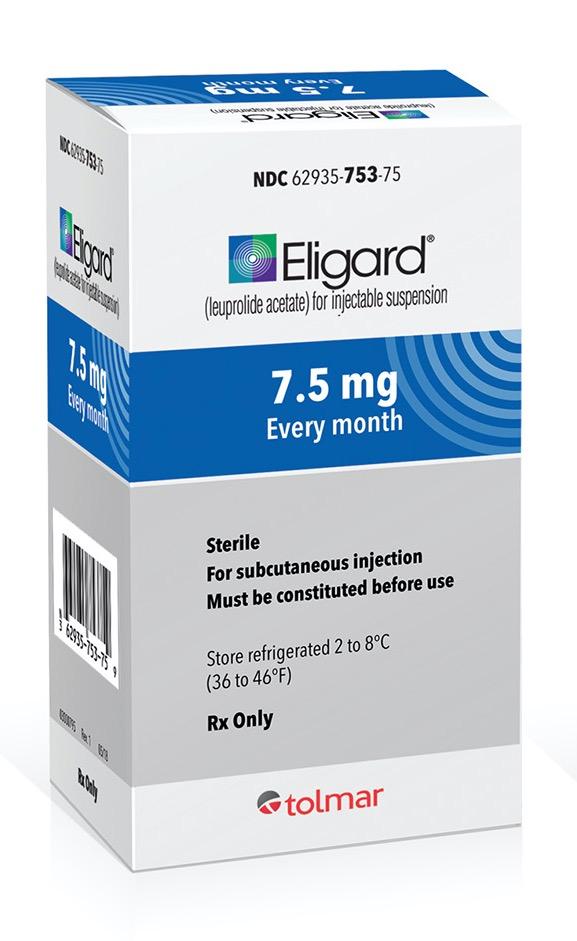
Eligard Side Effects
Generic name: leuprolide
Medically reviewed by Drugs.com. Last updated on Jan 1, 2024.
Note: This document contains side effect information about leuprolide. Some dosage forms listed on this page may not apply to the brand name Eligard.
Applies to leuprolide: emulsion, powder for suspension 1 month, powder for suspension 3 month, powder for suspension 4 month, powder for suspension 6 month, solution.
Serious side effects of Eligard
Along with its needed effects, leuprolide (the active ingredient contained in Eligard) may cause some unwanted effects. Although not all of these side effects may occur, if they do occur they may need medical attention.
Check with your doctor immediately if any of the following side effects occur while taking leuprolide:
For adults
Less common
- Fast or irregular heartbeat
Rare
- Bone, muscle, or joint pain
- chest tightness
- fainting
- fast or irregular breathing
- numbness or tingling of the hands or feet
- puffiness or swelling of the eyelids or around the eyes
- skin rash, hives, or itching
- sudden, severe decrease in blood pressure and collapse
- trouble breathing
For males only (adults)
More common
- Arm, back, or jaw pain
- bloody or cloudy urine
- blurred vision
- bone pain
- chest pain or discomfort
- difficult, burning, or painful urination
- difficulty with moving
- dizziness
- frequent urge to urinate
- headache
- increased urge to urinate during the night
- muscle pain or stiffness
- nausea
- nervousness
- pain in the arms or legs
- pain in the joints
- pale skin
- pounding in the ears
- slow or fast heartbeat
- sweating
- unusual bleeding or bruising
- unusual tiredness or weakness
- waking to urinate at night
Rare
- Pain in the groin or legs (especially in the calves)
Incidence not known
- Altered mental status
- anxiety
- blurred vision
- burning, numbness, tingling, or painful sensations
- chest pain
- cold, clammy, pale skin
- confusion
- dizziness or lightheadedness
- double vision
- dry mouth
- flushed, dry skin
- fruit-like breath odor
- increased hunger
- increased thirst
- increased urination
- irregular heartbeat
- loss of consciousness
- seizures
- thoughts or attempts at killing oneself
- unexplained weight loss
- unsteadiness or awkwardness
- visual changes
- weakness in the arms, hands, legs, or feet
For females only (adults)
Rare
- Anxiety
- deepening of voice
- increased hair growth
- mental depression
- mood changes
For children
More common
- Body aches or pain
- chest tightness
- chills
- cough
- cough producing mucus
- difficulty in breathing
- ear congestion
- fever
- headache
- loss of voice
- muscle aches
- noisy breathing
- pain or redness at the injection site
- runny or stuffy nose
- sneezing
- sore throat
- unusual tiredness or weakness
Less common
- Irritability
- mood or mental changes
Rare
- Burning, itching, or swelling at the injection site
Incidence not known
- Blurred vision
- change in ability to see colors, especially blue or yellow
- nausea and vomiting
- seizures
- severe headache
For females only (children)—expected in first few weeks
Rare
- Vaginal bleeding (continuing)
- white vaginal discharge (continuing)
Other side effects of Eligard
Some side effects of leuprolide may occur that usually do not need medical attention. These side effects may go away during treatment as your body adjusts to the medicine. Also, your health care professional may be able to tell you about ways to prevent or reduce some of these side effects.
Check with your health care professional if any of the following side effects continue or are bothersome or if you have any questions about them:
For adults
More common
- Sudden sweating and feeling of warmth (hot flashes)
Less common
- Bleeding, bruising, burning, itching, pain, redness, or swelling at the injection site
- decreased interest in sexual intercourse
- swelling of the feet or lower legs
- swelling or increased tenderness of the breasts
- trouble sleeping
- weight gain
For females only (adults)
More common
- Light, irregular vaginal bleeding
- stopping of menstrual periods
Less common
- Burning, dryness, or itching of the vagina
- pelvic pain
For males only (adults)
More common
- Back pain
- chills
- constipation
- cough
- diarrhea
- fever
- general feeling of discomfort or illness
- loss of appetite
- pain or discomfort at the injection site
- redness of the face, neck, arms, and occasionally, upper chest
- runny nose
- shivering
- sore throat
- unusual drowsiness, dullness, tiredness, weakness, or feeling of sluggishness
Less common
- Decreased size of the testicles
- inability to have or keep an erection
Incidence not known
- Increased sensitivity of the skin to sunlight
- redness or other discoloration of the skin
- severe sunburn
For children
More common
- Constipation
- feeling of warmth
- redness of the face, neck, arms and occasionally, upper chest
- stomach pain
For Healthcare Professionals
Applies to leuprolide: intramuscular kit, intramuscular powder for injection, intramuscular powder for injection extended release, subcutaneous emulsion, subcutaneous implant, subcutaneous kit, subcutaneous powder for injection extended release, subcutaneous solution.
General
The most commonly reported side effects were hot flashes or sweats, gastrointestinal disorders, hyperhidrosis, edema, emotional lability or depression, respiratory disorder, urinary disorder, nausea or vomiting, injection site reaction, joint disorders, testicular atrophy, asthenia, flu syndrome, headache, skin reaction, fatigue, and pain.[Ref]
Cardiovascular
Very common (10% or more): ECG changes (19%), ischemia (19%), hot flashes or sweats (57%)
Common (1% to 10%): Hypertension, murmur, phlebitis, thrombosis, arrhythmias, angina pectoris, myocardial infarction, vasodilation
Frequency not reported: Cardiovascular collapse, palpitations, tachycardia, bradycardia, varicose vein, atrial fibrillation, deep thrombophlebitis, mitral valve incompetence, tricuspid valve incompetence, irregular heart rate, pallor, prolonged QT interval
Postmarketing reports: Deep vein thrombosis, hypotension, pulmonary embolism, congestive heart failure[Ref]
Dermatologic
Very common (10% or more): Hyperhidrosis (up to 98%), hair loss (18%)
Common (1% to 10%): Alopecia, skin rash, acne, itching, dry skin, ecchymosis, pruritus, photosensitivity, clamminess, night sweats, skin pigmentation, skin reactions, skin/mucous membrane reaction
Frequency not reported: Hair disorder, nail disorder, cellulitis, herpes zoster, melanosis, dermatitis, macropapular rash, actinic keratosis, hirsutism, skin hypertrophy, carcinoma of skin or ear, skin lesions
Postmarketing reports: Photosensitivity reactions[Ref]
Endocrine
Common (1% to 10%): Decreased testicular size
Very rare (less than 0.01%): Pituitary apoplexy (following initial administration in patients with pituitary adenoma)
Frequency not reported: Androgen-like effect, transient increase in serum testosterone concentrations during the first 2 days of therapy, initial flare of symptoms with management of endometriosis or flare phenomenon, feminization, goiter[Ref]
Pituitary apoplexy included sudden headache, vomiting, visual changes, ophthalmoplegia, altered mental status, and sometimes cardiovascular collapse.[Ref]
Gastrointestinal
Very common (10% or more): Nausea/vomiting (up to 25%), altered bowel function (up to 14%), constipation (up to 14%), diarrhea (up to 14%), gastrointestinal disorders (14%)
Common (1% to 10%): Dyspepsia, gastroenteritis or colitis, dysphagia, flatulence, gastrointestinal (GI) bleeding, peptic ulcer, rectal polyps, duodenal ulcer
Frequency not reported: Dry mouth, eructation, enlarged abdomen, gingivitis, gum hemorrhage, intestinal obstruction, periodontal abscess, rectal disorder, hematochezia, retching, abdominal distention, taste disorders[Ref]
Genitourinary
Very common (10% or more): Vaginal dryness (37%), vaginitis (up to 28%), breast tenderness (14%), erectile dysfunction, urinary disorder (12%)
Common (1% to 10%): Breast changes, breast enlargement, breast pain, breast soreness or tenderness, menstrual disorders, urinary frequency or urgency, hematuria, urinary tract infection, ovarian hyperstimulation, testicular soreness or pain, penile disorder, vaginal hemorrhage, gynecomastia, decrease in testicular size, impotence, testicular atrophy, vulvovaginal dryness, spotting
Frequency not reported: Dysuria, lactation, urinary tract obstruction, balanitis, decreased urine specific gravity, gynecomastia, penis disorders, testis disorders, epididymitis, urinary incontinence, pelvic pain, dysmenorrhea, pollakiuria, bladder spasms, metrorrhagia, vulvovaginitis
Postmarketing reports: Prostate pain[Ref]
Hematologic
Common (1% to 10%): Anemia
Frequency not reported: Decreased red blood cell count (RBC)/hematocrit/hemoglobin, thrombocytopenia, leucopenia, increased platelets, leukopenia, lymphedema, increased WBC, lymphadenopathy, eosinophilia, purpura
Postmarketing reports: Decreased white blood cell count (WBC)[Ref]
Hepatic
Common (1% to 10%): Increased liver enzymes
Frequency not reported: Hepatitis, hepatomegaly, jaundice, increased liver function tests
Postmarketing reports: Hepatic dysfunction, serious liver injury[Ref]
Hypersensitivity
Frequency not reported: Anaphylaxis, hypersensitivity reactions, allergic reaction
Postmarketing reports: Anaphylactic reactions (e.g., rash, pruritus, urticaria, wheezing or interstitial pneumonitis, anaphylactic reactions)[Ref]
Immunologic
Frequency not reported: Flu syndrome[Ref]
Local
Frequency not reported: Erythema, ecchymosis, induration, abscess, swelling, injection site nodule, ulcers, irritation, necrosis at the site of injection, injection site reaction, gait disturbance[Ref]
Metabolic
Very common (10% or more): Weight gain/loss (up to 13%), edema (14%)
Common (1% to 10%): Anorexia
Uncommon (0.1% to 1%): Abnormal lipids
Frequency not reported: Appetite changes
Frequency not reported: Thirst, hyperglycemia, hyperuricemia, dehydration, hyperlipidemia, gout, hyperkalemia, increased bilirubin, insulin resistance
Postmarketing reports: Diabetes[Ref]
Musculoskeletal
Very common (10% or more): Arthralgia (up to 12%)
Common (1% to 10%): Bone or joint pain, myalgia, ankylosing spondylosis, arthritis, blurred disc margins, bone fracture, joint disorder, leg cramps, muscle stiffness, muscle weakness or tenderness, pelvic fibrosis, spasms, or cramps
Uncommon (0.1% to 1%): Weakness of lower extremities
Frequency not reported: Backache, muscle atrophy, limb pain, loss of bone mineral density, neck pain, ptosis, rib fracture, bursitis, osteoarthritis, pain in extremity, arthropathy
Postmarketing reports: Joint or muscle pain, spinal fracture or paralysis, tenosynovitis-like symptoms, decreased bone density[Ref]
Nervous system
Very common (10% or more): Headache (sometimes severe [up to 65%]), migraine (up to 65%), asthenia (up to 18%), dizziness/lightheadedness (up to 16%), vertigo (up to 16%)
Common (1% to 10%): Memory disorder, neuromuscular disorder, paresthesia
Frequency not reported: Convulsions, syncope, taste perversion, hypesthesia, tinnitus, abnormal thinking, amnesia, confusion, dementia, cerebrovascular accident/transient ischemic attack, hyperkinesia, ataxia, hypertonia, lethargy
Postmarketing reports: Peripheral neuropathy, stroke, symptoms consistent with fibromyalgia, sudden headache, transient Ischaemic attack[Ref]
Ocular
Frequency not reported: Conjunctivitis, ophthalmologic disorders, visual impairment, amblyopia, dry eyes
Postmarketing reports: Ophthalmoplegia, visual changes[Ref]
Oncologic
Second primary neoplasms include basal cell carcinoma, bladder transitional cell carcinoma, lung neoplasm, malignant melanoma, non-Hodgkin's lymphoma, and squamous cell carcinoma.[Ref]
Frequency not reported: Neoplasm, cyst, bladder carcinoma, second primary neoplasm, tumor flare[Ref]
Other
Very common (10% or more): Pain (up to 24%), general pain (up to 23%)
Common (1% to 10%): Tinnitus, edema peripheral, infection
Frequency not reported: Body odor, disturbance of smell/taste, decreased albumin, fever, decreased prostatic acid phosphatase, decreased total protein, increased BUN, increased phosphorus, increased prostatic acid phosphatase, increased total cholesterol, accidental injury, hernia, abnormal healing, prostate disorder, decreased bicarbonate, decreased HDL-cholesterol, increased glucose, fatigue, induration, increased urea nitrogen, hyperphosphatemia, increased prothrombin time (PT), increased partial thromboplastin time (PTT), decreased potassium, increased ALT, increased LDH, chills, hypothermia, pitting edema, increased calcium, increased alanine amino transferase, increased aspartate aminotransferase, increased gamma-glutamyl transferase (GGT), hard nodule in throat, hypertrophy, present antinuclear antibody, increased sedimentation rate
Postmarketing reports: Hearing disorder[Ref]
Psychiatric
Very common (10% or more): Depression (up to 31%), emotional lability (up to 31%), insomnia/sleep disorder (up to 31%), decreased libido (up to 11%)
Common (1% to 10%): Anxiety, nervousness, mood changes, increased libido, decreased libido
Frequency not reported: Delusions, agitation
Postmarketing reports: Altered mental status, suicidal ideation, suicide attempt, mood swings[Ref]
Renal
Uncommon (0.1% to 1%): Renal calculus, uric aciduria, hematuria, hemorrhagic cystitis, nocturia
Frequency not reported: Hydronephrosis, renal failure[Ref]
Respiratory
Influenza-like illness include influenza, nasal congestion, nasopharyngitis, rhinorrhea, upper respiratory tract infection, and viral upper respiratory tract infection.[Ref]
Common (1% to 10%): Dyspnea, sinus congestion, chest tightness, decreased breathing sounds, hemoptysis, pleuritic chest pain, pulmonary infiltrate, rales/rhonchi, rhinitis, strep throat, wheezing/bronchitis, pulmonary edema, pulmonary embolism, respiratory disorder, cough, COPD
Frequency not reported: Interstitial lung disease (ILD), emphysema, hemoptysis, lung edema, increased sputum, increased creatinine, epistaxis, pharyngitis, pneumonia, pleural effusion, hypoxia, hiccup, voice alteration, influenza-like illness, pleural rub
Postmarketing reports: Shortness of breath, symptoms consistent with asthmatic process[Ref]
Frequently asked questions
- Are Lupron Depot and Eligard the same drug?
- How long should you take it for?
- Is this a chemotherapy drug?
- How is it injected / administered for prostate cancer?
- Will I get my period while on Lupron?
- What does this drug do for IVF?
- Can you get pregnant on Lupron Depot?
- Is Firmagon (degarelix) the same as Lupron?
More about Eligard (leuprolide)
- Check interactions
- Compare alternatives
- Pricing & coupons
- Reviews (35)
- Drug images
- Dosage information
- During pregnancy
- Drug class: gonadotropin releasing hormones
- En español
Patient resources
Other brands
Lupron Depot, Lupron Depot-PED, Camcevi, Fensolvi, Viadur
Professional resources
Other brands
Lupron Depot, Lupron Depot-PED, Camcevi, Fensolvi, Lupron Depot-Gyn
Related treatment guides
References
1. Product Information. Lupron (leuprolide). TAP Pharmaceuticals Inc. 2002;PROD.
2. Cerner Multum, Inc. UK Summary of Product Characteristics.
3. Cerner Multum, Inc. Australian Product Information.
4. Product Information. Eligard (leuprolide). sanofi-aventis. 2019.
5. Product Information. Camcevi (leuprolide). Accord Biopharma Inc. 2022.
6. Product Information. Fensolvi (leuprolide). Tolmar Pharmaceuticals. 2022.
7. Product Information. Lupron Depot-Gyn (leuprolide). TAP Pharmaceuticals Inc. 2020.
8. Product Information. Lupron Depot-Ped (leuprolide). AbbVie US LLC. 2022.
9. Product Information. Viadur (leuprolide). Bayer Pharmaceutical Inc. 2006.
Further information
Always consult your healthcare provider to ensure the information displayed on this page applies to your personal circumstances.
Some side effects may not be reported. You may report them to the FDA.