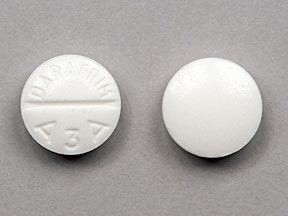
Daraprim Side Effects
Generic name: pyrimethamine
Medically reviewed by Drugs.com. Last updated on Oct 5, 2024.
Note: This document provides detailed information about Daraprim Side Effects associated with pyrimethamine. Some dosage forms listed on this page may not apply specifically to the brand name Daraprim.
Applies to pyrimethamine: oral tablet.
Precautions
It is very important that your doctor check your or your child's progress at regular visits to make sure that this medicine is working properly. Blood tests are needed to check for unwanted effects.
If your symptoms do not improve within a few days or if they become worse, check with your doctor.
This medicine may decrease the amount of folate in the body. Tell your doctor if you have burning, crawling, itching, numbness, prickling, "pins and needles", or tingling feelings, changes in vision, confusion, depression, redness or soreness of the tongue, ulcers inside the mouth, unusual tiredness or weakness.
Do not drink alcohol while you are using this medicine.
Do not take other medicines unless they have been discussed with your doctor. This includes prescription or nonprescription (over-the-counter [OTC]) medicines and herbal or vitamin supplements.
Serious side effects of Daraprim
Along with its needed effects, pyrimethamine (the active ingredient contained in Daraprim) may cause some unwanted effects. Although not all of these side effects may occur, if they do occur they may need medical attention.
Check with your doctor immediately if any of the following side effects occur while taking pyrimethamine:
Rare side effects
- chest pain
- dry cough
- fever
- rapid or trouble breathing
- skin rash
- unusual tiredness or weakness
Incidence not known
- black, tarry stools
- bleeding gums
- blistering, peeling, or loosening of the skin
- blood in the urine or stools
- chills
- cough
- diarrhea
- difficulty swallowing
- dizziness
- fainting spells
- fast or irregular heartbeat
- hives, itching
- irritation or soreness of the tongue
- joint or muscle pain
- lower back or side pain
- puffiness or swelling of the eyelids or around the eyes, face, lips, or tongue
- painful or difficult urination
- pale skin
- pinpoint red spots on the skin
- red, irritated eyes
- red skin lesions, often with a purple center
- sore throat
- sores, ulcers, or white spots on the lips or in the mouth
- swollen glands
- tightness in the chest
- unusual bleeding or bruising
Other side effects of Daraprim
Some side effects of pyrimethamine may occur that usually do not need medical attention. These side effects may go away during treatment as your body adjusts to the medicine. Also, your health care professional may be able to tell you about ways to prevent or reduce some of these side effects.
Check with your health care professional if any of the following side effects continue or are bothersome or if you have any questions about them:
Incidence not known
- loss of appetite
- vomiting
- weight loss
See also:
For healthcare professionals
Applies to pyrimethamine: compounding powder, oral tablet.
General adverse events
Since this drug is coadministered with a sulfonamide, the manufacturer product information for the relevant sulfonamide should be consulted for sulfonamide-related side effects.[Ref]
Gastrointestinal
- Very common (10% or more): Nausea, vomiting, diarrhea, colic
- Uncommon (0.1% to 1%): Dry mouth, dry throat
- Very rare (less than 0.01%): Buccal ulceration
- Frequency not reported: Glossitis, atrophic glossitis[Ref]
Nervous system
- Very common (10% or more): Headache
- Common (1% to 10%): Dizziness
- Very rare (less than 0.01%): Convulsions/seizures
- Frequency not reported: Ataxia, tremors, precipitation of grand mal attack[Ref]
Precipitation of a grand mal attack in a patient predisposed to epilepsy was reported; clinical significance was not established.[Ref]
Hematologic
- Very common (10% or more): Anemia
- Common (1% to 10%): Thrombocytopenia, leukopenia
- Very rare (less than 0.01%): Pancytopenia
- Frequency not reported: Megaloblastic anemia, neutropenia, agranulocytosis[Ref]
Dermatologic
- Very common (10% or more): Rash
- Uncommon (0.1% to 1%): Abnormal skin pigmentation, dermatitis
Other
- Uncommon (0.1% to 1%): Fever, malaise
Psychiatric
- Uncommon (0.1% to 1%): Depression
- Very rare (less than 0.01%): Insomnia
Insomnia was reported when this drug was given weekly at higher than recommended doses.
Respiratory
- Rare (0.01% to 0.1%): Pulmonary eosinophilia
- Very rare (less than 0.01%): Pneumonia with cellular and eosinophilic pulmonary infiltration[Ref]
Pneumonia with cellular and eosinophilic pulmonary infiltration was observed when this drug was administered once a week with sulfadoxine.[Ref]
Hypersensitivity
- Frequency not reported: Hypersensitivity reactions (included erythema multiforme, Stevens-Johnson Syndrome, toxic epidermal necrolysis, Lyell's syndrome, hepatitis, anaphylaxis, pulmonary reactions, maculopapular rashes)[Ref]
Cardiovascular
- Very rare (less than 0.01%): Circulatory collapse
- Frequency not reported: Disorders of cardiac rhythm, arrhythmias[Ref]
Circulatory collapse was reported in patients treated with higher than recommended doses.[Ref]
Metabolic
- Very rare (less than 0.01%): Hyperphenylalaninemia
- Frequency not reported: Anorexia[Ref]
Hyperphenylalaninemia was reported in neonates treated for congenital toxoplasmosis.[Ref]
Genitourinary
- Very rare (less than 0.01%): Hematuria
Oncologic
- Frequency not reported: Chronic granulocytic leukemia, reticulum cell sarcoma[Ref]
A 51-year-old female developed chronic granulocytic leukemia after taking this drug for 2 years for toxoplasmosis and a 56-year-old patient developed reticulum cell sarcoma after taking this drug for 14 months for toxoplasmosis.[Ref]
References
1. Cerner Multum, Inc. "UK Summary of Product Characteristics."
2. Cerner Multum, Inc. "Australian Product Information."
3. (2001) "Product Information. Daraprim (pyrimethamine)." Glaxo Wellcome
4. Ree GH (1983) "Chemoprophylaxis of malaria in Africa." Br Med J (Clin Res Ed), 286, p. 562
5. Phillips-Howard PA, West LJ (1990) "Serious adverse drug reactions to pyrimethamine-sulphadoxine pyrimethamine-dapsone and to amodiaquine in Britain." J R Soc Med, 83, p. 82-5
6. Olsen VV, Loft S, Christensen KD (1982) "Serious reactions during malaria prophylaxis with pyrimethamine- sulfadoxine." Lancet, 2, p. 994
7. Nicholls MD, Concannon AJ (1982) "Maloprim-induced agranulocytosis and red-cell aplasia." Med J Aust, 2, p. 564-6
8. Booth F, Barker LC, Barton CJ, Naik RB (1984) "Agranulocytosis during malaria prophylaxis with Maloprim (pyrimethamine and dapsone)." Postgrad Med J, 60, p. 566-7
9. Bowcock SJ, Linch DC, Machin SJ, Stewart JW (1987) "Pyrimethamine in the myeloproliferative disorders: a forgotten treatment?" Clin Lab Haematol, 9, p. 129-36
10. Whitehead S (1983) "Agranulocytosis associated with maloprim." Br Med J (Clin Res Ed), 286, p. 1515
11. Iaccheri B, Fiore T, Papadaki T, et al. (2008) "Adverse drug reactions to treatments for ocular toxoplasmosis: A retrospective chart review." Clin Ther, 30, p. 2069-74
12. Zitelli BJ, Alexander J, Taylor S, Miller KD, Howrie DL, Kuritsky JN, Perez TH, Van Thiel DH (1987) "Fatal hepatic necrosis due to pyrimethamine-sulfadoxine (Fansidar)." Ann Intern Med, 106, p. 393-5
13. Davidson AC, Bateman C, Shovlin C, Marrinan M, Burton GH, Cameron IR (1988) "Pulmonary toxicity of malaria prophylaxis." BMJ, 297, p. 1240-1
14. Selby CD, Ladusans EJ, Smith PG (1985) "Fatal multisystemic toxicity associated with prophylaxis with pyrimethamine and sulfadoxine (Fansidar)." Br Med J (Clin Res Ed), 290, p. 113-4
15. Svanbom M, Rombo L, Gustafsson L (1984) "Unusual pulmonary reaction during short term prophylaxis with pyrimethamine-sulfadoxine (Fansidar)." Br Med J (Clin Res Ed), 288, p. 1876
16. Whitfield D (1982) "Presumptive fatality due to pyrimethamine-sulfadoxine." Lancet, 2, p. 1272
17. Phillips-Howard PA, Behrens RH, Dunlop J (1989) "Stevens-Johnson syndrome due to pyrimethamine/sulfadoxine during presumptive self-therapy of malaria." Lancet, 2, p. 803-4
18. (1988) "Fansidar-associated fatal reaction in an HIV-infected man." MMWR Morb Mortal Wkly Rep, 37, p. 571-2
19. Hornstein OP, Ruprecht KW (1982) "Fansidar-induced Stevens-Johnson Syndrome." N Engl J Med, 307, p. 1529-30
20. Jeffrey RF (1986) "Transient lupus anticoagulant and fansidar therapy." Postgrad Med J, 62, p. 893-4
21. Adams SJ, Broadbent J, Clayden LM, Ridley CM (1985) "Erythema multiforme (Stevens-Johnson) precipitated by Fansidar." Postgrad Med J, 61, p. 263-4
22. McCormack D, Morgan WK (1987) "Fansidar hypersensitivity pneumonitis." Br J Dis Chest, 81, p. 194-6
23. Ward DJ, Krzeminska EC, Tanner NS (1990) "Treatment of toxic epidermal necrolysis and a review of six cases." Burns, 16, p. 97-104
24. Ortel B, Sivayathorn A, Honigsmann H (1989) "An unusual combination of phototoxicity and Stevens-Johnson syndrome due to antimalarial therapy." Dermatologica, 178, p. 39-42
25. Bamber MG, Elder AT, Gray JA, Minns RA (1986) "Fatal Stevens-Johnson syndrome associated with Fansidar and chloroquine." J Infect, 13, p. 31-3
26. Pang JA (1989) "Non-cardiogenic pulmonary oedema associated with pyrimethamine." Respir Med, 83, p. 247-8
More about Daraprim (pyrimethamine)
- Check interactions
- Compare alternatives
- Pricing & coupons
- Reviews (1)
- Drug images
- Dosage information
- During pregnancy
- Generic availability
- Drug class: miscellaneous antimalarials
- Breastfeeding
- En español
Patient resources
Professional resources
Related treatment guides
Further information
Daraprim side effects can vary depending on the individual. Always consult your healthcare provider to ensure the information displayed on this page applies to your personal circumstances.
Note: Medication side effects may be underreported. If you are experiencing side effects that are not listed, submit a report to the FDA by following this guide.