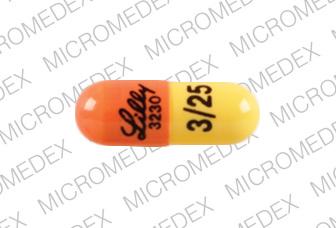
Symbyax: Package Insert / Prescribing Info
Package insert / product label
Generic name: olanzapine and fluoxetine hydrochloride
Dosage form: capsule
Drug class: Psychotherapeutic combinations
Medically reviewed by Drugs.com. Last updated on Feb 9, 2025.
On This Page
- Indications and Usage
- Dosage and Administration
- Dosage Forms and Strengths
- Contraindications
- Warnings and Precautions
- Adverse Reactions/Side Effects
- Drug Interactions
- Use In Specific Populations
- Drug Abuse and Dependence
- Overdosage
- Description
- Clinical Pharmacology
- Nonclinical Toxicology
- Clinical Studies
- How Supplied/Storage and Handling
- Storage and Handling
- Patient Counseling Information
- Medication Guide
Highlights of Prescribing Information
SYMBYAX (olanzapine and fluoxetine) capsules for oral use
Initial U.S. Approval: 2003
WARNING: SUICIDAL THOUGHTS AND BEHAVIORS and INCREASED MORTALITY IN ELDERLY PATIENTS WITH DEMENTIA-RELATED PSYCHOSIS
See full prescribing information for complete boxed warning.
- Increased risk of suicidal thinking and behavior in children, adolescents, and young adults taking antidepressants. SYMBYAX is not approved for use in children less than 10 years of age. Monitor for worsening and emergence of suicidal thoughts and behaviors (5.1, 8.4).
- Elderly patients with dementia-related psychosis treated with antipsychotic drugs are at an increased risk of death. SYMBYAX is not approved for the treatment of patients with dementia-related psychosis (5.2).
Recent Major Changes
| Warnings and Precautions (5.22) | 01/2025 |
Indications and Usage for Symbyax
Symbyax Dosage and Administration
- Adult Starting Dose: 6 mg olanzapine with 25 mg fluoxetine (6 mg/25 mg, once daily in the evening (2.1, 2.2)
- Adult Maximum Dose: 12 mg/50 mg once daily (2.1, 2.2).
- Pediatric Bipolar Depression Starting Dose: 3 mg/25 mg once daily (for ages 10 to 17 years) (2.1)
- Pediatric Bipolar Depression Maximum Dose: 12 mg/50 mg (2.1)
- Starting dose in patients predisposed to hypotensive reactions, hepatic impairment, or with potential for slowed metabolism: 3 mg/25 mg to 6 mg/25 mg. Escalate dose cautiously (2.3)
Dosage Forms and Strengths
- Capsules: 3 mg/25 mg, 6 mg/25 mg (mg olanzapine/mg equivalent fluoxetine) (3)
Contraindications
- Monoamine Oxidase Inhibitors (MAOI): Because of the risk of serotonin syndrome, do not use MAOIs intended to treat psychiatric disorders with SYMBYAX or within 5 weeks of stopping treatment with SYMBYAX. Do not use SYMBYAX within 14 days of stopping an MAOI intended to treat psychiatric disorders. In addition, do not start SYMBYAX in a patient who is being treated with linezolid or intravenous methylene blue. (4.1)
- Pimozide: Do not use. Risk of QT interval prolongation (4.2, 5.20, 7.7, 7.8)
- Thioridazine: Do not use. Risk of QT interval prolongation. Do not use thioridazine within 5 weeks of discontinuing SYMBYAX (4.2, 5.20, 7.7, 7.8)
Warnings and Precautions
- Neuroleptic Malignant Syndrome: Manage with immediate discontinuation and close monitoring (5.3)
- Drug Reaction with Eosinophilia and Systemic Symptoms (DRESS): Discontinue if DRESS is suspected (5.4)
-
Metabolic Changes: Atypical antipsychotic drugs have been associated with metabolic changes including hyperglycemia, dyslipidemia, and weight gain (5.5)
- Hyperglycemia and Diabetes Mellitus:In some cases extreme and associated with ketoacidosis or hyperosmolar coma or death. Monitor for symptoms of hyperglycemia. Perform fasting blood glucose testing before beginning, and periodically during treatment. (5.5)
- Dyslipidemia: Appropriate clinical monitoring is recommended, including fasting blood lipid testing before beginning, and periodically during, treatment (5.5)
- Weight gain: Consider potential consequences of weight gain. Monitor weight regularly (5.5)
- Serotonin Syndrome: Serotonin syndrome has been reported with SSRIs and SNRIs, including SYMBYAX, both when taken alone, but especially when co-administered with other serotonergic agents. If such symptoms occur, discontinue SYMBYAX and serotonergic agents and initiate supportive treatment. If concomitant use of SYMBYAX with other serotonergic drugs is clinically warranted, patients should be made aware of a potential increased risk for serotonin syndrome, particularly during treatment initiation and dose increases (5.6).
- Angle-Closure Glaucoma: Angle-closure glaucoma has occurred in patients with untreated anatomically narrow angles treated with antidepressants (5.7)
- Allergic Reactions and Rash: Discontinue upon appearance of rash or allergic phenomena (5.8)
- Activation of Mania/Hypomania: Screen for Bipolar Disorder and monitor for activation of mania/hypomania (5.9)
- Tardive Dyskinesia: Discontinue if clinically appropriate (5.10)
- Orthostatic Hypotension: Can be associated with bradycardia and syncope. Risk is increased during initial dose titration. Use caution in patients with cardiovascular disease or cerebrovascular disease, and those conditions that could affect hemodynamic responses (5.11)
- Leukopenia, Neutropenia, and Agranulocytosis: Has been reported with antipsychotics, including SYMBYAX. Patients with a history of a clinically significant low white blood cell count (WBC) or drug induced leukopenia/neutropenia should have their complete blood count (CBC) monitored frequently during the first few months of therapy. Consider discontinuing SYMBYAX at the first sign of a clinically significant decline in WBC in the absence of other causative factors (5.13)
- Seizures: Use cautiously in patients with a history of seizures or with conditions that lower the seizure threshold (5.15)
- Increased Risk of Bleeding: SSRIs increase the risk of bleeding. Use with NSAIDs, aspirin, warfarin, or other drugs that affect coagulation may potentiate the risk of gastrointestinal or other bleeding (5.16)
- Hyponatremia: Can occur in association with syndrome of inappropriate antidiuretic hormone (SIADH). Consider discontinuing SYMBYAX if symptomatic hyponatremia occurs (SIADH) (5.17)
- Potential for Cognitive and Motor Impairment: Has potential to impair judgment, thinking, and motor skills. Caution patients about operating machinery (5.18)
- QT Prolongation: QT prolongation and ventricular arrhythmia including Torsade de Pointes have been reported with fluoxetine. Use with caution in conditions that predispose to arrhythmias or increased fluoxetine exposure. Use cautiously in patients with risk factors for QT prolongation (4.2, 5.20)
- Anticholinergic (antimuscarinic) Effects: Use with caution with other anticholinergic drugs and in patients with urinary retention, prostatic hypertrophy, constipation, history of paralytic ileus or related conditions (5.21)
- Hyperprolactinemia: May elevate prolactin levels (5.22)
- Long Elimination Half-Life of Fluoxetine: Changes in dose will not be fully reflected in plasma for several weeks (5.24)
- Sexual Dysfunction: SYMBYAX use may cause symptoms of sexual dysfunction (5.26)
Adverse Reactions/Side Effects
Most common adverse reactions (≥5% and at least twice that for placebo) in adults: sedation, weight increased, appetite increased, dry mouth, fatigue, edema, tremor, disturbance in attention, blurred vision. Children and adolescents: sedation, weight increased, appetite increased, tremor, triglyceride increased, hepatic enzymes increased (6.1)
To report SUSPECTED ADVERSE REACTIONS, contact Eli Lilly and Company at 1-800-LillyRx (1-800-545-5979) or FDA at 1-800-FDA-1088 or www.fda.gov/medwatch
Drug Interactions
- Monoamine Oxidase Inhibitor (MAOI): (2.4, 2.5, 4.1, 5.6, 7.1)
- Drugs Metabolized by CYP2D6: Fluoxetine is a potent inhibitor of CYP2D6 enzyme pathway (7.7)
- Tricyclic Antidepressants (TCAs): Monitor TCA levels during coadministration with SYMBYAX or when SYMBYAX has been recently discontinued (5.6, 7.7)
- CNS Acting Drugs: Caution is advised if the concomitant administration of SYMBYAX and other CNS-active drugs is required (7.2)
- Antihypertensive Agent: Enhanced antihypertensive effect (7.7)
- Levodopa and Dopamine Agonists: May antagonize levodopa/dopamine agonists (7.7)
- Benzodiazepines: May potentiate orthostatic hypotension and sedation (7.6, 7.7)
- Clozapine: May elevate clozapine levels (7.7)
- Haloperidol: Elevated haloperidol levels have been observed (7.7)
- Carbamazepine: Potential for elevated carbamazepine levels and clinical anticonvulsant toxicity (7.7)
- Phenytoin: Potential for elevated phenytoin levels and clinical anticonvulsant toxicity (7.7)
- Alcohol: May potentiate sedation and orthostatic hypotension (7.7)
- Serotonergic Drugs: (2.4, 2.5, 4.1, 5.6, 7.3)
- Fluvoxamine: May increase olanzapine levels; a lower dose of the olanzapine component of SYMBYAX should be considered (7.6)
- Drugs that Interfere with Hemostasis: (e.g., NSAIDs, Aspirin, Warfarin, etc.): May potentiate the risk of bleeding (7.4)
- Drugs Tightly Bound to Plasma Proteins: Fluoxetine may cause shift in plasma concentrations (7.7)
- Drugs that Prolong the QT Interval: Do not use SYMBYAX in combination with thioridazine or pimozide. Use SYMBYAX with caution in combination with other drugs that prolong the QT interval (4.2, 5.20, 7.7, 7.8)
Use In Specific Populations
- Pregnancy: SSRI use, particularly later in pregnancy, may increase the risk for persistent pulmonary hypertension and symptoms of poor adaptation (respiratory distress, temperature instability, feeding difficulty, hypotonia, irritability, tremor) in the neonate. Olanzapine may cause extrapyramidal symptoms and/or withdrawal symptoms in neonates with third trimester exposure (8.1)
- Pediatric Use: Safety and efficacy of Symbyax for the treatment of bipolar I depression in patients under 10 years of age have not been established. Safety and efficacy of Symbyax for treatment resistant depression in patients under 18 years of age have not been established (8.4)
- Hepatic Impairment: Use a lower or less frequent dose in patients with cirrhosis (8.6)
See 17 for PATIENT COUNSELING INFORMATION and Medication Guide.
Revised: 1/2025
Full Prescribing Information
WARNING: SUICIDAL THOUGHTS AND BEHAVIORS and INCREASED MORTALITY IN ELDERLY PATIENTS WITH DEMENTIA-RELATED PSYCHOSIS
Suicidal Thoughts and Behaviors — Antidepressants increased the risk of suicidal thoughts and behavior in children, adolescents, and young adults in short-term studies. These studies did not show an increase in the risk of suicidal thoughts and behavior with antidepressant use in patients over age 24; there was a reduction in risk with antidepressant use in patients aged 65 and older.
In patients of all ages who are started on antidepressant therapy, monitor closely for worsening and emergence of suicidal thoughts and behaviors. Advise families and caregivers of the need for close observation and communication with the healthcare provider. SYMBYAX is not approved for use in children less than 10 years of age [see Warnings and Precautions (5.1), Use in Specific Populations (8.4)].
Increased Mortality in Elderly Patients with Dementia-Related Psychosis — Elderly patients with dementia-related psychosis treated with antipsychotic drugs are at an increased risk of death. SYMBYAX (olanzapine and fluoxetine) is not approved for the treatment of patients with dementia-related psychosis [see Warnings and Precautions (5.2)].
1. Indications and Usage for Symbyax
SYMBYAX® is indicated for the treatment of:
- Acute depressive episodes in Bipolar I Disorder [see Clinical Studies (14.1)].
- Treatment resistant depression (Major Depressive Disorder in patient who do not respond to 2 separate trials of different antidepressants of adequate dose and duration in the current episode) [see Clinical Studies (14.2)].
2. Symbyax Dosage and Administration
2.1 Depressive Episodes Associated with Bipolar I Disorder
Adults — Administer SYMBYAX once daily in the evening, generally beginning with the 6 mg/25 mg (mg olanzapine/mg equivalent fluoxetine) capsule. While food has no appreciable effect on the absorption of olanzapine and fluoxetine given individually, the effect of food on the absorption of SYMBYAX has not been studied. Make dosage adjustments, if indicated, according to efficacy and tolerability. Antidepressant efficacy was demonstrated with SYMBYAX in a dose range of olanzapine 6 mg to 12 mg and fluoxetine 25 mg to 50 mg [see Clinical Studies (14.1)]. The safety of doses above 18 mg of olanzapine and 75 mg of fluoxetine has not been evaluated in adult clinical studies. Periodically reexamine the need for continued pharmacotherapy.
Children and Adolescents (10 to 17 years of age) — Administer SYMBYAX once daily in the evening, generally beginning with the 3 mg/25 mg capsule, without regard to meals, with a recommended target dose within the approved dosing range (6/25; 6/50; 12/50 mg) [see Clinical Studies (14.1)]. The safety of doses above 12 mg of olanzapine and 50 mg of fluoxetine has not been evaluated in pediatric clinical studies. Periodically reexamine the need for continued pharmacotherapy.
2.2 Treatment Resistant Depression
Administer SYMBYAX once daily in the evening, generally beginning with the 6 mg/25 mg capsule. While food has no appreciable effect on the absorption of olanzapine and fluoxetine given individually, the effect of food on the absorption of SYMBYAX has not been studied. Adjust dosage, if indicated, according to efficacy and tolerability. Antidepressant efficacy was demonstrated with SYMBYAX in a dose range of olanzapine 6 mg to 18 mg and fluoxetine 25 mg to 50 mg [see Clinical Studies (14.2)]. The safety of doses above 18 mg/75 mg has not been evaluated in clinical studies. Periodically reexamine the need for continued pharmacotherapy.
2.3 Specific Populations
Start SYMBYAX at 3 mg/25 mg or 6 mg/25 mg in patients with a predisposition to hypotensive reactions, patients with hepatic impairment, or patients who exhibit a combination of factors that may slow the metabolism of SYMBYAX (female gender, geriatric age, nonsmoking status) or those patients who may be pharmacodynamically sensitive to olanzapine. Titrate slowly and adjust dosage as needed in patients who exhibit a combination of factors that may slow metabolism. SYMBYAX has not been systematically studied in patients >65 years of age or in patients <10 years of age [see Use in Specific Populations (8.5) and Clinical Pharmacology (12.3, 12.4)].
2.4 Switching a Patient To or From a Monoamine Oxidase Inhibitor (MAOI) Intended to Treat Psychiatric Disorders
At least 14 days should elapse between discontinuation of an MAOI intended to treat psychiatric disorders and initiation of therapy with SYMBYAX. Conversely, at least 5 weeks should be allowed after stopping SYMBYAX before starting an MAOI intended to treat psychiatric disorders [see Contraindications (4.1)].
2.5 Use of SYMBYAX with Other MAOIs such as Linezolid or Methylene Blue
Do not start SYMBYAX in a patient who is being treated with linezolid or intravenous methylene blue because there is an increased risk of serotonin syndrome. In a patient who requires more urgent treatment of a psychiatric condition, other interventions, including hospitalization, should be considered [see Contraindications (4.1)].
In some cases, a patient already receiving SYMBYAX therapy may require urgent treatment with linezolid or intravenous methylene blue. If acceptable alternatives to linezolid or intravenous methylene blue treatment are not available and the potential benefits of linezolid or intravenous methylene blue are judged to outweigh the risks of serotonin syndrome in a particular patient, SYMBYAX should be stopped promptly, and linezolid or intravenous methylene blue can be administered. The patient should be monitored for symptoms of serotonin syndrome for five weeks or until 24 hours after the last dose of linezolid or intravenous methylene blue, whichever comes first. Therapy with SYMBYAX may be resumed 24 hours after the last dose of linezolid or intravenous methylene blue [see Warnings and Precautions (5.6)].
The risk of administering methylene blue by non-intravenous routes (such as oral tablets or by local injection) or in intravenous doses much lower than 1 mg/kg with SYMBYAX is unclear. The clinician should, nevertheless, be aware of the possibility of emergent symptoms of serotonin syndrome with such use [see Warnings and Precautions (5.6)].
2.6 Discontinuation of Treatment with SYMBYAX
Symptoms associated with discontinuation of fluoxetine, a component of SYMBYAX, SNRIs, and SSRIs, have been reported [see Warnings and Precautions (5.25)].
3. Dosage Forms and Strengths
Capsules (mg olanzapine/mg equivalent fluoxetine):
- 3 mg/25 mg
- 6 mg/25 mg
4. Contraindications
4.1 Monoamine Oxidase Inhibitors (MAOIs)
The use of MAOIs intended to treat psychiatric disorders with SYMBYAX or within 5 weeks of stopping treatment with SYMBYAX is contraindicated because of an increased risk of serotonin syndrome. The use of SYMBYAX within 14 days of stopping an MAOI intended to treat psychiatric disorders is also contraindicated [see Dosage and Administration (2.4) and Warnings and Precautions (5.6)].
Starting SYMBYAX in a patient who is being treated with MAOIs such as linezolid or intravenous methylene blue is also contraindicated because of an increased risk of serotonin syndrome [see Dosage and Administration (2.5) and Warnings and Precautions (5.6)].
4.2 Other Contraindications
- Pimozide [see Warnings and Precautions (5.20) and Drug Interactions (7.7, 7.8)]
- Thioridazine [see Warnings and Precautions (5.20) and Drug Interactions (7.7, 7.8)]
Pimozide and thioridazine prolong the QT interval. SYMBYAX can increase the levels of pimozide and thioridazine through inhibition of CYP2D6. SYMBYAX can also prolong the QT interval.
5. Warnings and Precautions
5.1 Suicidal Thoughts and Behaviors in Children, Adolescents, and Young Adults
Patients with Major Depressive Disorder (MDD), both adult and pediatric, may experience worsening of their depression and/or the emergence of suicidal ideation and behavior (suicidality) or unusual changes in behavior, whether or not they are taking antidepressant medications, and this risk may persist until significant remission occurs. Suicide is a known risk of depression and certain other psychiatric disorders, and these disorders themselves are the strongest predictors of suicide. There has been a long-standing concern, however, that antidepressants may have a role in inducing worsening of depression and the emergence of suicidality in certain patients during the early phases of treatment. Pooled analyses of short-term placebo-controlled trials of antidepressant drugs (SSRIs and others) showed that these drugs increase the risk of suicidal thinking and behavior (suicidality) in children, adolescents, and young adults (ages 18 to 24) with Major Depressive Disorder (MDD) and other psychiatric disorders. Short-term studies did not show an increase in the risk of suicidality with antidepressants compared to placebo in adults beyond age 24; there was a reduction with antidepressants compared to placebo in adults aged 65 and older.
The pooled analyses of placebo-controlled trials in children and adolescents with MDD, Obsessive Compulsive Disorder (OCD), or other psychiatric disorders included a total of 24 short-term trials of 9 antidepressant drugs in over 4400 patients. The pooled analyses of placebo-controlled trials in adults with MDD or other psychiatric disorders included a total of 295 short-term trials (median duration of 2 months) of 11 antidepressant drugs in over 77,000 patients. There was considerable variation in risk of suicidality among drugs, but a tendency toward an increase in the younger patients for almost all drugs studied. There were differences in absolute risk of suicidality across the different indications, with the highest incidence in MDD. The risk differences (drug versus placebo), however, were relatively stable within age strata and across indications. These risk differences (drug-placebo difference in the number of cases of suicidality per 1000 patients treated) are provided in Table 1.
| Age Range | Drug-Placebo Difference in Number of Cases of Suicidality per 1000 Patients Treated |
| Increases Compared to Placebo | |
| <18 | 14 additional cases |
| 18-24 | 5 additional cases |
| Decreases Compared to Placebo | |
| 25-64 | 1 fewer case |
| ≥65 | 6 fewer cases |
No suicides occurred in any of the pediatric trials. There were suicides in the adult trials, but the number was not sufficient to reach any conclusion about drug effect on suicide.
It is unknown whether the suicidality risk extends to longer-term use, i.e., beyond several months. However, there is substantial evidence from placebo-controlled maintenance trials in adults with depression that the use of antidepressants can delay the recurrence of depression.
All patients being treated with antidepressants for any indication should be monitored appropriately and observed closely for clinical worsening, suicidality, and unusual changes in behavior, especially during the initial few months of a course of drug therapy, or at times of dose changes, either increases or decreases.
The following symptoms, anxiety, agitation, panic attacks, insomnia, irritability, hostility, aggressiveness, impulsivity, akathisia (psychomotor restlessness), hypomania, and mania, have been reported in adult and pediatric patients being treated with antidepressants for Major Depressive Disorder as well as for other indications, both psychiatric and nonpsychiatric. Although a causal link between the emergence of such symptoms and either the worsening of depression and/or the emergence of suicidal impulses has not been established, there is concern that such symptoms may represent precursors to emerging suicidality.
Consideration should be given to changing the therapeutic regimen, including possibly discontinuing the medication, in patients whose depression is persistently worse, or who are experiencing emergent suicidality or symptoms that might be precursors to worsening depression or suicidality, especially if these symptoms are severe, abrupt in onset, or were not part of the patient's presenting symptoms.
If the decision has been made to discontinue treatment, medication should be tapered, as rapidly as is feasible, but with recognition that abrupt discontinuation can be associated with certain symptoms [see Warnings and Precautions (5.25)].
Families and caregivers of patients being treated with antidepressants for Major Depressive Disorder or other indications, both psychiatric and nonpsychiatric, should be alerted about the need to monitor patients for the emergence of agitation, irritability, unusual changes in behavior, and the other symptoms described above, as well as the emergence of suicidality, and to report such symptoms immediately to health care providers. Such monitoring should include daily observation by families and caregivers. Prescriptions for SYMBYAX should be written for the smallest quantity of capsules consistent with good patient management, in order to reduce the risk of overdose.
It should be noted that SYMBYAX is not approved for use in treating any indications in patients less than 10 years of age [see Use in Specific Populations (8.4)].
5.2 Increased Mortality in Elderly Patients with Dementia-Related Psychosis
Elderly patients with dementia-related psychosis treated with antipsychotic drugs are at an increased risk of death. SYMBYAX is not approved for the treatment of patients with dementia-related psychosis [see Boxed Warning and Use in Specific Populations (8.5)].
In olanzapine placebo-controlled clinical trials of elderly patients with dementia-related psychosis, the incidence of death in olanzapine-treated patients was significantly greater than placebo-treated patients (3.5% vs 1.5%, respectively).
Meta-Analysis of Antipsychotic Use in Dementia-Related Psychosis — Elderly patients with dementia-related psychosis treated with antipsychotic drugs are at an increased risk of death. Analyses of seventeen placebo-controlled trials (modal duration of 10 weeks), largely in patients taking atypical antipsychotic drugs, revealed a risk of death in drug-treated patients of between 1.6 to 1.7 times the risk of death in placebo-treated patients. Over the course of a typical 10-week controlled trial, the rate of death in drug-treated patients was about 4.5%, compared to a rate of about 2.6% in the placebo group. Although the causes of death were varied, most of the deaths appeared to be either cardiovascular (e.g., heart failure, sudden death) or infectious (e.g., pneumonia) in nature. Observational studies suggest that, similar to atypical antipsychotic drugs, treatment with conventional antipsychotic drugs may increase mortality. The extent to which the findings of increased mortality in observational studies may be attributed to the antipsychotic drug as opposed to some characteristic(s) of the patients is not clear. SYMBYAX (olanzapine and fluoxetine) is not approved for the treatment of patients with dementia-related psychosis [see Use in Specific Populations (8.5)].
Cerebrovascular Adverse Events (CVAE), Including Stroke — Cerebrovascular adverse events (e.g., stroke, transient ischemic attack), including fatalities, were reported in patients in trials of olanzapine in elderly patients with dementia-related psychosis. In placebo-controlled trials, there was a significantly higher incidence of cerebrovascular adverse events in patients treated with olanzapine compared to patients treated with placebo. Olanzapine and SYMBYAX are not approved for the treatment of patients with dementia-related psychosis [see Boxed Warning].
5.3 Neuroleptic Malignant Syndrome (NMS)
A potentially fatal symptom complex sometimes referred to as NMS has been reported in association with administration of antipsychotic drugs, including olanzapine. Clinical manifestations of NMS are hyperpyrexia, muscle rigidity, altered mental status, and evidence of autonomic instability (irregular pulse or blood pressure, tachycardia, diaphoresis, and cardiac dysrhythmia). Additional signs may include elevated creatinine phosphokinase, myoglobinuria (rhabdomyolysis), and acute renal failure.
The diagnostic evaluation of patients with this syndrome is complicated. In arriving at a diagnosis, it is important to exclude cases where the clinical presentation includes both serious medical illness (e.g., pneumonia, systemic infection, etc.) and untreated or inadequately treated extrapyramidal signs and symptoms (EPS). Other important considerations in the differential diagnosis include central anticholinergic toxicity, heat stroke, drug fever, and primary central nervous system pathology.
The management of NMS should include: 1) immediate discontinuation of antipsychotic drugs and other drugs not essential to concurrent therapy, 2) intensive symptomatic treatment and medical monitoring, and 3) treatment of any concomitant serious medical problems for which specific treatments are available. There is no general agreement about specific pharmacological treatment regimens for NMS.
If after recovering from NMS, a patient requires treatment with an antipsychotic, the patient should be carefully monitored, since recurrences of NMS have been reported [see Warnings and Precautions (5.5)].
5.4 Drug Reaction with Eosinophilia and Systemic Symptoms (DRESS)
Drug Reaction with Eosinophilia and Systemic Symptoms (DRESS) has been reported with olanzapine exposure. DRESS may present with a cutaneous reaction (such as rash or exfoliative dermatitis), eosinophilia, fever, and/or lymphadenopathy with systemic complications such as hepatitis, nephritis, pneumonitis, myocarditis, and/or pericarditis. DRESS is sometimes fatal. Discontinue SYMBYAX if DRESS is suspected.
5.5 Metabolic Changes
Atypical antipsychotic drugs have been associated with metabolic changes including hyperglycemia, dyslipidemia, and weight gain. Metabolic changes may be associated with increased cardiovascular/cerebrovascular risk. Olanzapine's specific metabolic profile is presented below.
Hyperglycemia and Diabetes Mellitus
Adults — Healthcare providers should consider the risks and benefits when prescribing SYMBYAX to patients with an established diagnosis of diabetes mellitus, or having borderline increased blood glucose level (fasting 100-126 mg/dL, nonfasting 140-200 mg/dL). Patients taking SYMBYAX should be monitored regularly for worsening of glucose control. Patients starting treatment with SYMBYAX should undergo fasting blood glucose testing at the beginning of treatment and periodically during treatment. Any patient treated with atypical antipsychotics should be monitored for symptoms of hyperglycemia including polydipsia, polyuria, polyphagia, and weakness. Patients who develop symptoms of hyperglycemia during treatment with atypical antipsychotics should undergo fasting blood glucose testing. In some cases, hyperglycemia has resolved when the atypical antipsychotic was discontinued; however, some patients required continuation of anti-diabetic treatment despite discontinuation of the suspect drug.
Hyperglycemia, in some cases extreme and associated with ketoacidosis or hyperosmolar coma or death, has been reported in patients treated with atypical antipsychotics, including olanzapine alone, as well as olanzapine taken concomitantly with fluoxetine. Assessment of the relationship between atypical antipsychotic use and glucose abnormalities is complicated by the possibility of an increased background risk of diabetes mellitus in patients with schizophrenia and the increasing incidence of diabetes mellitus in the general population. Epidemiological studies suggest an increased risk of treatment-emergent hyperglycemia-related adverse reactions in patients treated with the atypical antipsychotics. While relative risk estimates are inconsistent, the association between atypical antipsychotics and increases in glucose levels appears to fall on a continuum and olanzapine appears to have a greater association than some other atypical antipsychotics.
Mean increases in blood glucose have been observed in patients treated (median exposure of 9.2 months) with olanzapine in phase 1 of the Clinical Antipsychotic Trials of Intervention Effectiveness (CATIE). The mean increase of serum glucose (fasting and nonfasting samples) from baseline to the average of the 2 highest serum concentrations was 15.0 mg/dL.
In a study of healthy volunteers, subjects who received olanzapine (N=22) for 3 weeks had a mean increase compared to baseline in fasting blood glucose of 2.3 mg/dL. Placebo-treated subjects (N=19) had a mean increase in fasting blood glucose compared to baseline of 0.34 mg/dL.
In an analysis of 7 controlled clinical studies, 2 of which were placebo-controlled, with treatment duration up to 12 weeks, SYMBYAX was associated with a greater mean change in random glucose compared to placebo (+8.65 mg/dL vs. -3.86 mg/dL). The difference in mean changes between SYMBYAX and placebo was greater in patients with evidence of glucose dysregulation at baseline (including those patients diagnosed with diabetes mellitus or related adverse reactions, patients treated with anti-diabetic agents, patients with a baseline random glucose level ≥200 mg/dL, or a baseline fasting glucose level ≥126 mg/dL). SYMBYAX-treated patients had a greater mean HbA1c increase from baseline of 0.15% (median exposure 63 days), compared to a mean HbA1c decrease of 0.04% in fluoxetine-treated subjects (median exposure 57 days) and a mean HbA1c increase of 0.12% in olanzapine-treated patients (median exposure 56 days).
In an analysis of 6 controlled clinical studies, a larger proportion of SYMBYAX-treated subjects had glycosuria (4.4%) compared to placebo-treated subjects (1.4%).
The mean change in nonfasting glucose in patients exposed at least 48 weeks was +5.9 mg/dL (N=425).
Table 2 shows short-term and long-term changes in random glucose levels from adult SYMBYAX studies.
|
a Not Applicable. |
||||||
| Up to 12 weeks exposure | At least 48 weeks exposure | |||||
| Laboratory Analyte | Category Change (at least once) from Baseline | Treatment Arm | N | Patients | N | Patients |
| Random Glucose | Normal to High (<140 mg/dL to ≥200 mg/dL) | SYMBYAX | 609 | 2.3% | 382 | 3.1% |
| Placebo | 346 | 0.3% | NAa | NAa | ||
| Borderline to High (≥140 mg/dL and <200 mg/dL to ≥200 mg/dL) | SYMBYAX | 44 | 34.1% | 27 | 37.0% | |
| Placebo | 28 | 3.6% | NAa | NAa | ||
In a 47-week SYMBYAX study, the mean change from baseline to endpoint in fasting glucose was +4.81 mg/dL (n=130). Table 3 shows the categorical changes in fasting glucose [see Clinical Studies (14.2)].
|
a Not Applicable. |
||||||
| Up to 27 Weeks Exposure (Randomized, Double-Blind Phase) | Up to 47 Weeks Exposure | |||||
| Laboratory Analyte | Category Change (at least once) from Baseline | Treatment Arm | N | Patients | N | Patients |
| Fasting Glucose | Normal to High (<100 mg/dL to ≥126 mg/dL) | SYMBYAX | 90 | 4.4% | 130 | 11.5% |
| Fluoxetine | 96 | 5.2% | NAa | NAa | ||
|
Borderline to High (≥100 mg/dL and <126 mg/dL to ≥126 mg/dL) | SYMBYAX | 98 | 18.4% | 79 | 32.9% | |
| Fluoxetine | 97 | 7.2% | NAa | NAa | ||
Controlled fasting glucose data is limited for SYMBYAX; however, in an analysis of 5 placebo-controlled olanzapine monotherapy studies with treatment duration up to 12 weeks, olanzapine was associated with a greater mean change in fasting glucose levels compared to placebo (+2.76 mg/dL vs. +0.17 mg/dL).
The mean change in fasting glucose for olanzapine-treated patients exposed at least 48 weeks was +4.2 mg/dL (N=487). In analyses of patients who completed 9-12 months of olanzapine therapy, mean change in fasting and nonfasting glucose levels continued to increase over time.
Children and Adolescents — In a single, 8-week, randomized, placebo-controlled clinical trial investigating SYMBYAX for treatment of bipolar I depression in patients 10 to 17 years of age, there were no clinically meaningful differences observed between SYMBYAX and placebo for mean change in fasting glucose levels. Table 4 shows categorical changes in fasting blood glucose from the pediatric SYMBYAX study.
|
a Impaired Glucose Tolerance. |
||||
| Up to 8 weeks exposure | ||||
| Laboratory Analyte | Category Change (at least once) from Baseline | Treatment Arm | N | Patients |
| Fasting Glucose | Normal to High (<100 mg/dL to ≥126 mg/dL) | SYMBYAX | 125 | 4.8% |
| Placebo | 65 | 1.5% | ||
| Normal/IGTa to High (<126 mg/dL to ≥126 mg/dL) | SYMBYAX | 156 | 5.8% | |
| Placebo | 78 | 1.3% | ||
| Normal/IGT (<126 mg/dL) to ≥140 mg/dL) | SYMBYAX | 156 | 1.9% | |
| Placebo | 78 | 0.0% | ||
Olanzapine Monotherapy in Adolescents — In an analysis of 3 placebo-controlled olanzapine monotherapy studies of adolescent patients, including those with Schizophrenia (6 weeks) or Bipolar I Disorder (manic or mixed episodes) (3 weeks), olanzapine was associated with a greater mean change from baseline in fasting glucose levels compared to placebo (+2.68 mg/dL vs -2.59 mg/dL). The mean change in fasting glucose for adolescents exposed at least 24 weeks was +3.1 mg/dL (N=121). Table 5 shows short-term and long-term changes in fasting blood glucose from adolescent olanzapine monotherapy studies.
|
a Not Applicable. |
||||||
| Up to 12 weeks exposure | At least 24 weeks exposure | |||||
| Laboratory Analyte | Category Change (at least once) from Baseline | Treatment Arm | N | Patients | N | Patients |
| Fasting Glucose | Normal to High (<100 mg/dL to ≥126 mg/dL) | Olanzapine | 124 | 0% | 108 | 0.9% |
| Placebo | 53 | 1.9% | NAa | NAa | ||
| Borderline to High (≥100 mg/dL and <126 mg/dL to ≥126 mg/dL) | Olanzapine | 14 | 14.3% | 13 | 23.1% | |
| Placebo | 13 | 0% | NAa | NAa | ||
Dyslipidemia
Undesirable alterations in lipids have been observed with SYMBYAX use. Clinical monitoring, including baseline and periodic follow-up lipid evaluations in patients using SYMBYAX, is recommended.
Adults — Clinically meaningful, and sometimes very high (>500 mg/dL), elevations in triglyceride levels have been observed with SYMBYAX use. Clinically meaningful increases in total cholesterol have also been seen with SYMBYAX use.
In an analysis of 7 controlled clinical studies, 2 of which were placebo-controlled, with treatment duration up to 12 weeks, SYMBYAX-treated patients had an increase from baseline in mean random total cholesterol of 12.1 mg/dL compared to an increase from baseline in mean random total cholesterol of 4.8 mg/dL for olanzapine-treated patients and a decrease in mean random total cholesterol of 5.5 mg/dL for placebo-treated patients. Table 6 shows categorical changes in nonfasting lipid values.
In long-term olanzapine and fluoxetine in combination studies (at least 48 weeks), changes (at least once) in nonfasting total cholesterol from normal at baseline to high occurred in 12% (N=150) and changes from borderline to high occurred in 56.6% (N=143) of patients. The mean change in nonfasting total cholesterol was 11.3 mg/dL (N=426).
| Laboratory Analyte | Category Change (at least once) from Baseline | Treatment Arm | N | Patients |
| Nonfasting Triglycerides | Increase by ≥50 mg/dL | SYMBYAX | 174 | 67.8% |
| Olanzapine | 172 | 72.7% | ||
| Normal to High (<150 mg/dL to ≥500 mg/dL) | SYMBYAX | 57 | 0% | |
| Olanzapine | 58 | 0% | ||
| Borderline to High (≥150 mg/dL and <500 mg/dL to ≥500 mg/dL) | SYMBYAX | 106 | 15.1% | |
| Olanzapine | 103 | 8.7% | ||
| Nonfasting Total Cholesterol | Increase by ≥40 mg/dL | SYMBYAX | 685 | 35% |
| Olanzapine | 749 | 22.7% | ||
| Placebo | 390 | 9% | ||
| Normal to High (<200 mg/dL to ≥240 mg/dL) | SYMBYAX | 256 | 8.2% | |
| Olanzapine | 279 | 2.9% | ||
| Placebo | 175 | 1.7% | ||
| Borderline to High (≥200 mg/dL and <240 mg/dL to ≥240 mg/dL) | SYMBYAX | 213 | 36.2% | |
| Olanzapine | 261 | 27.6% | ||
| Placebo | 111 | 9.9% |
A 47-week SYMBYAX study demonstrated mean changes from baseline to endpoint in fasting total cholesterol (+1.24 mg/dL), LDL cholesterol (+0.29 mg/dL), direct HDL cholesterol (-2.13 mg/dL), and triglycerides (+11.33 mg/dL). Table 7 shows the categorical changes in fasting lipids [see Clinical Studies (14.2)].
|
a Not Applicable. |
||||||
| Up to 27 Weeks Treatment (Randomized, Double-Blind Phase) | Up to 47 Weeks Treatment | |||||
| Laboratory Analyte | Category Change (at least once) from Baseline | Treatment Arm | N | Patients | N | Patients |
| Fasting Total Cholesterol | Normal to High (<200 mg/dL to ≥240 mg/dL) | SYMBYAX | 47 | 2.1% | 83 | 19.3% |
| Fluoxetine | 59 | 3.4% | NAa | NAa | ||
| Borderline to High (≥200 and <240 mg/dL to ≥240 mg/dL) | SYMBYAX | 75 | 28.0% | 73 | 69.9% | |
| Fluoxetine | 83 | 20.5% | NAa | NAa | ||
| Fasting LDL Cholesterol | Normal to High (<100 mg/dL to ≥160 mg/dL) | SYMBYAX | 22 | 4.5% | 46 | 8.7% |
| Fluoxetine | 26 | 0% | NAa | NAa | ||
| Borderline to High (≥100 mg/dL and <160 mg/dL to ≥160 mg/dL) | SYMBYAX | 115 | 17.4% | 128 | 46.9% | |
| Fluoxetine | 134 | 10.4% | NAa | NAa | ||
|
Fasting HDL Cholesterol | Normal to Low (≥40 mg/dL to <40 mg/dL) | SYMBYAX | 199 | 39.2% | 193 | 45.1% |
| Fluoxetine | 208 | 25.5% | NAa | NAa | ||
| Fasting Triglycerides | Normal to High (<150 mg/dL to ≥200 mg/dL) | SYMBYAX | 68 | 16.2% | 115 | 46.1% |
| Fluoxetine | 74 | 5.4% | NAa | NAa | ||
| Borderline to High (≥150 mg/dL and <200 mg/dL to ≥200 mg/dL) | SYMBYAX | 47 | 51.1% | 40 | 72.5% | |
| Fluoxetine | 41 | 26.8% | NAa | NAa | ||
Fasting lipid data is limited for SYMBYAX; however, in an analysis of 5 placebo-controlled olanzapine monotherapy studies with treatment duration up to 12 weeks, olanzapine-treated patients had increases from baseline in mean fasting total cholesterol, LDL cholesterol, and triglycerides of 5.3 mg/dL, 3.0 mg/dL, and 20.8 mg/dL respectively compared to decreases from baseline in mean fasting total cholesterol, LDL cholesterol, and triglycerides of 6.1 mg/dL, 4.3 mg/dL, and 10.7 mg/dL for placebo-treated patients. For fasting HDL cholesterol, no clinically meaningful differences were observed between olanzapine-treated patients and placebo-treated patients. Mean increases in fasting lipid values (total cholesterol, LDL cholesterol, and triglycerides) were greater in patients without evidence of lipid dysregulation at baseline, where lipid dysregulation was defined as patients diagnosed with dyslipidemia or related adverse reactions, patients treated with lipid lowering agents, patients with high baseline lipid levels.
In long-term olanzapine studies (at least 48 weeks), patients had increases from baseline in mean fasting total cholesterol, LDL cholesterol, and triglycerides of 5.6 mg/dL, 2.5 mg/dL, and 18.7 mg/dL, respectively, and a mean decrease in fasting HDL cholesterol of 0.16 mg/dL. In an analysis of patients who completed 12 months of therapy, the mean nonfasting total cholesterol did not increase further after approximately 4-6 months.
The proportion of olanzapine-treated patients who had changes (at least once) in total cholesterol, LDL cholesterol or triglycerides from normal or borderline to high, or changes in HDL cholesterol from normal or borderline to low, was greater in long-term studies (at least 48 weeks) as compared with short-term studies. Table 8 shows categorical changes in fasting lipids values.
|
a Not Applicable. |
||||||
| Up to 12 weeks exposure | At least 48 weeks exposure | |||||
| Laboratory Analyte | Category Change (at least once) from Baseline | Treatment Arm | N | Patients | N | Patients |
| Increase by ≥50 mg/dL | Olanzapine | 745 | 39.6% | 487 | 61.4% | |
| Placebo | 402 | 26.1% | NAa | NAa | ||
| Fasting | Normal to High | Olanzapine | 457 | 9.2% | 293 | 32.4% |
| Triglycerides | (<150 mg/dL to ≥200 mg/dL) | Placebo | 251 | 4.4% | NAa | NAa |
| Borderline to High | Olanzapine | 135 | 39.3% | 75 | 70.7% | |
| (≥150 mg/dL and <200 mg/dL to ≥200 mg/dL) | Placebo | 65 | 20.0% | NAa | NAa | |
| Increase by ≥40 mg/dL | Olanzapine | 745 | 21.6% | 489 | 32.9% | |
| Placebo | 402 | 9.5% | NAa | NAa | ||
| Fasting | Normal to High | Olanzapine | 392 | 2.8% | 283 | 14.8% |
| Total Cholesterol | (<200 mg/dL to ≥240 mg/dL) | Placebo | 207 | 2.4% | NAa | NAa |
| Borderline to High | Olanzapine | 222 | 23.0% | 125 | 55.2% | |
| (≥200 mg/dL and <240 mg/dL to ≥240 mg/dL) | Placebo | 112 | 12.5% | NAa | NAa | |
| Increase by ≥30 mg/dL | Olanzapine | 536 | 23.7% | 483 | 39.8% | |
| Placebo | 304 | 14.1% | NAa | NAa | ||
| Fasting | Normal to High | Olanzapine | 154 | 0% | 123 | 7.3% |
| LDL Cholesterol | (<100 mg/dL to ≥160 mg/dL) | Placebo | 82 | 1.2% | NAa | NAa |
| Borderline to High | Olanzapine | 302 | 10.6% | 284 | 31.0% | |
| (≥100 mg/dL and <160 mg/dL to ≥160 mg/dL) | Placebo | 173 | 8.1% | NAa | NAa | |
In phase 1 of the Clinical Antipsychotic Trials of Intervention Effectiveness (CATIE), over a median exposure of 9.2 months, the mean increase in triglycerides in patients taking olanzapine was 40.5 mg/dL. In phase 1 of CATIE, the median increase in total cholesterol was 9.4 mg/dL.
Children and Adolescents — In a single, 8-week, randomized, placebo-controlled clinical trial investigating SYMBYAX for treatment of bipolar I depression in patients 10 to 17 years of age, there were clinically meaningful and statistically significant differences observed between SYMBYAX and placebo for mean change in fasting total cholesterol (+16.3 mg/dL vs. -4.3 mg/dL, respectively), LDL cholesterol (+9.7 mg/dL vs -3.5 mg/dL, respectively), and triglycerides (+35.4 mg/dL vs. -3.5 mg/dL, respectively).
The magnitude and frequency of changes in lipids were greater in children and adolescents than previously observed in adults. Table 9 shows categorical changes in fasting lipids values from the pediatric SYMBYAX study.
| Laboratory Analyte | Category Change (at least once) from Baseline | Treatment Arm | Up to 8 weeks exposure | |
| N | Patients | |||
| Fasting Triglycerides | Increase by ≥50 mg/dL | SYMBYAX | 158 | 70.3% |
| Placebo | 81 | 38.3% | ||
| Normal to High (<90 mg/dL to ≥130 mg/dL) | SYMBYAX | 71 | 39.4% | |
| Placebo | 31 | 19.4% | ||
| Borderline to High (≥90 mg/dL and <130 mg/dL to ≥130 mg/dL) | SYMBYAX | 13 | 84.6% | |
| Placebo | 12 | 33.3% | ||
| Normal/borderline to High (<130 mg/dL to ≥130 mg/dL) | SYMBYAX | 106 | 52.8% | |
| Placebo | 56 | 25.0% | ||
| Normal to borderline/high (<90 mg/dL to ≥90 mg/dL) | SYMBYAX | 71 | 73.2% | |
| Placebo | 31 | 41.9% | ||
| Normal/borderline/high to very high (<500 mg/dL to ≥500 mg/dL) | SYMBYAX | 158 | 2.5% | |
| Placebo | 81 | 1.2% | ||
| Fasting Total Cholesterol | Increase by ≥40 mg/dL | SYMBYAX | 158 | 52.5% |
| Placebo | 81 | 8.6% | ||
| Normal to High (<170 mg/dL to ≥200 mg/dL) | SYMBYAX | 81 | 12.3% | |
| Placebo | 44 | 4.5% | ||
| Borderline to High (≥170 mg/dL and <200 mg/dL to ≥200 mg/dL) | SYMBYAX | 22 | 72.7% | |
| Placebo | 11 | 24.3% | ||
| Normal/borderline to High (<200 mg/dL to ≥200 mg/dL) | SYMBYAX | 126 | 32.5% | |
| Placebo | 67 | 10.4% | ||
| Normal to borderline/high (<170 mg/dL to ≥170 mg/dL) | SYMBYAX | 81 | 58.0% | |
| Placebo | 44 | 31.8% | ||
| Fasting LDL Cholesterol | Increase by ≥30 mg/dL | SYMBYAX | 158 | 53.8% |
| Placebo | 81 | 23.5% | ||
| Normal to High (<110 mg/dL to ≥130 mg/dL) | SYMBYAX | 112 | 13.4% | |
| Placebo | 62 | 6.5% | ||
| Borderline to High (≥110 mg/dL and <130 mg/dL to ≥130 mg/dL) | SYMBYAX | 12 | 75.0% | |
| Placebo | 3 | 0.0% | ||
| Normal/borderline to High (<130 mg/dL to ≥130 mg/dL) | SYMBYAX | 138 | 21.7% | |
| Placebo | 77 | 7.8% | ||
| Normal to borderline/high (<110 mg/dL to ≥110 mg/dL) | SYMBYAX | 112 | 30.4% | |
| Placebo | 62 | 14.5% | ||
Olanzapine Monotherapy in Adolescents — In an analysis of 3 placebo-controlled olanzapine monotherapy studies of adolescents, including those with Schizophrenia (6 weeks) or Bipolar I Disorder (manic or mixed episodes) (3 weeks), olanzapine-treated adolescents had increases from baseline in mean fasting total cholesterol, LDL cholesterol, and triglycerides of 12.9 mg/dL, 6.5 mg/dL, and 28.4 mg/dL, respectively, compared to increases from baseline in mean fasting total cholesterol and LDL cholesterol of 1.3 mg/dL and 1.0 mg/dL, and a decrease in triglycerides of 1.1 mg/dL for placebo-treated adolescents. For fasting HDL cholesterol, no clinically meaningful differences were observed between olanzapine-treated adolescents and placebo-treated adolescents.
In long-term olanzapine studies (at least 24 weeks), adolescents had increases from baseline in mean fasting total cholesterol, LDL cholesterol, and triglycerides of 5.5 mg/dL, 5.4 mg/dL, and 20.5 mg/dL, respectively, and a mean decrease in fasting HDL cholesterol of 4.5 mg/dL. Table 10 shows categorical changes in fasting lipids values in adolescents.
|
a Not Applicable. |
||||||
| Laboratory Analyte | Category Change (at least once) from Baseline | Treatment Arm | Up to 6 weeks exposure | At least 24 weeks exposure | ||
| N | Patients | N | Patients | |||
| Fasting Triglycerides | Increase by ≥50 mg/dL | Olanzapine | 138 | 37.0% | 122 | 45.9% |
| Placebo | 66 | 15.2% | NAa | NAa | ||
| Normal to High (<90 mg/dL to >130 mg/dL) | Olanzapine | 67 | 26.9% | 66 | 36.4% | |
| Placebo | 28 | 10.7% | NAa | NAa | ||
| Borderline to High (≥90 mg/dL and ≤130 mg/dL to >130 mg/dL) | Olanzapine | 37 | 59.5% | 31 | 64.5% | |
| Placebo | 17 | 35.3% | NAa | NAa | ||
| Fasting Total Cholesterol | Increase by ≥40 mg/dL | Olanzapine | 138 | 14.5% | 122 | 14.8% |
| Placebo | 66 | 4.5% | NAa | NAa | ||
| Normal to High (<170 mg/dL to ≥200 mg/dL) | Olanzapine | 87 | 6.9% | 78 | 7.7% | |
| Placebo | 43 | 2.3% | NAa | NAa | ||
| Borderline to High (≥170 mg/dL and <200 mg/dL to ≥200 mg/dL) | Olanzapine | 36 | 38.9% | 33 | 57.6% | |
| Placebo | 13 | 7.7% | NAa | NAa | ||
| Fasting LDL Cholesterol | Increase by ≥30 mg/dL | Olanzapine | 137 | 17.5% | 121 | 22.3% |
| Placebo | 63 | 11.1% | NAa | NAa | ||
| Normal to High (<110 mg/dL to ≥130 mg/dL) | Olanzapine | 98 | 5.1% | 92 | 10.9% | |
| Placebo | 44 | 4.5% | NAa | NAa | ||
| Borderline to High (≥110 mg/dL and <130 mg/dL to ≥130 mg/dL) | Olanzapine | 29 | 48.3% | 21 | 47.6% | |
| Placebo | 9 | 0% | NAa | NAa | ||
Weight Gain
Potential consequences of weight gain should be considered prior to starting SYMBYAX. Patients receiving SYMBYAX should receive regular monitoring of weight.
Adults — In an analysis of 7 controlled clinical studies, 2 of which were placebo-controlled, the mean weight increase for SYMBYAX-treated patients was greater than placebo-treated patients [4 kg (8.8 lb) vs -0.3 kg (-0.7 lb)]. Twenty-two percent of SYMBYAX-treated patients gained at least 7% of their baseline weight, with a median exposure to event of 6 weeks. This was greater than in placebo-treated patients (1.8%). Approximately 3% of SYMBYAX-treated patients gained at least 15% of their baseline weight, with a median exposure to event of 8 weeks. This was greater than in placebo-treated patients (0%). Clinically significant weight gain was observed across all baseline Body Mass Index (BMI) categories. Discontinuation due to weight gain occurred in 2.5% of SYMBYAX-treated patients and 0% of placebo-treated patients.
In long-term olanzapine and fluoxetine in combination studies (at least 48 weeks), the mean weight gain was 6.7 kg (14.7 lb) (median exposure of 448 days, N=431). The percentages of patients who gained at least 7%, 15% or 25% of their baseline body weight with long-term exposure were 66%, 33%, and 10%, respectively. Discontinuation due to weight gain occurred in 1.2% of patients treated with olanzapine and fluoxetine in combination following at least 48 weeks of exposure.
Table 11 presents the distribution of weight gain in a single long-term relapse prevention study of patients treated for up to 47 weeks with SYMBYAX [see Clinical Studies (14.2)].
| Amount Gained kg (lb) | Up to 8 Weeks
(N=881) (%) | Up to 20 Weeks
(N=651) (%) | Up to 47 Weeks
(N=220) (%) |
| ≤0 | 19.8 | 14.9 | 19.1 |
| 0 to ≤5 (0-11 lb) | 64.1 | 47.2 | 37.7 |
| >5 to ≤10 (11-22 lb) | 15.1 | 30.3 | 27.7 |
| >10 to ≤15 (22-33 lb) | 0.9 | 5.8 | 10.0 |
| >15 to ≤20 (33-44 lb) | 0.1 | 1.2 | 3.2 |
| >20 to ≤25 (44-55 lb) | 0.0 | 0.6 | 1.4 |
| >25 to ≤30 (55-66 lb) | 0.0 | 0.0 | 0.5 |
| >30 (>66 lb) | 0.0 | 0.0 | 0.5 |
In long-term olanzapine studies (at least 48 weeks), the mean weight gain was 5.6 kg (12.3 lb) (median exposure of 573 days, N=2021). The percentages of patients who gained at least 7%, 15%, or 25% of their baseline body weight with long-term exposure were 64%, 32%, and 12%, respectively. Discontinuation due to weight gain occurred in 0.4% of olanzapine-treated patients following at least 48 weeks of exposure.
Table 12 includes data on adult weight gain with olanzapine pooled from 86 clinical trials. The data in each column represent data for those patients who completed treatment periods of the durations specified.
| Amount Gained kg (lb) | 6 Weeks (N=7465) (%) | 6 Months (N=4162) (%) | 12 Months (N=1345) (%) | 24 Months (N=474) (%) | 36 Months (N=147) (%) |
| ≤0 | 26.2 | 24.3 | 20.8 | 23.2 | 17.0 |
| 0 to ≤5 (0-11 lb) | 57.0 | 36.0 | 26.0 | 23.4 | 25.2 |
| >5 to ≤10 (11-22 lb) | 14.9 | 24.6 | 24.2 | 24.1 | 18.4 |
| >10 to ≤15 (22-33 lb) | 1.8 | 10.9 | 14.9 | 11.4 | 17.0 |
| >15 to ≤20 (33-44 lb) | 0.1 | 3.1 | 8.6 | 9.3 | 11.6 |
| >20 to ≤25 (44-55 lb) | 0 | 0.9 | 3.3 | 5.1 | 4.1 |
| >25 to ≤30 (55-66 lb) | 0 | 0.2 | 1.4 | 2.3 | 4.8 |
| >30 (>66 lb) | 0 | 0.1 | 0.8 | 1.2 | 2 |
Dose group differences with respect to weight gain have been observed. In a single 8-week randomized, double-blind, fixed-dose study comparing 10 (N=199), 20 (N=200) and 40 (N=200) mg/day of oral olanzapine in adult patients with schizophrenia or schizoaffective disorder, mean baseline to endpoint increase in weight (10 mg/day: 1.9 kg; 20 mg/day: 2.3 kg; 40 mg/day: 3 kg) was observed with significant differences between 10 vs 40 mg/day.
Children and Adolescents — In a single, 8-week, randomized, placebo-controlled clinical trial investigating SYMBYAX for the treatment of bipolar I depression in patients 10 to 17 years of age, SYMBYAX was associated with greater mean change in weight compared to placebo (+4.4 kg vs +0.5 kg, respectively). The percentages of children and adolescents who gained at least 7%, 15%, or 25% of their baseline body weight with 8-week exposure were 52%, 14%, and 1%, respectively. The proportion of patients who had clinically significant weight gain was greater in children and adolescent patients compared to short-term data in adults. Discontinuation due to weight gain occurred in 2.9% of SYMBYAX-treated patients and 0% of placebo-treated patients. Table 13 depicts weight gain observed in the pediatric SYMBYAX study.
| Amount Gained kg (lb) | Up to 8 Weeks (N=170) (%) |
| ≤0 | 7.1 |
| 0 to ≤5 (0-11 lb) | 54.7 |
| >5 to ≤10 (11-22 lb) | 31.2 |
| >10 to ≤15 (22-33 lb) | 7.1 |
| >15 to ≤20 (33-44 lb) | 0 |
| >20 to ≤25 (44-55 lb) | 0 |
| >25 to ≤30 (55-66 lb) | 0 |
| >30 (>66 lb) | 0 |
Olanzapine Monotherapy in Adolescents — Mean increase in weight in adolescents was greater than in adults. In 4 placebo-controlled trials, discontinuation due to weight gain occurred in 1% of olanzapine-treated patients, compared to 0% of placebo-treated patients.
| Olanzapine-treated patients | Placebo-treated patients | |
| Mean change in body weight from baseline (median exposure = 3 weeks) | 4.6 kg (10.1 lb) | 0.3 kg (0.7 lb) |
| Percentage of patients who gained at least 7% of baseline body weight | 40.6% (median exposure to 7% = 4 weeks) | 9.8% (median exposure to 7% = 8 weeks) |
| Percentage of patients who gained at least 15% of baseline body weight | 7.1% (median exposure to 15% = 19 weeks) | 2.7% (median exposure to 15% = 8 weeks) |
In long-term olanzapine studies (at least 24 weeks), the mean weight gain was 11.2 kg (24.6 lb) (median exposure of 201 days, N=179). The percentages of adolescents who gained at least 7%, 15%, or 25% of their baseline body weight with long-term exposure were 89%, 55%, and 29%, respectively. Among adolescent patients, mean weight gain by baseline BMI category was 11.5 kg (25.3 lb), 12.1 kg (26.6 lb), and 12.7 kg (27.9 lb), respectively, for normal (N=106), overweight (N=26) and obese (N=17). Discontinuation due to weight gain occurred in 2.2% of olanzapine-treated patients following at least 24 weeks of exposure.
Table 15 shows data on adolescent weight gain with olanzapine pooled from 6 clinical trials. The data in each column represent data for those patients who completed treatment periods of the durations specified. Little clinical trial data is available on weight gain in adolescents with olanzapine beyond 6 months of treatment.
| Amount Gained kg (lb) | 6 Weeks (N=243) (%) | 6 Months (N=191) (%) |
| ≤0 | 2.9 | 2.1 |
| 0 to ≤5 (0-11 lb) | 47.3 | 24.6 |
| >5 to ≤10 (11-22 lb) | 42.4 | 26.7 |
| >10 to ≤15 (22-33 lb) | 5.8 | 22.0 |
| >15 to ≤20 (33-44 lb) | 0.8 | 12.6 |
| >20 to ≤25 (44-55 lb) | 0.8 | 9.4 |
| >25 to ≤30 (55-66 lb) | 0 | 2.1 |
| >30 to ≤35 (66-77 lb) | 0 | 0 |
| >35 to ≤40 (77-88 lb) | 0 | 0 |
| >40 (>88 lb) | 0 | 0.5 |
5.6 Serotonin Syndrome
Selective serotonin reuptake inhibitors (SSRIs), including SYMBYAX, can precipitate serotonin syndrome, a potentially life-threatening condition. The risk is increased with concomitant use of other serotonergic drugs (including triptans, tricyclic antidepressants, fentanyl, lithium, tramadol, meperidine, methadone, tryptophan, buspirone, amphetamines, and St. John's Wort) and with drugs that impair metabolism of serotonin, i.e., MAOIs [see Contraindications (4.1), Drug Interactions (7.1)]. Serotonin syndrome can also occur when these drugs are used alone.
Serotonin syndrome signs and symptoms may include mental status changes (e.g., agitation, hallucinations, delirium, and coma), autonomic instability (e.g., tachycardia, labile blood pressure, dizziness, diaphoresis, flushing, hyperthermia), neuromuscular symptoms (e.g., tremor, rigidity, myoclonus, hyperreflexia, incoordination), seizures, and/or gastrointestinal symptoms (e.g., nausea, vomiting, diarrhea).
The concomitant use of SYMBYAX with MAOIs is contraindicated. In addition, do not initiate SYMBYAX in a patient being treated with MAOIs such as linezolid or intravenous methylene blue. No reports involved the administration of methylene blue by other routes (such as oral tablets or local tissue injection). If it is necessary to initiate treatment with an MAOI such as linezolid or intravenous methylene blue in a patient taking SYMBYAX, discontinue SYMBYAX before initiating treatment with the MAOI [see Contraindications (4.1) and Drug Interations (7.1)].
Monitor all patients taking SYMBYAX for the emergence of serotonin syndrome. Discontinue treatment with SYMBYAX and any concomitant serotonergic agents immediately if the above symptoms occur, and initiate supportive symptomatic treatment. If concomitant use of SYMBYAX with other serotonergic drugs is clinically warranted, inform patients of the increased risk for serotonin syndrome and monitor for symptoms.
5.7 Angle-Closure Glaucoma
Angle-Closure Glaucoma — The pupillary dilation that occurs following use of many antidepressant drugs including SYMBYAX may trigger an angle-closure attack in a patient with anatomically narrow angles who does not have a patent iridectomy.
5.8 Allergic Reactions and Rash
In SYMBYAX premarketing controlled clinical studies, the overall incidence of rash or allergic reactions in SYMBYAX-treated patients [4.6% (26/571)] was similar to that of placebo [5.2% (25/477)]. The majority of the cases of rash and/or urticaria were mild; however, 3 patients discontinued (1 due to rash, which was moderate in severity and 2 due to allergic reactions, 1 of which included face edema).
In fluoxetine US clinical studies, 7% of 10,782 fluoxetine-treated patients developed various types of rashes and/or urticaria. Among the cases of rash and/or urticaria reported in premarketing clinical studies, almost a third were withdrawn from treatment because of the rash and/or systemic signs or symptoms associated with the rash. Clinical findings reported in association with rash include fever, leukocytosis, arthralgias, edema, carpal tunnel syndrome, respiratory distress, lymphadenopathy, proteinuria, and mild transaminase elevation. Most patients improved promptly with discontinuation of fluoxetine and/or adjunctive treatment with antihistamines or steroids, and all patients experiencing these reactions were reported to recover completely.
In fluoxetine premarketing clinical studies, 2 patients are known to have developed a serious cutaneous systemic illness. In neither patient was there an unequivocal diagnosis, but 1 was considered to have a leukocytoclastic vasculitis, and the other, a severe desquamating syndrome that was considered variously to be a vasculitis or erythema multiforme. Other patients have had systemic syndromes suggestive of serum sickness.
Since the introduction of fluoxetine, systemic reactions, possibly related to vasculitis, have developed in patients with rash. Although these reactions are rare, they may be serious, involving the lung, kidney, or liver. Death has been reported to occur in association with these systemic reactions.
Anaphylactoid reactions, including bronchospasm, angioedema, and urticaria alone and in combination, have been reported.
Pulmonary reactions, including inflammatory processes of varying histopathology and/or fibrosis, have been reported rarely. These reactions have occurred with dyspnea as the only preceding symptom.
Whether these systemic reactions and rash have a common underlying cause or are due to different etiologies or pathogenic processes is not known. Furthermore, a specific underlying immunologic basis for these reactions has not been identified. Upon the appearance of rash or of other possible allergic phenomena for which an alternative etiology cannot be identified, SYMBYAX should be discontinued.
5.9 Activation of Mania/Hypomania
A major depressive episode may be the initial presentation of Bipolar Disorder. It is generally believed (though not established in controlled trials) that treating such an episode with an antidepressant alone may increase the likelihood of precipitation of a manic episode in patients at risk for Bipolar Disorder. Whether any of the symptoms described for clinical worsening and suicide risk represent such a conversion is unknown. However, prior to initiating treatment with an antidepressant, patients with depressive symptoms should be adequately screened to determine if they are at risk for Bipolar Disorder; such screening should include a detailed psychiatric history, including a family history of suicide, Bipolar Disorder, and depression. It should be noted that SYMBYAX is approved for the acute treatment of depressive episodes associated with Bipolar I Disorder.
In the 3 controlled bipolar depression studies (2 in adults and 1 in children and adolescents [10 to 17 years of age]) there was no statistically significant difference in the incidence of manic reactions (manic reaction or manic depressive reaction) between SYMBYAX- and placebo-treated patients. In 1 adult study, the incidence of manic reactions was (7% [3/43]) in SYMBYAX-treated patients compared to (3% [5/184]) in placebo-treated patients. In the other adult study, the incidence of manic reactions was (2% [1/43]) in SYMBYAX-treated patients compared to (8% [15/193]) in placebo-treated patients. In a single, 8-week, randomized, placebo-controlled clinical trial investigating SYMBYAX for the treatment of bipolar I depression in patients 10 to 17 years of age, the incidence of manic reactions was (1% [2/170]) in SYMBYAX-treated patients compared to (0% [0/84]) in placebo-treated patients. Because of the cyclical nature of Bipolar I Disorder, patients should be monitored closely for the development of symptoms of mania/hypomania during treatment with SYMBYAX.
5.10 Tardive Dyskinesia
A syndrome of potentially irreversible, involuntary, dyskinetic movements may develop in patients treated with antipsychotic drugs. Although the prevalence of the syndrome appears to be highest among the elderly, especially elderly women, it is impossible to rely upon prevalence estimates to predict, at the inception of antipsychotic treatment, which patients are likely to develop the syndrome. Whether antipsychotic drug products differ in their potential to cause tardive dyskinesia is unknown.
The risk of developing tardive dyskinesia and the likelihood that it will become irreversible are believed to increase as the duration of treatment and the total cumulative dose of antipsychotic drugs administered to the patient increase. However, the syndrome can develop, although much less commonly, after relatively brief treatment periods at low doses or may even arise after discontinuation of treatment.
Tardive dyskinesia may remit, partially or completely, if antipsychotic treatment is withdrawn. Antipsychotic treatment itself, however, may suppress (or partially suppress) the signs and symptoms of the syndrome and thereby may possibly mask the underlying process. The effect that symptomatic suppression has upon the long-term course of the syndrome is unknown.
The incidence of dyskinetic movement in SYMBYAX-treated patients was infrequent. The mean score on the Abnormal Involuntary Movement Scale (AIMS) in the SYMBYAX-controlled database across clinical studies involving SYMBYAX-treated patients decreased from baseline. Nonetheless, SYMBYAX should be prescribed in a manner that is most likely to minimize the risk of tardive dyskinesia. If signs and symptoms of tardive dyskinesia appear in a patient on SYMBYAX, drug discontinuation should be considered. However, some patients may require treatment with SYMBYAX despite the presence of the syndrome. The need for continued treatment should be reassessed periodically.
5.11 Orthostatic Hypotension
SYMBYAX may induce orthostatic hypotension associated with dizziness, tachycardia, bradycardia, and in some patients, syncope, especially during the initial dose-titration period.
In the SYMBYAX-controlled clinical trials across all indications, there were no significant differences between SYMBYAX-treated patients and olanzapine, fluoxetine- or placebo-treated patients in exposure-adjusted rates of orthostatic systolic blood pressure decreases of at least 30 mm Hg. Orthostatic systolic blood pressure decreases of at least 30 mm Hg occurred in 4.0% (28/705), 2.3% (19/831), 4.5% (18/399), and 1.8% (8/442) of the SYMBYAX, olanzapine, fluoxetine, and placebo groups, respectively. In this group of studies, the incidence of syncope-related adverse reactions (i.e., syncope and/or loss of consciousness) in SYMBYAX-treated patients was 0.4% (3/771) compared to placebo 0.2% (1/477).
In a clinical pharmacology study of SYMBYAX, 3 healthy subjects were discontinued from the trial after experiencing severe, but self-limited, hypotension and bradycardia that occurred 2 to 9 hours following a single 12 mg/50 mg dose of SYMBYAX. Reactions consisting of this combination of hypotension and bradycardia (and also accompanied by sinus pause) have been observed in at least 3 other healthy subjects treated with various formulations of olanzapine (1 oral, 2 intramuscular). In controlled clinical studies, the incidence of patients with a ≥20 bpm decrease in orthostatic pulse concomitantly with a ≥20 mm Hg decrease in orthostatic systolic blood pressure was 0.3% (2/706) in the SYMBYAX group, 0.2% (1/445) in the placebo group, 0.7% (6/837) in the olanzapine group, and 0% (0/404) in the fluoxetine group.
SYMBYAX should be used with particular caution in patients with known cardiovascular disease (history of myocardial infarction or ischemia, heart failure, or conduction abnormalities), cerebrovascular disease, or conditions that would predispose patients to hypotension (dehydration, hypovolemia, and treatment with antihypertensive medications).
5.12 Falls
SYMBYAX may cause somnolence, postural hypotension, motor and sensory instability, which may lead to falls and, consequently, fractures or other injuries. For patients with diseases, conditions, or medications that could exacerbate these effects, complete fall risk assessments when initiating antipsychotic treatment and recurrently for patients on long-term antipsychotic therapy.
5.13 Leukopenia, Neutropenia, and Agranulocytosis
Class Effect — In clinical trial and/or postmarketing experience, events of leukopenia/neutropenia have been reported temporally related to antipsychotic agents, including SYMBYAX. Agranulocytosis has also been reported.
Possible risk factors for leukopenia/neutropenia include preexisting low white blood cell count (WBC) and history of drug induced leukopenia/neutropenia. Patients with a history of a clinically significant low WBC or drug induced leukopenia/neutropenia should have their complete blood count (CBC) monitored frequently during the first few months of therapy and discontinuation of SYMBYAX should be considered at the first sign of a clinically significant decline in WBC in the absence of other causative factors.
Patients with clinically significant neutropenia should be carefully monitored for fever or other symptoms or signs of infection and treated promptly if such symptoms or signs occur. Patients with severe neutropenia (absolute neutrophil count <1000/mm3) should discontinue SYMBYAX and have their WBC followed until recovery.
5.14 Dysphagia
Esophageal dysmotility and aspiration have been associated with antipsychotic drug use. Aspiration pneumonia is a common cause of morbidity and mortality in patients with advanced Alzheimer's disease. SYMBYAX is not approved for the treatment of patients with Alzheimer's disease.
5.15 Seizures
Seizures occurred in 0.2% (4/2547) of SYMBYAX-treated patients during open-label clinical studies. No seizures occurred in the controlled SYMBYAX studies. Seizures have also been reported with both olanzapine and fluoxetine monotherapy. SYMBYAX should be used cautiously in patients with a history of seizures or with conditions that potentially lower the seizure threshold, e.g., Alzheimer's dementia. SYMBYAX is not approved for the treatment of patients with Alzheimer's disease. Conditions that lower the seizure threshold may be more prevalent in a population of ≥65 years of age.
5.16 Increased Risk of Bleeding
SNRIs and SSRIs, including fluoxetine, may increase the risk of bleeding reactions. Concomitant use of aspirin, nonsteroidal anti-inflammatory drugs, warfarin, and other anti-coagulants may add to this risk. Case reports and epidemiological studies (case-control and cohort design) have demonstrated an association between use of drugs that interfere with serotonin reuptake and the occurrence of gastrointestinal bleeding. Based on data from the published observational studies, exposure to SSRIs, particularly in the month before delivery, has been associated with a less than 2-fold increase in the risk of postpartum hemorrhage [see Use in Specific Populations (8.1)]. Bleeding reactions related to SNRIs and SSRIs use have ranged from ecchymoses, hematomas, epistaxis, and petechiae to life-threatening hemorrhages.
Patients should be cautioned about the increased risk of bleeding associated with the concomitant use of SYMBYAX and NSAIDs, aspirin, or other drugs that affect coagulation [see Drug Interactions (7.4)].
5.17 Hyponatremia
Hyponatremia has been reported during treatment with SNRIs and SSRIs, including fluoxetine and SYMBYAX. In many cases, this hyponatremia appears to be the result of the syndrome of inappropriate antidiuretic hormone secretion (SIADH). Cases with serum sodium lower than 110 mmol/L have been reported and appeared to be reversible when [see Use in Specific Populations (8.5)]. SYMBYAX was discontinued. Elderly patients may be at greater risk of developing hyponatremia with SNRIs and SSRIs. Also, patients taking diuretics or who are otherwise volume depleted may be at greater risk. Discontinuation of SYMBYAX should be considered in patients with symptomatic hyponatremia and appropriate medical intervention should be instituted.
Signs and symptoms of hyponatremia include headache, difficulty concentrating, memory impairment, confusion, weakness, and unsteadiness, which may lead to falls. More severe and/or acute cases have been associated with hallucination, syncope, seizure, coma, respiratory arrest, and death.
5.18 Potential for Cognitive and Motor Impairment
SYMBYAX has the potential to impair judgment, thinking, or motor skills. Patients should be cautioned about operating hazardous machinery, including automobiles, until they are reasonably certain that SYMBYAX therapy does not affect them adversely.
Adults — Sedation-related adverse reactions were commonly reported with SYMBYAX treatment occurring at an incidence of 26.6% in SYMBYAX-treated patients compared with 10.9% in placebo-treated patients. Sedation-related adverse reactions (sedation, somnolence, hypersomnia, and lethargy) led to discontinuation in 2% (15/771) of patients in the controlled clinical studies.
Children and Adolescents — In a single, 8-week, randomized, placebo-controlled clinical trial investigating SYMBYAX for the treatment of bipolar I depression in patients 10 to 17 years of age, somnolence-related adverse events were commonly reported with SYMBYAX treatment occurring at an incidence of 23.5% in SYMBYAX-treated patients compared with 2.4% in placebo-treated patients. Somnolence-related adverse events led to discontinuation in 1.2% (2/170) of patients.
5.19 Body Temperature Dysregulation
Disruption of the body's ability to reduce core body temperature has been attributed to antipsychotic drugs. Appropriate care is advised when prescribing SYMBYAX for patients who will be experiencing conditions which may contribute to an elevation in core body temperature (e.g., exercising strenuously, exposure to extreme heat, receiving concomitant medication with anticholinergic activity, or being subject to dehydration).
5.20 QT Prolongation
Post-marketing cases of QT interval prolongation and ventricular arrhythmia including Torsade de Pointes have been reported in patients treated with fluoxetine. SYMBYAX should be used with caution in patients with congenital long QT syndrome; a previous history of QT prolongation; a family history of long QT syndrome or sudden cardiac death; and other conditions that predispose to QT prolongation and ventricular arrhythmia. Such conditions include concomitant use of drugs that prolong the QT interval; hypokalemia or hypomagnesemia; recent myocardial infarction, uncompensated heart failure, bradyarrhythmias, and other significant arrhythmias; and conditions that predispose to increased fluoxetine exposure (overdose, hepatic impairment, use of CYP2D6 inhibitors, CYP2D6 poor metabolizer status, or use of other highly protein-bound drugs). Fluoxetine is primarily metabolized by CYP2D6 [see Contraindications (4.2), Adverse Reactions (6), Drug Interactions (7.7, 7.8), Overdosage (10.1), and Clinical Pharmacology (12.3)].
Pimozide and thioridazine are contraindicated for use with SYMBYAX. Avoid the concomitant use of drugs known to prolong the QT interval. These include specific antipsychotics (e.g., ziprasidone, iloperidone, chlorpromazine, mesoridazine, droperidol); specific antibiotics (e.g., erythromycin, gatifloxacin, moxifloxacin, sparfloxacin); Class 1A antiarrhythmic medications (e.g., quinidine, procainamide); Class III antiarrhythmics (e.g., amiodarone, sotalol); and others (e.g., pentamidine, levomethadyl acetate, methadone, halofantrine, mefloquine, dolasetron mesylate, probucol or tacrolimus) [see Drug Interactions (7.7, 7.8) and Clinical Pharmacology (12.3)].
Consider ECG assessment and periodic ECG monitoring if initiating treatment with SYMBYAX in patients with risk factors for QT prolongation and ventricular arrhythmia. Consider discontinuing SYMBYAX and obtaining a cardiac evaluation if patients develop signs or symptoms consistent with ventricular arrhythmia.
In a single, 8-week, randomized, placebo-controlled clinical trial investigating SYMBYAX for the treatment of bipolar I depression in patients 10 to 17 years of age, there was a statistically significant difference in QTc interval for patients treated with SYMBYAX compared with patients on placebo: mean change in QTcF (Fridericia correction factor) from baseline to endpoint in patients treated with SYMBYAX was 8.2 msec (95% CI 6.2, 10.2). No patient developed QTc increases ≥60 msec or QTc ≥480 msec. Clinicians should use SYMBYAX with caution in those children or adolescents who are known to be particularly at risk for QT prolongation [see Adverse Reactions (6.1)].
5.21 Anticholinergic (antimuscarinic) Effects
The following precautions for the individual components may be applicable to SYMBYAX.
Olanzapine exhibits in vitro muscarinic receptor affinity. In premarketing clinical studies, SYMBYAX was associated with constipation, dry mouth, and tachycardia, all adverse reactions possibly related to cholinergic antagonism. Such adverse reactions were not often the basis for study discontinuations; SYMBYAX should be used with caution in patients with a current diagnosis or prior history of urinary retention, clinically significant prostatic hypertrophy, constipation, a history of paralytic ileus, or related conditions.
5.22 Hyperprolactinemia
As with other drugs that antagonize dopamine D2 receptors, SYMBYAX elevates prolactin levels, and the elevation persists during administration. Hyperprolactinemia may suppress hypothalamic GnRH, resulting in reduced pituitary gonadotropin secretion. This, in turn, may inhibit reproductive function by impairing gonadal steroidogenesis in both female and male patients. Galactorrhea, amenorrhea, gynecomastia, and erectile dysfunction have been reported in patients receiving prolactin-elevating compounds. Long-standing hyperprolactinemia when associated with hypogonadism may lead to decreased bone density in both female and male subjects.
Tissue culture experiments indicate that approximately one-third of human breast cancers are prolactin dependent in vitro, a factor of potential importance if the prescription of these drugs is contemplated in a patient with previously detected breast cancer. As is common with compounds that increase prolactin release, an increase in mammary gland neoplasia was observed in the olanzapine carcinogenicity studies conducted in mice and rats [see Nonclinical Toxicology (13.1)]. Published epidemiologic studies have shown inconsistent results when exploring the potential association between hyperprolactinemia and breast cancer.
Adults — In controlled clinical studies of SYMBYAX (up to 12 weeks), changes from normal to high in prolactin concentrations were observed in 28% of adults treated with SYMBYAX as compared to 5% of placebo-treated patients. The elevations persisted throughout administration of SYMBYAX. In a pooled analysis from clinical studies including 2929 adults treated with SYMBYAX, potentially associated clinical manifestations included menstrual-related events1 (1% [20/1946] of females), sexual function-related events2 (7% [192/2929] of females and males), and breast-related events3 (0.8% [16/1946] of females, 0.2% [2/983] of males).
Children and Adolescents — In a single, 8-week, randomized, placebo-controlled clinical trial investigating SYMBYAX for the treatment of bipolar I depression in patients 10 to 17 years of age, SYMBYAX was associated with a statistically significant greater mean change from baseline in prolactin levels compared to placebo (8.7 mcg/L vs 0.7 mcg/L, respectively). Although prolactin concentrations were very commonly (>10%) elevated above normal in both the SYMBYAX and placebo groups, more than twice as many SYMBYAX-treated patients were seen with these elevations compared to placebo-treated patients. Five patients experienced an adverse event potentially associated with elevated prolactin; these events included dysmenorrhea, galactorrhea, and ovulation disorder.
The magnitude and frequency of change in prolactin in children and adolescents was larger than observed in adult patients treated with SYMBYAX, but was similar to that observed in adolescents treated with olanzapine monotherapy.
Olanzapine Monotherapy
In placebo-controlled olanzapine clinical studies (up to 12 weeks), changes from normal to high in prolactin concentrations were observed in 30% of adults treated with olanzapine as compared to 10.5% of adults treated with placebo. In a pooled analysis from clinical studies including 8136 adults treated with olanzapine, potentially associated clinical manifestations included menstrual-related events1 (2% [49/3240] of females), sexual function-related events2 (2% [150/8136] of females and males), and breast-related events3 (0.7% [23/3240] of females, 0.2% [9/4896] of males).
In placebo-controlled olanzapine monotherapy studies in adolescent patients (up to 6 weeks) with schizophrenia or bipolar I disorder (manic or mixed episodes), changes from normal to high in prolactin concentrations were observed in 47% of olanzapine-treated patients compared to 7% of placebo-treated patients. In a pooled analysis from clinical trials including 454 adolescents treated with olanzapine, potentially associated clinical manifestations included menstrual-related events1 (1% [2/168] of females), sexual function-related events2 (0.7% [3/454] of females and males), and breast-related events3 (2% [3/168] of females, 2% [7/286] of males), [see Use in Specific Populations (8.4)].
1 Based on a search of the following terms: amenorrhea, hypomenorrhea, menstruation delayed, and oligomenorrhea.
2 Based on a search of the following terms: anorgasmia, delayed ejaculation, erectile dysfunction, decreased libido, loss of libido, abnormal orgasm, and sexual dysfunction.
3 Based on a search of the following terms: breast discharge, enlargement or swelling, galactorrhea, gynecomastia, and lactation disorder.
Dose group differences with respect to prolactin elevation have been observed. In a single 8-week randomized, double-blind, fixed-dose study comparing 10 (n=199), 20 (n=200) and 40 (n=200) mg/day of oral olanzapine in adult patients with schizophrenia or schizoaffective disorder, incidence of prolactin elevation >24.2 ng/mL (female) or >18.77 ng/mL (male) at any time during the trial (10 mg/day: 31.2%; 20 mg/day: 42.7%; 40 mg/day: 61.1%) indicated significant differences between 10 vs 40 mg/day and 20 vs 40 mg/day.
5.23 Concomitant Use of Olanzapine and Fluoxetine Products
SYMBYAX contains the same active ingredients that are in Zyprexa®, Zyprexa® Zydis®, Zyprexa ® Relprevv™ (olanzapine), and in Prozac®, and Sarafem® (fluoxetine HCl). Caution should be exercised when prescribing these medications concomitantly with SYMBYAX [see Overdosage (10)].
5.24 Long Elimination Half-Life of Fluoxetine
Because of the long elimination half-lives of fluoxetine and its major active metabolite, changes in dose will not be fully reflected in plasma for several weeks, affecting both strategies for titration to final dose and withdrawal from treatment. This is of potential consequence when drug discontinuation is required or when drugs are prescribed that might interact with fluoxetine and norfluoxetine following the discontinuation of fluoxetine [see Clinical Pharmacology (12.3)].
5.25 Discontinuation Adverse Reactions
During marketing of fluoxetine, a component of SYMBYAX, SNRIs, and SSRIs, there have been spontaneous reports of adverse reactions occurring upon discontinuation of these drugs, particularly when abrupt, including the following: dysphoric mood, irritability, agitation, dizziness, sensory disturbances (e.g., paresthesias such as electric shock sensations), anxiety, confusion, headache, lethargy, emotional lability, insomnia, and hypomania. While these reactions are generally self-limiting, there have been reports of serious discontinuation symptoms. Patients should be monitored for these symptoms when discontinuing treatment with fluoxetine. A gradual reduction in the dose rather than abrupt cessation is recommended whenever possible. If intolerable symptoms occur following a decrease in the dose or upon discontinuation of treatment, then resuming the previously prescribed dose may be considered. Subsequently, the healthcare provider may continue decreasing the dose but at a more gradual rate. Plasma fluoxetine and norfluoxetine concentration decrease gradually at the conclusion of therapy, which may minimize the risk of discontinuation symptoms with this drug [see Dosage and Administration (2.4)].
5.26 Sexual Dysfunction
Use of SSRIs, including fluoxetine a component of SYMBYAX, may cause symptoms of sexual dysfunction [see Adverse Reactions (6.1)]. In male patients, SYMBYAX use may result in ejaculatory delay or failure, decreased libido, and erectile dysfunction. In female patients, SYMBYAX use may result in decreased libido and delayed or absent orgasm.
It is important for prescribers to inquire about sexual function prior to initiation of SYMBYAX and to inquire specifically about changes in sexual function during treatment, because sexual function may not be spontaneously reported. When evaluating changes in sexual function, obtaining a detailed history (including timing of symptom onset) is important because sexual symptoms may have other causes, including the underlying psychiatric disorder. Discuss potential management strategies to support patients in making informed decisions about treatment.
6. Adverse Reactions/Side Effects
The following adverse reactions are discussed in more detail in other sections of the labeling:
- Suicidal Thoughts and Behaviors in Children, Adolescents, and Young Adults [see Boxed Warning and Warnings and Precautions (5.1)]
- Increased Mortality in Elderly Patients with Dementia-Related Psychosis [see Warnings and Precautions (5.2)]
- Neuroleptic Malignant syndrome (NMS) [see Warnings and Precautions (5.3)]
- Drug Reaction with Eosinophilia and Systemic Symptoms (DRESS) [see Warnings and Precautions (5.4)]
- Hyperglycemia [see Warnings and Precautions (5.5)]
- Dyslipidemia [see Warnings and Precautions (5.5)]
- Weight Gain [see Warnings and Precautions (5.5)]
- Serotonin Syndrome [see Warnings and Precautions (5.6)]
- Angle-Closure Glaucoma [see Warnings and Precautions (5.7)]
- Allergic Reactions and Rash [see Warnings and Precautions (5.8)]
- Activation of Mania/Hypomania [see Warnings and Precautions (5.9)]
- Tardive Dyskinesia [see Warnings and Precautions (5.10)]
- Orthostatic Hypotension [see Warnings and Precautions (5.11)]
- Falls [see Warnings and Precautions (5.12)]
- Leukopenia, Neutropenia, and Agranulocytosis [see Warnings and Precautions (5.13)]
- Dysphagia [see Warnings and Precautions (5.14)]
- Seizures [see Warnings and Precautions (5.15)]
- Increased Risk of Bleeding [see Warnings and Precautions (5.16)]
- Hyponatremia [see Warnings and Precautions (5.17)]
- Potential for Cognitive and Motor Impairment [see Warnings and Precautions (5.18)]
- Body Temperature Dysregulation [see Warnings and Precautions (5.19)]
- QT Prolongation [see Warnings and Precautions (5.20)]
- Anticholinergic (antimuscarinic) Effects [see Warnings and Precautions (5.21)]
- Hyperprolactinemia [see Warnings and Precautions (5.22)]
- Discontinuation Adverse Reactions [see Warnings and Precautions (5.25)]
- Sexual Dysfunction [see Warnings and Precautions (5.26)]
6.1 Clinical Trials Experience
Because clinical trials are conducted under widely varying conditions, adverse reaction rates observed in the clinical trials of a drug cannot be directly compared to rates in the clinical trials of another drug and may not reflect or predict the rates observed in practice.
The data in the tables represent the proportion of individuals who experienced, at least once, a treatment-emergent adverse reaction of the type listed. A reaction was considered treatment-emergent if it occurred for the first time or worsened while receiving therapy following baseline evaluation.
Adults — The information below is derived from a clinical study database for SYMBYAX consisting of 2547 patients with treatment resistant depression, depressive episodes associated with Bipolar I Disorder, Major Depressive Disorder with psychosis, or sexual dysfunction with approximately 1085 patient-years of exposure. The conditions and duration of treatment with SYMBYAX varied greatly and included (in overlapping categories) open-label and double-blind phases of studies, inpatients and outpatients, fixed-dose and dose-titration studies, and short-term or long-term exposure.
Adverse Reactions Associated with Discontinuation of Treatment in Short-Term, Controlled Studies Including Depressive Episodes Associated with Bipolar I Disorder and Treatment Resistant Depression — Overall, 11.3% of the 771 patients in the SYMBYAX group discontinued due to adverse reactions compared with 4.4% of the 477 patients for placebo. Adverse reactions leading to discontinuation associated with the use of SYMBYAX (incidence of at least 1% for SYMBYAX and greater than that for placebo) using MedDRA Dictionary coding were weight increased (2%) and sedation (1%) versus placebo patients which had 0% incidence of weight increased and sedation.
Commonly Observed Adverse Reactions in Controlled Studies Including Depressive Episodes Associated with Bipolar I Disorder and Treatment Resistant Depression — In short-term studies, the most commonly observed adverse reactions associated with the use of SYMBYAX (incidence ≥5% and at least twice that for placebo in the SYMBYAX-controlled database) using MedDRA Dictionary coding were: disturbance in attention, dry mouth, fatigue, hypersomnia, increased appetite, peripheral edema, sedation, somnolence, tremor, vision blurred, and weight increased. Adverse reactions reported in clinical trials of olanzapine and fluoxetine in combination are generally consistent with treatment-emergent adverse reactions during olanzapine or fluoxetine monotherapy.
In a 47-week maintenance study in adults with treatment resistant depression, adverse reactions associated with SYMBYAX use were generally similar to those seen in short-term studies. Weight gain, hyperlipidemia, and hyperglycemia were observed in SYMBYAX-treated patients throughout the study.
Adverse Reactions Occurring at an Incidence of 2% or More in Short-Term Controlled Studies Including Depressive Episodes Associated with Bipolar I Disorder and Treatment Resistant Depression — Table 16 enumerates the treatment-emergent adverse reactions associated with the use of SYMBYAX (incidence of at least 2% for SYMBYAX and twice or more than for placebo). The SYMBYAX-controlled column includes patients with various diagnoses while the placebo column includes only patients with bipolar depression and major depression with psychotic features.
|
a Includes edema, edema peripheral, pitting edema, generalized edema, eyelid edema, face edema, gravitational edema, localized edema, periorbital edema, swelling, joint swelling, swelling face, and eye swelling. |
|||
|
b Includes somnolence, sedation, hypersomnia, and lethargy. |
|||
| System Organ Class | Adverse Reaction | Percentage of Patients Reporting Event |
|
| SYMBYAX-Controlled (N=771) | Placebo
(N=477) |
||
| Eye disorders | Vision blurred | 5 | 2 |
| Gastrointestinal disorders | Dry mouth | 15 | 6 |
| Flatulence | 3 | 1 | |
| Abdominal distension | 2 | 0 | |
| General disorders and administration site conditions | Fatigue | 12 | 2 |
| Edemaa | 15 | 2 | |
| Asthenia | 3 | 1 | |
| Pain | 2 | 1 | |
| Pyrexia | 2 | 1 | |
| Infections and infestations | Sinusitis | 2 | 1 |
| Investigations | Weight increased | 25 | 3 |
| Metabolism and nutrition disorders | Increased appetite | 20 | 4 |
| Musculoskeletal and connective tissue disorders | Arthralgia | 4 | 1 |
| Pain in extremity | 3 | 1 | |
| Musculoskeletal stiffness | 2 | 1 | |
| Nervous system disorders | Somnolenceb | 27 | 11 |
| Tremor | 9 | 3 | |
| Disturbance in attention | 5 | 1 | |
| Psychiatric disorders | Restlessness | 4 | 1 |
| Thinking abnormal | 2 | 1 | |
| Nervousness | 2 | 1 | |
| Reproductive system and breast disorders | Erectile dysfunction | 2 | 1 |
Dystonia, Class Effect for Antipsychotics — Symptoms of dystonia, prolonged abnormal contractions of muscle groups, may occur in susceptible individuals during the first few days of treatment. Dystonic symptoms include: spasm of the neck muscles, sometimes progressing to tightness of the throat, swallowing difficulty, difficulty breathing, and/or protrusion of the tongue. While these symptoms can occur at low doses, the frequency and severity are greater with high potency and at higher doses of first generation antipsychotic drugs. In general, an elevated risk of acute dystonia may be observed in males and younger age groups receiving antipsychotics; however, events of dystonia have been reported infrequently (<1%) with the olanzapine and fluoxetine combination.
Sexual Dysfunction — In the pool of controlled SYMBYAX studies in patients with bipolar depression, there were higher rates of the treatment-emergent adverse reactions decreased libido, anorgasmia, erectile dysfunction and abnormal ejaculation in the SYMBYAX group than in the placebo group. One case of decreased libido led to discontinuation in the SYMBYAX group. In the controlled studies that contained a fluoxetine arm, the rates of decreased libido and abnormal ejaculation in the SYMBYAX group were less than the rates in the fluoxetine group. None of the differences were statistically significant.
Sexual dysfunction, including priapism, has been reported with all SSRIs. While it is difficult to know the precise risk of sexual dysfunction associated with the use of SSRIs, healthcare providers should routinely inquire about such possible side effects.
There are no adequate and well-controlled studies examining sexual dysfunction with SYMBYAX or fluoxetine treatment. Symptoms of sexual dysfunction occasionally persist after discontinuation of fluoxetine treatment.
Difference Among Dose Levels Observed in Other Olanzapine Clinical Trials
In a single 8-week randomized, double-blind, fixed-dose study comparing 10 (N=199), 20 (N=200), and 40 (N=200) mg/day of olanzapine in patients with Schizophrenia or Schizoaffective Disorder, statistically significant differences among 3 dose groups were observed for the following safety outcomes: weight gain, prolactin elevation, fatigue, and dizziness. Mean baseline to endpoint increase in weight (10 mg/day: 1.9 kg; 20 mg/day: 2.3 kg; 40 mg/day: 3 kg) was observed with significant differences between 10 vs 40 mg/day. Incidence of treatment-emergent prolactin elevation >24.2 ng/mL (female) or >18.77 ng/mL (male) at any time during the trial (10 mg/day: 31.2%; 20 mg/day: 42.7%; 40 mg/day: 61.1%) with significant differences between 10 vs 40 mg/day and 20 vs 40 mg/day; fatigue (10 mg/day: 1.5%; 20 mg/day: 2.1%; 40 mg/day: 6.6%) with significant differences between 10 vs 40 and 20 vs 40 mg/day; and dizziness (10 mg/day: 2.6%; 20 mg/day: 1.6%; 40 mg/day: 6.6%) with significant differences between 20 vs 40 mg, was observed.
Other Adverse Reactions Observed in Clinical Studies
Following is a list of treatment-emergent adverse reactions reported by patients treated with SYMBYAX in clinical trials. This listing is not intended to include reactions (1) already listed in previous tables or elsewhere in labeling, (2) for which a drug cause was remote, (3) which were so general as to be uninformative, (4) which were not considered to have significant clinical implications, or (5) which occurred at a rate equal to or less than placebo.
Reactions are classified by body system using the following definitions: frequent adverse reactions are those occurring in at least 1/100 patients; infrequent adverse reactions are those occurring in 1/100 to 1/1000 patients; and rare reactions are those occurring in fewer than 1/1000 patients.
- Body as a Whole — Frequent: chills, neck rigidity, photosensitivity reaction; Rare: death1.
- Cardiovascular System — Frequent: vasodilatation.
- Digestive System — Frequent: diarrhea; Infrequent: gastritis, gastroenteritis, nausea and vomiting, peptic ulcer; Rare: gastrointestinal hemorrhage, intestinal obstruction, liver fatty deposit, pancreatitis.
- Hemic and Lymphatic System — Frequent: ecchymosis; Infrequent: anemia, thrombocytopenia; Rare: leukopenia, purpura.
- Metabolic and Nutritional — Frequent: generalized edema, weight loss; Rare: bilirubinemia, creatinine increased, gout.
- Musculoskeletal System — Rare: osteoporosis.
- Nervous System — Frequent: amnesia; Infrequent: ataxia, buccoglossal syndrome, coma, depersonalization, dysarthria, emotional lability, euphoria, hypokinesia, movement disorder, myoclonus; Rare: hyperkinesia, libido increased, withdrawal syndrome.
- Respiratory System — Infrequent: epistaxis, yawn; Rare: laryngismus.
- Skin and Appendages — Infrequent: alopecia, dry skin, pruritus; Rare: exfoliative dermatitis.
- Special Senses — Frequent: taste perversion; Infrequent: abnormality of accommodation, dry eyes.
- Urogenital System — Frequent: breast pain, menorrhagia2, urinary frequency, urinary incontinence; Infrequent: amenorrhea2, female lactation2, hypomenorrhea2, metrorrhagia2, urinary retention, urinary urgency, urination impaired; Rare: breast engorgement2.
1 This term represents a serious adverse event but does not meet the definition for adverse drug reactions. It is included here because of its seriousness.
2 Adjusted for gender.
Other Adverse Reactions Observed with Olanzapine or Fluoxetine Monotherapy
The following adverse reactions were not observed in SYMBYAX-treated patients during premarketing clinical studies but have been reported with olanzapine or fluoxetine monotherapy: Bruxism, dysuria, esophageal ulcer, gynecological bleeding, headache, hypotension, neutropenia, sudden unexpected death3 and sweating.
3 These terms represent serious adverse events but do not meet the definition for adverse drug reactions. They are included here because of their seriousness.
Children and Adolescent Patients (aged 10 to 17 years) with a Diagnosis of Bipolar Depression
The information below is derived from a single, 8-week, randomized, placebo-controlled clinical trial investigating SYMBYAX for the treatment of bipolar I depression in patients 10 to 17 years of age.
Adverse Reactions Associated with Discontinuation of Treatment in the single pediatric study — Overall, 14.1% of the 170 patients in the SYMBYAX group discontinued due to adverse reactions compared with 5.9% of the 85 patients for placebo. Adverse reactions leading to discontinuation associated with the use of SYMBYAX (incidence of at least 1% for SYMBYAX and greater than that for placebo) using MedDRA Dictionary coding were weight increased (2.9%), suicidal ideation (1.8%), bipolar disorder (1.2%), and somnolence (1.2%) versus placebo patients which had 0% incidence of weight increased, bipolar disorder, and somnolence, and a 1.2% incidence of suicidal ideation.
Adverse Reactions Occurring at an Incidence of 2% or more and greater than placebo — Table 17 enumerates the treatment-emergent adverse reactions associated with the use of SYMBYAX (incidence of at least 2% for SYMBYAX and twice or more than for placebo).
|
a Includes somnolence, sedation, and hypersomnia. No lethargy was reported. |
|||
|
b Includes alanine aminotransferase increased, aspartate aminotransferase increased, hepatic enzyme increased, liver function test abnormal, gamma-glutamyltransferase increased, and transaminases increased. |
|||
| System Organ Class | Adverse Reaction | Percentage of Patients Reporting Event |
|
| SYMBYAX (N=170) | Placebo
(N=85) |
||
| Nervous system disorders | Somnolencea | 24 | 2 |
| Tremor | 9 | 1 | |
| Investigations | Weight increased | 20 | 1 |
| Blood triglycerides increased | 7 | 2 | |
| Blood cholesterol increased | 4 | 0 | |
| Hepatic enzyme increasedb | 9 | 1 | |
| Gastrointestinal disorders | Dyspepsia | 3 | 1 |
| Metabolism and nutrition disorders | Increased appetite | 17 | 1 |
| Psychiatric disorders | Anxiety | 3 | 1 |
| Restlessness | 3 | 1 | |
| Suicidal ideation | 2 | 1 | |
| Musculoskeletal and connective tissue disorders | Back pain | 2 | 1 |
| Injury, poisoning and procedural complications | Accidental overdose | 3 | 1 |
| Reproductive system and breast disorders | Dysmenorrhea | 2 | 0 |
Vital Signs and Laboratory Studies
Adults:
Vital Signs — Tachycardia, bradycardia, and orthostatic hypotension have occurred in SYMBYAX-treated patients [see Warnings and Precautions (5.11)]. The mean standing pulse rate of SYMBYAX-treated patients was reduced by 0.7 beats/min.
Laboratory Changes — In SYMBYAX clinical studies (including treatment resistant depression, depressive episodes associated with Bipolar I Disorder, Major Depressive Disorder with psychosis, or sexual dysfunction), SYMBYAX was associated with statistically significantly greater frequencies for the following treatment-emergent findings in laboratory analytes (normal at baseline to abnormal at any time during the trial) compared to placebo: elevated prolactin (28% vs 5%); elevated urea nitrogen (3% vs 0.8%); elevated uric acid (3% vs 0.5%); low albumin (3% vs 0.3%); low bicarbonate (14% vs 9%); low hemoglobin (3% vs 0%); low inorganic phosphorus (2% vs 0.3%); low lymphocytes (2% vs 0%); and low total bilirubin (15% vs 4%).
As with olanzapine, asymptomatic elevations of hepatic aminotransferases [ALT, AST, and GGT] and alkaline phosphatase have been observed with SYMBYAX. In the SYMBYAX-controlled database, clinically significant ALT elevations (change from <3 times the upper limit of normal [ULN] at baseline to ≥3 times ULN) were observed in 5% (38/698) of patients exposed to SYMBYAX compared with 0.5% (2/378) of placebo-treated patients and 4% (33/751) of olanzapine-treated patients. ALT elevations ≥5 times ULN were observed in 2% (11/701) of SYMBYAX-treated patients, compared to 0.3% (1/379) of placebo-treated patients and 1% (11/760) of olanzapine-treated patients. No patient with elevated ALT values experienced jaundice or liver failure, or met the criteria for Hy's Rule. ALT values returned to normal, or were decreasing, at last follow-up in the majority of patients who either continued treatment with SYMBYAX or discontinued SYMBYAX.
Rare postmarketing reports of hepatitis have been received in patients treated with olanzapine. Very rare cases of cholestatic or mixed liver injury have also been reported in the postmarketing period in patients treated with olanzapine.
Caution should be exercised in patients with signs and symptoms of hepatic impairment, in patients with pre-existing conditions associated with limited hepatic functional reserve, and in patients who are being treated with potentially hepatotoxic drugs.
An increase in creatine phosphokinase has been reported very rarely in SYMBYAX-treated patients and infrequently in clinical trials of olanzapine-treated patients.
QT Interval Prolongation — In patients treated with SYMBYAX QTcF≥450 msec for males and QTcF≥470 msec for females has been reported frequently (≥1%). The incidence of QTcF>500 msec associated with SYMBYAX treatment in clinical trials has been rare and was not significantly different from the incidence associated with placebo. The mean increase in QTc interval for SYMBYAX-treated patients (5.17 msec) in the one clinical study directly comparing SYMBYAX to placebo in adult patients was significantly greater than that for placebo-treated patients (-1.66 msec).
Children and Adolescents (aged 10 to 17 years):
In a single 8-week randomized, placebo-controlled clinical trial investigating SYMBYAX for treatment of bipolar I depression in patients 10 to 17 years of age, the following was observed:
Vital Signs — In the SYMBYAX-treated patients compared with placebo-treated patients, the mean orthostatic blood pressure and standing pulse rate were not significantly different between treatment groups.
Body Weight: An increase in weight greater than or equal to 7% occurred in 52.4% of the SYMBYAX group and 3.6% of the placebo group. Weight gain greater than or equal to 15% occurred in 14.1% of the SYMBYAX group and none of the placebo group.
Laboratory Changes — SYMBYAX was associated with statistically significantly greater frequencies for the following treatment-emergent findings in laboratory analytes (normal or low at baseline to abnormal at any time during the trial) compared to placebo: elevated ALT (45.9% vs 2.5%); elevated AST (33.7% vs 7.6%); high fasting total cholesterol (28.9% vs 8.2%); high fasting LDL cholesterol (19.7% vs 6.5%); high fasting triglycerides (52.3% vs 27.3%), and elevated prolactin (85% vs 36%). No patient with elevated hepatic enzyme values experienced jaundice or liver failure, or met the criteria for Hy's Rule. Five patients experienced an adverse event potentially associated with elevated prolactin; these events included dysmenorrhea, galactorrhea, and ovulation disorder.
QT Interval Prolongation — SYMBYAX was associated with a statistically significantly greater mean increase in QTcF interval (8.2 msec [95% CI 6.2, 10.2]) compared with placebo. No patients developed QTc increases ≥60 msec or QTc ≥480 msec [see Warnings and Precautions (5.20)].
6.2 Postmarketing Experience
The following adverse reactions have been identified during post-approval use of SYMBYAX, Fluoxetine, or Olanzapine monotherapy. Because these reactions are reported voluntarily from a population of uncertain size, it is difficult to reliably estimate their frequency or evaluate a causal relationship to drug exposure.
Adverse reactions reported since market introduction that were temporally (but not necessarily causally) related to SYMBYAX, fluoxetine, or olanzapine therapy include the following:
SYMBYAX: rhabdomyolysis and venous thromboembolic events (including pulmonary embolism and deep venous thrombosis)
Fluoxetine: anosmia, aplastic anemia, cholestatic jaundice, drug reaction with eosinophilia and systemic symptoms (DRESS), eosinophilic pneumonia3, erythema multiforme, violent behavior3, atrial fibrillation3, cataract, cerebrovascular accident 3, epidermal necrolysis, erythema nodosum, heart arrest3, hepatic failure/necrosis, hypoglycemia, hyposmia, kidney failure, memory impairment, optic neuritis, pulmonary hypertension, Stevens-Johnson syndrome.
Olanzapine: diabetic coma, jaundice, random triglyceride levels of ≥1000 mg/dL, restless legs syndrome, stuttering4, salivary hypersecretion, allergic reaction (e.g., anaphylactoid reaction, angioedema, pruritus or urticaria), diabetic ketoacidosis, discontinuation reaction (diaphoresis, nausea or vomiting), drug reaction with eosinophilia and systemic symptoms (DRESS), fecal incontinence, and somnambulism.
3 These terms represent serious adverse events but do not meet the definition for adverse drug reactions. They are included here because of their seriousness.
4 Stuttering was only studied in oral and long acting injection (LAI) olanzapine formulations.
Related/similar drugs
7. Drug Interactions
The risks of using SYMBYAX in combination with other drugs have not been extensively evaluated in systematic studies. The drug-drug interactions sections of fluoxetine and olanzapine are applicable to SYMBYAX. As with all drugs, the potential for interaction by a variety of mechanisms (e.g., pharmacodynamic, pharmacokinetic drug inhibition or enhancement, etc.) is a possibility. In evaluating individual cases, consideration should be given to using lower initial doses of the concomitantly administered drugs, using conservative titration schedules, and monitoring of clinical status [see Clinical Pharmacology (12.3)].
7.1 Monoamine Oxidase Inhibitors (MAOIs)
[See Dosage and Administration (2.4, 2.5), Contraindications (4.1), and Warnings and Precautions (5.6)].
7.2 CNS Acting Drugs
Caution is advised if the concomitant administration of SYMBYAX and other CNS-active drugs is required. In evaluating individual cases, consideration should be given to using lower initial doses of the concomitantly administered drugs, using conservative titration schedules, and monitoring of clinical status [see Clinical Pharmacology (12.3)].
7.3 Other Serotonergic Drugs
The concomitant use of serotonergic drugs (including other SSRIs, SNRIs, triptans, tricyclic antidepressants, opioids, lithium, buspirone, amphetamines, tryptophan, and St. John's Wort) with SYMBYAX increases the risk of serotonin syndrome. Monitor patients for signs and symptoms of serotonin syndrome, particularly during treatment initiation and dosage increases. If serotonin syndrome occurs, consider discontinuation of SYMBYAX and/or concomitant serotonergic drugs [see Warnings and Precautions (5.6)].
7.4 Drugs that Interfere with Hemostasis (e.g., NSAIDs, Aspirin, Warfarin)
Serotonin release by platelets plays an important role in hemostasis. Epidemiological studies of the case-control and cohort design that have demonstrated an association between use of psychotropic drugs that interfere with serotonin reuptake and the occurrence of upper gastrointestinal bleeding have also shown that concurrent use of an NSAID or aspirin may potentiate this risk of bleeding. Altered anticoagulant effects, including increased bleeding, have been reported when SNRIs or SSRIs are coadministered with warfarin [see Warnings and Precautions (5.16)]. Warfarin (20 mg single dose) did not affect olanzapine pharmacokinetics. Single doses of olanzapine did not affect the pharmacokinetics of warfarin. Patients receiving warfarin therapy should be carefully monitored when SYMBYAX is initiated or discontinued.
7.5 Electroconvulsive Therapy (ECT)
There are no clinical studies establishing the benefit of the combined use of ECT and fluoxetine. There have been rare reports of prolonged seizures in patients on fluoxetine receiving ECT treatment [see Warnings and Precautions (5.15)].
7.6 Potential for Other Drugs to Affect SYMBYAX
Benzodiazepines — Co-administration of diazepam with olanzapine potentiated the orthostatic hypotension observed with olanzapine [see Drug Interactions (7.7)].
Inducers of 1A2 — Carbamazepine therapy (200 mg BID) causes an approximate 50% increase in the clearance of olanzapine. This increase is likely due to the fact that carbamazepine is a potent inducer of CYP1A2 activity. Higher daily doses of carbamazepine may cause an even greater increase in olanzapine clearance [see Drug Interactions (7.7)].
Alcohol — Ethanol (45 mg/70 kg single dose) did not have an effect on olanzapine pharmacokinetics [see Drug Interactions (7.7)].
Inhibitors of CYP1A2 — Fluvoxamine decreases the clearance of olanzapine. This results in a mean increase in olanzapine Cmax following fluvoxamine administration of 54% in female nonsmokers and 77% in male smokers. The mean increase in olanzapine AUC is 52% and 108%, respectively. Lower doses of the olanzapine component of SYMBYAX should be considered in patients receiving concomitant treatment with fluvoxamine.
The Effect of Other Drugs on Olanzapine — Fluoxetine, an inhibitor of CYP2D6, decreases olanzapine clearance a small amount [see Clinical Pharmacology (12.3)]. Agents that induce CYP1A2 or glucuronyl transferase enzymes, such as omeprazole and rifampin, may cause an increase in olanzapine clearance. The effect of CYP1A2 inhibitors, such as fluvoxamine and some fluoroquinolone antibiotics, on SYMBYAX has not been evaluated. Although olanzapine is metabolized by multiple enzyme systems, induction or inhibition of a single enzyme may appreciably alter olanzapine clearance. Therefore, a dosage increase (for induction) or a dosage decrease (for inhibition) may need to be considered with specific drugs.
7.7 Potential for SYMBYAX to Affect Other Drugs
Pimozide — Concomitant use of SYMBYAX and pimozide is contraindicated. Pimozide can prolong the QT interval. SYMBYAX can increase the level of pimozide through inhibition of CYP2D6. SYMBYAX can also prolong the QT interval. Clinical studies of pimozide with other antidepressants demonstrate an increase in drug interaction or QTc prolongation. While a specific study with pimozide and SYMBYAX has not been conducted, the potential for drug interactions or QTc prolongation warrants restricting the concurrent use of pimozide and SYMBYAX [see Contraindications (4.2), Warnings and Precautions (5.20), and Drug Interactions (7.8)].
Carbamazepine — Patients on stable doses of carbamazepine have developed elevated plasma anticonvulsant concentrations and clinical anticonvulsant toxicity following initiation of concomitant fluoxetine treatment.
Alcohol — The coadministration of ethanol with SYMBYAX may potentiate sedation and orthostatic hypotension [see Drug Interactions (7.6)].
Thioridazine — Thioridazine should not be administered with SYMBYAX or administered within a minimum of 5 weeks after discontinuation of SYMBYAX, because of the risk of QT prolongation [see Contraindications (4.2), Warnings and Precautions (5.20), and Drug Interactions (7.8)].
In a study of 19 healthy male subjects, which included 6 slow and 13 rapid hydroxylators of debrisoquin, a single 25 mg oral dose of thioridazine produced a 2.4-fold higher Cmax and a 4.5-fold higher AUC for thioridazine in the slow hydroxylators compared with the rapid hydroxylators. The rate of debrisoquin hydroxylation is felt to depend on the level of CYP2D6 isozyme activity. Thus, this study suggests that drugs that inhibit CYP2D6, such as certain SSRIs, including fluoxetine, will produce elevated plasma levels of thioridazine [see Contraindications (4.2)].
Thioridazine administration produces a dose-related prolongation of the QTc interval, which is associated with serious ventricular arrhythmias, such as torsades de pointes-type arrhythmias and sudden death. This risk is expected to increase with fluoxetine-induced inhibition of thioridazine metabolism [see Contraindications (4.2)].
Due to the risk of serious ventricular arrhythmias and sudden death potentially associated with elevated thioridazine plasma levels, thioridazine should not be administered with fluoxetine or within a minimum of 5 weeks after fluoxetine has been discontinued [see Contraindications (4.2)].
Tricyclic Antidepressants (TCAs) — Single doses of olanzapine did not affect the pharmacokinetics of imipramine or its active metabolite desipramine.
In 2 fluoxetine studies, previously stable plasma levels of imipramine and desipramine have increased >2- to 10-fold when fluoxetine has been administered in combination. This influence may persist for 3 weeks or longer after fluoxetine is discontinued. Thus, the dose of TCA may need to be reduced and plasma TCA concentrations may need to be monitored temporarily when SYMBYAX is coadministered or has been recently discontinued [see Warnings and Precautions (5.6) and Clinical Pharmacology (12.3)].
Antihypertensive Agents — Because of the potential for olanzapine to induce hypotension, SYMBYAX may enhance the effects of certain antihypertensive agents [see Warnings and Precautions (5.11)].
Levodopa and Dopamine Agonists — The olanzapine component of SYMBYAX may antagonize the effects of levodopa and dopamine agonists.
Benzodiazepines — Multiple doses of olanzapine did not influence the pharmacokinetics of diazepam and its active metabolite N-desmethyldiazepam.
When concurrently administered with fluoxetine, the half-life of diazepam may be prolonged in some patients [see Clinical Pharmacology (12.3)]. Coadministration of alprazolam and fluoxetine has resulted in increased alprazolam plasma concentrations and in further psychomotor performance decrement due to increased alprazolam levels.
Clozapine — Elevation of blood levels of clozapine has been observed in patients receiving concomitant fluoxetine.
Haloperidol — Elevation of blood levels of haloperidol has been observed in patients receiving concomitant fluoxetine.
Phenytoin — Patients on stable doses of phenytoin have developed elevated plasma levels of phenytoin with clinical phenytoin toxicity following initiation of concomitant fluoxetine.
Drugs Metabolized by CYP2D6 — In vitro studies utilizing human liver microsomes suggest that olanzapine has little potential to inhibit CYP2D6. Thus, olanzapine is unlikely to cause clinically important drug interactions mediated by this enzyme.
Fluoxetine inhibits the activity of CYP2D6 and may make individuals with normal CYP2D6 metabolic activity resemble a poor metabolizer. Coadministration of fluoxetine with other drugs that are metabolized by CYP2D6, including certain antidepressants (e.g., TCAs), antipsychotics (e.g., phenothiazines and most atypicals), and antiarrhythmics (e.g., propafenone, flecainide, and others) should be approached with caution. Therapy with medications that are predominantly metabolized by the CYP2D6 system and that have a relatively narrow therapeutic index should be initiated at the low end of the dose range if a patient is receiving fluoxetine concurrently or has taken it in the previous 5 weeks. If fluoxetine is added to the treatment regimen of a patient already receiving a drug metabolized by CYP2D6, the need for a decreased dose of the original medication should be considered. Drugs with a narrow therapeutic index represent the greatest concern (including but not limited to, flecainide, propafenone, vinblastine, and TCAs).
Drugs Metabolized by CYP3A — In vitro studies utilizing human liver microsomes suggest that olanzapine has little potential to inhibit CYP3A. Thus, olanzapine is unlikely to cause clinically important drug interactions mediated by these enzymes.
In an in vivo interaction study involving the coadministration of fluoxetine with single doses of terfenadine (a CYP3A substrate), no increase in plasma terfenadine concentrations occurred with concomitant fluoxetine. In addition, in vitro studies have shown ketoconazole, a potent inhibitor of CYP3A activity, to be at least 100 times more potent than fluoxetine or norfluoxetine as an inhibitor of the metabolism of several substrates for this enzyme, including astemizole, cisapride, and midazolam. These data indicate that fluoxetine's extent of inhibition of CYP3A activity is not likely to be of clinical significance.
Effect of Olanzapine on Drugs Metabolized by Other CYP Enzymes — In vitro studies utilizing human liver microsomes suggest that olanzapine has little potential to inhibit CYP1A2, CYP2C9, and CYP2C19. Thus, olanzapine is unlikely to cause clinically important drug interactions mediated by these enzymes.
Lithium — Multiple doses of olanzapine did not influence the pharmacokinetics of lithium.
There have been reports of both increased and decreased lithium levels when lithium was used concomitantly with fluoxetine. Cases of lithium toxicity and increased serotonergic effects have been reported. Lithium levels should be monitored in patients taking SYMBYAX concomitantly with lithium [see Warnings and Precautions (5.5)].
Drugs Tightly Bound to Plasma Proteins — The in vitro binding of SYMBYAX to human plasma proteins is similar to the individual components. The interaction between SYMBYAX and other highly protein-bound drugs has not been fully evaluated. Because fluoxetine is tightly bound to plasma protein, the administration of fluoxetine to a patient taking another drug that is tightly bound to protein (e.g., Coumadin, digitoxin) may cause a shift in plasma concentrations potentially resulting in an adverse effect. Conversely, adverse effects may result from displacement of protein-bound fluoxetine by other tightly bound drugs [see Clinical Pharmacology (12.3)].
Valproate — In vitro studies using human liver microsomes determined that olanzapine has little potential to inhibit the major metabolic pathway, glucuronidation, of valproate. Further, valproate has little effect on the metabolism of olanzapine in vitro. Thus, a clinically significant pharmacokinetic interaction between olanzapine and valproate is unlikely.
7.8 Drugs that Prolong the QT Interval
Do not use SYMBYAX in combination with thioridazine or pimozide. Use SYMBYAX with caution in combination with other drugs that cause QT prolongation. These include: specific antipsychotics (e.g., ziprasidone, iloperidone, chlorpromazine, mesoridazine, droperidol); specific antibiotics (e.g., erythromycin, gatifloxacin, moxifloxacin, sparfloxacin); Class 1A antiarrhythmic medications (e.g., quinidine, procainamide); Class III antiarrhythmics (e.g., amiodarone, sotalol); and others (e.g., pentamidine, levomethadyl acetate, methadone, halofantrine, mefloquine, dolasetron mesylate, probucol or tacrolimus). Fluoxetine is primarily metabolized by CYP2D6. Concomitant treatment with CYP2D6 inhibitors can increase the concentration of fluoxetine. Concomitant use of other highly protein-bound drugs can increase the concentration of fluoxetine [see Contraindications (4.2), Warnings and Precautions (5.20), Drug Interactions (7.7), and Clinical Pharmacology (12.3)].
8. Use In Specific Populations
8.1 Pregnancy
Pregnancy Exposure Registry
There is a pregnancy exposure registry that monitors pregnancy outcomes in women exposed to psychiatric medications, including SYMBYAX, during pregnancy. Healthcare providers are encouraged to register patients by contacting the National Pregnancy Registry for Psychiatric Medications at 1-866-961-2388 or https://womensmentalhealth.org/clinical-and-research-programs/pregnancyregistry/.
Risk Summary
Based on data from published observational studies, exposure to SSRIs, particularly in the month before delivery, has been associated with a less than 2-fold increase in the risk of postpartum hemorrhage [see Warnings and Precautions (5.16) and Clinical Considerations].
Neonates exposed to antipsychotic drugs, including the olanzapine component of SYMBYAX, during the third trimester are at risk for extrapyramidal and/or withdrawal symptoms following delivery (see Clinical Considerations).Overall available data from published epidemiologic studies and postmarketing reports of pregnant women exposed to olanzapine or fluoxetine have not established a drug-associated increased risk of major birth defects or miscarriage (see Data). Some studies in pregnant women exposed to fluoxetine have reported an increased incidence of cardiovascular malformations; however, these studies results do not establish a causal relationship (see Data). There are risks associated with untreated depression in pregnancy and risks of persistent pulmonary hypertension (PPHN) (see Data) and poor neonatal adaptation with exposure to selective serotonin reuptake inhibitors (SSRIs), including fluoxetine, during pregnancy (see Clinical Considerations). Neonates exposed to antipsychotic drugs, including the olanzapine component of SYMBYAX, during the third trimester are at risk for extrapyramidal and/or withdrawal symptoms following delivery (see Clinical Considerations).
In animal studies, administration of the combination of olanzapine and fluoxetine during the period of organogenesis resulted in adverse effects on development (decreased fetal body weights in rats and rabbits and retarded skeletal ossification in rabbits) at maternally toxic doses greater than those used clinically. When administered to rats throughout pregnancy and lactation, an increase in early postnatal mortality was observed at doses similar to those used clinically (see Data).
The estimated background risk of major birth defects and miscarriage for the indicated populations is unknown. All pregnancies have a background risk of birth defects, miscarriage, or another adverse outcomes. In the U.S. general population, the estimated background risk of major birth defects and miscarriage in clinically recognized pregnancies is 2% to 4% and 15% to 20%, respectively.
Clinical Considerations
Disease-associated maternal and/or embryo/fetal risk
Women who discontinue antidepressants during pregnancy are more likely to experience a relapse of major depression than women who continue antidepressants. This finding is from a prospective, longitudinal study that followed 201 pregnant women with a history of major depressive disorder who were euthymic and taking antidepressants at the beginning of pregnancy. Consider the risk of untreated depression when discontinuing or changing treatment with antidepressant medication during pregnancy and the postpartum.
Maternal Adverse Reactions
Use of SYMBYAX in the month before delivery may be associated with an increased risk of postpartum hemorrhage [see Warnings and Precautions (5.16)].
Fetal/Neonatal adverse reactions
Extrapyramidal and/or withdrawal symptoms, including agitation, hypertonia, hypotonia, tremor, somnolence, respiratory distress and feeding disorder have been reported in neonates who were exposed to antipsychotic drugs, including olanzapine, during the third trimester of pregnancy. These symptoms have varied in severity. Monitor neonates for extrapyramidal and/or withdrawal symptoms and manage symptoms appropriately. Some neonates recovered within hours or days without specific treatment; others required prolonged hospitalization.
Neonates exposed to fluoxetine, and other SSRIs or SNRIs late in the third trimester have developed complications requiring prolonged hospitalization, respiratory support, and tube feeding. Such complications can arise immediately upon delivery. Reported clinical findings have included respiratory distress, cyanosis, apnea, seizures, temperature instability, feeding difficulty, vomiting, hypoglycemia, hypotonia, hypertonia, hyperreflexia, tremor, jitteriness, irritability, and constant crying. These findings are consistent with either a direct toxic effect of SSRIs and SNRIs or, possibly, a drug discontinuation syndrome. It should be noted that, in some cases, the clinical picture is consistent with serotonin syndrome [see Warnings and Precautions (5.6)].
Infants exposed to SSRIs, particularly later in pregnancy may have an increased risk for persistent pulmonary hypertension of the newborn (PPHN). PPHN occurs in 1–2 per 1,000 live births in the general population and is associated with substantial neonatal morbidity and mortality. Several recent epidemiologic studies suggest a positive statistical association between SSRI (including fluoxetine) use in pregnancy and PPHN. Other studies do not show a significant statistical association.
Data
Human Data
It has been shown that olanzapine and fluoxetine can cross the placenta. Placental passage of olanzapine has been reported in published study reports; however, the placental passage ratio was highly variable ranging between 7% to 167% at birth following exposure during pregnancy. The clinical relevance of this finding is unknown.
Published data from observational studies, birth registries, and case reports on the use of atypical antipsychotics during pregnancy do not establish an increased risk of major birth defects. A retrospective cohort study from a Medicaid database of 9258 women exposed to antipsychotics during pregnancy did not indicate an overall increased risk for major birth defects.
Several publications reported an increased incidence of cardiovascular malformations in children with in utero exposure to fluoxetine. However, these studies results do not establish a causal relationship. Methodologic limitations of these observational studies include possible exposure and outcome misclassification, lack of adequate controls, adjustment for confounders and confirmatory studies. However, these studies cannot definitely establish or exclude any drug-associated risk during pregnancy.
Exposure to SSRIs, particularly later in pregnancy, may have an increased risk for persistent pulmonary hypertension (PPHN). PPHN occurs in 1-2 per 1000 live births in the general population and is associated with substantial neonatal morbidity and mortality.
SYMBYAX — Embryo-fetal development studies were conducted in rats and rabbits with olanzapine and fluoxetine in low-dose and high-dose combinations. In rats, the doses were: 2 and 4 mg/kg/day (low-dose) [approximately 2 and 1 times the maximum recommended human dose (MRHD) for SYMBYAX: for olanzapine (12 mg) and fluoxetine (50 mg), respectively based on mg/m2 body surface area], and 4 and 8 mg/kg/day (high-dose) [approximately 3 and 2 times the MRHD based on mg/m2 body surface area, respectively]. In rabbits, the doses were 4 and 4 mg/kg/day (low-dose) [approximately 6 and 2 times the MRHD based on mg/m2 body surface area, respectively], and 8 and 8 mg/kg/day (high-dose) [approximately 13 and 3 times the MRHD based on mg/m2 body surface area, respectively]. In these studies, olanzapine and fluoxetine were also administered alone at the high-doses (4 and 8 mg/kg/day, respectively, in the rat; 8 and 8 mg/kg/day, respectively, in the rabbit). In the rabbit, there was no evidence of teratogenicity; however, the high-dose combination produced decreases in fetal weight and retarded skeletal ossification in conjunction with maternal toxicity. Similarly, in the rat there was no evidence of teratogenicity; however, a decrease in fetal weight was observed with the high-dose combination.
In a pre- and postnatal study conducted in rats, olanzapine and fluoxetine were orally administered during pregnancy and throughout lactation in combination at dose levels up to 2 (olanzapine) plus 4 (fluoxetine) mg/kg/day (2 and 1 times the MRHD based on mg/m2 body surface area, respectively). An elevation of early postnatal mortality (survival through postnatal day 4 was 69% per litter) and reduced body weight (approximately 8% in female) occurred among offspring at the highest dose: the no-effect dose was 0.5 (olanzapine) plus 1 (fluoxetine) mg/kg/day ( less than the MRHD based on mg/m2 body surface area). Among the surviving progeny, there were no adverse effects on physical or neurobehavioral development and reproductive performance at any dose.
Olanzapine — In oral reproduction studies in rats at doses up to 18 mg/kg/day and in rabbits, at doses up to 30 mg/kg/day (15 and 49 times the daily oral MRHD of 12 mg based on mg/m2 body surface area, respectively) no evidence of teratogenicity was observed. In an oral rat teratology study, early resorptions and increased numbers of nonviable fetuses were observed at a dose of 18 mg/kg/day (15 times the daily oral MRHD based on mg/m2 body surface area). Gestation was prolonged at 10 mg/kg/day (8 times the daily oral MRHD based on mg/m2 body surface area). In an oral rabbit teratology study, fetal toxicity manifested as increased resorptions and decreased fetal weight, occurred at a maternally toxic dose of 30 mg/kg/day (49 times the daily oral MRHD based on mg/m2 body surface area).
Fluoxetine — In embryo-fetal development studies in rats and rabbits, there was no evidence of malformations or developmental variations following administration of fluoxetine at doses up to 12.5 and 15 mg/kg/day, respectively (2 and 6 times, respectively, the MRHD of 50 mg based on mg/m2 body surface area) throughout organogenesis. However, in rat reproduction studies, an increase in stillborn pups, a decrease in pup weight, and an increase in pup deaths during the first 7 days postpartum occurred following maternal exposure to 12 mg/kg/day (approximately 2 times the MRHD based on mg/m2 body surface area) during gestation or 7.5 mg/kg/day (approximately 1 times the MRHD based on mg/m2 body surface area) during gestation and lactation. There was no evidence of developmental neurotoxicity in the surviving offspring of rats treated with 12 mg/kg/day during gestation. The no-effect dose for rat pup mortality was 5 mg/kg/day (approximately equal to the MRHD based on mg/m2 body surface area).
8.2 Lactation
Risk Summary
Data from published literature report the presence of olanzapine, fluoxetine, and norfluoxetine in human milk (see Data). There are reports of excess sedation, irritability, poor feeding and extrapyramidal symptoms (tremors and abnormal muscle movements) in infants exposed to olanzapine through breast milk and reports of agitation, irritability, poor feeding and poor weight gain in infants exposed to fluoxetine through breast milk (see Clinical Considerations). There is no information on the effects of olanzapine or fluoxetine and their metabolites on milk production.
The developmental and health benefits of breastfeeding should be considered along with the mother's clinical need for SYMBYAX and any potential adverse effects on the breastfed child from SYMBYAX or the underlying maternal condition.
8.3 Females and Males of Reproductive Potential
Infertility
Females
Based on the pharmacologic action of olanzapine (dopamine D2 receptor blockade), treatment with SYMBYAX may result in an increase in serum prolactin levels, which may lead to a reversible reduction in fertility in females of reproductive potential [see Warnings and Precautions (5.22)].
8.4 Pediatric Use
SYMBYAX — The safety and efficacy of SYMBYAX in patients 10 to 17 years of age has been established for the acute treatment of Depressive Episodes Associated with Bipolar I Disorder in a single 8-week randomized, placebo-controlled clinical trial (N = 255) [see Clinical Studies (14.1)]. Patients were initiated at a dose of 3/25 mg/day and force-titrated to the maximum dose of 12/50 mg/day over two weeks. After Week 2, there was flexible dosing of SYMBYAX in the range of 6/25, 6/50, or 12/50 mg/day. The average dose was olanzapine 7.7 mg and fluoxetine 37.6 mg. The recommended starting dose for children and adolescents is 3/25 mg per day (lower than that for adults). Flexible dosing is recommended, rather than the forced titration used in the study [see Dosage and Administration (2.1)].
The types of adverse events observed with SYMBYAX in children and adolescents were generally similar to those observed in adults. However, the magnitude and frequency of some changes were greater in children and adolescents than adults. These included increases in lipids, hepatic enzymes, and prolactin, as well as increases in the QT interval [see Warnings and Precautions (5.5, 5.20, 5.22), and Vital Signs and Laboratory Studies (6.1)]. The frequency of weight gain ≥7%, and the magnitude and frequency of increases in lipids, hepatic analytes, and prolactin in children and adolescents treated with SYMBYAX were similar to those observed in adolescents treated with olanzapine monotherapy.
The safety and efficacy of olanzapine and fluoxetine in combination for the treatment of bipolar I depression in patients under the age of 10 years have not been established. The safety and effectiveness of olanzapine and fluoxetine in combination for treatment resistant depression in patients less than 18 years of age have not been established.
Anyone considering the use of SYMBYAX in a child or adolescent must balance the potential risks with the clinical need [see Boxed Warning and Warnings and Precautions (5.1)].
Olanzapine — Safety and effectiveness of olanzapine in children <13 years of age have not been established.
Compared to patients from adult clinical trials, adolescents treated with oral olanzapine were likely to gain more weight, experience increased sedation, and have greater increases in total cholesterol, triglycerides, LDL cholesterol, prolactin and hepatic aminotransferase levels.
Juvenile Animal Toxicity Data
Fluoxetine — Juvenile animal toxicity studies were performed for fluoxetine alone. Significant toxicity on muscle tissue, neurobehavior, reproductive organs, and bone development has been observed following exposure of juvenile rats to fluoxetine from weaning through maturity. Oral administration of fluoxetine to rats from weaning postnatal day 21 through adulthood day 90 at 3, 10, or 30 mg/kg/day was associated with testicular degeneration and necrosis, epididymal vacuolation and hypospermia (at 30 mg/kg/day corresponding to plasma exposures [AUC] approximately 5-10 times the average AUC in pediatric patients at the MRHD of 20 mg/day), increased serum levels of creatine kinase (at AUC as low as 1-2 times the average AUC in pediatric patients at the MRHD of 20 mg/day), skeletal muscle degeneration and necrosis, decreased femur length/growth and body weight gain (at AUC 5-10 times the average AUC in pediatric patients at the MRHD of 20 mg/day). The high dose of 30 mg/kg/day exceeded a maximum tolerated dose. When animals were evaluated after a drug-free period (up to 11 weeks after cessation of dosing), fluoxetine was associated with neurobehavioral abnormalities (decreased reactivity at AUC as low as approximately 0.1-0.2 times the average AUC in pediatric patients at the MRHD and learning deficit at the high dose), and reproductive functional impairment (decreased mating at all doses and impaired fertility at the high dose). In addition, the testicular and epididymal microscopic lesions and decreased sperm concentrations found in high dose group were also observed, indicating that the drug effects on reproductive organs are irreversible. The reversibility of fluoxetine-induced muscle damage was not assessed.
These fluoxetine toxicities in juvenile rats have not been observed in adult animals. Plasma exposures (AUC) to fluoxetine in juvenile rats receiving 3, 10, or 30 mg/kg/day doses in this study are approximately 0.1-0.2, 1-2, and 5-10 times, respectively, the average exposure in pediatric patients receiving the MRHD of 20 mg/day. Rat exposures to the major metabolite, norfluoxetine, are approximately 0.3-0.8, 1-8, and 3-20 times, respectively, the pediatric exposure at the MRHD.
A specific effect on bone development was reported in juvenile mice administered fluoxetine by the intraperitoneal route to 4 week old mice for 4 weeks at doses 0.5 and 2 times the oral MRHD of 20 mg/day on mg/m2 basis. There was a decrease in bone mineralization and density at both doses, but the overall growth (body weight gain or femur length) was not affected.
8.5 Geriatric Use
SYMBYAX — Clinical studies of SYMBYAX did not include sufficient numbers of patients ≥65 years of age to determine whether they respond differently from younger patients. Other reported clinical experience has not identified differences in responses between the elderly and younger patients. In general, dose selection for an elderly patient should be cautious, usually starting at the low end of the dosing range, reflecting the greater frequency of decreased hepatic, renal, or cardiac function, and of concomitant disease or other drug therapy [see Dosage and Administration (2.3)].
Olanzapine — Of the 2500 patients in premarketing clinical studies with olanzapine, 11% (263 patients) were ≥65 years of age. In patients with Schizophrenia, there was no indication of any different tolerability of olanzapine in the elderly compared with younger patients. Studies in elderly patients with dementia-related psychosis have suggested that there may be a different tolerability profile in this population compared with younger patients with Schizophrenia. In placebo-controlled studies of olanzapine in elderly patients with dementia-related psychosis, there was a higher incidence of cerebrovascular adverse reactions (e.g., stroke, transient ischemic attack) in patients treated with olanzapine compared to patients treated with placebo. In 5 placebo-controlled studies of olanzapine in elderly patients with dementia-related psychosis (n=1184), the following adverse reactions were reported in olanzapine-treated patients at an incidence of at least 2% and significantly greater than placebo-treated patients: falls, somnolence, peripheral edema, abnormal gait, urinary incontinence, lethargy, increased weight, asthenia, pyrexia, pneumonia, dry mouth, and visual hallucinations. The rate of discontinuation due to adverse reactions was significantly greater with olanzapine than placebo (13% vs 7%). Elderly patients with dementia-related psychosis treated with olanzapine are at an increased risk of death compared to placebo. Olanzapine is not approved for the treatment of patients with dementia-related psychosis [see Boxed Warning and Warnings and Precautions (5.2)]
Also, the presence of factors that might decrease pharmacokinetic clearance or increase the pharmacodynamic response to olanzapine should lead to consideration of a lower starting dose for any geriatric patient.
Fluoxetine — US fluoxetine clinical studies included 687 patients ≥65 years of age and 93 patients ≥75 years of age. No overall differences in safety or effectiveness were observed between these subjects and younger subjects, and other reported clinical experience has not identified differences in responses between the elderly and younger patients, but greater sensitivity of some older individuals cannot be ruled out. SNRIs and SSRIs, including SYMBYAX, have been associated with cases of clinically significant hyponatremia in elderly patients, who may be at greater risk for this adverse reaction [see Warnings and Precautions (5.17)].
8.6 Hepatic Impairment
In subjects with cirrhosis of the liver, the clearances of fluoxetine and its active metabolite, norfluoxetine, were decreased, thus increasing the elimination half-lives of these substances. A lower or less frequent dose of the fluoxetine-component of SYMBYAX should be used in patients with cirrhosis. Caution is advised when using SYMBYAX in patients with diseases or conditions that could affect its metabolism [see Dosage and Administration (2.3) and Clinical Pharmacology (12.4)].
9. Drug Abuse and Dependence
9.3 Dependence
SYMBYAX, as with fluoxetine and olanzapine, has not been systematically studied in humans for its potential for abuse, tolerance, or physical dependence. While the clinical studies did not reveal any tendency for any drug-seeking behavior, these observations were not systematic, and it is not possible to predict on the basis of this limited experience the extent to which a CNS-active drug will be misused, diverted, and/or abused once marketed. Consequently, healthcare providers should carefully evaluate patients for history of drug abuse and follow such patients closely, observing them for signs of misuse or abuse of SYMBYAX (e.g., development of tolerance, incrementation of dose, drug-seeking behavior).
In studies in rats and rhesus monkeys designed to assess abuse and dependence potential, olanzapine alone was shown to have acute depressive CNS effects but little or no potential of abuse or physical dependence at oral doses up to 15 (rat) and 8 (monkey) times the MRHD (20 mg) on a mg/m2 basis.
10. Overdosage
SYMBYAX — During premarketing clinical studies of olanzapine and fluoxetine in combination, overdose of both fluoxetine and olanzapine were reported in 5 study subjects. Four of the 5 subjects experienced loss of consciousness (3) or coma (1). No fatalities occurred.
Adverse reactions involving overdose of fluoxetine and olanzapine in combination, and SYMBYAX, have been reported spontaneously to Eli Lilly and Company. An overdose of combination therapy is defined as confirmed or suspected ingestion of a dose of >20 mg olanzapine in combination with a dose of >80 mg fluoxetine. Adverse reactions associated with these reports included somnolence (sedation), impaired consciousness (coma), impaired neurologic function (ataxia, confusion, convulsions, dysarthria), arrhythmias, lethargy, essential tremor, agitation, acute psychosis, hypotension, hypertension, and aggression. Fatalities have been confounded by exposure to additional substances including alcohol, thioridazine, oxycodone, and propoxyphene.
Olanzapine — In postmarketing reports of overdose with olanzapine alone, symptoms have been reported in the majority of cases. In symptomatic patients, symptoms with ≥10% incidence included agitation/aggressiveness, dysarthria, tachycardia, various extrapyramidal symptoms, and reduced level of consciousness ranging from sedation to coma. Among less commonly reported symptoms were the following potentially medically serious reactions: aspiration, cardiopulmonary arrest, cardiac arrhythmias (such as supraventricular tachycardia as well as a patient that experienced sinus pause with spontaneous resumption of normal rhythm), delirium, possible neuroleptic malignant syndrome, respiratory depression/arrest, convulsion, hypertension, and hypotension. Eli Lilly and Company has received reports of fatality in association with overdose of olanzapine alone. In 1 case of death, the amount of acutely ingested olanzapine was reported to be possibly as low as 450 mg of oral olanzapine; however, in another case, a patient was reported to survive an acute olanzapine ingestion of approximately 2 g of oral olanzapine.
Fluoxetine —
The following have been reported with fluoxetine overdosage:
- Seizures, which may be delayed, and altered mental status including coma.
- Cardiovascular toxicity, which may be delayed, including QRS and QTc interval prolongation, wide complex tachyarrhythmias, Torsade de Pointes, and cardiac arrest. Hypertension most commonly seen, but rarely can see hypotension alone or with co-ingestants including alcohol.
- Serotonin syndrome (patients with a multiple drug overdosage with other pro-serotonergic drugs may have a higher risk).
10.1 Management of Overdose
For current information on the management of SYMBYAX (olanzapine and fluoxetine) overdose, consider contacting a Certified Poison Control Center (1-800-222-1222) or a medical toxicologist for additional overdosage management recommendations. In managing overdose, consider the possibility of multiple drug involvement. Establish and maintain an airway and ensure adequate ventilation. Commence cardiovascular monitoring immediately and include continuous electrocardiographic monitoring to detect possible arrhythmias.
A specific precaution involves patients who are taking or have recently taken SYMBYAX and may have ingested excessive quantities of a TCA (tricyclic antidepressant). In such cases, accumulation of the parent TCA and/or an active metabolite increases the possibility of serious sequelae and extends the time needed for close medical observation.
Due to the large volume of distribution of olanzapine and fluoxetine, forced diuresis, dialysis, hemoperfusion, and exchange transfusion are unlikely to be of benefit. No specific antidote for either fluoxetine or olanzapine overdose is known.
11. Symbyax Description
SYMBYAX (olanzapine and fluoxetine HCl capsules) combines an atypical antipsychotic and a selective serotonin reuptake inhibitor, olanzapine (the active ingredient in Zyprexa, and Zyprexa Zydis) and fluoxetine hydrochloride (the active ingredient in Prozac and Sarafem).
Olanzapine belongs to the thienobenzodiazepine class. The chemical designation is 2-methyl-4-(4-methyl-1-piperazinyl)-10H-thieno[2,3-b] [1,5]benzodiazepine. The molecular formula is C17H20N4S, which corresponds to a molecular weight of 312.44.
Fluoxetine hydrochloride is a selective serotonin reuptake inhibitor (SSRI). The chemical designation is (±)-N-methyl-3-phenyl-3-[(α,α,α-trifluoro-p-tolyl)oxy]propylamine hydrochloride. The molecular formula is C17H18F3NO•HCl, which corresponds to a molecular weight of 345.79.
The chemical structures are:
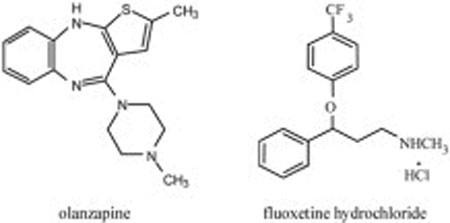
Olanzapine is a yellow crystalline solid, which is practically insoluble in water.
Fluoxetine hydrochloride is a white to off-white crystalline solid with a solubility of 14 mg/mL in water.
SYMBYAX capsules are available for oral administration in the following strength combinations:
| 3 mg/25 mg | 6 mg/25 mg | |
| olanzapine | 3 | 6 |
| fluoxetine base equivalent | 25 | 25 |
Each capsule also contains pregelatinized starch, gelatin, dimethicone, titanium dioxide, sodium lauryl sulfate, edible black ink, red iron oxide, yellow iron oxide, and/or black iron oxide.
12. Symbyax - Clinical Pharmacology
12.1 Mechanism of Action
The mechanism of action of olanzapine and fluoxetine in the listed indications, is unclear. However, the combined effect of olanzapine and fluoxetine at the monoaminergic neural systems (serotonin, norepinephrine, and dopamine) could be responsible for the pharmacological effect.
12.2 Pharmacodynamics
Olanzapine binds with high affinity to the following receptors: serotonin 5HT2A/2C, 5HT6 (Ki=4, 11, and 5 nM, respectively), dopamine D1-4 (Ki=11 to 31 nM), histamine H1 (Ki=7 nM), and adrenergic α1 receptors (Ki=19 nM). Olanzapine is an antagonist with moderate affinity binding for serotonin 5HT3 (Ki=57 nM) and muscarinic M1-5 (Ki=73, 96, 132, 32, and 48 nM, respectively). Olanzapine binds weakly to GABAA, BZD, and β-adrenergic receptors (Ki>10 μM). Fluoxetine is an inhibitor of the serotonin transporter and is a weak inhibitor of the norepinephrine and dopamine transporters.
12.3 Pharmacokinetics
SYMBYAX — Fluoxetine (administered as a 60 mg single dose or 60 mg daily for 8 days) caused a small increase in the mean maximum concentration of olanzapine (16%) following a 5 mg dose, an increase in the mean area under the curve (17%) and a small decrease in mean apparent clearance of olanzapine (16%). In another study, a similar decrease in apparent clearance of olanzapine of 14% was observed following olanzapine doses of 6 or 12 mg with concomitant fluoxetine doses of 25 mg or more. The decrease in clearance reflects an increase in bioavailability. The terminal half-life is not affected, and therefore the time to reach steady state should not be altered. The overall steady-state plasma concentrations of olanzapine and fluoxetine when given as the combination in the therapeutic dose ranges were comparable with those typically attained with each of the monotherapies. The small change in olanzapine clearance, observed in both studies, likely reflects the inhibition of a minor metabolic pathway for olanzapine via CYP2D6 by fluoxetine, a potent CYP2D6 inhibitor, and was not deemed clinically significant. Therefore, the pharmacokinetics of the individual components is expected to reasonably characterize the overall pharmacokinetics of the combination.
SYMBYAX — Following a single oral 12 mg/50 mg dose of SYMBYAX, peak plasma concentrations of olanzapine and fluoxetine occur at approximately 4 and 6 hours, respectively. The effect of food on the absorption and bioavailability of SYMBYAX has not been evaluated. The bioavailability of olanzapine given as Zyprexa, and the bioavailability of fluoxetine given as Prozac were not affected by food. It is unlikely that there would be a significant food effect on the bioavailability of SYMBYAX.
Olanzapine — Olanzapine is well absorbed and reaches peak concentration approximately 6 hours following an oral dose. Food does not affect the rate or extent of olanzapine absorption when olanzapine is given as Zyprexa. It is eliminated extensively by first pass metabolism, with approximately 40% of the dose metabolized before reaching the systemic circulation.
Fluoxetine — Following a single oral 40 mg dose, peak plasma concentrations of fluoxetine from 15 to 55 ng/mL are observed after 6 to 8 hours. Food does not appear to affect the systemic bioavailability of fluoxetine given as Prozac, although it may delay its absorption by 1 to 2 hours, which is probably not clinically significant.
SYMBYAX — The in vitro binding to human plasma proteins of olanzapine and fluoxetine in combination is similar to the binding of the individual components.
Olanzapine — Olanzapine is extensively distributed throughout the body, with a volume of distribution of approximately 1000 L. It is 93% bound to plasma proteins over the concentration range of 7 to 1100 ng/mL, binding primarily to albumin and α1-acid glycoprotein.
Fluoxetine — Over the concentration range from 200 to 1000 ng/mL, approximately 94.5% of fluoxetine is bound in vitro to human serum proteins, including albumin and α1-glycoprotein. The interaction between fluoxetine and other highly protein-bound drugs has not been fully evaluated [see Drug Interactions (7.7)].
SYMBYAX — SYMBYAX therapy yielded steady-state concentrations of norfluoxetine similar to those seen with fluoxetine in the therapeutic dose range.
Olanzapine — Olanzapine displays linear pharmacokinetics over the clinical dosing range. Its half-life ranges from 21 to 54 hours (5th to 95th percentile; mean of 30 hr), and apparent plasma clearance ranges from 12 to 47 L/hr (5th to 95th percentile; mean of 25 L/hr). Administration of olanzapine once daily leads to steady-state concentrations in about 1 week that are approximately twice the concentrations after single doses. Plasma concentrations, half-life, and clearance of olanzapine may vary between individuals on the basis of smoking status, gender, and age [see Dosage and Administration (2.3) and Clinical Pharmacology (12.4)].
Following a single oral dose of 14C-labeled olanzapine, 7% of the dose of olanzapine was recovered in the urine as unchanged drug, indicating that olanzapine is highly metabolized. Approximately 57% and 30% of the dose was recovered in the urine and feces, respectively. In the plasma, olanzapine accounted for only 12% of the AUC for total radioactivity, indicating significant exposure to metabolites. After multiple dosing, the major circulating metabolites were the 10-N-glucuronide, present at steady state at 44% of the concentration of olanzapine, and 4′-N-desmethyl olanzapine, present at steady state at 31% of the concentration of olanzapine. Both metabolites lack pharmacological activity at the concentrations observed.
Direct glucuronidation and CYP450-mediated oxidation are the primary metabolic pathways for olanzapine. In vitro studies suggest that CYP1A2, CYP2D6, and the flavin-containing monooxygenase system are involved in olanzapine oxidation. CYP2D6-mediated oxidation appears to be a minor metabolic pathway in vivo, because the clearance of olanzapine is not reduced in subjects who are deficient in this enzyme.
Fluoxetine — Fluoxetine is a racemic mixture (50/50) of R-fluoxetine and S-fluoxetine enantiomers. In animal models, both enantiomers are specific and potent serotonin uptake inhibitors with essentially equivalent pharmacologic activity. The S-fluoxetine enantiomer is eliminated more slowly and is the predominant enantiomer present in plasma at steady state.
Fluoxetine is extensively metabolized in the liver to its only identified active metabolite, norfluoxetine, via the CYP2D6 pathway. A number of unidentified metabolites exist.
In animal models, S-norfluoxetine is a potent and selective inhibitor of serotonin uptake and has activity essentially equivalent to R- or S-fluoxetine. R-norfluoxetine is significantly less potent than the parent drug in the inhibition of serotonin uptake. The primary route of elimination appears to be hepatic metabolism to inactive metabolites excreted by the kidney.
Clinical Issues Related to Metabolism and Elimination
The complexity of the metabolism of fluoxetine has several consequences that may potentially affect the clinical use of SYMBYAX.
Variability in Metabolism — A subset (about 7%) of the population has reduced activity of the drug metabolizing enzyme CYP2D6. Such individuals are referred to as “poor metabolizers” of drugs such as debrisoquin, dextromethorphan, and the tricyclic antidepressants (TCAs). In a study involving labeled and unlabeled enantiomers administered as a racemate, these individuals metabolized S-fluoxetine at a slower rate and thus achieved higher concentrations of S-fluoxetine. Consequently, concentrations of S-norfluoxetine at steady state were lower. The metabolism of R-fluoxetine in these poor metabolizers appears normal. When compared with normal metabolizers, the total sum at steady state of the plasma concentrations of the 4 enantiomers was not significantly greater among poor metabolizers. Thus, the net pharmacodynamic activities were essentially the same. Alternative nonsaturable pathways (non-CYP2D6) also contribute to the metabolism of fluoxetine. This explains how fluoxetine achieves a steady-state concentration rather than increasing without limit.
Because the metabolism of fluoxetine, like that of a number of other compounds including TCAs and other selective serotonin antidepressants, involves the CYP2D6 system, concomitant therapy with drugs also metabolized by this enzyme system (such as the TCAs) may lead to drug interactions [see Drug Interactions (7.7)].
Accumulation and Slow Elimination — The relatively slow elimination of fluoxetine (elimination half-life of 1 to 3 days after acute administration and 4 to 6 days after chronic administration) and its active metabolite, norfluoxetine (elimination half-life of 4 to 16 days after acute and chronic administration), leads to significant accumulation of these active species in chronic use and delayed attainment of steady state, even when a fixed dose is used. After 30 days of dosing at 40 mg/day, plasma concentrations of fluoxetine in the range of 91 to 302 ng/mL and norfluoxetine in the range of 72 to 258 ng/mL have been observed. Plasma concentrations of fluoxetine were higher than those predicted by single-dose studies, because the metabolism of fluoxetine is not proportional to dose. However, norfluoxetine appears to have linear pharmacokinetics. Its mean terminal half-life after a single dose was 8.6 days and after multiple dosing was 9.3 days. Steady-state levels after prolonged dosing are similar to levels seen at 4 to 5 weeks.
The long elimination half-lives of fluoxetine and norfluoxetine assure that, even when dosing is stopped, active drug substance will persist in the body for weeks (primarily depending on individual patient characteristics, previous dosing regimen, and length of previous therapy at discontinuation). This is of potential consequence when drug discontinuation is required or when drugs are prescribed that might interact with fluoxetine and norfluoxetine following the discontinuation of fluoxetine.
12.4 Specific Populations
Geriatric — Based on the individual pharmacokinetic profiles of olanzapine and fluoxetine, the pharmacokinetics of SYMBYAX may be altered in geriatric patients. Caution should be used in dosing the elderly, especially if there are other factors that might additively influence drug metabolism and/or pharmacodynamic sensitivity.
In a study involving 24 healthy subjects, the mean elimination half-life of olanzapine was about 1.5 times greater in elderly subjects (≥65 years of age) than in non-elderly subjects (<65 years of age).
The disposition of single doses of fluoxetine in healthy elderly subjects (≥65 years of age) did not differ significantly from that in younger normal subjects. However, given the long half-life and nonlinear disposition of the drug, a single-dose study is not adequate to rule out the possibility of altered pharmacokinetics in the elderly, particularly if they have systemic illness or are receiving multiple drugs for concomitant diseases. The effects of age upon the metabolism of fluoxetine have been investigated in 260 elderly but otherwise healthy depressed patients (≥60 years of age) who received 20 mg fluoxetine for 6 weeks. Combined fluoxetine plus norfluoxetine plasma concentrations were 209.3 ± 85.7 ng/mL at the end of 6 weeks. No unusual age-associated pattern of adverse reactions was observed in those elderly patients.
Renal Impairment — The pharmacokinetics of SYMBYAX has not been studied in patients with renal impairment. However, olanzapine and fluoxetine individual pharmacokinetics do not differ significantly in patients with renal impairment. SYMBYAX dosing adjustment based upon renal impairment is not routinely required.
Because olanzapine is highly metabolized before excretion and only 7% of the drug is excreted unchanged, renal dysfunction alone is unlikely to have a major impact on the pharmacokinetics of olanzapine. The pharmacokinetic characteristics of olanzapine were similar in patients with severe renal impairment and normal subjects, indicating that dosage adjustment based upon the degree of renal impairment is not required. In addition, olanzapine is not removed by dialysis. The effect of renal impairment on olanzapine metabolite elimination has not been studied.
In depressed patients on dialysis (N=12), fluoxetine administered as 20 mg once daily for 2 months produced steady-state fluoxetine and norfluoxetine plasma concentrations comparable with those seen in patients with normal renal function. While the possibility exists that renally excreted metabolites of fluoxetine may accumulate to higher levels in patients with severe renal dysfunction, use of a lower or less frequent dose is not routinely necessary in renally impaired patients.
Hepatic Impairment — Based on the individual pharmacokinetic profiles of olanzapine and fluoxetine, the pharmacokinetics of SYMBYAX may be altered in patients with hepatic impairment. The lowest starting dose should be considered for patients with hepatic impairment [see Dosage and Administration (2.3) and Warnings and Precautions (5.20)].
Although the presence of hepatic impairment may be expected to reduce the clearance of olanzapine, a study of the effect of impaired liver function in subjects (N=6) with clinically significant cirrhosis (Child-Pugh Classification A and B) revealed little effect on the pharmacokinetics of olanzapine.
As might be predicted from its primary site of metabolism, liver impairment can affect the elimination of fluoxetine. The elimination half-life of fluoxetine was prolonged in a study of cirrhotic patients, with a mean of 7.6 days compared with the range of 2 to 3 days seen in subjects without liver disease; norfluoxetine elimination was also delayed, with a mean duration of 12 days for cirrhotic patients compared with the range of 7 to 9 days in normal subjects.
Gender — Clearance of olanzapine is approximately 30% lower in women than in men. There were, however, no apparent differences between men and women in effectiveness or adverse effects. Dosage modifications based on gender should not be needed.
Smoking Status — Olanzapine clearance is about 40% higher in smokers than in nonsmokers, although dosage modifications are not routinely required.
Race — No SYMBYAX pharmacokinetic study was conducted to investigate the effects of race. In vivo studies have shown that exposures to olanzapine are similar among Japanese, Chinese and Caucasians, especially after normalization for body weight differences. Dosage modifications for race, therefore, are not routinely required.
Combined Effects — The combined effects of age, smoking, and gender could lead to substantial pharmacokinetic differences in populations. The clearance of olanzapine in young smoking males, for example, may be 3 times higher than that in elderly nonsmoking females. SYMBYAX dosing modification may be necessary in patients who exhibit a combination of factors that may result in slower metabolism of the olanzapine component [see Dosage and Administration (2.3)].
Children and Adolescents (ages 10 to 17 years) — Based on the pediatric SYMBYAX study, steady-state olanzapine, fluoxetine, and norfluoxetine plasma concentrations were about 31%, 76%, and 38% higher, respectively, in pediatric patients with lower body weights (less than 50 kg) than in pediatric patients with high body weight (greater than or equal to 50 kg). Exposures in pediatric patients with high body weight were similar to those previously observed in adults. Dose modifications based on body weight are not required.
13. Nonclinical Toxicology
13.1 Carcinogenesis, Mutagenesis, Impairment of Fertility
No carcinogenicity, mutagenicity, or fertility studies were conducted with SYMBYAX. The following data are based on findings in studies performed with the individual components, and all dose multiples (based on body surface area) reflect the maximum recommended human dose (MRHD) of 12 mg olanzapine, or 50 mg fluoxetine in SYMBYAX.
Carcinogenesis
Olanzapine — Oral carcinogenicity studies were conducted in mice and rats. Olanzapine was administered to mice in two 78-week studies at doses of 3, 10, and 30/20 mg/kg/day [equivalent to 1 to 12 times the MRHD based on mg/m2 body surface area] and 0.25, 2, and 8 mg/kg/day (equivalent to up to 3 times the oral MRHD based on mg/m2 body surface area). Rats were dosed for 2 years at doses of 0.25, 1, 2.5 and 4 mg/kg/day (males) and 0.25, 1, 4 and 8 mg/kg/day (females) (equivalent to up to 3 and 7 times the oral MRHD based on mg/m2 body surface area, respectively). The incidence of liver hemangiomas and hemangiosarcomas was significantly increased in 1 mouse study in female mice at 3 times the daily oral MRHD based on mg/m2 body surface area). These tumors were not increased in another mouse study in females dosed at (up to 12 times the daily oral MRHD based on mg/m2 body surface area); in this study, there was a high incidence of early mortalities in males of the 30/20 mg/kg/day group. The incidence of mammary gland adenomas and adenocarcinomas was significantly increased in female mice dosed at ≥2 mg/kg/day and in female rats dosed at ≥4 mg/kg/day (1 and 3 times the oral MRHD based on mg/m2 body surface area, respectively). Antipsychotic drugs have been shown to chronically elevate prolactin levels in rodents. Serum prolactin levels were not measured during the olanzapine carcinogenicity studies; however, measurements during subchronic toxicity studies showed that olanzapine elevated serum prolactin levels up to 4-fold in rats at the same doses used in the carcinogenicity study. An increase in mammary gland neoplasms has been found in rodents after chronic administration of other antipsychotic drugs and is considered to be prolactin-mediated. The relevance for human risk of the finding of prolactin-mediated endocrine tumors in rodents is unknown [see Warnings and Precautions (5.22)].
Fluoxetine — The dietary administration of fluoxetine to rats and mice for 2 years at doses of up to 10 and 12 mg/kg/day, respectively (approximately 2 and 1 times, respectively, the MRHD of 20 mg given to children based on mg/m2 body surface area), produced no evidence of carcinogenicity.
Mutagenesis
Olanzapine — No evidence of genotoxic potential for olanzapine was found in the following tests: Ames reverse mutation test, in vivo micronucleus test in mice, the chromosomal aberration test in Chinese hamster ovary cells, unscheduled DNA synthesis test in rat hepatocytes, induction of forward mutation test in mouse lymphoma cells, or in vivo sister chromatid exchange test in bone marrow of Chinese hamsters.
Impairment of Fertility
SYMBYAX — Fertility studies were not conducted with SYMBYAX. However, in a repeat-dose rat toxicology study of 3 months duration, ovary weight was decreased in females treated with the low-dose [2 and 4 mg/kg/day (approximately 2 and 1 times the MRHD of 12 mg (olanzapine) and 50 mg (fluoxetine) based on mg/m2 body surface area), respectively] and high-dose [4 and 8 mg/kg/day (3 and 2 times the MRHD based on mg/m2 body surface area), respectively] combinations of olanzapine and fluoxetine. Decreased ovary weight, and corpora luteal depletion and uterine atrophy were observed to a greater extent in the females receiving the high-dose combination than in females receiving either olanzapine or fluoxetine alone. In a 3-month repeat-dose dog toxicology study, reduced epididymal sperm and reduced testicular and prostate weights were observed with the high-dose combination of olanzapine and fluoxetine [5 and 5 mg/kg/day (14 and 3 times the MRHD based on mg/m2 body surface area), respectively] and with olanzapine alone (5 mg/kg/day or 14 times the MRHD based on mg/m2 body surface area).
Olanzapine — In an oral fertility and reproductive performance study in rats, male mating performance, but not fertility, was impaired at a dose of 22.4 mg/kg/day and female fertility was decreased at a dose of 3 mg/kg/day (18 and 2 times the daily oral MRHD of 12 mg given to adults based on mg/m2 body surface area, respectively). Discontinuance of olanzapine treatment reversed the effects on male-mating performance. In female rats, the precoital period was increased and the mating index reduced at 5 mg/kg/day (4 times the MRHD based on mg/m2 body surface area). Diestrous was prolonged and estrous was delayed at 1.1 mg/kg/day (1 times the daily oral MRHD based on mg/m2 body surface area); therefore, olanzapine may produce a delay in ovulation.
Fluoxetine — Two fertility studies conducted in adult rats at doses of up to 7.5 and 12.5 mg/kg/day (approximately 1 and 2 times the MRHD of 50 mg given to adolescents based on mg/m2 body surface area) indicated that fluoxetine had no adverse effects on fertility. However, adverse effects on fertility were seen when juvenile rats were treated with fluoxetine [see Use in Specific Populations (8.4)].
14. Clinical Studies
Efficacy for SYMBYAX was established for the:
- Acute treatment of depressive episodes in Bipolar I Disorder in adults, and children and adolescents (10 to 17 years) in 3 short-term, placebo-controlled trials (Studies 1, 2, 3) [see Clinical Studies 14.1].
- Acute and maintenance treatment of treatment resistant depression in adults (18 to 85 years) in 3 short-term, placebo-controlled trials (Studies 4, 5, 6) and 1 randomized withdrawal study with an active control (Study 7) [see Clinical Studies 14.2].
14.1 Depressive Episodes Associated with Bipolar I Disorder
Adults — The efficacy of SYMBYAX for the acute treatment of depressive episodes associated with Bipolar I Disorder was established in 2 identically designed, 8-week, randomized, double-blind, controlled studies of patients who met Diagnostic and Statistical Manual 4th edition (DSM-IV) criteria for Bipolar I Disorder, Depressed utilizing flexible dosing of SYMBYAX (6/25, 6/50, or 12/50 mg/day), olanzapine (5 to 20 mg/day), and placebo. These studies included patients (≥18 years of age [n=788]) with or without psychotic symptoms and with or without a rapid cycling course.
The primary rating instrument used to assess depressive symptoms in these studies was the Montgomery-Asberg Depression Rating Scale (MADRS), a 10-item clinician-rated scale with total scores ranging from 0 to 60. The primary outcome measure of these studies was the change from baseline to endpoint in the MADRS total score. In both studies, SYMBYAX was statistically significantly superior to both olanzapine monotherapy and placebo in reduction of the MADRS total score. Refer to Table 18 (Studies 1 and 2).
Children and Adolescents — The efficacy of SYMBYAX for the acute treatment of depressive episodes associated with Bipolar I Disorder was established in a single 8-week, randomized, double-blind, placebo-controlled study of patients, 10 to 17 years of age [N=255], who met Diagnostic and Statistical Manual 4th edition-Text Revision (DSM-IV-TR) criteria for Bipolar I Disorder, Depressed. Patients were initiated at a dose of 3/25 mg/day and force-titrated to the maximum dose of 12/50 mg/day over two weeks. After Week 2, there was flexible dosing of SYMBYAX in the range of 6/25, 6/50, 12/25, or 12/50 mg/day. The average daily dose was olanzapine 7.7 mg and fluoxetine 37.6 mg. The recommended starting dose for children and adolescents is 3/25 mg per day. Flexible dosing is recommended, rather than the forced titration used in the study [see Dosage and Administration (2.1)]. This study included patients with or without psychotic symptoms.
The primary rating instrument used to assess depressive symptoms in these studies was the Children's Depressive Rating Scale-Revised (CDRS-R), a 17-item clinician-rated scale with total scores ranging from 17 to 113. The primary outcome measure of this study was the change from baseline to Week 8 in the CDRS-R total score. In this study, SYMBYAX was statistically significantly superior to placebo in reduction of the CDRS-R total score. Refer to Table 18 (Study 3).
|
a SD – standard deviation; SE – standard error; LS mean – least-squares mean estimate; CI – unadjusted confidence interval; NA – not available. |
||||
|
b Difference (SYMBYAX minus active comparator or placebo) in least squares estimates. |
||||
| Study Number
(Primary Efficacy Measure) | Treatment group | Mean baseline score (SD) | LS mean change from baseline (SE) | Differenceb from SYMBYAX (95% CI) |
| Study 1
(MADRS) | SYMBYAX Olanzapine Placebo | 29.9 (5.0) 32.4 (6.3) 31.2 (5.7) | -18.7 (1.8) -14.4 (1.0) -13.3 (1.0) |
-4.4 (NA) -5.5 (NA) |
| Study 2
(MADRS) | SYMBYAX Olanzapine Placebo | 31.7 (6.8) 32.8 (6.1) 31.4 (6.6) | -18.44 (1.7) -15.81 (1.0) -10.68 (1.0) |
-2.6 (NA) -7.8 (NA) |
| Study 3
(CDRS-R) | SYMBYAX Placebo | 54.6 (10.0) 53.7 (8.2) | -28.43 (1.1) -23.40 (1.5) |
-5.0 (-8.3, -1.8) |
14.2 Treatment Resistant Depression
The efficacy of SYMBYAX in acute treatment resistant depression was demonstrated with data from 3 clinical studies (n=579) in adults (18 to 85 years). Doses evaluated in these studies ranged from 6 to 18 mg for olanzapine and 25 to 50 mg for fluoxetine.
An 8-week randomized, double-blind controlled study was conducted to evaluate the efficacy of SYMBYAX in patients (n=300) who met DSM-IV criteria for Major Depressive Disorder and did not respond to 2 different antidepressants after at least 6 weeks at or above the minimally effective labeled dosage in their current episode. Patients who were not responding to an antidepressant in their current episode entered an 8-week open-label fluoxetine lead-in; non-responders were randomized (1:1:1) to receive SYMBYAX, olanzapine, or fluoxetine, and were treated for 8 weeks. SYMBYAX was flexibly dosed between 6/50 mg, 12/50 mg, and 18/50 mg. Results from this study yielded statistically significant greater reduction in mean total MADRS scores from baseline to endpoint for SYMBYAX versus fluoxetine and olanzapine. See Table 19 (Study 4). A second study with the same treatment-resistant patient population (n=28), when analyzed with change in MADRS as the outcome measure, demonstrated statistically significantly greater reduction in MADRS scores for SYMBYAX versus fluoxetine and olanzapine. See Table 19 (Study 5). A third study demonstrated statistically significantly greater reduction in total MADRS scores for SYMBYAX versus fluoxetine or olanzapine alone, when analyzed in a subpopulation of depressed patients (n=251) who met the definition of treatment resistance (patients who had not responded to 2 antidepressants of adequate dose and duration in the current episode). See Table 19 (Study 6).
|
a SD – standard deviation; SE – standard error; LS mean – least-squares mean estimate; CI – unadjusted confidence interval; NA – not available. |
||||
|
b Difference (SYMBYAX minus active comparator or placebo) in least squares estimates. |
||||
| Study Number
(Primary Efficacy Measure) | Treatment group | Mean baseline score (SD) | LS Mean change from baseline (SE) | Differenceb from SYMBYAX (95% CI) |
| Study 4
(MADRS) | SYMBYAX Olanzapine Fluoxetine | 30.6 (6.1) 30.1 (6.3) 30.1 (5.9) | -14.1 (1.0) -7.1 (1.0) -8.3 (1.1) |
-6.9 (NA) -5.8 (NA) |
| Study 5
(HAMD-21) | SYMBYAX Olanzapine Fluoxetine | 26.4 (7.5) 24.5 (5.2) 23.5 (6.0) | -11.7 (3.3) -5.9 (1.9) -3.8 (3.0) |
-6.1 (-13.7, 1.5) -6.7 (-14.0, 0.5) |
| Study 6
(MADRS) | SYMBYAX Olanzapine Fluoxetine | 30.1 (6.6) 31.5 (6.8) 31.1 (5.6) | -13.3 (0.8) -8.8 (1.7) -10.0 (1.4) |
NA NA |
The efficacy of SYMBYAX in the maintenance therapy of treatment-resistant depression was demonstrated in a 47-week study (Study 7) in adults (18 to 65 years). SYMBYAX was dosed between 6/25 mg, 12/25 mg, 6/50 mg, 12/50 mg, and 18/50 mg.
Patients (N=892) met DSM-IV criteria for Major Depressive Disorder and for treatment-resistant depression (a lack of response to 2 antidepressants after at least 6 weeks at or above the minimally effective labeled dose in their current episode of major depressive disorder). Patients were initially treated with open-label SYMBYAX; those who responded to and were stabilized on treatment over approximately 20 weeks were randomized to continue receiving treatment with SYMBYAX (n=221) or to receive treatment with fluoxetine (n=223) for another 27 weeks. Relapse was assessed using 3 criteria: a 50% increase in Montgomery-Åsberg Depression Rating Scale score from randomization with concomitant Clinical Global Impressions–Severity of Depression score increase to 4 or more; hospitalization due to depression or suicidality; or discontinuation due to lack of efficacy/worsening of depression/suicidality. A total of 15.8% of patients on SYMBYAX and 31.8% of patients on fluoxetine relapsed; this difference was statistically significant. Patients receiving continued SYMBYAX experienced statistically significantly longer time to relapse over the 27 weeks compared with those receiving fluoxetine (Figure 1).
Figure 1 Kaplan-Meier Estimation of Cumulative Proportion of Patients with Relapse (Study 7)
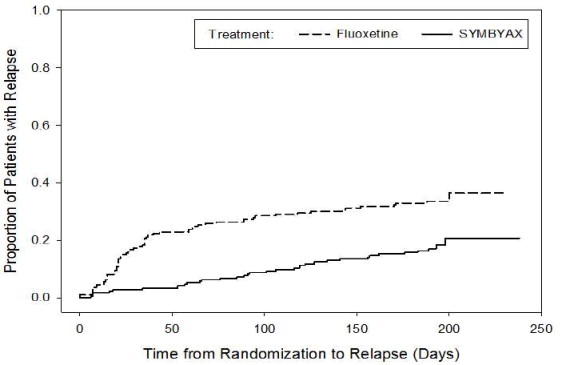
16. How is Symbyax supplied
16.1 How Supplied
SYMBYAX capsules are supplied in 3/25 mg, 6/25 mg (mg olanzapine/mg equivalent fluoxetinea) strengths.
|
a Fluoxetine base equivalent. |
||
| SYMBYAX | CAPSULE STRENGTH | |
| 3 mg/25 mg | 6 mg/25 mg | |
| Color | Peach & Light Yellow | Mustard Yellow & Light Yellow |
| Capsule No. | PU3230 | PU3231 |
| Identification | Lilly 3230 | Lilly 3231 |
| 3/25 | 6/25 | |
| NDC Codes | ||
| Bottles 30 | 0002-3230-30 | 0002-3231-30 |
17. Patient Counseling Information
Advise the patient to read the FDA-approved patient labeling (Medication Guide).
Patients should be advised of the following issues and asked to alert their healthcare provider if these occur while taking SYMBYAX.
Information on Medication Guide
Healthcare providers should inform patients, their families, and their caregivers about the potential benefits and potential risks associated with treatment with SYMBYAX and should counsel them in its appropriate use. A patient Medication Guide is available for SYMBYAX. The healthcare providers should instruct patients, their families, and their caregivers to read the Medication Guide and should assist them in understanding its contents. Patients should be given the opportunity to discuss the contents of the Medication Guide and to obtain answers to any questions they may have.
Suicidal Thoughts and Behaviors in Children, Adolescents, and Young Adults
Patients, their families, and their caregivers should be encouraged to be alert to the emergence of anxiety, agitation, panic attacks, insomnia, irritability, hostility, aggressiveness, impulsivity, akathisia (psychomotor restlessness), hypomania, mania, other unusual changes in behavior, worsening of depression, and suicidal ideation, especially early during antidepressant treatment and when the dose is adjusted up or down. Families and caregivers of patients should be advised to look for the emergence of such symptoms on a day-to-day basis, since changes may be abrupt. Such symptoms should be reported to the patient's healthcare provider, especially if they are severe, abrupt in onset, or were not part of the patient's presenting symptoms. Symptoms such as these may be associated with an increased risk for suicidal thinking and behavior and indicate a need for very close monitoring and possibly changes in the medication [see Boxed Warning and Warnings and Precautions (5.1)].
Elderly Patients with Dementia-Related Psychosis: Increased Mortality and Cerebrovascular Adverse Events (CVAE), Including Stroke
Patients and caregivers should be advised that elderly patients with dementia-related psychosis treated with antipsychotic drugs are at increased risk of death. Patients and caregivers should be advised that elderly patients with dementia-related psychosis treated with olanzapine had a significantly higher incidence of cerebrovascular adverse events (e.g., stroke, transient ischemic attack) compared with placebo. SYMBYAX is not approved for elderly patients with dementia-related psychosis [see Boxed Warning and Warnings and Precautions (5.2)].
Neuroleptic Malignant Syndrome (NMS)
Patients and caregivers should be counseled that a potentially fatal symptom complex sometimes referred to as NMS has been reported in association with administration of antipsychotic drugs, including olanzapine, a component of SYMBYAX. Signs and symptoms of NMS include hyperpyrexia, muscle rigidity, altered mental status, and evidence of autonomic instability (irregular pulse or blood pressure, tachycardia, diaphoresis, and cardiac dysrhythmia) [see Warnings and Precautions (5.3)].
Drug Reaction with Eosinophilia and Systemic Symptoms (DRESS)
Patients should be advised to report to their health care provider at the earliest onset of any signs and symptoms that may be associated with Drug Reaction with Eosinophilia and Systemic Symptoms (DRESS) [see Warnings and Precautions (5.4)].
Hyperglycemia and Diabetes Mellitus
Patients should be advised of the potential risk of hyperglycemia-related adverse reactions. Patients should be monitored regularly for worsening of glucose control. Patients and caregivers should be counseled that metabolic changes have occurred during treatment with SYMBYAX. Patients who have diabetes should follow their doctor's instructions about how often to check their blood sugar while taking SYMBYAX [see Warnings and Precautions (5.5)].
Dyslipidemia
Patients should be counseled that dyslipidemia has occurred during treatment with SYMBYAX. Patients should have their lipid profile monitored regularly [see Warnings and Precautions (5.5)].
Weight Gain
Patients should be counseled that weight gain has occurred during treatment with SYMBYAX. Patients should have their weight monitored regularly [see Warnings and Precautions (5.5)].
Serotonin Syndrome
Patients should be cautioned about the risk of serotonin syndrome with the concomitant use of SYMBYAX and other serotonergic agents including triptans, tricyclic antidepressants, opioids, lithium, tryptophan, buspirone, amphetamines, and St. John's Wort [see Contraindications (4.1) and Warnings and Precautions (5.6), and Drug Interactions (7.3)]. Patients should be advised of the signs and symptoms associated with serotonin syndrome that may include mental status changes (e.g., agitation, hallucinations, delirium, coma), autonomic instability (e.g., tachycardia, labile blood pressure, dizziness, diaphoresis, flushing, hyperthermia), neuromuscular changes (e.g., tremor, rigidity, myoclonus, hyperreflexia, incoordination), seizures, and/or gastrointestinal symptoms (e.g., nausea, vomiting, diarrhea). Patients should be cautioned to seek medical care immediately if they experience these symptoms.
Angle-Closure Glaucoma
Patients should be advised that taking SYMBYAX can cause mild pupillary dilation, which in susceptible individuals, can lead to an episode of angle-closure glaucoma. Pre-existing glaucoma is almost always open-angle glaucoma because angle-closure glaucoma, when diagnosed, can be treated definitively with iridectomy. Open-angle glaucoma is not a risk factor for angle-closure glaucoma. Patients may wish to be examined to determine whether they are susceptible to angle-closure, and have a prophylactic procedure (e.g., iridectomy), if they are susceptible [see Warnings and Precautions (5.7)].
Allergic Reactions and Rash
Patients should be advised to notify their healthcare provider if they develop a rash or hives [see Warnings and Precautions (5.8)]. Patients should also be advised of the signs and symptoms associated with a severe allergic reaction, including swelling of the face, eyes, or mouth, or have trouble breathing. Patients should be cautioned to seek medical care immediately if they experience these symptoms.
Orthostatic Hypotension
Patients should be advised of the risk of orthostatic hypotension, especially during the period of initial dose titration and in association with the use of concomitant drugs that may potentiate the orthostatic effect of olanzapine, e.g., diazepam or alcohol [see Warnings and Precautions (5.11) and Drug Interactions (7.6, 7.7)]. Patients should be advised to change positions carefully to help prevent orthostatic hypotension, and to lie down if they feel dizzy or faint, until they feel better. Patients should be advised to call their doctor if they experience any of the following signs and symptoms associated with orthostatic hypotension: dizziness, fast or slow heart beat, or fainting.
Increased Risk of Bleeding
Patients should be cautioned about the concomitant use of SYMBYAX and NSAIDs, aspirin, warfarin, or other drugs that affect coagulation since the combined use of psychotropic drugs that interfere with serotonin reuptake and these agents have been associated with an increased risk of bleeding [see Warnings and Precautions (5.16)]. Patients should be advised to call their doctor if they experience any increased or unusual bruising or bleeding while taking SYMBYAX.
Hyponatremia
Patients should be advised that hyponatremia has been reported during treatment with SNRIs and SSRIs, including SYMBYAX. Signs and symptoms of hyponatremia include headache, difficulty concentrating, memory impairment, confusion, weakness, and unsteadiness, which may lead to falls. More severe and/or acute cases have been associated with hallucination, syncope, seizure, coma, respiratory arrest, and death [see Warnings and Precautions (5.17)].
Potential for Cognitive and Motor Impairment
SYMBYAX has the potential to impair judgment, thinking, or motor skills. Patients should be cautioned about operating hazardous machinery, including automobiles, until they are reasonably certain that SYMBYAX therapy does not affect them adversely [see Warnings and Precautions (5.18)].
Body Temperature Dysregulation
Patients should be advised regarding appropriate care in avoiding overheating and dehydration. Patients should be advised to call their doctor right away if they become severely ill and have some or all of these symptoms of dehydration: sweating too much or not at all, dry mouth, feeling very hot, feeling thirsty, not able to produce urine [see Warnings and Precautions (5.19)].
Concomitant Medication
Patients should be advised to inform their healthcare provider if they are taking Prozac, Sarafem, fluoxetine, Zyprexa, Zyprexa Zydis, or Zyprexa Relprevv. Patients should be advised to inform their healthcare providers if they are taking, plan to take, or have stopped taking any prescription or over-the-counter drugs, including herbal supplements, since there is a potential for interactions. Patients should also be advised to inform their healthcare providers if they plan to discontinue any medications they are taking while taking SYMBYAX, as stopping a medication may also impact the overall blood level of SYMBYAX [see Warnings and Precautions (5.23)].
Discontinuation of Treatment with SYMBYAX
Patients should be advised to take SYMBYAX exactly as prescribed, and to continue taking SYMBYAX as prescribed even after their mood symptoms improve. Patients should be advised that they should not alter their dosing regimen, or stop taking SYMBYAX, without consulting their healthcare provider [see Warnings and Precautions (5.25)].
Alcohol
Patients should be advised to avoid alcohol while taking SYMBYAX [see Drug Interactions (7.6, 7.7)].
Use in Specific Populations
- Pregnancy — Advise pregnant women to notify their healthcare provider if they become pregnant or intend to become pregnant during treatment with SYMBYAX. Advise patients that SYMBYAX use later in pregnancy may lead to extrapyramidal symptoms (tremors, abnormal muscle movements), an increased risk for neonatal complications requiring prolonged hospitalization, respiratory distress, tube feeding, and/or persistent pulmonary hypertension of the newborn (PPHN). Advise patients that there is a pregnancy exposure registry that monitors pregnancy outcomes in women exposed to SYMBYAX during pregnancy [see Use in Specific Populations (8.1)].
- Lactation — Advise breastfeeding women using SYMBYAX to monitor infants for agitation, irritability, poor weight gain, poor feeding, excess sedation, and extrapyramidal symptoms (tremors and abnormal muscle movements) and to seek medical care if they notice these signs. [see Use in Specific Populations (8.2)].
-
Infertility
Advise females of reproductive potential that SYMBYAX may impair fertility due to an increase in serum prolactin levels. The effects on fertility are reversible [see Use in Specific Populations (8.3)]. - Pediatric Use — Safety and efficacy of SYMBYAX in patients 10 to 17 years of age have been established for the acute treatment of Depressive Episodes Associated with Bipolar I Disorder. The types of adverse reactions observed with SYMBYAX in children and adolescents were generally similar to those observed in adults. However, the magnitude and frequency of some changes were greater in children and adolescents than adults. These included increases in lipids, hepatic enzymes, and prolactin, as well as increases in the QT interval. Educate patients, families, and caregivers about these risks [see Warnings and Precautions (5.5, 5.18, 5.20), Adverse Reactions (6.1), and Use in Specific Populations (8.4)].
- The frequency of weight gain ≥7%, and the magnitude and frequency of increases in lipids, hepatic analytes, and prolactin in children and adolescents treated with SYMBYAX were similar to those observed in adolescents treated with olanzapine monotherapy [see Warnings and Precautions (5.5, 5.20), Adverse Reactions (6.1), and Use in Specific Populations (8.4)].
- The safety and effectiveness of SYMBYAX for the treatment of bipolar I depression in patients under 10 years of age have not been established. The safety and effectiveness of SYMBYAX for treatment resistant depression in patients under 18 years of age have not been established.
QT Prolongation
Patients should be advised that QT interval prolongation and ventricular arrhythmia including Torsade de Pointes have been reported in patients treated with fluoxetine. Signs and symptoms of ventricular arrhythmia include fast, slow, or irregular heart rate, dyspnea, syncope, or dizziness, which may indicate serious cardiac arrhythmia [see Warnings and Precautions (5.20)].
Sexual Dysfunction
Advise patients that use of SYMBYAX may cause symptoms of sexual dysfunction in both male and female patients. Inform patients that they should discuss any changes in sexual function and potential management strategies with their healthcare provider [see Warnings and Precautions (5.26)].
Marketed by: Lilly USA, LLC
Indianapolis, IN 46285, USA
SYM-0022-USPI-20250122
Medication Guide
SYMBYAX®
(SIM-be-ax)
(olanzapine and fluoxetine)
Capsule
Read the Medication Guide that comes with SYMBYAX® before you start taking it and each time you get a refill. There may be new information. This Medication Guide does not take the place of talking to your doctor about your medical condition or treatment. Talk with your doctor or pharmacist if there is something you do not understand or you want to learn more about SYMBYAX.
What is the most important information I should know about SYMBYAX?
SYMBYAX may cause serious side effects, including:
- Suicidal thoughts or actions.
- Increased risk of death in elderly people who are confused, have memory loss and have lost touch with reality (dementia-related psychosis).
- High blood sugar (hyperglycemia).
- High fat levels in your blood (increased cholesterol and triglycerides), especially in children and adolescents age 10 to 17.
- Weight gain, especially in children and adolescents age 10 to 17.
These serious side effects are described below.
-
Suicidal thoughts or actions.
Antidepressant medicines, depression and other serious mental illnesses, and suicidal thoughts or actions:
Talk to your, or your family member's, healthcare provider about:-
- all risks and benefits of treatment with antidepressant medicines.
- all treatment choices for depression or other serious mental illness.
- Antidepressant medicines may increase suicidal thoughts or actions in some children, teenagers, and young adults within the first few months of treatment.
- Depression and other serious mental illnesses are the most important causes of suicidal thoughts and actions. Some people may have a particularly high risk of having suicidal thoughts or actions. These include people who have (or have a family history of) bipolar illness (also called manic-depressive illness) or suicidal thoughts or actions.
-
How can I watch for and try to prevent suicidal thoughts and actions in myself or a family member?
- Pay close attention to any changes, especially sudden changes, in mood, behaviors, thoughts, or feelings. This is very important when an antidepressant medicine is started or when the dose is changed.
- Call the healthcare provider right away to report new or sudden changes in mood, behavior, thoughts, or feelings.
- Keep all follow-up visits with the healthcare provider as scheduled. Call the healthcare provider between visits as needed, especially if you have concerns about symptoms.
Call a healthcare provider right away if you or your family member has any of the following symptoms, especially if they are new, worse, or worry you:
- thoughts about suicide or dying
- attempts to commit suicide
- new or worse depression
- new or worse anxiety
- feeling very agitated or restless
- panic attacks
- trouble sleeping (insomnia)
- new or worse irritability
- acting aggressive, being angry, or violent
- acting on dangerous impulses
- an extreme increase in activity and talking (mania)
- or other unusual changes in behavior or mood.
What else do I need to know about antidepressant medicines?
- Never stop an antidepressant medicine without first talking to a healthcare provider. Stopping an antidepressant medicine suddenly can cause other symptoms.
- Antidepressants are medicines used to treat depression and other illnesses. It is important to discuss all the risks of treating depression and also the risks of not treating it. Patients and their families or other caregivers should discuss all treatment choices with the healthcare provider, not just the use of antidepressants.
- Antidepressant medicines have other side effects. Talk to the healthcare provider about the side effects of the medicine prescribed for you or your family member.
- Antidepressant medicines can interact with other medicines. Know all of the medicines that you or your family member takes. Keep a list of all medicines to show the healthcare provider. Do not start new medicines without first checking with your healthcare provider.
- Not all antidepressant medicines prescribed for children are FDA approved for use in children. Talk to your child's healthcare provider for more information.
- Increased risk of death in elderly people who are confused, have memory loss and have lost touch with reality (dementia-related psychosis). SYMBYAX is not approved for treating psychosis in elderly people with dementia.
-
High blood sugar (hyperglycemia): High blood sugar can happen if you have diabetes already or if you have never had diabetes. High blood sugar could lead to:
- build up of acid in your blood due to ketones (ketoacidosis)
- coma
- death
Your doctor should do tests to check your blood sugar before you start taking SYMBYAX and during treatment. In people who do not have diabetes, sometimes high blood sugar goes away when SYMBYAX is stopped. People with diabetes and some people who did not have diabetes before taking SYMBYAX need to take medicine for high blood sugar even after they stop taking SYMBYAX.
If you have diabetes, follow your doctor's instructions about how often to check your blood sugar while taking SYMBYAX.
Call your doctor if you have any of these symptoms of high blood sugar (hyperglycemia) while taking SYMBYAX:
- feel very thirsty
- need to urinate more than usual
- feel very hungry
- feel weak or tired
- feel sick to your stomach
- feel confused, or your breath smells fruity.
- High fat levels in your blood (increased cholesterol and triglycerides). High fat levels may happen in people treated with SYMBYAX, especially in children and adolescents (10 to 17 years old). You may not have any symptoms, so your doctor should do blood tests to check your cholesterol and triglyceride levels before you start taking SYMBYAX and during treatment.
- Increase in weight (weight gain): Weight gain is common in people who take SYMBYAX. Children and adolescents (10 to 17 years old) who received SYMBYAX, were more likely to gain weight and to gain more weight than adults. Some people may gain a lot of weight while taking SYMBYAX, so you and your doctor should check your weight regularly. Talk to your doctor about ways to control weight gain, such as eating a healthy, balanced diet, and exercising.
What is SYMBYAX?
SYMBYAX is a prescription medicine used for:
- short-term treatment of episodes of depression that happen with Bipolar I Disorder in people age 10 or older.
- treatment of episodes of depression that do not respond to 2 other medicines, also called treatment resistant depression, in adults.
SYMBYAX contains two medicines, olanzapine and fluoxetine hydrochloride.
It is not known if SYMBYAX is safe and effective in children under the age of 10.
The symptoms of Bipolar I Disorder include alternating periods of depression and high or irritable mood, increased activity and restlessness, racing thoughts, talking fast, impulsive behavior, and a decreased need for sleep. With treatment, some of your symptoms of Bipolar I Disorder may improve.
The symptoms of treatment resistant depression include decreased mood, decreased interest, increased guilty feelings, decreased energy, decreased concentration, changes in appetite, and suicidal thoughts or behavior. With treatment, some of your symptoms of treatment resistant depression may improve.
If you do not think you are getting better, call your doctor.
Who should not take SYMBYAX?
- Do not take SYMBYAX if you take a Monoamine Oxidase Inhibitor (MAOI). Ask your healthcare provider or pharmacist if you are not sure if you take an MAOI, including the antibiotic linezolid.
- Do not take an MAOI within 5 weeks of stopping SYMBYAX unless directed to do so by your physician.
- Do not start SYMBYAX if you stopped taking an MAOI in the last 2 weeks unless directed to do so by your physician.
People who take SYMBYAX close in time to an MAOI can have serious and life-threatening side effects, with symptoms including:
- high fever
- continued muscle spasms that you cannot control
- rigid muscles
- changes in heart rate and blood pressure that happen fast
- confusion
- unconsciousness.
- Do not take SYMBYAX if you take Mellaril® (thioridazine). Do not take Mellaril® within 5 weeks of stopping SYMBYAX. Mellaril can cause serious heart rhythm problems and you could die suddenly.
- Do not take SYMBYAX if you take the antipsychotic medicine pimozide (Orap®). Do not take pimozide (Orap®) within 5 weeks of stopping SYMBYAX.
What should I tell my doctor before taking SYMBYAX?
SYMBYAX may not be right for you. Before starting SYMBYAX, tell your doctor about all your medical conditions, including if you have or had any of the following:
- heart problems
- seizures (convulsions)
- diabetes or high blood sugar levels (hyperglycemia)
- high cholesterol or triglyceride levels in your blood
- liver problems
- low or high blood pressure
- strokes or “mini-strokes” also called transient ischemic attacks (TIAs)
- bleeding problems
- Alzheimer's disease
- angle-closure glaucoma
- enlarged prostate in men
- bowel obstruction
- breast cancer
- are pregnant or plan to become pregnant. It is not known if SYMBYAX will harm your unborn baby. Talk to your healthcare provider about the benefits and risks of treating depression during pregnancy.
- If you become pregnant while taking SYMBYAX, talk to your healthcare provider about registering with the National Pregnancy Registry for Psychiatric Medications at 1-866-961-2388 or visit https://womensmentalhealth.org/clinical-and-research-programs/pregnancyregistry.
- are breast-feeding or plan to breast-feed. SYMBYAX can pass into your breast milk. Talk to your healthcare provider about the best way to feed your baby if you take SYMBYAX.
Before starting SYMBYAX, tell your doctor about all the medicines that you take, including
- Prescription and non-prescription medicines
- Vitamins, and herbal supplements
- Triptans used to treat migraine headache
- Medicines used to treat mood, anxiety, psychotic or thought disorders, including tricyclics, lithium, buspirone, SSRIs, SNRIs, MAOIs, or antipsychotics
- Tramadol, fentanyl, meperidine, methadone, or other opioids
- Amphetamines
- Over-the-counter supplements such as tryptophan or St. John's Wort
- Electroconvulsive therapy (ECT)
SYMBYAX and some medicines may interact with each other and may not work as well, or cause possible serious side effects. Your doctor can tell you if it is safe to take SYMBYAX with your other medicines. Do not start or stop any medicine while taking SYMBYAX without talking to your doctor first.
If you take SYMBYAX, you should not take any other medicines that contain:
- olanzapine (the active ingredient in Zyprexa® and Zyprexa® Zydis®) or
- fluoxetine hydrochloride (the active ingredient in Prozac®, and Sarafem®).
You could take too much medicine (overdose).
How should I take SYMBYAX?
- Take SYMBYAX exactly as prescribed. Your doctor may need to change (adjust) the dose of SYMBYAX until it is right for you.
- If you miss a dose of SYMBYAX, take the missed dose as soon as you remember. If it is almost time for the next dose, skip the missed dose and take your next dose at the regular time. Do not take two doses of SYMBYAX at the same time.
- To prevent serious side effects, do not stop taking SYMBYAX suddenly. If you need to stop taking SYMBYAX, your doctor can tell you how to safely stop taking it.
- If you take too much SYMBYAX, call your doctor or poison control center right away, or get emergency treatment.
- SYMBYAX can be taken with or without food.
- SYMBYAX is usually taken one time each day, in the evening.
- If you do not think you are getting better or have any concerns about your condition while taking SYMBYAX, call your doctor.
What should I avoid while taking SYMBYAX?
- SYMBYAX can cause sleepiness and may affect your ability to make decisions, think clearly, or react quickly. You should not drive, operate heavy machinery, or do other dangerous activities until you know how SYMBYAX affects you.
- Avoid drinking alcohol while taking SYMBYAX. Drinking alcohol while you take SYMBYAX may make you sleepier than if you take SYMBYAX alone.
What are the possible side effects of SYMBYAX?
Other possible serious risks:
- Increased risk of death and increased incidence of stroke or "mini-strokes" called transient ischemic attacks (TIAs) in elderly people with psychosis related to dementia (a brain disorder that lessens the ability to remember, think, and reason). SYMBYAX is not approved for these patients.
-
Severe allergic reactions: Tell your doctor right away if you get red itchy welts (hives) or, a rash alone or with fever and joint pain, while taking SYMBYAX. Call your doctor right away if you become severely ill and have some or all of these symptoms:
- swelling of your face, eyes, or mouth
- trouble breathing
-
Neuroleptic malignant syndrome (NMS): NMS is a rare but very serious condition that can happen in people who take antipsychotic medicines, including SYMBYAX. NMS can cause death and must be treated in a hospital. Call your doctor right away if you become severely ill and have some or all of these symptoms:
- high fever
- excessive sweating
- rigid muscles
- confusion
- changes in your breathing, heartbeat, and blood pressure
- Drug Reaction with Eosinophilia and Systemic Symptoms (DRESS): DRESS can occur. Features of DRESS may include rash, fever, swollen glands and other internal organ involvement such as liver, kidney, lung and heart. DRESS is sometimes fatal; therefore, tell your doctor immediately if you experience any of these signs.
- Tardive Dyskinesia: This condition causes body movements that keep happening and that you cannot control. These movements usually affect the face and tongue. Tardive dyskinesia may not go away, even if you stop taking SYMBYAX. It may also start after you stop taking SYMBYAX. Tell your doctor if you get any body movements that you cannot control.
-
Serotonin Syndrome: This is a condition that can be life threatening. Call your doctor right away if you become severely ill and have some or all of these symptoms:
- agitation, hallucinations, coma or other changes in mental status
- coordination problems or muscle twitching (overactive reflexes)
- racing heartbeat, high or low blood pressure
- sweating or fever
- nausea, vomiting, and diarrhea
- muscle rigidity
- dizziness
- flushing
- tremor
- seizures
-
Visual problems:
- eye pain
- changes in vision
- swelling or redness in or around the eye
-
Abnormal bleeding: Tell your doctor if you notice any increased or unusual bruising or bleeding while taking SYMBYAX, especially if you take one of these medicines:
- the blood thinner warfarin (Coumadin, Jantoven)
- a non-steroidal anti-inflammatory drug (NSAID)
- aspirin
-
Low salt (sodium) levels in the blood (hyponatremia): Call your doctor right away if you become severely ill and have some or all of these symptoms:
- headache
- feel weak
- confusion
- problems concentrating
- memory problems
- feel unsteady
-
Changes in the electrical activity of your heart (QT prolongation and ventricular arrhythmia including Torsade de Pointes). This condition can be life threatening. The symptoms may include:
- fast, slow, or irregular heartbeat
- shortness of breath
- dizziness or fainting
- Decreased blood pressure when you change positions, with symptoms of dizziness, fast or slow heart beat, or fainting
- Difficulty swallowing
- Seizures
-
Problems with control of body temperature: You could become very hot, for instance when you exercise a lot or stay in an area that is very hot. It is important for you to drink water to avoid dehydration. Call your doctor right away if you become severely ill and have some or all of these symptoms of dehydration:
- sweating too much or not at all
- dry mouth
- feeling very hot
- feeling thirsty
- not able to produce urine
-
Sexual problems (dysfunction): Taking selective serotonin reuptake (SSRIs), including fluoxetine, a component of SYMBYAX, may cause sexual problems.
- Symptoms in males may include:
- Delayed ejaculation or inability to have an ejaculation
- Decreased sex drive
- Problems getting or keeping an erection
- Symptoms in females may include:
- Decreased sex drive
- Delayed orgasm or inability to have an orgasm
- Symptoms in males may include:
Common possible side effects of SYMBYAX include: dry mouth, tiredness, sleeping for long period of time, increased appetite, swelling of your hands and feet, drowsiness, tremors (shakes), or blurred vision.
Tell your doctor about any side effect that bothers you or that does not go away.
These are not all the possible side effects with SYMBYAX. For more information, ask your doctor or pharmacist.
Call your doctor for medical advice about side effects. You may report side effects to FDA at 1-800-FDA-1088.
How should I store SYMBYAX?
- Store SYMBYAX at room temperature, between 59°F to 86°F (15°C to 30°C).
- Keep SYMBYAX away from light.
- Keep SYMBYAX dry and away from moisture. Keep the bottle closed tightly.
Keep SYMBYAX and all medicines out of the reach of children.
General information about SYMBYAX
Medicines are sometimes prescribed for purposes other than those listed in a Medication Guide. Do not use SYMBYAX for a condition for which it was not prescribed. Do not give SYMBYAX to other people, even if they have the same condition. It may harm them.
This Medication Guide summarizes the most important information about SYMBYAX. If you would like more information, talk with your doctor. You can ask your doctor or pharmacist for information about SYMBYAX that was written for healthcare professionals. For more information about SYMBYAX call 1-800-Lilly-Rx (1-800-545-5979).
What are the ingredients in SYMBYAX?
Active ingredients: olanzapine and fluoxetine hydrochloride
Inactive ingredients: pregelatinized starch, gelatin, dimethicone, titanium dioxide, sodium lauryl sulfate, edible black ink, red iron oxide, yellow iron oxide, and/or black iron oxide.
This Medication Guide has been approved by the U.S. Food and Drug Administration.
Medication Guide revised August, 2023
Marketed by: Lilly USA, LLC
Indianapolis, IN 46285, USA
Copyright © 2009, 2023, Eli Lilly and Company. All rights reserved.
SYM-0007-MG-20230818
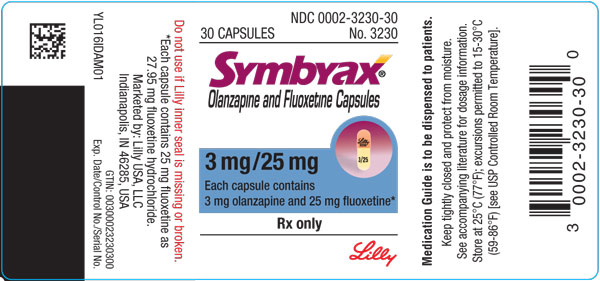
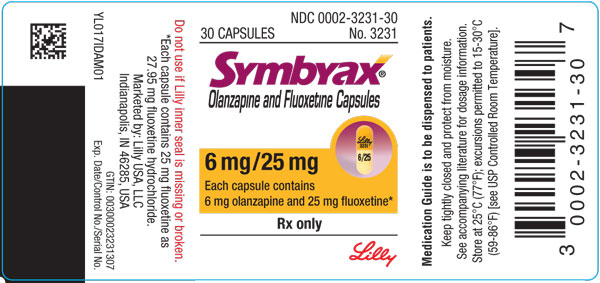
| SYMBYAX
olanzapine and fluoxetine hydrochloride capsule |
||||||||||||||||||
|
||||||||||||||||||
|
||||||||||||||||||
|
||||||||||||||||||
|
||||||||||||||||||
|
||||||||||||||||||
|
||||||||||||||||||
| SYMBYAX
olanzapine and fluoxetine hydrochloride capsule |
||||||||||||||||||||
|
||||||||||||||||||||
|
||||||||||||||||||||
|
||||||||||||||||||||
|
||||||||||||||||||||
|
||||||||||||||||||||
|
||||||||||||||||||||
| Labeler - Eli Lilly and Company (006421325) |
More about Symbyax (fluoxetine / olanzapine)
- Check interactions
- Compare alternatives
- Pricing & coupons
- Reviews (65)
- Drug images
- Side effects
- Dosage information
- During pregnancy
- Drug class: psychotherapeutic combinations
- En español
Patient resources
Professional resources
Related treatment guides
Copyright © 2003, 2025, Eli Lilly and Company. All rights reserved.