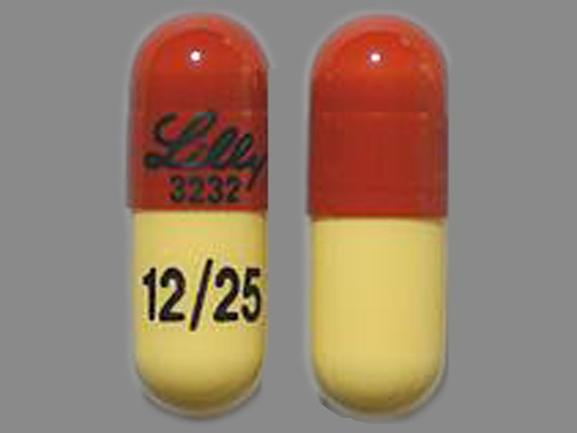
Symbyax Dosage
Generic name: Olanzapine 3mg, Fluoxetine hydrochloride 25mg
Dosage form: capsule
Drug class: Psychotherapeutic combinations
Medically reviewed by Drugs.com. Last updated on Aug 18, 2023.
Depressive Episodes Associated with Bipolar I Disorder
Adults — Administer SYMBYAX once daily in the evening, generally beginning with the 6 mg/25 mg (mg olanzapine/mg equivalent fluoxetine) capsule. While food has no appreciable effect on the absorption of olanzapine and fluoxetine given individually, the effect of food on the absorption of SYMBYAX has not been studied. Make dosage adjustments, if indicated, according to efficacy and tolerability. Antidepressant efficacy was demonstrated with SYMBYAX in a dose range of olanzapine 6 mg to 12 mg and fluoxetine 25 mg to 50 mg [see Clinical Studies (14.1)]. The safety of doses above 18 mg of olanzapine and 75 mg of fluoxetine has not been evaluated in adult clinical studies. Periodically reexamine the need for continued pharmacotherapy.
Children and Adolescents (10 to 17 years of age) — Administer SYMBYAX once daily in the evening, generally beginning with the 3 mg/25 mg capsule, without regard to meals, with a recommended target dose within the approved dosing range (6/25; 6/50; 12/50 mg) [see Clinical Studies (14.1)]. The safety of doses above 12 mg of olanzapine and 50 mg of fluoxetine has not been evaluated in pediatric clinical studies. Periodically reexamine the need for continued pharmacotherapy.
Treatment Resistant Depression
Administer SYMBYAX once daily in the evening, generally beginning with the 6 mg/25 mg capsule. While food has no appreciable effect on the absorption of olanzapine and fluoxetine given individually, the effect of food on the absorption of SYMBYAX has not been studied. Adjust dosage, if indicated, according to efficacy and tolerability. Antidepressant efficacy was demonstrated with SYMBYAX in a dose range of olanzapine 6 mg to 18 mg and fluoxetine 25 mg to 50 mg [see Clinical Studies (14.2)]. The safety of doses above 18 mg/75 mg has not been evaluated in clinical studies. Periodically reexamine the need for continued pharmacotherapy.
Specific Populations
Start SYMBYAX at 3 mg/25 mg or 6 mg/25 mg in patients with a predisposition to hypotensive reactions, patients with hepatic impairment, or patients who exhibit a combination of factors that may slow the metabolism of SYMBYAX (female gender, geriatric age, nonsmoking status) or those patients who may be pharmacodynamically sensitive to olanzapine. Titrate slowly and adjust dosage as needed in patients who exhibit a combination of factors that may slow metabolism. SYMBYAX has not been systematically studied in patients >65 years of age or in patients <10 years of age [see Use in Specific Populations (8.5) and Clinical Pharmacology (12.3, 12.4)].
Switching a Patient To or From a Monoamine Oxidase Inhibitor (MAOI) Intended to Treat Psychiatric Disorders
At least 14 days should elapse between discontinuation of an MAOI intended to treat psychiatric disorders and initiation of therapy with SYMBYAX. Conversely, at least 5 weeks should be allowed after stopping SYMBYAX before starting an MAOI intended to treat psychiatric disorders [see Contraindications (4.1)].
Use of SYMBYAX with Other MAOIs such as Linezolid or Methylene Blue
Do not start SYMBYAX in a patient who is being treated with linezolid or intravenous methylene blue because there is an increased risk of serotonin syndrome. In a patient who requires more urgent treatment of a psychiatric condition, other interventions, including hospitalization, should be considered [see Contraindications (4.1)].
In some cases, a patient already receiving SYMBYAX therapy may require urgent treatment with linezolid or intravenous methylene blue. If acceptable alternatives to linezolid or intravenous methylene blue treatment are not available and the potential benefits of linezolid or intravenous methylene blue are judged to outweigh the risks of serotonin syndrome in a particular patient, SYMBYAX should be stopped promptly, and linezolid or intravenous methylene blue can be administered. The patient should be monitored for symptoms of serotonin syndrome for five weeks or until 24 hours after the last dose of linezolid or intravenous methylene blue, whichever comes first. Therapy with SYMBYAX may be resumed 24 hours after the last dose of linezolid or intravenous methylene blue [see Warnings and Precautions (5.6)].
The risk of administering methylene blue by non-intravenous routes (such as oral tablets or by local injection) or in intravenous doses much lower than 1 mg/kg with SYMBYAX is unclear. The clinician should, nevertheless, be aware of the possibility of emergent symptoms of serotonin syndrome with such use [see Warnings and Precautions (5.6)].
Discontinuation of Treatment with SYMBYAX
Symptoms associated with discontinuation of fluoxetine, a component of SYMBYAX, SNRIs, and SSRIs, have been reported [see Warnings and Precautions (5.25)].
More about Symbyax (fluoxetine / olanzapine)
- Check interactions
- Compare alternatives
- Pricing & coupons
- Reviews (65)
- Drug images
- Side effects
- During pregnancy
- Generic availability
- Drug class: psychotherapeutic combinations
- En español
Patient resources
Professional resources
Related treatment guides
Further information
Always consult your healthcare provider to ensure the information displayed on this page applies to your personal circumstances.