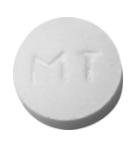
Toremifene Citrate (Monograph)
Brand name: Fareston
Drug class: Estrogen Agonists-Antagonists
Introduction
Antineoplastic agent; a nonsteroidal estrogen agonist-antagonist that is structurally and pharmacologically related to tamoxifen.
Uses for Toremifene Citrate
Breast Cancer
Palliative treatment of metastatic breast cancer in postmenopausal women with estrogen-receptor positive or estrogen-receptor unknown tumors (designated an orphan drug by FDA for this use). Not recommended for treatment of estrogen-receptor negative breast tumors. Similar efficacy and toxicity as tamoxifen. Not known whether toremifene offers a therapeutic advantage over tamoxifen for the treatment of advanced breast cancer in eligible patients.
Under investigation for use as adjuvant therapy† [off-label] for early-stage breast cancer in node-positive postmenopausal women. Results from trials to date suggest similar efficacy and toxicity as tamoxifen.
Efficacy in treatment of advanced breast cancer in men† [off-label] not demonstrated.
Because of demonstrated cross-resistance with tamoxifen, usefulness of toremifene as second-line† [off-label] endocrine therapy for treatment of metastatic breast cancer refractory to tamoxifen appears to be limited.
Prostate Cancer
Under investigation as a preventive agent for prostate cancer† [off-label] in men with high-grade prostatic intraepithelial neoplasia and no evidence of prostate cancer.
Toremifene Citrate Dosage and Administration
Administration
Oral Administration
Administer orally without regard to meals.
Dosage
Available as toremifene citrate; dosage expressed in terms of toremifene.
Adults
Breast Cancer
Oral
60 mg once daily for metastatic breast cancer. Continue therapy until disease progression occurs; in clinical studies, therapy was continued for a median duration of 5 months.
Prescribing Limits
Adults
Breast Cancer
Oral
Higher dosages (200 or 240 mg daily) associated with greater toxicity but provide no additional benefit in metastatic breast cancer.
Special Populations
Hepatic Impairment
Use with caution and monitor liver function carefully. Dosage reduction may be necessary.
Renal Impairment
Dosage adjustments not required.
Geriatric Patients
Dosage adjustments not required.
Cautions for Toremifene Citrate
Contraindications
-
Known hypersensitivity to toremifene or any ingredient in the formulation.
Warnings/Precautions
Warnings
Hypercalcemia and Tumor Flare
Hypercalcemia and tumor flare reported (usually during the first weeks of therapy) in patients with metastatic breast cancer who have bone metastases. Tumor flare is a syndrome of diffuse musculoskeletal pain and erythema with increase and then regression in the size of tumor lesions; tumor flare does not represent tumor progression or imply failure of treatment.
Monitor patients with bone metastases closely for hypercalcemia during first weeks of therapy. If hypercalcemia occurs, institute appropriate measures; if severe, discontinue toremifene.
Monitor serum calcium concentrations periodically during therapy.
Effects on the Uterus
Endometrial hyperplasia and endometrial cancer reported. Long-term therapy not recommended in patients with preexisting endometrial hyperplasia.
Monitor carefully for uterine disorders. Gynecologic symptoms (i.e., menstrual irregularities, abnormal vaginal bleeding, changes in vaginal discharge, pelvic pain or pressure) should be promptly evaluated.
Fetal/Neonatal Morbidity and Mortality
May cause fetal harm. Embryotoxicity and fetotoxicity demonstrated in animals. If used during pregnancy or if patient becomes pregnant, apprise of potential fetal hazard and potential loss of pregnancy.
General Precautions
Cardiovascular Effects
Pulmonary embolism, thrombophlebitis, thrombosis, cerebrovascular accident, and TIA reported. Use not recommended in patients with history of thromboembolic disorders.
Cardiac failure, MI, arrhythmia, angina pectoris, and edema reported.
Hematologic Effects
Leukopenia and thrombocytopenia reported rarely; monitor leukocyte and platelet counts in patients with leukopenia and thrombocytopenia.
Monitor CBCs periodically during therapy.
Hepatic Effects
Increased hepatic enzyme concentrations (e.g., AST, alkaline phosphatase, bilirubin) and jaundice reported. Fatty liver and nonalcoholic steatohepatitis reported following long-term therapy with higher than recommended dosage (i.e., 80 mg daily).
Obtain liver function tests periodically during therapy.
Ocular Effects
Cataracts, dry eyes, abnormal visual fields, corneal keratopathy, glaucoma, abnormal vision/diplopia, and corneal opacity (corneal verticulata) reported. Blurred vision reported following therapy with higher than recommended dosages (i.e., 200 or 240 mg daily).
Specific Populations
Pregnancy
Category D. (See Fetal/Neonatal Morbidity and Mortality under Cautions.)
Lactation
Distributed into milk in rats; not known whether distributed into human milk. Discontinue nursing or the drug.
Pediatric Use
Not labeled for use in children.
Geriatric Use
No substantial differences in safety and efficacy relative to younger adults, but increased sensitivity cannot be ruled out.
Hepatic Impairment
Decreased clearance in patients with hepatic impairment (i.e., cirrhosis, fibrosis). (See Elimination: Special Populations, under Pharmacokinetics.) Use with caution and monitor liver function carefully. Dosage reduction may be necessary.
Common Adverse Effects
Hot flushes (flashes), sweating, nausea, vaginal discharge, dizziness, edema, vomiting, vaginal bleeding.
Drug Interactions
Metabolized principally by CYP3A4.
No formal drug interaction studies to date.
Drugs Affecting Hepatic Microsomal Enzymes
Inhibitors of CYP3A4-6: Potential pharmacokinetic interaction (increased toremifene concentrations). Clinical importance unknown.
Inducers of CYP3A4: Potential pharmacokinetic interaction (decreased toremifene concentrations).
Drugs Affecting Calcium
Drugs that decrease renal calcium excretion (e.g., thiazide diuretics): Potential pharmacologic interaction (increased risk of hypercalcemia).
Specific Drugs
|
Drug |
Interaction |
Comments |
|---|---|---|
|
Anticoagulants, oral (e.g., warfarin) |
Possible increased PT |
Monitor PT; adjust anticoagulant dosage if necessary |
|
Anticonvulsants (e.g., carbamazepine, clonazepam, phenobarbital, phenytoin) |
Possible decreased toremifene concentrations (due to increased clearance and decreased elimination half-life of toremifene) |
Increase toremifene dosage if necessary |
|
Antifungals, azoles (e.g., ketoconazole) |
Possible increased toremifene concentrations |
Adjust toremifene dosage if necessary |
|
Macrolides (e.g., erythromycin) |
Possible increased toremifene concentrations |
Adjust toremifene dosage if necessary |
|
Rifampin |
Decreased peak plasma concentration and AUC of toremifene |
Increase toremifene dosage if necessary |
Toremifene Citrate Pharmacokinetics
Absorption
Bioavailability
Well absorbed following oral administration, with peak plasma concentration usually attained within 3 hours.
Steady-state concentrations are reached in about 4–6 weeks.
Food
Food does not appear to affect absorption.
Distribution
Extent
Crosses the placenta and accumulates in the fetus in rodents. Distributed into milk in rats; not known whether distributed into human milk.
Plasma Protein Binding
>99.5% (mainly albumin).
Special Populations
Increased toremifene volume of distribution in geriatric female patients; however, no change in AUC.
Elimination
Metabolism
Extensively metabolized, principally via CYP3A4 to N-demethyltoremifene, which exhibits antiestrogenic effects but has weak antitumor potency in vivo.
Elimination Route
Excreted as metabolites principally in feces, with about 10% excreted in urine over 1 week.
Half-life
Toremifene: Approximately 5 days.
N-demethyltoremifene: 6 days. Deaminohydroxy toremifene: 4 days.
Elimination is slow due to enterohepatic circulation.
Special Populations
Increased toremifene elimination half-life in patients with hepatic impairment (i.e., cirrhosis, fibrosis).
Pharmacokinetics are not altered in patients with renal impairment.
Increased toremifene elimination half-life in geriatric female patients; however, no change in clearance.
Stability
Storage
Oral
Tablets
25°C (may be exposed to 15–30°C); protect from heat and light.
Actions
-
Acts as an estrogen antagonist on breast tissue and as a weak estrogen agonist on endometrium, bone, and lipids.
-
In breast cancer, competitively binds to estrogen receptors and blocks tumor growth stimulated by estrogen. Also may inhibit tumor growth through other mechanisms (e.g., induction of apoptosis, regulation of oncogene expression and growth factors).
-
Decreases total and LDL-cholesterol concentrations.
-
Acts as an estrogen agonist on the uterus and exhibits proliferative and tumor-promoting effects on the endometrium.
Advice to Patients
-
Importance of receiving routine gynecologic care and of immediately informing clinician if any new breast lumps or abnormal gynecologic symptoms, including menstrual irregularities, abnormal vaginal bleeding, change in vaginal discharge, or pelvic pain/pressure occur.
-
Importance of informing patients with bone metastases about the typical manifestations of hypercalcemia and instructing patients to report promptly any symptoms to their clinician.
-
Importance of informing clinicians of existing or contemplated concomitant therapy, including prescription and OTC drugs and dietary or herbal supplements, as well as any concomitant illnesses.
-
Importance of women informing their clinician if they are or plan to become pregnant or plan to breast-feed. Necessity for clinicians to advise women to avoid pregnancy during therapy and to advise pregnant women of risk to the fetus and of potential loss of pregnancy.
-
Importance of informing patients of other important precautionary information.
Additional Information
The American Society of Health-System Pharmacists, Inc. represents that the information provided in the accompanying monograph was formulated with a reasonable standard of care, and in conformity with professional standards in the field. Readers are advised that decisions regarding use of drugs are complex medical decisions requiring the independent, informed decision of an appropriate health care professional, and that the information contained in the monograph is provided for informational purposes only. The manufacturer’s labeling should be consulted for more detailed information. The American Society of Health-System Pharmacists, Inc. does not endorse or recommend the use of any drug. The information contained in the monograph is not a substitute for medical care.
Preparations
Excipients in commercially available drug preparations may have clinically important effects in some individuals; consult specific product labeling for details.
Please refer to the ASHP Drug Shortages Resource Center for information on shortages of one or more of these preparations.
|
Routes |
Dosage Forms |
Strengths |
Brand Names |
Manufacturer |
|---|---|---|---|---|
|
Oral |
Tablets |
60 mg (of toremifene) |
Fareston (with povidone) |
GTx |
AHFS DI Essentials™. © Copyright 2025, Selected Revisions November 10, 2024. American Society of Health-System Pharmacists, Inc., 4500 East-West Highway, Suite 900, Bethesda, Maryland 20814.
† Off-label: Use is not currently included in the labeling approved by the US Food and Drug Administration.
Reload page with references included
Related/similar drugs
More about toremifene
- Check interactions
- Compare alternatives
- Pricing & coupons
- Reviews (2)
- Drug images
- Side effects
- Dosage information
- During pregnancy
- Drug class: hormones/antineoplastics
- En español