Golimumab (Monograph)
Brand name: Simponi
Drug class: Tumor Necrosis Factor Inhibitors, Miscellaneous
Warning
- Serious Infections
-
Increased risk of serious infections involving various organ systems and sites that may require hospitalization or result in death; tuberculosis (frequently disseminated or extrapulmonary), invasive fungal infections (may be disseminated), bacterial (e.g., legionellosis, listeriosis) and viral infections, and other opportunistic infections reported. (See Infectious Complications under Cautions.)
-
Carefully consider risks and benefits prior to initiating golimumab therapy in patients with chronic or recurring infections.
-
Evaluate patients for latent tuberculosis infection prior to and periodically during golimumab therapy; if indicated, initiate appropriate antimycobacterial regimen prior to initiating golimumab therapy.
-
Closely monitor patients for infection, including active tuberculosis in those with a negative tuberculin skin test, during and after treatment. Discontinue golimumab if serious infection occurs. Consider empiric antifungal therapy if serious systemic illness occurs in a patient at risk for invasive fungal infections.
- Malignancy
-
Lymphoma and other malignancies (some fatal) reported in children and adolescents receiving TNF blocking agents. (See Malignancies and Lymphoproliferative Disorders under Cautions.)
Introduction
Tumor necrosis factor (TNF) inhibitor and biologic disease-modifying antirheumatic drug (DMARD); a human immunoglobulin G1 kappa (IgG1) monoclonal antibody.
Uses for Golimumab
Rheumatoid Arthritis
Used in conjunction with methotrexate for the management of moderately to severely active rheumatoid arthritis in adults.
Disease-modifying treatments for rheumatoid arthritis include conventional DMARDs (e.g., hydroxychloroquine, leflunomide, methotrexate, sulfasalazine), biologic DMARDs (e.g., TNF blocking agents, abatacept, tocilizumab, sarilumab, rituximab), and/or targeted synthetic DMARDs (e.g., Janus kinase inhibitors).
Guidelines generally support use of TNF blocking agents as add-on therapy to methotrexate in patients who do not meet treatment goals with methotrexate alone.
Specific agents for rheumatoid arthritis are selected according to current disease activity, prior therapies used, and presence of comorbidities.
Psoriatic Arthritis
Used alone or in conjunction with methotrexate for the management of active psoriatic arthritis in adults.
IV formulation is used for the management of active psoriatic arthritis in pediatric patients ≥2 years of age.
Disease-modifying treatments for adults with psoriatic arthritis include oral small molecules (e.g., methotrexate, sulfasalazine, cyclosporine, leflunomide, apremilast), biologic DMARDs (e.g., TNF blocking agents, secukinumab, ixekizumab, ustekinumab, brodalumab, abatacept), and/or targeted synthetic DMARDs (e.g., tofacitinib). Guidelines generally support use of TNF blocking agents, including golimumab, as first-line treatment in adults with active psoriatic arthritis. Recommendations for the use and selection of disease-modifying therapies in psoriatic arthritis vary based on the presence of certain disease characteristics (e.g., psoriatic spondylitis/axial disease, enthesitis) and comorbidities (e.g., inflammatory bowel disease, diabetes).
Guidelines generally support use of TNF blocking agents as add-on therapy in pediatric patients with psoriatic arthritis. In patients with psoriatic arthritis manifesting as nonsystemic polyarthritis, TNF blocking agents recommended if moderate to high disease activity persists despite methotrexate use. In patients with psoriatic arthritis manifesting as sacroiliitis or enthesitis, TNF blocking agents recommended if active disease persists despite nonsteroidal anti-inflammatory agent (NSAIA) use.
Ankylosing Spondylitis
Used for the management of ankylosing spondylitis in adults with active disease.
Treatments for ankylosing spondylitis include NSAIAs, conventional DMARDs (e.g., methotrexate, sulfasalazine), biologic DMARDs (e.g., TNF blocking agents, secukinumab, ixekizumab), and/or targeted synthetic DMARDs (e.g., tofacitinib).
Guidelines generally support use of TNF blocking agents for treatment of ankylosing spondylitis in patients with active disease despite treatment with NSAIAs.
Recommendations for treatment selection in ankylosing spondylitis vary based the presence of certain comorbidities (e.g., iritis, inflammatory bowel disease).
Ulcerative Colitis
Used to treat moderately to severely active ulcerative colitis in adults who require continuous corticosteroid therapy or who had inadequate response to or were intolerant to conventional therapies (oral aminosalicylates, oral corticosteroids, azathioprine, or mercaptopurine).
Guidelines generally support first-line use of TNF blocking agents for induction and maintenance of remission in patients with moderate to severe ulcerative colitis.
Specific treatments for ulcerative colitis are selected according to disease severity, disease location/extent, disease prognosis, and previous therapies used.
Juvenile Idiopathic Arthritis
Used for the management of active polyarticular juvenile idiopathic arthritis in pediatric patients ≥2 years of age.
Drugs used to treat juvenile idiopathic arthritis include NSAIAs, systemic and intra-articular corticosteroids, conventional DMARDs (e.g., methotrexate, sulfasalazine, hydroxychloroquine, leflunomide), and biologic DMARDs (e.g., TNF blocking agents, abatacept, tocilizumab, rituximab).
Guidelines generally support use of TNF blocking agents, as add-on therapy in patients with moderate to high disease activity despite the use of methotrexate.
Specific agents for juvenile idiopathic arthritis treatment are selected according to presence of certain risk factors (e.g., positive anti-cyclic citrullinated peptide antibodies, positive rheumatoid factor, joint damage), level of disease activity, involvement of specific joints, presence of certain comorbidities (e.g., uveitis), and prior therapies.
Nonradiographic Axial Spondyloarthritis
Some evidence suggests that sub-Q golimumab may be useful in the treatment of active nonradiographic axial spondyloarthritis† [off-label].
Golimumab Dosage and Administration
General
Pretreatment Screening
-
Evaluate all patients for active and inactive tuberculosis prior to initiating therapy.
-
Screen all patients for hepatitis B virus (HBV) infection before initiating therapy.
-
Do not initiate therapy in patients with an active infection, including clinically important localized infections.
Patient Monitoring
-
Monitor closely for signs or symptoms of infection (e.g., fever, malaise, weight loss, sweats, cough, dyspnea, pulmonary infiltrates, serious systemic illness including shock) during and after treatment; monitor for possible development of tuberculosis in patients who tested negative for latent tuberculosis prior to initiating therapy.
-
Perform periodic dermatologic evaluations in all patients, particularly those with risk factors for skin cancer.
-
Evaluate and monitor chronic carriers of HBV during treatment and for up to several months following treatment.
Dispensing and Administration Precautions
-
Efficacy and safety of switching between IV and subcutaneous golimumab formulations and routes of administration have not been established.
Other General Considerations
-
Golimumab is used in conjunction with methotrexate for the management of rheumatoid arthritis in adults; the drug may be used with or without methotrexate or other nonbiologic disease-modifying antirheumatic drugs (DMARDs) in adults with psoriatic arthritis or ankylosing spondylitis.
-
Corticosteroids and nonsteroidal anti-inflammatory agents (NSAIAs) or analgesics may be continued in adults receiving golimumab for the management of rheumatoid arthritis, psoriatic arthritis, or ankylosing spondylitis.
-
Aminosalicylates, corticosteroids, azathioprine, mercaptopurine, and/or methotrexate were permitted to be continued during pivotal trials of golimumab in patients with ulcerative colitis. However, the possibility of an increased risk of hepatosplenic T-cell lymphoma with combination immunosuppressive therapy should be considered carefully.
Administration
May administer by sub-Q injection in the management of rheumatoid arthritis, psoriatic arthritis, ankylosing spondylitis, or ulcerative colitis in adults. May administer by IV infusion in the management of rheumatoid arthritis, psoriatic arthritis, or ankylosing spondylitis in adults, and in the management of psoriatic arthritis or polyarticular juvenile idiopathic arthritis in pediatric patients.
Sub-Q Administration
Administer by sub-Q injection into the thigh, lower abdomen, or upper arm; do not make abdominal injections within 2 inches of the umbilicus. Use thigh (the preferred site) or abdomen for self-administration; may use upper arm if not self-administered. Rotate injection sites. Do not make injections into areas where the skin is tender, bruised, red, or hard or into scars or stretch marks.
Allow golimumab prefilled syringe or auto-injector to sit at room temperature outside of the carton for 30 minutes prior to injection; do not warm the drug in any other way (e.g., microwave, hot water). Do not remove the syringe needle cover or auto-injector cap while the drug is warming to room temperature.
Intended for use under the guidance and supervision of a clinician, but may be self-administered if the clinician determines that the patient and/or their caregiver is competent to safely administer the drug after appropriate training.
IV Administration
For solution compatibility information, see Compatibility under Stability.
Administer by IV infusion.
Golimumab injection concentrate must be diluted prior to IV administration.
Do not infuse golimumab simultaneously through the same IV line with other drugs.
Use an inline, nonpyrogenic, low-protein-binding filter with pore size ≤0.22 µm.
Dilution
Dilute the required volume of golimumab injection concentrate in 0.45 or 0.9% sodium chloride injection to provide a total volume of 100 mL (i.e., remove a volume of diluent equal to the total required volume of the injection concentrate from a 100-mL bag or bottle of 0.45 or 0.9% sodium chloride injection prior to adding the injection concentrate). Slowly add golimumab injection concentrate to the infusion container and mix gently.
Do not use the injection concentrate if it is discolored (should appear colorless to light yellow) or contains particulates other than a few fine translucent particles.
Discard any unused portion remaining in the vial since the injection concentrate contains no preservative.
Rate of Administration
Administer by IV infusion over 30 minutes.
Dosage
Pediatric Patients
Psoriatic Arthritis
IV
Pediatric patients ≥2 years of age: 80 mg/m2 at weeks 0 and 4, then every 8 weeks thereafter. Calculate dosage based on body surface area.
Juvenile Idiopathic Arthritis
IV
Pediatric patients ≥2 years of age: 80 mg/m2 at weeks 0 and 4, then every 8 weeks thereafter. Calculate dosage based on body surface area.
Adults
Rheumatoid Arthritis
Sub-Q
50 mg once monthly.
IV
2 mg/kg at weeks 0 and 4, then every 8 weeks thereafter.
Psoriatic Arthritis
Sub-Q
50 mg once monthly.
IV
2 mg/kg at weeks 0 and 4, then every 8 weeks thereafter.
Ankylosing Spondylitis
Sub-Q
50 mg once monthly.
IV
2 mg/kg at weeks 0 and 4, then every 8 weeks thereafter.
Ulcerative Colitis
Sub-Q
200 mg at week 0 and 100 mg at week 2 (induction regimen), then 100 mg every 4 weeks thereafter (maintenance regimen).
Special Populations
Dosage adjustment of sub-Q golimumab based on weight or gender not necessary.
Hepatic Impairment
Manufacturer makes no specific dosage recommendations.
Renal Impairment
Manufacturer makes no specific dosage recommendations.
Geriatric Patients
Manufacturer makes no specific dosage recommendations.
Cautions for Golimumab
Contraindications
-
Manufacturer states none known.
Warnings/Precautions
Warnings
Infectious Complications
Increased risk of serious infections involving various organ systems and sites that may require hospitalization or result in death. Opportunistic infections caused by bacterial, mycobacterial, invasive fungal, viral, or parasitic organisms (e.g., aspergillosis, blastomycosis, candidiasis, coccidioidomycosis, histoplasmosis, legionellosis, listeriosis, pneumocystosis, tuberculosis) reported, particularly in patients receiving concomitant therapy with immunosuppressive agents (e.g., methotrexate, corticosteroids). Infections frequently are disseminated. (See Boxed Warning.)
Increased incidence of serious infections observed with concomitant use of another TNF blocking agent and anakinra or abatacept. Use of golimumab in combination with other biologic agents used in the management of rheumatoid arthritis, psoriatic arthritis, ankylosing spondylitis, or polyarticular juvenile idiopathic arthritis not recommended. Use caution when switching from one biologic disease-modifying antirheumatic drug (DMARD) to another.
Patients >65 years of age, with comorbid conditions, and/or receiving concomitant therapy with immunosuppressive agents (e.g., corticosteroids, methotrexate) may be at increased risk of infection.
Do not initiate golimumab in patients with active infections, including clinically important localized infections. Consider potential risks and benefits of the drug prior to initiating therapy in patients with a history of chronic, recurring, or opportunistic infections; patients with underlying conditions that may predispose them to infections; and patients who have been exposed to tuberculosis or who have resided or traveled in regions where tuberculosis or mycoses such as histoplasmosis, coccidioidomycosis, and blastomycosis are endemic.
Closely monitor patients during and after golimumab therapy for signs or symptoms of infection (e.g., fever, malaise, weight loss, sweats, cough, dyspnea, pulmonary infiltrates, serious systemic illness including shock), including the possible development of tuberculosis in patients who tested negative for latent tuberculosis prior to initiating therapy.
If new infection occurs during therapy, perform thorough diagnostic evaluation (appropriate for immunocompromised patient), initiate appropriate anti-infective therapy, and closely monitor patient. Discontinue golimumab if serious infection, opportunistic infection, or sepsis develops.
Evaluate all patients for active or latent tuberculosis and for risk factors for tuberculosis prior to and periodically during therapy. When indicated, initiate appropriate antimycobacterial regimen for treatment of latent tuberculosis infection prior to golimumab therapy. Also consider antimycobacterial therapy prior to golimumab therapy for individuals with a history of latent or active tuberculosis in whom an adequate course of antimycobacterial treatment cannot be confirmed and for individuals with a negative tuberculin skin test who have risk factors for tuberculosis. Consultation with a tuberculosis specialist is recommended when deciding whether to initiate antimycobacterial therapy.
Monitor all patients, including those with negative tuberculin skin tests, those receiving treatment for latent tuberculosis, and those previously treated for tuberculosis infection, for active tuberculosis. Consider tuberculosis in patients who develop new infections while receiving golimumab, especially if they previously have traveled to countries where tuberculosis is highly prevalent or have been in close contact with an individual with active tuberculosis.
Failure to recognize invasive fungal infections has led to delays in appropriate treatment. Consider empiric antifungal therapy in patients at risk for invasive fungal infections who develop severe systemic illness; consider the risk for severe fungal infection as well as risks associated with antifungal therapy. Whenever feasible, consult specialist in fungal infections when making decisions regarding initiation and duration of antifungal therapy.
When deciding whether to reinitiate TNF blocking agent therapy following resolution of an invasive fungal infection, reevaluate risks and benefits, particularly in patients who reside in regions where mycoses are endemic. Whenever feasible, consult specialist in fungal infections.
Malignancies and Lymphoproliferative Disorders
Cases of lymphoma and other malignancies (some fatal) reported in children, adolescents, and adults receiving TNF blocking agents; patients receiving other immunosuppressive agents (e.g., azathioprine, methotrexate) concomitantly may be at increase risk. Malignancies included lymphomas (e.g., Hodgkin disease, non-Hodgkin lymphoma, hepatosplenic T-cell lymphoma) and various other malignancies (e.g., leukemia, melanoma, solid organ cancers, leiomyosarcoma, hepatic malignancies, renal cell carcinoma).
FDA has concluded that there is an increased risk of malignancy with TNF blocking agents; however, the strength of the association is not fully characterized.
Consider possibility of and monitor for occurrence of malignancies during and following treatment with TNF blocking agents.
Periodic skin examination recommended for all patients, especially those with risk factors for skin cancer.
Consider risks and benefits of TNF blocking agents before initiating therapy in patients with a known malignancy (other than successfully treated nonmelanoma skin cancer) or when considering whether to continue therapy in patients who develop a malignancy. Carefully consider risks and benefits of these agents, especially in adolescents and young adults and especially in the treatment of Crohn disease or ulcerative colitis.
Not known whether golimumab influences risk of developing dysplasia or colon cancer. Screen all patients with ulcerative colitis who have a history of dysplasia or colon carcinoma, or are at increased risk for these conditions (e.g, those with long-standing ulcerative colitis or primary sclerosing cholangitis), for dysplasia at regular intervals in accordance with current standard of care. Carefully consider risks and benefits of continued therapy in those with newly diagnosed dysplasia.
Other Warnings/Precautions
HBV Reactivation
Increased risk of reactivation of HBV infection in patients who are chronic carriers of this virus (i.e., hepatitis B surface antigen-positive [HBsAg-positive]). Death reported in a few individuals. Use of multiple immunosuppressive agents may contribute to HBV reactivation.
Screen all patients for HBV infection prior to initiation of therapy. Consultation with an HBV infection specialist is recommended prior to initiation of therapy in patients who test positive for HBsAg.
Evaluate and monitor HBV carriers before, during, and for up to several months after therapy. Safety and efficacy of antiviral therapy for prevention of HBV reactivation not established. Discontinue golimumab and initiate appropriate treatment if HBV reactivation occurs. Not known whether golimumab can be readministered once control of a reactivated HBV infection is achieved; caution advised in this situation.
Cardiovascular Effects
New-onset or worsening CHF, sometimes fatal, reported in patients receiving TNF blocking agents, including golimumab; golimumab not studied in patients with history of CHF. If used in patients with CHF, caution and careful monitoring recommended. Discontinue therapy if new or worsening symptoms of heart failure occur.
Nervous System Effects
New onset or exacerbation of central or peripheral nervous system demyelinating disorders (e.g., multiple sclerosis, Guillain-Barré syndrome) reported rarely in patients receiving TNF blocking agents. Central demyelination, multiple sclerosis, optic neuritis, and peripheral demyelinating polyneuropathy reported rarely with golimumab.
Exercise caution when considering golimumab therapy in patients with central or peripheral nervous system demyelinating disorders. Consider discontinuing golimumab if these disorders develop.
Hematologic Effects
Pancytopenia, leukopenia, neutropenia, agranulocytosis, aplastic anemia, and thrombocytopenia reported in patients receiving golimumab. Use with caution in patients who have or have had substantial cytopenias.
Immunization and Use of Therapeutic Infectious Agents
Whenever possible, prior to starting golimumab therapy, review vaccination status of the patient and administer all appropriate vaccines included in current immunization guidelines.
Patients taking golimumab may receive inactivated vaccines. Avoid live vaccines and therapeutic infectious agents. Limited data available on live vaccine response in golimumab-treated patients and secondary transmission of infection by live vaccines in golimumab-treated patients.
In utero exposure to golimumab may affect immune response of infants. Monoclonal antibodies such as golimumab cross the placenta during the third trimester of pregnancy. Infants exposed to golimumab in utero should not receive live vaccines for 6 months following the last golimumab dose given to the infant’s mother during pregnancy.
Immunologic Reactions and Antibody Formation
Formation of autoimmune antibodies and, rarely, development of a lupus-like syndrome reported with TNF blocking agents, including golimumab; discontinue golimumab if symptoms suggestive of a lupus-like syndrome develop. Antibodies to double-stranded DNA (anti-dsDNA) also reported.
Antibodies to golimumab, including neutralizing antibodies, reported. Development of anti-golimumab antibodies not associated with reduced efficacy in studies of sub-Q golimumab in patients with rheumatoid arthritis, psoriatic arthritis, or ankylosing spondylitis; however, higher antibody titers may be associated with reduced efficacy. Clinical response rates tended to be lower in ulcerative colitis patients with antibody development. Lower incidence of antibody formation reported with concomitant use of immunosuppressive agents (azathioprine, mercaptopurine, methotrexate).
Psoriasis
New-onset psoriasis, including pustular and palmoplantar psoriasis, and exacerbation of existing psoriasis reported with TNF blocking agents, including golimumab. Most patients experienced improvement following discontinuance of the TNF blocking agent.
Consider possibility of and monitor for manifestations (e.g., new rash) of new or worsening psoriasis, particularly pustular and palmoplantar psoriasis. May consider discontinuance of golimumab if new-onset or worsening psoriasis occurs.
Hepatic Effects
Severe hepatic reactions, including acute liver failure, reported in patients receiving TNF blocking agents.
Increased serum ALT and AST concentrations reported. Relationship between golimumab and increased liver enzyme concentrations not clear because many patients received concomitant drugs that increase liver enzyme concentrations (e.g., methotrexate, nonsteroidal anti-inflammatory agents [NSAIAs]).
Sensitivity Reactions
Serious hypersensitivity reactions (e.g., anaphylactic reactions) reported in patients receiving golimumab, sometimes after the first dose. Immediately discontinue golimumab and initiate appropriate therapy if an anaphylactic or other serious allergic reaction occurs.
The needle cover of the prefilled syringe and the syringe in the auto-injector contain dry natural rubber and should not be handled by individuals sensitive to latex.
Specific Populations
Pregnancy
No adequate and well-controlled trials in pregnant women. Limited data from observational studies, published case reports, and postmarketing surveillance are insufficient to inform a drug-associated risk. Use during pregnancy only if clearly needed.
In animal studies, no evidence of teratogenicity/embryofetal toxicity or adverse developmental effects observed. In these studies, golimumab was present in umbilical cord blood and fetal serum at end of the second trimester and in neonatal serum from birth and for up to 6 months postpartum.
Golimumab may affect immune response in infants exposed in utero. Monoclonal antibodies cross the placenta during the third trimester of pregnancy. Another TNF blocking monoclonal antibody administered during pregnancy was detected for up to 6 months in infants' serum. Infants born to women who received golimumab during their pregnancy may be at increased risk of infection. Such infants should not receive live vaccines for 6 months following the last golimumab dose given to the infant’s mother during pregnancy.
Lactation
Distributed into milk in cynomolgus monkeys.
Maternal IgG distributes into human milk; not known whether golimumab distributes into human milk, affects breast-fed infants, or affects milk production. Any effects resulting from local exposure in the GI tract or potential limited systemic exposure in the infant also are unknown.
Consider developmental and health benefits of breast-feeding along with the mother's clinical need for golimumab and any potential adverse effects on the breast-fed infant from the drug or from the underlying maternal condition.
Pediatric Use
Efficacy of sub-Q golimumab not established in pediatric patients <18 years of age. A placebo-controlled, double-blind study in 173 pediatric patients 2–17 years of age with active polyarticular juvenile idiopathic arthritis despite methotrexate therapy failed to establish efficacy of sub-Q golimumab as add-on therapy to methotrexate.
Use of IV golimumab established for polyarticular juvenile idiopathic arthritis and psoriatic arthritis in pediatric patients ≥2 years of age; safety and efficacy of IV golimumab for these indications not established in pediatric patients <2 years of age. Safety and efficacy of IV golimumab for uses other than polyarticular juvenile idiopathic arthritis and psoriatic arthritis not established in pediatric patients <18 years of age.
Malignancies, some fatal, reported in children and adolescents who received TNF blocking agents.
Geriatric Use
In studies of sub-Q golimumab in patients with rheumatoid arthritis, psoriatic arthritis, or ankylosing spondylitis, no overall differences in serious adverse events, serious infections, and adverse events in those ≥65 years of age compared with younger adults.
In studies of sub-Q golimumab in patients with ulcerative colitis or IV golimumab in those with rheumatoid arthritis, insufficient numbers of patients ≥65 years of age to determine whether they respond differently than younger adults.
Overall incidence of infection is higher in the geriatric population than in younger adults; use with caution.
Hepatic Impairment
Pharmacokinetics of golimumab not formally studied in patients with hepatic impairment.
Renal Impairment
Pharmacokinetics of golimumab not formally studied in patients with renal impairment.
Common Adverse Effects
Adverse effects reported in ≥5% of patients receiving sub-Q golimumab include upper respiratory tract infection, nasopharyngitis, and injection site reactions.
Adverse effects reported in ≥3% of patients receiving IV golimumab include upper respiratory tract infection, increased ALT or AST concentration, viral infection, decreased neutrophil count, bronchitis, hypertension, and rash.
Drug Interactions
Administered concomitantly with methotrexate, hydroxychloroquine, sulfasalazine, corticosteroids, and/or NSAIAs/analgesics in clinical studies.
Drugs Metabolized by Hepatic Microsomal Enzymes
Because increased levels of TNF-α during chronic inflammation may suppress formation of CYP isoenzymes, antagonism of TNF-α activity by golimumab may normalize formation of CYP enzymes.
Drugs metabolized by CYP isoenzymes that have a low therapeutic index: Monitor therapeutic effect and serum concentrations following initiation or discontinuance of golimumab; adjust dosage as needed.
Biologic Antirheumatic Agents
Possible increased risk of infection. Concomitant use with other biologic agents used in the management of rheumatoid arthritis, psoriatic arthritis, ankylosing spondylitis, or polyarticular juvenile idiopathic arthritis not recommended.
Use caution when switching from one biologic disease-modifying antirheumatic drug (DMARD) to another, since overlapping biologic activity may further increase the risk of infection.
Vaccines and Therapeutic Infectious Agents
Inactivated vaccines: May be administered concomitantly.
Live vaccines: Avoid concomitant use. Risk of infections, including disseminated infections. Limited data regarding response to live vaccines or secondary transmission of infection by live vaccines in golimumab-treated patients. Infants exposed to golimumab in utero should not receive live vaccines for 6 months following the last golimumab dose given to the infant’s mother during pregnancy.
Therapeutic infectious agents: Avoid concomitant use. Risk of infections, including disseminated infections.
Specific Drugs
|
Drug |
Interaction |
Comments |
|---|---|---|
|
Abatacept |
Increased incidence of infection and serious infection, without additional clinical benefit, reported with abatacept and TNF blocking agents in rheumatoid arthritis |
Concomitant use not recommended Use caution when switching from one biologic DMARD to another, since overlapping biologic activity may further increase risk of infection |
|
Anakinra |
Increased incidence of serious infections and neutropenia, without additional clinical benefit, reported with anakinra and etanercept (another TNF blocking agent) in rheumatoid arthritis |
Concomitant use not recommended Use caution when switching from one biologic DMARD to another, since overlapping biologic activity may further increase risk of infection |
|
BCG for intravesical instillation |
Risk of infections, including disseminated infections |
Avoid concomitant use |
|
Corticosteroids, oral |
Concomitant use does not appear to alter golimumab clearance |
|
|
Cyclosporine |
Possible effect on cyclosporine metabolism; because increased levels of TNF-α during chronic inflammation may suppress formation of CYP isoenzymes, antagonism of TNF-α activity by golimumab may normalize formation of CYP enzymes |
Monitor therapeutic effect and serum concentrations of cyclosporine following initiation or discontinuance of golimumab; adjust dosage as needed |
|
Methotrexate |
Concomitant use or nonuse of methotrexate does not appear to influence efficacy or safety of golimumab for management of psoriatic arthritis or ankylosing spondylitis Decreased incidence of antibodies to golimumab reported with concomitant use Increased mean steady-state trough concentrations of sub-Q golimumab and decreased clearance of IV golimumab reported with concomitant use |
Use golimumab in conjunction with methotrexate for management of rheumatoid arthritis Golimumab may be used with or without methotrexate for management of psoriatic arthritis or ankylosing spondylitis |
|
NSAIAs |
Concomitant use does not appear to alter golimumab clearance |
|
|
Pneumococcal polysaccharide vaccine |
Study data suggest that golimumab does not suppress the humoral immune response to pneumococcal vaccine |
|
|
Rituximab |
Increased risk of serious infection reported in patients who received rituximab and subsequently received a TNF blocking agent |
Concomitant use not recommended Use caution when switching from one biologic DMARD to another, since overlapping biologic activity may further increase risk of infection |
|
Sulfasalazine |
Concomitant use does not appear to alter golimumab clearance |
|
|
Theophylline |
Possible effect on theophylline metabolism; because increased levels of TNF-α during chronic inflammation may suppress formation of CYP isoenzymes, antagonism of TNF-α activity by golimumab may normalize formation of CYP enzymes |
Monitor therapeutic effect and serum concentrations of theophylline following initiation or discontinuance of golimumab; adjust dosage as needed |
|
Warfarin |
Possible effect on warfarin metabolism; because increased levels of TNF-α during chronic inflammation may suppress formation of CYP isoenzymes, antagonism of TNF-α activity by golimumab may normalize formation of CYP enzymes |
Monitor therapeutic effect of warfarin following initiation or discontinuance of golimumab; adjust dosage as needed |
Golimumab Pharmacokinetics
Absorption
Bioavailability
Absolute bioavailability is approximately 53% following sub-Q administration.
Peak serum concentrations achieved in a median of 2–6 days following sub-Q administration.
Steady-state concentrations achieved within 12 weeks following sub-Q administration of golimumab 50 mg once monthly in patients with rheumatoid arthritis, psoriatic arthritis, or ankylosing spondylitis; within 12 weeks following IV administration of golimumab 2 mg/kg at weeks 0 and 4 and every 8 weeks thereafter in patients with rheumatoid arthritis; within 12 weeks following IV administration of golimumab 80 mg/m2 at weeks 0 and 4 and every 8 weeks thereafter in patients with juvenile idiopathic arthritis and active polyarthritis; or within 8 weeks after first maintenance dose in patients with ulcerative colitis receiving sub-Q administration of golimumab 200 mg at week 0 and 100 mg at week 2 (induction) and every 4 weeks thereafter (maintenance).
Golimumab concentrations tended to decrease with increasing titers of anti-drug antibodies in patients receiving sub-Q golimumab. Patients receiving IV golimumab who developed antibodies to golimumab generally had lower steady-state trough serum concentrations of golimumab.
Special Populations
Following weight-based IV dosing, adults with higher body weight tended to have higher serum golimumab concentrations; however, population pharmacokinetic analysis indicated no clinically important differences in exposure to 2-mg/kg IV dose in patients across various body weights.
Consistent with adult data, population pharmacokinetic analyses indicated no clinically important differences in exposure to 80-mg/m2 IV dose in pediatric patients with polyarticular juvenile idiopathic arthritis across various ages and body weights.
Distribution
Extent
Distributed mainly into the circulatory system with limited extravascular distribution.
Distributed into milk in cynomolgus monkeys; not known whether golimumab is distributed into human milk.
Elimination
Elimination Route
Elimination pathways not characterized.
Half-life
Approximately 2 weeks in healthy individuals and patients with active rheumatoid arthritis, psoriatic arthritis, or ankylosing spondylitis.
Special Populations
Pharmacokinetics not formally studied in renal or hepatic impairment.
Among adults, age does not appear to influence pharmacokinetics of sub-Q golimumab. Clearance appears to be similar in patients ≥65 years of age and younger adults.
With increasing body weight, there is a trend toward higher clearance of sub-Q golimumab; however, no clinically important weight-related differences in efficacy observed in psoriatic arthritis, ankylosing spondylitis, or ulcerative colitis populations. Reduction in clinical efficacy with increasing body weight observed with both 50- and 100-mg sub-Q doses in 1 study in rheumatoid arthritis.
No gender-related pharmacokinetic differences with sub-Q golimumab apparent in patients with rheumatoid arthritis, psoriatic arthritis, or ulcerative colitis; in patients with ankylosing spondylitis, apparent clearance was approximately 13% higher in females than in males. However, both genders achieved clinically important responses at the recommended sub-Q dose.
Ethnicity-related pharmacokinetic differences between Caucasian and Asian patients not observed with sub-Q golimumab; limited number of patients of other races available to assess for pharmacokinetic differences.
Stability
Storage
Parenteral
Injection, for Sub-Q Use
2–8°C. Protect from light; store in original carton until administration. Do not freeze or shake. Discard unused portions.
If necessary, may store at room temperature up to 25°C for a maximum single period of 30 days in original carton protected from light; discard if not used within 30 days; do not return to refrigerator after storage at room temperature.
Concentrate for IV Infusion
2–8°C. Protect from light; store in original carton until administration. Do not freeze or shake. Discard unused portions.
If necessary, may store at room temperature up to 25°C for a maximum single period of 30 days in original carton protected from light; discard if not used within 30 days; do not return to refrigerator after storage at room temperature.
Diluted solution: Store up to 4 hours at room temperature.
Compatibility
Parenteral
Solution Compatibility24
|
Compatible |
|---|
|
Sodium chloride 0.45 or 0.9% |
Actions
-
Potent antagonist of tumor necrosis factor (TNF; TNF-α) biologic activity.
-
Has high specificity and affinity for soluble and transmembrane TNF (TNF-α); does not bind to or neutralize human lymphotoxin. Prevents the binding of TNF to its receptors, thereby blocking the biologic activity of TNF.
-
TNF-α is an important mediator of articular inflammation in rheumatoid arthritis, psoriatic arthritis, and ankylosing spondylitis. Exact mechanism of action of golimumab in the treatment of ulcerative colitis is unknown.
-
Does not appear to bind to other TNF superfamily ligands.
-
Does not lyse human monocytes expressing transmembrane TNF in the presence of complement or effector cells.
-
An IgG1 kappa monoclonal antibody created using genetically engineered mice immunized with human TNF, resulting in an antibody with human-derived antibody variable and constant regions.
-
Produced by a recombinant cell line cultured by continuous perfusion; purified by a process that includes specific viral inactivation and removal steps.
Advice to Patients
-
A copy of the manufacturer’s patient information (medication guide) for golimumab should be provided to all patients with each prescription of the drug. Importance of advising patients about potential benefits and risks of golimumab. Importance of patients reading the medication guide prior to initiation of therapy and each time the prescription is refilled.
-
Importance of instructing patient and/or caregiver regarding proper dosage and administration of subcutaneous golimumab, including the use of aseptic technique, and proper disposal of needles and syringes if it is determined that the patient and/or caregiver is competent to safely administer the drug.
-
Increased susceptibility to infection. Importance of promptly informing clinicians if any signs or symptoms of infection (e.g., persistent fever, sweating, cough, dyspnea, fatigue, diarrhea, burning upon urination, warm, red, or painful skin) develop.
-
Risk of lymphoma, including hepatosplenic T-cell lymphoma, leukemia, and other malignancies with use of TNF blocking agents. Importance of informing patients and caregivers about the increased risk of cancer development in children, adolescents, and young adults, taking into account the clinical utility of TNF blocking agents, the relative risks and benefits of these and other immunosuppressive drugs, and the risks associated with untreated disease. Importance of promptly informing clinicians if signs and symptoms of malignancies (e.g., unexplained weight loss; fatigue; abdominal pain; persistent fever; night sweats; swollen lymph nodes in the neck, underarm, or groin; easy bruising or bleeding; hepatomegaly or splenomegaly; changes in skin appearance or skin growths) occur.
-
Importance of alerting clinician if allergy to latex exists.
-
Importance of informing clinician of any new or worsening medical conditions (e.g., heart failure, neurologic disease [e.g., demyelinating disorders], autoimmune disorders [e.g., lupus-like syndrome], liver disease, cytopenias, psoriasis).
-
Importance of taking the drug as prescribed and of not altering or discontinuing therapy without first consulting with a clinician.
-
Importance of informing clinicians of existing or contemplated concomitant therapy, including prescription and OTC drugs, as well as any concomitant illnesses or any history of cancer, tuberculosis, HBV infection, or other chronic or recurring infections.
-
Importance of consulting a clinician before receiving any vaccinations. Importance of avoiding live vaccinations while taking golimumab. Importance of informing pregnant women taking golimumab that their infants should not receive live vaccinations for 6 months following the last dose of golimumab during pregnancy.
-
Importance of women informing clinicians if they are or plan to become pregnant or plan to breast-feed.
-
Importance of informing patients of other important precautionary information. (See Cautions.)
Additional Information
The American Society of Health-System Pharmacists, Inc. represents that the information provided in the accompanying monograph was formulated with a reasonable standard of care, and in conformity with professional standards in the field. Readers are advised that decisions regarding use of drugs are complex medical decisions requiring the independent, informed decision of an appropriate health care professional, and that the information contained in the monograph is provided for informational purposes only. The manufacturer's labeling should be consulted for more detailed information. The American Society of Health-System Pharmacists, Inc. does not endorse or recommend the use of any drug. The information contained in the monograph is not a substitute for medical care.
Preparations
Excipients in commercially available drug preparations may have clinically important effects in some individuals; consult specific product labeling for details.
Please refer to the ASHP Drug Shortages Resource Center for information on shortages of one or more of these preparations.
|
Routes |
Dosage Forms |
Strengths |
Brand Names |
Manufacturer |
|---|---|---|---|---|
|
Parenteral |
Injection, for subcutaneous use |
50 mg/0.5 mL |
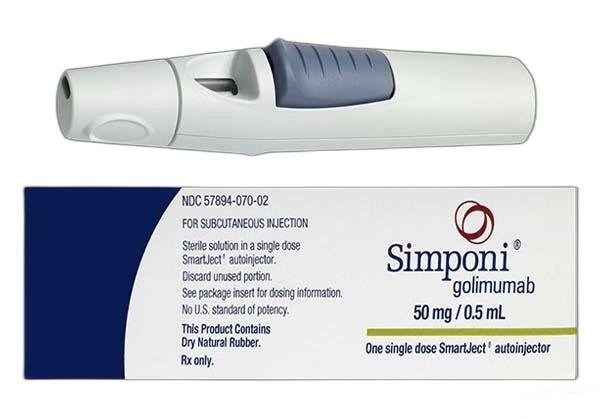
Simponi (available as disposable prefilled syringes and prefilled auto-injectors [SmartJect]) |
Janssen Biotech |
|
100 mg/mL |
Simponi (available as disposable prefilled syringes and prefilled auto-injectors [SmartJect]) |
Janssen Biotech |
||
|
Concentrate, for Injection, for IV use |
12.5 mg/mL (50 mg) |
Simponi Aria |
Janssen Biotech |
AHFS DI Essentials™. © Copyright 2025, Selected Revisions May 10, 2024. American Society of Health-System Pharmacists, Inc., 4500 East-West Highway, Suite 900, Bethesda, Maryland 20814.
† Off-label: Use is not currently included in the labeling approved by the US Food and Drug Administration.
Reload page with references included
Related/similar drugs
Biological Products Related to golimumab
Find detailed information on biosimilars for this medication.
Frequently asked questions
More about golimumab
- Check interactions
- Compare alternatives
- Reviews (157)
- Side effects
- Dosage information
- During pregnancy
- Drug class: TNF alfa inhibitors
- Breastfeeding
- En español