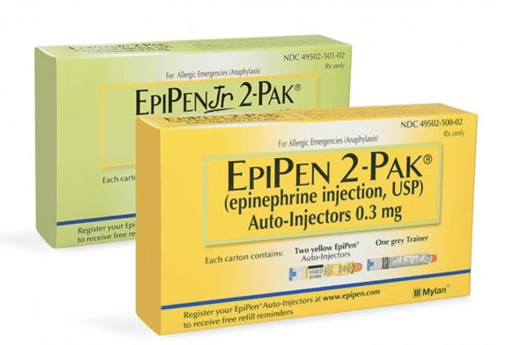
Epinephrine (Monograph)
Brand names: Adrenaclick, Adrenalin, Auvi-Q, EpiPen
Drug class: alpha- and beta-Adrenergic Agonists
Introduction
Epinephrine is an endogenous catecholamine that is the active principle of the adrenal medulla; epinephrine acts directly on both α- and β-adrenergic receptors.
Uses for Epinephrine
Sensitivity Reactions
Drug of choice in the emergency treatment of severe acute anaphylactic reactions, including anaphylactic shock.
Used to relieve anaphylactic symptoms (e.g., urticaria, pruritus, angioedema, hypotension, respiratory distress) caused by reactions to drugs, contrast media, insect stings, foods (e.g., milk, eggs, fish, shellfish, peanuts, tree nuts), latex, or other allergens; also used for idiopathic or exercise-induced anaphylaxis.
Administer immediately by IM injection as soon as anaphylaxis is diagnosed or strongly suspected.
Administration by IM injection preferred, mainly because of safety considerations. However, IV administration may be necessary in extreme situations (e.g., anaphylactic shock, cardiac arrest, unresponsive or severely hypotensive patients who have failed to respond to multiple IM injections). Close hemodynamic monitoring is recommended during IV administration.
Also used for its vasopressor effects in the treatment of anaphylactic shock and cardiac arrest associated with anaphylaxis.
Manage cardiac arrest secondary to anaphylaxis with standard ACLS measures; consider alternative vasoactive drugs (e.g., vasopressin, norepinephrine) in patients who do not respond to epinephrine. (See ACLS and Cardiac Arrhythmias under Uses.) Consider other interventions (e.g., antihistamines, inhaled β2-adrenergic agents, IV corticosteroids) as clinically indicated.
Risk of paradoxical response to epinephrine in patients receiving β-adrenergic blocking agents; consider glucagon and/or ipratropium for treatment of anaphylaxis in these patients.
ACLS and Cardiac Arrhythmias
Used for its α-adrenergic effects to increase blood flow and facilitate return of spontaneous circulation (ROSC) during cardiac arrest. Principal benefits of the drug result from increases in aortic diastolic blood pressure and in coronary and cerebral blood flow during resuscitation.
High-quality CPR and defibrillation are the only proven interventions to increase survival to hospital discharge in ACLS. Other resuscitative efforts, including drug therapy, are considered secondary and should be performed without compromising the quality and timely delivery of chest compressions and defibrillation.
Principal goal of pharmacologic therapy during cardiac arrest is to facilitate ROSC, and epinephrine is the drug of choice for this use.
ACLS guidelines state that administration of epinephrine may be reasonable in adults with VF or pulseless VT resistant to initial CPR attempts and at least one defibrillation shock; optimal timing of administration (particularly in relation to defibrillation) not known and may vary based on patient-specific factors and resuscitation conditions. In adults with asystole or pulseless electrical activity (PEA), epinephrine may be administered as soon as feasible after onset of cardiac arrest.
Also may be used in the postresuscitation period to optimize BP, cardiac output, and systemic perfusion after ROSC.
Used during the periarrest period for treatment of symptomatic bradycardia in adults; although not a first-line drug, may be considered in patients who are unresponsive to atropine or as a temporizing measure while awaiting availability of a pacemaker.
Also used in the emergency treatment of infants and children with bradycardia and cardiopulmonary compromise (with a palpable pulse) when bradycardia persists despite ventilation, oxygenation, and chest compressions.
Drugs are rarely needed during resuscitation of neonates; because hypoxemia and inadequate lung inflation are common causes of bradycardia, establishing adequate ventilation is the most important corrective measure in these patients.
Also has been used in the treatment of syncope resulting from AV nodal block. However, permanent pacemaker implantation is the treatment of choice for third-degree and advanced second-degree AV nodal block (complete heart block).
Septic Shock
Used for treatment of hypotension associated with septic shock, generally as a second-line agent.
The Surviving Sepsis Campaign International Guidelines for Management of Sepsis and Septic Shock recommend norepinephrine as the first-line vasopressor of choice in adults with septic shock; if adequate BP not achieved, epinephrine may be added.
Vasopressor therapy is not a substitute for replacement of blood, plasma, fluids, and/or electrolytes. Correct blood volume depletion as fully as possible before administration of epinephrine.
Should not be used in cardiogenic shock (because it increases myocardial oxygen demand) or in hemorrhagic or traumatic shock.
Local Vasoconstriction
May be added to solutions of some local anesthetics to decrease the rate of vascular absorption (to localize and prolong the duration of anesthesia and decrease the risk of systemic toxicity).
Has been applied topically to control superficial bleeding from arterioles or capillaries in the skin, mucous membranes, or other tissues. Bleeding from larger vessels is not controllable by topical application.
Premature Labor
Has been used to relax uterine musculature and inhibit uterine contractions in premature labor† [off-label] (tocolysis); however, the cardiovascular and other adverse effects limit its usefulness. (See Pregnancy under Cautions.) Other β-agonists (e.g., terbutaline) preferred.
Bronchospasm
Has been used as an oral bronchodilator for symptomatic treatment of asthma. However, an epinephrine preparation for oral inhalation no longer commercially available in US.
While orally inhaled epinephrine was once widely used in the treatment of asthma, the drug has been replaced by more selective and rapid-acting agents (e.g., inhaled β2-adrenergic agonists).
Also has been used IV for treatment of severe asthma exacerbations; however, no evidence that the drug improves outcomes compared with selective inhaled β2-adrenergic agonists.
Upper GI Hemorrhage
Has been used as an endoscopic treatment modality (as a dilute solution injected into and around ulcer base) to produce tamponade and achieve hemostasis in patients with acute nonvariceal upper GI bleeding† [off-label]. Should not be used as monotherapy; use in combination with additional treatment modality (e.g., clips, thermocoagulation).
Epinephrine Dosage and Administration
Administration
Effective May 1, 2016, USP changed its labeling standard for all single-entity preparations of epinephrine injection, USP to require that dosage strengths be expressed only in terms of strength per mL (e.g., mg/mL). Use of ratio expressions (e.g., 1:1000 or 1:10,000) no longer is acceptable. Labeling change was prompted by numerous reports of serious medication errors caused by confusion with different ratio expressions.
Usually administered parenterally (by IM, sub-Q, or IV injection or by continuous IV infusion).
Select appropriate concentration and route of administration carefully; serious adverse effects (e.g., cerebral hemorrhage) have occurred after concentrated solutions of epinephrine intended for IM administration were administered IV. Generally administer IV only in extreme situations (e.g., septic or anaphylactic shock, cardiac arrest, or when patient is unresponsive to multiple IM injections). Always use dilute solutions of epinephrine (e.g., 0.1 mg/mL) when administering IV. Commercially available epinephrine solutions for IM or sub-Q injection are more concentrated (1 mg/mL) and should not be administered IV without dilution.
Also has been administered by intraosseous (IO) injection or infusion† [off-label] in the ACLS setting, generally when IV access not readily available; onset of action and systemic concentrations are comparable to those achieved with venous administration.
May be administered endotracheally if vascular access (IV or IO) cannot be established during cardiac arrest.
Also has been administered by intracardiac injection (into the left ventricular chamber) during cardiac arrest; however, this route of administration not recommended in current ACLS guidelines.
Solutions of epinephrine have been applied topically to the skin, mucous membranes, or other tissues for local hemostasis.
Also has been administered by oral inhalation in the treatment of asthma; however, an oral inhalation preparation no longer commercially available in the US.
IM or Sub-Q Injection
Injections containing 1 mg/mL may be administered IM or sub-Q; avoid IM injections in the buttock. When epinephrine is used for the treatment of anaphylaxis, inject into anterolateral aspect of thigh; injection into or near smaller muscles (i.e., deltoid muscle) not recommended because of possible differences in absorption. When administered sub-Q, absorption and subsequent achievement of peak plasma concentrations is slower and may be substantially delayed if shock is present.
Commercially available as a prefilled auto-injector for emergency treatment of allergic reactions. When using the auto-injector, administer appropriate weight-based dose by IM or sub-Q injection into anterolateral aspect of thigh; may administer through clothing if necessary. Do not reuse auto-injectors. Consult manufacturer's prescribing information for additional instructions.
For self-medication, instruct patients and caregivers about proper administration techniques using the auto-injector provided by the manufacturer. First aid providers should be familiar with the auto-injector in order to assist patients experiencing an anaphylactic reaction, and they should be able to administer the auto-injector in the event that patient is unable to self-administer, provided that state law permits and valid prescription exists.
IV Administration
May administer by slow, direct IV injection or continuous IV infusion. Commercially available as a 0.1-mg/mL solution for IV administration. Must further dilute the commercially available 1-mg/mL solution prior to IV administration.
Extreme caution recommended when epinephrine is administered by direct IV injection since risk of overdosage and adverse cardiovascular effects is substantially higher; administer slowly and with close hemodynamic monitoring.
During cardiac resuscitation, may administer IV into a central or peripheral line. CPR should not be interrupted for placement of a central line. After administration through a peripheral line, flush with 20 mL of IV fluid and elevate extremity to ensure drug delivery into central compartment.
To minimize risk of necrosis, administer continuous IV infusions into a large vein. Avoid catheter tie-in technique to avoid stasis and increased local concentrations of the drug. Take care to avoid extravasation because local necrosis may result.
Dilution
Must dilute the commercially available 1-mg/mL solution prior to IV administration.
Various methods have been described for diluting epinephrine solutions for IV administration.
Rate of Administration
Administer slowly (after appropriate dilution) by IV injection or continuous IV infusion.
Recommended rates of infusion vary based on indicated use. While low rates (e.g., <0.3 mcg/kg per minute) generally produce predominantly β-adrenergic effects and higher rates (e.g., >0.3 mcg/kg per minute) produce α-adrenergic vasoconstriction, there is substantial interindividual variability; titrate infusion rate based on clinical response. (See Dosage under Dosage and Administration.)
Standardize 4 Safety
Standardized concentrations for epinephrine have been established through Standardize 4 Safety (S4S), a national patient safety initiative to reduce medication errors, especially during transitions of care. Because recommendations from the S4S panels may differ from the manufacturer’s prescribing information, caution is advised when using concentrations that differ from labeling, particularly when using rate information from the label. For additional information on S4S (including updates that may be available), see [Web].
The concentrations for epinephrine and norepinephrine are intentionally different to avoid confusion as recommended by the S4S panel and ISMP.
Babies under 500 g may require a lower concentration
|
Patient Population |
Concentration Standards |
Dosing Units |
|---|---|---|
|
Adults |
20 mcg/mL |
mcg/kg/min |
|
40 mcg/mL |
||
|
Pediatric patients (<50 kg) |
10 mcg/mL |
mcg/kg/min |
|
20 mcg/mL |
||
|
40 mcg/mL |
Topical Administration
Apply solutions topically as a spray or on cotton or gauze to the skin, mucous membranes, or other tissues.
Dosage
Dosage of epinephrine salts is expressed in terms of epinephrine.
Pediatric Patients
Sensitivity Reactions
Anaphylaxis
IM or Sub-Q0.01 mg/kg (0.01 mL/kg of a 1-mg/mL solution) (up to 0.3–0.5 mg per dose depending on patient weight); repeat every 5–15 minutes as needed. Some clinicians state that doses may be repeated at 20-minute to 4-hour intervals depending on severity of the condition and patient response.
For self-administration using a prefilled auto-injector, inject 0.15 or 0.3 mg, depending on body weight; 0.3 mg recommended for patients weighing ≥30 kg and 0.15 mg recommended for patients weighing 15–30 kg. Use alternative injectable forms if dose <0.15 mg considered more appropriate. For severe persistent anaphylaxis, repeat doses may be needed; if >2 sequential doses are required, administer subsequent doses only under direct medical supervision.
IVIf necessary, initial dose of 0.01 mg/kg (0.1 mL/kg of a 0.1-mg/mL solution) may be administered. If repeat doses are required, initiate a continuous IV infusion at a rate of 0.1 mcg/kg per minute; increase gradually to 1.5 mcg/kg per minute to maintain BP.
Pediatric Advanced Life Support (PALS)
IV or IO
Neonates: Usual IV dose is 0.01–0.03 mg/kg (0.1–0.3 mL/kg of a 0.1-mg/mL solution). Higher doses not recommended because of risk of exaggerated hypertension, decreased myocardial function, and worsening neurologic function.
Pediatric patients: Usual IV/IO dose is 0.01 mg/kg (0.1 mL/kg of a 0.1-mg/mL solution), up to a maximum single dose of 1 mg, repeated every 3–5 minutes as needed. Lack of survival benefit and potential harm from routine use of higher doses, particularly in cases of asphyxia. However, may consider high-dose epinephrine in exceptional circumstances (e.g., β-adrenergic blocking agent overdose).
For postresuscitation stabilization in pediatric patients, usual dosage is 0.1–1 mcg/kg per minute by IV/IO infusion; adjust based on patient response. Low-dose infusions (<0.3 mcg/kg per minute) generally produce predominantly β-adrenergic effects, while higher-dose infusions (>0.3 mcg/kg per minute) result in α-adrenergic vasoconstriction.
For emergency treatment of infants and children with bradycardia and cardiopulmonary compromise (with a palpable pulse), may give 0.01 mg/kg (0.1 mL/kg of a 0.1-mg/mL solution) by IV/IO injection, repeated every 3–5 minutes as needed.
Endotracheal
Optimum dose not established.
Neonates: If endotracheal route is used, doses of 0.01 or 0.03 mg/kg will likely be ineffective. Although safety and efficacy not established, consider endotracheal administration of a higher dose (0.05–0.1 mg/kg) while IV access is being obtained.
Pediatric patients: Usual dose is 0.1 mg/kg (0.1 mL/kg of a 1-mg/mL solution), up to a maximum single dose of 2.5 mg, for cardiac resuscitation; repeat every 3–5 minutes as needed. Flush with at least 5 mL of 0.9% sodium chloride injection after each dose.
For emergency treatment of infants and children with bradycardia and cardiopulmonary compromise (with a palpable pulse), may administer endotracheally at a dose of 0.1 mg/kg (0.1 mL/kg of a 1-mg/mL solution) if IV/IO access not available.
Septic Shock
IV
If epinephrine is used in pediatric patients, some clinicians have recommended an infusion rate of 0.05–0.3 mcg/kg per minute, titrated to effect.
When therapy is discontinued, decrease infusion rate gradually (e.g., by reducing every 30 minutes over a 12- to 24- hour period).
Bronchospasm
Sub-Q
Pediatric patients ≤12 years of age: For severe asthma, inject 0.01 mg/kg (0.01 mL/kg of a 1-mg/mL solution) every 20 minutes as needed for 3 doses; do not exceed 0.3–0.5 mg per dose.
Adolescents >12 years of age: 0.3–0.5 mg every 20 minutes as needed for 3 consecutive doses.
IV
Neonates: 0.01 mg/kg by slow IV injection has been recommended.
Infants: Initially, 0.05 mg by slow IV injection; may repeat every 20–30 minutes as needed.
Adults
Sensitivity Reactions
Anaphylaxis
IM or Sub-QUsual dose is 0.2–0.5 mg (0.2–0.5 mL of a 1-mg/mL solution); repeat every 5–15 minutes as needed.
For self-administration using a prefilled auto-injector, inject 0.3 mg. For severe persistent anaphylaxis, repeat doses may be needed; if >2 sequential doses are needed, administer subsequent doses only under direct medical supervision.
IVIn extreme circumstances (e.g., anaphylactic shock, cardiac arrest, or no response to initial IM injections), IV administration may be necessary.
Usual IV dose is 0.1–0.25 mg (1–2.5 mL of a 0.1-mg/mL solution); repeat every 5–15 minutes as necessary.
Alternatively, may administer as a continuous infusion at a rate of 2–15 mcg/minute; titrate based on severity of the reaction and clinical response.
ACLS and Cardiac Arrhythmias
Cardiac Arrest
IV or IOACLS guidelines recommend 1 mg every 3–5 minutes by IV/IO injection.
Higher doses (e.g., 0.1–0.2 mg/kg) do not provide any benefits in terms of survival or neurologic outcomes compared with the standard dose (1 mg) and may be harmful.
Optimal timing of administration, particularly in relation to defibrillation, not known and may vary based on patient-specific factors and resuscitation conditions. In adults with asystole or PEA, may administer as soon as feasible after onset of cardiac arrest based on studies demonstrating improved survival to hospital discharge and increased ROSC when the drug is administered early during course of treatment for a nonshockable rhythm.
For postresuscitation stabilization, usual IV dosage is 0.1–0.5 mcg/kg per minute; adjust based on patient response.
EndotrachealOptimal dose not established, but typical doses are 2–2.5 times those administered IV.
Bradycardia:
IVFor symptomatic bradycardia, initial IV infusion rate of 2–10 mcg/minute has been recommended; adjust according to patient response.
Adjunct to Local Anesthesia
Local Injection
In conjunction with local anesthetics, has been used in concentrations of 0.002–0.02 mg/mL; most frequently used concentration is 0.005 mg/mL.
Superficial Bleeding
Topical
As a topical hemostatic, solution concentrations of 0.002–0.1% have been sprayed or applied with cotton or gauze to the skin, mucous membranes, or other tissues.
Septic Shock
IV
Manufacturer suggests IV infusion of 0.05–2 mcg/kg per minute. May increase infusion rate by 0.05–0.2 mcg/kg per minute every 10–15 minutes to achieve desired BP goal. Duration of therapy or total dose required not known; treatment may be necessary for several hours or days until the patient's hemodynamic status improves.
When therapy is discontinued, decrease infusion rate gradually (e.g., by reducing every 30 minutes over a 12- to 24-hour period).
Bronchospasm
Sub-Q
For severe asthma, 0.3–0.5 mg (0.3–0.5 mL of a 1-mg/mL solution) may be administered every 20 minutes for 3 doses.
Alternatively, may administer 0.01 mg/kg (using a 1-mg/mL solution) divided into 3 doses of approximately 0.3 mg each, given at 20-minute intervals.
IV
0.1–0.25 mg (1–2.5 mL of a 0.1-mg/mL solution) injected slowly.
Prescribing Limits
Pediatric Patients
Sensitivity Reactions
Anaphylaxis
IM or Sub-QMaximum for pediatric patients: 0.3–0.5 mg of epinephrine per dose depending on weight.
Pediatric Resuscitation
IV/IO
Maximum single dose of 1 mg.
Endotracheal
Maximum single dose of 2.5 mg.
Bronchospasm
Sub-Q
Maximum for pediatric patients ≤12 years of age: 0.3–0.5 mg per dose.
Adults
Sensitivity Reactions
Anaphylaxis
IM or Sub-QSingle doses should not exceed 0.5 mg.
Cautions for Epinephrine
Contraindications
-
No absolute contraindications to use in life-threatening conditions.
-
Relative contraindications include shock (other than anaphylactic and septic shock), known hypersensitivity to sympathomimetic amines, coronary insufficiency, or cardiac dilatation, as well as use in most patients with angle-closure glaucoma, or organic brain damage. Contraindicated for use during general anesthesia with agents such as cyclopropane and halogenated hydrocarbon anesthetics (e.g., halothane).
-
Contraindicated in conjunction with local anesthetics for use in certain areas (e.g.,fingers, toes, ears).
Warnings/Precautions
Warnings
High BP Induction
Inadvertent induction of high arterial BP with epinephrine can cause angina pectoris, aortic rupture, or cerebral hemorrhage.
Hypovolemia
Vasopressor therapy is not a substitute for replacement of blood, plasma, fluids, and/or electrolytes. Correct blood volume depletion as fully as possible before epinephrine administration.
Extravasation
Avoid extravasation; severe local adverse effects (e.g., tissue necrosis) may occur as a result of local vasoconstriction.
Check site of infusion frequently for free flow and observe infused vein for blanching.
Avoid injection into leg veins, especially in geriatric patients or those with occlusive vascular diseases (e.g., arteriosclerosis, atherosclerosis, Buerger’s disease, diabetic endarteritis).
If blanching is observed in the infused vein, changing the injection site periodically may be advisable.
If extravasation occurs, infiltrate affected area liberally with 10–15 mL of sodium chloride solution containing 5–10 mg of phentolamine mesylate. Immediate and conspicuous local hyperemic changes occur if area is infiltrated within 12 hours; therefore, administer phentolamine as soon as possible after extravasation noted.
Concomitant Diseases
Adverse reactions most likely to occur in hypertensive or hyperthyroid patients; use with extreme caution, if at all.
Use with caution in patients with Parkinson's disease, diabetes mellitus, pheochromocytoma, cardiovascular disease, or psychoneurotic disorders.
Cardiac Arrhythmias
Can induce serious cardiac arrhythmias in patients without heart disease, in those with organic heart disease, and in those with drug-induced myocardial sensitization.
General Anesthetics
Can convert asystole to VF in anesthetic cardiac accidents since many anesthetics sensitize the myocardium to epinephrine.
Cyclopropane or halogenated hydrocarbon general anesthetics that increase cardiac irritability and seem to sensitize the myocardium to epinephrine may cause arrhythmias including VPC, VT, or VF. (See Contraindications under Cautions.)
Sensitivity Reactions
Sulfites
Some formulations contain sulfites, which may cause allergic-type reactions (including anaphylaxis and life-threatening or less severe asthmatic episodes) in certain susceptible individuals.
Presence of sulfites in a parenteral epinephrine preparation and the possibility of allergic-type reactions should not deter use of the drug when indicated for the treatment of serious allergic reactions or for other emergency situations. Epinephrine is the preferred treatment for such conditions, and currently available alternatives to epinephrine may not be optimally effective.
Consider that sulfites may be responsible for paradoxical worsening of respiratory function in asthmatics or for worsening symptoms or decreased bronchodilatory response with increasing use of the drug.
Sympathomimetic Amines
Caution in those with a history of sensitivity to sympathomimetic amines.
General Precautions
Cardiovascular Effects
Can cause VF, but beneficial effects in restoring electrical activity and enhancing defibrillation are well documented.
May cause tachycardia, ventricular ectopy, tachyarrhythmias, hypertension, and vasoconstriction in patients with a perfusing rhythm.
Caution in patients with underlying cardiovascular disease (e.g., cardiac arrhythmias, coronary artery disease, organic heart disease).
Extreme caution in patients with prefibrillatory rhythm because of excitatory cardiac activity.
Overdosage or inadvertent IV administration may cause cerebrovascular hemorrhage secondary to a marked increase in BP.
Respiratory Disease and Effects
Caution in patients with long-standing bronchial asthma and substantial emphysema who may also have degenerative heart disease.
Can cause pulmonary edema secondary to peripheral vasoconstriction and cardiac stimulation.
Diuretics
May decrease vascular vasopressor response.
MAO Inhibitors
Use vasopressors cautiously with MAO inhibitors.
Specific Populations
Pregnancy
Category C.
Use during pregnancy only if clearly indicated.
Some manufacturers state that epinephrine injection should be avoided during the second stage of labor or when maternal BP is >130/80 mm Hg.
When administered in ACLS, may decrease blood flow to the uterus; however, the woman must be resuscitated for survival of the fetus.
Lactation
Risk unknown.
Pediatric Use
Used in pediatric patients of all ages, dosing according to body weight.
Geriatric Use
Use with caution.
Common Adverse Effects
Fear, anxiety, tenseness, restlessness, headache, tremor, dizziness, lightheadedness, nervousness, sleeplessness, excitability, and weakness. Increased rigidity and tremor in patients with parkinsonian syndrome. May aggravate or induce psychomotor agitation, disorientation, impaired memory, assaultive behavior, panic, hallucinations, suicidal or homicidal tendencies, and psychosis characterized by clear consciousness with schizophrenic-like thought disorder and paranoid delusions. Nausea, vomiting, sweating, pallor, respiratory difficulty, or respiratory weakness and apnea.
ECG changes including a decrease in T-wave amplitude in all leads in normal individuals. Disturbances of cardiac rhythm and rate may result in palpitation and tachycardia. Aggravation or precipitation of angina pectoris by increasing cardiac work and accentuating the insufficiency of the coronary circulation. Potentially fatal ventricular arrhythmias including fibrillation, especially in patients with organic heart disease or those receiving other drugs that sensitize the heart to arrhythmias.
Hypertension secondary to overdosage or inadvertent IV injection of usual sub-Q doses. Subarachnoid hemorrhage and hemiplegia have resulted from hypertension, even following usual sub-Q doses.
Necrosis from repeated injections because of vascular constriction at the injection site. Tissue necrosis in the extremities, kidneys, and liver.
Severe metabolic acidosis from prolonged use or overdosage because of elevated blood concentrations of lactic acid.
Absorption from the respiratory tract following large orally inhaled doses may result in adverse effects similar to those occurring after parenteral administration. Rebound bronchospasm may occur when the effects of epinephrine end. Further reductions in arterial oxygen tension. Dryness of pharyngeal membranes may follow oral inhalation.
Drug Interactions
Specific Drugs
|
Drug |
Interaction |
Comments |
|---|---|---|
|
α-Adrenergic blocking agents (e.g., phentolamine) |
High-dose epinephrine vasoconstriction and hypertension antagonized |
|
|
β-Adrenergic blocking agents (e.g., propranolol) |
Antagonism of cardiac and bronchodilating effects May potentiate pressor effects of epinephrine |
|
|
Anesthetics, general (e.g., halogenated hydrocarbons [e.g., halothane], cyclopropane) |
Increased cardiosensitivity to epinephrine |
Use with caution, if at all; increased risk of ventricular arrhythmias such as VPCs, VT, or VF; contraindicated with chloroform, trichloroethylene, or cyclopropane May not be absorbed rapidly enough with topical hemostatic use to present a problem in short procedures Prophylactic lidocaine or procainamide may provide some protection IV propranolol may reverse arrhythmias |
|
Antidepressants, MAO inhibitors |
MAO is one enzyme involved in epinephrine metabolism May cause severe, prolonged hypertension |
Use with caution |
|
Antidepressants, tricyclic |
Potentiation of epinephrine effects (especially on heart rate and rhythm) |
|
|
Antidiabetic agents (e.g., insulin, oral hypoglycemics) |
Epinephrine-induced hyperglycemia |
May require increased antidiabetic dosage |
|
Antihistamines, first generation (especially diphenhydramine, dexchlorpheniramine, tripelennamine) |
Potentiation of epinephrine effects (especially on heart rate and rhythm) |
|
|
Antihypertensives |
Antagonism of pressor effects of epinephrine |
|
|
Catechol-O-methyltransferase (COMT) inhibitors (e.g., entacapone) |
Potentiation of pressor effects of epinephrine |
|
|
Clonidine |
Potentiation of pressor effects of epinephrine |
|
|
Corticosteroids |
Potentiation of hypokalemic effects of epinephrine |
|
|
Digoxin |
Increased cardiosensitivity to epinephrine |
Avoid epinephrine with excessive digoxin dosages |
|
Diuretics |
Antagonism of pressor effects and potentiation of arrhythmogenic effects of epinephrine Some diuretics may potentiate the hypokalemic effects of epinephrine |
|
|
Doxapram |
Potentiation of pressor effects of epinephrine |
|
|
Ergot alkaloids |
α-Adrenergic antagonism |
Possible reversal of pressor response |
|
Nitrates |
Antagonism of pressor effects of epinephrine |
|
|
Oxytocics |
Severe, persistent, hypertension possible |
|
|
Phenothiazines |
Reversal of epinephrine's vasopressor effect |
Do not use to treat phenothiazine-induced hypotension |
|
Quinidine |
May potentiate arrhythmogenic effects of epinephrine |
|
|
Sympathomimetic amines |
Additive effects and toxicity |
Avoid concomitant use |
|
Theophylline |
Potentiation of hypokalemic effects of epinephrine |
|
|
Thyroid hormones |
Potentiation of epinephrine effects (especially on heart rate and rhythm) |
Epinephrine Pharmacokinetics
Absorption
Bioavailability
Rapidly metabolized in the GI tract and liver after oral ingestion; pharmacologically active concentrations are not reached when given orally.
Well absorbed after sub-Q or IM injection; absorption can be hastened by massaging the injection site.
Absorbed rapidly through the lung capillary bed following endotracheal administration; serum concentrations achieved only 10% of those with an equivalent IV dose.
Absorption is slight and the effects are restricted mainly to the respiratory tract after usual orally inhaled doses; absorption somewhat increased when larger doses are inhaled, and systemic effects may occur.
Onset
Rapid onset of action when solutions are administered parenterally or by oral inhalation.
Sub-Q injection in asthmatic attacks may produce bronchodilation within 5–10 minutes and maximal effects in about 20 minutes.
After oral inhalation, bronchodilation usually occurs within 1 minute.
Duration
Short duration of action when solutions are administered parenterally or by oral inhalation.
Distribution
Extent
Epinephrine crosses the placenta but not the blood-brain barrier.
Distributed into milk.
Elimination
Metabolism
Pharmacologic actions are terminated mainly by uptake and metabolism in sympathetic nerve endings.
Circulating drug is metabolized in the liver and other tissues by a combination of reactions involving the enzymes catechol-O-methyltransferase (COMT) and MAO.
Elimination Route
40% excreted in urine, mainly as inactive metabolites.
Stability
Storage
Epinephrine, epinephrine salts, and preparations containing the drug gradually darken on exposure to light and air and must be stored in tight, light-resistant containers.
Discard solutions with a color that is pinkish or darker than slightly yellow or that contain a precipitate.
Commercially available preparations vary in stability, depending on the form in which epinephrine is present and on the preservatives used. Follow the manufacturer’s directions with respect to storage requirements for each product.
Parenteral
Injection
Epinephrine: 20–25°C; protect from light and freezing.
In some commercially available injections, air has been replaced with nitrogen to avoid oxidation.
Withdrawal of doses from multiple-dose vials introduces air into the vials, subjecting the remaining epinephrine to oxidation. Oxidation of epinephrine imparts first a pink, then a brown color.
Auto-injector (e.g., EpiPen): 20–25°C (may be exposed to 15–30°C); protect from light and do not refrigerate or freeze. Manufacturer's plastic carrying case provides added UV light protection. Avoid exposure to extreme heat or cold.
Actions
-
An endogenous catecholamine.
-
Acts directly on both α- and β-adrenergic receptors of tissues innervated by sympathetic nerves except the sweat glands and arteries of the face.
-
Main effects of therapeutic parenteral doses are relaxation of smooth muscle of the bronchial tree, cardiac stimulation, and dilation of skeletal muscle vasculature.
-
Relaxes bronchial smooth muscle by stimulation of β2-adrenergic receptors and constricts bronchial arterioles by stimulation of α-adrenergic receptors. Relieves bronchospasm, reduces congestion and edema, and increases tidal volume and vital capacity.
-
Inhibits histamine release and antagonizes the effect of the mediator on end organs. As a result, may reverse histamine-induced bronchiolar constriction, vasodilation, and edema.
-
Acts on β1-adrenergic receptors in the heart, producing a positive chronotropic effect through the SA node and a positive inotropic effect on the myocardium. Cardiac output, oxygen consumption, and the work of the heart are increased.
-
Constricts arterioles in the skin, mucous membranes, and viscera by its effect on α-adrenergic receptors and reduces cutaneous blood flow, especially in the hands and feet. Produces local vasoconstriction and hemostasis in bleeding from small vessels when applied topically but does not control bleeding from larger vessels.
-
Increases glycogenolysis in the liver, reduces glucose uptake by tissues, and inhibits insulin release in the pancreas, resulting in hyperglycemia.
Advice to Patients
-
Importance of advising patients or their caregivers about common adverse effects with epinephrine including tachycardia, palpitations, sweating, nausea, vomiting, difficulty breathing, pallor, dizziness, weakness, shakiness, headache, apprehension, nervousness, or anxiety. These effects may be more persistent or severe in patients with hypertension or hyperthyroidism, and patients with coronary artery disease could experience angina.
-
Importance of advising patients with diabetes mellitus that epinephrine may increase blood glucose and advising patients with Parkinson's disease that the drug may cause a temporary worsening of symptoms.
-
For self-administration in anaphylaxis, instruct patients on proper techniques for storage, expiration dating (replacing before expiration), use, and disposal of prefilled auto-injectors (e.g., EpiPen).
-
Importance of advising patients to go to the nearest emergency room after self-administration for anaphylaxis since further medical attention may be needed. Instruct patient to inform clinician that epinephrine was self-administered (show injection site) and to bring used auto-injector for proper disposal.
-
Give patients a copy of the manufacturer’s patient instructions.
-
Importance of not injecting the dose via the auto-injector into the thumb, finger, or hand since loss of blood flow may occur in these areas. Importance of seeking immediate medical attention if this occurs.
-
For anaphylaxis, importance of remaining vigilant for possible recurrence despite an asymptomatic period; length of observation time not established. Symptoms may recur within 1–36 hours after initial reaction. Some experts suggest that patients with moderate to severe anaphylaxis should be observed for a minimum of 4–8 hours after treatment.
-
Importance of informing clinicians of existing or contemplated concomitant therapy, including prescription and OTC drugs, as well as any concomitant diseases.
-
Importance of women informing clinicians if they are or plan to become pregnant or plan to breast-feed.
-
Importance of informing patients of other important precautionary information. (See Cautions.)
Additional Information
The American Society of Health-System Pharmacists, Inc. represents that the information provided in the accompanying monograph was formulated with a reasonable standard of care, and in conformity with professional standards in the field. Readers are advised that decisions regarding use of drugs are complex medical decisions requiring the independent, informed decision of an appropriate health care professional, and that the information contained in the monograph is provided for informational purposes only. The manufacturer’s labeling should be consulted for more detailed information. The American Society of Health-System Pharmacists, Inc. does not endorse or recommend the use of any drug. The information contained in the monograph is not a substitute for medical care.
Preparations
Excipients in commercially available drug preparations may have clinically important effects in some individuals; consult specific product labeling for details.
Please refer to the ASHP Drug Shortages Resource Center for information on shortages of one or more of these preparations.
* available from one or more manufacturer, distributor, and/or repackager by generic (nonproprietary) name
|
Routes |
Dosage Forms |
Strengths |
Brand Names |
Manufacturer |
|---|---|---|---|---|
|
Parenteral |
Injection |
0.1 mg/mL* |
EPINEPHrine Injection (available in prefilled syringes) |
|
|
0.5 mg/mL |
EpiPen Jr. Auto-Injector (delivers a single 0.15-mg [0.3 mL] dose) |
Meridian |
||
|
1 mg/mL* |
Adrenaclick Auto-Injector (available in dose of 0.15 mg [0.15 mL] or 0.3 mg [0.3 mL]) |
Amedra |
||
|
Adrenalin |
Par |
|||
|
Auvi-Q Auto-Injector (available in dose of 0.15 mg [0.15 mL] or 0.3 mg [0.3 mL]) |
Sanofi-Aventis |
|||
|
EPINEPHrine Injection |
||||
|
EpiPen Auto-Injector (delivers a single 0.3-mg [0.3 mL] dose) |
Meridian |
AHFS DI Essentials™. © Copyright 2025, Selected Revisions September 10, 2024. American Society of Health-System Pharmacists, Inc., 4500 East-West Highway, Suite 900, Bethesda, Maryland 20814.
† Off-label: Use is not currently included in the labeling approved by the US Food and Drug Administration.
Reload page with references included
Related/similar drugs
Frequently asked questions
- Can you use an expired EpiPen in an emergency?
- Norepinephrine vs epinephrine: what's the difference?
- Can you bring an EpiPen on a plane?
- What's the mechanism of action for epinephrine?
- Does epinephrine cause vasoconstriction?
- How much does Auvi-Q cost compared to EpiPen?
- How does neffy work?
More about epinephrine
- Check interactions
- Compare alternatives
- Pricing & coupons
- Reviews (60)
- Latest FDA alerts (4)
- Side effects
- Dosage information
- During pregnancy
- Support group
- Drug class: adrenergic bronchodilators
- Breastfeeding
Patient resources
Professional resources
- EPINEPHrine Bitartrate, EPINEPHrine Hydrochloride, Epinephryl Borate (Mydriatic) (EENT) monograph
- EPINEPHrine Hydrochloride (Vasoconstrictor) (EENT) (AHFS Monograph)
- Epinephrine Concentrate Injection (FDA)
- Epinephrine Injection (FDA)
Other brands
EpiPen, Adrenalin, neffy, Auvi-Q, ... +5 more