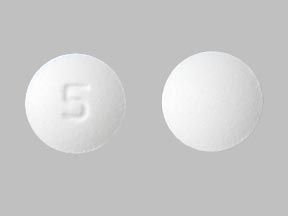
Donepezil (Monograph)
Drug class: Parasympathomimetic (Cholinergic) Agents
- Anticholinesterase Agents
VA class: AU300
Chemical name: 2,3-Dihydro-5,6-dimethoxy-2-[(1-(phenylmethyl)-4-piperidinyl)methyl]-1H-inden-1-one
Molecular formula: C24H29NO3
CAS number: 120014-06-4
Introduction
Centrally active, reversible acetylcholinesterase inhibitor.
Uses for Donepezil
Alzheimer’s Disease
Management of mild, moderate, or severe dementia of the Alzheimer’s type (Alzheimer’s disease, presenile or senile dementia).
Cholinesterase inhibitors (e.g., donepezil, galantamine, rivastigmine) are used for symptomatic management of dementia associated with Alzheimer's disease; however, these drugs have been shown to provide only modest benefits and do not alter the underlying dementing process. Because of the lack of established alternatives, experts generally recommend a trial with one of these agents in Alzheimer's disease.
Donepezil may be used in combination with memantine, an N-methyl-d-aspartate (NMDA) receptor antagonist. A fixed-combination preparation consisting of memantine and donepezil is commercially available for the treatment of moderate to severe dementia of the Alzheimer's type in patients receiving donepezil hydrochloride at a stable dosage of 10 mg once daily.
Mild Cognitive Impairment
Cholinesterase inhibitors including donepezil have been investigated in patients with mild cognitive impairment† [off-label]; however, evidence of benefit is lacking.
Donepezil Dosage and Administration
Administration
Oral Administration
Administer orally (as conventional or orally disintegrating tablets) once daily at bedtime.
Orally disintegrating and conventional film-coated tablets are bioequivalent.
Administer with or without food.
Orally disintegrating tablets: Place on tongue and allow to dissolve; follow with water.
Fixed-combination preparation containing memantine and donepezil (Namzaric): Swallow capsules intact (do not divide, chew, or crush); alternatively, may open capsules, sprinkle on applesauce, and swallow without chewing. Consume entire contents of each capsule; do not divide dose.
Dosage
Available as donepezil hydrochloride; dosage expressed in terms of the salt.
Adults
Alzheimer’s Disease
Mild to Moderate Disease
OralInitially, 5 mg once daily at bedtime.
May increase to 10 mg daily as tolerated. In clinical studies, higher dosage of 10 mg daily not shown to provide substantially greater clinical benefit compared with 5 mg daily; however, some patients may derive additional benefit with the higher dosage. (See Prescribing Limits under Dosage and Administration.)
Use of the 10-mg daily dosage should be based on prescriber and patient preference. Rate of dose titration may affect incidence of adverse effects; therefore, manufacturer states that patients should receive a dosage of 5 mg daily for 4–6 weeks before receiving a dosage of 10 mg daily. In clinical studies, increasing dosage from 5 mg daily to 10 mg daily over 6 weeks, as compared with over 1 week, resulted in lower rate of adverse effects.
Moderate to Severe Disease
OralInitially, 5 mg once daily at bedtime. May increase to 10 or 23 mg once daily at bedtime as tolerated. (See Prescribing Limits under Dosage and Administration.)
Rate of dose titration may affect incidence of adverse effects; therefore, manufacturer states that patients should receive a dosage of 5 mg daily for 4–6 weeks before receiving a dosage of 10 mg daily, and should receive a dosage of 10 mg daily for ≥3 months before receiving a dosage of 23 mg daily.
Patients stabilized on donepezil hydrochloride 10 mg daily and not currently receiving memantine who are being switched to the fixed combination of memantine hydrochloride and donepezil hydrochloride (Namzaric): Recommended initial dosage of the fixed-combination preparation is 7 mg of memantine hydrochloride and 10 mg of donepezil hydrochloride once daily in the evening. If tolerated, may increase dosage after ≥1 week; increase dosage in increments of 7 mg of the memantine hydrochloride component up to maximum recommended maintenance dosage of 28 mg of memantine hydrochloride and 10 mg of donepezil hydrochloride once daily in the evening.
Patients currently receiving stable dosages of donepezil and memantine as separate preparations (donepezil hydrochloride 10 mg daily; memantine hydrochloride 10 mg twice daily or 28 mg once daily as an extended-release preparation) who are being switched to the fixed combination of memantine hydrochloride and donepezil hydrochloride (Namzaric): Recommended dosage of the fixed-combination preparation is memantine hydrochloride 28 mg and donepezil hydrochloride 10 mg once daily in the evening. Initiate therapy with the fixed-combination preparation on the day following the last dose of the individual preparations.
Prescribing Limits
Adults
Alzheimer's Disease
Oral
Mild to moderate disease: Maximum 10 mg daily.
Moderate to severe disease: Maximum 23 mg daily.
Maximum dosage of the fixed-combination preparation containing memantine and donepezil: 28 mg memantine hydrochloride and 10 mg donepezil hydrochloride once daily.
Special Populations
Hepatic Impairment
No specific recommendation for dosage adjustment.
Renal Impairment
Manufacturer makes no specific recommendations for dosage adjustment of donepezil based on renal function.
Fixed combination of memantine hydrochloride and donepezil hydrochloride (Namzaric): Dosage reduction recommended in patients with severe renal impairment (Clcr 5–29 mL/minute); no dosage adjustment required in patients with mild or moderate renal impairment.
If the fixed-combination preparation is initiated in patients with severe renal impairment who are not currently taking memantine, recommended initial dosage is 7 mg of memantine hydrochloride and 10 mg of donepezil hydrochloride once daily in the evening; after 1 week, increase to recommended maintenance dosage of 14 mg of memantine hydrochloride and 10 mg of donepezil hydrochloride once daily in the evening.
Patients with severe renal impairment who are receiving stable dosages of memantine and donepezil as separate preparations can be switched to the fixed-combination preparation containing memantine hydrochloride 14 mg and donepezil hydrochloride 10 mg once daily in the evening.
Geriatric Patients
No specific recommendations for dosage adjustment.
Cautions for Donepezil
Contraindications
-
Known hypersensitivity to donepezil or piperidine derivatives or any ingredient in the formulation.
Warnings/Precautions
Warnings
Use with Anesthesia
Cholinesterase inhibitors may exaggerate the effects of some muscle relaxants (e.g., succinylcholine) during anesthesia.
Cardiac Effects
Cholinesterase inhibitors may produce bradycardia or heart block via vagotonic effects on the sinoatrial or AV nodes. May occur in patients with or without known cardiac conduction abnormalities. Syncope reported in patients receiving donepezil.
Use with caution in patients with sick sinus syndrome or other conduction defects.
GI Effects
Possible diarrhea, nausea, and vomiting as a result of cholinergic effects of the drug; appear to be dose related and generally mild to moderate in severity. Adverse GI effects are generally transient and resolve during continued use of the drug without need for dose modification. Monitor patients closely for adverse GI effects during initiation of therapy and after dosage increases.
Potential for increased gastric acid secretion. Carefully monitor patients for symptoms of active or occult GI bleeding, especially those at increased risk for developing ulcers (e.g., those with history of peptic ulcer disease, those receiving concomitant NSAIA therapy).
Weight Loss
Weight loss reported with higher frequency in patients receiving the 23-mg daily dosage compared with 10-mg daily dosage.
GU Effects
Although not reported in clinical studies with donepezil, cholinesterase inhibitors may induce or exacerbate urinary obstruction.
Respiratory Effects
Use with caution in patients with a history of asthma or obstructive pulmonary disease.
Neurologic Effects
Drugs that increase cholinergic activity have the potential to cause seizures; however, seizures also may be a manifestation of Alzheimer’s disease.
Use with caution in patients with seizures.
Use of Fixed Combinations
When donepezil is used in fixed combination with memantine, consider the cautions, precautions, and contraindications associated with memantine.
Specific Populations
Pregnancy
No adequate data on developmental risks associated with use in pregnant women. In animal studies, no evidence of developmental toxicity; however, increased stillbirths and decreased offspring survival observed.
Lactation
Not known whether donepezil is distributed into milk. Also not known whether the drug affects nursing infants or milk production. Consider known benefits of breast-feeding along with mother's need for the drug and any potential adverse effects on the breast-fed infant from the drug or underlying maternal condition.
Pediatric Use
Safety and efficacy not established.
Geriatric Use
Dementia of the Alzheimer’s type occurs principally in patients >55 years of age. The mean age of patients receiving donepezil in clinical studies was 73 years of age. No substantial differences in most adverse effects in patients ≥65 years of age relative to those <65 years of age.
Low Body Weight
Increased frequency of some adverse effects (e.g., nausea, vomiting, decreased weight) observed in patients who weigh <55 kg compared with those with higher body weights; may be related to higher plasma exposures in patients with lower body weights.
Pharmacogenomic Considerations
Clearance of donepezil, a CYP2D6 substrate, differs based on CYP2D6 genotype. (See Special Populations under Pharmacokinetics.)
Hepatic Impairment
Clearance may be reduced by hepatic impairment. (See Special Populations under Pharmacokinetics.)
Renal Impairment
Clearance does not appear to be affected by renal impairment. (See Special Populations under Pharmacokinetics.)
Common Adverse Effects
Nausea, diarrhea, insomnia, vomiting, muscle cramp, fatigue, anorexia.
Drug Interactions
Metabolized by CYP3A4 and CYP2D6. Unlikely to cause clinically important induction or inhibition of CYP3A4 or CYP2D6. Little to no evidence of CYP2B6, 2C8, or 2C19 inhibition at clinically relevant concentrations; not known whether donepezil has any enzyme-induction potential.
Not a substrate of P-glycoprotein (P-gp).
Drugs Affecting or Metabolized by Hepatic Enzymes
CYP3A4 or CYP2D6 substrates: Donepezil unlikely to alter clearance of these drugs.
Potent CYP3A inhibitors: Possible increased plasma concentrations of donepezil.
Potent CYP2D6 inhibitors: May Increase systemic exposure of donepezil by 17–20%.
CYP3A inducers: Possible increased metabolism of donepezil.
Protein-bound Drugs
Pharmacokinetic interactions unlikely with highly protein-bound drugs.
Specific Drugs
|
Drug |
Interaction |
Comments |
|---|---|---|
|
Anticholinergic agents |
Possible interference with activity of anticholinergic agents |
|
|
Carbamazepine |
Possible induction of donepezil metabolism |
|
|
Cholinergic agonists (e.g., bethanechol) |
Synergistic effect |
|
|
Cholinesterase inhibitors |
Synergistic effect |
|
|
Cimetidine |
No clinically important effects on pharmacokinetics of either drug |
|
|
Dexamethasone |
Possible induction of donepezil metabolism |
|
|
Digoxin |
No clinically important effects on pharmacokinetics of either drug |
|
|
Furosemide |
Pharmacokinetic interactions (including protein binding interactions) unlikely |
|
|
Ketoconazole |
Plasma donepezil concentrations increased by 36%; no change in ketoconazole pharmacokinetics |
Clinical importance not known |
|
Neuromuscular blocking agents (e.g., succinylcholine) |
Synergistic effect resulting in exaggerated muscle relaxation |
|
|
Phenobarbital |
Possible induction of donepezil metabolism |
|
|
Phenytoin |
Possible induction of donepezil metabolism |
|
|
Quinidine |
Possible inhibition of donepezil metabolism |
Clinical importance not known |
|
Rifampin |
Possible induction of donepezil metabolism |
|
|
Theophylline |
No effect on pharmacokinetics of theophylline |
|
|
Warfarin |
Pharmacokinetic interactions (including protein binding interactions) unlikely |
Donepezil Pharmacokinetics
Absorption
Bioavailability
Relative oral bioavailability is 100%.
Orally disintegrating and conventional film-coated tablets are bioequivalent.
Following oral administration of the 23-mg tablet, peak plasma concentrations achieved in approximately 8 hours compared with 3 hours for the 10-mg tablet; peak plasma concentrations are approximately twofold higher for the 23-mg versus the 10-mg tablet.
Food
Food does not affect rate or extent of absorption when administered as conventional film-coated tablets.
Effect of food on donepezil absorption after administration as orally disintegrating tablets not studied, but expected to be minimal.
Distribution
Plasma Protein Binding
Approximately 96% (mainly albumin [75%] and alpha1-acid glycoprotein [21%]).
Elimination
Metabolism
Extensively metabolized to 4 major metabolites (2 known to be active) and a number of minor metabolites. Metabolized by CYP2D6 and CYP3A4 and undergoes glucuronidation.
Elimination Route
Eliminated in urine and feces (57 and 15%, respectively, over 10 days, with 28% still unrecovered; about 17% of the dose recovered in urine as unchanged drug).
Half-life
About 70 hours.
Special Populations
Hepatic impairment: In patients with stable alcoholic cirrhosis, clearance appears to be reduced by about 20%.
Renal impairment: In patients with moderate to severe renal impairment (Clcr <18 mL/minute per 1.73 m2), clearance appears to be similar to that in healthy individuals.
Age: Clearance appears to decrease with increasing age. Compared with patients 65 years of age, clearance of donepezil was decreased by 17% in patients 90 years of age and increased by 33% in patients 40 years of age; however, these changes are not considered clinically important.
Weight: Clearance appears to increase with body weight (observed over weight range of 50–110 kg).
CYP2D6 genotype: Compared with extensive metabolizers, clearance is decreased by 31.5% in poor CYP2D6 metabolizers and increased by 24% in ultra-rapid metabolizers.
Stability
Storage
Oral
Tablets and Orally Disintegrating Tablets
15–30°C.
Fixed-combination Memantine and Donepezil Extended-release Capsules
20–25°C (may be exposed to 15–30°C).
Actions
-
Binds reversibly with and inactivates cholinesterases (e.g., acetylcholinesterase), thus inhibiting hydrolysis of acetylcholine and resulting in increased acetylcholine concentrations at cholinergic synapses.
-
Deficiency of acetylcholine caused by selective loss of cholinergic neurons in the cerebral cortex, nucleus basalis, and hippocampus is a pathologic feature of Alzheimer's disease associated with cognitive deficits.
Advice to Patients
-
Importance of taking donepezil once daily as prescribed.
-
Importance of informing patients of the potential for adverse effects such as nausea, diarrhea, vomiting, insomnia, fatigue, anorexia, and weight loss.
-
Importance of women informing clinicians if they are or plan to become pregnant or plan to breast-feed.
-
Importance of informing clinicians of existing or contemplated concomitant therapy, including prescription and OTC drugs.
-
Importance of informing patients of other important precautionary information. (See Cautions.)
Preparations
Excipients in commercially available drug preparations may have clinically important effects in some individuals; consult specific product labeling for details.
Please refer to the ASHP Drug Shortages Resource Center for information on shortages of one or more of these preparations.
* available from one or more manufacturer, distributor, and/or repackager by generic (nonproprietary) name
|
Routes |
Dosage Forms |
Strengths |
Brand Names |
Manufacturer |
|---|---|---|---|---|
|
Oral |
Tablets, film-coated |
5 mg* |
Aricept |
Eisai |
|
Donepezil Hydrochloride Tablets |
||||
|
10 mg* |
Aricept |
Eisai |
||
|
Donepezil Hydrochloride Tablets |
||||
|
23 mg |
Aricept |
Eisai |
||
|
Tablets, orally disintegrating |
5 mg* |
Aricept ODT |
Eisai |
|
|
Donepezil Hydrochloride Orally Disintegrating Tablets |
||||
|
10 mg* |
Aricept ODT |
Eisai |
||
|
Donepezil Hydrochloride Orally Disintegrating Tablets |
|
Routes |
Dosage Forms |
Strengths |
Brand Names |
Manufacturer |
|---|---|---|---|---|
|
Oral |
Capsules, extended-release |
10 mg with Memantine Hydrochloride 7 mg |
Namzaric |
Allergan |
|
10 mg with Memantine Hydrochloride 14 mg |
Namzaric |
Allergan |
||
|
10 mg with Memantine Hydrochloride 21 mg |
Namzaric |
Allergan |
||
|
10 mg with Memantine Hydrochloride 28 mg |
Namzaric |
Allergan |
AHFS DI Essentials™. © Copyright 2025, Selected Revisions November 9, 2020. American Society of Health-System Pharmacists, Inc., 4500 East-West Highway, Suite 900, Bethesda, Maryland 20814.
† Off-label: Use is not currently included in the labeling approved by the US Food and Drug Administration.
Reload page with references included
Related/similar drugs
Frequently asked questions
- What drugs can help improve or slow down memory loss?
- When is the best time to take Aricept (donepezil)?
- How does Aricept work?
More about donepezil
- Check interactions
- Compare alternatives
- Pricing & coupons
- Reviews (149)
- Drug images
- Side effects
- Dosage information
- Patient tips
- During pregnancy
- Support group
- Drug class: cholinesterase inhibitors
Patient resources
Professional resources
- Donepezil prescribing information
- Donepezil ER Tablets (FDA)
- Donepezil Orally Disintegrating Tablet (FDA)