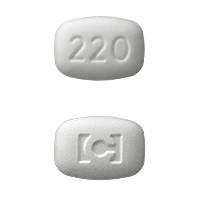
Armodafinil (Monograph)
Brand name: Nuvigil
Drug class: Wakefulness-promoting Agents
Introduction
Wakefulness-promoting agent; R-enantiomer of racemic modafinil.
Uses for Armodafinil
Obstructive Sleep Apnea (OSA)
Symptomatic treatment of OSA to improve wakefulness in adults with excessive sleepiness.
Indicated for treatment of excessive sleepiness, but not for treatment of underlying obstruction. If continuous positive airway pressure (CPAP) is the treatment of choice for a patient, make every effort to optimize treatment with CPAP for an adequate period of time prior to initiating armodafinil.
Guidelines from the American Academy of Sleep Medicine (AASM) recommend use of positive airway pressure (PAP) as first-line therapy in patients with excessive sleepiness associated with OSA. Modafinil is recommended for OSA patients with residual excessive daytime sleepiness despite effective PAP treatment and no other identifiable cause for sleepiness. Armodafinil was not yet approved at the time the AASM guideline was published; thus, its place in therapy is not addressed.
Narcolepsy
Symptomatic treatment of narcolepsy to improve wakefulness in adults with excessive sleepiness.
The American Academy of Sleep Medicine (AASM) provides a strong recommendation for use of modafinil for the treatment of adults with narcolepsy (versus no treatment). A conditional recommendation is given for armodafinil.
Shift Work Disorder (SWD)
Symptomatic treatment of SWD to improve wakefulness in adults with excessive sleepiness.
Guidelines from AASM on circadian rhythm sleep disorders recommend use of alerting agents (i.e., modafinil) for SWD.
Armodafinil Dosage and Administration
General
Patient Monitoring
-
Increased monitoring of blood pressure and heart rate may be appropriate during armodafinil therapy.
Administration
Oral Administration
Administer orally once daily. Manufacturer makes no specific recommendations regarding administration with regard to meals.
In patients with narcolepsy or OSA, usually administer as a single dose in the morning. In patients with SWD, administer dose approximately 1 hour prior to start of work shift.
Dosage
Adults
OSA
Oral
150 or 250 mg daily.
Dosages up to 250 mg daily have been well tolerated, but may not provide additional clinical benefit beyond 150-mg daily dosage.
Narcolepsy
Oral
150 or 250 mg daily.
SWD
Oral
150 mg daily.
Special Populations
Hepatic Impairment
Reduce dosage in patients with severe hepatic impairment. No specific dosage recommendations for patients with mild or moderate hepatic impairment.
Renal Impairment
No specific dosage recommendations in patients with renal impairment.
Geriatric Patients
Consider use of lower than usual recommended dosage.
Cautions for Armodafinil
Contraindications
-
Known hypersensitivity to armodafinil, modafinil, or any ingredient in the formulation.
Warnings/Precautions
Serious Dermatologic Reactions
Serious rash (e.g., Stevens-Johnson syndrome [SJS]) requiring hospitalization and drug discontinuance reported in patients receiving armodafinil.
Serious or life-threatening rash (e.g., SJS, toxic epidermal necrolysis [TEN]) and drug rash with eosinophilia and systemic symptoms (DRESS) reported rarely during postmarketing experience with modafinil and armodafinil; skin and mouth sores, blistering, and ulceration also reported. Recurrence of symptoms reported after drug rechallenge. Severe rash (e.g., possible SJS, multiorgan hypersensitivity reaction), sometimes associated with fever and other abnormalities (e.g., vomiting, leukopenia), also observed in pediatric clinical trials of modafinil. Armodafinil is not approved for use in pediatric patients for any indication.
No known risk factors predict the occurrence or severity of rash. Nearly all cases occurred within 1 day to 2 months following initiation of modafinil or armodafinil therapy, but cases also reported after prolonged (e.g., 3 months) treatment.
Benign rashes also occur with armodafinil; not possible to predict which rashes will become serious. Therefore, discontinue drug at first sign of rash unless clearly not drug related. Rash may become potentially life-threatening or permanently disabling or disfiguring despite drug discontinuance.
DRESS/Multiorgan Hypersensitivity
Multiorgan hypersensitivity reactions, also known as DRESS, including at least 1 fatality, reported. The DRESS fatality reported postmarketing in close temporal association (3 weeks) following initiation of armodafinil.
Multiorgan hypersensitivity reactions detected a median of 13 days (range: 4–33 days) after initiation of modafinil. Clinical presentation is variable but typically included fever, rash, lymphadenopathy, and/or facial swelling associated with other organ system involvement (e.g., myocarditis, hepatitis, nephritis, hematological abnormalities, and myositis); eosinophilia is also common. Early manifestations of hypersensitivity reactions (e.g., fever, lymphadenopathy) can present without an evident rash.
If a multiorgan hypersensitivity reaction is suspected, discontinue therapy. Cross-sensitivity with other drugs that produce this syndrome not yet reported but is possible.
Angioedema and Anaphylaxis Reactions
Angioedema and hypersensitivity (with rash, dysphagia, and bronchospasm) reported.
Immediately discontinue therapy if any signs or symptoms of angioedema or anaphylaxis (e.g., swelling of face, eyes, lips, tongue or larynx; difficulty swallowing or breathing; hoarseness) develop.
Persistent Sleepiness
In patients with abnormal levels of sleepiness, level of wakefulness may improve with armodafinil therapy, but may not return to normal.
Frequently reassess degree of sleepiness, and, if appropriate, advise patients to avoid driving or other potentially dangerous activity. Patients may not acknowledge sleepiness or drowsiness until directly questioned about these symptoms during specific activities.
Psychiatric Symptoms
Adverse psychiatric effects (e.g., mania, delusions, hallucinations, suicidal ideation, aggression), sometimes resulting in hospitalization, reported in modafinil-treated patients; many, but not all, such patients had a psychiatric history. Incidence and type of psychiatric effects expected to be similar with armodafinil.
In controlled clinical trials, psychiatric symptoms requiring treatment discontinuance more often for armodafinil than for placebo include anxiety, agitation, nervousness, irritability, and depression; suicidal ideation also reported.
Use with caution in patients with a history of psychosis, depression, or mania.
If psychiatric symptoms develop, consider drug discontinuance.
Effects on Ability to Drive and Use Machinery
Although armodafinil not shown to cause functional impairment, altered judgment, thinking, or motor skills is possible with any drug affecting the CNS. Caution patients of this risk.
Cardiovascular Events
Adverse cardiovascular effects (e.g., chest pain, palpitations, dyspnea, transient ischemic T- wave changes on ECG) reported with modafinil; similar risk expected with armodafinil.
Not recommended in patients with history of left ventricular hypertrophy or in patients with mitral valve prolapse who have experienced mitral valve prolapse syndrome (e.g., ischemic ECG changes, chest pain, arrhythmia) with CNS stimulant use. If new onset of any of these symptoms of mitral valve prolapse syndrome occurs during armodafinil therapy, consider cardiac evaluation.
Exert caution when armodafinil is prescribed in patients with preexisting cardiovascular conditions. Increased monitoring of blood pressure and heart rate may be appropriate during therapy.
Drug Abuse and Dependence
Armodafinil is subject to control as a schedule IV (C-IV) drug. Abuse and drug diversion reported with armodafinil; misuse also reported during postmarketing period.
Physical dependence can also occur in patients receiving armodafinil. Tolerance, or the physiological state of a reduced response to a drug with repeated administration, reported with armodafinil in the postmarketing period.
Produces psychoactive and euphoric effects and alterations in mood, perception, thinking, and feelings similar to those observed with other CNS stimulants (e.g., amphetamines, methylphenidate). Evidence indicates that modafinil abuse potential is similar to other CNS stimulants such as methylphenidate.
Monitor patients closely during treatment for possible signs of misuse or abuse (e.g., incrementation of doses, drug-seeking behavior), particularly in those with a history of drug or stimulant abuse (e.g., amphetamine, cocaine, methylphenidate).
Specific Populations
Pregnancy
Limited data available to assess drug-associated risk of adverse developmental outcomes when used in pregnancy; however, armodafinil and modafinil associated with intrauterine growth restriction and spontaneous abortion.
Pregnancy registry available; clinicians and patients may enroll by calling 1-866-404-4106.
Lactation
Not known whether armodafinil or its metabolites are distributed into human milk. Detected in the milk of lactating rats. Effects of drug and its metabolite on the breast-fed infant or on milk production are not known.
Females and Males of Reproductive Potential
Fertility studies not conducted with armodafinil. Increased time to mating in rats observed with modafinil. No other effects on fertility or reproduction observed.
Possible reduction in efficacy of hormonal contraceptives during treatment and for 1 month after discontinuance of armodafinil. Advise women using hormonal contraceptives to use an additional barrier method or concomitant non-hormonal method of contraception during these periods.
Pediatric Use
Safety and effectiveness not established in pediatric patients. Serious rashes associated with use of modafinil in pediatric patients.
Geriatric Use
Elimination of armodafinil and its metabolites may be reduced; consider reduced dosage and monitoring.
Hepatic Impairment
Armodafinil not specifically studied in patients with hepatic impairment. However, possible reduced clearance in patients with severe hepatic impairment based on pharmacokinetic studies with modafinil. Reduce dosage in patients with severe hepatic impairment.
Renal Impairment
Armodafinil not specifically studied in patients with renal impairment. Severe chronic renal impairment (Clcr of ≤20 mL/minute) did not substantially affect pharmacokinetics of modafinil, but increased metabolite exposure ninefold.
Common Adverse Effects
Adverse effects (≥5%): headache, nausea, dizziness, insomnia.
Drug Interactions
Partially metabolized by CYP3A4/5. Weakly induces CYP1A2 and possibly CYP3A, and reversibly inhibits CYP2C19 in vitro. Other CYP activities do not appear to be affected by armodafinil.
Substrate of P-glycoprotein.
Drugs Affecting Hepatic Microsomal Enzymes
Strong inducers or inhibitors of CYP3A4/5: Potential pharmacokinetic interaction (altered plasma concentrations of armodafinil).
Drugs Metabolized by Hepatic Microsomal Enzymes
Substrates of CYP3A4/5: Potential pharmacokinetic interaction (decreased plasma concentrations of substrate); dosage adjustment of substrate drug may be necessary.
Substrates of CYP2C19: Potential pharmacokinetic interaction (increased plasma concentrations of substrate); dosage reduction and monitoring for toxicity of substrate drug may be necessary.
Protein-bound Drugs
Potential for interactions with highly protein-bound drugs considered unlikely.
Specific Drugs
|
Drug |
Interaction |
Comments |
|---|---|---|
|
Alcohol |
Concomitant use not evaluated |
Concomitant use not recommended |
|
Caffeine |
Pharmacokinetics of caffeine not substantially affected during armodafinil administration |
|
|
Carbamazepine |
Possible decreased plasma armodafinil concentrations |
|
|
Clomipramine |
Prolonged elimination of clomipramine; possible increased plasma concentrations of clomipramine and its active desmethyl metabolite metabolite |
May need to reduce clomipramine dosage |
|
CNS-active agents |
Specific drug interaction studies not conducted between armodafinil and CNS-active drugs; available drug interaction information with modafinil should also apply to armodafinil |
|
|
Cyclosporine |
Possible decreased blood concentrations and effectiveness of cyclosporine |
Consider monitoring circulating cyclosporine concentrations; adjust cyclosporine dosage if necessary |
|
Dextroamphetamine |
Specific drug interaction studies not conducted between armodafinil and dextroamphetamine; clinically important pharmacokinetic interaction unlikely with racemic modafinil, although modafinil absorption may be delayed by approximately 1 hour |
|
|
Diazepam |
Possible increased plasma diazepam concentrations |
May need to reduce diazepam dosage and monitor for toxicity |
|
Erythromycin |
Possible increased armodafinil plasma concentrations |
|
|
Hormonal contraceptives |
Potential for decreased plasma concentrations of ethinyl estradiol; possible hormonal contraceptive failure |
Additional barrier method or non-hormonal contraceptive method recommended during and for 1 month after discontinuance of armodafinil therapy |
|
Ketoconazole |
Possible increased armodafinil plasma concentrations |
|
|
MAO inhibitors |
Interaction studies not performed to date |
Use concomitantly with caution |
|
Methylphenidate |
Specific drug interaction studies not conducted between armodafinil and methylphenidate; clinically important pharmacokinetic interaction unlikely with racemic modafinil, although modafinil absorption may be delayed by approximately 1 hour |
|
|
Midazolam |
Potential for reduced systemic exposure of midazolam |
Dosage adjustment of midazolam may be necessary |
|
Omeprazole |
Potential for increased plasma concentrations and systemic exposure to omeprazole |
May need to reduce omeprazole dosage |
|
Phenobarbital |
Possible decreased plasma armodafinil concentrations |
|
|
Phenytoin |
Possible increased plasma phenytoin concentrations |
May need to reduce phenytoin dosage and monitor for toxicity |
|
Propranolol |
Possible increased plasma propranolol concentrations |
May need to reduce propranolol dosage and monitor for toxicity |
|
Quetiapine |
Possible reduced quetiapine exposure |
Dosage adjustment of quetiapine not necessary |
|
Rifampin |
Possible decreased plasma armodafinil concentrations |
|
|
Triazolam |
Potential for reduced plasma concentrations and effectiveness of triazolam |
Dosage adjustment of triazolam may be necessary |
|
Warfarin |
Single-dose pharmacokinetics of warfarin not substantially affected by administration of modafinil |
Monitor PT and/or INR more frequently |
Armodafinil Pharmacokinetics
Absorption
Bioavailability
Readily absorbed following oral administration, with peak plasma concentrations occurring at approximately 2 hours (in the fasted state). Steady-state concentrations are reached within 7 days of once-daily administration.
Absolute oral bioavailability not determined because of low aqueous solubility.
Armodafinil produces higher plasma concentrations and total exposure at steady state relative to modafinil on a mg-to-mg basis.
Food
Food may delay time to peak plasma concentrations by approximately 2–4 hours, but does not appear to affect overall bioavailability.
Distribution
Extent
Not known whether armodafinil or its metabolites are distributed into human milk.
Plasma Protein Binding
Armodafinil: Data not available.
Modafinil: approximately 60% (mainly albumin).
Elimination
Metabolism
Metabolized to inactive metabolites via hydrolytic deamidation, S-oxidation, and aromatic ring hydroxylation, with subsequent glucuronide conjugation. Partially metabolized by CYP3A isoenzymes.
Elimination Route
Metabolic fate of armodafinil not specifically studied; however, modafinil is excreted in urine (80%) and in feces (1%), mainly as metabolites.
Half-life
Approximately 15 hours.
Special Populations
In patients with severe hepatic impairment, clearance of modafinil is decreased and steady-state concentrations are increased.
In patients with severe chronic renal impairment (Clcr ≤20 mL/minute), pharmacokinetics of modafinil are not substantially altered, but exposure to modafinil acid (an inactive metabolite) is increased ninefold compared with healthy individuals.
In geriatric patients, clearance of armodafinil and its metabolites may be reduced.
Gender has no impact on armodafinil pharmacokinetics.
Stability
Storage
Oral
Tablets
20–25°C.
Actions
-
Armodafinil, a nonamphetamine wakefulness-promoting agent, is the longer-lasting R-enantiomer of racemic modafinil (a 50:50 mixture of the of the R- and S-enantiomers); exhibits pharmacologic properties similar to those of modafinil.
-
Promotes vigilance and wakefulness. Exact mechanism of action unknown, but may involve activation of certain areas of the brain that control wakefulness.
-
Indirect dopamine receptor agonist; has been shown in in vitro studies to bind to the dopamine transporter and inhibit dopamine reuptake.
-
Produces effects similar to those of other CNS stimulants (e.g., psychoactive and euphoric effects, alterations in mood, perception, thinking, and feelings). Stimulant effects of modafinil can be attenuated by the α1-adrenergic receptor antagonist, prazosin.
Advice to Patients
-
Advise patients to read the patient information leaflet provided by the manufacturer prior to initiating therapy.
-
Advise patients to inform their clinicians of existing or contemplated therapy, including prescription and OTC drugs and/or herbal supplements, as well as any concomitant illnesses. Advise patients that it is prudent to avoid alcohol while taking armodafinil since combined use has not been studied.
-
Advise patients about the potential increased risk of pregnancy in women taking hormonal contraceptives (including injectable or implantable contraceptives) during and for 1 month after discontinuing armodafinil therapy. Advise women to use an additional barrier method or concomitant non-hormonal method of contraception during these periods.
-
Advise patients to inform their clinicians if they plan to become pregnant or plan to breast-feed. Inform women who become pregnant while receiving armodafinil that a registry is available that monitors pregnancy outcomes. Patients or prescribers can enroll by calling 1-866-404-4106.
-
Inform patients of the risk of potentially fatal skin reactions. Advise patients to immediately discontinue armodafinil and notify their clinician if they develop a skin reaction such as a rash, mouth sores, blisters, or peeling skin during treatment.
-
Inform patients that a fever associated with other signs of organ system involvement (e.g., rash, lymphadenopathy, liver dysfunction) could be associated with armodafinil and to notify clinicians immediately.
-
Inform patients of the risk of severe allergic reactions (e.g., hives, difficulty breathing or swallowing, hoarseness, swelling of the face, eyes, lips or tongue) that can occur. Instruct patients to discontinue armodafinil and immediately report symptoms to a clinician.
-
Risk of psychiatric symptoms. Stress importance of discontinuing armodafinil and informing clinician if depression, anxiety, hallucinations, mania, suicidal thoughts, aggression, or other psychiatric symptoms associated with psychosis or mania occur.
-
Advise patients that armodafinil may improve, but not eliminate, the abnormal tendency to fall asleep. Advise against altering previous behavior with regard to potentially dangerous activities (e.g., driving, operating machinery) or other activities requiring appropriate levels of wakefulness until and unless armodafinil has been shown to produce levels of wakefulness that permit such activities. Advise patients that armodafinil is not a replacement for sleep.
-
Stress importance of continuing previously prescribed therapy (e.g., advising patients with OSA that armodafinil is used along with other medical therapies for this condition and that the drug is not a replacement for the continuous positive airway pressure [CPAP] machine). Advise patients with OSA to continue using their CPAP machine while sleeping.
-
Inform patients of other important precautionary information.
Additional Information
The American Society of Health-System Pharmacists, Inc. represents that the information provided in the accompanying monograph was formulated with a reasonable standard of care, and in conformity with professional standards in the field. Readers are advised that decisions regarding use of drugs are complex medical decisions requiring the independent, informed decision of an appropriate health care professional, and that the information contained in the monograph is provided for informational purposes only. The manufacturer’s labeling should be consulted for more detailed information. The American Society of Health-System Pharmacists, Inc. does not endorse or recommend the use of any drug. The information contained in the monograph is not a substitute for medical care.
Preparations
Excipients in commercially available drug preparations may have clinically important effects in some individuals; consult specific product labeling for details.
Please refer to the ASHP Drug Shortages Resource Center for information on shortages of one or more of these preparations.
Subject to control under the Federal Controlled Substances Act of 1970 as a schedule IV (C-IV) drug.
* available from one or more manufacturer, distributor, and/or repackager by generic (nonproprietary) name
|
Routes |
Dosage Forms |
Strengths |
Brand Names |
Manufacturer |
|---|---|---|---|---|
|
Oral |
Tablets |
50 mg* |
Armodafinil Tablets |
|
|
Nuvigil ( C-IV ) |
Cephalon |
|||
|
100 mg* |
Armodafinil Tablets ( C-IV ) |
|||
|
150 mg* |
Armodafinil Tablets |
|||
|
Nuvigil ( C-IV ) |
Cephalon |
|||
|
200 mg* |
Armodafinil Tablets |
|||
|
Nuvigil ( C-IV ) |
||||
|
250 mg* |
Armodafinil Tablets |
|||
|
Nuvigil ( C-IV ) |
Cephalon |
AHFS DI Essentials™. © Copyright 2025, Selected Revisions September 10, 2024. American Society of Health-System Pharmacists, Inc., 4500 East-West Highway, Suite 900, Bethesda, Maryland 20814.
Reload page with references included
Related/similar drugs
Frequently asked questions
- How do I know if I have sleep apnea? The warning signs
- Is sleep apnea the hidden cause of your high blood pressure?
- Can sleep apnea kill you? Understanding the real risks?
More about armodafinil
- Check interactions
- Compare alternatives
- Pricing & coupons
- Reviews (445)
- Drug images
- Side effects
- Dosage information
- During pregnancy
- Drug class: CNS stimulants
- Breastfeeding
- En español