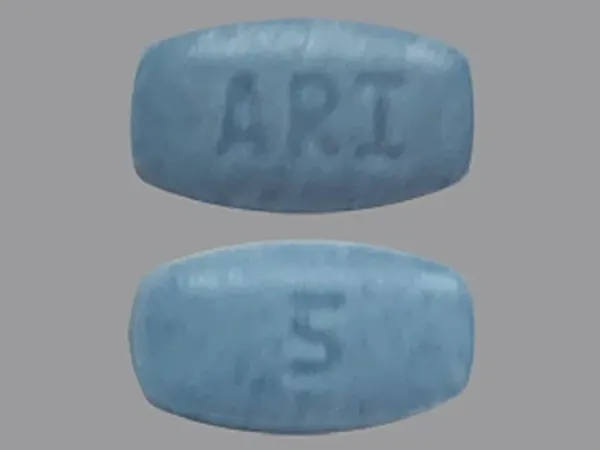
Aripiprazole (Monograph)
Brand names: Abilify, Abilify Maintena ;, Abilify Asimtufii, Aristada, Aristada Initio, Opipza
Drug class: Atypical Antipsychotics
Warning
- Increased Mortality in Geriatric Patients with Dementia-related Psychosis
-
Geriatric patients with dementia-related psychosis treated with antipsychotic agents are at an increased risk of death.
-
Analyses of 17 placebo-controlled trials in geriatric patients mainly receiving atypical antipsychotic agents revealed an approximate 1.6- to 1.7-fold increase in mortality compared with that in patients receiving placebo.
-
Most fatalities appeared to result from cardiovascular-related events (e.g., heart failure, sudden death) or infections (mostly pneumonia).
-
Antipsychotic agents, including aripiprazole, are not approved for the treatment of dementia-related psychosis.
- Suicidality
-
Antidepressants increased risk of suicidal thinking and behavior (suicidality) compared with placebo in children, adolescents, and young adults (18–24 years of age) with major depressive disorder and other psychiatric disorders; balance this risk with clinical need. Aripiprazole is notapproved for treatment of depression in pediatric patients.
-
In pooled data analyses, risk of suicidality was not increased in adults >24 years of age and was reduced in adults ≥65 years of age with antidepressant therapy compared with placebo.
-
Depression and certain other psychiatric disorders are themselves associated with an increased risk of suicide.
-
Appropriately monitor and closely observe all patients who are started on aripiprazole therapy for clinical worsening, suicidality, or unusual changes in behavior; involve family members and/or caregivers in this process.
Introduction
Atypical or second-generation antipsychotic agent.
Uses for Aripiprazole
Schizophrenia
Used orally (as aripiprazole conventional tablets, orally disintegrating tablets, oral solution, or oral film [Opipza]) for treatment of schizophrenia in adults and pediatrics patients 13—17 years of age.
Used orally (as aripiprazole tablets with sensor [Abilify MyCite] and IM (as extended-release aripiprazole [Abilify Maintena or Abilify Asimtufii] or aripiprazole lauroxil injection [Aristada]) for treatment of schizophrenia in adults.
Used IM (as extended-release aripiprazole lauroxil injection [Aristada Initio]), in combination with oral aripiprazole, for initiation of aripiprazole lauroxil for the treatment of schizophrenia in adults.
American Psychiatric Association (APA) and Department of Veterans Affairs/Department of Defense recommend an antipsychotic agent for acute and long-term maintenance treatment of schizophrenia. Choice of antipsychotic should be based on patient preference, past response to therapy, concurrent medical conditions, and drug-specific factors (e.g., adverse effect profile, available formulations, potential drug interactions, receptor binding profiles, pharmacokinetic considerations).
American Academy of Child and Adolescent Psychiatry (AACAP) recommends antipsychotic medications as primary treatment for schizophrenia spectrum disorders in children and adolescents. Choice of antipsychotic agent in pediatric patients should be individualized based on FDA labeling, side effect profiles, patient and family preferences, cost, and clinician familiarity.
Bipolar Disorder
Used orally (as aripiprazole conventional tablets, orally disintegrating tablets, or oral solution) for the acute treatment of manic and mixed episodes associated with bipolar I disorder in adults and pediatric patients 10—17 years of age.
Used orally (as aripiprazole oral tablets with sensor [Abilify MyCite]) alone or in conjunction with lithium or valproate for acute treatment of manic and mixed episodes associated with bipolar I disorder in adults and maintenance treatment of bipolar I disorder in adults.
Used IM (as extended-release aripiprazole injection [Abilify Maintena, Abilify Asimtufii]) as monotherapy for maintenance treatment of bipolar I disorder in adults.
APA recommends lithium or valproate plus an antipsychotic for first-line treatment of severe manic or mixed episodes; for patients with less severe symptoms, monotherapy with lithium, valproate, or an antipsychotic may be appropriate. Selection of a specific treatment is based on clinical factors (e.g., illness severity, associated features, patient preference, side effect profile of the medication). Recommended agents for maintenance treatment include lithium and valproate. Role of aripiprazole not addressed.
Department of Veterans Affairs/Department of Defense recommends lithium or quetiapine monotherapy for first-line treatment of acute mania associated with bipolar disorder; recommended alternative agents include olanzapine, paliperidone, and risperidone. If none of these agents are suitable based on patient preference or characteristics, other alternatives include aripiprazole, asenapine, carbamazepine, cariprazine, haloperidol, valproate, or ziprasidone. In patients with breakthrough episodes or unsatisfactory response to initial treatment, lithium or valproate in combination with an antipsychotic agent (haloperidol, asenapine, quetiapine, olanzapine, or risperidone) recommended. Recommended agents for maintenance therapy include lithium and quetiapine; alternatives include olanzapine, paliperidone, or risperidone.
AACAP recommends pharmacotherapy as primary treatment for mania in bipolar I disorder in children and adolescents. Standard therapies include lithium, valproate, and/or atypical antipsychotic agents. Choice of therapy in pediatric patients should be based on evidence of efficacy, phase of illness, presence of confounding symptoms, side effect profiles, history of response to medication, and patient and family preferences.
Adjunctive Therapy of Major Depressive Disorder
Used orally (as conventional oral tablets [Abilify], oral tablets with sensor [Abilify MyCite], orally disintegrating tablets, and oral film [Opipza]) as adjunctive therapy to antidepressants for treatment of major depressive disorder in adults.
Guidelines from APA and Department of Veterans Affairs/Department of Defense state that there is no evidence to suggest superiority of one first-line antidepressant over another. Recommended first-line agents for initial treatment of major depressive disorder include bupropion, mirtazapine, SSRIs, SNRIs, trazodone, vilazodone, or vortioxetine. For patients with no response or inadequate response to initial treatment with an antidepressant, options include changing to a different antidepressant or to psychotherapy, or augmentation with psychotherapy or another pharmacological agent.
Irritability Associated with Autistic Disorder
Used orally (as aripiprazole conventional tablets [Abilify], orally disintegrating tablets, oral solution, and oral film [Opipza]) for treatment of irritability associated with autistic disorder in pediatric patients 6—17 years of age.
American Academy of Pediatrics (AAP) suggests use of atypical antipsychotics for symptoms of irritability and severe disruptive behavior in children and adolescents with autism spectrum disorder (ASD). AACAP lists risperidone and aripiprazole as options for the treatment of irritability associated with autism.
Tourette's Syndrome
Used orally (as aripiprazole conventional tablets [Abilify], orally disintegrating tablets, oral solution, and oral film [Opipza]) for treatment of Tourette's disorder in pediatric patients 6—18 years of age.
AACAP lists atypical antipsychotics (e.g., aripiprazole or risperidone) as options to treat tic disorders in children and adolescents.
Behavioral and Psychological Symptoms with Dementia
Used orally for management of behavioral and psychological symptoms associated with dementia (BPSD)† [off-label].
APA states antipsychotic agents should only be used for treatment of agitation or psychosis in patients with dementia when symptoms are severe, dangerous, and/or cause significant distress to the patient. In one treatment algorithm, first-line pharmacotherapy options for urgent BPSD associated with dementia include oral aripiprazole and risperidone. For emergent BPSD when IM administration is necessary, IM injection of olanzapine, haloperidol or benzodiazepines is recommended.
American Geriatrics Society (AGS) Beers Criteria for potentially inappropriate medication use in older adults recommend avoiding antipsychotics for behavioral problems of dementia or delirium unless documented nonpharmacologic options have failed and/or the patient is threatening substantial harm to self and others; if used, the lowest effect dosage should be used and periodic deprescribing attempts should be considered.
Obsessive-Compulsive Disorder
Used orally as adjunctive treatment in the management of obsessive-compulsive disorder (OCD)† [off-label] in adults.
Legacy guideline from APA list cognitive-behavioral therapy and pharmacotherapy as safe and effective first-line treatments for OCD. For pharmacotherapy, SSRIs (e.g., fluoxetine, fluvoxamine, paroxetine, sertraline) are considered first-line drugs of choice. If patient does not respond to one SSRI, they may switch to a different SSRI, switch to clomipramine, augment their current SSRI with a second-generation antipsychotic, switch to venlafaxine, or switch to mirtazapine. Updated guidelines from international experts state that escitalopram, fluvoxamine, fluoxetine, paroxetine, and sertraline are first-line treatments for OCD. For treatment-resistant patients, augmentation with antipsychotics (e.g., aripiprazole or risperidone) or other drugs (e.g., memantine, ondansetron, lamotrigine) may be considered.
Aripiprazole Dosage and Administration
General
Patient Monitoring
-
Monitor for possible worsening of depression, suicidality, or unusual changes in behavior, especially at the beginning of therapy or during periods of dosage adjustments.
-
Monitor patient weight. In pediatric patients receiving aripiprazole for any indication, monitor weight and compare to the expected weight gain for normal growth.
-
Monitor CBC frequently during the first few months of therapy in patients with a preexisting low leukocyte count or a history of drug-induced leukopenia or neutropenia.
-
Periodically monitor for worsening glucose control in patients with preexisting diabetes mellitus; perform fasting blood glucose testing upon therapy initiation and periodically throughout treatment in those with risk factors for diabetes (e.g., obesity, family history of diabetes).
-
Carefully monitor patients with clinically significant neutropenia for fever or other signs or symptoms of infection, and treat promptly if such signs and symptoms occur.
-
Because of the risk of orthostatic hypotension and associated adverse effects (e.g., postural dizziness, syncope, tachycardia), use caution in patients with known cardiovascular disease (e.g., heart failure, history of MI or ischemia, conduction abnormalities), cerebrovascular disease, and/or predisposing conditions to hypotension (e.g., dehydration, hypovolemia, concomitant antihypertensive therapy), as well as in patients who are antipsychotic naïve. Consider a lower initial dosage of extended-release IM aripiprazole lauroxil (Aristada) and monitor vital signs in such patients. Consider monitoring vital signs in patients receiving extended-release aripiprazole injection (Abilify Asimtufii) at increased risk for hypotension.
-
In patients with diseases, conditions, or concomitant drug therapies that can exacerbate the risk of falls, complete a fall risk assessment when initiating antipsychotic treatment and periodically during long-term therapy.
Dispensing and Administration Precautions
-
Clinicians should be aware that there are several different extended-release IM formulations of aripiprazole with different indications, dosages, and dosing frequencies.
-
Medication errors, including substitution and dispensing errors, may occur between the 2 different extended-release IM formulations of aripiprazole lauroxil (e.g., Aristada Initio and Aristada). Aristada Initio is for single-dose administration only, while Aristada is administered either monthly, every 6 weeks, or every 8 weeks. Aristada Initio should not be substituted for Aristada because of their different pharmacokinetic profiles.
-
The Institute for Safe Medication Practices (ISMP) includes ARIPiprazole, proton pump inhibitors, and RABEprazole on their List of Confused Drug Names, and recommends using special safeguards to ensure the accuracy of prescriptions for these drugs.
-
The 2023 American Geriatrics Society (AGS) Beers Criteria for Potentially Inappropriate Medication (PIM) Use in Older Adults includes aripiprazole on the list of PIMs that are best avoided by older adults in most circumstances or under specific situations, such as certain diseases, conditions, or care settings. The criteria are intended to apply to adults 65 years of age and older in all ambulatory, acute, and institutional settings of care, except hospice and end-of-life care settings. The Beers Criteria Expert Panel recommends that use of antipsychotics such as aripiprazole be avoided in such patients except in FDA-approved indications such as schizophrenia, bipolar disorder, Parkinson disease psychosis, adjunctive treatment of major depressive disorder, or for short-term use as an antiemetic.
Other General Considerations
-
When switching from other antipsychotic agents to aripiprazole, abrupt discontinuance of the previous agent may be acceptable for some patients with schizophrenia, but gradual discontinuance may be most appropriate for others. In all cases, minimize period of overlapping antipsychotic administration.
-
Aripiprazole tablets with sensor (Abilify MyCite) are part of a digital ingestion tracking system intended to provide objective data on drug ingestion. The ability of aripiprazole tablets with sensor to improve patient compliance or usefulness in modifying aripiprazole dosage has not been established. Use of aripiprazole tablets with sensor to track medication ingestion in real time or during an emergency is not recommended because detection may be delayed or may not occur.
Administration
Administer aripiprazole orally or by IM injection. Administer aripiprazole lauroxil only by IM injection.
Establish tolerability with oral aripiprazole prior to initiating IM therapy with extended-release aripiprazole or aripiprazole lauroxil.
Oral Administration
Administer orally as conventional tablets, tablets with sensor, orally disintegrating tablets, oral solution, or oral film once daily without regard to meals.
Orally Disintegrating Tablets
Just prior to administration, peel open blister package; with dry hands, remove orally disintegrating tablet. Do not push tablet through foil.
Place tablet on tongue to dissolve; manufacturer recommends taking without liquid, but may take with liquid, if necessary.
Do not divide orally disintegrating tablet.
Oral Film
Apply oral film to the top of the tongue to dissolve in saliva; can then be swallowed without consumption of water or other liquids.
Do not chew or swallow film until fully dissolved.
Do not split or cut film prior to administering.
If >1 oral film must be administered, administer consecutively after previous film is fully dissolved.
Oral Solution
Commercially available as a 1 mg/mL solution in child-resistant bottles with calibrated oral dosing cup.
Tablets with Sensor
Aripiprazole is available as part of a digital ingestion tracking system comprised of the following components: aripiprazole tablets embedded with an ingestible event marker sensor (IEM; Abilify MyCite); a wearable sensor (MyCite patch), which detects the signal from the ingested sensor and transmits data to a compatible mobile device (i.e., a smart phone); a software application (app) for compatible mobile devices (e.g., smart phones; MyCite App), which displays information for the patient; and a web-based portal for healthcare professionals and caregivers.
Prior to initial patient use, facilitate use of the Abilify MyCite system. Ensure that patients are capable and willing to use a mobile device and the software application. Before using any component of the system, instruct patients to download the application and follow all the instructions for use and ensure that the software is compatible with their specific mobile device.
Administer tablets with sensor once daily without regard to meals. Swallow tablets whole; do not divide, crush, or chew.
Prior to use of the software application, the patient's mobile device should be powered on and Bluetooth enabled. Patients should apply the accompanying wearable sensor when prompted by the mobile software application; the application will instruct patients to apply and remove the sensor correctly. Patients should confirm that their mobile device is paired with the wearable sensor prior to use; the mobile software application will display a status icon on the mobile device to indicate that the patch is properly adhered and functioning. For further information, refer to the information provided in the product packaging as well as the instructions for use within the mobile software application.
Most ingestions of aripiprazole tablets with sensor will be detected within 30 minutes following ingestion; however, it may take up to 2 hours for the smart phone application and web portal to detect the ingestion. In some cases, ingestion of the tablet sensor may not be detected. If the tablet with sensor is not detected following ingestion, do not repeat the dose.
Apply the wearable sensor topically to the left side of the body just above the lower edge of the rib cage. Avoid application to areas where the skin is scraped, cracked, inflamed, or irritated or areas overlapping the area of the most recently removed sensor.
Change the wearable sensor weekly or sooner as needed; the mobile software application will remind patients when to change the sensor. Instruct patients to keep the wearable sensor in place while showering, swimming, or exercising. Remove the wearable sensor before undergoing magnetic resonance imaging (MRI) and replace with a new sensor as soon as possible.
If skin irritation occurs, remove the wearable sensor.
IM Administration of Extended-release Aripiprazole (Abilify Maintena)
Extended-release IM aripiprazole (Abilify Maintena) is available in 300- and 400-mg vials and prefilled syringes; do not confuse this formulation with extended-release IM aripiprazole (Abilify Asimtufii), which is available as 720 mg and 960 mg prefilled syringes, or extended-release aripiprazole lauroxil (Aristada and Aristada Initio; available in 441-, 662-, 675-, 882-, and 1064-mg prefilled syringes) or the immediate-release IM aripiprazole formulation (Abilify; 9.75 mg/vial), which is no longer commercially available in the US.
Administer monthly; allow at least 26 days to elapse between doses.
Must be administered by a healthcare professional.
Administer extended-release aripiprazole injection only by deep IM injection slowly into the deltoid or gluteal muscle. Do not massage injection site following IM administration. Rotate injection sites.
To maintain therapeutic antipsychotic concentrations during initiation of therapy with extended-release aripiprazole injection, administer oral aripiprazole 10–20 mg daily or another oral antipsychotic agent (for patients already stable on another oral antipsychotic agent and known to tolerate aripiprazole) after the first IM injection of extended-release aripiprazole and continue for 14 days.
If a dose of extended-release aripiprazole injection is missed, administer next dose as soon as possible. May need to supplement with oral aripiprazole depending on the time elapsed. If the second or third doses are missed, supplementation with oral aripiprazole not required if the time elapsed since the last injection is <5 weeks; however, if the time elapsed since the last injection is >5 weeks, supplement with oral aripiprazole for 14 days starting with the next administered injection. If the fourth or subsequent doses are missed, supplementation with oral aripiprazole not required if the time elapsed since the last injection is <6 weeks; however, if the time elapsed since the last injection is >6 weeks, supplement with oral aripiprazole for 14 days starting with the next administered injection.
Reconstitution
Abilify Maintena is commercially available in 2 types of kits that contain aripiprazole lyophilized powder in either single-use vials or prefilled dual-chamber syringes with all the components required for reconstitution and administration (e.g., sterile water for injection diluent, needles, syringes); consult manufacturer's instructions for use for specific information on preparation, reconstitution, and administration.
Because entire contents of prefilled dual-chamber syringes should be administered after reconstitution, use single-use vials for dosages <300 mg.
Following reconstitution, shake prefilled syringe or vials vigorously for 20 or 30 seconds, respectively, to ensure a uniform and homogeneous suspension, which appears opaque and milky-white. If using vials, withdraw the appropriate dose of aripiprazole using the syringe supplied by the manufacturer. If a vial of reconstituted suspension is not administered immediately, shake the vial vigorously for at least 60 seconds to resuspend the drug; do not store in syringe after reconstitution. If using prefilled syringes, inject entire contents immediately following reconstitution (i.e., within 30 minutes).
IM Administration of Extended-release Aripiprazole (Abilify Asimtufii)
Extended-release IM aripiprazole (Abilify Asimtufii) is available in 720-mg and 960-mg prefilled syringes; do not confuse this formulation with extended-release aripiprazole (Abilify Maintena; available in 300- and 400-mg vials and prefilled syringes), extended-release aripiprazole lauroxil (Aristada and Aristada Initio; available in 441-, 662-, 675-, 882-, and 1064-mg prefilled syringes) or the immediate-release aripiprazole formulation (no longer commercially available in the US).
Available as kits containing extended-release aripiprazole in prefilled syringes and safety needles for IM injection. Prior to use, tap the prefilled syringe ≥10 times to dislodge any material that may have settled, then shake for ≥10 seconds to ensure a uniform suspension. Following IM administration, do not massage the injection site.
Administer by deep IM injection every 2 months into the gluteal muscle; do not administer by any other route. Allow at least 56 days to elapse between doses.
Must be administered by a healthcare professional.
To maintain therapeutic antipsychotic concentrations during initiation of therapy with extended-release aripiprazole injection (Abilify Asimtufii), administer oral aripiprazole 10–20 mg daily or another oral antipsychotic agent (for patients already stable on another oral antipsychotic agent and known to tolerate aripiprazole) after the first IM injection of extended-release aripiprazole and continue for 14 days.
When switching from once-monthly IM Abilify Maintena injections to Abilify Asimtufii, administer the first IM injection of Abilify Asimtufii in place of the next scheduled Abilify Maintena injection.
If a dose of extended-release aripiprazole injection (Abilify Asimtufii) is missed by >8 weeks but <14 weeks, administer the next dose as soon as possible and resume the every 2-month schedule. If >14 weeks have elapsed since the last dose, supplement the next injection of extended-release aripiprazole injection (Abilify Asimtufii) with oral aripiprazole for 14 days.
IM Administration of Extended-release Aripiprazole Lauroxil (Aristada, Aristada Initio)
Extended-release aripiprazole lauroxil (Aristada) is available in 441-, 662-, 882-, and 1064-mg prefilled syringes for the treatment of schizophrenia; do not confuse this formulation with extended-release aripiprazole (Abilify Maintena; available in 300- and 400-mg vials and prefilled syringes, , or Abilify Asimtufii; available in 720-mg and 960-mg prefilled syringes) or the immediate-release aripiprazole formulation (no longer commercially available in the US).
Extended-release aripiprazole lauroxil injection also is available in 675-mg prefilled syringes (Aristada Initio). Use only as a single IM dose to initiate treatment or as a single dose to re-initiate treatment following a missed dose of extended-release aripiprazole lauroxil (Aristada). Aristada Initio is for single-dose administration only; do not use for repeated dosing. Aristada Initio is not interchangeable with Aristada because of their different pharmacokinetic profiles.
Must be administered by a healthcare professional.
Available as kits containing extended-release aripiprazole lauroxil injectable suspension in prefilled syringes and safety needles for IM injection. Prior to use, tap the prefilled syringe ≥10 times to dislodge any material that may have settled, then shake vigorously for ≥30 seconds to ensure a uniform suspension. If not administered within 15 minutes, shake the syringe again for 30 seconds.
Administer only by IM injection rapidly and continuously into the deltoid (for 441- and 675-mg doses only) or gluteal muscle (for 441-, 662-, 675-, 882-, and 1064-mg doses). Select needle length based on injection site; use longer needles in patients with a larger amount of subcutaneous tissue overlaying the injection site muscle.
Administer 441- and 662-mg doses of extended-release aripiprazole lauroxil (Aristada) monthly; may administer the 882-mg dose monthly or every 6 weeks. Administer 1064-mg doses every 2 months. Allow at least 14 days to elapse between doses.
Initiate treatment with aripiprazole lauroxil injection using 1 of 2 methods. The first method requires administration of one 30 mg dose of oral aripiprazole in conjunction with one 675 mg IM injection of aripiprazole lauroxil injection (Aristada Initio). May administer the first aripiprazole lauroxil injection (Aristada) injection the same day as the Aristada Initio injection or up to 10 days after; avoid concurrent administration of the 2 different aripiprazole lauroxil injection formulations (Aristada Initio and Aristada) in the same muscle. The second method requires oral administration of aripiprazole for 21 days starting on the same day as the first aripiprazole lauroxil injection (Aristada) IM injection.
If a dose of aripiprazole lauroxil injection is missed, administer the next dose as soon as possible. May need to supplement with oral aripiprazole and/or a 675-mg IM dose of extended-release aripiprazole lauroxil (Aristada Initio) depending on the dosage and time elapsed (see Table 1). Dosage of oral aripiprazole supplementation should be same as when patient began extended-release aripiprazole lauroxil therapy.
|
Dosage of Patient's Last Injection |
No Oral Supplementation Required |
Supplement with a Single Dose of Aristada Initio OR Oral Aripiprazole for 7 Days |
Re-initiate with a Single Dose of Aristada Initio and a 30 mg Dose of Oral Aripiprazole OR Supplement with Oral Aripiprazole for 21 Days |
|---|---|---|---|
|
441 mg |
≤6 weeks since last injection |
>6 and ≤7 weeks since last injection |
>7 weeks since last injection |
|
662 mg |
≤8 weeks since last injection |
>8 and ≤12 weeks since last injection |
>12 weeks since last injection |
|
882 mg |
≤8 weeks since last injection |
>8 and ≤12 weeks since last injection |
>12 weeks since last injection |
|
1064 mg |
≤10 weeks since last injection |
>10 and ≤12 weeks since last injection |
>12 weeks since last injection |
Dosage
Aripiprazole oral solution may be given at same dose on mg-per-mg basis as the tablet strengths of the medication up to a dose of 25 mg. However, if oral solution is used in patients receiving 30-mg tablets, use a dose of 25 mg of the oral solution.
Dosing of aripiprazole orally disintegrating tablets is the same as for conventional tablets.
Dosage of aripiprazole lauroxil expressed in terms of aripiprazole lauroxil.
Extended-release aripiprazole lauroxil (Aristada) doses of 441, 662, 882, and 1064 mg correspond to aripiprazole doses of 300, 450, 600, and 724 mg, respectively.
Of the available oral dosage formulations of aripiprazole, the oral film is not indicated for use in pediatric or adult patients with manic and mixed episodes associated with bipolar I disorder.
Pediatric Patients
Schizophrenia
Oral
Adolescents ≥13 years of age: Recommended target dosage for treatment is 10 mg once daily and maximum recommended dosage is 30 mg daily. Therapy has been initiated at 2 mg once daily, with subsequent titration to 5 mg once daily after 2 days and to 10 mg once daily after 2 additional days.
Subsequent dosage increases should be made in 5-mg, once-daily increments.
Dosages of 10 and 30 mg once daily evaluated in clinical trials; the 30-mg daily dosage was not more effective than the 10-mg daily dosage in adolescents.
Although efficacy as maintenance treatment not systematically evaluated in adolescents with schizophrenia, the manufacturer states that such efficacy can be extrapolated from adult data in addition to comparisons of aripiprazole pharmacokinetic parameters in adult and pediatric patients. Periodically reassess need for continued therapy.
Bipolar Disorder
Manic or Mixed Episodes: Monotherapy or Combination Therapy
OralChildren and adolescents 10–17 years of age: Target dosage for acute treatment is 10 mg once daily and maximum recommended dosage is 30 mg daily. Recommended initial dosage when given as monotherapy is 2 mg once daily, with subsequent titration to 5 mg once daily after 2 days and to the target dosage of 10 mg once daily after 2 additional days.
Recommended dosage when aripiprazole is given as adjunctive therapy with lithium or valproate is the same as that for monotherapy.
Daily dosage may be increased, if necessary, in 5-mg increments. In pediatric clinical studies, dosages of 10 and 30 mg daily were effective.
Irritability Associated with Autistic Disorder
Oral
Children and adolescents 6–17 years of age: Initially, 2 mg once daily, then increase dosage to 5 mg daily, with subsequent increases to 10 or 15 mg daily, if necessary. Increase dosage gradually, at intervals of ≥1 week. Efficacy established within a dosage range of 5–15 mg daily in clinical studies.
Periodically reassess need for continued therapy.
Tourette's Syndrome
Oral
Children and adolescents 6–18 years of age weighing <50 kg: Initially, 2 mg once daily for 2 days, then increase dosage to 5 mg once daily. If optimal control of tics not achieved, may increase dosage to 10 mg once daily. Adjust dosage gradually at intervals of ≥1 week.
Children and adolescents 6–18 years of age weighing ≥50 kg: Initially, 2 mg once daily for 2 days, then increase to 5 mg once daily for 5 days, with a recommended target dosage of 10 mg once daily on day 8. If optimal control of tics not achieved, may increase dosage up to 20 mg once daily. Adjust dosage gradually in increments of 5 mg daily at intervals of ≥1 week.
Periodically reassess need for continued maintenance therapy.
Adults
Schizophrenia
Oral
Initial and target dosage for treatment is 10 or 15 mg once daily.
Dosages ranging from 10–30 mg once daily were effective in clinical trials; dosages exceeding 10–15 mg daily did not result in greater efficacy.
Adjust dosage at intervals of ≥2 weeks, the time needed to achieve steady-state concentrations.
Efficacy for preventing relapse for up to 26 weeks has been demonstrated. ;
Periodically reassess need for continued therapy.
IM, Extended-release Aripiprazole (Abilify Maintena)
For patients naïve to aripiprazole, establish tolerability with oral aripiprazole prior to initiating extended-release IM aripiprazole therapy; may take up to 2 weeks to fully assess tolerability due to the half-life of oral aripiprazole.
Usual initial and maintenance dosage: 400 mg IM every month (no sooner than 26 days following the previous injection). May reduce dosage to 300 mg every month in patients experiencing adverse effects.
Administer oral aripiprazole 10–20 mg daily (or another oral antipsychotic agent in patients already stable on another oral antipsychotic and known to tolerate aripiprazole) with the first extended-release IM aripiprazole injection and continue oral therapy for 14 days thereafter to ensure adequate therapeutic plasma concentrations are maintained.
IM, Extended-release Aripiprazole (Abilify Asimtufii)
For patients naïve to aripiprazole, establish tolerability with oral aripiprazole prior to initiating extended-release IM aripiprazole therapy; may take up to 2 weeks to fully assess tolerability due to the half-life of oral aripiprazole.
Recommended IM dosage of 960 mg every 2 months (56 days following previous injection). In patients experiencing adverse effects, consider dosage reduction to 720 mg every 2 months. Dosage administration may occur as early as 2 weeks before or after the scheduled 2-month dosage.
During initiation of therapy, administer oral aripiprazole 10–20 mg daily (or another oral antipsychotic agent in patients already stable on another oral antipsychotic agent and known to tolerate aripiprazole) with the first extended-release IM aripiprazole injection and continue oral therapy for 14 days thereafter to ensure adequate therapeutic plasma concentrations. When switching from once-monthly IM Abilify Maintena injections to Abilify Asimtufii, administer the first IM injection of Abilify Asimtufii in place of the next scheduled Abilify Maintena injection.
IM, Extended-release Aripiprazole Lauroxil (Aristada)
For patients naïve to aripiprazole, establish tolerability with oral aripiprazole prior to initiating extended-release IM aripiprazole lauroxil therapy; may take up to 2 weeks to fully assess tolerability due to the half-life of oral aripiprazole.
Depending on individual patient's needs, may initiate therapy at an IM dosage of 441, 662, or 882 mg every month; 882 mg every 6 weeks; or 1064 mg every 2 months.
Initiate extended-release IM aripiprazole lauroxil (Aristada); therapy may be initiated using one of the following methods:
Option 1: Administer one 30 mg oral aripiprazole dose with a single IM 675 mg aripiprazole lauroxil injection (Aristada Initio) in conjunction with the first Aristada injection. May administer first dose of aripiprazole lauroxil (Aristada) on the same day as Aristada Initio or up to 10 days thereafter. Avoid injecting both formulations concurrently into the same deltoid or gluteal muscle.
Option 2: May administer oral aripiprazole therapy with the first Aristada injection and for 21 days thereafter.
For patients established on oral aripiprazole 10 mg daily, recommended IM dosage of aripiprazole lauroxil is 441 mg every month.
For patients established on oral aripiprazole 15 mg daily, recommended IM dosage of aripiprazole lauroxil is 662 mg every month, 882 mg every 6 weeks, or 1064 mg every 2 months.
For patients established on oral aripiprazole ≥20 mg daily, recommended IM dosage of aripiprazole lauroxil is 882 mg every month.
Adjust dosage as needed. Consider pharmacokinetics and prolonged-release characteristics of extended-release aripiprazole lauroxil injection when adjusting dose and dosing interval.
IM, Extended-release Aripiprazole Lauroxil (Aristada Initio)
For patients naïve to aripiprazole, establish tolerability with oral aripiprazole prior to initiating IM therapy with extended-release aripiprazole lauroxil (Aristada Initio); may take up to 2 weeks to fully assess tolerability.
Use the 675-mg strength of extended-release aripiprazole lauroxil injection (Aristada Initio) only as a single dose to initiate aripiprazole lauroxil therapy or as a single dose to reinitiate therapy following a missed dose of extended-release aripiprazole lauroxil injection (Aristada). Do not use the 675-mg strength for repeated dosing.
For initiation of aripiprazole lauroxil therapy after establishing tolerability with oral aripiprazole, may administer the first IM injection of aripiprazole lauroxil (Aristada; 441, 662, 882, or 1064 mg) in conjunction with both one 675-mg IM injection of aripiprazole lauroxil (Aristada Initio) (this dosage is equivalent to 459 mg of aripiprazole) and one 30-mg dose of oral aripiprazole.
May administer the first dose of aripiprazole lauroxil (Aristada) on the same day as Aristada Initio or up to 10 days thereafter. Avoid injecting both formulations concurrently into the same deltoid or gluteal muscle.
For re-initiation of aripiprazole lauroxil (Aristada) therapy following a missed dose, administer the next injection of aripiprazole lauroxil (Aristada) as soon as possible. Depending on the time elapsed since the last Aristada injection, the next Aristada injection may be supplemented as recommended in Table 1.
Bipolar Disorder
Manic or Mixed Episodes: Monotherapy or Combination Therapy
OralMonotherapy: Initially, 15 mg once daily.
Adjunctive therapy to lithium or valproate: Initial dosage of 10–15 mg once daily.
Recommended target dosage is 15 mg once daily whether the drug is given as monotherapy or as adjunctive therapy with lithium or valproate. Based on patient response, may increase dosage to 30 mg once daily.
Safety of dosages >30 mg daily not established.
Maintenance Therapy
IM, Extended-release Aripiprazole (Abilify Maintena)For patients naïve to aripiprazole, establish tolerability with oral aripiprazole prior to initiating extended-release IM aripiprazole therapy; may take up to 2 weeks to fully assess tolerability due to the half-life of oral aripiprazole.
Usual initial and maintenance dosage: 400 mg IM every month (no sooner than 26 days following the previous injection). May reduce dosage to 300 mg every month in patients experiencing adverse effects.
Administer oral aripiprazole 10–20 mg daily (or another oral antipsychotic agent in patients already stable on another oral antipsychotic agent and known to tolerate aripiprazole) with the first extended-release IM aripiprazole injection and continue oral therapy for 14 days thereafter to ensure adequate therapeutic plasma concentrations are maintained.
IM, Extended-release Aripiprazole (Abilify Asimtufii)For patients naïve to aripiprazole, establish tolerability with oral aripiprazole prior to initiating extended-release IM aripiprazole therapy; may take up to 2 weeks to fully assess tolerability due to the half-life of oral aripiprazole.
Recommended IM dosage of 960 mg every 2 months (56 days following previous injection). In patients experiencing adverse effects, consider dosage reduction to 720 mg every 2 months. Dosage administration may occur as early as 2 weeks before or after the scheduled 2-month dosage.
During initiation of therapy, administer oral aripiprazole daily (or another oral antipsychotic agent if the tolerability of aripiprazole is established) with the first extended-release IM aripiprazole injection and continue oral aripiprazole therapy for 14 days thereafter.
When switching from once-monthly IM Abilify Maintena injections to Abilify Asimtufii, administer the first IM injection of Abilify Asimtufii in place of the next scheduled injection.
Major Depressive Disorder
Oral
Initially, 2–5 mg once daily as adjunctive acute therapy.
Gradually adjust dosage in increments of ≤5 mg daily at ≥1-week intervals; the recommended dosage range is 2–15 mg once daily. Dosages of 2–15 mg daily (mean dosage: approximately 11 mg daily) were effective in clinical trials.
Periodically reassess need for continued therapy.
Dosage Modification for Use with Drugs Affecting Hepatic Microsomal Enzymes
Potent CYP3A4 inhibitors (e.g., clarithromycin, itraconazole, ketoconazole) or potent CYP2D6 inhibitors (e.g., quinidine, fluoxetine, paroxetine): Reduce oral aripiprazole dosage by 50%, except when used in the adjunctive treatment of major depressive disorder.
Potent CYP3A4 inhibitors or CYP2D6 inhibitors for >14 days: Reduce dosage of Abilify Maintena from 400 mg to 300 mg every month, or from 300 mg to 200 mg every month. Reduce dosage of Aristada to next available lower strength; in patients tolerating the 441-mg dosage, dosage reduction not necessary. Reduce an Aristada dosage of 882 mg every 6 weeks or 1064 mg every 2 months to 441 mg every 4 weeks. Reduce Abilify Asimtufii dosage from 960 mg every 2 months to 720 mg every 2 months.
Potent CYP3A4 inhibitors orCYP2D6 inhibitor for <14 days: Dosage adjustment of Abilify Maintena, Abilify Asimtufii, or Aristada is not necessary.
Potent CYP3A4 inhibitors and potent CYP2D6 inhibitors: Reduce oral aripiprazole dosage to 25% of usual dosage, except when used in the adjunctive treatment of major depressive disorder.
Potent CYP3A4 inhibitors and potent CYP2D6 inhibitors for >14 days: Reduce Abilify Maintena from 400 mg to 200 mg every month, or from 300 mg to 160 mg every month. Dosage adjustment not necessary in patients tolerating 441-mg dosage of Aristada. Avoid concomitant use in patients receiving 662-, 882-, or 1064-mg dosages of Aristada. Avoid concomitant use in patients receiving Abilify Asimtufii.
Potent CYP3A4 inhibitors and potent CYP2D6 inhibitors for <14 days: Dosage adjustment of Abilify Maintena, Abilify Asimtufii, or Aristada not necessary.
Combination of potent, moderate, or weak inhibitors of CYP3A4 and CYP2D6 (e.g., a potent CYP3A4 inhibitor and moderate CYP2D6 inhibitor or a moderate CYP3A4 inhibitor and a moderate CYP2D6 inhibitor): Reduce oral aripiprazole dosage to 25% of usual dosage; dosage may then be adjusted based on clinical response.
Upon discontinuation of the CYP2D6 and/or CYP3A4 inhibitor, increase aripiprazole back to the original dosage.
Potent CYP3A4 inducers >14 days: Avoid concomitant use in patients receiving Abilify Maintena or Abilify Asimtufii. Increase Aristada dosage from 441-mg to 662-mg every month; dosage adjustment not necessary in patients receiving 662-,882-, or 1064-mg dosages. Aristada dosage adjustment not necessary if potent inducer used for <14 days.
Avoid use of Aristada Initio in patients receiving potent CYP3A4 inhibitors, potent CYP2D6 inhibitors, or potent CYP3A4 inducers.
Special Populations
Hepatic Impairment
Dosage adjustment not required in mild to severe hepatic impairment (Child-Pugh score 5–15).
Renal Impairment
Dosage adjustment not required in mild to severe renal impairment (eGFR ≥15 mL/minute).
Geriatric Patients
Dosage adjustment not required.
Safety and efficacy of Aristada and Aristada Initio not established in patients >65 years of age.
Poor CYP2D6 Metabolizer Phenotype
Reduce oral dosage to 50% of the usual dosage; dosage adjustment not required when used as adjunctive treatment of major depressive disorder.
If patients who are poor CYP2D6 metabolizers are concomitantly receiving a potent CYP3A4 inhibitor, reduce oral aripiprazole dosage to 25% of the usual dosage.
Reduce dosage of Abilify Maintena to 300 mg every month. If patients who are poor CYP2D6 metabolizers are concomitantly receiving a potent CYP3A4 inhibitor, reduce dosage to 200 mg every month. Dosage adjustment not required for concomitant use <2 weeks.
Reduce dosage of Abilify Asimtufii to 720 mg every 2 months. Avoid use in patients who are poor CYP2D6 metabolizers are concomitantly receiving a potent CYP3A4 inhibitor for >14 days.
Reduce Aristada dosage based on patient's established oral dosage. If patients who are poor CYP2D6 metabolizers are concomitantly receiving a potent CYP3A4 inhibitor, reduce dosage of Aristada from 662, 882, or 1064 mg to 441 mg every month. Dosage adjustment not necessary in patients already receiving 441 mg every month, if tolerated. Dosage adjustment not required for concomitant use <2 weeks. No further dosage adjustment required in patients who are poor CYP2D6 metabolizers receiving a concomitant potent CYP2D6 inhibitor.
Avoid use of Aristada Initio in patients who are poor CYP2D6 metabolizers. Only a single strength (675 mg) is available; therefore, dosage adjustments are not possible.
Cautions for Aripiprazole
Contraindications
-
Known hypersensitivity to aripiprazole; hypersensitivity reactions have ranged from pruritus/urticaria to anaphylaxis.
Warnings/Precautions
Warnings
Increased Mortality in Geriatric Patients with Dementia-related Psychosis
Increased risk of death with use of antipsychotics in geriatric patients with dementia-related psychosis (see Boxed Warning).
Antipsychotic agents, including aripiprazole, are not approved for the treatment of dementia-related psychosis.
Increased Risk of Suicidal Thoughts and Behaviors in Children and Young Adults
Possible worsening of depression and/or the emergence of suicidal ideation and behavior (suicidality) or unusual changes in behavior in both adult and pediatric patients with major depressive disorder, whether or not they are taking antidepressants; may persist until clinically important remission occurs (see Boxed Warning). However, suicide is a known risk of depression and certain other psychiatric disorders, and these disorders themselves are the strongest predictors of suicide.
Appropriately monitor and closely observe patients receiving aripiprazole for any reason, particularly during initiation of therapy (i.e., the first few months) and during periods of dosage adjustments.
Anxiety, agitation, panic attacks, insomnia, irritability, hostility, aggressiveness, impulsivity, akathisia, hypomania, and/or mania may be precursors to emerging suicidality. Consider changing or discontinuing therapy in patients whose depression is persistently worse or in those with emerging suicidality or symptoms that might be precursors to worsening depression or suicidality, particularly if severe, abrupt in onset, or not part of patient’s presenting symptoms.
Prescribe in smallest quantity consistent with good patient management to reduce risk of overdosage.
Other Warnings and Precautions
Adverse Cerebrovascular Events, including Stroke, in Geriatric Patients with Dementia-related Psychosis
Increased incidence of adverse cerebrovascular events (cerebrovascular accidents and TIAs), including fatalities, observed in geriatric patients with dementia-related psychosis treated with aripiprazole in several placebo-controlled studies. Aripiprazole is not approved for the treatment of patients with dementia-related psychosis.
Potential for Dosing and Medication Errors
Substitution and dispensing errors between the 2 different extended-release IM formulations of aripiprazole lauroxil, Aristada Initio and Aristada, may occur.
Aristada Initio is for single-dose administration only, while Aristada is administered either monthly, every 6 weeks, or every 8 weeks. Do not substitute Aristada Initio for Aristada because of their different pharmacokinetic profiles.
Neuroleptic Malignant Syndrome
Neuroleptic malignant syndrome (NMS), a potentially fatal syndrome characterized by hyperpyrexia, muscle rigidity, altered mental status, autonomic instability (irregular pulse or blood pressure, tachycardia, diaphoresis, and cardiac dysrhythmia), elevated creatine phosphokinase, myoglobinuria (rhabdomyolysis), and acute renal failure, reported with antipsychotic agents, including some rare cases in patients treated with aripiprazole.
Immediately discontinue therapy and initiate supportive and symptomatic treatment if NMS occurs. Careful monitoring recommended if therapy is reinstituted following recovery; the risk that NMS can recur must be considered.
Tardive Dyskinesia
Tardive dyskinesia, a syndrome of potentially irreversible, involuntary dyskinetic movements, reported with use of antipsychotic agents, including aripiprazole.
Reserve long-term antipsychotic treatment for patients with chronic illness known to respond to antipsychotic agents, and for whom alternative, equally effective, but potentially less harmful treatments are not available or appropriate. In patients requiring chronic treatment, use smallest dosage and shortest duration of treatment producing a satisfactory clinical response; periodically reassess need for continued therapy.
Consider discontinuance of aripiprazole if signs and symptoms of tardive dyskinesia appear. However, some patients may require treatment despite the presence of the syndrome.
Metabolic Changes
Atypical antipsychotic agents are associated with metabolic changes, including hyperglycemia and diabetes mellitus, dyslipidemia, and weight gain. While all atypical antipsychotics produce some metabolic changes, each medication has its own specific risk profile.
Hyperglycemia and Diabetes Mellitus
Hyperglycemia, sometimes severe and associated with ketoacidosis, hyperosmolar coma, or death, reported in patients receiving atypical antipsychotic agents. In short- and longer-term clinical studies in adult and pediatric patients, clinically important differences between oral aripiprazole and placebo in mean change from baseline to end point in serum glucose concentrations was not observed.
Periodically monitor patients with an established diagnosis of diabetes mellitus for worsening of glucose control and perform fasting glucose testing at baseline and periodically in patients with risk factors for diabetes (e.g., obesity, family history of diabetes). If manifestations of hyperglycemia (including polydipsia, polyuria, polyphagia, and weakness) occur in any aripiprazole-treated patient, perform fasting blood glucose testing.
Some patients who developed hyperglycemia while receiving an atypical antipsychotic have required continuance of antidiabetic treatment despite discontinuance of the atypical antipsychotic; in other patients, hyperglycemia resolved with discontinuance of the antipsychotic.
Dyslipidemia
Undesirable changes in lipid parameters observed in patients treated with some atypical antipsychotics. However, aripiprazole generally does not appear to adversely affect the lipid profile.
Weight Gain
Weight gain observed with atypical antipsychotic therapy. Monitoring of weight recommended during aripiprazole therapy. In pediatric patients, monitor weight and compare to the expected weight gain for normal growth.
Pathological Gambling and Other Compulsive Behaviors
Intense urges and compulsive behaviors, particularly pathological gambling, reported in adult and pediatric patients treated with aripiprazole.
Compulsive urges (e.g., compulsive or binge eating, compulsive spending or shopping, compulsive sexual behaviors) reported less frequently. Most of the patients had no history of compulsive behaviors and experienced the uncontrollable urges only after beginning aripiprazole treatment.
Impulse-control symptoms may also be associated with the underlying disorder.
In some, but not all, cases, uncontrollable urges stopped following aripiprazole dosage reduction or discontinuance.
Compulsive behaviors may result in harm to the patient or others if not recognized. Because patients may not recognize such behaviors as abnormal, specifically ask patients whether they have developed any new or intense gambling urges, binge or compulsive eating, compulsive shopping, compulsive sexual urges, or other urges while receiving the medication.
If an aripiprazole-treated patient develops new or increased impulsive or compulsive behaviors, consider reducing the dosage or discontinuing the drug.
Orthostatic Hypotension
Risk of orthostatic hypotension associated with adverse effects, including postural dizziness, syncope, and tachycardia, perhaps because of aripiprazole's α1-adrenergic blocking activity. Risk generally appears greatest during initiation of therapy and dosage titration.
Use with caution in patients with known cardiovascular (e.g., heart failure, history of MI or ischemia, conduction abnormalities)or cerebrovascular disease and/or conditions that would predispose them to hypotension (e.g., dehydration, hypovolemia, concomitant antihypertensive therapy) and in antipsychotic-naïve patients. In such patients who are receiving extended-release IM aripiprazole lauroxil therapy, consider a lower initial dosage and monitoring of orthostatic vital signs. Consider monitoring vital signs in patients receiving extended-release aripiprazole injection (Abilify Asimtufii) at increased risk for hypotension.
Falls
May cause somnolence, postural hypotension, and motor and sensory instability, which may lead to falls, fractures, or other injuries.
In patients with diseases or conditions or receiving other medications that could exacerbate these effects, complete fall risk assessments when initiating antipsychotic therapy; repeat such testing periodically during long-term therapy.
Leukopenia, Neutropenia, and Agranulocytosis
Leukopenia and neutropenia temporally related to antipsychotic agents, including aripiprazole, reported during clinical trial and/or postmarketing experience. Agranulocytosis also reported.
Possible risk factors for leukopenia and neutropenia include preexisting low WBC count and a history of drug-induced leukopenia or neutropenia. Monitor CBC frequently during the first few months of therapy in patients with such risk factors. Discontinue aripiprazole at the first sign of a decline in WBC count in the absence of other causative factors.
Carefully monitor patients with neutropenia for signs and symptoms of infection (e.g., fever) and treat promptly if they occur. Discontinue aripiprazole if severe neutropenia (ANC <1000/mm3) occurs; monitor WBC until recovery occurs.
Seizures
Seizures/convulsions reported in adult and pediatric patients (6–18 years of age) treated with oral aripiprazole.
Use with caution in patients with a history of seizures or with conditions known to lower the seizure threshold; such conditions may be more prevalent in patients ≥65 years of age.
Cognitive and Motor Impairment
Judgment, thinking, or motor skills may be impaired.
Somnolence (including sedation) reported in short-term clinical trials.
Caution patients about performing activities that require mental alertness, such as operating hazardous machinery or a motor vehicle, until they are reasonably certain that aripiprazole does not affect them adversely.
Body Temperature Regulation
Antipsychotic agents may disrupt ability to reduce core body temperature.
Use caution in patients exposed to conditions that may contribute to an elevation in core body temperature (e.g., strenuous exercise, extreme heat, concomitant use of anticholinergic agents, dehydration).
Suicide
Attendant risk with psychotic illnesses, bipolar disorder, and major depressive disorder; closely supervise high-risk patients. Prescribe in the smallest quantity consistent with good patient management to reduce the risk of overdosage.
Dysphagia
Esophageal dysmotility and aspiration associated with antipsychotic agents, including aripiprazole.
Aspiration pneumonia is a common cause of morbidity and mortality in geriatric patients, particularly in those with advanced Alzheimer’s dementia. Use caution in patients at risk for aspiration pneumonia.
Phenylketonuria
Each 10- or 15-mg aripiprazole orally disintegrating tablet contains aspartame, which is metabolized in the GI tract to provide about 1.12 or 1.68 mg of phenylalanine, respectively. Aripiprazole conventional tablets, oral solution, and oral film do not contain aspartame.
Skin Irritation associated with Abilify MyCite Wearable Sensor
Skin irritation (e.g., rash, pruritus, discoloration) may occur at the application site of the wearable sensor (MyCite patch).
If skin irritation occurs, remove the wearable sensor.
Specific Populations
Pregnancy
Risk for extrapyramidal and/or withdrawal symptoms (e.g., agitation, hypertonia, hypotonia, tardive dyskinetic-like symptoms, tremor, somnolence, respiratory distress, feeding disorder) in neonates exposed to antipsychotic agents during the third trimester; monitor neonates exhibiting such symptoms. Symptoms varied in severity; some neonates recovered within hours to days without specific treatment, while others have required prolonged hospitalization.
Clinicians encouraged to register patients exposed to atypical antipsychotics during pregnancy in the National Pregnancy Registry for Atypical Antipsychotics: 866-961-2388 and [Web].
Lactation
Limited data indicate presence in human milk at a relative infant dose (RID) 0.7–8.3% of the maternal weight-adjusted dosage. Poor weight gain reported in breast-fed infants exposed to aripiprazole and inadequate milk supply reported in lactating females taking aripiprazole.
Benefit of aripiprazole therapy to the mother as well as the benefits of breast-feeding to the infant should be weighed against the potential risk to the infant from exposure to the drug or from the underlying maternal condition.
Pediatric Use
Safety and efficacy of oral aripiprazole not established with major depressive disorder.
Safety and efficacy of oral aripiprazole not established with agitation associated with schizophrenia or bipolar mania.
Safety and efficacy of extended-release IM aripiprazole and aripiprazole lauroxil not evaluated in patients <18 years of age.
Safety and efficacy of aripiprazole tablets with sensor not established.
Safety and efficacy of oral aripiprazole for acute management of schizophrenia in patients 13–17 years of age established in a placebo-controlled study of 6 weeks' duration. Efficacy for maintenance treatment not established, but can be extrapolated from adult data and pharmacokinetic comparisons between adult and pediatric populations.
Safety and efficacy of oral aripiprazole monotherapy for acute management of bipolar mania in patients 10–17 years of age established in a placebo-controlled study of 4 weeks' duration.
Efficacy of oral aripiprazole as adjunctive therapy to lithium or valproate for management of manic or mixed episodes associated with bipolar disorder in pediatric patients not systematically evaluated. However, efficacy can be extrapolated from adult data and pharmacokinetic comparisons between adult and pediatric populations.
Safety and efficacy of oral aripiprazole for treatment of irritability associated with autistic disorder in patients 6–17 years of age established in 2 placebo-controlled clinical studies of 8 weeks’ duration. Efficacy as maintenance treatment not established in a longer-term, placebo-controlled relapse prevention trial in patients 6–17 years of age.
Safety and efficacy of oral aripiprazole for treatment of Tourette's syndrome in patients 6–18 years of age established in 2 short-term, placebo-controlled trials of 8 and 10 weeks' duration. Efficacy as maintenance therapy not systematically evaluated.
Weight gain reported in pediatric patients with schizophrenia, bipolar disorder, Tourette's syndrome, or irritability associated with autistic disorder.
Greater risk of suicidal thinking or behavior (suicidality) during first few months of antidepressant treatment in children and adolescents with major depressive disorder, obsessive-compulsive disorder (OCD), or other psychiatric disorders. No suicides occurred in pediatric trials.
Geriatric Use
Insufficient experience with oral and extended-release IM formulations of aripiprazole in patients ≥65 years of age to determine whether they respond differently than younger adults. Dosage adjustment of oral and IM aripiprazole based on age alone in geriatric patients is not necessary.
Safety and efficacy of extended-release IM aripiprazole lauroxil not evaluated in patients >65 years of age; manufacturer makes no specific dosage recommendations for geriatric patients.
Manufacturer of extended-release aripiprazole (Abilify Asimtufii) states insufficient number of patients ≥65 years of age in clinical trials to assess differences in response compared to younger adults; use caution during dosage selection.
Geriatric patients with dementia-related psychosis treated with antipsychotic agents are at an increased risk of death; increased incidence of cerebrovascular accidents and TIAs observed with aripiprazole. Aripiprazole is not approved for dementia-related psychosis.
Hepatic Impairment
No dosage adjustment necessary in mild to severe hepatic impairment (Child-Pugh score 5–15).
Renal Impairment
No dosage adjustment necessary in mild to severe renal impairment (GFR ≥15 mL/minute).
Common Adverse Effects
Oral aripiprazole in adults with schizophrenia (incidence ≥5%): Akathisia.
Oral aripiprazole in pediatric patients 13–17 years of age with schizophrenia (incidence ≥5%): Extrapyramidal disorder, somnolence, and tremor.
Oral aripiprazole as monotherapy in adults with bipolar mania (incidence ≥5%): Akathisia, sedation, restlessness, tremor, extrapyramidal disorder.
Oral aripiprazole as adjunctive therapy with lithium or valproic acid in adults with bipolar mania (incidence ≥5%): Akathisia, insomnia, extrapyramidal disorder.
Oral aripiprazole in pediatric patients 10–17 years of age with bipolar mania (incidence ≥5%): Somnolence, extrapyramidal disorder, fatigue, nausea, akathisia, blurred vision, salivary hypersecretion, dizziness.
Oral aripiprazole in adults with major depressive disorder (incidence ≥5%): Akathisia, restlessness, insomnia, constipation, fatigue, blurred vision.
Oral aripiprazole in pediatric patients 6–17 years of age with autistic disorder (incidence ≥5%): Sedation, fatigue, vomiting, somnolence, tremor, pyrexia, drooling, decreased appetite, salivary hypersecretion, extrapyramidal disorder, lethargy.
Oral aripiprazole in pediatric patients 6–18 years of age with Tourette’s Disorder (incidence ≥5%): Sedation, somnolence, nausea, headache, nasopharyngitis, fatigue, increased appetite.
Aripiprazole tablets with sensor and digital ingestion tracking system (Abilify MyCite): Skin rash localized at application site of the wearable sensor reported in 12.4% of patients.
IM aripiprazole, extended-release (Abilify Maintena and Abilify Asimtufii; incidence ≥5%): Increased weight, akathisia, injection site pain, sedation.
IM aripiprazole lauroxil, extended-release (Aristada; incidence ≥5%): Akathisia.
Drug Interactions
Aripiprazole is extensively metabolized in the liver principally via dehydrogenation, hydroxylation, and N-dealkylation by CYP2D6 and CYP3A4.
Drugs Affecting Hepatic Microsomal Enzymes
Potent CYP3A4 inhibitors and/or potent CYP2D6 inhibitors: Potential pharmacokinetic interaction.
Combination of potent, moderate, and weak CYP3A4 and CYP2D6 inhibitors (e.g., potent CYP3A4 inhibitor with moderate CYP2D6 inhibitor; moderate CYP3A4 inhibitor with moderate CYP2D6 inhibitor): Potential pharmacokinetic interaction.
Potent CYP3A4 inducers: Decreased systemic exposure to aripiprazole.
|
Concomitant Drug |
Recommended Dosage Adjustment |
|---|---|
|
Potent CYP3A4 inhibitors |
Oral aripiprazole: Reduce aripiprazole dosage to 50% of usual dosage; dosage adjustment not required when used as adjunctive treatment of major depressive disorder. Increase back to original dosage when the CYP3A4 inhibitor is discontinued. Further reduce dosage to 25% of the usual oral aripiprazole dosage in patients with poor CYP2D6 metabolizer phenotype. Extended-release IM aripiprazole injection (Abilify Maintena): Dosage adjustment not necessary if potent CYP3A4 inhibitor is added for <2 weeks. For concomitant therapy >14 days, reduce aripiprazole dosage from 400 to 300 mg or from 300 to 200 mg every month. If potent CYP3A4 inhibitor is added for >14 days in patients with poor CYP2D6 metabolizer phenotype, further dosage reduction to 200 mg every month is necessary. Extended-release IM aripiprazole injection (Abilify Asimtufii): Dosage adjustment not necessary if potent CYP3A4 inhibitor is added for <2 weeks. For concomitant therapy >14 days, reduce aripiprazole dosage from 960 mg every 2 months to 720 mg every 2 months. Avoid use if potent CYP3A4 inhibitor is added for >14 days in patients with poor CYP2D6 metabolizer phenotype. Extended-release IM aripiprazole lauroxil injection (Aristada): Dosage adjustment not necessary if potent CYP3A4 inhibitor is added for <2 weeks. For concomitant therapy >14 days, reduce aripiprazole lauroxil dosage to next available lower strength. Dosage reduction not necessary in patients receiving the 441-mg dosage, if tolerated. Reduce 882 mg every 6 weeks or 1064 mg every 2 months to 441 mg every 4 weeks. Avoid use of 662-mg, 882-mg, and 1064-mg dosages if potent CYP3A4 inhibitor added for >14 days in patients with poor CYP2D6 metabolizer phenotype. No dosage adjustment necessary if potent CYP3A4 inhibitor added for >14 days in patients receiving 441-mg dosage with poor CYP2D6 metabolizer phenotype. Extended-release IM aripiprazole lauroxil injection (Aristada Initio): Avoid use. |
|
Potent CYP2D6 inhibitors |
Oral aripiprazole: Reduce aripiprazole dosage to 50% of usual dosage; dosage adjustment not required when used as adjunctive treatment of major depressive disorder. Increase back to original dosage when the CYP2D6 inhibitor is discontinued. Extended-release IM aripiprazole injection (Abilify Maintena): Dosage adjustment not necessary if potent CYP2D6 inhibitor is added for <2 weeks. For concomitant therapy >14 days, reduce aripiprazole dosage from 400 to 300 mg or from 300 to 200 mg every month. Extended-release IM aripiprazole injection (Abilify Asimtufii): Dosage adjustment not necessary if potent CYP2D6 inhibitor is added for <2 weeks. For concomitant therapy >14 days, reduce aripiprazole dosage from 960 mg to 720 mg every 2 months. Extended-release IM aripiprazole lauroxil injection (Aristada): Dosage adjustment not necessary if potent CYP2D6 inhibitor is added for <2 weeks. For concomitant therapy >14 days, reduce aripiprazole lauroxil dosage to next available lower strength. Dosage reduction not necessary in patients receiving 441-mg dosage, if tolerated. Reduce 882 mg every 6 weeks or 1064 mg every 2 months to 441 mg every 4 weeks. Dosage adjustment in patients with poor CYP2D6 metabolizer phenotype not necessary. Extended-release IM aripiprazole lauroxil injection (Aristada Initio): Avoid use. |
|
Potent CYP3A4 inhibitors and potent CYP2D6 inhibitors |
Oral aripiprazole: Reduce aripiprazole dosage to 25% of usual dosage; dosage adjustment not required when used as adjunctive treatment of major depressive disorder. Increase back to original dosage when the CYP3A4 and/or CYP2D6 inhibitor is discontinued. Extended-release IM aripiprazole injection (Abilify Maintena): Reduce aripiprazole dosage from 400 to 200 mg every month, or from 300 to 160 mg every month for concomitant therapy >14 days. Extended-release IM aripiprazole injection (Abilify Asimtufii): Avoid use for concomitant therapy >14 days. Extended-release IM aripiprazole lauroxil injection (Aristada): Dosage adjustment not required for patients tolerating the 441-mg dosage; however, avoid concomitant use of potent CYP2D6 inhibitors and potent CYP3A4 inhibitors for >2 weeks in patients taking the 662-, 882-, or 1064-mg dosage. Dosage adjustment not required for concomitant use <2 weeks. |
|
Combination of potent, moderate, or weak CYP3A4 and CYP2D6 inhibitors (e.g., potent CYP3A4 inhibitor with moderate CYP2D6 inhibitor; moderate CYP3A4 inhibitor with moderate CYP2D6 inhibitor) |
Oral aripiprazole: Reduce aripiprazole dosage to 25% of usual dosage, then adjust dosage to achieve clinical response. Increase back to original dosage when the CYP3A4 and/or CYP2D6 inhibitor is discontinued. |
|
Potent CYP3A4 inducers |
Oral aripiprazole: Double dosage of aripiprazole over 1–2 weeks of concomitant therapy. Reduce back to original dosage over 1–2 weeks when the CYP3A4 inducer is discontinued. Extended-release IM aripiprazole injection (Abilify Maintena): Avoid use of potent CYP3A4 inducers for >14 days. Extended-release IM aripiprazole injection (Abilify Asimtufii): Avoid use of potent CYP3A4 inducers for >14 days. Extended-release IM aripiprazole lauroxil injection (Aristada): Increase monthly aripiprazole dosage from 441 to 662 mg when used concomitantly for >2 weeks; dosage adjustment not required in patients receiving 662-, 882-, or 1064-mg dosages. Dosage adjustment not required for concomitant use <2 weeks. Extended-release IM aripiprazole lauroxil injection (Aristada Initio): Avoid use. |
Substrates of Hepatic Microsomal Enzymes
Substrates of CYP isoenzymes 2C9, 2C19, 2D6, and 3A4: Clinically important pharmacokinetic interaction unlikely; dosage adjustment not necessary.
Specific Drugs
|
Drug |
Interaction |
Comments |
|---|---|---|
|
Alcohol |
Possible additive CNS effects Oral aripiprazole: No clinically important effects on gross motor skills or stimulus response |
Extended-release IM aripiprazole (Abilify Maintena and Abilify Asimtufii ): Avoid concomitant use Specific recommendations concerning alcohol use not provided for other oral and parenteral formulations of aripiprazole (e.g., Abilify, Aristada) |
|
Anticholinergic agents |
Possible disruption of body temperature regulation |
Use with caution in patients who will be experiencing conditions that may contribute to an elevation in core body temperature (e.g., strenuous exercise, extreme heat, concomitant use of anticholinergic agents, dehydration |
|
Benzodiazepines (e.g., lorazepam) |
Possible increased sedative and orthostatic hypotensive effects Lorazepam: No clinically important effects on pharmacokinetics of either aripiprazole or lorazepam |
If concomitant use of aripiprazole and benzodiazepines considered necessary, monitor for excessive sedation and orthostatic hypotension; adjust dosages if needed Lorazepam: Routine dosage adjustment of aripiprazole and lorazepam not necessary |
|
Carbamazepine |
Carbamazepine (potent CYP3A4 inducer) decreased peak plasma concentrations and AUCs of aripiprazole and dehydro-aripiprazole |
Oral aripiprazole: Double aripiprazole dosage over 1–2 weeks when carbamazepine is added; decrease back to original dosage over 1–2 weeks when carbamazepine is discontinued Extended-release aripiprazole (Abilify Maintena): Avoid concomitant use >14 days Extended-release aripiprazole (Abilify Asimtufii): Avoid concomitant use >14 days. Extended-release aripiprazole lauroxil (Aristada): If used concomitantly >2 weeks, increase aripiprazole lauroxil dosage from 441 to 662 mg monthly; no dosage adjustment necessary for 662- , 882-, or 1064-mg dosages Extended-release IM aripiprazole lauroxil injection (Aristada Initio): Avoid use. |
|
Clarithromycin |
Clarithromycin (potent CYP3A4 inhibitor) may increase AUCs of aripiprazole and its active metabolite |
Reduce oral aripiprazole to 50% of usual dosage; if used in combination with potent CYP2D6 inhibitors, reduce oral aripiprazole dosage to 25% of usual dosage If used in combination with potent, moderate, and weak CYP3A4 and CYP2D6 inhibitors, initially reduce oral aripiprazole dosage to 25% of usual dosage then adjust dosage based on clinical response Dosage adjustment not necessary when aripiprazole used as adjunctive therapy for major depressive disorder Extended-release aripiprazole (Abilify Maintena): If used concomitantly >14 days, reduce aripiprazole dosage from 400 to 300 mg or from 300 to 200 mg monthly; if used in combination with potent CYP2D6 inhibitors, reduce dosage from 400 to 200 mg or 300 to 160 mg monthly Extended-release aripiprazole (Abilify Asimtufii): If used concomitantly >14 days, reduce aripiprazole dosage from 960 to 720 mg every 2 months. Avoid concomitant use of potent CYP3A4 inhibitors (e.g., clarithromycin) and potent CYP2D6 inhibitors for >2 weeks. Extended-release aripiprazole lauroxil (Aristada): If used concomitantly >2 weeks, reduce aripiprazole lauroxil dosage to next available lower strength; dosage reduction not necessary in patients tolerating 441-mg dosage. Reduce 882 mg every 6 weeks or 1064 mg every 2 months to 441 mg every 4 weeks. Avoid concomitant use of potent CYP3A4 inhibitors (e.g., clarithromycin) and potent CYP2D6 inhibitors for >2 weeks in patients taking the 662-, 882-, or 1064-mg dosages; no dosage adjustment necessary for 441-mg dosage, if tolerated Increase aripiprazole dosage when the CYP3A4 and/or CYP2D6 inhibitor is discontinued Extended-release IM aripiprazole lauroxil injection (Aristada Initio): Avoid use. |
|
Dextromethorphan |
No clinically important change in dextromethorphan (CYP3A4 and CYP2D6 substrate) pharmacokinetics observed |
Dextromethorphan dosage adjustment not necessary |
|
Escitalopram |
Escitalopram dosage adjustment not necessary |
|
|
Famotidine |
Possible decreased peak concentration and AUC of aripiprazole; unlikely to be clinically important |
Aripiprazole dosage adjustment not necessary |
|
Fluoxetine |
Fluoxetine (potent CYP2D6 inhibitor) expected to increase aripiprazole AUC Aripiprazole did not substantially affect fluoxetine pharmacokinetics |
Oral aripiprazole: Reduce aripiprazole to 50% of usual dosage; if used in combination with potent CYP3A4 inhibitors, reduce aripiprazole dosage to 25% of usual dosage; if used in combination with potent, moderate, or weak CYP3A4 inhibitors, reduce aripiprazole dosage to 25% of usual dosage then adjust to achieve clinical response Dosage adjustment not necessary when used as adjunctive therapy for major depressive disorder Extended-release aripiprazole (Abilify Maintena): If used concomitantly >14 days, reduce aripiprazole dosage from 400 to 300 mg or from 300 to 200 mg monthly; in combination with potent CYP3A4 inhibitors, reduce dosage from 400 to 200 mg or 300 to 160 mg monthly Extended-release aripiprazole (Abilify Asimtufii): If used concomitantly >14 days, reduce aripiprazole dosage from 960 mg to 720 mg every 2 months. Avoid concomitant use of potent CYP3A4 inhibitors and potent CYP2D6 inhibitors (e.g., fluoxetine) for >2 weeks. Extended-release aripiprazole lauroxil (Aristada): If used concomitantly >2 weeks, reduce aripiprazole lauroxil dosage to next available lower strength; no dosage adjustment necessary in patients tolerating 441-mg dosage; reduce 882 mg every 6 weeks or 1064 mg every 2 months to 441 mg every 4 weeks; dosage adjustment not necessary for concomitant use <2 weeks; avoid concomitant potent CYP3A4 inhibitors andpotent CYP2D6 inhibitors (e.g., fluoxetine) for >2 weeks in patients taking the 662-, 882-, or 1064-mg dosage Increase aripiprazole dosage when the CYP3A4 and/or CYP2D6 inhibitor is discontinued Extended-release IM aripiprazole lauroxil injection (Aristada Initio): Avoid use. |
|
Hypotensive agents |
Possible additive hypotensive effects |
Use with caution; monitor blood pressure and adjust dosage of antihypertensive agent(s), if necessary |
|
Itraconazole |
Potent CYP3A4 inhibitors (e.g., itraconazole) may increase AUCs of aripiprazole and its active metabolite |
Reduce oral aripiprazole to 50% of usual dosage; if used in combination with potent CYP2D6 inhibitors, reduce oral aripiprazole dosage to 25% of usual dosage If used in combination with potent, moderate, and weak CYP3A4 and CYP2D6 inhibitors, initially reduce oral aripiprazole dosage to 25% of usual dosage then adjust dosage based on clinical response Dosage adjustment not necessary when aripiprazole used as adjunctive therapy for major depressive disorder Extended-release aripiprazole (Abilify Maintena): If used concomitantly >14 days, reduce aripiprazole dosage from 400 to 300 mg or from 300 to 200 mg monthly; if used in combination with potent CYP2D6 inhibitors, reduce dosage from 400 to 200 mg or 300 to 160 mg monthly Extended-release aripiprazole (Abilify Asimtufii): If used concomitantly >14 days, reduce aripiprazole dosage from 960 mg to 720 mg every 2 months. Avoid concomitant use of potent CYP3A4 inhibitors (e.g., itraconazole) and potent CYP2D6 inhibitors for >2 weeks. Extended-release aripiprazole lauroxil (Aristada): If used concomitantly >2 weeks, reduce aripiprazole lauroxil dosage to next available lower strength; dosage reduction not necessary in patients tolerating 441-mg dosage. Reduce 882 mg every 6 weeks or 1064 mg every 2 months to 441 mg every 4 weeks. Avoid concomitant use of potent CYP3A4 inhibitors (e.g., itraconazole) and potent CYP2D6 inhibitors for >2 weeks in patients taking the 662-, 882-, or 1064-mg dosages; no dosage adjustment necessary for 441-mg dosage, if tolerated Increase aripiprazole dosage when the CYP3A4 and/or CYP2D6 inhibitor is discontinued Extended-release IM aripiprazole lauroxil injection (Aristada Initio): Avoid use. |
|
Ketoconazole |
Ketoconazole (potent CYP3A4 inhibitor) substantially increased AUCs of aripiprazole and its active metabolite |
Reduce oral aripiprazole to 50% of usual dosage; if used in combination with potent CYP2D6 inhibitors, reduce oral aripiprazole dosage to 25% of usual dosage If used in combination with potent, moderate, and weak CYP3A4 and CYP2D6 inhibitors, initially reduce oral aripiprazole dosage to 25% of usual dosage then adjust dosage based on clinical response Dosage adjustment not necessary when aripiprazole used as adjunctive therapy for major depressive disorder Extended-release aripiprazole (Abilify Maintena): If used concomitantly >14 days, reduce aripiprazole dosage from 400 to 300 mg or from 300 to 200 mg monthly; if used in combination with potent CYP2D6 inhibitors, reduce dosage from 400 to 200 mg or 300 to 160 mg monthly Extended-release aripiprazole (Abilify Asimtufii): If used concomitantly >14 days, reduce aripiprazole dosage from 960 mg to 720 mg every 2 months. Avoid concomitant use of potent CYP3A4 inhibitors (e.g., ketoconazole) and potent CYP2D6 inhibitors for >2 weeks. Extended-release aripiprazole lauroxil (Aristada): If used concomitantly >2 weeks, reduce aripiprazole lauroxil dosage to next available lower strength; dosage reduction not necessary in patients tolerating 441-mg dosage. Reduce 882 mg every 6 weeks or 1064 mg every 2 months to 441 mg every 4 weeks. Avoid concomitant use of potent CYP3A4 inhibitors (e.g., ketoconazole) and potent CYP2D6 inhibitors for >2 weeks in patients taking the 662-, 882-, or 1064-mg dosages; no dosage adjustment necessary for 441-mg dosage, if tolerated Increase aripiprazole dosage when the CYP3A4 and/or CYP2D6 inhibitor is discontinued Extended-release IM aripiprazole lauroxil injection (Aristada Initio): Avoid use. |
|
Lamotrigine |
Pharmacokinetic interaction unlikely |
Dose adjustment of aripiprazole and lamotrigine not necessary |
|
Lithium |
Clinically important pharmacokinetic interaction unlikely |
Dosage adjustment of aripiprazole and lithium not necessary |
|
Omeprazole |
No substantial effect on pharmacokinetics of omeprazole (CYP2C19 substrate) |
Dose adjustment of aripiprazole and omeprazole not necessary |
|
Paroxetine |
Paroxetine (potent CYP2D6 inhibitor) expected to increase aripiprazole AUC Paroxetine plasma concentrations decreased by 27% when used concomitantly with aripiprazole. |
Oral aripiprazole: Reduce aripiprazole to 50% of usual dosage; if used in combination with potent CYP3A4 inhibitors, reduce aripiprazole dosage to 25% of usual dosage; if used in combination with potent, moderate, or weak CYP3A4 inhibitors, reduce aripiprazole dosage to 25% of usual dosage then adjust to achieve clinical response; dosage adjustment not necessary when used as adjunctive therapy for major depressive disorder Extended-release aripiprazole (Abilify Maintena): If used concomitantly >14 days, reduce aripiprazole dosage from 400 to 300 mg or from 300 to 200 mg monthly; in combination with potent CYP3A4 inhibitors, reduce dosage from 400 to 200 mg or 300 to 160 mg monthly Extended-release aripiprazole (Abilify Asimtufii): If used concomitantly >14 days, reduce aripiprazole dosage from 960 mg to 720 mg every 2 months. Avoid concomitant use of potent CYP3A4 inhibitors (e.g., paroxetine) and potent CYP2D6 inhibitors for >2 weeks. Extended-release aripiprazole lauroxil (Aristada): If used concomitantly >2 weeks, reduce aripiprazole lauroxil dosage to next available lower strength; no dosage adjustment necessary in patients tolerating 441-mg dosage; reduce 882 mg every 6 weeks or 1064 mg every 2 months to 441 mg every 4 weeks; dosage adjustment not necessary for concomitant use <2 weeks; avoid concomitant use of potent potent CYP3A4 inhibitors and CYP2D6 inhibitors (e.g., paroxetine) for >2 weeks in patients taking the 662-, 882-, or 1064-mg dosage Increase aripiprazole dosage when the CYP3A4 and/or CYP2D6 inhibitor is discontinued Extended-release IM aripiprazole lauroxil injection (Aristada Initio): Avoid use. |
|
Quinidine |
Quinidine (potent CYP2D6 inhibitor) increased aripiprazole AUC but decreased AUC of dehydro-aripiprazole |
Oral aripiprazole: Reduce aripiprazole to 50% of usual dosage; if used in combination with potent CYP3A4 inhibitors, reduce aripiprazole dosage to 25% of usual dosage; if used in combination with potent, moderate, or weak CYP3A4 inhibitors, reduce aripiprazole dosage to 25% of usual dosage then adjust to achieve clinical response. Dosage adjustment not necessary when used as adjunctive therapy for major depressive disorder Extended-release aripiprazole (Abilify Maintena): If used concomitantly >14 days, reduce aripiprazole dosage from 400 to 300 mg or from 300 to 200 mg monthly; in combination with potent CYP3A4 inhibitors, reduce dosage from 400 to 200 mg or 300 to 160 mg monthly Extended-release aripiprazole (Abilify Asimtufii): If used concomitantly >14 days, reduce aripiprazole dosage from 960 mg to 720 mg every 2 months. Avoid concomitant use of potent CYP3A4 inhibitors (e.g., quinidine) and potent CYP2D6 inhibitors for >2 weeks. Extended-release aripiprazole lauroxil (Aristada): If used concomitantly >2 weeks, reduce aripiprazole lauroxil dosage to next available lower strength; no dosage adjustment necessary in patients tolerating 441-mg dosage; reduce 882 mg every 6 weeks or 1064 mg every 2 months to 441 mg every 4 weeks; dosage adjustment not necessary for concomitant use <2 weeks; avoid concomitant use of potent CYP3A4 inhibitors and potent CYP2D6 inhibitors (e.g., quinidine) for >2 weeks in patients taking the 662-, 882-, or 1064-mg dosage Increase aripiprazole dosage when the CYP3A4 inhibitor and/or CYP2D6 inhibitor is discontinued Extended-release IM aripiprazole lauroxil injection (Aristada Initio): Avoid use. |
|
Rifampin |
Potent CYP3A4 inducers expected to decrease AUCs of aripiprazole and its active metabolite |
Oral aripiprazole: Double aripiprazole dosage over 1–2 weeks when rifampin is added; decrease back to original dosage over 1–2 weeks when rifampin is discontinued Extended-release aripiprazole (Abilify Maintena): Avoid concomitant use >14 days Extended-release aripiprazole (Abilify Asimtufii): Avoid concomitant use >14 days. Extended-release aripiprazole lauroxil (Aristada): If used concomitantly >2 weeks, increase aripiprazole lauroxil dosage from 441 to 662 mg monthly; no dosage adjustment necessary for 662-, 882-, or 1064-mg dosages Extended-release IM aripiprazole lauroxil injection (Aristada Initio): Avoid use. |
|
Sertraline |
Aripiprazole did not substantially affect sertraline pharmacokinetics |
Dosage adjustment of aripiprazole and sertraline not necessary |
|
Valproate |
Clinically important pharmacokinetic interaction unlikely |
Dosage adjustment of aripiprazole and valproate not necessary |
|
Venlafaxine |
No effect on pharmacokinetics of venlafaxine (CYP2D6 substrate) or O-desmethylvenlafaxine |
Dose adjustment of aripiprazole and venlafaxine not necessary |
|
Warfarin |
No clinically important effect on warfarin (CYP2C9 and CYP2C19 substrate) pharmacokinetics |
Dose adjustment of aripiprazole and warfarin not necessary |
Aripiprazole Pharmacokinetics
Absorption
Bioavailability
Absolute oral bioavailability of conventional tablets is 87%.
Peak plasma concentrations achieved within 3–5 hours after oral administration of conventional tablets; steady-state concentrations of aripiprazole and dehydro-aripiprazole achieved within 14 days.
Peak plasma concentrations attained in median of 1.5 hours with oral film.
Orally disintegrating tablets and conventional tablets are bioequivalent.
Well absorbed when administered as oral solution; plasma aripiprazole concentrations are higher after administration of oral solution than conventional tablets at equivalent doses.
Extended-release IM aripiprazole (Abilify Maintena): Peak plasma concentrations following multiple IM doses achieved within a median of 4 days with deltoid administration and 5–7 days with gluteal administration. Although single-dose IM administration into the deltoid results in 31% higher peak plasma concentrations compared with the gluteal site, extent of absorption similar for both injection sites. At steady state, AUCs and peak plasma concentrations similar for both deltoid and gluteal injection sites.
Extended-release IM aripiprazole (Abilify Asimtufii): Following IM gluteal administration, demonstrates a flat plasma concentration profile and delivers aripiprazole over 2-month period; maximum plasma concentrations attained in 1-49 days. Steady state plasma concentrations attained by fourth IM dose. Steady state plasma concentrations similar when Abilify Maintena 400 mg once monthly and Abilify Asimtufii 960 mg every 2 months were compared.
Extended-release IM aripiprazole lauroxil (Aristada): Following IM administration, aripiprazole appears in systemic circulation in 5–6 days and is continually released for an additional 36 days. Plasma concentrations of aripiprazole increase with consecutive doses and reach steady-state concentrations following the fourth monthly injection. When a single IM injection of Aristada Initio and 30 mg of oral aripiprazole is added to the first Aristada injection, therapeutic plasma concentrations of aripiprazole achieved within 4 days. A similar effect is attained when oral aripiprazole is administered for 21 days following the first Aristada injection. IM injection into the deltoid and gluteal areas results in similar systemic exposures; these injection sites are interchangeable. IM administration of 882 mg every 6 weeks or 1064 mg every 2 months results in plasma aripiprazole concentrations that are within the established therapeutic range for dosages of 441 and 882 mg once monthly.
Food
Administration of conventional tablets with a high-fat meal delayed rate but not extent of absorption.
Distribution
Extent
Distributed into milk.
Plasma Protein Binding
Aripiprazole and its major metabolite, dehydro-aripiprazole, are >99% bound, principally to albumin.
Elimination
Metabolism
Extensively metabolized in the liver principally via dehydrogenation, hydroxylation, and N-dealkylation by CYP3A4 and CYP2D6.
Extended-release IM aripiprazole lauroxil (Aristada): Aripiprazole lauroxil is a prodrug of aripiprazole and is probably converted by enzyme-mediated hydrolysis to N-hydroxymethyl aripiprazole, which is then hydrolyzed to aripiprazole.
Elimination Route
Following oral administration, approximately 18% and <1% excreted unchanged in feces and urine, respectively; IM administration is not expected to alter metabolic pathways.
Half-life
Oral aripiprazole: 75 hours.
Dehydro-aripiprazole: 94 hours.
Poor metabolizers of CYP2D6 receiving oral aripiprazole: 146 hours.
Extended-release aripiprazole (Abilify Maintena): Following multiple, once-monthly IM administration, about 30 days for the 300-mg dosage and 47 days for the 400-mg dosage.
Extended-release aripiprazole lauroxil (Aristada) administered IM monthly, every 6 weeks, or every 2 months: About 54–57 days.
Special Populations
Pediatric patients 10–17 years of age: Pharmacokinetics similar to those in adults after correcting for body weight differences.
Stability
Storage
Oral
Tablets
25°C (may be exposed to 15–30°C).
Orally Disintegrating Tablets
25°C (may be exposed to 15–30°C).
Oral Film
20—25°C in unopened pouch (may be exposed to 15–30°C).
Tablets with Sensor
Tablets (i.e., Abilify MyCite tablets): 20–25°C (may be exposed to 15–30°C). Avoid exposure to humid conditions.
Wearable sensors (i.e., MyCite patch): 5–27°C and 15–93% relative humidity.
Oral Solution
25°C (may be exposed to 15–30°C). After opening, can use for up to 6 months (but not beyond expiration date).
Parenteral
Extended-release Aripiprazole (e.g., Abilify Maintena)
Prefilled dual-chamber syringe: <30°C. Do not freeze. Protect syringe from light; store in original package until time of use.
Vial: 25°C (may be exposed to 15–30°C).
Extended-release Aripiprazole (e.g., Abilify Asimtufii)
Prefilled syringe: 25°C (may be exposed to 15–30°C).
Extended-release Aripiprazole Lauroxil (e.g., Aristada)
20–25°C (may be exposed to 15–30°C).
Extended-release Aripiprazole Lauroxil (e.g., Aristada Initio)
20–25°C (may be exposed to 15–30°C). Do not freeze.
Actions
-
Exact mechanism of action in schizophrenia, bipolar disorder, major depressive disorder, irritability associated with autistic disorder, Tourette's syndrome, and agitation associated with schizophrenia or bipolar mania has not been fully elucidated; may involve the drug’s activity at dopamine D2 and serotonin type 1 (5-HT1A) and type 2 (5-HT2A) receptors.
-
Demonstrates partial agonist activity at D2 and 5-HT1A receptors and antagonist activity at 5-HT2A receptors. The major active metabolite, dehydro-aripiprazole, exhibits affinity for D2 receptors similar to that of the parent compound.
-
Antagonism at other receptors (e.g., α1-adrenergic receptors, histamine H1 receptors) may contribute to other therapeutic and adverse effects (e.g., orthostatic hypotension, somnolence).
Aripiprazole Tablets with Sensor
-
Digital ingestion tracking system consists of aripiprazole tablets embedded with an ingestible sensor (Abilify MyCite), wearable sensor (MyCite patch), software application for mobile devices (MyCite App) for patients, and web-based portal for healthcare professionals and caregivers.
-
Following oral administration of aripiprazole tablets with sensor, magnesium and cuprous chloride within the sensor react with gastric fluid to activate and power the sensor.
-
Once activated, the ingestible sensor communicates with the wearable sensor within a 9-foot proximity using Bluetooth technology. The wearable sensor records the date and time of ingestions and transmits the data to the mobile software application. The mobile software application records and displays ingestion data for patients to review; subjective data such as activity level, mood, and quality of rest also may be reported to the software application.
-
Healthcare professionals, caregivers, and/or family members may access ingestion data shared by the patient through a web-based portal or dashboard. The manufacturer states that this access is granted by the patient and may be withdrawn by the patient at any time.
Advice to Patients
-
Advise patients to read the patient information (Medication Guide) before taking aripiprazole and each time the prescription is refilled.
-
Advise patients and caregivers that geriatric patients with dementia-related psychosis treated with antipsychotic agents are at an increased risk of death. Inform patients and caregivers that aripiprazole is not approved for treating geriatric patients with dementia-related psychosis.
-
Risk of suicidality; advise patients, family, and caregivers to be alert to and immediately report emergence of suicidality, worsening depression, manic or hypomanic symptoms, irritability, agitation, or unusual changes in behavior, especially during the first few months of therapy or during periods of dosage adjustment.
-
Risk of somnolence and impairment of judgment, thinking, or motor skills; avoid driving, operating machinery, or performing hazardous tasks until effects on the individual are known.
-
Inform patients that aripiprazole may cause sleepiness or dizziness, can decrease blood pressure when rising too quickly from sitting or standing, and can slow thinking and motor skills that can lead to falls and fractures or other injuries.
-
Advise patients to avoid alcohol during extended-release IM aripiprazole (Abilify Maintena or Abilify Asimtufii ) therapy.
-
Inform patients and caregivers about the risk of NMS; advise them to immediately contact a clinician or seek emergency medical attention if signs and symptoms of this rare but potentially life-threatening syndrome develop (e.g., high fever, muscle stiffness, sweating, fast or irregular heart beat, change in blood pressure, confusion, kidney damage).
-
Inform patients of risk of tardive dyskinesia if chronic use is contemplated. Advise patients to report any muscle movements that cannot be stopped to a healthcare professional.
-
Risk of leukopenia, neutropenia, and agranulocytosis. Advise patients with a preexisting low leukocyte count or history of drug-induced leukopenia/neutropenia of need for CBC monitoring during aripiprazole therapy.
-
Inform patients about the risk of metabolic changes (e.g., hyperglycemia and diabetes mellitus, dyslipidemia, weight gain), how to recognize symptoms of hyperglycemia and diabetes mellitus, and the need for specific monitoring for such changes, including blood glucose, lipids, and weight, during therapy.
-
Risk of pathological gambling and other compulsive behaviors. Advise patients and caregivers of the possibility that they may experience compulsive urges to shop, intense urges to gamble, compulsive sexual urges, binge eating, and/or other compulsive urges and the inability to control these urges during aripiprazole therapy. In some cases, but not all, the urges reportedly stopped when the dosage was reduced or the drug was discontinued.
-
Inform patients about the risk of orthostatic hypotension and syncope, especially when initiating or reinitiating treatment or increasing the dosage.
-
Advise patients to inform their clinicians of existing or contemplated concomitant therapy, including prescription and OTC drugs, as well as any concomitant illnesses (e.g., cardiovascular or cerebrovascular disease, diabetes mellitus, seizures).
-
Advise patients to inform their clinicians if they are or plan to become pregnant or plan to breast-feed. Inform patients about the benefits and risks of taking antipsychotics during pregnancy, including that third trimester use of aripiprazole may cause extrapyramidal and/or withdrawal symptoms in a neonate, and about the pregnancy exposure registry. Advise patients that aripiprazole can pass into breast milk and to consult with their clinician about the best way to feed their infant during aripiprazole therapy.
-
Advise patients to avoid overheating or dehydration.
-
Advise patients taking aripiprazole orally disintegrating tablets to avoid removing a tablet from the blister package until just before administering a dose; advise patients to peel the blister open with dry hands and place tablet on tongue to dissolve and be swallowed with saliva.
-
Inform patients with phenylketonuria that aripiprazole orally disintegrating 10- and 15-mg tablets contain 1.12 and 1.68 mg of phenylalanine, respectively.
-
Advise patients taking aripiprazole oral film (Opipza) to apply the film to the top of the tongue to dissolve in saliva, and to swallow without water or other liquids once the film has fully dissolved. Advise patients to refrain from chewing or swallowing any undissolved film. Only one oral film must be administered at a time; additional films may be administered after the previous film has fully dissolved.
-
Inform patients of other important precautionary information.
- Aripiprazole Tablets with Sensor
-
Instruct patients to download the MyCite App prior to initial use of aripiprazole tablets with sensor and ensure that the software is compatible with their smart phone . Patients should refer to the information provided by the manufacturer and within the MyCite App for instructions regarding applying and changing the wearable sensor (i.e., MyCite patch) and pairing the wearable sensor to their smart phone. Advise patients that initial use of the MyCite system should be facilitated by a healthcare professional.
-
Advise patients that most ingestions of the tablets with sensor will be detected within 30 minutes; however, it may sometimes take >2 hours for the smart phone and web portal to detect ingestion, and, in some cases, ingestion may not be detected at all. Advise patients not to repeat a dose if the tablet with sensor is not detected after ingestion.
-
Advise patients that if their smart phone is lost, impaired, or otherwise rendered unusable, to change the wearable sensor immediately and connect to a new mobile device using their current account information. Inform patients that some data collected by the system may be lost; however, data previously synchronized to the patient's account will be available.
-
Inform patients that in order for the wearable sensor to communicate with the mobile device, the device must be powered on and Bluetooth-enabled. Advise patients that the wearable sensor will communicate with a paired device when it is within a 9-foot proximity. Advise patients to keep the wearable sensor in place while showering, swimming, or exercising since it is intended to tolerate exposure to water and perspiration. However, the wearable sensor should be removed before MRI and replaced with a new wearable sensor as soon as possible following the MRI. Advise patients to remove the wearable sensor if skin irritation occurs.
-
Instruct patients to swallow aripiprazole tablets with sensor whole. Do not divide, crush, or chew the tablets.
Additional Information
The American Society of Health-System Pharmacists, Inc. represents that the information provided in the accompanying monograph was formulated with a reasonable standard of care, and in conformity with professional standards in the field. Readers are advised that decisions regarding use of drugs are complex medical decisions requiring the independent, informed decision of an appropriate health care professional, and that the information contained in the monograph is provided for informational purposes only. The manufacturer’s labeling should be consulted for more detailed information. The American Society of Health-System Pharmacists, Inc. does not endorse or recommend the use of any drug. The information contained in the monograph is not a substitute for medical care.
Preparations
Excipients in commercially available drug preparations may have clinically important effects in some individuals; consult specific product labeling for details.
Please refer to the ASHP Drug Shortages Resource Center for information on shortages of one or more of these preparations.
* available from one or more manufacturer, distributor, and/or repackager by generic (nonproprietary) name
|
Routes |
Dosage Forms |
Strengths |
Brand Names |
Manufacturer |
|---|---|---|---|---|
|
Oral |
Solution |
5 mg/5 mL* |
Aripiprazole Oral Solution |
|
|
Tablets |
2 mg* |
Abilify |
Otsuka |
|
|
Aripiprazole Tablets |
||||
|
5 mg* |
Abilify |
Otsuka |
||
|
Aripiprazole Tablets |
||||
|
10 mg* |
Abilify |
Otsuka |
||
|
Aripiprazole Tablets |
||||
|
15 mg* |
Abilify |
Otsuka |
||
|
Aripiprazole Tablets |
||||
|
20 mg* |
Abilify |
Otsuka |
||
|
Aripiprazole Tablets |
||||
|
30 mg* |
Abilify |
Otsuka |
||
|
Aripiprazole Tablets |
||||
|
Tablets with sensor |
2 mg |
Abilify MyCite (available as 30-day starter kit containing 30 tablets embedded with sensor, 1 MyCite pod and 7 wearable sensor strips; also available as maintenance kit containing 30 tablets embedded with sensor and 7 wearable sensor strips) |
Otsuka |
|
|
5 mg |
Abilify MyCite (available as 30-day starter kit containing 30 tablets embedded with sensor, 1 MyCite pod and 7 wearable sensor strips; also available as maintenance kit containing 30 tablets embedded with sensor and 7 wearable sensor strips) |
Otsuka |
||
|
10 mg |
Abilify MyCite (available as 30-day starter kit containing 30 tablets embedded with sensor, 1 MyCite pod and 7 wearable sensor strips; also available as maintenance kit containing 30 tablets embedded with sensor and 7 wearable sensor strips) |
Otsuka |
||
|
15 mg |
Abilify MyCite (available as 30-day starter kit containing 30 tablets embedded with sensor, 1 MyCite pod and 7 wearable sensor strips; also available as maintenance kit containing 30 tablets embedded with sensor and 7 wearable sensor strips) |
Otsuka |
||
|
20 mg |
Abilify MyCite (available as 30-day starter kit containing 30 tablets embedded with sensor, 1 MyCite pod and 7 wearable sensor strips; also available as maintenance kit containing 30 tablets embedded with sensor and 7 wearable sensor strips) |
Otsuka |
||
|
30 mg |
Abilify MyCite (available as 30-day starter kit containing 30 tablets embedded with sensor, 1 MyCite pod and 7 wearable sensor strips; also available as maintenance kit containing 30 tablets embedded with sensor and 7 wearable sensor strips) |
Otsuka |
||
|
Tablets, orally disintegrating |
10 mg* |
Aripiprazole Orally Disintegrating Tablets |
||
|
15 mg* |
Aripiprazole Orally Disintegrating Tablets |
|||
|
Parenteral |
For injectable suspension, extended-release, for IM use |
300 mg |
Abilify Maintena (available as kit containing either a single-dose vial, sterile water for injection, needles, and syringe or a prefilled dual-chamber syringe, sterile water for injection, and needles) |
Otsuka (also promoted by Lundbeck) |
|
400 mg |
Abilify Maintena (available as kit containing either a single-dose vial, sterile water for injection, needles, and syringe or a prefilled dual-chamber syringe, sterile water for injection, and needles) |
Otsuka (also promoted by Lundbeck) |
||
|
Injectable suspension, extended-release, for IM use |
720 mg/2.4 mL |
Abilify Asimtufii (available as a kit containing 1 prefilled syringe and 2 safety needles) |
Otsuka (also promoted by Lundbeck) |
|
|
960 mg/3.2 mL |
Abilify Asimtufii (available as kit containing either a single-dose vial, sterile water for injection, needles, and syringe or a prefilled dual-chamber syringe, sterile water for injection, and needles) |
Otsuka (also promoted by Lundbeck) |
|
Routes |
Dosage Forms |
Strengths |
Brand Names |
Manufacturer |
|---|---|---|---|---|
|
Parenteral |
Injectable suspension, extended-release, for IM use |
441 mg/1.6 mL |
Aristada (available as kit containing prefilled syringe and needles) |
Alkermes |
|
662 mg/2.4 mL |
Aristada (available as kit containing prefilled syringe and needles) |
Alkermes |
||
|
675 mg/2.4 mL |
Aristada Initio (available as kit containing prefilled syringe and needles) |
Alkermes |
||
|
882 mg/3.2 mL |
Aristada (available as kit containing prefilled syringe and needles) |
Alkermes |
||
|
1064 mg/3.9 mL |
Aristada (available as kit containing prefilled syringe and needles) |
Alkermes |
AHFS DI Essentials™. © Copyright 2025, Selected Revisions June 10, 2025. American Society of Health-System Pharmacists, Inc., 4500 East-West Highway, Suite 900, Bethesda, Maryland 20814.
† Off-label: Use is not currently included in the labeling approved by the US Food and Drug Administration.
Reload page with references included
Related/similar drugs
Frequently asked questions
- Why should you take aripiprazole in the morning?
- What is the difference between Abilify and Abilify Maintena?
- Does Abilify cause weight gain?
- How does Abilify MyCite work?
- What drugs cause tardive dyskinesia?
More about aripiprazole
- Check interactions
- Compare alternatives
- Pricing & coupons
- Reviews (1,555)
- Drug images
- Latest FDA alerts (5)
- Side effects
- Dosage information
- Patient tips
- During pregnancy
- Support group
- Drug class: atypical antipsychotics
- Breastfeeding
Patient resources
Professional resources
- Aripiprazole ODT prescribing information
- Aripiprazole Oral Solution (FDA)
- Aripiprazole Tablets (FDA)
Other brands
Abilify, Abilify Maintena, Aristada, Abilify Asimtufii, ... +3 more