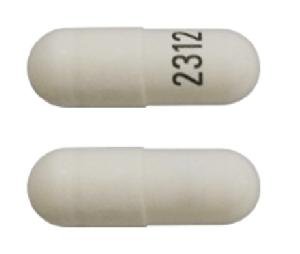
Alvimopan (Monograph)
Brand name: Entereg
Drug class: Opioid Antagonists
Warning
Risk Evaluation and Mitigation Strategy (REMS):
FDA approved a REMS for alvimopan to ensure that the benefits outweigh the risks. The REMS may apply to one or more preparations of alvimopan and consists of the following: elements to assure safe use and implementation system. (See Restricted Distribution Program under Dosage and Administration.) See https://www.accessdata.fda.gov/scripts/cder/rems/.
Warning
-
Only for short-term (15 doses) use in hospitalized patients. (See MI under Cautions.)
-
For use only by hospitals enrolled in the Entereg Access Support and Education (EASE) program. (See Restricted Distribution Program under Dosage and Administration.)
Introduction
Peripherally acting μ-opiate receptor antagonist.
Uses for Alvimopan
Postoperative Ileus
Acceleration of upper and lower GI recovery following partial large or small bowel resection with primary anastomosis.
Efficacy for management of postoperative ileus in women undergoing total abdominal hysterectomy† [off-label] under general anesthesia not established to date.
Alvimopan Dosage and Administration
General
Restricted Distribution Program
-
Available only to hospitals for short-term inpatient use through a restricted distribution program (Entereg Access Support and Education [EASE] program) because of an increased risk of ischemic cardiovascular events associated with long-term therapy. (See REMS and also see MI under Cautions.)
-
To enroll in the EASE program, hospitals must perform bowel resection surgeries and confirm that staff who prescribe, dispense, or administer alvimopan are provided with the EASE program enrollment kit. Hospitals must have systems, order sets, protocols, or other measures in place to limit use to short-term (≤15 doses) therapy in inpatients. Hospitals must ensure alvimopan is not dispensed for outpatient use and the drug is not transferred to a nonregistered hospital.
-
Information about the EASE program is available at 866-423-6567 (866-4ADOLOR) or at [Web]. A database of registered hospitals is available on the website.
Administration
Oral Administration
Preoperative dose administered in fasting patients in clinical studies; postoperative doses administered without regard to meals in studies.
Dosage
Available as alvimopan dihydrate; dosage expressed in terms of anhydrous alvimopan.
Adults
Postoperative Ileus
Oral
12 mg administered 0.5–5 hours prior to surgery followed by 12 mg twice daily beginning the day after surgery for a maximum of 7 days or until discharge.
Administer no more than 15 doses.
Prescribing Limits
Adults
Postoperative Ileus
Oral
Maximum of 15 doses over 7 days postoperatively in hospitalized patients.
Special Populations
Hepatic Impairment
No dosage adjustment required in patients with mild to moderate hepatic impairment (Child-Pugh class A or B). Not recommended in severe hepatic impairment. (See Hepatic Impairment under Cautions.)
Renal Impairment
No dosage adjustment required in patients with mild to severe renal impairment. Not recommended in patients with end-stage renal disease. (See Renal Impairment under Cautions.)
Geriatric Patients
Dosage adjustment based on age not needed.
Crohn’s Disease
No dosage adjustment required. (See Special Populations under Pharmacokinetics.)
Cautions for Alvimopan
Contraindications
-
Therapeutic doses of opiates for >7 consecutive days immediately prior to alvimopan administration.
Warnings/Precautions
Restricted Distribution Program
Only for short-term (15 doses) use in hospitalized patients. For use only by hospitals enrolled in the EASE program. (See Restricted Distribution Program under Dosage and Administration.)
MI
May be associated with increased incidence of MI when used long term; not found with short-term (i.e., ≤7 days) use following bowel resection. Causal relationship not established. (See Boxed Warning and see Restricted Distribution Program under Dosage and Administration.)
Recent Opiate Use
Increased sensitivity to alvimopan possible with recent exposure to opiates; manifests principally as GI symptoms (e.g., abdominal pain, nausea, vomiting, diarrhea). Use caution in patients who have received >3 doses of an opiate within 1 week prior to surgery. (See Contraindications under Cautions.)
Bowel Obstruction
Not recommended for use in patients undergoing surgical correction of complete bowel obstruction.
Specific Populations
Pregnancy
Category B.
Lactation
Distributed into milk in rats; not known whether distributed into human milk. Use caution.
Pediatric Use
Safety and efficacy not established in children <18 years of age.
Geriatric Use
No substantial differences in safety and efficacy relative to younger adults, but increased sensitivity cannot be ruled out.
Hepatic Impairment
Slight increase in plasma alvimopan concentrations possible in patients with mild to moderate hepatic impairment (Child-Pugh class A or B). Monitor for adverse effects (e.g., diarrhea, abdominal pain or cramping) that may indicate alvimopan or metabolite accumulation; discontinue if such effects occur. (See Hepatic Impairment under Dosage and Administration and see Special Populations under Pharmacokinetics.)
Use not recommended in patients with severe hepatic impairment (Child-Pugh class C). Substantially increased plasma concentrations possible.
Renal Impairment
Monitor for possible adverse effects in patients with renal impairment. Closely monitor those with severe renal impairment for adverse effects (e.g., diarrhea, abdominal pain or cramping) that may indicate elevated alvimopan or metabolite concentrations; discontinue if such effects occur. (See Renal Impairment under Dosage and Administration and see Special Populations under Pharmacokinetics.)
Not studied in patients with end-stage renal disease. Use not recommended.
Common Adverse Effects
Constipation, hypokalemia, flatulence, dyspepsia, anemia, back pain, urinary retention.
Drug Interactions
Does not inhibit CYP isoenzymes 1A2, 2C9, 2C19, 3A4, 2D6, or 2E1 or induce isoenzymes 1A2, 2B6, 2C9, 2C19, or 3A4.
Alvimopan does not inhibit P-glycoprotein; alvimopan and its metabolite are substrates for P-glycoprotein.
Drugs Affecting or Metabolized by Hepatic Microsomal Enzymes
Pharmacokinetic interaction unlikely.
Drugs Affecting or Affected by P-glycoprotein Transport
Pharmacokinetic interactions unlikely with mild-to-moderate P-glycoprotein inhibitors. The effect of potent P-glycoprotein inhibitors is unknown.
Pharmacokinetic interactions with P-glycoprotein substrates are unlikely.
Specific Drugs
|
Drug |
Interaction |
Comments |
|---|---|---|
|
Antibiotics (preoperative oral antibiotics) |
Decreased plasma concentrations of alvimopan metabolite; no alteration in alvimopan pharmacokinetics |
No dosage adjustment necessary |
|
Histamine H2-receptor antagonists |
Decreased plasma concentrations of alvimopan metabolite; no alteration in alvimopan pharmacokinetics |
No dosage adjustment necessary |
|
Morphine |
Pharmacokinetic interaction unlikely (no change in morphine pharmacokinetics); alvimopan does not reverse analgesic effects |
No dosage adjustment necessary |
|
Proton-pump inhibitors |
Decreased plasma concentrations of alvimopan metabolite; no alteration in alvimopan pharmacokinetics |
No dosage adjustment necessary |
Alvimopan Pharmacokinetics
Absorption
Bioavailability
Absolute bioavailability averages 6% (range 1–19%).
Food
High-fat meal decreases rate and extent of absorption.
Distribution
Extent
Does not readily cross blood-brain barrier.
Distributed into milk in rats; not known whether distributed into human milk.
Plasma Protein Binding
Alvimopan: 80%. Metabolite: 94%. Bound to albumin.
Elimination
Metabolism
Metabolized by intestinal flora to active metabolite; metabolite not required for pharmacologic activity.
No substantial hepatic metabolism.
Elimination Route
Excreted principally via biliary secretion (65%) and in the urine (35%).
Half-life
10–17 hours.
Special Populations
Exposure to alvimopan is 1.5-fold to twofold higher in patients with mild or moderate hepatic impairment (Child-Pugh class A or B); accumulation possible after multiple doses. Exposure may be increased approximately tenfold in patients with severe hepatic impairment (Child-Pugh class C).
Exposure to metabolite is twofold to fivefold higher in patients with moderate or severe renal impairment. Alvimopan half-life is prolonged in patients with severe renal impairment. Accumulation of alvimopan and metabolite is possible after multiple doses in patients with severe renal impairment. Not studied in patients with end-stage renal disease.
Exposure to alvimopan is twofold higher in patients with quiescent Crohn’s disease relative to healthy individuals or those with active Crohn’s disease; metabolite concentrations are lower in patients with Crohn’s disease.
Stability
Storage
Oral
Capsules
25°C (may be exposed to 15–30°C).
Actions
-
Peripherally acting μ-opiate receptor antagonist.
-
Blocks μ-opiate receptors in GI tract, thereby antagonizing peripheral inhibitory effects of opiates on GI motility and improving GI function.
-
Does not readily cross the blood-brain barrier; therefore, does not affect opiate analgesic activity or precipitate opiate withdrawal, unlike centrally active opiate antagonists (e.g., naltrexone, naloxone).
-
Exhibits greater affinity for μ-opiate receptors than for δ- and κ-opiate receptors; a more potent μ-opiate receptor antagonist than naloxone.
-
Does not possess opiate agonist activity or affinity for nonopiate receptors, including α1-, α2-, and β-adrenergic; dopamine types 1 and 2 (D1, D2); serotonin type 2 (5-hydroxytryptamine [5-HT2A]); histamine (H1); GABA; benzodiazepine; and muscarinic receptors.
Advice to Patients
-
Importance of informing clinicians of long-term or intermittent opiate therapy, including any use of opiates in the week prior to receiving alvimopan. Potential for alvimopan to precipitate GI symptoms (e.g., abdominal pain, nausea, vomiting, diarrhea) in patients who have recently received opiate therapy; importance of informing clinician if such adverse events occur.
-
Importance of informing patients that alvimopan is indicated for hospital use only and for no more than 7 days following bowel resection.
-
Advise patients that the most common adverse effects of alvimopan are constipation, dyspepsia, and flatulence.
-
Importance of women informing clinicians if they are or plan to become pregnant or plan to breast-feed.
-
Importance of informing clinicians of existing or contemplated concomitant therapy, including prescription and OTC drugs, as well as any concomitant illnesses.
-
Importance of informing patients of other important precautionary information. (See Cautions.)
Additional Information
The American Society of Health-System Pharmacists, Inc. represents that the information provided in the accompanying monograph was formulated with a reasonable standard of care, and in conformity with professional standards in the field. Readers are advised that decisions regarding use of drugs are complex medical decisions requiring the independent, informed decision of an appropriate health care professional, and that the information contained in the monograph is provided for informational purposes only. The manufacturer’s labeling should be consulted for more detailed information. The American Society of Health-System Pharmacists, Inc. does not endorse or recommend the use of any drug. The information contained in the monograph is not a substitute for medical care.
Preparations
Excipients in commercially available drug preparations may have clinically important effects in some individuals; consult specific product labeling for details.
Please refer to the ASHP Drug Shortages Resource Center for information on shortages of one or more of these preparations.
Distribution of alvimopan is restricted. (See Restricted Distribution Program under Dosage and Administration.)
|
Routes |
Dosage Forms |
Strengths |
Brand Names |
Manufacturer |
|---|---|---|---|---|
|
Oral |
Capsules |
12 mg (of anhydrous alvimopan) |
Entereg |
Adolor |
AHFS DI Essentials™. © Copyright 2025, Selected Revisions May 10, 2024. American Society of Health-System Pharmacists, Inc., 4500 East-West Highway, Suite 900, Bethesda, Maryland 20814.
† Off-label: Use is not currently included in the labeling approved by the US Food and Drug Administration.
Reload page with references included
Related/similar drugs
Frequently asked questions
More about alvimopan
- Check interactions
- Compare alternatives
- Pricing & coupons
- Drug images
- Side effects
- Dosage information
- During pregnancy
- Drug class: peripheral opioid receptor antagonists
- En español