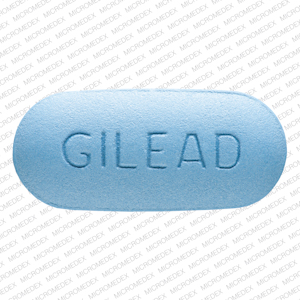
Truvada
Pronunciation: tru-VAD-dah
Generic name: emtricitabine and tenofovir disoproxil fumarate
Dosage form: oral tablet
Drug class: Antiviral combinations
What is Truvada?
Truvada is a combination antiviral tablet that may be used to reduce the risk of adults and teenagers getting HIV-1 infection (this is called HIV-1 PrEP [pre-exposure prophylaxis]) OR to treat HIV-1 infection in combination with other HIV-1 medications.
- Truvada is only approved for PrEP in adults and teenagers who weigh at least 77 pounds (at least 35 kg). It is used alongside practicing safer sex (for example, condom use).
- Truvada can be used for HIV treatment in adults and teenagers who weigh at least 37 pounds (17 kg).
- Truvada is not a cure for HIV or AIDS (acquired immunodeficiency syndrome).
Truvada is a prescription medicine that contains 2 antivirals, emtricitabine and tenofovir disoproxil fumarate that both work by blocking the activity of reverse transcriptase, an enzyme produced by HIV that allows it to infect cells and make more viruses. They both belong to a class of drugs called nucleoside reverse transcriptase inhibitors (NRTIs).
When used for PrEP, Truvada acts as a preventive measure against HIV-1. As long as consistent levels of Truvada are maintained in the blood. Truvada will stop the virus from multiplying and spreading from the site of infection if a person is exposed to the virus.
When used to treat HIV-1 infection, Truvada, when taken in combination with at least one other HIV medicine, reduces the amount of HIV in the blood and keeps it at a low level. This reduces viral load and improves the CD4+ T cell count. Truvada will not cure HIV infection or AIDS, but it may hold off damage to the immune system and the development of infections and diseases associated with AIDS.
Truvada gained FDA approval on August 2, 2004. Generic Truvada has been available since June 8, 2017.
Truvada side effects
The most common side effects of Truvada in people who take it daily for HIV-1 PrEP include:
- headache
- stomach-area (abdomen) pain
- decreased weight.
The most common side effects of Truvada in people who take it in combination with other antivirals for HIV-1 treatment include:
- diarrhea
- nausea
- tiredness
- headache
- dizziness
- depression
- problems sleeping
- abnormal dreams
- rash.
Serious side effects and warnings
Do not take Truvada if you also take other medicines that contain emtricitabine, tenofovir, lamivudine, or adefovir.
Truvada can cause the following serious side effects.
Worsening of hepatitis B virus infection (HBV). Your healthcare provider will test you for HBV before start or when you start treatment with Truvada. If you have an HBV infection and take Truvada, your HBV may get worse (flare-up) if you stop taking it. A “flare-up” is when your HBV infection suddenly returns in a worse way than before.
- Do not run out of Truvada. Refill your prescription or talk to your healthcare provider before it is all gone.
- Do not stop taking Truvada without first talking to your healthcare provider.
- If you stop taking Truvada, your healthcare provider will need to check your health often and do blood tests regularly for several months to check your HBV infection, or give you a medicine to treat hepatitis B. Tell your healthcare provider about any new or unusual symptoms you may have after you stop taking Truvada.
New or worse kidney problems, including kidney failure. Your healthcare provider should do blood and urine tests to check your kidneys before you start and during treatment with Truvada. Your healthcare provider may tell you to take Truvada less often or to stop taking Truvada if you get new or worse kidney problems. Tell your healthcare provider if you have any kidney problems such as swelling, urinating less, or feeling tired or short of breath.
Changes in your immune system (Immune Reconstitution Syndrome) can happen when taking medicines to treat HIV-1 infection. Your immune system may get stronger and begin to fight infections that have been hidden in your body for a long time. Truvada can affect your immune system (even weeks or months after you've used this medicine). Tell your doctor if you have signs of a new infection such as fever, night sweats, swollen glands, cold sores, cough, wheezing, diarrhea, or weight loss.
Bone problems can happen in some people who take Truvada. Bone problems include bone pain, or softening or thinning of bones, which may lead to fractures. Your healthcare provider may need to do tests to check your bones. Tell your healthcare provider right away if you have sudden or unusual bone pain.
Too much lactic acid in your blood (lactic acidosis). Too much lactic acid is a serious but rare medical emergency that can lead to death. Tell your healthcare provider right away if you get these symptoms: weakness or being more tired than usual, unusual muscle pain, being short of breath or fast breathing, stomach pain with nausea and vomiting, cold or blue hands and feet, feeling dizzy or lightheaded, or a fast or abnormal heartbeat. Mild symptoms of lactic acidosis may worsen over time, and this condition can be fatal.
Severe liver problems. In rare cases, severe liver problems can happen that can lead to death. Tell your healthcare provider right away if you get these symptoms: skin or the white part of your eyes turns yellow, dark “tea-colored” urine, light-colored stools, loss of appetite for several days or longer, nausea, or stomach-area pain.
Truvada does not prevent other sexually transmitted infections (STIs). Practice safer sex by using a latex or polyurethane condom to reduce the risk of getting STIs.
These are not all the possible side effects of Truvada. Call your doctor for medical advice about side effects. You may report side effects to the FDA at 1-800-FDA-1088.
Get emergency medical help if you have signs of an allergic reaction to Truvada: hives, difficulty breathing, swelling of your face, lips, tongue, or throat.
Truvada may cause other serious side effects Also, call your doctor at once if you have:
-
trouble speaking or swallowing, problems with balance or eye movement, weakness or prickly feeling; or
-
swelling in your neck or throat (enlarged thyroid), menstrual changes, impotence.
-
Liver problems include swelling around your midsection, right-sided upper stomach pain, loss of appetite, dark urine, clay-colored stools, and jaundice (yellowing of the skin or eyes).
The misuse of antiretroviral drugs like Truvada for recreational purposes is a serious issue, particularly in regions with high HIV rates. This concerning trend has significant implications for public health. See here for more information.
It is not known if Truvada for the treatment of HIV-1 infection is safe and effective in children who weigh less than 37 pounds (17 kg), or when used for PrEP, for people who weigh less than 77 pounds (35 kg).
This is not a complete list of side effects and others may occur. Call your doctor for medical advice about side effects. You may report side effects to the FDA at 1-800-FDA-1088.
Before taking Truvada for PrEP
Do not use Truvada for PrEP if you are HIV-positive or have not confirmed you are HIV-negative.
You must be HIV-1 negative to start Truvada. You must get tested to make sure that you do not already have HIV-1 infection. Do not take Truvada for HIV-1 PrEP unless you are confirmed to be HIV-1 negative. Some HIV-1 tests can miss HIV-1 infection in a person who has recently become infected. If you have flu-like symptoms, you could have recently become infected with HIV-1. Tell your healthcare provider if you had a flu-like illness within the last month before starting Truvada or at any time while taking Truvada, or if you have symptoms of a new HIV1 infection such as:
- tiredness
- fever
- joint or muscle aches
- headache
- sore throat
- vomiting or diarrhea
- rash
- night sweats
- enlarged lymph nodes in the neck or groin.
You must stay HIV-negative to keep taking Truvada for HIV-1 PrEP. Know your HIV-1 status and the HIV-1 status of your partners. Ask your partners with HIV-1 if they are taking anti-HIV-1 medicines and have an undetectable viral load. An undetectable viral load is when the amount of virus in the blood is too low to be measured in a lab test. To maintain an undetectable viral load, your partners must keep taking HIV-1 medicines every day. Your risk of getting HIV-1 is lower if your partners with HIV-1 are taking effective treatment.
- Get tested for HIV-1 at least every 3 months or when your healthcare provider tells you.
- Get tested for other STIs such as syphilis, chlamydia, and gonorrhea. These infections make it easier for HIV-1 to infect you.
If you think you were exposed to HIV-1, tell your healthcare provider right away. They may want to do more tests to be sure you are still HIV-1 negative. Get information and support to help reduce sexual risk behaviors.
Do not miss any doses of Truvada. Missing doses increases your risk of getting HIV-1 infection.
If you do become HIV-1 positive, you need more medicine than Truvada alone to treat HIV-1. Truvada by itself is not a complete treatment for HIV-1. If you have HIV-1 and take only Truvada, over time your HIV-1 may become harder to treat. Talk to your healthcare provider immediately if you do become HIV-1 positive.
Before taking Truvada (general information)
Tell your healthcare provider about all of your medical conditions, including if you:
- have liver problems, including HBV infection
- have kidney problems or receive kidney dialysis treatment
- have bone problems
- are pregnant or plan to become pregnant
- are breastfeeding or plan to breastfeed.
Pregnancy
It is not known if Truvada can harm your unborn baby. Tell your healthcare provider if you become pregnant during treatment with Truvada. There is a pregnancy registry for people who take Truvada during pregnancy. The purpose of this registry is to collect information about the health of you and your baby. Talk with your healthcare provider about how you can take part in this registry.
Breastfeeding
Truvada can pass to your baby in your breast milk. Do not breastfeed if you have HIV-1 or if you think you have recently become infected with HIV-1 because of the risk of passing HIV-1 to your baby.
If you take Truvada for HIV-1 PrEP, talk with your healthcare provider about the best way to feed your baby.
How should I take Truvada?
Take Truvada exactly as prescribed by your doctor. Follow all directions on your prescription label and read all medication guides or instruction sheets.
- If you take Truvada to treat HIV-1 infection, you need to take other HIV-1 medicines. Your healthcare provider will tell you what medicines to take and how to take them.
- If you take Truvada for PrEP it may be the only tablet you take, unless you have other medical conditions.
Take Truvada 1 time each day. You may take this medicine with or without food.
- Children who take Truvada are prescribed a lower-strength tablet than adults. Children should swallow the Truvada tablet. Tell your healthcare provider if your child cannot swallow the tablet, because they may need a different HIV-1 medicine.
- If you are on dialysis, take this medicine after dialysis.
- Your healthcare provider will change the dose of Truvada as needed based on your child’s weight.
Do not change your dose or stop taking Truvada without first talking with your healthcare provider. Stay under a healthcare provider’s care when taking Truvada.
Truvada dosage
Truvada comes in tablet form in the following strengths:
- 100 mg emtricitabine and 150 mg tenofovir disoproxil fumarate
- 133 mg emtricitabine and 200 mg tenofovir disoproxil fumarate
- 167 mg emtricitabine and 250 mg tenofovir disoproxil fumarate
- 200 mg emtricitabine and 300 mg tenofovir disoproxil fumarate
The dose of this medicine will be different for different patients. Follow your doctor's orders or the directions on the label. The following information includes only the average doses of this medicine. If your dose is different, do not change it unless your doctor tells you to do so.
For the prevention of HIV infection (PrEP)
Adults and teenagers weighing 77 pounds (35 kg) or more: 1 tablet once a day.
- Each tablet contains 200 milligrams (mg) of emtricitabine and 300 mg of tenofovir.
For treatment of HIV infection
Adults and teenagers weighing 77 pounds (35 kg) or more: 1 tablet once a day.
- Each tablet contains 200 milligrams (mg) of emtricitabine and 300 mg of tenofovir.
Children weighing 17 kg to less than 35 kg and who can swallow a whole tablet
Dosage is based on body weight and must be determined by your doctor:
- Body weight 62 lb (28 kg) to less than 77 lb (35 kg): 1 tablet once a day of emtricitabine 167 mg and tenofovir 250 mg
- Body weight 48 lb (22 kg) to less than 62 lb (28 kg): 1 tablet once a day of emtricitabine 133 mg and tenofovir 200 mg
- Body weight 37 lb (17 kg) to less than 48 lb (22 kg): 1 tablet once a day of emtricitabine 100 mg and tenofovir 150 mg.
What happens if I miss a dose?
Do not miss any doses of Truvada. Missing a dose increases your risk of getting HIV-1 infection if you are taking Truvada for PrEP. If you are taking Truvada for treatment of HIV-1, missing a dose may cause the amount of virus in your blood to increase. The virus may develop resistance to Truvada and become harder to treat.
If you miss a dose, take the missed dose as soon as you remember. If it is almost time for your next dose, skip that dose and take the next dose at your scheduled time. Do not double up on doses. Call your healthcare provider if you miss 2 or more doses in a row.
When your Truvada supply starts to run low, get more from your healthcare provider or pharmacy
What happens if I overdose?
If you take too much Truvada, seek emergency medical attention or call the Poison Help line at 1-800-222-1222.
What should I avoid while taking Truvada?
Using Truvada will not prevent your disease from spreading.
- Do not have unprotected sex or share razors, toothbrushes, or needles.
- Ask your doctor how to prevent HIV transmission during sex.
What other drugs will affect Truvada?
Sometimes it is not safe to use certain medicines at the same time. Some drugs can affect your blood levels of other drugs you use, which may increase side effects or make the medicines less effective.
Emtricitabine and tenofovir can harm your kidneys, especially if you also use certain medicines for infections, cancer, osteoporosis, organ transplant rejection, high blood pressure, or pain or arthritis (including Advil, Motrin, and Aleve).
Tell your doctor about all your other medicines, especially:
-
seizure medicine - carbamazepine, oxcarbazepine, phenytoin, phenobarbital; or
-
other antiviral medicine to treat hepatitis C or HIV.
This list is not complete and many other drugs may interact with emtricitabine and tenofovir. This includes prescription and over-the-counter medicines, vitamins, and herbal products. Not all possible drug interactions are listed here.
Storage
Store Truvada tightly closed in the original container at room temperature, away from moisture and heat.
Do not use Truvada if the seal over the bottle opening is broken or missing.
Keep out of reach of children.
Truvada ingredients
Active ingredient: emtricitabine and tenofovir disoproxil fumarate.
Inactive ingredients: croscarmellose sodium, lactose monohydrate, magnesium stearate, microcrystalline cellulose, and pregelatinized starch (gluten-free). The 200 mg/300 mg strength tablets are coated with Opadry II Blue Y-30-10701, which contains FD&C Blue #2 aluminum lake, hypromellose 2910, lactose monohydrate, titanium dioxide, and triacetin. The 167 mg/250 mg, 133 mg/200 mg, and 100 mg/150 mg strength tablets are coated with Opadry II Blue, which contains FD&C Blue #2 aluminum lake, hypromellose 2910, lactose monohydrate, titanium dioxide, and triacetin.
Truvada comes in tablet form in the following strengths:
- 100 mg emtricitabine and 150 mg tenofovir disoproxil fumarate
- 133 mg emtricitabine and 200 mg tenofovir disoproxil fumarate
- 167 mg emtricitabine and 250 mg tenofovir disoproxil fumarate
- 200 mg emtricitabine and 300 mg tenofovir disoproxil fumarate
Who makes Truvada?
Gilead Sciences, Inc., makes Truvada.
Popular FAQ
How long does it take for Truvada to work?
Truvada HIV pre-exposure prophylaxis (PrEP) reaches maximum effectiveness after 7 days of daily use for receptive anal sex (bottoming). It takes about 21 days of daily use for protection for receptive vaginal sex or injected drug use. No data are available for insertive anal sex (topping) or insertive vaginal sex. Continue reading
How does Truvada work to prevent HIV?
Truvada is made up of two antiviral medications, emtricitabine and tenofovir disoproxil fumarate. It works to lower the risk of human immunodeficiency virus (HIV) infection by blocking pathways the virus uses to infect you and spread in your body. Continue reading
What is the recreational use of ART, including Truvada?
Recreational use of ART (Antiretroviral Therapy), including drugs like Truvada, is the non-prescribed consumption of these medications for their intoxicating effects. This dangerous practice has become a growing concern, particularly in regions with high HIV prevalence, such as South Africa. One survey of 200 adolescents reported that 3% used non-prescribed ART recreationally themselves and 14% knew someone who used it. Continue reading
More FAQ
More about Truvada (emtricitabine / tenofovir disoproxil)
- Check interactions
- Compare alternatives
- Pricing & coupons
- Reviews (38)
- Drug images
- Side effects
- Dosage information
- During pregnancy
- Generic availability
- FDA approval history
- Drug class: antiviral combinations
- En español
Professional resources
Related treatment guides
Further information
Always consult your healthcare provider to ensure the information displayed on this page applies to your personal circumstances.