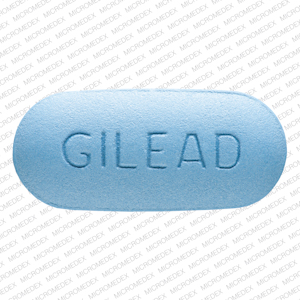
Truvada Dosage
Generic name: emtricitabine 200mg, tenofovir disoproxil fumarate 300mg
Dosage form: tablet, film coated
Drug class: Antiviral combinations
Medically reviewed by Drugs.com. Last updated on May 9, 2024.
Testing Prior to Initiation of TRUVADA for Treatment of HIV-1 Infection or for HIV-1 PrEP
Prior to or when initiating TRUVADA, test individuals for hepatitis B virus infection [see Warnings and Precautions (5.1)].
Prior to initiation, and during use of TRUVADA, on a clinically appropriate schedule, assess serum creatinine, estimated creatinine clearance, urine glucose, and urine protein in all individuals. In individuals with chronic kidney disease, also assess serum phosphorus [see Warnings and Precautions (5.3)].
HIV-1 Screening for Individuals Receiving TRUVADA for HIV-1 PrEP
Screen all individuals for HIV-1 infection immediately prior to initiating TRUVADA for HIV-1 PrEP and at least once every 3 months while taking TRUVADA, and upon diagnosis of any other sexually transmitted infections (STIs) [see Indications and Usage (1.2), Contraindications (4), and Warnings and Precautions (5.2)].
If recent (<1 month) exposures to HIV-1 are suspected or clinical symptoms consistent with acute HIV-1 infection are present, use a test approved or cleared by the FDA as an aid in the diagnosis of acute or primary HIV-1 infection [see Warnings and Precautions (5.2), Use in Specific Populations (8.4), and Clinical Studies (14.3 and 14.4)].
Recommended Dosage for Treatment of HIV-1 Infection in Adults and Pediatric Patients Weighing at Least 35 kg
TRUVADA is a two-drug fixed dose combination product containing emtricitabine (FTC) and tenofovir disoproxil fumarate (TDF). The recommended dosage of TRUVADA in adults and in pediatric patients weighing at least 35 kg is one tablet (containing 200 mg of FTC and 300 mg of TDF) once daily taken orally with or without food [see Clinical Pharmacology (12.3)].
Recommended Dosage for Treatment of HIV-1 Infection in Pediatric Patients Weighing at Least 17 kg and Able to Swallow a Tablet
The recommended oral dosage of TRUVADA for pediatric patients weighing at least 17 kg and who can swallow a tablet is presented in Table 1. Tablets should be taken once daily with or without food. Weight should be monitored periodically and the TRUVADA dose adjusted accordingly.
| Body Weight (kg) | Dosing of TRUVADA (FTC/TDF) |
|---|---|
| 17 to less than 22 | one 100 mg /150 mg tablet once daily |
| 22 to less than 28 | one 133 mg /200 mg tablet once daily |
| 28 to less than 35 | one 167 mg /250 mg tablet once daily |
Recommended Dosage for HIV-1 PrEP in Adults and Adolescents Weighing at Least 35 kg
The dosage of TRUVADA for HIV-1 PrEP is one tablet (containing 200 mg of FTC and 300 mg of TDF) once daily taken orally with or without food in HIV-1 uninfected adults and adolescents weighing at least 35 kg [see Clinical Pharmacology (12.3)].
Dosage Adjustment in Individuals with Renal Impairment
Treatment of HIV-1 Infection
Table 2 provides dosage interval adjustment for patients with renal impairment. No dosage adjustment is necessary for HIV-1 infected patients with mild renal impairment (creatinine clearance 50–80 mL/min). The safety and effectiveness of the dosing interval adjustment recommendations in patients with moderate renal impairment (creatinine clearance 30–49 mL/min) have not been clinically evaluated; therefore, clinical response to treatment and renal function should be closely monitored in these patients [see Warnings and Precautions (5.3)].
No data are available to make dosage recommendations in pediatric patients with renal impairment.
| Creatinine Clearance (mL/min)* | |||
|---|---|---|---|
| ≥50 | 30–49 | <30 (Including Patients Requiring Hemodialysis) |
|
|
|||
| Recommended Dosing Interval | Every 24 hours | Every 48 hours | TRUVADA is not recommended. |
HIV-1 PrEP
TRUVADA for HIV-1 PrEP is not recommended in HIV-1 uninfected individuals with estimated creatinine clearance below 60 mL/min [see Warnings and Precautions (5.3)].
If a decrease in estimated creatinine clearance is observed in uninfected individuals while using TRUVADA for HIV-1 PrEP, evaluate potential causes and re-assess potential risks and benefits of continued use [see Warnings and Precautions (5.3)].
Frequently asked questions
- How long does it take for Truvada to work?
- How does Truvada work to prevent HIV?
- What is the recreational use of ART, including Truvada?
- Truvada vs Descovy: How do they compare for HIV and PrEP?
More about Truvada (emtricitabine / tenofovir disoproxil)
- Check interactions
- Compare alternatives
- Pricing & coupons
- Reviews (38)
- Drug images
- Side effects
- During pregnancy
- Generic availability
- FDA approval history
- Drug class: antiviral combinations
- En español
Patient resources
Other brands
Professional resources
Related treatment guides
Further information
Always consult your healthcare provider to ensure the information displayed on this page applies to your personal circumstances.