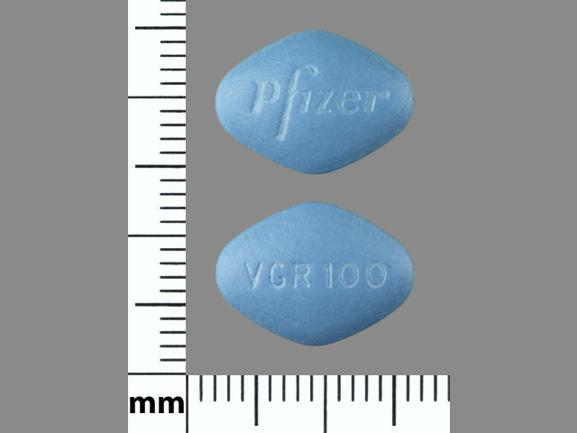
Viagra Side Effects
Generic name: sildenafil
Medically reviewed by Drugs.com. Last updated on Jun 3, 2025.
Note: This document provides detailed information about Viagra Side Effects associated with sildenafil. Some dosage forms listed on this page may not apply specifically to the brand name Viagra.
Applies to sildenafil: oral powder for suspension, oral suspension, oral tablet.
Other dosage forms:
Precautions
It is important that you tell all of your doctors that you take sildenafil (the active ingredient contained in Viagra). If you need emergency medical care for a heart problem, it is important that your doctor knows when you last took sildenafil.
Do not use this medicine if you are also using a nitrate medicine, often used to treat angina or high blood pressure. Nitrate medicines include nitroglycerin, isosorbide, Imdur®, Nitro-Bid®, Nitro-Dur®, Nitrol® ointment, Nitrolingual® spray, Nitrostat®, and Transderm Nitro®. Some illegal ("street") drugs called "poppers" (such as amyl nitrate, butyl nitrate, or nitrite). Do not use this medicine if you also use riociguat (Adempas®).
If you will be taking this medicine for pulmonary arterial hypertension, your doctor will want to check your progress at regular visits. This will allow your doctor to see if the medicine is working properly and to decide if you should continue to take it.
If you take sildenafil for pulmonary arterial hypertension, do not take Viagra® or other PDE5 inhibitors, including tadalafil (Cialis®) or vardenafil (Levitra®). Viagra® also contains sildenafil. If you take too much sildenafil or take it together with these medicines, the chance for side effects will be higher.
Sildenafil should not be used with any other medicine or device that causes erections.
It is important to tell your doctor about any heart problems you have now or may have had in the past. This medicine can cause serious side effects in patients with heart problems.
If you experience a prolonged or painful erection for 4 hours or more, contact your doctor immediately. This condition may require prompt medical treatment to prevent serious and permanent damage to your penis.
If you experience a sudden loss of vision in one or both eyes, contact your doctor immediately.
Check with your doctor right away if you have a sudden decrease in hearing or loss of hearing, which may be accompanied by dizziness and ringing in the ears.
If you already use medicine for high blood pressure (hypertension), sildenafil could make your blood pressure go too low. Call your doctor right away if you have blurred vision, confusion, dizziness, faintness, or lightheadedness when getting up from a lying or sitting position suddenly, sweating, or unusual tiredness or weakness.
This medicine does not protect you against sexually transmitted diseases (including HIV or AIDS). Use protective measures and ask your doctor if you have any questions about this.
Do not take other medicines unless they have been discussed with your doctor. This includes prescription or nonprescription (over-the-counter [OTC]) medicines and herbal or vitamin supplements.
Common side effects of Viagra
Some side effects of sildenafil may occur that usually do not need medical attention. These side effects may go away during treatment as your body adjusts to the medicine. Also, your health care professional may be able to tell you about ways to prevent or reduce some of these side effects.
Check with your health care professional if any of the following side effects continue or are bothersome or if you have any questions about them:
More common side effects
- aches or pains in the muscles
- bloody nose
- diarrhea
- difficult or labored breathing
- flushing
- headache
- pain or tenderness around the eyes and cheekbones
- redness of the skin
- sneezing
- stomach discomfort following meals
- stuffy or runny nose
- trouble sleeping
- unusually warm skin
Rare side effects
- abdominal or stomach pain
- abnormal dreams
- anxiety
- clumsiness or unsteadiness
- cough
- diarrhea or stomach cramps (severe or continuing)
- difficulty in swallowing
- ear pain
- increased amount of saliva
- increased skin sensitivity
- lack of coordination
- loss of bladder control
- mental depression
- nausea
- numbness or tingling of the hands, legs, or feet
- rectal bleeding
- redness or irritation of the tongue
- redness, soreness, swelling, or bleeding of the gums
- ringing or buzzing in the ears
- sensation of motion, usually whirling, either of one's self or of one's surroundings
- sexual problems in men (continuing), including failure to experience a sexual orgasm
- sleepiness
- sores in the mouth and on the lips
- tense muscles
- trembling and shaking
- vomiting
- waking to urinate at night
- worsening of asthma
Serious side effects of Viagra
Along with its needed effects, sildenafil may cause some unwanted effects. Although not all of these side effects may occur, if they do occur they may need medical attention.
Check with your doctor immediately if any of the following side effects occur while taking sildenafil:
Less common side effects
- bladder pain
- burning feeling in the chest or stomach
- burning, crawling, itching, numbness, prickling, "pins and needles", or tingling feelings
- cloudy or bloody urine
- dizziness
- increased frequency of urination
- indigestion
- pain on urination
- stomach upset
- tenderness in the stomach area
Rare side effects
- abnormal vision
- anxiety
- behavior change similar to drunkenness
- bleeding of the eye
- blurred vision
- bone pain
- breast enlargement
- chest pain
- chills
- cold sweats
- confusion
- cool and pale skin
- deafness or hearing loss
- decrease in amount of urine or the frequency of urination
- decreased vision
- difficulty in concentrating
- dizziness or lightheadedness, especially when getting up suddenly from a lying or sitting position
- double vision
- drowsiness
- dry eyes
- dry mouth
- dryness, redness, scaling, or peeling of the skin
- excessive hunger
- eye pain
- fainting or faintness
- fast, irregular, or pounding heartbeat
- feeling of something in the eye
- fever or chills
- headache (severe or continuing)
- increase in the size of the pupil
- increased sweating
- increased thirst
- lower back or side pain
- migraine headache
- nausea (severe or continuing)
- nervousness
- nightmares
- numbness of the hands
- painful, swollen joints
- prolonged, painful erection of penis
- redness, burning, or swelling of the eyes
- redness, itching, or tearing of the eyes
- restless sleep
- seeing shades of colors differently than before
- seizures
- sensitivity to light
- shakiness
- skin lesions with swelling
- skin paleness
- skin rash, hives, or itching
- skin ulcers
- slurred speech
- sore throat
- sudden weakness
- swelling of the face, hands, feet, or lower legs
- trouble breathing
- twitching of the muscles
- unusual feeling of burning or stinging of the skin
- unusual tiredness or weakness
- vision changes
- vision loss, temporary
Incidence not known
- blindness
See also:
For healthcare professionals
Applies to sildenafil: intravenous solution, oral powder for reconstitution, oral tablet.
General adverse events
The most common adverse reactions occurring in patients with erectile dysfunction (ED) and pulmonary arterial hypertension (PAH) included headache, flushing, dyspepsia, abnormal vision, nasal congestion, back pain, myalgia, nausea, dizziness, rash, visual disturbance, cyanopsia, blurred vision, limb pain, priapism, upper respiratory infection, vomiting, bronchitis, pharyngitis, pyrexia, diarrhea, influenza, epistaxis.[Ref]
Cardiovascular
- Very common (10% or more): Flushing (up to 19%)
- Rare (0.01% to 0.1%): Myocardial infarction, atrial fibrillation, unstable angina, tachycardia, palpitations
- Frequency not reported: Shock, angina pectoris, AV block, migraine, syncope, hypotension, postural hypotension, myocardial ischemia, cerebral thrombosis, cardiac arrest, heart failure, abnormal electrocardiogram, cardiomyopathy, vasodilation, abnormal electrocardiogram, increased heart rate
- Postmarketing reports: Myocardial infarction, sudden cardiac death, cardiac arrest, ventricular arrhythmia, hypertension, hypotensive events after the use with alpha-blockers, tachycardia, hypotension, syncope
Gastrointestinal
- Very common (10% or more): Dyspepsia (up to 17%), diarrhea
- Common (1% to 10%): Nausea, vomiting, dry mouth, gastritis, gastroesophageal reflux disease, hemorrhoids, abdominal distension
- Rare (less than 0.1%): Oral hypoesthesia
- Frequency not reported: Glossitis, colitis, dysphagia, gastroenteritis, esophagitis, stomatitis, gingivitis
Musculoskeletal
- Very common (10% or more): Pain in limb (up to 15%), myalgia (up to 14%), back pain (up to 13%)
- Frequency not reported: Arthritis, arthrosis, myalgia, tendon rupture, tenosynovitis, bone pain, myasthenia, synovitis
- Postmarketing reports: Pain in extremity, pain in jaw, arthralgia
Nervous system
- Very common (10% or more): Headache (up to 28% in ED; up to 49% in PAH)
- Common (1% to 10%): Dizziness, vertigo, paresthesia, tremor, burning sensation, migraine, hypoesthesia
- Uncommon (0.1% to 1%): Somnolence
- Rare (0.01% to 0.1%): Cerebrovascular accident, transient ischemic attack, syncope
- Frequency not reported: Ataxia, hypertonia, neuralgia, neuropathy, vertigo, depression, decreased reflexes/hyporeflexia, cerebral thrombosis, convulsion
- Postmarketing reports: Cerebrovascular hemorrhage, transient ischemic attack, subarachnoid hemorrhage, intracerebral hemorrhage, seizure, seizure recurrence, transient global amnesia
Ocular
- Very common (10% or more): Abnormal vision (up to 11%)
- Common (1% to 10%): Abnormal sensation in eye, chromatopsia, cyanopsia, diplopia, eye irritation, photophobia, retinal hemorrhage, visual acuity reduced, visual color distortion
- Uncommon (0.1% to 1%): Dry eye, lacrimal disorder, photopsia, ocular hyperemia, visual brightness, conjunctivitis, eye pain
- Rare (0.01% to 0.1%): Arteriosclerotic retinopathy, retinal disorder, glaucoma, visual field defect, myopia, asthenopia, vitreous floaters, iris disorder, mydriasis, halo vision, eye edema, eye swelling, eye disorder, conjunctival hyperemia, eyelid edema, scleral discoloration
- Frequency not reported: Eye hemorrhage, cataract, visual disturbance, xanthopsia, erythropsia
- Postmarketing reports: Diplopia, temporary vision loss/decreased vision, ocular redness or bloodshot appearance, ocular burning, ocular swelling/pressure, increased intraocular pressure, retinal edema, retinal vascular disease or bleeding, vitreous traction/detachment, non-arteritic anterior ischemic optic neuropathy (NAION)
Abnormal vision included a severity that was mild to moderate and transient, characterized predominantly by color tinge to vision, but also increased sensitivity to light, or blurred vision.
Lacrimation disorders included dry eye, lacrimal disorder, and lacrimation increased.
Visual color distortions included chloropsia, chromatopsia, cyanopsia, erythropsia, and xanthopsia.
Respiratory
- Very common (10% or more): Upper respiratory tract infection (up to 31%), bronchitis (up to 20%), pharyngitis (up to 18%)
- Common (1% to 10%): Nasal congestion, cough, epistaxis, dyspnea, sinusitis, rhinitis, bronchitis, pneumonia, rhinorrhea
- Uncommon (0.1% to 1%): Sinus congestion
- Frequency not reported: Asthma, laryngitis, increased sputum, increased cough, respiratory tract infection, throat tightness, nasal dryness, nasal edema, bronchopneumonia, hypoxia, stridor, pulmonary hypertension
- Postmarketing reports: Epistaxis, pulmonary hemorrhage
Dermatologic
- Common (1% to 10%): Rash, erythema, alopecia
- Frequency not reported: Face edema, photosensitivity reaction, urticaria, pruritus, sweating, skin ulcer, contact dermatitis, exfoliative dermatitis
- Postmarketing reports: Stevens-Johnson syndrome (SJS), Toxic epidermal necrolysis (TEN)
Hematologic
- Common (1% to 10%): Anemia
- Frequency not reported: Leukopenia
- Postmarketing reports: Vaso-occlusive crisis (in patients with PAH secondary to sickle cell disease)
Metabolic
- Common (1% to 10%): Increased weight, fluid retention
- Frequency not reported: Edema, gout, unstable diabetes, hyperglycemia, peripheral edema, hyperuricemia, hypoglycemic reaction, hypernatremia
Other
- Very common (10% or more): Pyrexia (up to 17%), influenza (up to 12%)
- Common (1% to 10%): Cellulitis, gynecomastia, breast enlargement, night sweats
- Uncommon (0.1% to 1%): Tinnitus, chest pain, feeling hot, fatigue
- Rare (0.01% to 0.1%): Deafness, irritability
- Frequency not reported: Asthenia, pain, chills, accidental fall, accidental injury, thirst, sudden decrease or loss of hearing, ear pain, flu syndrome, infection, herpes simplex
- Postmarketing reports: Sudden decrease or loss of hearing
Psychiatric
- Common (1% to 10%): Insomnia, anxiety
- Frequency not reported: Depression, abnormal dreams
- Postmarketing reports: Anxiety
Genitourinary
- Common (1% to 10%): Increased erection, urinary tract infection
- Uncommon (0.1% to 1%): Penile hemorrhage, hematospermia
- Frequency not reported: Cystitis, nocturia, urinary frequency, urinary incontinence, abnormal ejaculation, genital edema, anorgasmia, prostatic disorder
- Postmarketing reports: Prolonged erection, priapism
Renal
- Uncommon (0.1% to 1%): Hematuria
Hypersensitivity
- Uncommon (0.1% to 1%): Hypersensitivity
- Frequency not reported: Allergic reaction
- Postmarketing reports: Hypersensitivity reaction
Hepatic
- Frequency not reported: Abnormal liver tests
References
1. (2023) "Product Information. Revatio (sildenafil)." Pfizer U.S. Pharmaceuticals Group, SUPPL-25
2. (2017) "Product Information. Viagra (sildenafil)." Pfizer U.S. Pharmaceuticals Group
3. (2023) "Product Information. Liqrev (sildenafil)." Carolina Medical Products Company
4. (2023) "Product Information. Revatio (sildenafil)." Pfizer Australia Pty Ltd
5. (2021) "Product Information. Viagra (sildenafil)." Pfizer Australia Pty Ltd
6. (2021) "Product Information. Wafesil (sildenafil)." iX Biopharma Pty Ltd
7. (2021) "Product Information. Silcap (sildenafil)." iX Biopharma Pty Ltd
8. (2023) "Product Information. Viagra (sildenafil)." Viatris UK Healthcare Ltd
9. (2023) "Product Information. Viagra Connect (sildenafil)." Viatris UK Healthcare Ltd
10. (2023) "Product Information. Revatio (sildenafil)." Pfizer Ltd
11. (2022) "Product Information. Sildenafil (sildenafil)." Rosemont Pharmaceuticals Ltd
Frequently asked questions
- Cialis vs Viagra - What's the difference between them?
- Can you take Viagra with high blood pressure?
- How long does Viagra last and how soon does it work?
- Can women take Viagra?
- Can I buy generic Viagra online?
- Do you know these 11 amazing facts about Viagra?
- Is generic Viagra available in the U.S.?
- Does generic Viagra work just like regular Viagra?
- Are there any drug interactions between prednisone and Viagra?
More about Viagra (sildenafil)
- Check interactions
- Compare alternatives
- Pricing & coupons
- Reviews (256)
- Drug images
- Latest FDA alerts (15)
- Dosage information
- Patient tips
- During pregnancy
- Generic availability
- Support group
- Drug class: impotence agents
- Breastfeeding
- En español
Patient resources
Other brands
Professional resources
Other brands
Related treatment guides
Further information
Viagra side effects can vary depending on the individual. Always consult your healthcare provider to ensure the information displayed on this page applies to your personal circumstances.
Note: Medication side effects may be underreported. If you are experiencing side effects that are not listed, submit a report to the FDA by following this guide.