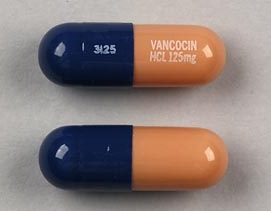
Vancomycin Side Effects
Medically reviewed by Drugs.com. Last updated on Oct 30, 2023.
Applies to vancomycin: oral capsule, oral powder for solution, oral powder for suspension.
Other dosage forms:
Serious side effects of vancomycin
Along with its needed effects, vancomycin may cause some unwanted effects. Although not all of these side effects may occur, if they do occur they may need medical attention.
Check with your doctor immediately if any of the following side effects occur while taking vancomycin:
More common
- bladder pain
- bloating or swelling of the face, arms, hands, lower legs, or feet
- bloody or cloudy urine
- decreased urine
- difficult, burning, or painful urination
- dry mouth
- fever
- frequent urge to urinate
- increased thirst
- irregular heartbeat
- loss of appetite
- lower back or side pain
- mood changes
- muscle pain or cramps
- nausea
- numbness or tingling in the hands, feet, or lips
- seizures
- unusual tiredness or weakness
- unusual weight gain or loss
- vomiting
Less common
- change in the frequency of urination or amount of urine
- drowsiness
- trouble breathing
- weakness
Rare
- hives, skin rash
- redness or other discoloration of the skin
- scaling or welting of the skin
Incidence not known
- black, tarry stools
- bleeding gums
- blistering, peeling, or loosening of the skin
- blurred vision
- chest pain or tightness
- chills
- confusion
- continuing ringing or buzzing or other unexplained noise in the ears
- cough
- difficulty with swallowing
- dizziness, faintness, or lightheadedness when getting up suddenly from a lying or sitting position
- fast heartbeat
- feeling of constant movement of self or surroundings
- feeling of fullness in the ears
- hearing loss
- itching
- joint or muscle pain
- loss of balance
- lower back or side pain
- pale skin
- pinpoint red spots on the skin
- puffiness or swelling of the eyelids or around the eyes, face, lips, or tongue
- red skin lesions, often with a purple center
- red, irritated eyes
- ringing or buzzing in the ears
- sensation of spinning
- sore throat
- sores, ulcers, or white spots in the mouth or on the lips
- sweating
- swollen glands
- unusual bleeding or bruising
Other side effects of vancomycin
Some side effects of vancomycin may occur that usually do not need medical attention. These side effects may go away during treatment as your body adjusts to the medicine. Also, your health care professional may be able to tell you about ways to prevent or reduce some of these side effects.
Check with your health care professional if any of the following side effects continue or are bothersome or if you have any questions about them:
More common
- back pain
- bitter or unpleasant taste
- excess air or gas in the stomach or bowels
- headache
- mouth irritation
- passing gas
- stomach pain
Incidence not known
- depression
- difficulty having a bowel movement
- trouble sleeping
For healthcare professionals
Applies to vancomycin: compounding powder, intravenous powder for injection, intravenous solution, oral capsule, oral powder for reconstitution, oral solution.
General
The most commonly reported side effects include nausea, abdominal pain, and hypokalemia.[Ref]
Gastrointestinal
- Very common (10% or more): Nausea (up to 17%), abdominal pain (up to 15%)
- Common (1% to 10%): Vomiting, diarrhea, flatulence
- Uncommon (0.1% to 1%): Mild gastrointestinal tract disturbances
- Very rare (less than 0.01%): Pseudomembranous enterocolitis/colitis
- Frequency not reported: Chemical peritonitis, constipation, indigestion, stomachache[Ref]
Chemical peritonitis occurred with intraperitoneal administration.
Mild gastrointestinal tract disturbances occurred with oral administration.[Ref]
Metabolic
- Very common (10% or more): Hypokalemia (up to 13%)[Ref]
Dermatologic
- Common (1% to 10%): Exanthema, pruritus, vancomycin infusion reaction, redness of the face/upper arms, urticaria
- Uncommon (0.1% to 1%): Erythema, itch
- Rare (0.01% to 0.1%): Toxic epidermal necrolysis
- Very rare (less than 0.01%): Exfoliative dermatitis, linear IgA bullous dermatosis, Lyell's syndrome, Stevens-Johnson syndrome
- Frequency not reported: Acute generalized exanthematous pustulosis (AGEP), erythematous macular rash with intense pruritus over face/neck/upper body, rash, red neck[Ref]
Cardiovascular
- Common (1% to 10%): Decrease in blood pressure, flushing of the upper body, peripheral edema, phlebitis
- Uncommon (0.1% to 1%): Thrombophlebitis
- Rare (0.01% to 0.1%): Vasculitis
- Very rare (less than 0.01%): Cardiac arrest
- Frequency not reported: Bradycardia, cardiogenic shock, generalized flushing, hypotension, palpitations, substernal pressure, tachycardia
- Postmarketing reports: Chest pain[Ref]
Hypotension, bradycardia, cardiogenic shock, and cardiac arrest have occurred with rapid bolus administration.[Ref]
Renal
- Common (1% to 10%): Increased serum creatinine, increased serum urea, nephrotoxicity, renal insufficiency
- Rare (0.01% to 0.1%): Acute renal failure, interstitial nephritis
- Frequency not reported: Acute kidney injury, Acute tubular necrosis, azotemia, blood urea nitrogen (BUN) concentrations increased, uremia, transient increased urea[Ref]
Renal failure was most commonly characterized by increased serum creatinine levels or BUN concentrations.
Azotemia usually resolved upon discontinuation of treatment.[Ref]
Other
- Common (1% to 10%): Fatigue, mucosal inflammation, pyrexia
- Uncommon (0.1% to 1%): Chills, fever, pain, permanent hearing loss, transient hearing loss
- Rare (0.01% to 0.1%): Drug fever, ototoxicity, rigors, shivering, tinnitus[Ref]
Respiratory
- Common (1% to 10%): Dyspnea, stridor
- Frequency not reported: Wheezing[Ref]
Musculoskeletal
- Common (1% to 10%): Back pain
- Rare (0.01% to 0.1%): Back and chest muscle pain and spasm[Ref]
Nervous system
- Common (1% to 10%): Headache
- Rare (0.01% to 0.1%): Dizziness, vertigo[Ref]
Genitourinary
- Common (1% to 10%): Urinary tract infection
- Frequency not reported: Granular urinary casts[Ref]
Hematologic
- Uncommon (0.1% to 1%): Eosinophilia,
- Rare (0.01% to 0.1%): Agranulocytosis, leukopenia, pancytopenia, reversible agranulocytosis, reversible neutropenia, thrombocytopenia
- Frequency not reported: Anemia[Ref]
Hypersensitivity
- Rare (0.01% to 0.1%): Anaphylactic reactions, anaphylaxis, hypersensitivity reactions
- Frequency not reported: Anaphylactoid reaction[Ref]
Immunologic
- Rare (0.01% to 0.1%): Superinfection
- Frequency not reported: Drug rash with eosinophilia and systemic symptoms (DRESS), non-susceptible organism overgrowth[Ref]
Local
- Frequency not reported: Injection site inflammation, injection site pruritus, necrosis, tissue irritation[Ref]
Ocular
- Frequency not reported: Hemorrhagic occlusive retinal vasculitis (HORV), permanent vision loss[Ref]
HORV occurred in patients given this drug via intracameral or intravitreal route during/after cataract surgery.[Ref]
Psychiatric
- Frequency not reported: Depression, insomnia[Ref]
Hepatic
- Frequency not reported: Transaminase elevations[Ref]
References
1. (2001) "Product Information. Vancocin (vancomycin)." Lilly, Eli and Company
2. Cerner Multum, Inc. "UK Summary of Product Characteristics."
3. Cerner Multum, Inc. "Australian Product Information."
4. Infectious Diseases Society of America (2021) Position on Terminology for Vancomycin Flushing Reactions. https://www.hivma.org/globalassets/idsa/public-health/covid-19/vanc-flushing-syndrome-idsa-position-statement.pdf
Frequently asked questions
- Can you drink alcohol while taking vancomycin?
- What is the difference between Firvanq and the CutisPharma FIRST-Vancomycin Compounding Kit?
More about vancomycin
- Check interactions
- Compare alternatives
- Pricing & coupons
- Reviews (56)
- Drug images
- Latest FDA alerts (8)
- Dosage information
- Patient tips
- During pregnancy
- Support group
- Drug class: glycopeptide antibiotics
- Breastfeeding
Patient resources
Other brands
Vancocin, Firvanq, Vancocin HCl, Vancocin HCl Pulvules
Professional resources
- Vancomycin monograph
- Vancomycin Capsules (FDA)
- Vancomycin Hydrochloride (FDA)
- Vancomycin Oral Solution (FDA)
Other brands
Related treatment guides
Further information
Vancomycin side effects can vary depending on the individual. Always consult your healthcare provider to ensure the information displayed on this page applies to your personal circumstances.
Some side effects may not be reported. You may report them to the FDA.