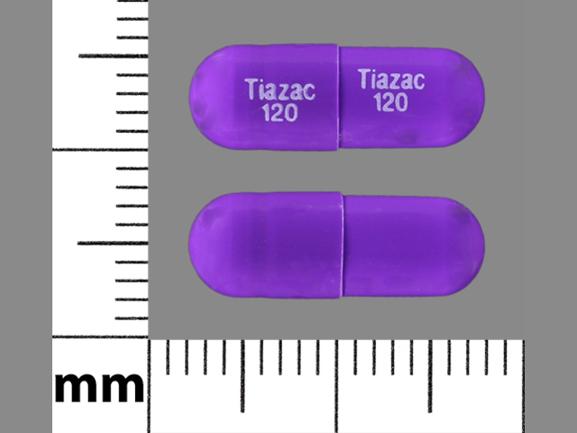
Tiazac Side Effects
Generic name: diltiazem
Medically reviewed by Drugs.com. Last updated on Oct 20, 2023.
Note: This document contains side effect information about diltiazem. Some dosage forms listed on this page may not apply to the brand name Tiazac.
Applies to diltiazem: oral capsule extended release, oral capsule extended release 12 hr, oral capsule extended release 24 hr, oral tablet, oral tablet extended release, oral tablet extended release 24 hr. Other dosage forms:
Serious side effects of Tiazac
Along with its needed effects, diltiazem (the active ingredient contained in Tiazac) may cause some unwanted effects. Although not all of these side effects may occur, if they do occur they may need medical attention.
Check with your doctor immediately if any of the following side effects occur while taking diltiazem:
More common
- Body aches or pain
- congestion
- cough
- dryness or soreness of the throat
- fever
- hoarseness
- runny nose
- tender or swollen glands in the neck
- trouble swallowing
- voice changes
Less common
- Chest pain, discomfort, or tightness
- chills
- diarrhea
- difficult or labored breathing
- feeling faint, dizzy, or lightheaded
- feeling of warmth or heat
- flushing or redness of the skin, especially on the face and neck
- general feeling of discomfort or illness
- headache
- joint pain
- loss of appetite
- muscle aches and pains
- nausea
- shivering
- slow or irregular heartbeat
- sweating
- swelling of the hands, ankles, feet, or lower legs
- trouble sleeping
- unusual tiredness or weakness
- vomiting
Incidence not known
- Blistering, peeling, or loosening of the skin
- itching
- large, hive-like swelling on the face, eyelids, lips, tongue, throat, hands, legs, feet, or sex organs
- no heartbeat
- red skin lesions, often with a purple center
- red, irritated eyes
- sores, ulcers, or white spots in the mouth or on the lips
Other side effects of Tiazac
Some side effects of diltiazem may occur that usually do not need medical attention. These side effects may go away during treatment as your body adjusts to the medicine. Also, your health care professional may be able to tell you about ways to prevent or reduce some of these side effects.
Check with your health care professional if any of the following side effects continue or are bothersome or if you have any questions about them:
More common
- Sneezing
- stuffy nose
Less common
- Acid or sour stomach
- belching
- constipation
- continuing ringing or buzzing or other unexplained noise in the ears
- degenerative disease of the joint
- difficulty with moving
- hearing loss
- heartburn
- indigestion
- lack or loss of strength
- muscle aching or cramping
- muscle pains or stiffness
- pain or tenderness around the eyes and cheekbones
- rash
- stomach discomfort, upset, or pain
- swollen joints
Incidence not known
- Loss or thinning of the hair
For Healthcare Professionals
Applies to diltiazem: compounding powder, intravenous powder for injection, intravenous solution, oral capsule extended release, oral tablet, oral tablet extended release.
General
The most commonly reported side effects include edema, headache, and dizziness.[Ref]
Cardiovascular
A patient with Prinzmetal's angina developed asystole after a single, 60 mg dose.
Myocardial infarction was not readily distinguishable from the natural history of the disease.
Vasodilatory events (e.g., peripheral edema, headache, flushing) are dose-related and may be more common in elderly patients.
First degree AV block and sinus bradycardia occurred more frequently with higher doses.[Ref]
Very common (10% or more): Peripheral edema (up to 15%)
Common (1% to 10%): Arrhythmia (junctional rhythm/isorhythmic dissociation), asymptomatic/symptomatic hypotension, atrioventricular (AV) block (first/second/third degree), bradycardia, bundle branch block, ECG abnormality, edema, extrasystole/ventricular extrasystole, flushing, lower limb edema, palpitations, vasodilation
Uncommon (0.1% to 1%): Orthostatic hypotension
Frequency not reported: Angina, asystole/cardiac arrest, atrial flutter, chest pain, development/aggravation of congestive heart failure, hypotension, sinoatrial block, sinus node dysfunction, sinus pause/arrest, vasculitis, ventricular arrhythmia, ventricular fibrillation, ventricular tachycardia/tachycardia
Postmarketing reports: Myocardial infarction, vasodilation symptoms (flushing, lower limb edema, sweating)[Ref]
Other
Common (1% to 10%): Asthenia, fatigue, flu syndrome, infection, malaise, pain
Frequency not reported: Thirst, tinnitus[Ref]
Gastrointestinal
Common (1% to 10%): Abdominal enlargement, constipation, dyspepsia, gastric pain, nausea
Uncommon (0.1% to 1%): Diarrhea, vomiting
Rare (0.01% to 0.1%): Dry mouth
Frequency not reported: Gastrointestinal disorder, gingivitis, gingival hyperplasia[Ref]
Dermatologic
Well-documented cases of rashes (as leukocytoclastic vasculitis) have been reported, but a definitive between these events and this drug have not been established.
Lichenoid keratosis and hyperpigmentation occurred in skin exposed to the sun.[Ref]
Common (1% to 10%): Erythema, hot flushes, rash, urticaria
Frequency not reported: Acute generalized exanthematous pustular dermatitis, desquamative erythema with/without fever exfoliative dermatitis, facial edema, hyperhidrosis/sweating, hyperpigmentation, leukocytoclastic vasculitis, petechiae, photosensitivity (lichenoid keratosis), pruritus, Steven-Johnson's syndrome
Postmarketing reports: Allergic dermatitis, alopecia, angioneurotic edema, erythema multiforme, generalized dermatitis, musculocutaneous reactions, simple erythema, toxic epidermal necrolysis[Ref]
Respiratory
Common (1% to 10%): Bronchitis, cough, increased cough, pharyngitis, sinus/nasal congestion
Frequency not reported: Dyspnea, epistaxis
Postmarketing reports: Asthma aggravation, bronchospasm[Ref]
Nervous system
Dizziness occurred more frequently with higher doses.[Ref]
Common (1% to 10%): Dizziness, headache, lightheadedness
Frequency not reported: Amnesia, dysgeusia, extrapyramidal syndrome/symptoms, gait abnormality, paresthesia, somnolence, syncope, tremor[Ref]
Musculoskeletal
Common (1% to 10%): Myalgia
Frequency not reported: Creatine phosphokinase (CPK) increase, muscle cramp, muscle pain, muscle weakness, myopathy, neck rigidity, osteoarticular pain[Ref]
Metabolic
Common (1% to 10%): Gout
Frequency not reported: Anorexia, hyperglycemia, hyperuricemia, mild elevation of alkaline phosphatase, mild elevation of lactate dehydrogenase, thirst, weight increase[Ref]
Genitourinary
Common (1% to 10%): Impotence
Frequency not reported: Albuminuria, crystalluria, nocturia, polyuria, sexual difficulties[Ref]
Ocular
Common (1% to 10%): Conjunctivitis
Frequency not reported: Amblyopia, eye irritation, periorbital edema, retinopathy[Ref]
Local
Common (1% to 10%): Injection site reactions (e.g., itching, burning)[Ref]
Psychiatric
Uncommon (0.1% to 1%): Insomnia, nervousness
Frequency not reported: Abnormal dreams, depression, hallucinations, mood changes (including depression), personality change[Ref]
Hepatic
Uncommon (0.1% to 1%): Increased hepatic enzymes (ALT, AST)
Frequency not reported: Clinical hepatitis/hepatitis[Ref]
There were rare cases of clinical hepatitis that were reversible with discontinuation of this drug.[Ref]
Hematologic
Frequency not reported: Eosinophilia, hemolytic anemia, increased bleeding time, leukopenia, lymphadenopathy, thrombocytopenia
Postmarketing reports: Purpura[Ref]
Hypersensitivity
Frequency not reported: Allergic reactions, angioedema (including facial/periorbital edema)[Ref]
Endocrine
Frequency not reported: Gynecomastia[Ref]
More about Tiazac (diltiazem)
- Check interactions
- Compare alternatives
- Pricing & coupons
- Reviews (3)
- Drug images
- Dosage information
- During pregnancy
- Generic availability
- Drug class: calcium channel blocking agents
- Breastfeeding
- En español
Patient resources
Other brands
Cardizem, Cartia XT, Dilt-XR, Cardizem CD, ... +6 more
Professional resources
Other brands
Cardizem, Cartia XT, Dilt-XR, Cardizem CD, ... +5 more
Related treatment guides
References
1. Product Information. Cardizem (diltiazem). Hoechst Marion Roussel. 2002;PROD.
2. Cerner Multum, Inc. UK Summary of Product Characteristics.
3. Cerner Multum, Inc. Australian Product Information.
4. Product Information. Dilacor XR (diltiazem). Aventis Pharmaceuticals. 2011.
Further information
Always consult your healthcare provider to ensure the information displayed on this page applies to your personal circumstances.
Some side effects may not be reported. You may report them to the FDA.