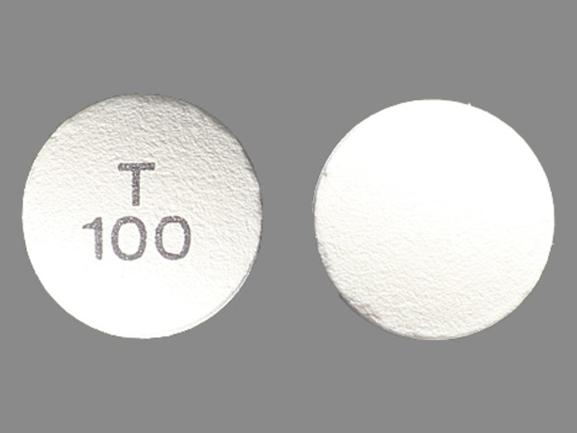
Tarceva Side Effects
Generic name: erlotinib
Note: This document provides detailed information about Tarceva Side Effects associated with erlotinib. Some dosage forms listed on this page may not apply specifically to the brand name Tarceva.
Applies to erlotinib: oral tablet.
Precautions
It is very important that your doctor check your progress at regular visits to make sure this medicine is working properly. Blood and urine tests may be needed to check for unwanted effects.
Using this medicine while you are pregnant can harm your unborn baby. Use an effective form of birth control to keep from getting pregnant. You should continue to use birth control during treatment and for 1 month after your last dose. If you think you have become pregnant while using the medicine, tell your doctor right away.
It is important that you talk to your doctor right away if you have severe or continuing diarrhea, nausea, loss of appetite, or vomiting.
Call your doctor right away if you have unexplained shortness of breath, cough, and fever that comes on suddenly. These could be symptoms of a serious lung condition.
Check with your doctor right away if you have bloody or black, tarry stools, severe stomach pain, or vomiting of blood or material that looks like coffee grounds. These could be symptoms of a serious stomach or bowel problem.
Tell your doctor right away if you have dark urine or pale stools, yellow skin or eyes, nausea or vomiting, or upper stomach pain. These could be symptoms of a liver problem.
Kidney problems may occur while you are using this medicine. Tell your doctor right away if you have decreased urine output, dizziness, headache, irritability, rapid weight gain, seizures, swelling of the face, ankles, or hands, or unusual tiredness or weakness.
Serious skin reactions can occur with this medicine. Check with your doctor right away if you have blistering, peeling, or loosening of the skin, red skin lesions, severe acne or skin rash, sores or ulcers on the skin, or fever or chills while you are using this medicine.
You may use alcohol-free emollient creams, sunscreen, or sun blocking lotions to prevent dry skin and other serious skin reactions.
Check with your doctor right away if blurred vision or any vision change, eye pain, or eye irritation occurs during or after treatment. Your doctor may want you to have your eyes checked by an ophthalmologist (eye doctor).
Do not take other medicines unless they have been discussed with your doctor. This includes prescription or nonprescription (over-the-counter [OTC]) medicines and herbal (eg, St. John's wort) or vitamin supplements.
Serious side effects of Tarceva
Along with its needed effects, erlotinib (the active ingredient contained in Tarceva) may cause some unwanted effects. Although not all of these side effects may occur, if they do occur they may need medical attention.
Check with your doctor immediately if any of the following side effects occur while taking erlotinib:
More common side effects
- burning, tingling, numbness or pain in the hands, arms, feet, or legs
- cough or hoarseness
- diarrhea (severe)
- difficult or labored breathing
- fever or chills
- lower back or side pain
- painful or difficult urination
- rash (severe)
- sensation of pins and needles
- stabbing chest pain
- tightness in the chest
Rare side effects
- bloody or black, tarry stools
- blurred vision
- chest pain or discomfort
- constipation
- convulsions (seizures)
- eye irritation or redness
- inability to speak
- pain or discomfort in the arms, jaw, back, or neck
- severe stomach pain
- slurred speech
- sudden, severe chest pain
- sudden, severe headache
- sudden, severe weakness in the arm or leg on one side of the body
- sweating
- vision changes
- vomiting of blood or material that looks like coffee grounds
Incidence not known
- agitation
- blistering, peeling, or loosening of the skin
- bloody nose
- burning feeling in the chest or stomach
- burning upper abdominal or stomach pain
- confusion
- dark-colored urine
- darkening of the skin
- decreased urine output
- general feeling of tiredness or weakness
- headache
- increased thirst
- irregular heartbeat
- lethargy
- light-colored stools
- loss of appetite
- mood changes
- muscle pain or stiffness
- muscle twitching
- nausea or vomiting
- rapid weight gain
- red skin lesions, often with a purple center
- sore throat
- sores, ulcers, or white spots in the mouth or on the lips
- stomach pain, continuing
- stupor
- swelling of the face, ankles, or hands
- tenderness in the stomach area
- trouble breathing
- unusual tiredness or weakness
- yellow eyes or skin
Other side effects of Tarceva
Some side effects of erlotinib may occur that usually do not need medical attention. These side effects may go away during treatment as your body adjusts to the medicine. Also, your health care professional may be able to tell you about ways to prevent or reduce some of these side effects.
Check with your health care professional if any of the following side effects continue or are bothersome or if you have any questions about them:
More common side effects
- acid or sour stomach
- belching
- blemishes on the skin
- bloated or full feeling
- bone pain
- burning, dry, or itching eyes
- diarrhea (mild)
- difficulty with moving
- dizziness
- dry eyes
- dry skin
- excess air or gas in the stomach or intestines
- excessive tearing
- fear
- feeling sad or empty
- feeling unusually cold
- hair loss
- headache
- heartburn
- indigestion
- irritability
- itching skin
- joint pain
- loss of interest or pleasure
- nervousness
- passing gas
- pimples
- rash, mild
- redness, pain, or swelling of the eye, eyelid, or inner lining of the eyelid
- shivering
- stomach discomfort, upset, or pain
- swelling
- swelling or inflammation of the mouth
- swollen joints
- thinning of the hair
- tiredness
- trouble or inability to sleep
- trouble with concentrating
- weight loss
Less common side effects
- loosening of the fingernails
- redness or soreness around the fingernails
Incidence not known
- brittle and loose nails
- discharge, excessive tearing
- increased hair growth, especially on the face
See also:
Opdivo Qvantig
Opdivo Qvantig is used to treat adults with melanoma, non-small cell lung cancer, renal cell ...
Rybrevant
Rybrevant is used to treat advanced non-small cell lung cancer (NSCLC) in adults that has certain ...
Enhertu
Enhertu is a treatment for breast cancer, stomach cancer, and non-small cell lung cancer with HER2 ...
Opdivo
Opdivo is used to treat many cancers, such as melanoma, non-small cell lung cancer, malignant ...
Keytruda
Keytruda is used to treat melanoma, non-small cell lung cancer, malignant pleural mesothelioma ...
Avastin
Avastin is used to brain tumors and cancers of the kidney, colon, rectum, or lung. Learn about side ...
Tagrisso
Tagrisso (osimertinib) may be used to treat adults with non-small cell lung cancer (NSCLC) whose ...
Gemcitabine
Gemcitabine is used for breast cancer, breast cancer, metastatic, nasopharyngeal carcinoma, non ...
Nivolumab
Nivolumab is used to treat melanoma, non-small cell lung cancer, malignant pleural mesothelioma ...
Paclitaxel
Paclitaxel is used for breast cancer, breast cancer, adjuvant, breast cancer, metastatic, kaposi's ...
For healthcare professionals
Applies to erlotinib: oral tablet.
Respiratory adverse events
- Very common (10% or more): Dyspnea (41%), cough (33%)
- Common (1% to 10%): Epistaxis, interstitial lung disease[Ref]
Dermatologic
- Very common (10% or more): Rash (75%), alopecia (14%), pruritus (13%), dry skin (12%)
- Common (1% to 10%): Acne, dermatitis acneiform, folliculitis, skin fissures, paronychia
- Uncommon (0.1% to 1%): Hyperpigmentation, hirsutism, brittle/loose nails, eyebrow changes
- Rare (less than 0.1%): Palmar plantar erythrodysesthesia syndrome, Stevens-Johnson syndrome (SJS), toxic epidermal necrolysis (TEN)[Ref]
Gastrointestinal
- Very common (10% or more): Diarrhea (54%), nausea (33%), vomiting (23%), stomatitis (22%), dyspepsia (17%), flatulence (13%), abdominal pain (11%)
- Common (1% to 10%): GI bleeding
- Uncommon (0.1% to 1%): GI perforations[Ref]
Hepatic
- Common (1% to 10%): Liver function test abnormalities (including elevated ALT, AST, bilirubin)
- Rare (less than 0.1%): Hepatic failure and hepatorenal syndrome (including fatalities)[Ref]
Immunologic
- Very common (10% or more): Infections (24%)[Ref]
Ocular
- Very common (10% or more): Keratoconjunctivitis sicca (12%), conjunctivitis (12%)
- Common (1% to 10%): Keratitis
- Uncommon (0.1% to 1%): Eyelash changes
- Rare (less than 0.1%): Corneal ulcerations or perforations
- Postmarketing reports: Uveitis[Ref]
Renal
- Common (1% to 10%): Renal insufficiency
- Uncommon (0.1% to 1%): Nephritis, proteinuria
Other
- Very common (10% or more): Fatigue (73%), pyrexia (36%)[Ref]
Cardiovascular
- Common (1% to 10%): Myocardial infarction/ischemia, cerebrovascular accident
Metabolic
- Very common (10% or more): Anorexia (53%), weight decreased (39%)
Musculoskeletal
- Very common (10% or more): Rigors (12%)
- Postmarketing reports: Myopathy, including rhabdomyolysis, in combination with statin therapy
Nervous system
- Very common (10% or more): Headache (15%), neuropathy (13%)
Psychiatric
- Very common (10% or more): Depression (19%)
References
1. (2004) "Product Information. Tarceva (erlotinib)." Genentech
2. Liu V, White DA, Zakowski MF, et al. (2007) "Pulmonary toxicity associated with erlotinib." Chest, 132, p. 1042-4
3. Cuetara MS, Aguilar A, Martin L, Aspiroz C, Del Palacio A (2006) "Erlotinib associated with rosacea-like folliculitis and Malassezia sympodialis." Br J Dermatol, 155, p. 477-9
4. PharmaLive (2007) Skin rash actually signifies better outcomes for pancreatic and lung cancer patients. http://pharmalive.com/news/Print.cfm?articleid=456520
5. Marquez G, Herrera-Acosta E, Vidal I, Galvany L, Iglesias M, Umbert P (2009) "A case of trichomegaly of the eyelashes and facial hypertrichosis induced by erlotinib (Tarceva)." Int J Dermatol, 48, p. 97-8
6. Pellegrinotti M, Fimognari FL, Franco A, Repetto L, Pastorelli R (2009) "Erlotinib-induced hepatitis complicated by fatal lactic acidosis in an elderly man with lung cancer." Ann Pharmacother, 43, p. 542-5
7. Lee SM, Buchler T, Joseph T, Lai C (2008) "Bilateral eardrum perforation after long-term treatment with erlotinib." J Clin Oncol, 26, p. 2582-4
Frequently asked questions
- How does erlotinib work (mechanism of action)?
- Can Tarceva (erlotinib) cure lung cancer?
- What medications are known to cause hair loss?
More about Tarceva (erlotinib)
- Check interactions
- Compare alternatives
- Reviews (42)
- Drug images
- Dosage information
- During pregnancy
- Generic availability
- FDA approval history
- Drug class: EGFR inhibitors
- Breastfeeding
Patient resources
Professional resources
Related treatment guides
Further information
Tarceva side effects can vary depending on the individual. Always consult your healthcare provider to ensure the information displayed on this page applies to your personal circumstances.
Note: Medication side effects may be underreported. If you are experiencing side effects that are not listed, submit a report to the FDA by following this guide.