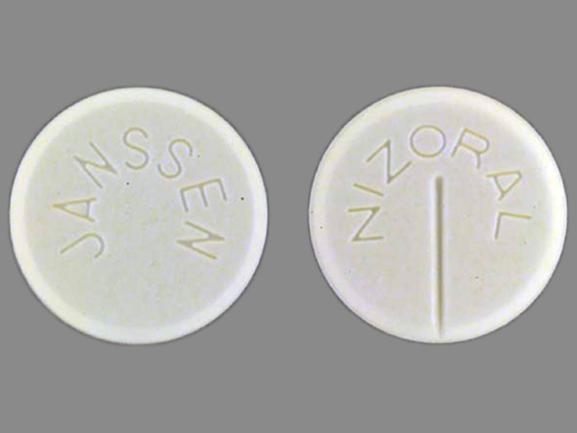
Nizoral Side Effects
Generic name: ketoconazole
Medically reviewed by Drugs.com. Last updated on Oct 19, 2023.
Note: This document provides detailed information about Nizoral Side Effects associated with ketoconazole. Some dosage forms listed on this page may not apply specifically to the brand name Nizoral.
Applies to ketoconazole: oral tablet.
Important warnings
This medicine can cause some serious health issues
Oral route (tablet)
Ketoconazole tablets should only be used when other antifungal therapies are unavailable or not tolerated, and the potential benefits of treatment outweigh its risks.
Serious hepatotoxicity, including cases with a fatal outcome or requiring liver transplantation has occurred with the use of oral ketoconazole, even in patients with no obvious risk factors for liver disease.
Patients who receive this drug should be informed by the physician of the risk and should be closely monitored.
Coadministration of ketoconazole with dofetilide, quinidine, pimozide, cisapride, methadone, disopyramide, dronedarone, and ranolazine is contraindicated, as ketoconazole can cause increased plasma concentrations of these drugs and may prolong QT intervals, sometimes resulting in life-threatening ventricular dysrhythmias such as torsades de pointes.
Precautions
It is very important that your doctor check your or your child's progress at regular visits to make sure this medicine is working properly. Blood tests may be needed to check for unwanted effects.
If your or your child's symptoms do not improve, or if they become worse, check with your doctor. You may need to take this medicine for several months before your infection gets better.
Do not use this medicine together with alprazolam, cisapride, colchicine, disopyramide, dofetilide, dronedarone, eplerenone, felodipine, irinotecan, lovastatin, lurasidone, methadone, nisoldipine, oral midazolam, pimozide, quinidine, ranolazine, simvastatin, terfenadine, tolvaptan, triazolam, or ergot medicines (such as dihydroergotamine, ergometrine, ergotamine, methylergometrine). Using these medicines together may cause serious unwanted effects.
Liver problems may occur while you are taking this medicine. Check with your doctor right away if you are having more than one of these symptoms: abdominal or stomach pain or tenderness, clay-colored stools, dark urine, decreased appetite, fever, headache, itching, loss of appetite, nausea and vomiting, skin rash, swelling of the feet or lower legs, unusual tiredness or weakness, or yellow eyes or skin.
Contact your doctor right away if you have any changes to your heart rhythm. You might feel dizzy or faint, or you might have a fast, pounding, or uneven heartbeat. Make sure your doctor knows if you or anyone in your family has ever had a heart rhythm problem such as QT prolongation.
This medicine may cause serious allergic reactions, including anaphylaxis. Anaphylaxis can be life-threatening and requires immediate medical attention. Call your doctor right away if you have a rash, itching, trouble breathing, trouble swallowing, or any swelling of your hands, face, or mouth while you are using this medicine.
Avoid drinking alcohol while you are using this medicine.
Do not take other medicines unless they have been discussed with your doctor. This includes prescription or nonprescription (over-the-counter [OTC]) medicines and herbal or vitamin supplements.
Serious side effects of Nizoral
Along with its needed effects, ketoconazole (the active ingredient contained in Nizoral) may cause some unwanted effects. Although not all of these side effects may occur, if they do occur they may need medical attention.
Check with your doctor immediately if any of the following side effects occur while taking ketoconazole:
Rare side effects
- back, leg, or stomach pains
- black, tarry stools
- bleeding gums
- blood in the urine or stools
- blurred vision
- burning, crawling, itching, numbness, prickling, "pins and needles", or tingling feelings
- change in color vision
- change in the ability to see colors, especially blue or yellow
- chest pain
- chills
- confusion
- cough
- dark urine
- difficulty seeing at night
- difficulty swallowing
- dizziness
- fast heartbeat
- fever
- general body swelling
- headache
- hoarseness
- increased sensitivity of the eyes to sunlight
- irritation
- joint pain, stiffness, or swelling
- light-colored stools
- loss of appetite
- mood or mental changes
- nausea or vomiting, severe
- nosebleeds
- painful or difficult urination
- pale skin
- pinpoint red spots on the skin
- puffiness or swelling of the eyelids or around the eyes, face, lips, or tongue
- redness of the skin
- skin rash, hives, itching
- sore throat
- sores, ulcers, or white spots on the lips or in the mouth
- swelling of the eyelids, face, lips, hands, or feet
- swollen glands
- tightness in the chest
- trouble sleeping
- troubled breathing or swallowing
- unusual bleeding or bruising
- unusual tiredness or weakness
- vision changes
- yellow eyes or skin
Other side effects of Nizoral
Some side effects of ketoconazole may occur that usually do not need medical attention. These side effects may go away during treatment as your body adjusts to the medicine. Also, your health care professional may be able to tell you about ways to prevent or reduce some of these side effects.
Check with your health care professional if any of the following side effects continue or are bothersome or if you have any questions about them:
Rare side effects
- change in number of sperm and their ability to move
- decreased interest in sexual intercourse
- diarrhea
- hair loss or thinning of the hair
- inability to have or keep an erection
- loss in sexual ability, desire, drive, or performance
- sleepiness or unusual drowsiness
- swelling of the breasts or breast soreness for both female and male
See also:
For healthcare professionals
Applies to ketoconazole: compounding powder, oral tablet.
Hepatic adverse events
- Frequency not reported: Hepatitis, jaundice, abnormal hepatic function, hepatotoxicity, transient elevations of liver enzymes, severe hepatotoxicity (hepatocellular, cholestatic, or mixed)
- Postmarketing reports: Serious hepatotoxicity including cholestatic hepatitis, biopsy-confirmed hepatic necrosis, cirrhosis, hepatic failure (including cases resulting in death or requiring liver transplantation)[Ref]
Ketoconazole therapy has commonly been associated with transient elevations in liver enzymes, which have resolved despite continued therapy.
Serious hepatotoxicity has been reported with both high doses for short durations and low doses for long therapy durations. Hepatic injury has usually (but not always) been reversible with discontinuation of ketoconazole therapy. Hepatitis has been reported in children.
Hepatotoxicity has been reported with oral ketoconazole rechallenge.
Severe hepatotoxicity (hepatocellular, cholestatic, or mixed) generally occurred after 1 or 2 months of therapy. Hepatic function usually returned to normal within 1 month, but cases of hepatic failure and death have occurred.[Ref]
Cardiovascular
- Frequency not reported: Orthostatic hypotension, QT interval prolongation (sometimes resulting in life-threatening ventricular dysrhythmias such as torsades de pointes)[Ref]
Endocrine
- Rare (less than 0.1%): Hypothyroidism
- Frequency not reported: Inhibition of cortisol production (sometimes resulting in symptomatic adrenal insufficiency), adrenal crisis
- Postmarketing reports: Adrenocortical insufficiency[Ref]
Ketoconazole inhibits hydroxylation of deoxycortisol, which results in diminished cortisol production, especially when given in divided doses. In some patients, symptomatic adrenal insufficiency may occur, presenting with hyponatremia, hyperkalemia, hypotension, lethargy, depression, and malaise.
A 77-year-old male with prostate cancer experienced adrenal crisis coincident with ketoconazole therapy. He presented with progressive right lower extremity weakness, debilitating low back pain, and a serum prostate-specific antigen level of 78.8 ng/mL. He was given ketoconazole 200 mg orally four times daily to reduce serum testosterone levels. Nine days after initiating ketoconazole therapy, he experienced generalized weakness, abdominal pain, nausea with vomiting, and severely diminished mentation. The urology service was advised of the patient's admission and suggested that adrenal insufficiency related to high-dose ketoconazole therapy should be considered in the differential diagnosis. However, a serum cortisol level was not obtained prior to steroid treatment. An ACTH stimulation test performed 2 days later showed no evidence of underlying adrenal insufficiency when the patient was no longer being given ketoconazole.[Ref]
Dermatologic
- Frequency not reported: Erythema multiforme, rash, dermatitis, erythema, urticaria, pruritus, alopecia, xeroderma, dry skin, bruising, loss of scalp hair, worsening loss of scalp hair, desquamation
- Postmarketing reports: Acute generalized exanthematous pustulosis, photosensitivity[Ref]
Gastrointestinal
- Common (1% to 10%): Gastrointestinal complaints (including nausea, vomiting)
- Frequency not reported: Diarrhea, constipation, abdominal pain, upper abdominal pain, dry mouth, dysgeusia, dyspepsia, flatulence, tongue discoloration, stomatitis[Ref]
Gastrointestinal intolerance may resolve with continued therapy and may improve if ketoconazole is taken with food.[Ref]
Hematologic
- Rare (less than 0.1%): Hemolytic anemia
- Frequency not reported: Platelet count decreased, fatal aplastic anemia
- Postmarketing reports: Thrombocytopenia[Ref]
A 23-year-old female with vaginal discharge experienced fatal aplastic anemia coincident with ketoconazole (the active ingredient contained in Nizoral) therapy. She was admitted with widespread purpuric lesions on her face, arms, and legs. She had taken ketoconazole 200 mg twice daily for vaginal discharge for 4 days before admission. Ketoconazole was discontinued on admission. The patient was diagnosed with aplastic anemia based on clinical findings. The patient did not respond to therapy and died of disseminated candidiasis 2 months later.[Ref]
Hypersensitivity
- Frequency not reported: Anaphylactoid reaction, hypersensitivity reactions (including urticaria), anaphylaxis (sometimes after first dose), cross-sensitivity between imidazoles, drug hypersensitivity (presenting as rash, erythema, pruritus)
- Postmarketing reports: Allergic conditions including anaphylactic shock, anaphylactic reaction, angioneurotic edema[Ref]
A 72-year-old female with a Candida albicans infection experienced a severe reaction of refractory anaphylactic shock coincident with ketoconazole (the active ingredient contained in Nizoral) therapy. She was initially given oral ketoconazole 200 mg twice daily. She developed hypotension over the first 2 days of treatment (BP 136/82 mmHg at baseline; 90/50 mmHg on day 2). Severe hypotension (BP 90/49 mmHg) unresponsive to fluid therapy or high-dose dopamine developed on day 4 of treatment. When laboratory tests revealed a high level of plasma tryptase, anaphylactic redistribution shock was diagnosed. Her vital signs became more stable after therapy with hydrocortisone and epinephrine infusion.[Ref]
Genitourinary
- Frequency not reported: Menstrual disorder, serum testosterone decreased, gynecomastia (in males), breast tenderness (in males), oligospermia, polymenorrhea anovulatory cycles, anovulatory oligomenorrhea
- Postmarketing reports: Erectile dysfunction, azoospermia (with doses higher than recommended dose of 200 to 400 mg per day)[Ref]
Gynecomastia and breast tenderness have been reported in male patients. Gynecomastia in males resulted from decreased steroidogenesis and testosterone production, which led to an increased estrogen to testosterone ratio.[Ref]
Metabolic
- Rare (less than 0.1%): Hypoglycemia
- Frequency not reported: Alcohol intolerance, anorexia, hyperlipidemia, increased appetite, transient fall in serum cholesterol with an increase in triglycerides[Ref]
Nervous system
- Frequency not reported: Headache, somnolence, dizziness, paresthesia
- Postmarketing reports: Reversible increased intracranial pressure (e.g., papilledema, fontanel bulging in infants)[Ref]
Other
- Frequency not reported: Fatigue, asthenia, hot flush, malaise, peripheral edema, pyrexia, chills[Ref]
Musculoskeletal
- Frequency not reported: Myalgia
- Postmarketing reports: Arthralgia[Ref]
Psychiatric
- Rare (less than 0.1%): Confusion, suicidal tendencies
- Frequency not reported: Insomnia, nervousness, paranoid delusions[Ref]
Paranoid delusions have been reported in a patient treated with ketoconazole for cutaneous leishmaniasis.[Ref]
Ocular
- Frequency not reported: Photophobia[Ref]
Respiratory
- Frequency not reported: Epistaxis[Ref]
References
1. Knight TE, Shikuma CY, Knight J (1991) "Ketoconazole-induced fulminant hepatitis necessitating liver transplantation." J Am Acad Dermatol, 25, p. 398-400
2. Duarte PA, Chow CC, Simmons F, Ruskin J (1984) "Fatal hepatitis associated with ketoconazole therapy." Arch Intern Med, 144, p. 1069-70
3. Lewis JH, Zimmerman HJ, Benson GD, Ishak KG (1984) "Hepatic injury associated with ketoconazole therapy: analysis of 33 cases." Gastroenterology, 86, p. 503-13
4. Bercoff E, Bernuau J, Degott C, et al. (1985) "Ketoconazole-induced fulminant hepatitis." Gut, 26, p. 636-8
5. Stricker BH, Blok AP, Bronkhorst FB, et al. (1986) "Ketoconazole-associated hepatic injury: a clinicopathological study of 55 cases." J Hepatol, 3, p. 399-406
6. Lake-Bakaar G, Scheuer PJ, Sherlock S (1987) "Hepatic reactions associated with ketoconazole in the United Kingdom." Br Med J (Clin Res Ed), 294, p. 419-22
7. van Parys G, Evenepoel C, van Damme B, Desmet VJ (1987) "Ketoconazole-induced hepatitis: a case with a definite cause-effect relationship." Liver, 7, p. 27-30
8. McCance DR, Ritchie CM, Sheridan B, Atkinson AB (1987) "Acute hypoadrenalism and hepatotoxicity after treatment with ketoconazole." Lancet, Mar, p. 573
9. Gradon JD, Sepkowitz DV (1990) "Massive hepatic enlargement with fatty change associated with ketoconazole." Ann Pharmacother, 24, p. 1175-6
10. (2002) "Product Information. Nizoral (ketoconazole)." Janssen Pharmaceuticals
11. Chien RN, Yang LJ, Lin PY, Liaw YF (1997) "Hepatic injury during ketoconazole therapy in patients with onychomycosis: a controlled cohort study." Hepatology, 25, p. 103-7
12. Tucker WS Jr, Snell BB, Island DP, Gregg CR (1985) "Reversible adrenal insufficiency induced by ketoconazole." JAMA, 253, p. 2413-4
13. Pillans PI, Cowan P, Whitelaw D (1985) "Hyponatraemia and confusion in a patient taking ketoconazole." Lancet, Apr, p. 821-2
14. Best TR, Jenkins JK, Murphy FY, et al. (1987) "Persistent adrenal insufficiency secondary to low-dose ketoconazole therapy." Am J Med, 82, p. 676-80
15. Pont A (1987) "Long-term experience with high dose ketoconazole therapy in patients with stage D2 prostatic carcinoma." J Urol, 137, p. 902-4
16. Lobo BL, Miwa LJ, Jungnickel PW (1988) "Possible ketoconazole-induced hypoglycemia." Drug Intell Clin Pharm, 22, p. 632
17. Khosla S, Wolfson JS, Demerjian Z, Godine JE (1989) "Adrenal crisis in the setting of high-dose ketoconazole therapy." Arch Intern Med, 149, p. 802-4
18. Debruyne D, Coquerel A (2001) "Pharmacokinetics of antifungal agents in onychomycoses." Clin Pharmacokinet, 40, p. 441-72
19. Harris KA, Weinberg V, Bok RA, Kakefuda M, Small EJ (2002) "Low dose ketoconazole with replacement doses of hydrocortisone in patients with progressive androgen independent prostate cancer." J Urol, 168, p. 542-5
20. Venturoli S, Fabbri R, Dal Prato L, et al. (1990) "Ketoconazole therapy for women with acne and/or hirsutism." J Clin Endocrinol Metab, 71, p. 335-9
21. Cerner Multum, Inc. "UK Summary of Product Characteristics."
22. Gupta AK, Ryder JE (2003) "The use of oral antifungal agents to treat onychomycosis." Dermatol Clin, 21, 469-79, vi
23. Umstead GS, Babiak LM, Tejwani S (1987) "Immune hemolytic anemia associated with ketoconazole therapy." Clin Pharm, 6, p. 499-500
24. Duman D, Turhal NS, Duman DG (2001) "Fatal aplastic anemia during treatment with ketoconazole." Am J Med, 111, p. 737
25. van Ketel WG (1983) "An allergic eruption probably caused by ketaconazole." Contact Dermatitis, 9, p. 313
26. van Dijke CP, Veerman FR, Haverkamp HC (1983) "Anaphylactic reactions to ketoconazole." Br Med J (Clin Res Ed), 287, p. 1673
27. Kahana M, Levy A, Yaron-Shiffer O, et al. (1984) "Drug eruption following ketoconazole therapy." Arch Dermatol, 120, p. 837
28. Bharija SC, Belhaj MS (1988) "Ketoconazole-induced fixed drug eruption." Int J Dermatol, 27, p. 278-9
29. Garcia-Bravo B, Mazuecos J, Rodriguez-Pichardo A, et al. (1989) "Hypersensitivity to ketoconazole preparations: study of 4 cases." Contact Dermatitis, 21, p. 346-8
30. Verschueren GL, Bruynzeel DP (1992) "Hypersensitivity to ketoconazole." Contact Dermatitis, 26, p. 47-8
31. Gonzalezdelgado P, Floridolopez F, Desanpedro BS, Cuevasagusti M, Marinpozo JF (1994) "Hypersensitivity to ketoconazole." Ann Allergy, 73, p. 326-8
32. Finch CK, Andrus MR, Curry WA (2004) "Nicotine replacement therapy-associated syndrome of inappropriate antidiuretic hormone." South Med J, 97, p. 322-4
33. Rollman O, Jameson S, Lithell H (1985) "Effects of long-term ketoconazole therapy on serum lipid levels." Eur J Clin Pharmacol, 29, p. 241-5
34. Fisch RZ, Lahad A (1989) "Adverse psychiatric reaction to ketoconazole." Am J Psychiatry, 146, p. 939-40
35. Hanash KA (1989) "Neurologic complications of ketoconazole therapy for advanced prostatic cancer." Urology, 33, p. 466-7
36. Finkelstein E, Amichai B, Halevy S (1996) "Paranoid delusions caused by ketoconazole." Int J Dermatol, 35, p. 75
Frequently asked questions
More about Nizoral (ketoconazole)
- Check interactions
- Compare alternatives
- Reviews (4)
- Drug images
- Dosage information
- During pregnancy
- Drug class: azole antifungals
- Breastfeeding
Patient resources
Professional resources
Other formulations
Related treatment guides
Further information
Nizoral side effects can vary depending on the individual. Always consult your healthcare provider to ensure the information displayed on this page applies to your personal circumstances.
Note: Medication side effects may be underreported. If you are experiencing side effects that are not listed, submit a report to the FDA by following this guide.