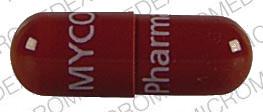
Mycobutin Side Effects
Generic name: rifabutin
Medically reviewed by Drugs.com. Last updated on Jun 24, 2024.
Note: This document provides detailed information about Mycobutin Side Effects associated with rifabutin. Some dosage forms listed on this page may not apply specifically to the brand name Mycobutin.
Applies to rifabutin: oral capsule.
Serious side effects of Mycobutin
Along with its needed effects, rifabutin (the active ingredient contained in Mycobutin) may cause some unwanted effects. Although not all of these side effects may occur, if they do occur they may need medical attention.
Check with your doctor immediately if any of the following side effects occur while taking rifabutin:
Less common
- black, tarry stools
- chest pain
- chills
- cough
- diarrhea
- fever
- heartburn
- indigestion
- itching or skin rash
- loss of appetite
- loss of strength or energy
- muscle pain
- painful or difficult urination
- sore throat
- ulcers, sores, or white spots in the mouth
- unusual bleeding or bruising
- unusual tiredness or weakness
Rare
- bruising or purple spots on the skin
- change in taste
- eye pain
- joint pain
- loss of vision
- lower back or side pain
- muscle swelling or pain
- pale skin
- yellow skin
Incidence not known
- burning, dry, or itching eyes
- discharge, excessive tearing
- hoarseness
- redness, pain, swelling of the eye, eyelid, or inner lining of the eyelid
- stomach cramps, pain, or tenderness
- watery and severe diarrhea, which may also be bloody
Other side effects of Mycobutin
Some side effects of rifabutin may occur that usually do not need medical attention. These side effects may go away during treatment as your body adjusts to the medicine. Also, your health care professional may be able to tell you about ways to prevent or reduce some of these side effects.
Check with your health care professional if any of the following side effects continue or are bothersome or if you have any questions about them:
Less common
- bad, unusual, or unpleasant (after) taste in the mouth
- belching
- bloated or full feeling
- discoloration of the urine
- excess air or gas in the stomach or intestines
- headache
- nausea
- passing gas
- trouble sleeping
For healthcare professionals
Applies to rifabutin: oral capsule.
General
The most commonly reported side effects included discolored urine, neutropenia, leukopenia, and jaundice.[Ref]
Genitourinary
- Very common (10% or more): Discolored urine (up to 30%)[Ref]
Hematologic
- Very common (10% or more): Neutropenia (up to 25%), leukopenia (up to 17%)
- Common (1% to 10%): Anemia, eosinophilia, thrombocytopenia
- Uncommon (0.1% to 1%): Agranulocytosis, granulocytopenia, lymphopenia, neutrophil count decreased, pancytopenia, platelet count decreased, white blood cell count decreased
- Frequency not reported: hemolysis, thrombotic thrombocytopenic purpura, white blood cell disorder[Ref]
The frequency and severity of hematological side effects may be increased with concomitant isoniazid use.[Ref]
Hepatic
- Very common (10% or more): Jaundice (up to 12%)
- Common (1% to 10%): Increased alkaline phosphatase, increased ALT, increased AST
- Uncommon (0.1% to 1%): Hepatic enzymes increased
- Frequency not reported: Hepatitis[Ref]
Dermatologic
- Very common (10% or more): Rash (up to 11%)
- Uncommon (0.1% to 1%): Skin discoloration
- Postmarketing reports: Urticaria[Ref]
Gastrointestinal
- Common (1% to 10%): Abdominal pain, diarrhea, dyspepsia, eructation, flatulence, gastrointestinal intolerance, nausea, nausea and vomiting, vomiting
- Frequency not reported: Clostridium difficile colitis
- Postmarketing reports: C difficile-associated diarrhea[Ref]
Other
- Common (1% to 10%): Asthenia, fever, pain, pyrexia[Ref]
Nervous system
- Common (1% to 10%): Headache, taste perversion
- Frequency not reported: aphasia, paresthesia, seizure[Ref]
Musculoskeletal
- Common (1% to 10%): Myalgia
- Uncommon (0.1% to 1%): Arthralgia
- Frequency not reported: Myositis[Ref]
Generalized arthralgia occurred in patients given 1050 to 2400 mg/day; symptoms abated when treatment was discontinued.[Ref]
Cardiovascular
- Common (1% to 10%): Chest pain
- Frequency not reported: Chest pressure, nonspecific T wave changes (on ECG), shock
- Postmarketing reports: Hypotension[Ref]
Psychiatric
- Common (1% to 10%): Insomnia
- Frequency not reported: Confusion[Ref]
Metabolic
- Common (1% to 10%): Anorexia[Ref]
Hypersensitivity
- Uncommon (0.1% to 1%): Hypersensitivity, other hypersensitivity reactions
- Frequency not reported: Anaphylactic shock
- Postmarketing reports: Angioedema[Ref]
Ocular
- Uncommon (0.1% to 1%): Corneal deposits, uveitis
- Postmarketing reports: Conjunctivitis[Ref]
Uveitis occurred in patients given 1050 to 2400 mg/day; symptoms abated when treatment was discontinued.
Uveitis was rare when this drug was used as a single agent at 300 mg/day, or in combination with fluconazole and/or macrolides (e.g., clarithromycin). However, the incidence of uveitis was greater if higher doses of this drug were used with these agents. Patients who developed uveitis had mild to severe symptoms that resolved following therapy with corticosteroids and/or mydriatic eye drops; however, in some severe cases, resolution of symptoms occurred after several weeks.[Ref]
Respiratory
- Uncommon (0.1% to 1%): Bronchospasm
- Frequency not reported: Dyspnea[Ref]
Immunologic
- Frequency not reported: Flu-like syndrome[Ref]
References
1. (2001) "Product Information. Mycobutin (rifabutin)." Pharmacia and Upjohn
2. Cerner Multum, Inc. "UK Summary of Product Characteristics."
3. Cerner Multum, Inc. "Australian Product Information."
More about Mycobutin (rifabutin)
- Check interactions
- Compare alternatives
- Pricing & coupons
- Drug images
- Dosage information
- During pregnancy
- Generic availability
- Drug class: rifamycin derivatives
- Breastfeeding
- En español
Patient resources
Professional resources
Related treatment guides
Further information
Mycobutin side effects can vary depending on the individual. Always consult your healthcare provider to ensure the information displayed on this page applies to your personal circumstances.
Some side effects may not be reported. You may report them to the FDA.