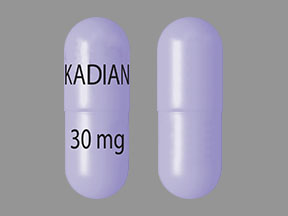
Kadian Side Effects
Generic name: morphine
Medically reviewed by Drugs.com. Last updated on Dec 30, 2023.
Note: This document contains side effect information about morphine. Some dosage forms listed on this page may not apply to the brand name Kadian.
Applies to morphine: oral capsule extended release, oral capsule extended release 24 hr, oral solution, oral tablet, oral tablet extended release. Other dosage forms:
Warning
Oral route (Capsule, Extended Release; Solution; Tablet; Tablet, Extended Release)
Addiction, Abuse, and MisuseMorphine sulfate exposes users to risks of addiction, abuse, and misuse, which can lead to overdose and death. Assess each patient’s risk before prescribing, and monitor regularly for these behaviors and conditions.Opioid Analgesic Risk Evaluation and Mitigation Strategy (REMS)To ensure that the benefits of opioid analgesics outweigh the risks of addiction, abuse, and misuse, the Food and Drug Administration (FDA) has required a Risk Evaluation and Mitigation Strategy (REMS) for these products.Life-Threatening Respiratory DepressionSerious, life-threatening or fatal respiratory depression may occur. Monitor closely, especially upon initiation or following a dose increase. Instruct patients to swallow morphine sulfate whole to avoid exposure to a potentially fatal dose of morphine.Accidental IngestionAccidental ingestion of morphine sulfate, especially in children, can result in fatal overdose of morphine.Neonatal Opioid Withdrawal SyndromeProlonged use of morphine sulfate during pregnancy can result in neonatal opioid withdrawal syndrome, which may be life-threatening if not recognized and treated. If prolonged opioid use is required in a pregnant woman, advise the patient of the risk of neonatal opioid withdrawal syndrome and ensure that appropriate treatment will be available.Risks From Concomitant Use With Benzodiazepines or Other CNS DepressantsConcomitant use of opioids with benzodiazepines or other central nervous system (CNS) depressants, including alcohol, may result in profound sedation, respiratory depression, coma, and death. Reserve concomitant prescribing for use in patients for whom alternative treatment options are inadequate; limit dosages and durations to the minimum required; and follow patients for signs and symptoms of respiratory depression and sedation.
Serious side effects of Kadian
Along with its needed effects, morphine (the active ingredient contained in Kadian) may cause some unwanted effects. Although not all of these side effects may occur, if they do occur they may need medical attention.
Check with your doctor immediately if any of the following side effects occur while taking morphine:
Less common
- Blurred vision
- bulging soft spot on the head of an infant
- burning, crawling, itching, numbness, prickling, "pins and needles", or tingling feelings
- change in the ability to see colors, especially blue or yellow
- chest pain or discomfort
- chills
- confusion
- cough
- decreased urination
- dizziness, faintness, or lightheadedness when getting up suddenly from a lying or sitting position
- fainting
- fast, pounding, or irregular heartbeat or pulse
- headache
- hives, itching, or skin rash
- increased sweating
- loss of appetite
- nausea
- nervousness
- pounding in the ears
- puffiness or swelling of the eyelids or around the eyes, face, lips, or tongue
- severe constipation
- severe vomiting
- shakiness in the legs, arms, hands, or feet
- slow heartbeat
- stomach pain
- sweating
- vomiting
Incidence not known
- Agitation
- black, tarry stools
- cold, clammy skin
- darkening of the skin
- diarrhea
- difficulty swallowing
- feeling of warmth or heat
- fever
- flushing or redness of the skin, especially on the face and neck
- irregular, fast or slow, or shallow breathing
- lightheadedness
- loss of consciousness
- low blood pressure or pulse
- mental depression
- overactive reflexes
- painful urination
- pale or blue lips, fingernails, or skin
- pale skin
- pinpoint red spots on the skin
- poor coordination
- pounding in the ears
- puffiness or swelling of the eyelids or around the eyes, face, lips, or tongue
- restlessness
- shakiness and unsteady walk
- shivering
- talking or acting with excitement you cannot control
- tightness in the chest
- twitching
- unsteadiness, trembling, or other problems with muscle control or coordination
- unusual bleeding or bruising
- unusual tiredness or weakness
- very slow heartbeat
Get emergency help immediately if any of the following symptoms of overdose occur while taking morphine:
Symptoms of overdose
- Constricted, pinpoint, or small pupils (black part of the eye)
- decreased awareness or responsiveness
- extreme drowsiness
- fever
- increased blood pressure
- increased thirst
- lower back or side pain
- muscle cramps, spasms, pain, or stiffness
- no muscle tone or movement
- severe sleepiness
- swelling of the face, fingers, or lower legs
- weight gain
Other side effects of Kadian
Some side effects of morphine may occur that usually do not need medical attention. These side effects may go away during treatment as your body adjusts to the medicine. Also, your health care professional may be able to tell you about ways to prevent or reduce some of these side effects.
Check with your health care professional if any of the following side effects continue or are bothersome or if you have any questions about them:
More common
- Cramps
- difficulty having a bowel movement
- drowsiness
- false or unusual sense of well-being
- relaxed and calm feeling
- sleepiness or unusual drowsiness
- weight loss
Less common
- Absent, missed, or irregular menstrual periods
- bad, unusual, or unpleasant (after) taste
- change in vision
- dry mouth
- floating feeling
- halos around lights
- heartburn or indigestion
- loss in sexual ability, desire, drive, or performance
- muscle stiffness or tightness
- night blindness
- overbright appearance of lights
- problems with muscle control
- stomach discomfort or upset
- trouble sleeping
- uncontrolled eye movements
Incidence not known
- Abnormal dreams
- change in walking and balance
- change or problem with discharge of semen
- clumsiness or unsteadiness
- confusion as to time, place, or person
- false beliefs that cannot be changed by facts
- feeling of constant movement of self or surroundings
- general feeling of discomfort or illness
- holding false beliefs that cannot be changed by fact
- poor insight and judgment
- problems with memory or speech
- seeing, hearing, or feeling things that are not there
- sensation of spinning
- trouble recognizing objects
- trouble thinking and planning
- trouble walking
- unusual excitement, nervousness, or restlessness
For Healthcare Professionals
Applies to morphine: compounding powder, injectable solution, injectable tablet soluble, intramuscular solution, intravenous solution, oral capsule, oral capsule extended release, oral concentrate, oral liquid, oral solution, oral tablet, oral tablet extended release, rectal suppository, spinal solution.
Nervous system
Very common (10% or more): Drowsiness (28%)
Common (1% to 10%): Dizziness, sedation, fever, anxiety, confusion, tremor, diaphoresis, lethargy, feeling of warmth
Uncommon (0.1% to 1%): Withdrawal symptoms after either abrupt cessation or fast tapering of the drug, headache, chills, flu syndrome, malaise, withdrawal syndrome, pallor, facial flushing, syncope, loss of concentration, insomnia, amnesia, paresthesia, agitation, vertigo, foot drop, ataxia, hypesthesia, slurred speech, hallucinations, euphoria, apathy, seizures, myoclonus
Frequency not reported: Inflammatory masses including granulomas (some of which have resulted in serous neurologic impairment including paralysis) in patients receiving continuous infusion of opioids via indwelling intrathecal catheter[Ref]
Central nervous system side effects may be either depressant or excitatory. Excitatory symptoms are sometimes ignored as possible side effects of morphine. Severe adverse effects such as respiratory depression can be treated with the opioid antagonist naloxone.
Patients receiving continuous infusion of morphine sulfate via indwelling intrathecal catheter should be monitored for new neurologic signs or symptoms. Further assessment or intervention should be based on the clinical condition of the individual patient.
Myoclonic spasms may occur in patients receiving high dose morphine, particularly in the setting of renal dysfunction. Hyperalgesia has also been reported with high doses.[Ref]
Respiratory
Common (1% to 10%): Respiratory depression
Uncommon (0.1% to 1%): Hiccup, rhinitis, atelectasis, asthma, hypoxia, voice alteration, depressed cough reflex, noncardiogenic pulmonary edema, bronchospasm[Ref]
Gastrointestinal
Morphine may cause constriction of the common bile duct and spasm of the sphincter of Oddi, thereby increasing intrabiliary pressure and worsening, rather than relieving, biliary colic.
In addition, morphine (the active ingredient contained in Kadian) may cause intense but uncoordinated duodenal contraction and decreased gastric emptying.[Ref]
Common (1% to 10%): Dry mouth, constipation, nausea, diarrhea, anorexia, abdominal pain, vomiting
Uncommon (0.1% to 1%): Dysphagia, dyspepsia, stomach atony disorder, gastroesophageal reflux, delayed gastric emptying, biliary colic, increased gastroesophageal reflux, intestinal obstruction[Ref]
Cardiovascular
Common (1% to 10%): Chest pain
Uncommon (0.1% to 1%): Tachycardia, atrial fibrillation, hypertension, hypotension, palpitations, bradycardia, vasodilation[Ref]
Psychiatric
Uncommon (0.1% to 1%): Abnormal thinking, abnormal dreams, depression, fearfulness, agitation, paranoia, psychosis, hypervigilance, hallucinations, delirium
Frequency not reported: Withdrawal symptoms after abrupt cessation of therapy[Ref]
Genitourinary
The risk of acute urinary retention is very high when morphine (the active ingredient contained in Kadian) is administered by epidural or intrathecal injection. Clinicians should be attentive to the increased risk of urosepsis in this setting, particularly if instrumentation of the urinary tract is necessary.[Ref]
Uncommon (0.1% to 1%): Urinary abnormality, urinary retention, urinary hesitancy[Ref]
Hematologic
Common (1% to 10%): Anemia, leukopenia
Uncommon (0.1% to 1%): Thrombocytopenia[Ref]
Endocrine
Uncommon (0.1% to 1%): Hyponatremia due to inappropriate ADH secretion, gynecomastia, amenorrhea, reduced libido, reduced potency, prolonged labor[Ref]
Musculoskeletal
Common (1% to 10%): Asthenia, accidental injury
Uncommon (0.1% to 1%): Back pain, bone pain, arthralgia
Frequency not reported: Opioid-induced involuntary muscle hyperactivity with chronic high doses[Ref]
Dermatologic
Common (1% to 10%): Rash
Uncommon (0.1% to 1%): Decubitus ulcer, pruritus, skin flush[Ref]
Ocular
Uncommon (0.1% to 1%): Amblyopia, conjunctivitis, miosis, blurred vision, nystagmus, diplopia[Ref]
Hypersensitivity
Very rare (less than 0.01%): Hypersensitivity reactions, anaphylaxis[Ref]
Hepatic
Uncommon (0.1% to 1%): Increases in hepatic enzymes[Ref]
Metabolic
Common (1% to 10%): Peripheral edema
Uncommon (0.1% to 1%): Hyponatremia
Frequently asked questions
- Which drugs cause opioid-induced constipation?
- Which painkiller should you use?
- How does fentanyl compare to heroin or other opiates?
More about Kadian (morphine)
- Check interactions
- Compare alternatives
- Reviews (49)
- Drug images
- Latest FDA alerts (12)
- Dosage information
- During pregnancy
- Drug class: Opioids (narcotic analgesics)
- Breastfeeding
Patient resources
Other brands
MS Contin, Roxanol, Avinza, Astramorph PF, ... +9 more
Professional resources
Other brands
MS Contin, Astramorph PF, Duramorph, Mitigo, ... +3 more
Related treatment guides
References
1. Bellville JW, Forrest WH, Elashoff J, Laska E. Evaluating side effects of analgesics in a cooperative clinical study. Clin Pharmacol Ther. 1968;9:303-13.
2. Bigler D, Eriksen J, Christensen CB. Prolonged respiratory depression caused by slow release morphine. Lancet. 1984;06/30/84:1477.
3. Covington EC, Gonsalves-Ebrahim L, Currie KO, et al. Severe respiratory depression from patient-controlled analgesia in renal failure. Psychosomatics. 1989;30:226-8.
4. Littrell RA, Kennedy LD, Birmingham WE, Leak WD. Muscle spasms associated with intrathecal morphine therapy: treatment with midazolam. Clin Pharm. 1992;11:57-9.
5. Patt RB, Wu C, Bressi J, Catania JA. Accidental intraspinal overdose revisited. Anesth Analg. 1993;76:202.
6. Westerling D, Frigren L, Hoglund P. Morphine pharmacokinetics and effects on salivation and continuous reaction times in healthy volunteers. Ther Drug Monit. 1993;15:364-74.
7. Ogawa K, Iranami H, Yoshiyama T, Maeda H, Hatano Y. Severe respiratory depression after epidural morphine in a patient with myotonic dystrophy. Can J Anaesth. 1993;40:968-70.
8. Sjogren P, Jonsson T, Jensen NH, Drenck NE, Jensen TS. Hyperalgesia and myoclonus in terminal cancer patients treated with continuous intravenous morphine. Pain. 1993;55:93-7.
9. Morley JS, Watt JWG, Wells JC, Miles JB, Finnegan MJ, Leng G. Methadone in pain uncontrolled by morphine. Lancet. 1993;342:1243.
10. Sjogren P, Dragsted L, Christensen CB. Myoclonic spasms during treatment with high doses of intravenous morphine in renal failure. Acta Anaesthesiol Scand. 1993;37:780-2.
11. Houghton IT, Aun CST, Wong YC, Chan K, Lau JTF, Oh TE. The respiratory depressant effect of morphine - a comparative study in three ethnic groups. Anaesthesia. 1994;49:197-201.
12. Etches RC. Respiratory depression associated with patient-controlled analgesia - a review of eight cases. Can J Anaesth. 1994;41:125-32.
13. Chambers FA, Mccarroll M, Macsullivan R. Polyarthralgia and amenorrhoea as a complication of intrathecally infused morphine and dilaudid in the treatment of chronic benign back pain. Br J Anaesth. 1994;72:734.
14. Sylvester RK, Levitt R, Steen PD. Opioid-induced muscle activity: implications for managing chronic pain. Ann Pharmacother. 1995;29:1118-21.
15. Kwan A. Morphine overdose from patient-controlled analgesia pumps. Anaesth Intensive Care. 1996;24:254-6.
16. Product Information. Roxanol (morphine). Roxane Laboratories Inc. 2002;PROD.
17. Morley AD. Profound respiratory depression with morphine patient-controlled analgesia in an elderly patient. Anaesth Intensive Care. 1996;24:287.
18. Lang DW, Pilon RN. Naloxone reversal of morphine-induced biliary colic. Anesth Analg. 1980;59:619-20.
19. White MJ, Berghausen EJ, Dumont SW, et al. Side effects during continuous epidural infusion of morphine and fentanyl. Can J Anaesth. 1992;39:576-82.
20. Zsigmond EK, Vieira ZEG, Duarte B, Renigers SA, Hirota K. Double-blind placebo-controlled ultrasonographic confirmation of constriction of the common bile duct by morphine. Int J Clin Pharmacol Ther Toxicol. 1993;31:506-9.
21. Thorn SE, Wattwil M, Kallander A. Effects of epidural morphine and epidural bupivacaine on gastroduodenal motility during the fasted state and after food intake. Acta Anaesthesiol Scand. 1994;38:57-62.
22. Semenkovich CF, Jaffe AS. Adverse effects due to morphine sulfate: challenge to previous clinical doctrine. Am J Med. 1985;79:325-30.
23. D'Souza M. Unusual reaction to morphine. Lancet. 1987;07/11/87:98.
24. Christie JM, Meade WR, Markowsky S. Paranoid psychosis after intrathecal morphine. Anesth Analg. 1993;77:1298-9.
25. Petersen TK, Husted SE, Rybro L, et al. Urinary retention during I.M. and extradural morphine analgesia. Br J Anaesth. 1982;54:1175-8.
26. Petros JG, Mallen JK, Howe K, Rimm EB, Robillard RJ. Patient-controlled analgesia and postoperative urinary retention after open appendectomy. Surg Gynecol Obstet. 1993;177:172-5.
27. Cimo PL, Hammond JJ, Moake JL. Morphine-induced immune thrombocytopenia. Arch Intern Med. 1982;142:832-4.
28. Paice JA, Penn RD. Amenorrhea associated with intraspinal morphine. J Pain Symptom Manage. 1995;10:582-3.
29. Kardaun SH, de Monchy JG. Acute generalized exanthematous pustulosis caused by morphine, confirmed by positive patch test and lymphocyte transformation test. J Am Acad Dermatol. 2006;55(2 Suppl):S21-3.
30. Galea M. Morphine-induced pruritus after spinal anaesthesia. Br J Anaesth. 2006;97:426.
31. Goldstein JH. Effects of drugs on cornea, conjunctiva, and lids. Int Ophthalmol Clin. 1971;11:13-34.
32. Knaggs RD, Crighton IM, Cobby TF, Fletcher AJ, Hobbs GJ. The pupillary effects of intravenous morphine, codeine, and tramadol in volunteers. Anesth Analg. 2004;99:108-12.
33. Olsen GD, Bennett WM, Porter GA. Morphine and phenytoin binding to plasma proteins in renal and hepatic failure. Clin Pharmacol Ther. 1975;17:677-84.
34. Hasselstrom J, Eriksson S, Persson A, Rane A, Svensson JO, Sawe J. The metabolism and bioavailability of morphine in patients with severe liver cirrhosis. Br J Clin Pharmacol. 1990;29:289-97.
Further information
Always consult your healthcare provider to ensure the information displayed on this page applies to your personal circumstances.
Some side effects may not be reported. You may report them to the FDA.