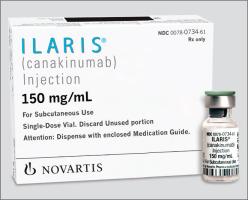
Ilaris Side Effects
Generic name: canakinumab
Note: This document provides detailed information about Ilaris Side Effects associated with canakinumab. Some dosage forms listed on this page may not apply specifically to the brand name Ilaris.
Applies to canakinumab: subcutaneous solution.
Precautions
It is very important that your doctor check your or your child's progress at regular visits to make sure that this medicine is working properly.
You will need to have a skin test for tuberculosis (TB) before you or your child start receiving this medicine. Tell your doctor if you or anyone in your home has ever had a positive reaction to a TB test.
Your body's ability to fight an infection may be reduced while you are being treated with canakinumab (the active ingredient contained in Ilaris). It is very important that you call your doctor right away if you or your child have a fever, chills, cough, hoarseness, lower back or side pain, or painful or difficult urination.
This medicine may increase your risk of cancer. Talk to your doctor if you have concerns about this risk.
Canakinumab may cause serious allergic reactions, which can be life-threatening and require immediate medical attention. Tell your doctor right away if you have a rash, itching, lightheadedness or dizziness, swelling of the face, tongue, and throat, trouble breathing or swallowing, or chest pain after you or your child receive the medicine.
Do not get any immunizations (vaccines), especially the live vaccines (eg, nasal flu virus vaccine) without your doctor's approval while you are being treated with this medicine.
This medicine may cause a life-threatening condition called macrophage activation syndrome (MAS). This usually occurs in patients with rheumatic conditions, including Still's disease, and must be treated immediately. Tell your doctor right away if you have a fever that lasts longer than 3 days, a cough that does not go away, redness in one part of your body, or warm feeling or swelling of your skin, or if symptoms of AOSD and SJIA become worse.
Do not take other medicines unless they have been discussed with your doctor. This includes prescription or nonprescription (over-the-counter [OTC]) medicines and herbal or vitamin supplements.
Serious side effects of Ilaris
Along with its needed effects, canakinumab may cause some unwanted effects. Although not all of these side effects may occur, if they do occur they may need medical attention.
Check with your doctor or nurse immediately if any of the following side effects occur while taking canakinumab:
More common side effects
- bladder pain
- bloody or cloudy urine
- body aches or pain
- chest tightness
- chills
- cough
- diarrhea
- difficult, burning, or painful urination
- dryness or soreness of the throat
- ear congestion
- fever
- frequent urge to urinate
- headache
- hoarseness
- joint pain
- loss of appetite
- loss of voice
- lower back or side pain
- muscle aches and pains
- nausea
- shivering
- sneezing
- stomach pain
- stuffy or runny nose
- sweating
- tender, swollen glands in the neck
- trouble breathing or swallowing
- trouble sleeping
- unusual tiredness or weakness
- voice changes
- vomiting
Incidence not known
- chest pain
- lightheadedness or dizziness
- skin rash, itching
- swelling of the face, tongue, and throat
Other side effects of Ilaris
Some side effects of canakinumab may occur that usually do not need medical attention. These side effects may go away during treatment as your body adjusts to the medicine. Also, your health care professional may be able to tell you about ways to prevent or reduce some of these side effects.
Check with your health care professional if any of the following side effects continue or are bothersome or if you have any questions about them:
More common side effects
- bleeding, blistering, burning, coldness, discoloration of the skin, feeling of pressure, hives, infection, inflammation, itching, lumps, numbness, pain, rash, redness, scarring, soreness, stinging, swelling, tenderness, tingling, ulceration, or warmth at the injection site
- feeling of constant movement of self or surroundings
- increased weight
- muscle or bone pain
- sensation of spinning
- weakness
See also:
Colcrys
Colcrys is used to treat gout in adults and Familial Mediterranean Fever in adults and children ...
Dupixent
Dupixent is used to treat eczema, eosinophilic or oral-corticosteroid-dependent asthma, chronic ...
Lodoco
Lodoco (colchicine) is used for cardiovascular disease to reduce the risk of heart attack, stroke ...
Arcalyst
Arcalyst (rilonacept) is used to treat Cryopyrin-Associated Periodic Syndromes, Deficiency of ...
Rilonacept
Rilonacept is used for cryopyrin-associated periodic syndromes, familial cold autoinflammatory ...
Colchicine
Colchicine is a plant-based alkaloid that may be used to treat and prevent gout and some other ...
For healthcare professionals
Applies to canakinumab: subcutaneous powder for injection, subcutaneous solution.
General adverse events
The most frequently reported side effects included nasopharyngitis, upper respiratory tract infections, and urinary tract infections.
The most frequently reported side effects in patients with Cryopyrin-Associated Periodic Syndromes were nasopharyngitis, diarrhea, influenza, rhinitis, nausea, headache, bronchitis, gastroenteritis, pharyngitis, weight increased, musculoskeletal pain, upper respiratory tract infection and vertigo.
The most frequently reported side effects in patients with Tumor Necrosis Factor (TNF) Receptor Associated Periodic Syndrome, Hyperimmunoglobulin D Syndrome/Mevalonate Kinase Deficiency, and Familial Mediterranean Fever were injection-site reactions and nasopharyngitis.
The most frequently reported side effects in patients with gout flares were infections and infestations.
The most frequently reported side effects in patients with Systemic Juvenile Idiopathic Arthritis were infections predominantly of the upper respiratory tract.[Ref]
Dermatologic
- Very common (10% or more): Cellulitis
- Common (1% to 10%): Measles, varicella[Ref]
Gastrointestinal
- Very common (10% or more): Diarrhea (20%), gastroenteritis (11%), nausea (14%), upper abdominal pain (up to 14%), gastroesophageal reflux disease
- Frequency not reported: Vomiting[Ref]
Genitourinary
- Very common (10% or more): Urinary tract infection (13%)
- Common (1% to 10%): Vulvovaginal candidiasis[Ref]
Hematologic
- Very common (10% or more): Decreased white blood cells (up to 10%), leukopenia, thrombocytopenia (16%)
- Common (1% to 10%): Decreased neutrophils, decreased platelet count, increased blood triglycerides, lymph node abscess, transient cytopenia
- Frequency not reported: Increased hemoglobin[Ref]
Hepatic
- Common (1% to 10%): High ALT and/or AST
- Rare (less than 0.1%): Elevated transaminases
- Frequency not reported: Elevated serum bilirubin[Ref]
Hypersensitivity
- Frequency not reported: Hypersensitivity reactions[Ref]
Local
- Very common (10% or more): Injection site reaction (up to 13%)[Ref]
Metabolic
- Very common (10% or more): Weight gain (11%)
- Common (1% to 10%): Hypertriglyceridemia[Ref]
Musculoskeletal
- Very common (10% or more): Arthralgia, musculoskeletal pain (11%)
- Common (1% to 10%): Back pain[Ref]
Nervous system
- Very common (10% or more): Dizziness/vertigo (up to 14%), headache (14%)[Ref]
Ocular
- Frequency not reported: Conjunctivitis
Other
- Very common (10% or more): Ear infection, infections (54%), increased uric acid levels (43%), influenza (17%), viral infection (13%)
- Common (1% to 10%): Adenovirus infection, fatigue/asthenia, otitis media, sepsis
- Frequency not reported: Opportunistic infections[Ref]
Infection included gastroenteritis, respiratory tract infection, upper respiratory tract infection and intra-abdominal abscess following appendectomy.[Ref]
Renal
- Very common (10% or more): Decreased creatinine clearance, proteinuria[Ref]
Respiratory
- Very common (10% or more): Tonsillitis (up to 54%), nasopharyngitis (34%), rhinitis (17%), bronchitis (11%), pneumonia, sinusitis, pharyngitis (11%), upper respiratory tract infection
- Frequency not reported: Pharyngotonsillitis[Ref]
References
1. (2023) "Product Information. Ilaris (canakinumab)." Novartis Pharmaceuticals
2. (2025) "Product Information. Ilaris (canakinumab)." Novartis Pharmaceuticals Pty Ltd
3. (2021) "Product Information. Ilaris (canakinumab)." Novartis Pharmaceuticals UK Ltd
4. Cerner Multum, Inc. "UK Summary of Product Characteristics."
5. Cerner Multum, Inc. "Australian Product Information."
6. (2009) "Product Information. Ilaris (canakinumab)." Novartis Pharmaceuticals
More about Ilaris (canakinumab)
- Check interactions
- Compare alternatives
- Pricing & coupons
- Reviews (5)
- Drug images
- Dosage information
- Patient tips
- During pregnancy
- FDA approval history
- Drug class: interleukin inhibitors
- Breastfeeding
- En español
Patient resources
Professional resources
Related treatment guides
Further information
Ilaris side effects can vary depending on the individual. Always consult your healthcare provider to ensure the information displayed on this page applies to your personal circumstances.
Note: Medication side effects may be underreported. If you are experiencing side effects that are not listed, submit a report to the FDA by following this guide.