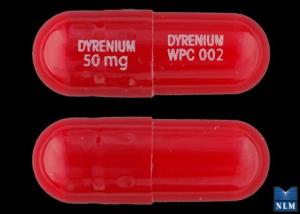
Dyrenium Side Effects
Generic name: triamterene
Medically reviewed by Drugs.com. Last updated on Apr 21, 2025.
Note: This document provides detailed information about Dyrenium Side Effects associated with triamterene. Some dosage forms listed on this page may not apply specifically to the brand name Dyrenium.
Applies to triamterene: oral capsule.
Important warnings
This medicine can cause some serious health issues
Oral route (capsule)
May cause hyperkalemia, which if uncorrected, is potentially fatal.
Hyperkalemia is more likely to occur in patients with renal impairment, diabetes mellitus (with or without recognized renal insufficiency), and in the elderly or severely ill.
Monitor serum potassium levels carefully in any patient receiving triamterene.
Precautions
It is very important that your doctor check your progress at regular visits to make sure this medicine is working properly and to decide if you should continue to take it. Blood tests may be needed to check for unwanted effects .
Do not take other medicines unless they have been discussed with your doctor. This especially includes potassium supplements or salt substitutes containing potassium .
This medicine may increase the amount of potassium in your blood. Check with your doctor right away if you are having abdominal pain; confusion; difficulty breathing; irregular heartbeats; nausea or vomiting; nervousness; numbness or tingling in the hands, feet, or lips; shortness of breath; or weakness or heaviness of the legs .
Serious side effects of Dyrenium
Along with its needed effects, triamterene (the active ingredient contained in Dyrenium) may cause some unwanted effects. Although not all of these side effects may occur, if they do occur they may need medical attention.
Check with your doctor immediately if any of the following side effects occur while taking triamterene:
Incidence not known
- abdominal or stomach pain
- agitation
- black, tarry stools
- bleeding gums
- blood in the urine or stools
- chills
- clay-colored stools
- cloudy urine
- confusion
- convulsions
- cough
- dark urine
- decreased urine output
- depression
- difficulty breathing
- difficulty swallowing
- dizziness
- dry mouth
- fainting spells
- fast or irregular heartbeats
- fever
- headache
- hives
- hostility
- increased thirst
- irritability
- itching
- joint pain
- lethargy
- loss of appetite
- loss of consciousness
- mood changes
- muscle pain or cramps
- muscle twitching
- nausea or vomiting
- nervousness
- numbness or tingling in the hands, feet, or lips
- pain in the groin or genitals
- pain in the lower back or side
- pinpoint red spots on the skin
- puffiness or swelling of the eyelids or around the eyes, face, lips or tongue
- rapid or unusual weight gain
- seizures
- sharp back pain just below the ribs
- shortness of breath
- skin rash
- stupor
- swelling of the face, ankles, feet, or hands
- tightness in the chest
- unpleasant breath odor
- unusual bleeding or bruising
- unusual tiredness or weakness
- vomiting of blood
- weakness or heaviness of the legs
- wheezing
- yellow eyes or skin
Get emergency help immediately if any of the following symptoms of overdose occur while taking triamterene:
Symptoms of overdose
- blurred vision
- diarrhea
- dizziness, faintness, or lightheadedness when getting up from a lying or sitting position suddenly
- indigestion
- pain or weakness in the hands or feet
- passing of gas
- stomach fullness or discomfort
- sweating
- trembling
Other side effects of Dyrenium
Some side effects of triamterene may occur that usually do not need medical attention. These side effects may go away during treatment as your body adjusts to the medicine. Also, your health care professional may be able to tell you about ways to prevent or reduce some of these side effects.
Check with your health care professional if any of the following side effects continue or are bothersome or if you have any questions about them:
Incidence not known
- increased sensitivity of skin to sunlight
- redness or other discoloration of the skin
- severe sunburn
See also:
Lasix
Lasix is a loop diuretic used to treat fluid retention from heart, liver, or kidney conditions, and ...
Botox
Botox is used cosmetically to reduce facial lines and wrinkles and for medical purposes for ...
Demadex
Demadex is used for ascites, edema, heart failure, high blood pressure, nonobstructive oliguria ...
Furoscix
Furoscix (furosemide injection) is used to treat edema in adults with chronic heart failure or ...
Ethacrynic acid
Ethacrynic acid is used for ascites, edema, nonobstructive oliguria, pulmonary edema, renal failure
Hydrochlorothiazide/spironolactone
Hydrochlorothiazide/spironolactone is used for ascites, edema, heart failure, high blood pressure ...
Amiloride
Amiloride is used for ascites, edema, heart failure, high blood pressure
Bumetanide
Bumetanide is used for ascites, autism, edema, pulmonary edema
For healthcare professionals
Applies to triamterene: compounding powder, oral capsule.
Gastrointestinal adverse events
- Uncommon (0.1% to 1%): Rash
- Rare (less than 0.1%): Photosensitivity reactions, pseudoporphyria[Ref]
Cardiovascular
- Uncommon (0.1% to 1%): Hypovolemia[Ref]
Genitourinary
- Frequency not reported: Blue fluorescence of the urine under certain light conditions[Ref]
Hematologic
- Rare (less than 0.1%): Thrombocytopenia, megaloblastic anemia, pancytopenia[Ref]
Hepatic
Hypersensitivity
- Rare (less than 0.1%): Anaphylaxis, photosensitivity[Ref]
Metabolic
- Very common (10% or more): Hyperkalemia
- Uncommon (0.1% to 1%): Hyperuricemia
- Rare (less than 0.1%): Hypokalemia, metabolic acidosis[Ref]
Nervous system
- Uncommon (0.1% to 1%): Headache
- Rare (less than 0.1%): Dizziness[Ref]
Other
- Rare (less than 0.1%): Weakness, fatigue, serum sickness[Ref]
Renal
- Uncommon (0.1% to 1%): Elevation of serum creatinine, transient renal insufficiency
- Rare (0.01% to 0.1%): Interstitial nephritis, urinary stones, azotemia, elevated BUN and creatinine, renal stones, acute interstitial nephritis
- Very rare (less than 0.01%): Renal failure[Ref]
References
1. (2001) "Product Information. Dyrenium (triamterene)." SmithKline Beecham
2. Cerner Multum, Inc. "UK Summary of Product Characteristics."
More about Dyrenium (triamterene)
- Check interactions
- Compare alternatives
- Pricing & coupons
- Reviews (2)
- Drug images
- Dosage information
- During pregnancy
- Generic availability
- Drug class: potassium-sparing diuretics
- Breastfeeding
- En español
Patient resources
Professional resources
Related treatment guides
Further information
Dyrenium side effects can vary depending on the individual. Always consult your healthcare provider to ensure the information displayed on this page applies to your personal circumstances.
Note: Medication side effects may be underreported. If you are experiencing side effects that are not listed, submit a report to the FDA by following this guide.