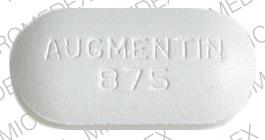
Augmentin Side Effects
Generic name: amoxicillin / clavulanate
Medically reviewed by Drugs.com. Last updated on May 3, 2023.
Note: This document contains side effect information about amoxicillin / clavulanate. Some dosage forms listed on this page may not apply to the brand name Augmentin.
Applies to amoxicillin / clavulanate: oral powder for suspension, oral tablet, oral tablet chewable, oral tablet extended release.
Serious side effects of Augmentin
Along with its needed effects, amoxicillin / clavulanate may cause some unwanted effects. Although not all of these side effects may occur, if they do occur they may need medical attention.
Check with your doctor immediately if any of the following side effects occur while taking amoxicillin / clavulanate:
Less common
- Hives or welts
- itching
- itching of the vagina or genital area
- pain during sexual intercourse
- redness of the skin
- skin rash
- thick, white vaginal discharge with no odor or with a mild odor
Rare
- Bloody or cloudy urine
- fever
- greatly decreased frequency of urination or amount of urine
- seizures
- swelling of the feet or lower legs
Incidence not known
- Back, leg, or stomach pains
- black, hairy tongue
- black, tarry stools
- bleeding gums
- blistering, peeling, or loosening of the skin
- bloating
- blood in the stools
- bloody nose
- chest pain or tightness
- chills
- clay-colored stools
- cough or hoarseness
- cracks in the skin
- dark urine
- diarrhea
- diarrhea, watery and severe, which may also be bloody
- difficulty with breathing
- difficulty with moving
- difficulty with swallowing
- dizziness
- fast heartbeat
- fever with or without chills
- general body swelling
- general feeling of tiredness or weakness
- headache
- heavier menstrual periods
- increased thirst
- joint or muscle pain
- large, hive-like swelling on the face, eyelids, lips, tongue, throat, hands, legs, feet, or sex organs
- light-colored stools
- loss of appetite
- loss of heat from the body
- lower back or side pain
- muscle stiffness
- nausea or vomiting
- pain
- pain, swelling, or redness in the joints
- painful or difficult urination
- pale skin
- pinpoint red spots on the skin
- puffiness or swelling of the eyelids or around the eyes, face, lips, or tongue
- rash
- red skin lesions, often with a purple center
- red, irritated eyes
- red, swollen skin
- scaly skin
- sore throat
- sores, ulcers, or white spots on the lips or in the mouth
- stomach cramps or tenderness
- swollen glands
- trouble breathing
- unpleasant breath odor
- unusual bleeding or bruising
- unusual tiredness or weakness
- unusual weight loss
- upper right abdominal or stomach pain
- vomiting of blood
- white patches in the mouth or throat or on the tongue
- white patches with diaper rash
- yellow eyes or skin
Get emergency help immediately if any of the following symptoms of overdose occur while taking amoxicillin / clavulanate:
Symptoms of overdose
- Cloudy urine
- diarrhea
- greatly decreased frequency of urination or amount of urine
- sleepiness
- stomach pain
Other side effects of Augmentin
Some side effects of amoxicillin / clavulanate may occur that usually do not need medical attention. These side effects may go away during treatment as your body adjusts to the medicine. Also, your health care professional may be able to tell you about ways to prevent or reduce some of these side effects.
Check with your health care professional if any of the following side effects continue or are bothersome or if you have any questions about them:
Rare
- Anxiety
- dry mouth
- hyperventilation
- irregular heartbeats
- irritability
- restlessness
- shaking
- sleeplessness
- tooth discoloration
- trouble sitting still
- trouble with sleeping
Incidence not known
- Burning feeling in the chest or stomach
- indigestion
- redness, swelling, or soreness of the tongue
- stomach upset
- swelling or inflammation of the mouth
For Healthcare Professionals
Applies to amoxicillin / clavulanate: oral powder for reconstitution, oral tablet, oral tablet chewable, oral tablet extended release.
General
In general, side effects have been classified as mild and transient. Less than 3% of patients in clinical trials discontinued treatment due to side effects. The most frequent adverse reactions associated with immediate-release formulations have included diarrhea/loose stools (9%), nausea (3%), skin rashes and urticaria (3%), vomiting (1%), and vaginitis (1%). Extended-release tablets have been most frequently associated with diarrhea (14.5%), vaginal mycosis (3.3%), nausea (2.1%), and loose stools (1.6%).[Ref]
Gastrointestinal
Amoxicillin has been associated with hemorrhagic, sometimes inflammatory colitis, which typically affects the ascending colon. In addition, C difficile pseudomembranous colitis should be considered in patients who develop severe or prolonged diarrhea during or following amoxicillin-clavulanate therapy.
The incidence of diarrhea appears to increase with higher doses, and to decrease with twice daily dosing regimens (of immediate release formulations).[Ref]
Gastrointestinal side effects have included diarrhea, nausea, abdominal pain, vomiting, indigestion, gastritis, generalized abdominal cramps, stomatitis, glossitis, mucocutaneous candidiasis, enterocolitis, black "hairy" tongue, small intestinal motor disturbances, hemorrhagic colitis, and pseudomembranous colitis. Colitis and Clostridium difficile pseudomembranous colitis have been reported with amoxicillin.[Ref]
Hypersensitivity
Hypersensitivity reactions to amoxicillin are more likely in patients with a history of allergy, asthma, hay fever, or urticaria.[Ref]
Hypersensitivity reactions have occurred in up to 10% of patients, and may present as a skin rash, urticaria, pruritus, angioedema, serum sickness-like reactions (urticaria or skin rash accompanied by arthritis, arthralgia, myalgia, and frequently fever), erythema multiforme, Stevens-Johnson syndrome (rarely), acute generalized exanthematous pustulosis, hypersensitivity vasculitis, exfoliative dermatitis, and toxic epidermal necrolysis. Anaphylaxis has been rarely reported (up to 0.2%). Hypersensitivity may play a role in some cases of amoxicillin-clavulanate-induced renal and hepatic toxicity. Urticarial rash, erythematous maculopapular rash, edema, hypotension, fever, eosinophilia, and dyspnea have been associated with hypersensitivity reactions to amoxicillin.[Ref]
Dermatologic
Three out of four patients with infectious mononucleosis and an amoxicillin-associated rash displayed hypersensitivity to amoxicillin and ampicillin by skin tests and lymphocyte transformation tests. Two of these patients had side-chain-specific sensitization.[Ref]
Dermatologic side effects have included rash, fixed drug eruption, bullous pemphigoid, erythema multiforme, Stevens-Johnson syndrome, and exfoliative dermatitis. Amoxicillin rashes occur more frequently in patients with unrecognized infectious mononucleosis. This rash is not necessarily indicative of a lifelong amoxicillin hypersensitivity.[Ref]
Hepatic
Hepatic side effects have included moderate elevations in serum transaminases (ALT and/or AST). Hepatic dysfunction (including cholestatic jaundice and hepatitis, increases in ALT and/or AST, serum bilirubin, and/or alkaline phosphatase) has been reported infrequently. Rare cases of jaundice, ductopenia, cholestatic hepatitis, granulomatous hepatitis, hepatic necrosis, and hepatocellular damage have also been reported. Less than 1 death per approximately 4 million prescriptions has been reported worldwide. Hepatic cholestasis and acute cytolytic hepatitis have been reported with amoxicillin use.[Ref]
In cases of amoxicillin-clavulanate-induced hepatotoxicity, biopsy findings have typically revealed evidence of cholestatic injury. However, hepatocellular and mixed-type (cholestatic and hepatocellular) injury have also been documented. In many instances, hepatotoxicity may be due to a hypersensitivity. Onset of symptoms has been delayed in some patients, with presentation occurring after therapy has been discontinued. Prolonged treatment may increase the risk of hepatotoxicity. Elderly patients may be at increased risk of developing amoxicillin-clavulanate-induced jaundice. Fatalities are rare, but have been reported.
Rechallenge with amoxicillin alone has not been followed by a recurrence of hepatitis. However, rechallenge with amoxicillin-clavulanate has resulted in a relapse of liver injury. Therefore, the clavulanic acid may be the hepatotoxic part of the drug.
In patients with liver disease, frequent monitoring of liver function tests during amoxicillin-clavulanate therapy is recommended.[Ref]
Renal
Renal side effects have rarely included crystalluria, hematuria, acute renal failure, and acute interstitial nephritis, often associated with fever, rash, and eosinophilia.[Ref]
A 45-year-old female developed massive crystalluria, gross hematuria, and acute anuric renal failure after 12 days of intravenous amoxicillin-clavulanate at a dose of 2 g amoxicillin 3 times daily (not available in the United States). The crystals were composed of amoxicillin trihydrate. The renal failure and hematuria resolved over 6 days after discontinuation of the antibiotic.[Ref]
Hematologic
Amoxicillin has been shown to induce hemolytic anemia in rare cases. A case of bone marrow "maturation arrest" resulting in neutropenia and of Henoch-Schonlein purpura syndrome has been associated with amoxicillin-clavulanate.
A patient undergoing dental extraction and receiving warfarin anticoagulation therapy had prolonged bleeding times (PT and INR), and decreased hemoglobin and hematocrit. The bleeding was felt due to vitamin K deficiency as a result of depletion of intrinsic vitamin K-producing gut flora from use of amoxicillin for prophylaxis of subacute bacterial endocarditis.[Ref]
Hematologic side effects associated with penicillins have included thrombocytopenia, anemia, hemolytic anemia, thrombocytopenic purpura, eosinophilia, agranulocytosis, and leukopenia. These are believed to be due to hypersensitivity and are usually reversible when the drug is discontinued. Mild to moderate thrombocytosis has been reported in less than 1% of patients treated with amoxicillin-clavulanate and 3.6% of patients treated with the extended-release tablets. Purpura, pancytopenia, granulocytopenia, medullary aplasia, prolongation of prothrombin time, and transient neutropenia have also been reported.[Ref]
Immunologic
Immunologic side effects associated with amoxicillin have included mucocutaneous candidiasis and vulvovaginal mycotic infection.[Ref]
Nervous system
Nervous system side effects have rarely included agitation, anxiety, behavioral changes, confusion, convulsions, dizziness, headache, insomnia, and reversible hyperactivity. Rare cases of psychosis associated with amoxicillin therapy have been reported, but may have been due to underlying infection or concomitant medication. Rarely, somnolence and aseptic meningitis have been reported with amoxicillin.[Ref]
Genitourinary
Genitourinary side effects have included genital moniliasis (2.1%).[Ref]
Other
Amoxicillin-clavulanate may cause false-positive urine glucose tests in patients using Clinitest(R) tablets. Enzymatic glucose oxidase tests should be used during amoxicillin-clavulanate therapy.[Ref]
Other side effects have rarely included brown, yellow, or gray tooth discoloration, primarily in pediatric patients. Brushing or dental cleaning reduced or eliminated the discoloration in most cases.[Ref]
Respiratory
Respiratory side effects associated with amoxicillin have included cough and rhinorrhea.[Ref]
Frequently asked questions
- Can you drink alcohol while taking Augmentin?
- What is the best antibiotic to treat a sinus infection?
- What are the best antibiotics for pneumonia?
- Amoxicillin rash: When should I be concerned?
- Does AMOX-CLAV treat an abcessed tooth?
- Can Amox-Clav tablets be crushed?
More about Augmentin (amoxicillin / clavulanate)
- Check interactions
- Compare alternatives
- Pricing & coupons
- Reviews (444)
- Drug images
- Dosage information
- Patient tips
- During pregnancy
- Support group
- Drug class: beta-lactamase inhibitors
- En español
Patient resources
- Augmentin drug information
- Augmentin (Amoxicillin/Clavulanate Chewable Tablets)
- Augmentin (Amoxicillin/Clavulanate Suspension)
- Augmentin (Amoxicillin/Clavulanate Tablets)
Other brands
Professional resources
- Augmentin prescribing information
- Augmentin Chewable (FDA)
- Augmentin Oral Suspension (FDA)
- Amoxicillin/Clavulanate (AHFS Monograph)
Other brands
Other formulations
Related treatment guides
References
1. Product Information. Augmentin (amoxicillin-clavulanate). SmithKline Beecham. 2002;PROD.
2. Product Information. Augmentin XR (amoxicillin-clavulanate). GlaxoSmithKline. 2003.
3. McCormack PL, Keating GM. Amoxicillin/Clavulanic Acid 2000mg/125mg Extended Release (XR): A Review of its Use in the Treatment of Respiratory Tract Infections in Adults. Drugs. 2005;65:121-36.
4. Siquier B, Sanchez-Alvarez J, Garcia-Mendez E, et al. Efficacy and safety of twice-daily pharmacokinetically enhanced amoxicillin / clavulanate (2000/125 mg) in the treatment of adults with community-acquired pneumonia in a country with a high prevalence of penicillin-resistant Streptococcus pneumoniae. J Antimicrob Chemother. 2006;57:536-45.
5. Mahakit P, Vicente JG, Butt DI, Angeli G, Bansal S, Zambrano D. Oral clindamycin 300 mg BID compared with oral amoxicillin/clavulanic acid 1 g BID in the outpatient treatment of acute recurrent pharyngotonsillitis caused by group a beta-hemolytic streptococci: an international, multicenter, randomized, investigator-bl Clin Ther. 2006;28:99-109.
6. Hebblethwaite EM, Brown GW, Cox DM. A comparison of the efficacy and safety of cefuroxime axetil and augmentin in the treatment of upper respiratory tract infections. Drugs Exp Clin Res. 1987;13:91-4.
7. Ball AP, Mehtar S, Watson A. Clinical efficacy and tolerance of augmentin in soft tissue infection. J Antimicrob Chemother. 1982;10:67-74.
8. Simon MW. Complications involving augmentin. Am J Dis Child. 1985;139:962.
9. Iravani A, Richard GA. Amoxicillin-clavulanic acid versus cefaclor in the treatment of urinary tract infections and their effects on the urogenital and rectal flora. Antimicrob Agents Chemother. 1986;29:107-11.
10. Todd PA, Benfield P. Amoxicillin/clavulanic acid: an update of its antibacterial activity, pharmacokinetic properties and therapeutic use. Drugs. 1990;39:264-307.
11. Caron F, Ducrotte P, Lerebours E, Colin R, Humbert G, Denis P. Effects of amoxicillin-clavulanate combination on the motility of the small intestine in human beings. Antimicrob Agents Chemother. 1991;35:1085-8.
12. Hautekeete ML, Brenard R, Horsmans Y, Henrion J, Verbist L, Derue G, Druez P, Omar M, Kockx M, Hubens H, Haber I, Rahier J, G. Liver injury related to amoxycillin-clavulanic acid: interlobular bile-duct lesions and extrahepatic manifestations. J Hepatol. 1995;22:71-7.
13. Whitlock W. Multicenter comparison of azithromycin and amoxicillin / clavulanate in the treatment of patients with acute exacerbations of chronic obstructive pulmonary disease. Curr Ther Res Clin Exp. 1995;56:985-95.
14. Higuera F, Hidalgo H, Feris J, Giguere G, Collins JJ. Comparison of oral cefuroxime axetil and oral amoxycillin/clavulanate in the treatment of community-acquired pneumonia. J Antimicrob Chemother. 1996;37:555-64.
15. Product Information. Augmentin ES-600 (amoxicillin-clavulanate). GlaxoSmithKline. 2003.
16. Sethi S, Breton J, Wynne B. Efficacy and Safety of Pharmacokinetically Enhanced Amoxicillin-Clavulanate at 2,000/125 Milligrams Twice Daily for 5 Days versus Amoxicillin-Clavulanate at 875/125 Milligrams Twice Daily for 7 Days in the Treatment of Acute Exacerbations of Chronic Bronc Antimicrob Agents Chemother. 2005;49:153-60.
17. Ramakrishnan K, Scheid DC. Diagnosis and management of acute pyelonephritis in adults. Am Fam Physician. 2005;71:933-42.
18. Salvo F, Polimeni G, Moretti U, et al. Adverse drug reactions related to amoxicillin alone and in association with clavulanic acid: data from spontaneous reporting in Italy. J Antimicrob Chemother. 2007;60:121-6.
19. Singer DR, Simpson JG, Catto GR, Johnston AW. Drug hypersensitivity causing granulomatous interstitial nephritis. Am J Kidney Dis. 1988;11:357-9.
20. Walker RJ, Bailey RR, Lynn KL, Swainson CP. Amoxicillin-induced acute interstitial nephritis. N Z Med J. 1985;98:866.
21. Amoxicillin-clavulanic acid (Augmentin). Med Lett Drugs Ther. 1984;26:99-100.
22. Wong FS, Ryan J, Dabkowski P, Dudley FJ, Sewell RB, Smallwood RA. Augmentin-induced jaundice. Med J Aust. 1991;154:698-701.
23. Cahen YD, Wuthrich B. Drug allergy to the beta-lactam antibiotics clavulanic acid and amoxicillin. Allergy. 1997;52:117-8.
24. Betto P, Germi L, Bonoldi E, Bertazzoni M. Acute localized exanthematous pustulosis (ALEP) caused by amoxicillin-clavulanic acid. Int J Dermatol. 2008;47:295-6.
25. Chowdhury FH. Fixed genital drug eruption. Practitioner. 1982;226:1450.
26. Alcaley J, David M, Ingber A, Hazaz B, Sandbank M. Bullous pemphigold mimicking bullous erythema multiforme: an untoward side effect of penicillins. J Am Acad Dermatol. 1988;18:345-9.
27. Shuttleworth D. A localized, recurrent pustular eruption following amoxycillin administration. Clin Exp Dermatol. 1989;14:367-8.
28. Benjamin S, Mueller BA. Erythema multiforme secondary to amoxicillin/clavulanic acid exposure. Ann Pharmacother. 1999;33:109-10.
29. Limauro DL, ChanTompkins NH, Carter RW, Brodmerkel GJ, Agrawal RM. Amoxicillin / clavulanate-associated hepatic failure with progression to Stevens-Johnson syndrome. Ann Pharmacother. 1999;33:560-4.
30. Pattee SF, Silvis NG, Ellsworth LG. Diffuse pustular eruption after treatment of dog bite: acute generalized exanthematous pustulosis (AGEP) due to antibiotic therapy. Arch Dermatol. 2002;138:1091-6.
31. Dowsett JF, Gillow T, Heagerty A, Radcliffe M, Toadi R, Isle I, Russell RC. Amoxycillin/clavulanic acid (augmentin)-induced intrahepatic cholestasis. Dig Dis Sci. 1989;34:1290-3.
32. Verhamme M, Ramboer C, Van De Bruaene P, Inderadjaja N. Cholestatic hepatitis due to an amoxycillin/clavulanic acid preparation. J Hepatol. 1989;9:260-4.
33. Hebbard GS, Smith KG, Gibson PR, Bhathal PS. Augmentin-induced jaundice with a fatal outcome. Med J Aust. 1992;156:285-6.
34. Silvain C, Fort E, Levillain P, Labat-Labourdette J, Beauchant M. Granulomatous hepatitis due to combination of amoxacillin and clavulanic acid. Dig Dis Sci. 1992;37:150-2.
35. Larrey D, Vial T, Micaleff A, et al. Hepatitis associated with amoxycillin-clavulanic acid combination report of 15 cases. Gut. 1992;33:368-71.
36. Habior A, Walewskazielecka B, Butruk E. Hepatocellular-cholestatic liver injury due to amoxycillin-clavulanic acid combination. Clin Investig. 1994;72:616-8.
37. Thomson JA, Fairley CK, Ugoni AM, Forbes AB, Purcell PM, Desmond PV, Smallwood RA, Mcneil JJ. Risk factors for the development of amoxycillin-clavulanic acid associated jaundice. Med J Aust. 1995;162:638-40.
38. Ryley NG, Fleming KA, Chapman RWG. Focal destructive cholangiopathy associated with amoxycillin/clavulanic acid (augmentin). J Hepatol. 1995;23:278-82.
39. Friess G, Wienbeck M. Cholestatic jaundice after taking amoxicillin and clavulanic acid. Dtsch Med Wochenschr. 1995;120:1356-60.
40. Podevin P, Biour M. Drug-induced ''allergic hepatitis''. Clin Rev Allergy Immunol. 1995;13:223-44.
41. Rodriguez LAG, Stricker BH, Zimmerman HJ. Risk of acute liver injury associated with the combination of amoxicillin and clavulanic acid. Arch Intern Med. 1996;156:1327-32.
42. Pedrobotet J, Supervia A, Barranco C, Sola R, Bruguera M. Intrahepatic cholestasis without hepatitis induced by amoxycillin/ clavulanic acid. J Clin Gastroenterol. 1996;23:137-8.
43. Garcia Rodriguez LA, Stricker BH, Zimmerman HJ. Risk of acute liver injury associated with the combination of amoxicillin and clavulanic acid Arch Intern Med. 1996;156:1327-32.
44. Nathani MG, Mutchnick MG, Tynes DJ, Ehrinpreis MN. An unusual case of amoxicillin/clavulanic acid-related hepatotoxicity. Am J Gastroenterol. 1998;93:1363-5.
45. Schey R, Avni Y, Bruck R, Shirin H. History of drug-induced hepatitis and risk of amoxicillin / clavulanate-induced hepatotoxicity. Ann Pharmacother. 2001;35:1142-3.
46. Boyd IW. Comment: history of drug-induced hepatitis and risk of amoxicillin / clavulanate-induced hepatotoxicity. Ann Pharmacother. 2001;35:1677.
47. Appel GB, Garvey G, Silva F, Francke E, Neu HC, Weisman J. Acute interstitial nephritis due to amoxicillin therapy. Nephron. 1981;27:313-5.
48. Labriola L, Jadoul M, Daudons M, Pirson Y, Lambert M. Massive amoxycillin crystalluria causing anuric acute renal failure. Clin Nephrol. 2003;59:455-7.
49. Desgrandchamps D, Schnyder C. Severe neutropenia in prolonged treatment with orally administered augmentin (amoxicillin/clavulanic acid). Infection. 1987;15:260-1.
50. Wakefield IR, Hunter DA. Antibiotic associated Henoch-Schonlein purpura syndrome. Br J Clin Pract. 1988;42:525-6.
51. Iravani A, Richard GA, Johnson D, Bryant A. A double-blind, multicenter, comparative study of the safety and efficacy of cefixime versus amoxicillin in the treatment of acute urinary tract infections in adult. Am J Med. 1988;85:17-23.
52. Bell CL, Watson B, Waring WS. Acute psychosis caused by co-amoxiclav. BMJ. 2008;337:a2117.
Further information
Always consult your healthcare provider to ensure the information displayed on this page applies to your personal circumstances.
Some side effects may not be reported. You may report them to the FDA.