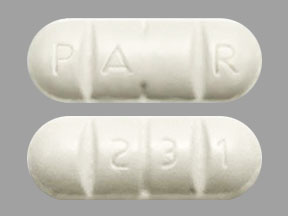
Praziquantel (Monograph)
Brand name: Biltricide
Drug class: Anthelmintics
VA class: AP200
Chemical name: 2-(Cyclohexylcarbonyl)-1,2,3,6,7,11b-hexahydro-4H-pyrazino(2,1-a)isoquinolin-4-one
CAS number: 55268-74-1
Introduction
Anthelmintic agent; pyrazinoisoquinoline derivative.
Uses for Praziquantel
Schistosomiasis
Treatment of schistosomiasis (bilharziasis) caused by all Schistosoma species pathogenic to humans.
Drug of choice for treatment of infections caused by S. haematobium, S. japonicum, S. mansoni, S. mekongi, and S. intercalatum.
Used for treatment of individual patients and in mass-treatment and control programs.
Effective against all stages of Schistosoma infection, including acute phase and chronic phase (which may be associated with hepatosplenic involvement).
May be effective for treatment of severe schistosomiasis (e.g., neuroschistosomiasis). Initiate promptly to prevent substantial morbidity and long-term sequelae; may be initiated in cases of suspected neuroschistosomiasis pending results of confirmative tests.
Cure rates generally lower in children and in patients with massive infections.
Clonorchiasis
Treatment of clonorchiasis caused by Clonorchis sinensis (Chinese liver fluke). Drug of choice.
Opisthorchiasis
Treatment of opisthorchiasis caused by Opisthorchis viverrini (Southeast Asian liver fluke). Drug of choice.
Other Trematode (Fluke) Infections
Treatment of trematode (fluke) infections caused by Fasciolopsis buski† [off-label] (intestinal fluke), Heterophyes heterophyes† [off-label] (intestinal fluke), Metagonimus yokogawai† [off-label] (intestinal fluke), Metorchis conjunctus† [off-label] (North American liver fluke), Nanophyetus salmincola† [off-label] (formerly Troglotrema salmincola) (intestinal fluke), and Paragonimus westermani† (lung fluke). Drug of choice.
Has been effective in a limited number of patients for treatment of infections caused by P. kellicotti† (American lung fluke), P. heterotrema† (lung fluke), and P. uterobilateralis† (African lung fluke).
Has been used in a limited number of patients for treatment of infections caused by Fasciola hepatica† (sheep liver fluke), but treatment failures have been reported. Drug of choice is triclabendazole (not commercially available in the US); alternatives are bithionol (not commercially available in the US; may be available from the CDC) and nitazoxanide.
Cestode (Tapeworm) Infections
Treatment of cestodiasis (tapeworm infections) caused by Diphyllobothrium latum† (fish tapeworm), Dipylidium caninum† (dog and cat tapeworm), Taenia saginata† (beef tapeworm), T. solium† (pork tapeworm), and Hymenolepis nana† (dwarf tapeworm).
Drug of choice. Effective against the adult, juvenile, and larval stages of susceptible cestodes.
Cysticercosis
Treatment of cysticercosis†, including neurocysticercosis†, caused by the larval form of T. solium (Cysticercus cellulosae).
Praziquantel and albendazole are drugs of choice, but treatment of neurocysticercosis is controversial.
Corticosteroids usually used concomitantly to reduce frequency and severity of adverse nervous system effects (CSF reaction syndrome). Anticonvulsant therapy also may be necessary.
In some patients with neurocysticercosis†, risk of severe adverse effects may outweigh potential benefits.
Do not use in patients with intraocular cysticercosis† because of risk of irreversible intraocular lesions secondary to killing of the cysts. Ocular and spinal cysts generally are not treated with anthelmintic drugs since irreparable damage may occur, even with concomitant corticosteroids.
Hydatid Disease
Unlikely to be effective in the treatment of larval Echinococcus infections (hydatid cysts)†. Treatment of choice is surgical resection of the cysts; if surgery is contraindicated or cysts rupture spontaneously during surgery, mebendazole or albendazole is treatment of choice.
Because praziquantel kills Echinococcus (e.g., protoscoleces), it may be useful for perioperative prophylaxis or when cyst contents are spilled during surgery.
Praziquantel Dosage and Administration
Administration
Oral Administration
Administer orally with meals.
Tablets may be halved or quartered to allow administration of individualized doses. Swallow the tablets, halves, and/or quarters with a sufficient amount of water during meals.
Do not chew tablets. Retention of the tablets or tablet segments in the mouth may cause gagging or vomiting as a result of the drug's bitter taste.
Dosage
Pediatric Patients
Schistosomiasis
Oral
Children ≥4 years of age: 20 mg/kg 3 times daily for 1 day; space doses 4–6 hours apart.
Some clinicians recommend 20 mg/kg twice daily for 1 day for schistosomiasis caused by Schistosoma haematobium or S. mansoni. Doses of 40 mg/kg given as a single dose or in 2 equally divided doses have been effective in some patients with schistosomiasis caused by any species.
Clonorchiasis
Oral
Children ≥4 years of age: 25 mg/kg 3 times daily for 1 day; space doses 4–6 hours apart.
Alternatively, 40–50 mg/kg given as a single dose has been effective in some patients, but may be associated with lower cure rates.
Opisthorchiasis
Oral
Children ≥4 years of age: 25 mg/kg 3 times daily for 1 day; space doses 4–6 hours apart.
Alternatively, 40–50 mg/kg given as a single dose has been effective in some patients, but may be associated with lower cure rates.
Other Trematode (Fluke) Infections†
Fasciolopsis buski†, Heterophyes heterophyes†, or Metagonimus yokogawai† Infections
Oral25 mg/kg 3 times daily for 1 day.
Nanophyetus salmincola† Infections
Oral20 mg/kg 3 times daily for 1 day.
Paragonimus westermani† or P. uterobilateralis† Infections
Oral25 mg/kg 3 times daily for 2 days.
Fasciola hepatica† Infections
Oral25 mg/kg 3 times daily for 5–8 days has been used, but treatment failures have occurred.
Cestode (Tapeworm) Infections
Diphyllobothrium latum† (Fish Tapeworm), Dipylidium caninum† (Dog and Cat Tapeworm), Taenia saginata† (Beef Tapeworm), or T. solium† (Pork Tapeworm) Infections
Oral5–10 mg/kg as a single dose.
Hymenolepis nana† (Dwarf Tapeworm) Infections
Oral25 mg/kg as a single dose. Eradication may be difficult; retreatment necessary if infection persists.
Cysticercosis†
Oral
50–100 mg/kg given in 3 divided doses daily for 30 days.
Adults
Schistosomiasis
Oral
20 mg/kg 3 times daily for 1 day; space doses 4–6 hours apart.
Some clinicians recommend 20 mg/kg twice daily for 1 day for treatment of schistosomiasis caused by Schistosoma haematobium or S. mansoni. Doses of 40 mg/kg given as a single dose or in 2 equally divided doses have been effective in some patients with schistosomiasis caused by any species.
Clonorchiasis
Oral
25 mg/kg 3 times daily for 1 day; space doses 4–6 hours apart.
Alternatively, 40–50 mg/kg given as a single dose has been effective in some patients, but may be associated with lower cure rates.
Opisthorchiasis
Oral
25 mg/kg 3 times daily for 1 day; space doses 4–6 hours apart.
Alternatively, 40–50 mg/kg given as a single dose has been effective in some patients, but may be associated with lower cure rates.
Other Trematode (Fluke) Infections†
Fasciolopsis buski†, Heterophyes heterophyes†, or Metagonimus yokogawai† Infections
Oral25 mg/kg 3 times daily for 1 day.
Nanophyetus salmincola† Infections
Oral20 mg/kg 3 times daily for 1 day.
Paragonimus westermani† or P. uterobilateralis† Infections
Oral25 mg/kg 3 times daily for 2 days.
Fasciola hepatica† Infections
Oral25 mg/kg 3 times daily for 5–8 days has been used, but treatment failures have occurred. .
Cestode (Tapeworm) Infections
Diphyllobothrium latum† (Fish Tapeworm), Dipylidium caninum† (Dog and Cat Tapeworm), Taenia saginata† (Beef Tapeworm), or T. solium† (Pork Tapeworm) Infections
Oral5–10 mg/kg as a single dose.
Hymenolepis nana† (Dwarf Tapeworm) Infections
Oral25 mg/kg as a single dose; re-treat if infection persists.
Cysticercosis†
Oral
50–100 mg/kg given in 3 divided doses daily for 30 days.
Neurocysticercosis†
Oral50 mg/kg given in 3 equally divided doses daily for 14–21 days. Concomitant corticosteroids (e.g., dexamethasone 6–24 mg daily, prednisone 30–60 mg daily) often administered to reduce adverse nervous system effects.
Consider repeating therapy in patients who show only partial resolution of cysts 3 months after a course or whose condition deteriorates.
Special Populations
Hepatic Impairment
Use caution if usual dosage is used in patients with hepatosplenic schistosomiasis if they have moderate to severe liver impairment (Child-Pugh class B and C). (See Hepatic Impairment under Cautions.)
Renal Impairment
Dosage adjustments not necessary in patients with renal impairment. (See Pharmacokinetics.)
Geriatric Patients
No specific dosage recommendations at this time. (See Geriatric Use under Cautions.)
Cautions for Praziquantel
Contraindications
-
Hypersensitivity to the drug.
-
Intraocular cysticercosis.
Warnings/Precautions
Warnings
Interactions
Therapeutically effective praziquantel concentrations may not be achieved in patients receiving concomitant therapy with drugs that are strong inducers of CYP450 (e.g., rifampin). (See Specific Drugs and Food under Interactions.)
Sensitivity Reactions
Urticaria, maculopapular rash, pruritus, and a generalized hypersensitivity reaction, including polyserositis, have been reported.
Mild eosinophilia has occurred in patients with schistosomiasis treated with praziquantel. Consider that eosinophilia can be associated with schistosomiasis and may be a consequence of a host-mediated immunologic response to antigen release during drug-induced killing of the worms. Similarly, urticaria may result from an immunologic response to antigen release from the worms.
General Precautions
Precautions Related to Treatment of Neurocysticercosis
CSF reaction syndrome (headache, exacerbation of neurologic signs and symptoms such as seizures, increased CSF protein concentrations and anticysticercal IgG levels, arachnoiditis, meningism, hyperthermia, and intracranial hypertension) occurs in almost all patients during treatment for neurocysticercosis and may rarely be life-threatening. Use appropriate corticosteroid therapy to reduce the frequency and severity of adverse nervous system effects.
Manufacturer recommends that patients with schistosomiasis who have cerebral cysticercosis be hospitalized during treatment.
GI Effects
Abdominal pain or discomfort (with or without nausea) occurs frequently. Vomiting, epigastric pain, anorexia, urge to defecate, and diarrhea have been reported.
GI reactions, principally colicky, crampy abdominal pain, occasionally may be severe and occur suddenly within 1 hour after administration of the drug; may be accompanied by fever, sweating, and bloody stools.
Hepatic Effects
Mild to moderate, transient increases in serum AST and/or ALT concentrations occur in about 3–27% of patients; no evidence of serious adverse hepatic effects, even in patients with schistosomal infection associated with severe hepatosplenic involvement.
Patients with Cardiac Irregularities
Monitor patients with cardiac irregularities during praziquantel treatment.
Specific Populations
Pregnancy
Category B.
Lactation
Distributed into milk; temporarily discontinue nursing on the day of therapy and for 72 hours after administration of the last dose.
Pediatric Use
Safety in children <4 years of age not established.
Geriatric Use
Insufficient experience in those ≥65 years of age to determine whether they respond differently than younger adults. No evidence of substantial differences in safety and efficacy relative to younger adults, but increased sensitivity cannot be ruled out.
Substantially eliminated by kidneys; decreased renal function associated with advanced age may increase risk of toxicity.
Hepatic Impairment
Use caution in hepatosplenic patients with schistosomiasis who have moderate to severe liver impairment (Child-Pugh class B and C); hepatic metabolism may be decreased, resulting in considerably higher and more prolonged plasma concentrations of unchanged drug.
Common Adverse Effects
Dizziness, headache, malaise, abdominal discomfort (with or without nausea).
Drug Interactions
Metabolized by CYP isoenzymes (e.g., CYP3A).
Drugs Affecting or Metabolized by Hepatic Microsomal Enzymes
Inhibitors of CYP isoenzymes: May increase plasma concentrations of praziquantel.
Inducers of CYP isoenzymes: May reduce plasma concentrations of praziquantel.
Specific Drugs and Food
|
Drug |
Interaction |
Comments |
|---|---|---|
|
Anticonvulsants (carbamazepine, phenobarbital, phenytoin) |
Decreased praziquantel concentrations |
|
|
Antifungals, azoles |
Itraconazole or ketoconazole: Increased praziquantel concentrations |
|
|
Chloroquine |
Decreased praziquantel concentrations |
|
|
Cimetidine |
Increased praziquantel concentrations |
|
|
Dexamethasone |
Decreased praziquantel concentrations |
|
|
Erythromycin |
Increased praziquantel concentrations |
|
|
Grapefruit juice |
Increased praziquantel concentrations |
Clinical importance unclear |
|
Rifampin |
Decreased praziquantel concentrations and AUC |
Avoid concomitant use |
Praziquantel Pharmacokinetics
Absorption
Bioavailability
About 80% of oral dose is rapidly absorbed from GI tract. Peak serum concentrations attained 1–3 hours after a dose.
Extensive first-pass metabolism; only a small portion reaches systemic circulation as unchanged drug.
Distribution
Extent
Distribution into human body tissues and fluids not fully characterized.
In rats, concentrations of free (unbound) praziquantel in CSF were similar to those in serum. Drug concentration in CSF is 14–20% of the concurrent total (free plus protein-bound) plasma concentration.
Distributed into milk in concentrations about 25% of maternal serum concentrations.
Elimination
Metabolism
Rapidly and extensively metabolized, principally in the liver via hydroxylation to monohydroxylated and polyhydroxylated metabolites. Unknown if metabolites possess anthelmintic activity.
Elimination Route
Approximately 70–80% of an oral dose excreted in urine within 24 hours, principally as metabolites; less than 0.1% of an oral dose excreted in urine unchanged.
Half-life
Adults with normal renal and hepatic function: 0.8–1.5 hours. Half-life of metabolites is about 4–5 hours.
Special Populations
Hepatic impairment: Pharmacokinetics in patients with Schistosoma mansoni infection and normal hepatic function or mild hepatic impairment (Child-Pugh class A) are similar, but half-life, peak serum concentrations, and AUC are increased in those with moderate to severe hepatic dysfunction (Child-Pugh class B and C). Half-life is about 3 hours in those with normal renal function, 4.7 hours in those with mild or moderate hepatic impairment (Child-Pugh class A or B), and 8.5 hours in those with severe hepatic impairment (Child-Pugh class C).
Renal impairment: Excretion may be delayed; accumulation of unchanged drug not expected.
Stability
Storage
Oral
Tablets
<30°C in tight containers.
Actions and Spectrum
-
Synthetic, pyrazinoisoquinoline derivative anthelmintic agent structurally unrelated to other currently available anthelmintic agents.
-
Active against all developmental stages of schistosomes. Causes dead or dying worms to be dislodged from their usual sites of residence in the mesenteric or pelvic (e.g., vesical plexus) veins to the liver where they are retained and subsequently elicit host tissue reactions (e.g., phagocytosis).
-
Dislodgment of schistosomes to the liver is rapid, occurring within 1 hour after administration of a single oral dose. Dislodgment of worms results principally from contraction and paralysis of their musculature and subsequent immobilization of their suckers.
-
Generally does not kill susceptible adult cestodes (tapeworms) in vivo, but causes worms to be dislodged from their usual sites of residence in the intestine by impairing function of the worms’ suckers. Effect is concentration dependent in vitro. Also causes irreversible focal vacuolization and subsequent disintegration at specific sites of the cestodal integument.
-
Active against all Schistosoma species pathogenic to humans, including S. mansoni, S. haematobium, S. japonicum, S. mekongi, and S. intercalatum.
-
Active against other trematodes, including the liver flukes Clonorchis sinensis, Opisthorchis viverrini, and Fasciola hepatica; the lung flukes Paragonimus westermani, P. uterobilateralis, and P. kellicotti; and the intestinal flukes Metagonimus yokogawai, Nanophyetus salmincola (formerly Troglotrema salmincola), Fasciolopsis buski, and Heterophyes heterophyes.
-
Active against adult, juvenile, and larval stages of certain cestodes (tapeworms) pathogenic to humans including Diphyllobothrium latum (fish tapeworm), Dipylidium caninum (dog and cat tapeworm), Hymenolepis nana (dwarf tapeworm), Taenia saginata (beef tapeworm), T. solium (pork tapeworm), and Cysticercus cellulosae (larval or tissue stage of T. solium).
Advice to Patients
-
Importance of immediately swallowing tablets, halves, and/or quarters with a sufficient amount of water during meals. Retention of tablets or tablet segments in the mouth may cause gagging or vomiting as a result of the drug’s bitter taste.
-
Importance of notifying clinician of persistent or worsening symptoms of infection.
-
Importance of completing full course of therapy, even if feeling better after a few days.
-
Importance of not performing activities requiring mental alertness or physical coordination (e.g., operating machinery, driving a motor vehicle) on the day of, and the day following, praziquantel therapy.
-
Importance of informing clinicians of existing or contemplated concomitant therapy, including prescription and OTC drugs.
-
Importance of women informing clinicians if they are or plan to become pregnant or plan to breast-feed.
-
Importance of informing patients of other important precautionary information. (See Cautions.)
Preparations
Excipients in commercially available drug preparations may have clinically important effects in some individuals; consult specific product labeling for details.
Please refer to the ASHP Drug Shortages Resource Center for information on shortages of one or more of these preparations.
|
Routes |
Dosage Forms |
Strengths |
Brand Names |
Manufacturer |
|---|---|---|---|---|
|
Oral |
Tablets, film-coated |
600 mg |
Biltricide (with povidone; scored) |
Bayer |
AHFS DI Essentials™. © Copyright 2025, Selected Revisions January 1, 2008. American Society of Health-System Pharmacists, Inc., 4500 East-West Highway, Suite 900, Bethesda, Maryland 20814.
† Off-label: Use is not currently included in the labeling approved by the US Food and Drug Administration.
Reload page with references included
Related/similar drugs
Biltricide
Biltricide is used for beef tapeworm infection, cysticercus cellulosae, dog tapeworm infection ...
Humatin
Humatin is used for amebiasis, beef tapeworm infection, cryptosporidiosis, dientamoeba fragilis ...
Botox
Botox is used cosmetically to reduce facial lines and wrinkles and for medical purposes for ...
Albenza
Albenza is used for ascariasis, capillariasis, cutaneous larva migrans, cysticercus cellulosae ...
Albendazole
Albendazole is used for ascariasis, capillariasis, cutaneous larva migrans, cysticercus cellulosae ...
Paromomycin
Paromomycin is used for amebiasis, beef tapeworm infection, cryptosporidiosis, dientamoeba ...
More about praziquantel
- Check interactions
- Compare alternatives
- Pricing & coupons
- Reviews (5)
- Drug images
- Side effects
- Dosage information
- During pregnancy
- Drug class: anthelmintics
- Breastfeeding
- En español