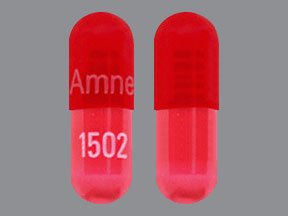
Phenoxybenzamine (Monograph)
Brand name: Dibenzyline
Drug class: Non-selective alpha-Adrenergic Blocking Agents
VA class: AU200
CAS number: 63-92-3
Introduction
α-Adrenergic blocking agent; a haloalkylamine.
Uses for Phenoxybenzamine
Pheochromocytoma
Prevention or treatment of paroxysmal hypertension and sweating in patients with pheochromocytoma.
Considered drug of choice for medical management of pheochromocytoma until surgery is performed and for prolonged treatment of hypertension caused by pheochromocytoma notamenable to surgery.
Used in conjunction with a β-adrenergic blocking agent (propranolol) to control symptoms from excessive β-receptor stimulation in patients with inoperable or metastatic pheochromocytoma or to control tachycardia prior to or during pheochromocytomectomy. (See General under Dosage and Administration.)
Peripheral Vascular Diseases
Has been used as adjunctive therapy in the treatment of peripheral vasospastic disorders associated with increased α-adrenergic activity† [off-label] (e.g., Raynaud’s syndrome, acrocyanosis, and frostbite sequelae) but efficacy in the treatment of peripheral vascular disease is not established.
Phenoxybenzamine should not be used in diseases affecting large blood vessels.
Micturition Disorders and Urinary Retention
Has been used in the treatment of micturition disorders† [off-label] resulting from neurogenic bladder, functional outlet obstruction, or partial prostatic obstruction.
Has been used for the prevention and treatment of acute postoperative urinary retention† [off-label], including that associated with the use of epidural morphine.
Phenoxybenzamine Dosage and Administration
General
-
Adjust dosage carefully according to individual requirements and response.
-
Minimize adverse effects by starting with small doses and gradually increasing the dosage until the desired effect is obtained or adverse effects occur.
-
If concomitant propranolol therapy is required, initiate phenoxybenzamine prior to use of propranolol and continue during propranolol therapy in order to prevent severe hypertension due to unopposed α-adrenergic stimulation.
Administration
Oral Administration
Administer orally in divided doses. If GI irritation occurs, administer with milk.
Dosage
Available as phenoxybenzamine hydrochloride; dosage expressed in terms of the salt.
Pediatric Patients
Pheochromocytoma
Oral
Initially, 0.2 mg/kg or 6 mg/m2 once daily; do not exceed 10 mg.
Increase dosage gradually until an adequate response is achieved (e.g., BP is controlled).
Usual maintenance dosage: 0.4–1.2 mg/kg or 12–36 mg/m2 daily.
Adults
Pheochromocytoma
Oral
Initially, 10 mg twice daily.
Increase dosage gradually every other day until an adequate response is achieved (e.g., BP is controlled).
Usual maintenance dosage: 20–40 mg 2 or 3 times daily; higher dosages may be required.
Peripheral Vascular Diseases† [off-label]
Oral
Initially, 10 mg twice daily.
Increase dosage gradually every other day until an adequate response is achieved.
Usual maintenance dosage: 20–40 mg 2 or 3 times daily; higher dosages may be required.
Prescribing Limits
Pediatric Patients
Pheochromocytoma
Oral
Initially, maximum 10 mg daily.
Special Populations
No special population dosage recommendations at this time.
Cautions for Phenoxybenzamine
Contraindications
-
Conditions where a decrease in BP is undesirable.
-
Known hypersensitivity to phenoxybenzamine or any ingredient in the formulation.
Warnings/Precautions
Warnings
Cardiovascular Effects
Phenoxybenzamine’s α-adrenergic blocking effect leaves β-receptors unopposed; concomitant use with drugs that stimulate α- and β-adrenergic receptors (i.e., epinephrine) may cause an exaggerated hypotensive response and tachycardia. (See Specific Drugs under Interactions.)
Phenoxybenzamine-induced tachycardia may precipitate CHF and angina in patients with compensated CHF or CAD.
General Precautions
Respiratory Effects
May aggravate symptoms of respiratory infections.
Arteriosclerosis
Use with caution in patients with marked cerebral or coronary arteriosclerosis.
Specific Populations
Pregnancy
Category C.
Lactation
Not known whether phenoxybenzamine is distributed into milk. Caution if used in nursing women.
Pediatric Use
Safety and efficacy not established.
Renal Impairment
Use with caution in patients with renal damage.
Common Adverse Effects
Nasal congestion, miosis, postural hypotension, dizziness, tachycardia.
Drug Interactions
Specific Drugs
|
Drug |
Interaction |
Comments |
|---|---|---|
|
Epinephrine |
Possible exaggerated hypotensive response and tachycardia (See Cardiovascular Effects under Cautions.) |
Do not use epinephrine for phenoxybenzamine-associated hypotension |
|
Norepinephrine |
May interfere with hyperthermia production of norepinephrine |
|
|
Reserpine |
May interfere with hypothermia production of reserpine |
Phenoxybenzamine Pharmacokinetics
Absorption
Bioavailability
Variably absorbed from the GI tract; 20–30% of an oral dose is absorbed.
Onset
Following oral administration, onset of action is gradual over a period of several hours.
Duration
α-Adrenergic blockade persists for 3–4 days following oral administration of a single dose; after administration of fixed daily doses, α-adrenergic blocking effects are cumulative for about 7 days.
Distribution
Extent
Highly lipid soluble; may accumulate in fat following administration of large doses.
Not known whether phenoxybenzamine crosses the placenta or is distributed into milk.
Elimination
Metabolism
Dealkylated to form N-phenoxyisopropyl-benzylamine.
Elimination Route
Excreted in urine and bile.
Half-life
Approximately 24 hours.
Stability
Storage
Oral
Capsules
25°C (may be exposed to 15–30°C).
Actions
-
Long-acting, α-adrenergic blocking agent that produces and maintains chemical sympathectomy.
-
Inhibits responses (primarily excitatory responses of smooth muscle and exocrine glands) to adrenergic stimuli by noncompetitively blocking α-adrenergic receptors; however, does not affect β-adrenergic receptors or the parasympathetic system.
-
Exact mechanism of action not fully elucidated; appears to form a reactive ethylenimonium intermediate and a highly reactive carbonium ion that forms stable covalent bonds with sulfhydryl, phosphate, amino, and carboxyl groups of α-adrenergic receptors.
-
Blocks α-adrenergic responses to circulating epinephrine and/or norepinephrine and to norepinephrine released at the adrenergic nerve ending.
-
Acts on vascular smooth muscle to block epinephrine- and norepinephrine-induced vasoconstriction and causes peripheral vasodilation and reflex tachycardia. Reverses the pressor effect of epinephrine (“epinephrine reversal”) and blocks, but does not reverse, the vasoconstrictor effects of norepinephrine.
-
Increases blood flow to the skin, mucosa, and abdominal viscera; lowers BP; blocks pupillary dilation, lid retraction, and adrenergically mediated sweating; and decreases uterine motility.
Advice to Patients
-
Importance of informing clinicians of existing or contemplated concomitant therapy, including prescription and OTC drugs, as well as any concomitant illnesses.
-
Importance of taking only as prescribed; do not increase dosage or duration of therapy unless otherwise instructed by a clinician.
-
Importance of women informing clinicians if they are or plan to become pregnant or plan to breast-feed.
-
Importance of informing patients of other precautionary information. (See Cautions.)
Preparations
Excipients in commercially available drug preparations may have clinically important effects in some individuals; consult specific product labeling for details.
Please refer to the ASHP Drug Shortages Resource Center for information on shortages of one or more of these preparations.
|
Routes |
Dosage Forms |
Strengths |
Brand Names |
Manufacturer |
|---|---|---|---|---|
|
Oral |
Capsules |
10 mg |
Dibenzyline (with benzyl alcohol) |
WellSpring |
AHFS DI Essentials™. © Copyright 2025, Selected Revisions April 1, 2010. American Society of Health-System Pharmacists, Inc., 4500 East-West Highway, Suite 900, Bethesda, Maryland 20814.
† Off-label: Use is not currently included in the labeling approved by the US Food and Drug Administration.
Reload page with references included
Related/similar drugs
More about phenoxybenzamine
- Check interactions
- Compare alternatives
- Pricing & coupons
- Drug images
- Side effects
- Dosage information
- During pregnancy
- Drug class: miscellaneous cardiovascular agents
- En español