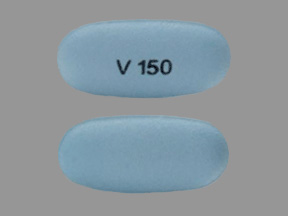
Ivacaftor (Monograph)
Brand name: Kalydeco
Drug class: Cystic Fibrosis Transmembrane Conductance Regulator Potentiators
Introduction
A cystic fibrosis transmembrane conductance regulator (CFTR) potentiator.
Uses for Ivacaftor
Cystic Fibrosis
Treatment of cystic fibrosis in patients ≥1 month of age who have at least one mutation in the CFTR gene that is responsive to ivacaftor based on in vitro assay and/or clinical data.
Use an FDA-approved cystic fibrosis mutation test to detect presence of a CFTR mutation if genotype of patient unknown.
Designated an orphan drug by FDA for treatment of cystic fibrosis.
Clinical trials demonstrated efficacy in patients with the following CFTR mutations: G551D, R117H, G1244E, G1349D, G178R, G551S, G970R, S1251N, S1255P, S549N, or S549R; individuals with other CFTR variants with similar gating defect may respond to ivacaftor treatment (see current prescribing information for a list of responsive mutations). Benefit has not been demonstrated in patients homozygous for the F508del-CFTR variant.
The 2018 Cystic Fibrosis Foundation pulmonary guideline specifically addresses the use of CFTR modulators in patients with cystic fibrosis. For adults and children ≥6 years of age with cystic fibrosis due to gating mutations other than G551D or R117H, the guideline makes a conditional recommendation for use of ivacaftor. For patients with the R117H mutation, the guideline makes a conditional recommendation for ivacaftor use in adults ≥18 years of age and in children 6–17 years of age with an FEV1 <90% predicted.
Ivacaftor Dosage and Administration
General
Pretreatment Screening
-
Select patients for treatment with ivacaftor based on presence of one mutation in the cystic fibrosis transmembrane conductance regulator (CFTR) gene that is responsive to ivacaftor based on clinical and/or in vitro assay data. Consult the prescribing information for full details on CFTR gene mutations that produce CFTR protein and are responsive to ivacaftor.
-
If a patient's genotype is unknown, an FDA-cleared cystic fibrosis mutation test should be used to detect the presence of a CFTR mutation along with bi-directional sequencing for verification when recommended by the mutation test instructions.
-
A baseline ophthalmological examination is recommended in pediatric patients.
Patient Monitoring
-
Monitor liver function tests (ALT and AST) prior to initiating ivacaftor treatment and every 3 months during the first year of treatment, then annually thereafter as clinically indicated. For patients with a history of aminotransferase elevations, consider more frequent monitoring of liver function tests. Closely monitor patients who develop elevations of aminotransferase levels until the abnormalities resolve.
-
Follow-up ophthalmological examinations are recommended in pediatric patients during treatment as clinically indicated.
Administration
Oral Administration
Commercially available as tablets (for administration in adults and pediatric patients ≥6 years of age) or oral granules (for administration in pediatric patients 1 month to less than 6 years of age).
Tablets:Administer orally every 12 hours with fat-containing food (e.g., butter, cheese pizza, eggs, peanut butter, whole-milk dairy products [e.g., cheese, yogurt, whole milk, breast milk, or infant formula]) to increase systemic absorption of the drug. Typical diet recommended for patients with cystic fibrosis satisfies requirement for fat-containing food. Swallow tablets whole.
Oral granules: Administer orally every 12 hours with age-appropriate soft food or liquid (e.g., pureed fruits or vegetables, breast milk or infant formula, juice, water, milk, yogurt). Each dose is administered just before or after consumption of fat-containing food.
Preparation of oral granules: Mix entire contents of each packet of oral granules with one teaspoon (5 mL) of an age-appropriate soft food or liquid (e.g., pureed fruits or vegetables, yogurt, applesauce, water, breast milk, infant formula, milk, juice) and completely consume. Food or liquid should be at or below room temperature. Once mixed, the product has been shown to be stable for 1 hour, and therefore should be consumed during this period. Administer each dose just before or just after fat-containing food.
If a dose of ivacaftor is missed within 6 hours of time of usual administration, take the dose with fat-containing food as soon as possible. If more than 6 hours have passed, missed dose should not be taken; take the dose at the next scheduled time.
Pharmacogenetic Testing
Results of genetic testing can be used to guide ivacaftor treatment. The Clinical Pharmacogenetics Implementation Consortium (CPIC) published a guideline in 2014 that provides recommendations for selecting patients for ivacaftor therapy based on CFTR genotyping. Additional updates may be available. For the most recent updates, consult the CPIC website at [Web]
Dosage
Pediatric Patients
Cystic Fibrosis
Oral
Pediatric patients ≥6 years of age: 150 mg every 12 hours (total daily dosage of 300 mg) with fat-containing food.
Oral
Pediatric patients 1 month to <6 years of age: weight-based dosing (see Table 1). Administer dose just before or after consumption of fat-containing food.
Use of ivacaftor in pediatric patients 1 to <6 months born at a gestational age <37 weeks has not been evaluated.
|
Age |
Body Weight (kg) |
Ivacaftor Dosage |
|---|---|---|
|
1 month to <2 months |
≥3 |
One 5.8 mg packet every 12 hours |
|
2 months to <4 months |
≥3 |
One 13.4 mg packet every 12 hours |
|
4 months to <6 months |
≥5 |
One 25 mg packet every 12 hours |
|
≥6 months to <6 years |
5 to <7 |
One 25 mg packet every 12 hours |
|
≥6 months to <6 years |
7 to <14 |
One 50 mg packet every 12 hours |
|
≥6 months to <6 years |
≥14 |
One 75 mg packet every 12 hours |
Adults
Cystic Fibrosis
Oral
150 mg every 12 hours (total daily dosage of 300 mg) with fat-containing food.
Dosage Modification for Concomitant Use of CYP3A Inhibitors in Patients ≥6 Months of Age
When coadministered with strong CYP3A4 inhibitors (e.g., ketoconazole, itraconazole, posaconazole, voriconazole, clarithromycin) reduce dosage of ivacaftor to one tablet or one packet of oral granules twice weekly.
When co-administered with moderate CYP3A inhibitors (e.g., fluconazole, erythromycin), reduce dosage of ivacaftor to one tablet or one packet of granules once daily.
Concomitant use of moderate or strong CYP3A inhibitors not recommended in patients <6 months of age.
Dosage Modification for Toxicity
Hepatic Toxicity
Interrupt ivacaftor dosing if elevation in serum ALT or AST concentrations exceeding 5 times the ULN occurs. Consider benefits versus risks of resuming ivacaftor after resolution of aminotransferase levels to baseline.
Special Populations
Hepatic Impairment
Mild hepatic impairment (Child-Pugh class A): Not recommended in patients <6 months of age. Dosage adjustment not necessary in patients ≥6 months of age.
Moderate hepatic impairment (Child-Pugh class B) Not recommended in patients <6 months of age. In patients 6 months to <6 years of age, recommended dose is one packet of granules (containing 25 mg, 50 mg, or 75 mg ivacaftor, based on dosing recommended for weight in Table 1) once daily. For patients ≥6 years of age, recommended dose is 150 mg orally once daily.
Severe hepatic impairment (Child-Pugh class C) Not recommended in patients <6 months of age. Use with caution and at a reduced dosage after weighing risks and benefits of therapy in patients ≥6 months of age. In patients 6 months to <6 years of age, recommended dosage is one packet of oral granules (containing 25 mg, 50 mg, or 75 mg ivacaftor, based on dosing recommended for weight in Table 1) once daily or less frequently. For patients ≥6 years of age, recommended dosage is 150 mg orally once daily or less frequently.
Renal Impairment
Mild or moderate renal impairment: Dosage adjustment not necessary.
Severe renal impairment (Clcr ≤30 mL/minute) or end-stage renal disease (ESRD): Use with caution.
Geriatric Patients
No specific dosage recommendations.
Cautions for Ivacaftor
Contraindications
-
None.
Warnings/Precautions
Hepatic Effects
Elevated ALT or AST concentrations reported.
Assess serum ALT and AST concentrations prior to initiation of therapy, every 3 months during first year of therapy, and annually thereafter as clinically indicated.
Closely monitor patients who develop increased ALT or AST concentrations until abnormalities resolve.
Interrupt therapy in patients with ALT or AST elevations >5 times ULN. Following resolution, consider benefits and risks of resuming therapy.
Hypersensitivity Reactions
Hypersensitivity reactions, including anaphylaxis, reported.
Discontinue ivacaftor if serious hypersensitivity reactions develop and institute appropriate therapy. Consider benefits and risks for the individual patient to determine whether to resume treatment.
Concomitant Use with CYP3A Inducers
Concomitant use with strong CYP3A inducers (e.g., carbamazepine, phenobarbital, phenytoin, rifabutin, rifampin, St. John’s wort [Hypericum perforatum]) substantially decreases systemic exposure of ivacaftor, possibly reducing efficacy of the drug. Concomitant use not recommended.
Cataracts
Non-congenital lens opacities and cataracts reported in pediatric patients.
Ophthalmological examinations recommended in pediatric patients at baseline and follow-up during treatment as clinically indicated.
Specific Populations
Pregnancy
Limited human data from clinical trials and postmarketing reports of ivacaftor use in pregnant women.
Ivacaftor administration in animal studies did not reveal teratogenicity or adverse effects on fetal development.
Lactation
Distributed into milk in rats; likely distributed into human milk. Use with caution in breastfeeding women.
Pediatric Use
Safety and efficacy established in pediatric patients 1 month to 17 years of age with cystic fibrosis and one mutation in the CFTR gene that is responsive to ivacaftor based on clinical and/or in vitro assay data.
Safety and efficacy not established in pediatric patients <1 month of age.
Geriatric Use
Insufficient experience in patients ≥65 years of age to determine whether geriatric patients respond differently than younger adults; cystic fibrosis is generally a disease of children and young adults.
Hepatic Impairment
Effect of mild hepatic impairment (Child-Pugh class A) on pharmacokinetics not studied but minimal effects expected; dosage adjustment not necessary in patients >6 months of age.
Increased AUC in patients with moderate hepatic impairment (Child-Pugh class B); dosage reduction recommended in patients >6 months of age.
Effect of severe hepatic impairment (Child-Pugh class C) on pharmacokinetics not studied but increased AUC expected; use with caution and at reduced dosage after weighing risks and benefits of therapy at a reduced dosage in patients >6 months of age.
Not recommended in patients 1 to <6 months of age with any level of hepatic impairment.
Renal Impairment
Not studied in patients with mild, moderate, or severe renal impairment or in those with ESRD.
Dosage adjustment not necessary in patients with mild or moderate renal impairment because of minimal urinary excretion of drug and metabolites.
Use with caution in patients with severe renal impairment (Clcr ≤30 mL/minute) or in those with ESRD.
Common Adverse Effects
Most common (≥8%) adverse effects include headache, oropharyngeal pain, upper respiratory tract infection, nasal congestion, abdominal pain, nasopharyngitis, diarrhea, rash, nausea, dizziness.
Drug Interactions
Principally metabolized by CYP3A.
Ivacaftor and its M1 metabolite are substrates of CYP3A (i.e., 3A4, 3A5).
Ivacaftor is a weak inhibitor of CYP3A, has potential to inhibit P-glycoprotein (P-gp) at therapeutic concentrations, and may inhibit CYP2C9. M1 metabolite (but not M6) has potential to inhibit CYP3A and P-gp.
Ivacaftor and its M1 and M6 metabolites are not CYP inducers.
Drugs Affecting or Metabolized by Hepatic Microsomal Enzymes or Transport Proteins
Strong CYP3A inhibitors: Pharmacokinetic interaction (substantially increased AUC of ivacaftor). If used concomitantly, reduce dosage of ivacaftor in patients ≥6 months of age. Use not recommended in patients <6 months of age.
Moderate CYP3A inhibitors: Pharmacokinetic interaction (increased AUC of ivacaftor). If used concomitantly, reduce dosage of ivacaftor in patients ≥6 months of age. Use not recommended in patients <6 months of age.
Strong CYP3A inducers: Pharmacokinetic interaction (substantially decreased AUC and possible reduced efficacy of ivacaftor). Concomitant use not recommended.
Substrates of CYP3A and/or P-gp: Potential pharmacokinetic interaction (increased systemic exposure; possible increased or prolonged therapeutic and adverse effects of substrate). Use with caution and appropriate monitoring.
Substrates of CYP2C9: Potential pharmacokinetic interaction (increased systemic exposure; possible increased or prolonged therapeutic and adverse effects of substrate). Appropriate monitoring recommended.
Specific Drugs
|
Drug |
Interaction |
Comments |
|---|---|---|
|
Anticonvulsants (carbamazepine, phenobarbital, phenytoin) |
Potential decreased AUC and efficacy of ivacaftor |
Concomitant use not recommended |
|
Azole antifungals (e.g., fluconazole, itraconazole, ketoconazole, posaconazole, voriconazole) |
Concomitant administration with ketoconazole, a potent CYP3A inhibitor, substantially increased AUC of ivacaftor Concomitant administration with fluconazole, a moderate CYP3A inhibitor, also increased AUC of ivacaftor, but a lesser extent |
Reduce dosage of ivacaftor when used concomitantly Use not recommended for patients <6 months of age. |
|
Benzodiazepines (alprazolam, diazepam, midazolam, triazolam) |
Concomitant administration of ivacaftor with midazolam, a sensitive CYP3A substrate, increased systemic exposure of midazolam |
Caution and adequate monitoring for benzodiazepine-related adverse effects (e.g., prolonged or increased sedation or respiratory depression) is recommended when ivacaftor is used concomitantly with alprazolam, diazepam, midazolam, or triazolam |
|
Ciprofloxacin |
No effect on ivacaftor exposure |
No dose adjustment is necessary |
|
Cyclosporine |
Possible increased systemic exposure of cyclosporine |
Caution advised with concomitant use; appropriate monitoring recommended |
|
Digoxin |
Possible increased systemic exposure of digoxin |
Caution advised with concomitant use; appropriate monitoring recommended |
|
Glimepiride |
Possible increased systemic exposure of glimepiride |
Use concomitantly with caution |
|
Glipizide |
Possible increased systemic exposure of glipizide |
Use concomitantly with caution |
|
Grapefruit juice |
Possible increased systemic exposure of ivacaftor |
Avoid use of grapefruit juice or foods containing grapefruit |
|
Macrolide antibiotics (clarithromycin, erythromycin) |
Potential for substantially increased AUC of ivacaftor |
Reduce dosage of ivacaftor when used concomitantly Use not recommended for patients <6 months of age. |
|
Oral contraceptives |
Concomitant administration with an oral contraceptive containing ethinyl estradiol and norethindrone did not affect systemic exposures of ivacaftor or its metabolites, ethinyl estradiol, or norethindrone |
Dosage adjustment of ivacaftor or oral contraceptives not necessary |
|
Rifabutin |
Potential decreased AUC and efficacy of ivacaftor |
Concomitant use not recommended |
|
Rifampin |
Concomitant administration with rifampin, a potent CYP3A inducer, substantially decreased AUC of ivacaftor; potential reduced efficacy of ivacaftor |
Concomitant use not recommended |
|
St. John's wort (Hypericum perforatum) |
Potential decreased AUC and efficacy of ivacaftor |
Concomitant use not recommended |
|
Tacrolimus |
Possible increased systemic exposure of tacrolimus |
Caution advised with concomitant use; appropriate monitoring recommended |
|
Warfarin |
Possible increase systemic exposure of warfarin |
Use concomitantly with caution with INR monitoring |
Ivacaftor Pharmacokinetics
Absorption
Bioavailability
Peak plasma concentrations achieved at approximately 4 hours following oral administration in the fed state.
Steady-state plasma concentrations attained within 3–5 days.
Food
Systemic exposure increased approximately two- to four-fold when administered with food containing fat. Effect of food is similar for tablets and granules.
Special Populations
Mild hepatic impairment (Child-Pugh class A): Effect on pharmacokinetics not studied; increase in AUC expected to be less than two-fold.
Moderate hepatic impairment (Child-Pugh class B): Similar peak plasma concentrations, but an approximately two-fold increase in AUC, compared with healthy individuals matched for demographics.
Severe hepatic impairment (Child-Pugh class C): Effect on pharmacokinetics not studied; magnitude of increase in systemic exposure unknown but expected to be substantially higher than that observed in patients with moderate hepatic impairment.
Not studied in patients with mild, moderate, or severe renal impairment or in those with ESRD.
Distribution
Extent
Distributed into milk in rats; likely distributed into human milk.
Plasma Protein Binding
Approximately 99% (mainly α1-acid glycoprotein, albumin).
Does not bind to human RBCs.
Elimination
Metabolism
Extensively metabolized in humans, principally by CYP3A.
Two major metabolites are M1 and M6. M1 considered pharmacologically active (approximately one-sixth the potency of ivacaftor). M6 not considered pharmacologically active (<one-fiftieth the potency of ivacaftor).
Ivacaftor and its M1 metabolite are substrates of CYP3A (i.e., 3A4, 3A5). Ivacaftor is a weak inhibitor of CYP3A, has potential to inhibit P-gp at therapeutic concentrations, and may inhibit CYP2C8 and 2C9. M1 metabolite (but not M6) has potential to inhibit CYP3A and P-gp.
Ivacaftor and its M1 and M6 metabolites are not CYP inducers.
Elimination Route
Mainly excreted in feces (87.8%) after metabolic conversion. Approximately 65% of total dose excreted as M1 (22%) and M6 (43%) metabolites.
Ivacaftor and metabolites minimally excreted in urine (6.6% of total radioactivity recovered); negligible amounts of unchanged drug excreted in urine.
Half-life
Apparent terminal half-life: Approximately 12 hours.
Stability
Storage
Oral
Tablets
Store at 20–25°C (excursions permitted between 15–30°C).
Actions
-
Potentiator of CFTR protein, a chloride channel present at epithelial cell surface in multiple organs involved in salt and fluid transport.
-
Mutations in the gene encoding the CFTR protein affect quantity or function of this protein at the cell surface resulting in cystic fibrosis.
-
CFTR mutation causes mutated CFTR protein to reach the cell surface but not to activate normally, resulting in low probability of channel opening and defective chloride transport.
-
Ivacaftor facilitates increased chloride transport by potentiating probability of channel opening (or gating) of the CFTR protein.
Advice to Patients
-
Advise patients to read the FDA-approved patient labeling (Patient Information).
-
Inform patients that ivacaftor tablets are best absorbed when taken with fat-containing food (e.g., butter, cheese pizza, eggs, peanut butter). A typical cystic fibrosis diet will satisfy this requirement.
-
Inform patients and caregivers that ivacaftor oral granules should be mixed with one teaspoon (5 mL) of age-appropriate soft food or liquid (e.g., pureed fruits or vegetables, yogurt, applesauce, water, breast milk, infant formula, milk, or juice) and completely consumed to ensure delivery of the entire dose. Food or liquid should be at or below room temperature. Once mixed, the product has been shown to be stable for 1 hour, and therefore should be consumed during this period. Inform patients that ivacaftor is best absorbed when taken with food that contains fat; therefore, the oral granules should be taken just before or just after consuming food that contains fat (e.g., eggs, butter, peanut butter, cheese pizza, whole-milk dairy products). A typical cystic fibrosis diet will satisfy this requirement.
-
Inform patients that if a dose of ivacaftor is missed within 6 hours of the time it is usually taken, to take the prescribed dose with fat-containing food as soon as possible. If more than 6 hours have passed, the missed dose should NOT be taken, and the patient should resume the usual dosing schedule.
-
Advise patients of important drug interactions with CYP3A inducers and inhibitors. Treatment with ivacaftor is not recommended in patients less than 6 months of age who are taking concomitant moderate or strong CYP3A inhibitors. Advise patients to avoid grapefruit juice or food containing grapefruit during ivacaftor therapy.
-
Inform patients that abnormality of the eye lens (cataract) has been noted in some children and adolescents receiving ivacaftor. Baseline and follow-up ophthalmological examinations should be performed in pediatric patients initiating the drug.
-
Hypersensitivity reactions, including anaphylaxis, are possible with use of ivacaftor. Inform patients of the early signs of hypersensitivity reactions including rash, hives, itching, facial swelling, tightness of the chest, and wheezing. Advise patients to discontinue use of ivacaftor immediately and contact their physician or go to the emergency department if these symptoms occur.
-
Assess whether patients have liver impairment. Dosage adjustment or avoidance of treatment may be required based on the degree of impairment.
-
Inform patients of the risk of elevated hepatic function tests and the importance of monitoring hepatic function tests prior to initiation of ivacaftor therapy, every 3 months during the first year of therapy, and annually thereafter. More frequent monitoring of liver function tests should be considered in patients with a history of aminotransferase elevations.
-
Dizziness has been reported in patients receiving ivacaftor, which could influence the ability to drive or operate machines. Advise patients not to drive or operate machines if they experience dizziness until symptoms abate.
-
Advise patients to inform their clinician of existing or contemplated concomitant therapy, including prescription and OTC drugs, vitamins, and herbal supplements, as well as any concomitant illnesses (e.g., hepatic impairment).
-
Advise women to inform their clinician if they are or plan to become pregnant or plan to breast-feed.
-
Advise patients of other important precautionary information.
Additional Information
The American Society of Health-System Pharmacists, Inc. represents that the information provided in the accompanying monograph was formulated with a reasonable standard of care, and in conformity with professional standards in the field. Readers are advised that decisions regarding use of drugs are complex medical decisions requiring the independent, informed decision of an appropriate health care professional, and that the information contained in the monograph is provided for informational purposes only. The manufacturer’s labeling should be consulted for more detailed information. The American Society of Health-System Pharmacists, Inc. does not endorse or recommend the use of any drug. The information contained in the monograph is not a substitute for medical care.
Preparations
Excipients in commercially available drug preparations may have clinically important effects in some individuals; consult specific product labeling for details.
Please refer to the ASHP Drug Shortages Resource Center for information on shortages of one or more of these preparations.
Ivacaftor is available only from designated specialty distributors and pharmacies. The manufacturer should be contacted for additional information.
|
Routes |
Dosage Forms |
Strengths |
Brand Names |
Manufacturer |
|---|---|---|---|---|
|
Oral |
Tablets, film-coated |
150 mg |
Kalydeco |
Vertex |
|
Oral granules |
5.8 mg per packet |
Kalydeco |
Vertex |
|
|
13.4 mg per packet |
Kalydeco |
Vertex |
||
|
25 mg per packet |
Kalydeco |
Vertex |
||
|
50 mg per packet |
Kalydeco |
Vertex |
||
|
75 mg per packet |
Kalydeco |
Vertex |
AHFS DI Essentials™. © Copyright 2025, Selected Revisions January 10, 2025. American Society of Health-System Pharmacists, Inc., 4500 East-West Highway, Suite 900, Bethesda, Maryland 20814.
Reload page with references included
Related/similar drugs
Frequently asked questions
- What is an orphan drug?
- How does Kalydeco work?
- What is the difference between Symdeko and Orkambi?
- What is the difference between Symdeko and Kalydeco?
More about ivacaftor
- Check interactions
- Compare alternatives
- Reviews (1)
- Side effects
- Dosage information
- During pregnancy
- Drug class: CFTR potentiators
- Breastfeeding