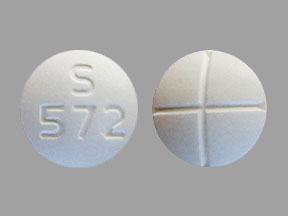
acetaZOLAMIDE, acetaZOLAMIDE Sodium (Monograph)
Drug class: Carbonic Anhydrase Inhibitors
Introduction
Carbonic anhydrase inhibitor; nonbacteriostatic sulfonamide derivative.
Uses for acetaZOLAMIDE, acetaZOLAMIDE Sodium
Glaucoma
Adjunctive treatment of open-angle glaucoma. Used principally in situations involving acute IOP elevation or chronically elevated IOP that is refractory to maximal topical ocular hypotensive therapy prior to a more definitive procedure to reduce IOP. Long-term use limited by systemic adverse effects.
Adjunctive treatment of secondary glaucoma.
Short-term use in acute angle-closure glaucoma to lower IOP before appropriate laser or incisional surgery. Should not be used for long-term treatment of angle-closure glaucoma. (See Contraindications under Cautions.)
Acute Mountain Sickness
Prevention or amelioration of symptoms (e.g., headache, lassitude, insomnia, nausea, shortness of breath, dizziness) associated with acute mountain sickness.
Shortens the time of acclimatization. If acute mountain sickness develops, shortens duration; does not obviate need to stop ascent or to descend.
Also used in the treatment and prevention of high-altitude sleep disorders. Decreases periodic breathing and apnea and improves oxygenation.
Seizure Disorders
Management (in combination with other anticonvulsants) of centrencephalic epilepsies (e.g., petit mal, unlocalized seizures); may be ineffective for prolonged therapy. Has not been evaluated in controlled clinical studies in specific seizure types.
Edema
Adjunctive treatment of edema due to CHF or drug therapy. Less potent diuretic than thiazide diuretics; metabolic acidosis resulting in loss of diuretic effect occurs after 2–4 days of continuous therapy.
Periodic Paralysis
Has been used in the treatment of hyperkalemic and hypokalemic forms of periodic paralysis† [off-label].
acetaZOLAMIDE, acetaZOLAMIDE Sodium Dosage and Administration
Administration
Administer orally or by direct IV injection.
Do not administer IM; injection is painful.
Oral Administration
When an oral liquid preparation is needed, crush the appropriate number of tablets and suspend in a highly flavored carbohydrate syrup. Can suspend up to 500 mg of acetazolamide in 5 mL of syrup; suspensions containing 250 mg per 5 mL are more palatable. Alternatively, soften a tablet in 2 teaspoonsful of hot water and add 2 teaspoonsful of honey or syrup; swallow immediately.
When the extended-release capsules are used for glaucoma, if adequate response is not achieved with twice-daily administration of this preparation, consider using other acetazolamide preparations that are administered more frequently (i.e., tablet, parenteral preparation) to achieve IOP control.
IV Administration
Administer IV when rapid lowering of IOP is necessary or if patient is unable to take oral medication.
Reconstitution
Reconstitute vial containing 500 mg of acetazolamide with 5 mL of sterile water for injection to provide a solution containing 100 mg/mL.
Dosage
Available as acetazolamide (oral preparations) and acetazolamide sodium; dosage expressed in terms of acetazolamide.
Adjust dosage based on patient response and requirements.
Pediatric Patients
Glaucoma
Oral
8–30 mg/kg or 300–900 mg/m2 daily in 3 divided doses has been used.
Open-angle or Secondary Glaucoma
OralExtended-release capsules in children ≥12 years of age: 500 mg twice daily.
Acute Angle-closure Glaucoma
OralExtended-release capsules in children ≥12 years of age: 500 mg twice daily.
IV5–10 mg/kg every 6 hours has been used.
Acute Mountain Sickness
Oral
Extended-release capsules in children ≥12 years of age: 500 mg once or twice daily. Initiate 24–48 hours before ascent; continue for 48 hours while at high altitude or longer if needed to control symptoms.
Seizure Disorders† [off-label]
Oral
8–30 mg/kg daily in divided doses has been used.
Edema† [off-label]
Oral or IV
5 mg/kg or 150 mg/m2 once daily in the morning has been used.
Adults
Glaucoma
Open-angle Glaucoma
OralConventional tablets: 250 mg to 1 g daily. For daily dosages >250 mg, administer in divided doses.
Extended-release capsules: 500 mg twice daily.
IV250 mg to 1 g daily. For daily dosages >250 mg, administer in divided doses.
Secondary Glaucoma
OralConventional tablets: 250 mg every 4 hours. Some patients respond to short-term therapy with 250 mg twice daily.
Extended-release capsules: 500 mg twice daily.
IV250 mg every 4 hours. Some patients respond to short-term therapy with 250 mg twice daily.
Acute Angle-closure Glaucoma
OralConventional tablets: 250 mg every 4 hours. Alternatively, 250 mg twice daily or an initial dose of 500 mg followed by 125–250 mg every 4 hours.
Extended-release capsules: 500 mg twice daily.
IV250 mg every 4 hours. Alternatively, 250 mg twice daily or an initial dose of 500 mg followed by 125–250 mg every 4 hours.
Acute Mountain Sickness
Oral
Conventional tablets and extended-release capsules: 500 mg to 1 g daily in divided doses. Initiate 24–48 hours before ascent; continue for 48 hours while at high altitude or longer if needed to control symptoms.
125–250 mg twice daily starting 24 hours before ascent has been effective for prevention of acute mountain sickness; 500 mg (as extended-release capsules) every 24 hours also has been effective. 750 mg daily may be more effective than 500 mg daily.
125 mg at bedtime has been used for the management of high-altitude sleep disorders.
For treatment of acute mountain sickness, some experts recommend 250 mg given within 24 hours of onset of symptoms and a second 250-mg dose 8 hours later.
Seizure Disorders
Oral
Conventional tablets: 8–30 mg/kg daily in divided doses.
Usual dosage range: 375 mg to 1 g daily.
When used in conjunction with other anticonvulsants, initiate at 250 mg once daily and increase dosage as needed.
IV
8–30 mg/kg daily in divided doses; usual dosage range is 375 mg to 1 g daily.
When given in conjunction with other anticonvulsants, initiate at 250 mg once daily and increase dosage as needed.
Edema
CHF
OralConventional tablets: Initially, 250–375 mg (5 mg/kg) once daily in the morning.
If patient fails to lose edema fluid after initial response, hold drug for 1 day. To avoid loss of diuretic effect, administer intermittently (on alternate days or for 2 days followed by a drug-free day).
IVInitially, 250–375 mg (5 mg/kg) once daily in the morning.
If patient fails to lose edema fluid after initial response, hold drug for 1 day. To avoid loss of diuretic effect, administer intermittently (on alternate days or for 2 days followed by a drug-free day).
Drug-induced Edema
OralConventional tablets: 250–375 mg once daily for 1 or 2 days, alternating with a drug-free day.
IV250–375 mg once daily for 1 or 2 days, alternating with a drug-free day.
Periodic Paralysis† [off-label]
Oral
250 mg 2 to 3 times daily has been used.
Prescribing Limits
When used in glaucoma or seizure disorders, dosage >1 g daily is not associated with additional clinical benefit.
When used for diuresis, increasing dosage does not produce greater response and may result in decreased response.
Special Populations
Geriatric Patients
Select dosage with caution because of age-related decreases in hepatic, renal, and/or cardiac function and concomitant disease and drug therapy.
Cautions for acetaZOLAMIDE, acetaZOLAMIDE Sodium
Contraindications
-
Marked impairment of hepatic function. Cirrhosis. (See Hepatic Impairment under Cautions.)
-
Depressed serum concentrations of sodium and/or potassium.
-
Adrenocortical insufficiency.
-
Hyperchloremic acidosis.
-
Marked impairment of renal function.
-
Long-term treatment of angle-closure glaucoma; further closure of the angle may occur while worsening of glaucoma is masked by lower IOP.
-
Hypersensitivity to acetazolamide or any ingredients in the formulation.
Warnings/Precautions
Sensitivity Reactions
Sulfonamide Sensitivity Reactions
Serious adverse events (e.g., Stevens-Johnson syndrome, toxic epidermal necrolysis, fulminant hepatic necrosis, agranulocytosis, aplastic anemia, other blood dyscrasias) associated with sulfonamide therapy possible.
Discontinue if signs of hypersensitivity, blood dyscrasias, or other serious reactions occur.
General Precautions
CNS Effects
Drowsiness and/or paresthesia reported with high dosages.
Respiratory Effects
Caution in patients with pulmonary obstruction, emphysema, or advanced pulmonary disease where alveolar ventilation may be impaired. Acetazolamide may precipitate or aggravate acidosis in these patients.
Laboratory Monitoring
Monitor for hematologic reactions associated with sulfonamides; obtain a CBC and platelet count before therapy and periodically during therapy. Discontinue the drug if clinically important changes occur.
Monitor serum electrolytes periodically for electrolyte imbalances (i.e., hyponatremia, hypokalemia, metabolic acidosis).
Glucose Concentrations
Increased or decreased blood glucose concentrations reported. Caution in patients with impaired glucose tolerance or diabetes mellitus.
Specific Populations
Pregnancy
Category C.
Lactation
Discontinue nursing or the drug.
Pediatric Use
Conventional tablets and parenteral preparation: Manufacturers state that safety and efficacy not established.
Extended-release capsules: Safety and efficacy not established in pediatric patients <12 years of age.
Growth retardation has been reported in children receiving long-term therapy with extended-release capsules.
Geriatric Use
Risk of metabolic acidosis (may be severe) in geriatric patients with reduced renal function.
Hepatic Impairment
Avoid use in patients with marked hepatic impairment, including those with cirrhosis, because of the risk of developing hepatic encephalopathy. (See Contraindications.)
Renal Impairment
Avoid use in patients with marked renal impairment. (See Contraindications.)
Common Adverse Effects
Paresthesias, hearing dysfunction or tinnitus, anorexia, altered taste, nausea, vomiting, diarrhea, polyuria, drowsiness, confusion.
Drug Interactions
Specific Drugs and Laboratory Tests
|
Drug or Test |
Interaction |
Comments |
|---|---|---|
|
Amphetamine |
Decreased urinary excretion of amphetamines; potentiates the effects of amphetamines |
|
|
Amphotericin B |
Possible enhanced potassium depletion |
|
|
Antidiabetic agents (oral agents, insulin) |
May interfere with the hypoglycemic response |
|
|
Aspirin |
Increased risk of toxicity |
Avoid concomitant use in patients receiving high-dose aspirin |
|
Carbonic anhydrase inhibitors, topical |
Additive systemic effects |
Concomitant use not recommended |
|
Corticosteroids |
Possible enhanced potassium depletion |
|
|
Cyclosporine |
Possible increased plasma cyclosporine concentrations |
|
|
Digitalis glycosides |
Acetazolamide-induced hypokalemia may potentiate toxicity of digitalis |
|
|
Folic acid antagonists |
Potential antifolate effect |
|
|
Lithium |
Increased renal excretion of lithium and decreased lithium concentrations |
Monitor patient |
|
Methenamine |
May interfere with urinary antiseptic effect of methenamine |
|
|
Phenytoin |
Altered metabolism of phenytoin; increased serum phenytoin concentrations; increased risk of phenytoin-associated osteomalacia |
Caution advised |
|
Primidone |
Possible decreased serum concentration of primidone and its metabolites; possible decreased anticonvulsant effect |
Caution advised |
|
Quinidine |
Decreased urinary excretion of quinidine |
|
|
Sodium bicarbonate |
Increased risk of renal calculus |
|
|
Tests for urinary protein |
False-positive results with tests that use bromophenol blue reagent (Albustix) or sulfosalicylic acid |
|
|
Tests, theophylline concentrations |
Interferes with high-performance liquid chromatography (HPLC) assay for theophylline |
acetaZOLAMIDE, acetaZOLAMIDE Sodium Pharmacokinetics
Absorption
Bioavailability
Well absorbed from GI tract. Peak plasma concentrations attained within 1–4 or 3–6 hours following administration of conventional tablets or extended-release capsules, respectively.
Onset
Following IV administration, reduction in IOP occurs in 2 minutes.
Following administration of conventional tablets or extended-release capsules, reduction in IOP occurs in 1 or 2 hours, respectively.
Duration
Following IV administration, reduction in IOP persists for 4–5 hours.
Following administration of conventional tablets or extended-release capsules, reduction in IOP persists for 8–12 or 18–24 hours, respectively.
Food
Extended-release capsules: Food does not affect absorption.
Distribution
Extent
Distributed into erythrocytes, renal cortex, and aqueous humor of eye.
Crosses the placenta.
Distributed into milk in dogs; not known whether distributed into human milk.
Elimination
Elimination Route
Excreted principally in the urine as unchanged drug.
Stability
Storage
Oral
Tablets
Tight, light-resistant container at 20–25°C (may be exposed to 15–30°C).
Capsules
Extended-release: tight container at 20–25°C.
Parenteral
Powder for Injection
20–25°C.
Reconstituted solutions prepared using sterile water for injection are stable for 3 days at 2–8°C or 12 hours at 20–25°C.
Store reconstituted solutions at 2–8°C and use within 12 hours to minimize the risk of microbial contamination.
Actions
-
Noncompetitive reversible inhibitor of the carbonic anhydrase enzyme.
-
Reduces the formation of hydrogen and bicarbonate ions from carbon dioxide and water, thereby reducing availability of these ions for active transport into secretions.
-
Decreases aqueous humor secretion and IOP.
-
Increases urinary excretion of bicarbonate, sodium, and potassium due to decrease in hydrogen ions in the renal tubules. Decreases reabsorption of water, increases urine volume, urine becomes alkaline.
-
When used as a diuretic, plasma bicarbonate concentration is decreased and chloride concentration may be increased, resulting in metabolic acidosis. In the presence of acidosis, diuretic effect ceases.
-
In acute mountain sickness, the effect of acetazolamide on acid-base balance (i.e., increased renal excretion of bicarbonate that leads to metabolic acidosis) results in compensatory hyperventilation and improved oxygenation.
-
Exact mechanism of anticonvulsant activity unclear; may be due to metabolic acidosis, inhibition of carbonic anhydrase in the CNS, or other mechanisms.
Advice to Patients
-
Risk of adverse effects, including sensitivity reactions; discontinue therapy and consult clinician if signs of sensitivity occur.
-
When used to prevent acute mountain sickness, importance of gradual ascent. Use of acetazolamide does not obviate need to stop ascent if acute mountain sickness develops or descend if severe forms of altitude sickness (e.g., high attitude pulmonary or cerebral edema) occur.
-
Potential for the drug to impair mental alertness or impair vision (myopia); use caution when driving a vehicle or operating machinery until effects on individual are known.
-
Advise patients with pulmonary obstruction or emphysema that the drug may precipitate or aggravate acidosis.
-
Advise patients with diabetes or impaired glucose tolerance that increases and decreases in blood glucose have occurred in acetazolamide-treated patients.
-
Importance of informing clinicians of existing or contemplated concomitant therapy, including prescription and OTC drugs (e.g., high-dose aspirin), as well as concomitant diseases.
-
Importance of women informing clinicians if they are or plan to become pregnant or plan to breast-feed.
-
Importance of informing patients of other precautionary information. (See Cautions.)
Additional Information
The American Society of Health-System Pharmacists, Inc. represents that the information provided in the accompanying monograph was formulated with a reasonable standard of care, and in conformity with professional standards in the field. Readers are advised that decisions regarding use of drugs are complex medical decisions requiring the independent, informed decision of an appropriate health care professional, and that the information contained in the monograph is provided for informational purposes only. The manufacturer’s labeling should be consulted for more detailed information. The American Society of Health-System Pharmacists, Inc. does not endorse or recommend the use of any drug. The information contained in the monograph is not a substitute for medical care.
Preparations
Excipients in commercially available drug preparations may have clinically important effects in some individuals; consult specific product labeling for details.
Please refer to the ASHP Drug Shortages Resource Center for information on shortages of one or more of these preparations.
* available from one or more manufacturer, distributor, and/or repackager by generic (nonproprietary) name
|
Routes |
Dosage Forms |
Strengths |
Brand Names |
Manufacturer |
|---|---|---|---|---|
|
Oral |
Capsules, extended-release |
500 mg* |
Acetazolamide Extended-release Capsules |
|
|
Tablets |
125 mg* |
Acetazolamide Tablets |
||
|
250 mg* |
Acetazolamide Tablets |
* available from one or more manufacturer, distributor, and/or repackager by generic (nonproprietary) name
|
Routes |
Dosage Forms |
Strengths |
Brand Names |
Manufacturer |
|---|---|---|---|---|
|
Parenteral |
For injection, for IV use |
500 mg (of acetazolamide)* |
Acetazolamide Sodium for Injection |
AHFS DI Essentials™. © Copyright 2025, Selected Revisions September 10, 2024. American Society of Health-System Pharmacists, Inc., 4500 East-West Highway, Suite 900, Bethesda, Maryland 20814.
† Off-label: Use is not currently included in the labeling approved by the US Food and Drug Administration.
Reload page with references included
Related/similar drugs
Diamox
Diamox is used for edema, epilepsy, glaucoma, hydrocephalus, mountain sickness / altitude sickness ...
Combigan
Combigan (brimonidine and timolol) is used to treat glaucoma or ocular hypertension. Includes ...
Dupixent
Dupixent is used to treat eczema, eosinophilic or oral-corticosteroid-dependent asthma, chronic ...
Pilocar
Pilocar is used for glaucoma, glaucoma, narrow angle, glaucoma, open angle, intraocular ...
Qlosi
Qlosi (pilocarpine hydrochloride) is a cholinergic agonist eye drop used to improve near vision in ...
Carbachol ophthalmic
Carbachol ophthalmic is used for glaucoma, intraocular hypertension, production of miosis
More about acetazolamide
- Check interactions
- Compare alternatives
- Pricing & coupons
- Reviews (192)
- Drug images
- Side effects
- Dosage information
- During pregnancy
- Drug class: carbonic anhydrase inhibitor anticonvulsants
- Breastfeeding
- En español