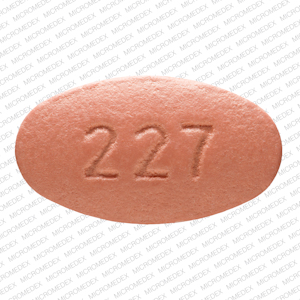
Raltegravir Potassium (Monograph)
Brand names: Isentress, Isentress HD
Drug class: HIV Integrase Inhibitors
Introduction
Antiretroviral; HIV integrase strand transfer inhibitor (INSTI).
Uses for Raltegravir Potassium
Treatment of HIV Infection
Treatment of HIV-1 infection in adults and pediatric patients weighing ≥2 kg (Isentress) or pediatric patients weighing ≥40 kg (Isentress HD). Raltegravir is commonly used as part of a fully suppressive antiretroviral regimen; consult guidelines for the most current information on recommended regimens. Selection of an initial antiretroviral regimen should be individualized based on factors such as virologic efficacy, toxicity, pill burden, dosing frequency, drug-drug interaction potential, resistance test results, comorbid conditions, access, and cost.
Postexposure Prophylaxis following Occupational Exposure to HIV (PEP)
Postexposure prophylaxis of HIV infection following occupational exposure (PEP)† [off-label] in health- care personnel and others exposed via percutaneous injury (e.g., needlestick, cut with sharp object) or mucous membrane or nonintact skin (e.g., chapped, abraded, dermatitis) contact with blood, tissue, or other body fluids that might contain HIV. Used in conjunction with 2 NRTIs. Raltegravir in combination with emtricitabine and tenofovir disoproxil fumarate (DF) is the preferred regimen in guidelines for PEP, and several raltegravir-containing combinations are listed as alternative regimens.
Postexposure Prophylaxis following Nonoccupational Exposure to HIV (nPEP)
Postexposure prophylaxis of HIV infection following nonoccupational exposure (nPEP)† [off-label] in individuals exposed to blood, genital secretions, or other potentially infectious body fluids that might contain HIV when the exposure represents a substantial risk for HIV transmission. Used in conjunction with other antiretrovirals. Raltegravir in combination with emtricitabine and tenofovir DF is a preferred regimen in guidelines for nPEP, and several raltegravir-containing combinations are listed as alternative regimens.
Raltegravir Potassium Dosage and Administration
General
Pretreatment Screening
-
Evaluate patients for history of phenylketonuria.
-
Evaluate patients for history of rhabdomyolysis, myopathy, or increased creatine kinase.
-
Evaluate use of concomitant medications including statins, fenofibrate, gemfibrozil, or zidovudine.
Patient Monitoring
-
Monitor for symptoms of infection.
-
Monitor for rash associated with severe symptoms such as fever, extreme fatigue, hypersensitivity, and hepatotoxicity.
Administration
Oral Administration
Administer orally once or twice daily without regard to food. Use in conjunction with other antiretrovirals.
Raltegravir (Isentress) 25- or 100-mg chewable tablets and 400-mg film-coated tablets: Administer twice daily.
Raltegravir (Isentress HD) 600-mg film-coated tablets: Administer once daily.
Raltegravir (Isentress) powder for oral suspension: Administer once or twice daily depending on age.
Chewable Tablets
May be chewed or swallowed whole. If needed, 100-mg chewable tablets can be divided into equal halves.
Used in pediatric patients ≥4 weeks of age weighing ≥ 3 to <25 kg. If needed, may be used as alternative in pediatric patients weighing ≥25 kg who cannot swallow film-coated tablets; however, the film-coated tablets are preferred in pediatric patients weighing ≥25 kg.
Film-coated Tablets
Must be swallowed whole.
400-mg film-coated tablets: Used in adults and pediatric patients weighing ≥25 kg.
600-mg film-coated tablets: Used in adults and pediatric patients weighing ≥40 kg.
Powder for Oral Suspension
Used in pediatric patients weighing 2 to <20 kg.
Immediately prior to use, mix contents of a single-use packet of powder for oral suspension in 10 mL of water to provide a suspension containing 10 mg/mL. Administer appropriate dosage of the suspension orally using dosing syringe provided by the manufacturer.
To prepare oral suspension, use dosing syringe provided by the manufacturer to measure and add 10 mL of water to the mixing cup provided by the manufacturer. Open a single-dose packet of powder for oral suspension and add entire contents to the water in the mixing cup, tightly close mixing cup, and gently swirl for 45 seconds. If powder not completely mixed, gently swirl mixing cup some more. Do not shake; suspension will appear cloudy.
Draw recommended dosage of oral suspension into the dosing syringe and administer orally.
Administer within 30 minutes of mixing; discard any remaining suspension. After each use, handwash dosing syringe and mixing cup with warm water and dish soap, rinse with water, and air dry.
Dosage
Available as raltegravir potassium; dosage expressed in terms of raltegravir.
Raltegravir chewable tablets and oral suspension are not bioequivalent to raltegravir film-coated tablets; do not substitute chewable tablets or oral suspension for the 400- or 600-mg film-coated tablets.
Pediatric Patients
Treatment of HIV-1 Infection
Full-term Neonates Weighing ≥2 kg.
OralUse powder for oral suspension in full-term neonates (birth through 4 weeks [28 days] of age) weighing ≥2 kg. Dosage is based on weight; use once-daily regimen in neonates up to 1 week of age and use twice-daily regimen in those 1–4 weeks of age. (See Table 1.)
If the mother received a dose of raltegravir (Isentressor Isentress HD) within 2–24 hours before delivery, give first raltegravir dose in the neonate 24–48 hours after birth.
Recommended dosage of raltegravir oral suspension in neonates from birth to 1 week of age is based on approximately 1.5 mg/kg per dose.
Recommended dosage of raltegravir oral suspension in neonates 1– 4 weeks of age is based on approximately 3 mg/kg per dose.
|
Weight (kg) |
Volume (Dose) of Oral Suspension Containing 10 mg/mL |
|---|---|
|
Birth to 1 Week of Age (Once-daily Regimen) |
|
|
2 to <3 |
0.4 mL (4 mg) once daily |
|
3 to <4 |
0.5 mL (5 mg) once daily |
|
4 to <5 |
0.7 (7 mg) once daily |
|
1–4 Weeks of Age (Twice- daily Regimen) |
|
|
2 to <3 |
0.8 mL (8 mg) twice daily |
|
3 to <4 |
1 mL (10 mg) twice daily |
|
4 to <5 |
1.5 mL (15 mg) twice daily |
≥4 weeks of Age Weighing 3 to <20 kg.
OralUse powder for oral suspension or chewable tablets in those weighing 3 to <20 kg; in those weighing <14 kg, the chewable tablets can be crushed; use chewable tablets in those weighing 20 to <25 kg. Dosage is based on weight and depends on whether powder for oral suspension or chewable tablets are used. Use twice-daily regimen in these pediatric patients. (See Table 2.)
Recommended weight-based dosage of raltegravir oral suspension or chewable tablets in pediatric patients 4 weeks of age or older weighing 3 to less than 25 kg is based on approximately 6 mg/kg/dose twice daily.
May be administered as a crushed tablet(s).
The 100-mg chewable tablets can be divided into equal halves.
|
Weight (kg) |
Volume (Dose) of Oral Suspension Containing 10 mg/mL |
Number of 25- or 100-mg Chewable Tablets |
|---|---|---|
|
3 to <4 |
2.5 mL (25 mg) twice daily |
1 x 25 mg twice daily |
|
4 to <6 |
3 mL (30 mg) twice daily |
1 x 25 mg twice daily |
|
6 to <8 |
4 mL (40 mg) twice daily |
2 x 25 mg twice daily |
|
8 to <10 |
6 mL (60 mg) twice daily |
2 x 25 mg twice daily |
|
10 to <14 |
8 mL (80 mg) twice daily |
3 x 25 mg twice daily |
|
14 to <20 |
10 mL (100 mg) twice daily |
1 x 100 mg twice daily |
|
20 to <25 |
Do not use |
1.5 x 100-mg twice daily |
≥25 kg Who are Unable to Swallow Film-coated Tablets.
OralFilm-coated tablets are preferred, but may use chewable tablets in those unable to swallow the film-coated tablets. When chewable tablets used, dosage is based on weight and twice-daily regimen is used. (See Table 3.)
Recommended weight-based dosage of raltegravir chewable tablets in pediatric patients weighing ≥25 kg is based on approximately 6 mg/kg per dose twice daily.
The 100-mg chewable tablets can be divided into equal halves.
|
Weight (kg) |
Dosage |
Number of 100-mg Chewable Tablets |
|---|---|---|
|
25 to <28 |
150 mg twice daily |
One and one-half 100-mg tablets twice daily |
|
28 to <40 |
200 mg twice daily |
Two 100-mg tablets twice daily |
|
≥40 |
300 mg twice daily |
Three 100-mg tablets twice daily |
25 to <40 kg Who are Able to Swallow Film-coated Tablets
Oral400 mg twice daily (one 400-mg film-coated tablet twice daily).
≥40 kg
Oral400 mg twice daily (one 400-mg film-coated tablet twice daily). Alternatively, 1.2 g once daily (two 600-mg film-coated tablets once daily).
-
Virologically suppressed on initial regimen of raltegravir 400 mg twice daily: Continue same twice-daily regimen or switch to 1.2 g once daily (two 600-mg film-coated tablets once daily).
Adults
Treatment of HIV-1 Infection
Antiretroviral-naive
Oral400 mg twice daily (one 400-mg film-coated tablet twice daily). Alternatively, 1.2 g once daily (two 600-mg film-coated tablets once daily).
-
Adults receiving rifampin: 800 mg twice daily (two 400-mg film-coated tablets twice daily).
Antiretroviral-experienced
Oral400 mg twice daily (one 400-mg film-coated tablet twice daily).
-
Virologically suppressed on initial regimen of raltegravir 400 mg twice daily: Continue same twice-daily regimen or switch to 1.2 g once daily (two 600-mg film-coated tablets once daily).
-
Adults receiving rifampin: 800 mg twice daily (two 400-mg film-coated tablets twice daily).
Postexposure Prophylaxis following Occupational Exposure to HIV (PEP) † [off-label]
Oral400 mg twice daily. Used in conjunction with 2 NRTIs.
-
Initiate PEP as soon as possible following exposure to HIV (preferably within hours); continue for 4 weeks, if tolerated.
Postexposure Prophylaxis following Nonoccupational Exposure to HIV (nPEP) † [off-label]
Oral400 mg twice daily. Use in conjunction with 2 NRTIs
-
Initiate nPEP as soon as possible (within 72 hours) following nonoccupational exposure that represents a substantial risk for HIV transmission and continue for 28 days.
-
nPEP not recommended if exposed individual seeks care ≥72 hours after exposure.
Special Populations
Hepatic Impairment
Raltegravir (twice daily): Dosage adjustments not needed in patients with mild to moderate hepatic impairment; not studied in those with severe hepatic impairment.
Raltegravir (once daily): Not recommended.
Renal Impairment
Raltegravir (once or twice daily): Dosage adjustments not needed in patients with renal impairment. Avoid administering raltegravir before dialysis session.
Geriatric Patients
Select dosage with caution because of age-related decreases in hepatic, renal, and/or cardiac function and concomitant disease and drug therapy.
Cautions for Raltegravir Potassium
Contraindications
-
None.
Warnings/Precautions
Severe Skin and Hypersensitivity Reactions
Severe, potentially life-threatening skin reactions, including some fatalities, reported. Stevens-Johnson syndrome, toxic epidermal necrolysis, and hypersensitivity reactions characterized by rash, constitutional findings, and organ dysfunction (including hepatic failure) have occurred.
Immediately discontinue raltegravir and any other suspect agents if signs or symptoms of severe skin or hypersensitivity reactions occur, including (but not limited to) severe rash or rash accompanied by fever, general malaise, fatigue, muscle or joint aches, blisters, oral lesions, conjunctivitis, facial edema, hepatitis, eosinophilia, or angioedema. Monitor clinical status, including liver aminotransferases, and initiate appropriate therapy.
Life-threatening reactions could occur if discontinuance of raltegravir and any other suspect agents is delayed after onset of severe rash.
Immune Reconstitution Syndrome
During initial treatment, HIV-infected patients who respond to antiretroviral therapy may develop an inflammatory response to indolent or residual opportunistic infections (e.g., Mycobacterium avium, M. tuberculosis, cytomegalovirus [CMV], Pneumocystis jirovecii); this may necessitate further evaluation and treatment.
Autoimmune disorders (e.g., Graves' disease, polymyositis, Guillain-Barré syndrome) also reported to occur in the setting of immune reconstitution; time to onset is more variable and can occur many months after initiation of antiretroviral therapy.
Phenylketonurics
Each 25- or 100-mg raltegravir chewable tablet contains approximately 0.05 or 0.1 mg of phenylalanine, respectively. Phenylalanine can be harmful to patients with phenylketonuria.
Specific Populations
Pregnancy
Antiretroviral Pregnancy Registry at 800-258-4263.
Available data from the Antiretroviral Pregnancy Registry show no difference in the rate of overall birth defects in infants of pregnant females receiving raltegravir compared with the background rate of major birth defects of 2.7% in the US. In animal studies (rats and rabbits), no evidence of adverse developmental outcomes when raltegravir given orally during organogenesis at doses producing exposures approximately 4 times those reported with maximum recommended human dose.
Data limited on use of raltegravir once daily (Isentress HD) in pregnancy.
Raltegravir crossed the placenta in animal studies.
Lactation
Not known whether distributed into human milk; distributed into milk in rats.
Not known whether raltegravir affects human milk production or affects the breast-fed infant.
Instruct HIV-infected females not to breast-feed because of risk of HIV transmission, development of viral resistance in infants who are HIV-positive, and risk of adverse effects in the infant.
Pediatric Use
Raltegravir (Isentress;; 400-mg film-coated tablets): Labeled by FDA for use in pediatric patients weighing ≥2 kg; not recommended in preterm neonates or pediatric patients weighing <2 kg.
Raltegravir (Isentress HD; 600-mg film-coated tablets): Labeled by FDA for use in pediatric patients weighing ≥40 kg. Pharmacokinetic modeling and simulation support use of the once-daily regimen (two 600-mg film-coated tablets once daily) in those weighing ≥40 kg.
Safety and pharmacokinetics of the oral suspension in full-term HIV-1 exposed neonates at high risk of acquiring HIV-1 infection was comparable to that observed in adults receiving the drug.
Safety, efficacy, and pharmacokinetics of twice-daily raltegravir in HIV-1 infected pediatric patients 4 weeks to 18 years of age was comparable to that observed in adults receiving the drug.
Geriatric Use
Insufficient experience in those ≥65 years of age to determine whether they respond differently than younger adults. Reported clinical experience has not identified differences in response between elderly and younger subjects. Select dosage with caution because of age-related decreases in hepatic, renal, and/or cardiac function and concomitant disease and drug therapy.
Hepatic Impairment
Dosage adjustment in patients with mild to moderate hepatic impairment not required. Not studied in those with severe hepatic impairment.
Pharmacokinetics of raltegravir (once daily) not studied in hepatic impairment; use not recommended in such patients.
Risk for further elevations in hepatic enzyme concentrations in patients with chronic hepatitis B virus (HBV) or hepatitis C virus (HCV) infection.
Renal Impairment
Pharmacokinetics of a single 400-mg dose not altered in adults with severe renal impairment (Clcr <30 mL/minute per 1.73 m2).
Pharmacokinetics of once-daily regimen (two 600-mg film-coated tablets once daily) not evaluated in patients with renal impairment.
Dosage adjustment of raltegravir (once or twice daily) not needed in patients with any degree of renal impairment.
Extent of removal by dialysis not known; avoid administering before dialysis session.
Common Adverse Effects
Adverse effects (≥2%) include insomnia, headache, dizziness, nausea, fatigue. Creatine kinase elevations, myopathy, and rhabdomyolysis reported.
Drug Interactions
Raltegravir is primarily metabolized by UGT1A1. Does not inhibit UGT1A1 or 2B7 in vitro.
Not a substrate for CYP isoenzymes. Does not inhibit CYP isoenzymes 1A2, 2B6, 2C8, 2C9, 2C19, 2D6, or 3A and does not induce CYP1A2, 2B6, or 3A4.
Does not inhibit P-glycoprotein (P-gp) transport.
Drugs Affecting or Metabolized by UGT
UGT1A1 inducers: Possible decreased raltegravir plasma concentrations.
UGT1A1 inhibitors: Possible increased raltegravir plasma concentrations.
Drugs Affecting or Metabolized by Hepatic Microsomal Enzymes
Pharmacokinetic interactions unlikely with drugs that are substrates for CYP isoenzymes 1A2, 2B6, 2C8, 2C9, 2C19, 2D6, or 3A.
|
Drug |
Interaction |
Comments |
|---|---|---|
|
Antacids, aluminum-,calcium-, or magnesium-containing |
Aluminum- and/or magnesium- containing antacids: Decreased raltegravir concentrations and AUC Calcium-containing antacids: Decreased raltegravir concentrations and AUC in those receiving raltegravir (twice daily) |
Aluminum- and/or magnesium- containing antacids: Do not use in patients receiving raltegravir Calcium-containing antacids: Dosage adjustments not needed if used concomitantly with raltegravir (twice daily); concomitant use with raltegravir (once daily) not recommended |
|
Antilipemic Agents (statins, fibrates) |
Myopathy, increased creatine kinase, and rhabdomyolysis reported with raltegravir |
Use caution with concomitant use |
|
Anticonvulsants |
Carbamazepine, phenobarbital, phenytoin: Effect on raltegravir pharmacokinetics unknown |
Carbamazepine, phenobarbital, phenytoin: Concomitant use not recommended |
|
Antimycobacterials (rifampin) |
Rifampin: Decreased raltegravir concentrations and AUC |
Rifampin: In adults receiving raltegravir (twice daily), increase dosage of raltegravir to 800 mg twice daily; concomitant use with raltegravir (once daily) not recommended Data insufficient to make dosage recommendations for concomitant use in patients<18 years |
|
Atazanavir |
Ritonavir-boosted or unboosted atazanavir: Increased raltegravir concentrations and AUC; not considered clinically important No in vitro evidence of antagonistic antiretroviral effects |
Ritonavir-boosted or unboosted atazanavir: Dosage adjustments not needed with concomitant use |
|
Darunavir |
Ritonavir-boosted darunavir: No clinically important effects on pharmacokinetics of ritonavir- boosted darunavir |
Ritonavir-boosted darunavir: Dosage adjustments not needed if used with raltegravir |
|
Efavirenz |
Decreased raltegravir concentrations and AUC; not considered clinically important No in vitro evidence of antagonistic antiretroviral effects |
Dosage adjustments not needed with concomitant use |
|
Enfuvirtide |
No in vitro evidence of antagonistic antiretroviral effects |
|
|
Estrogens and progestins |
Oral contraceptives containing ethinyl estradiol and norgestimate: Raltegravir has no effect on pharmacokinetics of either agent |
Oral contraceptives containing ethinyl estradiol and norgestimate: Dosage adjustments not needed |
|
Etravirine |
Decreased raltegravir concentrations and AUC; not considered clinically important No clinically important effect on etravirine pharmacokinetics |
Dosage adjustments not needed if used with raltegravir (twice daily); concomitant use with raltegravir (once daily) not recommended |
|
Lamivudine |
No clinically important effects on lamivudine pharmacokinetics No in vitro evidence of antagonistic antiretroviral effects |
Dosage adjustments not needed if lamivudine used with raltegravir |
|
Methadone |
No clinically important effects on methadone pharmacokinetics |
Dosage adjustments not needed with concomitant use |
|
Midazolam |
No clinically important effects on midazolam pharmacokinetics |
|
|
Proton pump inhibitors |
Omeprazole: Increased raltegravir concentrations and AUC; not considered clinically important |
Omeprazole: Dosage adjustments not needed with concomitant use |
|
Tenofovir |
Tenofovir alafenamide fumarate: Pharmacokinetic interactions not expected Tenofovir disoproxil fumarate (DF): Increased raltegravir concentrations and AUC (not clinically important); no clinically important effects on tenofovir DF pharmacokinetics No in vitro evidence of antagonistic antiretroviral effects |
Tenofovir DF: Dosage adjustments not needed with concomitant use |
|
Tipranavir |
Ritonavir-boosted tipranavir: Decreased raltegravir concentrations and AUC; not considered clinically important |
Ritonavir-boosted tipranavir: Dosage adjustments not needed if used with raltegravir (twice daily); concomitant use with raltegravir (once daily) not recommended |
Raltegravir Potassium Pharmacokinetics
Absorption
Bioavailability
Absolute bioavailability of raltegravir not established.
Oral bioavailability is higher with raltegravir chewable tablets and oral suspension than with raltegravir 400-mg film-coated tablets; the 600-mg film-coated tablets have higher relative bioavailability compared to the 400-mg film-coated tablets.
Because the formulations have different pharmacokinetic profiles, the chewable tablets and oral suspension are not bioequivalent to the film-coated tablets.
Raltegravir (Isentress) 400-mg film-coated tablets in fasting adults: Peak plasma concentrations attained in approximately 3 hours.
Raltegravir (Isentress HD) 600-mg film-coated tablets: Peak plasma concentrations attained in approximately 1.5–2 hours after a dose.
Film-coated tablets: Steady state attained in 2 days with the twice-daily regimen (400 mg twice daily) or once-daily regimen (1.2 g once daily).
Food
Studies using raltegravir chewable tablets, film-coated tablets, and powder for oral suspension indicate food affects peak plasma concentrations and AUC. Not considered clinically important.
Distribution
Extent
Crosses placenta in animal studies.
Not known whether distributed into human milk; distributed into milk in rats.
Plasma Protein Binding
Approximately 83%.
Elimination
Metabolism
Raltegravir metabolized primarily by UGT1A1-mediated glucuronidation in the liver.
Elimination Route
Raltegravir excreted in feces (51%) and urine (32%).
Extent of removal by dialysis not known.
Half-Life
Approximately 9 hours.
Special Populations
Moderate hepatic impairment: Study using single 400-mg dose indicates no clinically important differences in raltegravir pharmacokinetics compared with healthy individuals. Pharmacokinetics after 1.2 g once daily (two 600-mg film-coated tablets once daily) in patients with hepatic impairment not studied.
Severe hepatic impairment: Raltegravir pharmacokinetics not studied.
Severe renal impairment (Clcr <30 mL/minute per 1.73 m2): Study using single 400-mg dose indicates no clinically important differences in raltegravir pharmacokinetics compared with healthy individuals. Pharmacokinetics after 1.2 g once daily (two 600-mg film-coated tablets once daily) in patients with renal impairment not studied.
Infants, children, and adolescents 4 weeks to 18 years of age receiving recommended pediatric dosage: Raltegravir pharmacokinetics similar to those reported in adults receiving 400 mg twice daily.
Common UGT1A1 genotypes associated with reduced UGT1A1 activity do not appear to have clinically important effect on raltegravir pharmacokinetics compared with wild-type UGT1A1 genotype.
Stability
Storage
Oral
Chewable Tablets
Raltegravir (Isentress): 20–25°C (excursions permitted between 15–30°C). Keep bottle tightly closed; do not remove desiccant.
Film-coated Tablets
Raltegravir (Isentress, Isentress HD): 20–25°C (excursions permitted between 15–30°C). Keep bottle tightly closed; do not remove desiccant.
Oral Suspension
Raltegravir (Isentress): 20–25°C (excursions permitted between 15–30°C).
Do not open single-use foil packet of powder for oral suspension until ready to use.
After suspending packet contents in water, discard suspension if not used within 30 minutes.
Actions
-
Raltegravir is an HIV INSTI antiretroviral. Inhibits activity of HIV integrase, an enzyme that integrates HIV DNA into the host cell genome. Inhibition of integrase prevents propagation of viral infection.
-
Active against HIV-1; also has some in vitro activity against HIV type 2 (HIV-2).
-
Resistance to raltegravir has been produced in vitro and has emerged during raltegravir therapy.
-
Resistance to raltegravir due to amino acid substitutions on HIV-1 integrase may confer resistance to elvitegravir and/or dolutegravir.
Advice to Patients
-
Inform patients of the critical nature of compliance with HIV therapy and importance of remaining under the care of a clinician.
-
Advise patients of the importance of using raltegravir in conjunction with other antiretrovirals—not for monotherapy.
-
If using raltegravir film-coated tablets, advise patients of the importance of swallowing whole; raltegravir chewable tablets can be chewed or swallowed whole.
-
Advise patients to not switch between the film-coated tablet, the chewable tablet, or the oral suspension without first consulting a healthcare professional.
-
Inform patients with phenylketonuria that the chewable tablets contain phenylalanine.
-
If using raltegravir for oral suspension, advise parents and/or caregivers of the importance of reading the manufacturer's instructions for use before preparing and administering the drug. Instruct parents and/or caregivers that the oral suspension should be administered within 30 minutes of mixing.
-
If a dose of raltegravir is missed, take the dose as soon as it is remembered and the next dose at the regularly scheduled time. If a dose is skipped, do not take a double dose to make up for the missed dose.
-
Advise patients that a severe and potentially life-threatening rash has been reported with use. Importance of immediately discontinuing raltegravir and other suspect agents and seeking medical attention if rash occurs and is associated with fever, generally ill feeling, extreme tiredness, muscle or joint aches, breathing difficulty, blisters, oral lesions, eye inflammation, swelling of the face, eyes, lips, or mouth, and/or signs and symptoms of liver problems (e.g., yellowing of skin or whites of the eyes, dark or tea-colored urine, pale stools/bowel movements, nausea, vomiting, loss of appetite, or pain, aching, or sensitivity on the right side below ribs).
-
Advise patients to inform clinician if patient has a history of rhabdomyolysis, myopathy, or increased serum creatine kinase concentrations or is receiving drugs known to cause these conditions (e.g., hydroxymethylglutaryl-CoA [HMG-CoA] reductase inhibitors [statins], fenofibrate, gemfibrozil). Instruct patients to immediately inform their clinician if unexplained muscle pain, tenderness, or weakness occurs while receiving raltegravir.
-
Advise patients that signs and symptoms of inflammation from previous infections may occur soon after initiation of antiretroviral therapy in some individuals. Advise patients of the importance of immediately informing clinicians if any signs or symptoms of infection occur.
-
Advise patients that raltegravir may interact with some drugs and to inform clinicians of existing or contemplated concomitant therapy, including prescription and OTC drugs and herbal products, as well as any concomitant illnesses.
-
Advise females of child bearing age to inform clinicians if they are or plan to become pregnant. Inform females of child bearing age that there is a pregnancy registry that monitors pregnancy outcomes in females exposed to raltegravir during pregnancy.
-
Advise HIV-infected females not to breast-feed.
-
Advise patients of other important precautionary information.
Additional Information
The American Society of Health-System Pharmacists, Inc. represents that the information provided in the accompanying monograph was formulated with a reasonable standard of care, and in conformity with professional standards in the field. Readers are advised that decisions regarding use of drugs are complex medical decisions requiring the independent, informed decision of an appropriate health care professional, and that the information contained in the monograph is provided for informational purposes only. The manufacturer’s labeling should be consulted for more detailed information. The American Society of Health-System Pharmacists, Inc. does not endorse or recommend the use of any drug. The information contained in the monograph is not a substitute for medical care.
Preparations
Excipients in commercially available drug preparations may have clinically important effects in some individuals; consult specific product labeling for details.
Please refer to the ASHP Drug Shortages Resource Center for information on shortages of one or more of these preparations.
|
Routes |
Dosage Forms |
Strengths |
Brand Names |
Manufacturer |
|---|---|---|---|---|
|
Oral |
For suspension |
100 mg |
Isentress (single-use packet) |
|
|
Tablets, chewable |
25 mg |
Isentress |
||
|
100 mg |
Isentress |
|||
|
Tablets, film-coated |
400 mg |
Isentress |
||
|
600 mg |
Isentress HD () |
Merck |
AHFS DI Essentials™. © Copyright 2024, Selected Revisions February 10, 2024. American Society of Health-System Pharmacists, Inc., 4500 East-West Highway, Suite 900, Bethesda, Maryland 20814.
† Off-label: Use is not currently included in the labeling approved by the US Food and Drug Administration.
Reload page with references included
More about raltegravir
- Check interactions
- Compare alternatives
- Reviews (18)
- Side effects
- Dosage information
- During pregnancy
- Drug class: integrase strand transfer inhibitor
- Breastfeeding
- En español