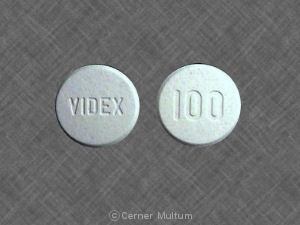
Videx and Alcohol/Food Interactions
There are 3 alcohol/food/lifestyle interactions with Videx (didanosine).
Didanosine Food
Moderate Food Interaction
Food decreases the levels of didanosine in your body. Take didanosine on an empty stomach at least 30 minutes before or 2 hours after a meal. This will make it easier for your body to absorb the medication. Do not crush, chew, break, or open a delayed-release capsule (Videx EC). Swallow the pill whole. It is specially made to release medicine slowly in the body. Breaking or opening the pill would cause too much of the drug to be released at one time.
Didanosine High Cholesterol (Hyperlipoproteinemia, Hypertriglyceridemia, Sitosterolemia)
Major Potential Hazard, Moderate plausibility
NRTIs - pancreatitis
The nucleoside reverse transcriptase inhibitors, didanosine, stavudine, and lamivudine, may cause pancreatitis. The incidence is generally low but is up to 7% with didanosine, and up to 18% in pediatric patients given lamivudine. Patients with a history of or known risk factors for pancreatitis (such as alcohol abuse or hypertriglyceridemia) should be monitored closely during therapy with these agents. Therapy should be discontinued at the first signs/symptoms suggestive of pancreatitis (e.g., nausea, vomiting, abdominal pain, hyperamylasemia with dysglycemia, rising triglycerides, decreasing serum calcium), and preferably permanently discontinued if clinical pancreatitis develops.
References
- (2019) "Product Information. Epivir (lamiVUDine)." ViiV Healthcare, SUPPL-39
- (2018) "Product Information. Videx (didanosine)." Bristol-Myers Squibb, SUPPL-54
- (2018) "Product Information. Zerit (stavudine)." Bristol-Myers Squibb, SUPPL-41
Didanosine High Blood Pressure (Hypertension)
Moderate Potential Hazard, High plausibility
ddI - sodium
Didanosine (ddI) formulations have a high sodium content. There are 265 mg of sodium per tablet and 1380 mg per packet of powder for oral solution, which may be of concern in patients with conditions that may be adversely affected by excessive amounts of sodium, such as congestive heart failure, hypertension, and fluid retention. Each tablet also contains 8.6 mEq of magnesium. Patients with significant renal impairment may not tolerate these loads.
References
- Willocks L, Brettle R, Keen J (1992) "Formulation of didanosine (ddI) and salt overload." Lancet, 339, p. 190
- Pike IM, Nicaise C (1993) "The didanosine Expanded Access Program: safety analysis." Clin Infect Dis, 16, S63-8
- Schindzielorz A, Pike I, Daniels M, Pacelli L, Smaldone L (1994) "Rates and risk factors for adverse events associated with didanosine in the expanded access program." Clin Infect Dis, 19, p. 1076-83
Videx drug interactions
There are 233 drug interactions with Videx (didanosine).
Videx disease interactions
There are 8 disease interactions with Videx (didanosine) which include:
- renal dysfunction
- bone marrow suppression
- hepatotoxicity
- pancreatitis
- peripheral neuropathy
- hyperuricemia
- PKU
- sodium
Report options

More about Videx (didanosine)
- Videx consumer information
- Check interactions
- Compare alternatives
- Drug images
- Side effects
- Dosage information
- During pregnancy
- Drug class: nucleoside reverse transcriptase inhibitors (NRTIs)
- Breastfeeding
Related treatment guides
Drug Interaction Classification
| Highly clinically significant. Avoid combinations; the risk of the interaction outweighs the benefit. | |
| Moderately clinically significant. Usually avoid combinations; use it only under special circumstances. | |
| Minimally clinically significant. Minimize risk; assess risk and consider an alternative drug, take steps to circumvent the interaction risk and/or institute a monitoring plan. | |
| No interaction information available. |
Further information
Always consult your healthcare provider to ensure the information displayed on this page applies to your personal circumstances.