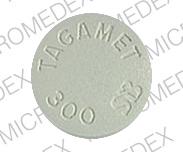
Home Drugs A to Z Ta Tagamet Alcohol & Food Interactions

Tagamet (cimetidine) and Alcohol / Food Interactions

There are 3 alcohol/food/lifestyle interactions with Tagamet (cimetidine) which include:

Tagamet and Caffeine

Minor Drug Interaction

Caffeine effects may be increased in patients also taking cimetidine. The mechanism may be due to decreased caffeine metabolism induced by cimetidine. Although adequate clinical data are lacking, a reduction in dose or elimination of caffeine may be needed if excess CNS stimulation is observed.

Tagamet and Alcohol (Ethanol)

Minor Drug Interaction

Concurrent use of cimetidine and ethanol may result in increased ethanol concentrations. The mechanism appears to be due to inhibition of gastric alcohol dehydrogenase by cimetidine, leading to increased bioavailability of the alcohol and inhibition of hepatic metabolism of alcohol. The clinical significance of this interaction is limited. More importantly, patients requiring cimetidine for gastrointestinal disease should be counseled to avoid alcohol to prevent worsening of their disease. The other H-2 receptor antagonists appear to have minimal effects on the concentrations of alcohol.

Tagamet and Nicotine

Minor Drug Interaction

H2 antagonists may reduce the clearance of nicotine. Cimetidine, 600 mg given twice a day for two days, reduced clearance of an intravenous nicotine dose by 30%. Ranitidine, 300 mg given twice a day for two days, reduced clearance by 10%. The clinical significance of this interaction is not known. Patients should be monitored for increased nicotine effects when using the patches or gum for smoking cessation and dosage adjustments should be made as appropriate.

You should also know about...

Tagamet (cimetidine) drug Interactions

There are 644 drug interactions with Tagamet (cimetidine)

Tagamet (cimetidine) disease Interactions

There are 3 disease interactions with Tagamet (cimetidine) which include:

See also...

Drug Interaction Classification

The classifications below are a general guideline only. It is difficult to determine the relevance of a particular drug interaction to any individual given the large number of variables.

Major Highly clinically significant. Avoid combinations; the risk of the interaction outweighs the benefit.
Moderate Moderately clinically significant. Usually avoid combinations; use it only under special circumstances.
Minor Minimally clinically significant. Minimize risk; assess risk and consider an alternative drug, take steps to circumvent the interaction risk and/or institute a monitoring plan.

Do not stop taking any medications without consulting your healthcare provider.


Disclaimer: Every effort has been made to ensure that the information provided by Multum is accurate, up-to-date, and complete, but no guarantee is made to that effect. In addition, the drug information contained herein may be time sensitive and should not be utilized as a reference resource beyond the date hereof. Multum's drug information does not endorse drugs, diagnose patients, or recommend therapy. Multum's drug information is a reference resource designed as supplement to, and not a substitute for, the expertise, skill , knowledge, and judgement of healthcare practitioners in patient care. The absence of a warning for a given drug or drug combination in no way should be construed to indicate that the drug of drug combination is safe, effective, or appropriate for any given patient. Multum Information Services, Inc. does not assume any responsibility for any aspect of healthcare administered with the aid of information Multum provides. Copyright 2000-2012 Multum Information Services, Inc. The information in contained herein is not intended to cover all possible uses, directions, precautions, warnings, drug interactions, allergic reactions, or adverse effects. If you have questions about the drugs you are taking, check with your doctor, nurse, or pharmacist.

(web1)