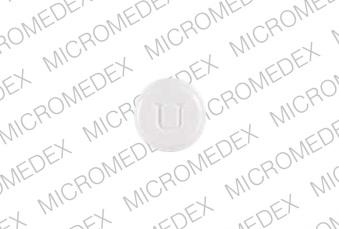
Mirapex Dosage
Generic name: pramipexole dihydrochloride 0.125mg
Dosage form: tablet
Drug class: Dopaminergic antiparkinsonism agents
Medically reviewed by Drugs.com. Last updated on Mar 24, 2025.
General Dosing Considerations
MIRAPEX tablets are taken orally, with or without food.
If a significant interruption in therapy with MIRAPEX tablets has occurred, re-titration of therapy may be warranted.
Dosing for Parkinson's Disease
In all clinical studies, dosage was initiated at a subtherapeutic level to avoid intolerable adverse effects and orthostatic hypotension. MIRAPEX tablets should be titrated gradually in all patients. The dose should be increased to achieve a maximum therapeutic effect, balanced against the principal side effects of dyskinesia, hallucinations, somnolence, and dry mouth.
Dosing in Patients with Normal Renal Function
Doses should be increased gradually from a starting dose of 0.375 mg/day given in three divided doses and should not be increased more frequently than every 5 to 7 days. A suggested ascending dosage schedule that was used in clinical studies is shown in Table 1:
| Week | Dosage (mg) | Total Daily Dose (mg) |
| 1 | 0.125 three times a day | 0.375 |
| 2 | 0.25 three times a day | 0.75 |
| 3 | 0.5 three times a day | 1.50 |
| 4 | 0.75 three times a day | 2.25 |
| 5 | 1 three times a day | 3.0 |
| 6 | 1.25 three times a day | 3.75 |
| 7 | 1.5 three times a day | 4.50 |
Maintenance Treatment
MIRAPEX tablets were effective and well tolerated over a dosage range of 1.5 to 4.5 mg/day administered in equally divided doses three times per day with or without concomitant levodopa (approximately 800 mg/day).
In a fixed-dose study in early Parkinson's disease patients, doses of 3 mg, 4.5 mg, and 6 mg per day of MIRAPEX tablets were not shown to provide any significant benefit beyond that achieved at a daily dose of 1.5 mg/day. However, in the same fixed-dose study, the following adverse events were dose related: postural hypotension, nausea, constipation, somnolence, and amnesia. The frequency of these events was generally 2-fold greater than placebo for pramipexole doses greater than 3 mg/day. The incidence of somnolence reported with pramipexole at a dose of 1.5 mg/day was comparable to placebo.
When MIRAPEX tablets are used in combination with levodopa, a reduction of the levodopa dosage should be considered. In a controlled study in advanced Parkinson's disease, the dosage of levodopa was reduced by an average of 27% from baseline.
Dosing in Patients with Renal Impairment
The recommended dosing of MIRAPEX tablets in Parkinson’s disease patients with renal impairment is provided in Table 2.
| Renal Status | Starting Dose (mg) | Maximum Dose (mg) |
| Normal to mild impairment (creatinine Cl >50 mL/min) |
0.125 three times a day | 1.5 three times a day |
| Moderate impairment (creatinine Cl =30 to 50 mL/min) |
0.125 twice a day | 0.75 three times a day |
| Severe impairment (creatinine Cl =15 to <30 mL/min) |
0.125 once a day | 1.5 once a day |
| Very severe impairment (creatinine Cl <15 mL/min and hemodialysis patients) |
The use of MIRAPEX tablets has not been adequately studied in this group of patients. | |
Discontinuation of Treatment
MIRAPEX tablets may be tapered off at a rate of 0.75 mg per day until the daily dose has been reduced to 0.75 mg. Thereafter, the dose may be reduced by 0.375 mg per day.
Dosing for Restless Legs Syndrome
The recommended starting dose of MIRAPEX tablets is 0.125 mg taken once daily 2-3 hours before bedtime. For patients requiring additional symptomatic relief, the dose may be increased every 4-7 days (Table 3). Although the dose of MIRAPEX tablets was increased to 0.75 mg in some patients during long-term open-label treatment, there is no evidence that the 0.75 mg dose provides additional benefit beyond the 0.5 mg dose.
| *if needed | ||
| Titration Step | Duration | Dose (mg) to be taken once daily, 2-3 hours before bedtime |
| 1 | 4-7 days | 0.125 |
| 2* | 4-7 days | 0.25 |
| 3* | 4-7 days | 0.5 |
Dosing in Patients with Renal Impairment
The duration between titration steps should be increased to 14 days in RLS patients with moderate and severe renal impairment (creatinine clearance 20-60 mL/min).
Discontinuation of Treatment
In clinical trials of patients being treated for RLS with doses up to 0.75 mg once daily, MIRAPEX tablets were discontinued without a taper. In a 26 week placebo-controlled clinical trial, patients reported a worsening of RLS symptom severity as compared to their untreated baseline when MIRAPEX treatment was suddenly withdrawn.
More about Mirapex (pramipexole)
- Check interactions
- Compare alternatives
- Reviews (122)
- Drug images
- Side effects
- Patient tips
- During pregnancy
- Drug class: dopaminergic antiparkinsonism agents
- Breastfeeding
Patient resources
Professional resources
Other formulations
Related treatment guides
See also:
Further information
Always consult your healthcare provider to ensure the information displayed on this page applies to your personal circumstances.