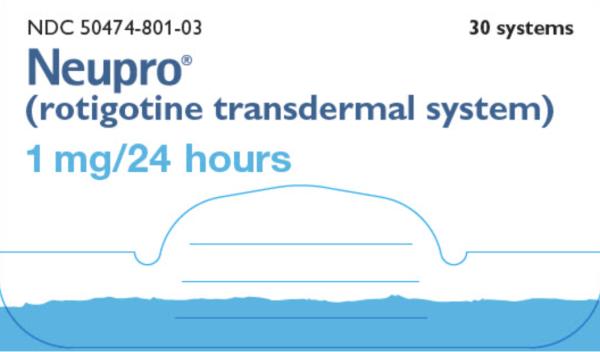
Rotigotine (transdermal)
Generic name: rotigotine (transdermal) [ roe-TIG-oh-teen ]
Brand name: Neupro
Dosage form: transdermal film, extended release (1 mg/24 hr; 2 mg/24 hr; 3 mg/24 hr; 4 mg/24 hr; 6 mg/24 hr; 8 mg/24 hr)
Drug class: Dopaminergic antiparkinsonism agents
What is rotigotine?
Rotigotine transdermal (skin patch) is used to treat symptoms of Parkinson's disease, such as stiffness, tremors, muscle spasms, and poor muscle control.
Rotigotine is also used to treat restless legs syndrome (RLS).
Rotigotine may also be used for purposes not listed in this medication guide.
Rotigotine side effects
Get emergency medical help if you have signs of an allergic reaction: hives; difficult breathing; swelling of your face, lips, tongue, or throat.
Rotigotine may cause serious side effects. Call your doctor at once if you have:
-
severe skin irritation that does not clear up within several hours after removing a skin patch;
-
extreme drowsiness, falling asleep suddenly, even after feeling alert;
-
a light-headed feeling, like you might pass out;
-
agitation, confusion, hallucinations, paranoia (most commonly in elderly people);
-
increased sexual urges, unusual urges to gamble, or other intense urges;
-
unusual thoughts or behavior; or
-
uncontrolled muscle movements.
Some people using rotigotine have fallen asleep during normal daytime activities such as working, talking, eating, or driving. Tell your doctor if you have any problems with daytime sleepiness or drowsiness.
Common side effects of rotigotine may include:
-
nausea, vomiting, loss of appetite;
-
headache, dizziness, drowsiness;
-
vision problems;
-
swelling in your hands or feet, rapid weight gain;
-
increased sweating;
-
sleep problems (insomnia); or
-
redness, itching, or swelling where a patch was worn.
This is not a complete list of side effects and others may occur. Call your doctor for medical advice about side effects. You may report side effects to FDA at 1-800-FDA-1088.
Related/similar drugs
ropinirole, benztropine, pramipexole, carbidopa / levodopa, levodopa, Mirapex, Requip
Warnings
Follow all directions on your medicine label and package. Tell each of your healthcare providers about all your medical conditions, allergies, and all medicines you use.
Before taking this medicine
You should not use rotigotine if you are allergic to it.
Tell your doctor if you have ever had:
-
asthma or a sulfite allergy;
-
high or low blood pressure;
-
heart problems;
-
kidney disease;
-
narcolepsy or other sleep disorder; or
-
if you feel light-headed or nauseated when you stand up.
People with Parkinson's disease may have a higher risk of skin cancer (melanoma). Talk to your doctor about this risk and what skin symptoms to watch for.
It is not known whether rotigotine will harm an unborn baby. Tell your doctor if you are pregnant or plan to become pregnant.
You should not breast-feed while using rotigotine.
How should I use rotigotine?
Follow all directions on your prescription label and read all medication guides. Your doctor may occasionally change your dose. Use the medicine exactly as directed.
Read and carefully follow any Instructions for Use provided with your medicine. Ask your doctor or pharmacist if you do not understand these instructions.
Apply the patch to clean, dry, and hairless skin. Avoid placing the patch where it will be rubbed by a waistband or tight clothing. Press the patch firmly into place for about 30 seconds. You may leave the patch on while bathing, showering, or swimming.
Remove the skin patch after 24 hours and replace it with a new one. Choose a different place on your body to wear the patch each time you put on a new one. Do not use the same skin area twice within 14 days.
If a patch falls off, put a new patch on a different place on your body and wear it the rest of the day. Then replace the patch the next day at your regular time.
Wash your hands with soap and water after applying or removing the patch.
Keep used and unused rotigotine skin patches out of the reach of children or pets.
If you are using rotigotine for RLS, call your doctor if your symptoms get worse, or if they start earlier in the day than usual.
This medicine can affect the results of certain medical tests. Tell any doctor who treats you that you are using rotigotine.
The rotigotine patch may burn your skin if you wear the patch during an MRI (magnetic resonance imaging). Remove the patch before undergoing such a test.
Do not stop using rotigotine suddenly, or you could have unpleasant withdrawal symptoms. Ask your doctor how to safely stop using rotigotine.
Keep the skin patch in its sealed pouch until you are ready to use it. Store the pouches at room temperature away from heat and moisture.
After removing a patch, fold it in half so it sticks together and throw it away in a place where children or pets cannot get to it.
Rotigotine dosing information
Usual Adult Dose for Parkinson's Disease:
Initial doses:
Early-stage Parkinson's disease: Apply 2 mg topically once a day
Advanced-stage Parkinson's disease: Apply 4 mg topically once a day
Maintenance dose: Increase weekly in 2 mg/24 hours increments if additional therapeutic effect is needed
Lowest effective dose: 4 mg/24 hours
Maximum dose for Early-stage Parkinson's disease: 6 mg/24 hours
Maximum dose for Advanced-stage Parkinson's disease: 8 mg/24 hours
Comments:
-Upon discontinuation, reduce the daily dose by a maximum of 2 mg every 24 hours, if possible; reduce the dose every other day until withdrawal is complete.
Use: Treatment of Parkinson's disease
Usual Adult Dose for Restless Legs Syndrome:
Initial dose: Apply 1 mg topically once a day
Maintenance dose: Increase weekly in 1 mg/24 hours increments if additional therapeutic effect is needed
Lowest effective dose: 1 mg/24 hours
Maximum dose: 3 mg/24 hours
Comments:
-Upon discontinuation, reduce the daily dose by a maximum of 1 mg every 24 hours, if possible; reduce the dose every other day until withdrawal is complete
Use: Treatment of moderate-to-severe primary Restless Legs Syndrome
What happens if I miss a dose?
If you forget to change a patch on your scheduled day, remove and replace the patch as soon as you remember. Wear the new patch until your next regular patch-changing time. Do not change your schedule, even if you wear the new patch for less than 24 hours.
What happens if I overdose?
Seek emergency medical attention or call the Poison Help line at 1-800-222-1222.
What should I avoid while using rotigotine?
Drinking alcohol with rotigotine can increase side effects.
Avoid driving or hazardous activity until you know how this medicine will affect you. Your reactions could be impaired. Avoid getting up too fast from a sitting or lying position, or you may feel dizzy.
Avoid applying a patch to skin that is irritated, or to skin where you have applied lotion, oil, cream, ointment, or powder.
Do not expose the skin patch to heat while you are wearing it. This includes a hot tub, heating pad, sauna, or heated water bed. Heat can increase the amount of drug absorbed through your skin and may cause harmful effects.
What other drugs will affect rotigotine?
Using rotigotine with other drugs that make you drowsy can worsen this effect. Ask your doctor before using opioid medication, a sleeping pill, a muscle relaxer, or medicine for anxiety or seizures.
Other drugs may affect rotigotine, including prescription and over-the-counter medicines, vitamins, and herbal products. Tell your doctor about all your current medicines and any medicine you start or stop using.
More about rotigotine
- Check interactions
- Compare alternatives
- Reviews (72)
- Side effects
- Dosage information
- During pregnancy
- Drug class: dopaminergic antiparkinsonism agents
- Breastfeeding
- En español
Patient resources
Other brands
Professional resources
Other brands
Related treatment guides
Further information
Remember, keep this and all other medicines out of the reach of children, never share your medicines with others, and use this medication only for the indication prescribed.
Always consult your healthcare provider to ensure the information displayed on this page applies to your personal circumstances.
Copyright 1996-2024 Cerner Multum, Inc. Version: 4.01.