
Vancomycin Resistant Enterococcus
Medically reviewed by Drugs.com. Last updated on Aug 4, 2025.
Vancomycin resistant enterococcus (VRE) is a strain of bacteria that can cause infection. Usually the antibiotic vancomycin is used to kill the bacteria. However, VRE is resistant to vancomycin and makes it difficult to treat. VRE most commonly causes an infection in the urinary tract, blood, or a wound. VRE infection can easily be spread from person to person. It most often occurs in hospitals.
DISCHARGE INSTRUCTIONS:
Call your local emergency number (911 in the US) if:
- You have shortness of breath or trouble breathing.
Seek care immediately if:
- You feel weak, dizzy, or confused.
- Your heart is beating faster than usual.
- You have severe pain.
Related medications
Call your doctor if:
- You have a fever.
- You have new symptoms.
- Your symptoms do not improve with treatment.
- You have questions or concerns about your condition or care.
Medicines:
- Antibiotics help kill the bacteria that caused your VRE infection.
- Take your medicine as directed. Contact your healthcare provider if you think your medicine is not helping or if you have side effects. Tell your provider if you are allergic to any medicine. Keep a list of the medicines, vitamins, and herbs you take. Include the amounts, and when and why you take them. Bring the list or the pill bottles to follow-up visits. Carry your medicine list with you in case of an emergency.
Follow up with your doctor as directed:
Write down your questions so you remember to ask them during your visits.
Prevent the spread of VRE:
Do the following if you or someone you care for has an active VRE infection:
- Wash your hands often. Wash your hands several times each day. Wash after you use the bathroom, change a child's diaper, and before you prepare or eat food. Use soap and water every time. Rub your soapy hands together, lacing your fingers. Wash the front and back of your hands, and in between your fingers. Use the fingers of one hand to scrub under the fingernails of the other hand. Wash for at least 20 seconds. Rinse with warm, running water for several seconds. Then dry your hands with a clean towel or paper towel. Use hand sanitizer that contains alcohol if soap and water are not available. Do not touch your eyes, nose, or mouth without washing your hands first.
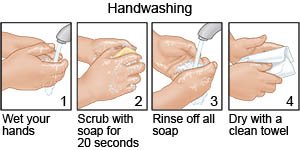
- Wear disposable gloves when you clean a wound, change a bandage, or handle body fluids. Do this if you care for someone with an active VRE infection. If you are infected with VRE, you do not need to wear gloves. Instead, make sure you wash your hands often. Throw away gloves after you use them. Put on a new pair with each task. Never use the same pair of gloves.
- Cover a sneeze or cough. Use a tissue that covers your mouth and nose. Throw the tissue away in a trash can right away. Use the bend of your arm if a tissue is not available. Then wash your hands well with soap and water or use a hand sanitizer.
- Do not share items. Do not share dishes, towels, or other items with anyone. Items need to be washed after you use them.
- Clean surfaces often. Use a disinfecting wipe, a single-use sponge, or a cloth you can wash and reuse. Use disinfecting cleaners if you do not have wipes. You can create a disinfecting cleaner by mixing 1 part bleach with 10 parts water. In the kitchen, clean countertops, cooking surfaces, and the fronts and insides of the microwave and refrigerator. In the bathroom, clean the toilet, the area around the toilet, the sink, the area around the sink, and faucets. Clean surfaces in the person's room, such as a desk or dresser.
- Tell all healthcare providers that you have a VRE infection. Healthcare providers will place you in a private hospital room to prevent the spread of infection to others.
© Copyright Merative 2025 Information is for End User's use only and may not be sold, redistributed or otherwise used for commercial purposes.
The above information is an educational aid only. It is not intended as medical advice for individual conditions or treatments. Talk to your doctor, nurse or pharmacist before following any medical regimen to see if it is safe and effective for you.
Learn more about Vancomycin Resistant Enterococcus
Care guides
Further information
Always consult your healthcare provider to ensure the information displayed on this page applies to your personal circumstances.