
Swimmer's Ear
Medically reviewed by Drugs.com. Last updated on Jun 2, 2025.
What is swimmer's ear?
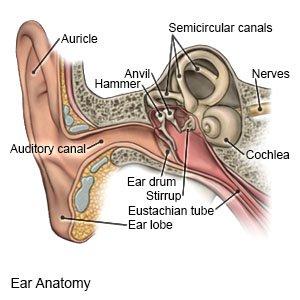
Swimmer's ear, also called otitis externa, is an infection in the outer ear canal. This canal goes from the outside of your ear to your eardrum. Swimmer's ear most often occurs when water remains in your ear after you swim. This creates a moist area for bacteria to grow. Scratches or damage from your fingers, cotton swabs, or other objects can also cause swimmer's ear.
 |
What increases my risk for swimmer's ear?
- Swimming, especially in water with high bacteria levels
- Use of devices such as ear buds or a hearing aid
- Cleaning your ear with cotton swabs or other objects
- Skin allergies such as eczema
- Irritation from hair spray, hair dyes, or jewelry
What are the signs and symptoms of swimmer's ear?
- Ear pain
- Red, swollen, itchy ear canal
- Fluid or pus draining from your ear
- A plugged ear and trouble hearing
How is swimmer's ear diagnosed?
Your healthcare provider will ask about your signs and symptoms. He or she will examine the inside of your ears.
How is swimmer's ear treated?
Your healthcare provider may clean your outer ear canal first. This will help clean any ear wax, flaky skin, or other discharge. You may then need any of the following:
- Medicines:
- Ear drops help fight infection and decrease redness and swelling.
- Acetaminophen decreases pain and fever. It is available without a doctor's order. Ask how much to take and how often to take it. Follow directions. Read the labels of all other medicines you are using to see if they also contain acetaminophen, or ask your doctor or pharmacist. Acetaminophen can cause liver damage if not taken correctly.
- NSAIDs , such as ibuprofen, help decrease swelling, pain, and fever. This medicine is available with or without a doctor's order. NSAIDs can cause stomach bleeding or kidney problems in certain people. If you take blood thinner medicine, always ask your healthcare provider if NSAIDs are safe for you. Always read the medicine label and follow directions.
- An ear wick may be used if your ear canal is blocked. A wick (small tube) made of cotton or gauze is placed in your ear. The wick helps pull extra fluid out of your ear canal. Wicks also help draw medicine into your ear canal.
Treatment options
The following list of medications are related to or used in the treatment of this condition.
How do I use ear drops?
- Warm the bottle of ear drops in your hands for a few minutes.
- Lie down on your side with your infected ear facing up. This will help the medicine travel completely through your ear canal.
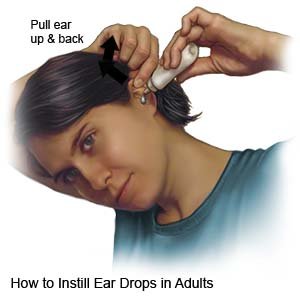
- Gently pull the ear up and back. Carefully drip the correct number of ear drops into your ear. Have another person help you if possible.
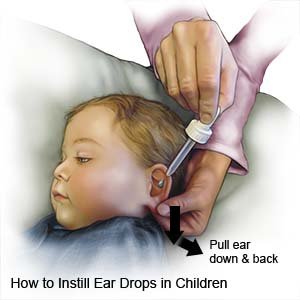
- For children younger than 3 years, gently pull and hold the ear down and back.
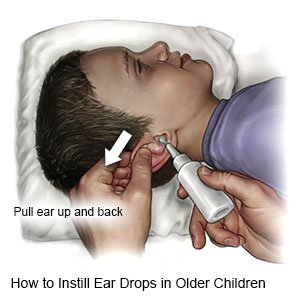
- For children older than 3 years, gently pull and hold the ear up and back.
- Stay in the same position for 3 to 5 minutes to let the medicine soak in.
How can I prevent swimmer's ear?
- Dry your ears completely after you swim or bathe. Gently wipe your outer ear with a soft towel or cloth. Use ear plugs when you swim.
- Do not put cotton swabs or other objects in your ears. These can scratch or damage your ear. They can also push ear wax deeper in and irritate your ear.
- Put cotton balls gently in your outer ear when you apply hair spray, hair dye, or perfume.
Related medications
Prednisone
Prednisone is used to treat allergic disorders, ulcerative colitis, psoriasis and arthritis. Learn ...
Valtrex
Valtrex is an antiviral drug used to treat infections caused by herpes viruses. Learn about side ...
Ozempic
Learn about Ozempic (semaglutide) for type 2 diabetes treatment, weight management, cardiovascular ...
Zovirax
Zovirax treats viral infections caused by genital herpes, cold sores, shingles, and chicken pox ...
Acyclovir
Acyclovir is an antiviral drug. It slows the growth and spread of the herpes virus. It will not ...
Valacyclovir
Valacyclovir is used to treat genital herpes, cold sores, shingles, and chicken pox. Learn about ...
When should I seek immediate care?
- You have severe ear pain.
- You are suddenly not able to hear.
- You have new swelling in your face, behind your ears, or in your neck.
- You suddenly cannot move part of your face, or it feels numb.
When should I call my doctor?
- You have a fever.
- Your symptoms get worse or do not go away, even after treatment.
- You have questions or concerns about your condition or care.
Care Agreement
You have the right to help plan your care. Learn about your health condition and how it may be treated. Discuss treatment options with your healthcare providers to decide what care you want to receive. You always have the right to refuse treatment. The above information is an educational aid only. It is not intended as medical advice for individual conditions or treatments. Talk to your doctor, nurse or pharmacist before following any medical regimen to see if it is safe and effective for you.© Copyright Merative 2025 Information is for End User's use only and may not be sold, redistributed or otherwise used for commercial purposes.
Learn more about Swimmer's Ear
Treatment options
Further information
Always consult your healthcare provider to ensure the information displayed on this page applies to your personal circumstances.