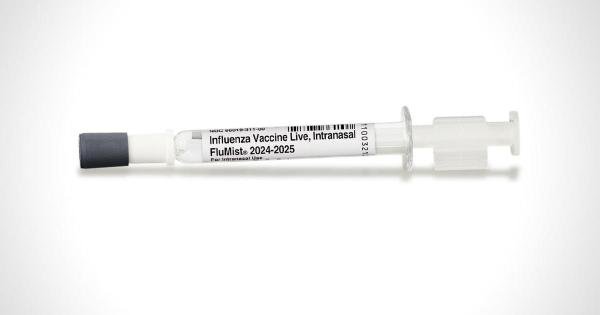
Influenza virus vaccine (nasal)
Generic name: influenza virus vaccine (nasal) [ IN-floo-EN-za-VYE-rus-VAK-seen ]
Brand names: FluMist 2024-2025, FluMist, FluMist 2010-2011, FluMist 2011-2012, FluMist 2012-2013,
... show all 16 brands
Dosage form: nasal spray (trivalent)
Drug class: Viral vaccines
What is influenza virus nasal vaccine?
Influenza virus ("the flu") is a contagious disease caused by a virus that can spread from one person to another through the air or on surfaces. Flu symptoms include fever, chills, tiredness, aches, sore throat, cough, vomiting, and diarrhea. The flu can also cause sinus infections, ear infections, bronchitis, or serious complications such as pneumonia.
Influenza causes thousands of deaths each year, and hundreds of thousands of hospitalizations. Influenza is most dangerous in children, pregnant women, older adults, and people with weak immune systems or health problems such as diabetes, heart disease, or cancer.
Influenza virus nasal vaccine (nasal flu vaccine) is for use in people 2 years to 49 years old, to prevent infection caused by influenza virus. This vaccine helps your body develop immunity to the disease, but will not treat an active infection you already have.
Influenza virus vaccine is redeveloped each year to contain specific strains of flu virus that are recommended by public health officials for that year.
Nasal influenza virus vaccine is made from "live viruses." Influenza virus vaccine is also available as an injection (flu shot) which is a "killed virus" vaccine. This medication guide addresses only the nasal form of this vaccine.
Like any vaccine, nasal flu vaccine may not provide protection from disease in every person.
Influenza virus nasal vaccine side effects
Get emergency medical help if you have signs of an allergic reaction: hives, difficult breathing, swelling of your face, lips, tongue, or throat.
You should not receive a booster vaccine if you had a life threatening allergic reaction after the first shot.
Keep track of any and all side effects you have. If you receive a nasal flu vaccine in the future, you will need to tell the vaccination provider if the previous shot caused any side effects.
Nasal flu vaccine is made from "live viruses" and may cause you to have mild flu-like symptoms. You may have flu-like symptoms at any time during flu season that could be caused by other strains of influenza virus.
Call a doctor at once or seek emergency medical attention if the person who has received this vaccine has wheezing or trouble breathing.
Common side effects include:
-
fever over 100 degrees F;
-
chills;
-
runny or stuffy nose;
-
sore throat, cough;
-
loss of appetite;
-
headache; or
-
feeling tired or irritable.
This is not a complete list of side effects and others may occur. Call your doctor for medical advice about side effects. You may report vaccine side effects to the US Department of Health and Human Services at 1-800-822-7967.
Related/similar drugs
Warnings
This vaccine is made from "live viruses" and may cause you to have mild flu-like symptoms.
Before taking this medicine
You should not receive this vaccine if you are allergic to eggs, or if you have:
-
a history of severe allergic reaction to any flu vaccine; or
-
if you are between 2 and 17 years old and have recently taken aspirin or medicines containing aspirin.
Nasal flu vaccine is not approved for use by children younger than 2 years or adults older than 49 years.
You should not receive a nasal flu vaccine if you have used:
-
oseltamivir (Tamiflu) or zanamivir (Relenza) in the past 48 hours or 2 weeks after your vaccine;
-
peramivir (Rapivab) in the past 5 days; or
-
baloxavir (Xofluza) in the past 17 days.
You may not be able to receive this vaccine if you have certain medical conditions. Tell the vaccination provider if you have:
-
asthma, wheezing, or other breathing problems;
-
(for children younger than 5 years) a history of wheezing;
-
a history of Guillain-Barré syndrome within 6 weeks after receiving a flu vaccine;
-
a weak immune system (or if someone in your household has a weak immune system);
-
heart problems;
-
diabetes; or
-
kidney disease.
If you are unable to receive a nasal influenza vaccine due to a medical condition, you may be able to get an injectable influenza vaccine (flu shot) instead.
You can still receive a vaccine if you have a minor cold. In the case of a more severe illness with a fever or any type of infection, wait until you get better before receiving this vaccine.
Tell your vaccination provider if you are pregnant or breastfeeding.
Nasal flu vaccine is not recommended for use in pregnant women. However, the Centers for Disease Control and Prevention recommends that pregnant women get a flu shot during any trimester of pregnancy to protect themselves and their newborn babies from flu.
How is this vaccine given?
A healthcare provider may administer this vaccine or may teach you how to properly use this vaccine by yourself.
This vaccine is given as a nasal spray into each nostril.
This vaccine should not be administered by anyone younger than 17 years of age.
Children ages 2 to 8 years old may need a second dose, at least 1 month after the first nasal vaccine.
The influenza virus vaccine is usually administered in October or November. Follow your doctor's instructions or the schedule recommended by your local health department.
Since the influenza virus vaccine is redeveloped each year for specific strains of influenza, you should receive a flu vaccine every year.
Influenza virus vaccine dosing information
Usual Adult Dose for Influenza Prophylaxis:
PATIENTS UP TO 49 YEARS: 0.2 mL intranasally once
Comments:
-The dose should be administered as a 0.1 mL dose per nostril.
-Active inhalation (sniffing) is not needed during administration.
Use: Active immunization for the prevention of influenza disease caused by influenza virus subtypes A and type B contained in the vaccine
Usual Pediatric Dose for Influenza Prophylaxis:
PATIENTS 2 TO 8 YEARS: 0.2 mL intranasally once OR in two-0.2 mL separate doses
PATIENTS 9 YEARS AND OLDER: 0.2 mL intranasally once
Comments:
-The dose should be administered as a 0.1 mL dose per nostril.
-If administering 2 doses, doses should be given at least 1 month apart.
-The Advisory Committee on Immunization Practices (ACIP) should be consulted regarding annual recommendations to determine the number of doses.
-Active inhalation (sniffing) is not needed during administration.
Use: Active immunization for the prevention of influenza disease caused by influenza virus subtypes A and type B contained in the vaccine
What happens if I miss a dose?
Call your doctor if you forget to receive your yearly nasal flu vaccine in October or November, or if your child misses a booster dose.
What happens if I overdose?
An overdose of this vaccine is unlikely to occur.
What should I avoid before or after receiving this vaccine?
For at least 2 weeks after receiving this vaccine, avoid using antiviral flu medications (such as amantadine, oseltamivir, rimantadine, zanamivir, Flumadine, Tamiflu, Relenza).
For at least 7 days after receiving a nasal flu vaccine, avoid close contact with anyone who has a weak immune system caused by disease such as cancer or HIV, or by using steroids, chemotherapy, radiation, or other treatments that can weaken the immune system. People with weak immune systems can become ill if they are in close contact with you when you recently received a live vaccine.
What other drugs will affect influenza virus nasal vaccine?
Anyone 2 to 17 years old receiving a nasal flu vaccine should not take aspirin for at least 4 weeks after the vaccine. A possible interaction between nasal flu vaccine and aspirin can cause a serious or fatal condition called Reye's syndrome.
Before receiving this vaccine, tell your vaccination provider about all other vaccines you have recently received.
Other drugs may affect influenza virus nasal vaccine, including prescription and over-the-counter medicines, vitamins, and herbal products. Tell your doctor about all other medicines you use.
More about influenza virus vaccine, live
- Check interactions
- Compare alternatives
- Reviews (15)
- Side effects
- Dosage information
- During pregnancy
- Drug class: viral vaccines
Patient resources
Other brands
Professional resources
Other brands
Related treatment guides
Further information
- Your vaccination provider, pharmacist, or doctor can provide more information about this vaccine. Additional information is available from your local health department or the Centers for Disease Control and Prevention.
Remember, keep this and all other medicines out of the reach of children, never share your medicines with others, and use this medication only for the indication prescribed.
Always consult your healthcare provider to ensure the information displayed on this page applies to your personal circumstances.
Copyright 1996-2025 Cerner Multum, Inc. Version: 8.01.