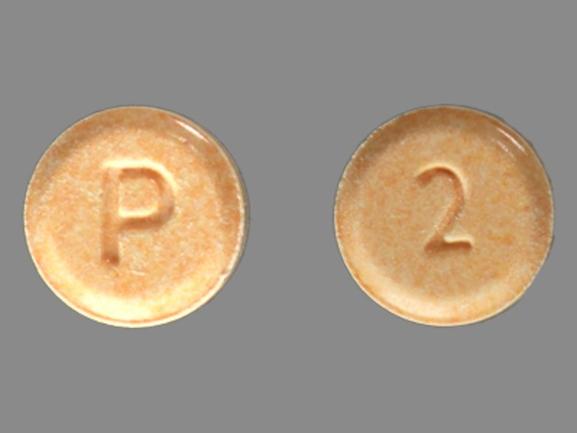
Generic Dilaudid Availability
Last updated on Apr 10, 2025.
Dilaudid is a brand name of hydromorphone, approved by the FDA in the following formulation(s):
DILAUDID (hydromorphone hydrochloride - injectable;injection)
-
Manufacturer: FRESENIUS KABI USA
Approval date: April 30, 2009
Strength(s): 1MG/ML [RLD] [AP], 2MG/ML [RLD] [AP], 4MG/ML [RLD] [AP] -
Manufacturer: FRESENIUS KABI USA
Approval date: February 10, 2017
Strength(s): 0.5MG/0.5ML [RLD] [AP] -
Manufacturer: FRESENIUS KABI USA
Approval date: January 16, 2020
Strength(s): 0.2MG/ML [RLD] [AP]
DILAUDID (hydromorphone hydrochloride - solution;oral)
DILAUDID (hydromorphone hydrochloride - tablet;oral)
-
Manufacturer: RHODES PHARMS
Approval date: December 7, 1992
Strength(s): 8MG [RLD] [AB] -
Manufacturer: RHODES PHARMS
Approval date: November 9, 2007
Strength(s): 2MG [RLD] [AB], 4MG [RLD] [AB]
Is there a generic version of Dilaudid available?
A generic version of Dilaudid has been approved by the FDA. However, this does not mean that the product will necessarily be commercially available - possibly because of drug patents and/or drug exclusivity. The following products are equivalent to Dilaudid and have been approved by the FDA:
hydromorphone hydrochloride injectable;injection
-
Manufacturer: HIKMA
Approval date: April 27, 2018
Strength(s): 2MG/ML [AP] -
Manufacturer: HIKMA
Approval date: February 9, 2024
Strength(s): 0.2MG/ML [AP], 0.5MG/0.5ML [AP], 1MG/ML [AP], 2MG/ML [AP] -
Manufacturer: HOSPIRA INC
Approval date: December 1, 2011
Strength(s): 1MG/ML [AP], 2MG/ML [AP], 4MG/ML [AP]
hydromorphone hydrochloride solution;oral
-
Manufacturer: ASCENT PHARMS INC
Approval date: October 27, 2017
Strength(s): 5MG/5ML [AA] -
Manufacturer: HIKMA
Approval date: July 29, 1998
Strength(s): 5MG/5ML [AA]
hydromorphone hydrochloride tablet;oral
-
Manufacturer: ASCENT PHARMS INC
Approval date: January 17, 2018
Strength(s): 2MG [AB], 4MG [AB], 8MG [AB] -
Manufacturer: AUROLIFE PHARMA LLC
Approval date: May 13, 2016
Strength(s): 2MG [AB], 4MG [AB], 8MG [AB] -
Manufacturer: SPECGX LLC
Approval date: December 23, 2004
Strength(s): 8MG [AB] -
Manufacturer: SPECGX LLC
Approval date: September 19, 2007
Strength(s): 2MG [AB], 4MG [AB]
Note: Fraudulent online pharmacies may attempt to sell an illegal generic version of Dilaudid. These medications may be counterfeit and potentially unsafe. If you purchase medications online, be sure you are buying from a reputable and valid online pharmacy. Ask your health care provider for advice if you are unsure about the online purchase of any medication.
See also: Generic Drug FAQ.
Related patents
Patents are granted by the U.S. Patent and Trademark Office at any time during a drug's development and may include a wide range of claims.
-
Packaging system for oxygen-sensitive drugs
Patent 9,248,229
Issued: February 2, 2016
Inventor(s): Devouassoux Thomas & Forat Eric & Proctor James Kenneth
Assignee(s): Becton, Dickinson France S.A.S.Described herein are pharmaceutical packaging systems which prevent oxidative degradation of morphine, hydromorphone, promethazine and other oxygen-sensitive drugs, such systems including a syringe with an oxygen permeable tip cap, a hermetically sealed oxygen barrier blister packaging with very low permeability to oxygen and comprises ethylene vinyl, and an oxygen absorber.
Patent expiration dates:
- March 12, 2034✓
- March 12, 2034
-
Drug container
Patent 9,731,082
Issued: August 15, 2017
Inventor(s): Vernizeau Michel & Foucher Cedric & Lefebvre Lionel
Assignee(s): Fresenius Kabi Deutschland GmbHThe present invention relates to an assembly () comprising: an injection device () comprising a container () for a product, said container comprising a distal tip (), an adaptor () comprising a ring () mounted onto said distal tip (), characterized in that said assembly () further comprises a heat-shrinkable film () covering part () of said container () and part () of said adaptor (), said film () maintaining said adaptor () blocked in rotation and in translation with respect to said container () when said film () is in its heat-shrunk condition. The invention further relates to a method for manufacturing such an assembly.
Patent expiration dates:
- April 23, 2032✓
- April 23, 2032
More about Dilaudid (hydromorphone)
- Check interactions
- Compare alternatives
- Pricing & coupons
- Reviews (329)
- Drug images
- Latest FDA alerts (11)
- Side effects
- Dosage information
- Patient tips
- During pregnancy
- Support group
- Drug class: Opioids (narcotic analgesics)
- Breastfeeding
Patient resources
Other brands
Dilaudid-HP, Exalgo, Palladone
Professional resources
- Dilaudid prescribing information
- Dilaudid Injection (FDA)
- Hydromorphone Hydrochloride (AHFS Monograph)
Other brands
Dilaudid-HP, Exalgo, Palladone
Related treatment guides
Glossary
| Term | Definition |
|---|---|
| Drug Patent | A drug patent is assigned by the U.S. Patent and Trademark Office and assigns exclusive legal right to the patent holder to protect the proprietary chemical formulation. The patent assigns exclusive legal right to the inventor or patent holder, and may include entities such as the drug brand name, trademark, product dosage form, ingredient formulation, or manufacturing process A patent usually expires 20 years from the date of filing, but can be variable based on many factors, including development of new formulations of the original chemical, and patent infringement litigation. |
| Drug Exclusivity | Exclusivity is the sole marketing rights granted by the FDA to a manufacturer upon the approval of a drug and may run simultaneously with a patent. Exclusivity periods can run from 180 days to seven years depending upon the circumstance of the exclusivity grant. |
| RLD | A Reference Listed Drug (RLD) is an approved drug product to which new generic versions are compared to show that they are bioequivalent. A drug company seeking approval to market a generic equivalent must refer to the Reference Listed Drug in its Abbreviated New Drug Application (ANDA). By designating a single reference listed drug as the standard to which all generic versions must be shown to be bioequivalent, FDA hopes to avoid possible significant variations among generic drugs and their brand name counterpart. |
| AA | Products in conventional dosage forms not presenting bioequivalence problems. Products coded as AA contain active ingredients and dosage forms that are not regarded as presenting either actual or potential bioequivalence problems or drug quality or standards issues. However, all oral dosage forms must, nonetheless, meet an appropriate in vitro bioequivalence standard that is acceptable to the Agency in order to be approved. |
| AB | Products meeting necessary bioequivalence requirements. Multisource drug products listed under the same heading (e.g. identical active ingredients, dosage form, and routes of administration) and having the same strength (see Therapeutic Equivalence-Related Terms, Pharmaceutical Equivalents) generally will be coded AB if a study is submitted demonstrating bioequivalence. In certain instances, a number is added to the end of the AB code to make a three character code (e.g. AB1, AB2, AB7). Three-character codes are assigned only in situations when more than one reference listed drug of the same strength has been designated under the same heading. Two or more reference listed drugs are generally selected only when there are at least two potential reference drug products which are not bioequivalent to each other. If a study is submitted that demonstrates bioequivalence to a specific listed drug product, the generic product will be given the same three-character code as the reference listed drug it was compared against. |
| AP | Injectable aqueous solutions and, in certain instances, intravenous non-aqueous solutions. It should be noted that even though injectable (parenteral) products under a specific listing may be evaluated as therapeutically equivalent, there may be important differences among the products in the general category, Injectable; Injection. For example, some injectable products that are rated therapeutically equivalent are labeled for different routes of administration. In addition, some products evaluated as therapeutically equivalent may have different preservatives or no preservatives at all. Injectable products available as dry powders for reconstitution, concentrated sterile solutions for dilution, or sterile solutions ready for injection are pharmaceutical alternative drug products. They are not rated as therapeutically equivalent (AP) to each other even if these pharmaceutical alternative drug products are designed to produce the same concentration prior to injection and are similarly labeled. Consistent with accepted professional practice, it is the responsibility of the prescriber, dispenser, or individual administering the product to be familiar with a product's labeling to assure that it is given only by the route(s) of administration stated in the labeling. |
Further information
Always consult your healthcare provider to ensure the information displayed on this page applies to your personal circumstances.