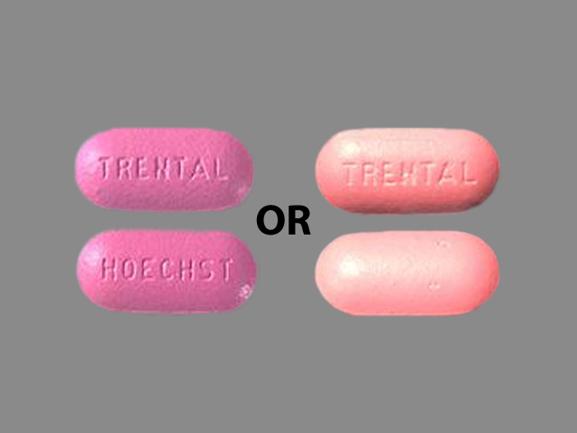
Trental Side Effects
Generic name: pentoxifylline
Medically reviewed by Drugs.com. Last updated on Nov 24, 2023.
Note: This document contains side effect information about pentoxifylline. Some dosage forms listed on this page may not apply to the brand name Trental.
Applies to pentoxifylline: oral tablet extended release.
Serious side effects of Trental
Along with its needed effects, pentoxifylline (the active ingredient contained in Trental) may cause some unwanted effects. Although not all of these side effects may occur, if they do occur they may need medical attention.
Check with your doctor as soon as possible if any of the following side effects occur while taking pentoxifylline:
Rare
- Chest pain
- irregular heartbeat
Signs and symptoms of overdose (in the order in which they may occur)
- Drowsiness
- flushing
- faintness
- unusual excitement
- convulsions (seizures)
Other side effects of Trental
Some side effects of pentoxifylline may occur that usually do not need medical attention. These side effects may go away during treatment as your body adjusts to the medicine. Also, your health care professional may be able to tell you about ways to prevent or reduce some of these side effects.
Check with your health care professional if any of the following side effects continue or are bothersome or if you have any questions about them:
Less common
For Healthcare Professionals
Applies to pentoxifylline: compounding powder, oral tablet extended release.
General
Pentoxifylline (the active ingredient contained in Trental) has been generally well tolerated. While typically minor, side effects have necessitated discontinuation of the drug in approximately 3% of treated patients. Tolerance to mild side effects generally has developed with continued use.[Ref]
Gastrointestinal
Gastrointestinal side effects have been the most common side effects associated with pentoxifylline (the active ingredient contained in Trental) therapy and have included dyspepsia, nausea, vomiting, and belching, which occurred in 1% to 3% of patients. Some smaller studies have reported gastrointestinal disturbance in up to 33% of patients treated with pentoxifylline.[Ref]
Nervous system
Nervous system side effects have occurred in 1% to 2% of treated patients and have included headache, dizziness, insomnia, and tremor. Some smaller studies have reported nervous system adverse effects in up to 17% of treated patients. In addition, rare cases of visual and auditory hallucinations have been reported. Aseptic meningitis has been reported in postmarketing experiences.[Ref]
Cardiovascular
Cardiovascular side effects have included reports of palpitations, flushing, and angina. These reports have usually been associated with higher doses of an immediate release capsule which is not available in the United States.[Ref]
Hematologic
Hematologic side effects have included anecdotal reports of pancytopenia and fatal aplastic anemia.[Ref]
Hepatic
Hepatic side effects have included postmarketing reports of cholestasis.
Hypersensitivity
Hypersensitivity side effects have included postmarketing reports of anaphylactic reaction, anaphylactoid reaction, and anaphylactic shock.
More about Trental (pentoxifylline)
- Check interactions
- Compare alternatives
- Reviews (3)
- Drug images
- Dosage information
- During pregnancy
- Drug class: miscellaneous coagulation modifiers
- Breastfeeding
Patient resources
Other brands
Professional resources
Related treatment guides
References
1. Product Information. Trental (pentoxifylline). Hoechst Marion Roussel. 2001;PROD.
2. Ward A, Clissold SP. Pentoxifylline: a review of its pharmacodynamic and pharmacokinetic properties, and its therapeutic efficacy. Drugs. 1987;34:50-97.
3. Dettelbach HR, Aviado DM. Clinical pharmacology of pentoxifylline with special reference to its hemorrheologic effect for the treatment of intermittent claudication. J Clin Pharmacol. 1985;25:8-26.
4. Witter FR, Smith RV. The excretion of pentoxifylline and its metabolites into human breast milk. Am J Obstet Gynecol. 1985;151:1094-7.
5. Lucas MA. Prevention of post-operative thrombosis in peripheral arteriopathies. Pentoxifylline vs. conventional antiaggregants: a six-month randomized follow-up study. Angiology. 1984;35:443-50.
6. Crowder JE, Cohn JB, Savitsky JP, Morgan DL, Slywka J, Cobert BL, Hryniewicki SW, Piccirillo RT, Wilcox CS. Efficacy and safety of pentoxifylline in geriatric patients with intermittent claudication. Angiology. 1989;40:795-802.
7. Green RM, McNamara J. The effects of pentoxifylline on patients with intermittent claudication. J Vasc Surg. 1988;7:356-62.
8. Baker DE, Campbell RK. Pentoxifylline: a new agent for intermittent claudication. Drug Intell Clin Pharm. 1985;19:345-8.
9. Pitner J, Simpson W, Gutierrez S, Mintzer J. Pentoxifylline (Trental)-induced visual hallucinations. J Am Geriatr Soc. 1993;41:782-3.
10. Gilbert GJ. Pentoxifylline-induced musical hallucinations. Neurology. 1993;43:1621-2.
11. Mass RD, Venook AP, Linker CA, Zipkin RE. Pentoxifylline and aplastic anemia. Ann Intern Med. 1987;107:427-8.
Further information
Always consult your healthcare provider to ensure the information displayed on this page applies to your personal circumstances.
Some side effects may not be reported. You may report them to the FDA.