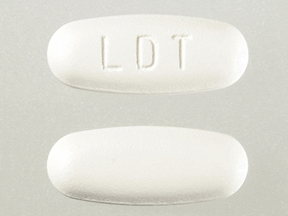
Telbivudine Side Effects
Medically reviewed by Drugs.com. Last updated on Apr 18, 2024.
Applies to telbivudine: oral tablet.
Important warnings
This medicine can cause some serious health issues
- Hepatitis B has gotten worse when this drug was stopped in some people with hepatitis B.
Close follow-up for a few months is needed when therapy is stopped in people who have hepatitis B.
Do not stop taking this drug without calling your doctor.
Serious side effects of telbivudine
WARNING/CAUTION: Even though it may be rare, some people may have very bad and sometimes deadly side effects when taking a drug. Tell your doctor or get medical help right away if you have any of the following signs or symptoms that may be related to a very bad side effect:
- Signs of an allergic reaction, like rash; hives; itching; red, swollen, blistered, or peeling skin with or without fever; wheezing; tightness in the chest or throat; trouble breathing, swallowing, or talking; unusual hoarseness; or swelling of the mouth, face, lips, tongue, or throat.
- Signs of liver problems like dark urine, feeling tired, not hungry, upset stomach or stomach pain, light-colored stools, throwing up, or yellow skin or eyes.
- Signs of too much lactic acid in the blood (lactic acidosis) like fast breathing, fast heartbeat, a heartbeat that does not feel normal, very bad upset stomach or throwing up, feeling very sleepy, shortness of breath, feeling very tired or weak, very bad dizziness, feeling cold, or muscle pain or cramps.
- Signs of a pancreas problem (pancreatitis) like very bad stomach pain, very bad back pain, or very bad upset stomach or throwing up.
- Not able to pass urine or change in how much urine is passed.
- A burning, numbness, or tingling feeling that is not normal.
- Change in balance.
- Trouble walking.
- Fever.
- Swelling of belly.
- A certain muscle problem (rhabdomyolysis) has happened with this drug. Rarely, this has led to organ problems and death. Call your doctor right away if you have muscle pain or weakness.
Other side effects of telbivudine
All drugs may cause side effects. However, many people have no side effects or only have minor side effects. Call your doctor or get medical help if any of these side effects or any other side effects bother you or do not go away:
- Belly pain.
- Headache.
- Feeling tired or weak.
- Cough.
- Diarrhea.
- Upset stomach.
- Back pain.
- Dizziness.
- Trouble sleeping.
- Joint pain.
- Sore throat.
These are not all of the side effects that may occur. If you have questions about side effects, call your doctor. Call your doctor for medical advice about side effects.
You may report side effects to the FDA at 1-800-332-1088. You may also report side effects at https://www.fda.gov/medwatch.
For healthcare professionals
Applies to telbivudine: oral solution, oral tablet.
General
In general, this drug was well tolerated in clinical studies, with most side effects described as mild or moderate. The most common side effects included grade 3 or 4 creatine phosphokinase elevations, fatigue, headache, and nausea.[Ref]
Musculoskeletal
- Very common (10% or more): Increased blood creatine phosphokinase (CPK)
- Common (1% to 10%): Arthralgia, back pain, myalgia, muscle-related symptoms
- Uncommon (0.1% to 1%): Myopathy, myositis, muscular weakness, pain in the extremities, muscle spasm, neck pain, flank pain
- Frequency not reported: Fibromyalgia, muscle strain, chest wall pain, noncardiac chest pain, chest discomfort, muscle cramp, musculoskeletal chest pain, musculoskeletal pain, musculoskeletal discomfort, musculoskeletal stiffness, myofascial pain syndrome, tenderness
- Postmarketing reports: Rhabdomyolysis[Ref]
CPK elevations greater than 7 times the upper limit of normal (7 x ULN) was reported in 13% of patients.
In clinical trials, increased CPK occurred more often during treatment with this drug. By 104 weeks of therapy, 79% of patients using this drug (compared to 47% of patients using lamivudine) reported grade 1 to 4 CPK elevations; 13% of patients using this drug (compared to 4% of patients using lamivudine) reported grade 3 or 4 CPK elevations. Most patients with CPK elevations did not exhibit symptoms, but the average recovery time was longer with this drug than with lamivudine. Of the patients with grade 1 to 4 CPK elevations using this drug, 10% had a musculoskeletal side effect (compared to 5% of patients using lamivudine); these side effects included back pain, chest wall pain, noncardiac chest pain, chest discomfort, flank pain, muscle cramp, muscular weakness, musculoskeletal pain, musculoskeletal chest pain, musculoskeletal discomfort, musculoskeletal stiffness, myalgia, myofascial pain syndrome, myopathy, myositis, neck pain, and pain in extremity. By 208 weeks of therapy, 16% of patients using this drug reported grade 3 or 4 CPK elevations, most of which were asymptomatic (74% of patients had no muscle-related side effect), transient (98% lasted 1 or 2 visits), and resolved spontaneously or returned to baseline levels (93%).
Muscle-related symptoms (2%) included back pain, fibromyalgia, muscle cramp, musculoskeletal chest pain, myalgia, myopathy (including myositis), pain, pain in extremity, and tenderness.
Myopathy/myositis (presenting with muscular weakness) was diagnosed in less than 1% of patients. Cases of myopathy/myositis have been reported several weeks to months after this drug was started.[Ref]
Other
- Very common (10% or more): Fatigue (up to 13%)
- Common (1% to 10%): Malaise, pyrexia
- Frequency not reported: Pain, influenza, influenza-like symptoms, postprocedural pain[Ref]
Nervous system
- Common (1% to 10%): Headache, dizziness
- Uncommon (0.1% to 1%): Peripheral neuropathy, dysgeusia, hypoesthesia, paresthesia, sciatica
- Frequency not reported: Migraine, sinus headache, tension headache, vertigo[Ref]
Headache included headache, migraine, sinus headache, and tension headache.
Paresthesia and hypoesthesia have also been reported during postmarketing experience.[Ref]
Hepatic
- Common (1% to 10%): Elevated ALT, elevated AST, acute hepatitis flare, hepatitis B exacerbation, ALT flares
- Uncommon (0.1% to 1%): Elevated total bilirubin
- Frequency not reported: Hypercholesterolemia, posttreatment exacerbations of hepatitis
Nucleoside analogs:
- Frequency not reported: Severe hepatomegaly with steatosis[Ref]
Elevated ALT (greater than 10 x ULN and 2 times baseline), elevated ALT (greater than 3 times baseline), elevated AST (greater than 3 times baseline), and elevated total bilirubin (greater than 5 x ULN) were reported in up to 6%, 7%, 6%, and less than 1% of patients, respectively.
The incidence of ALT flares (ALT greater than 10 x ULN and greater than 2 times baseline) was similar (3%) with this drug and lamivudine in the first 6 months. After week 24, reports of ALT flares decreased to 2% with this drug versus 5% with lamivudine.
In patients who stopped therapy early (for reasons excluding efficacy) or decided not to continue this drug in another trial, 6% reported exacerbation of hepatitis (ALT elevation greater than 10 x ULN and greater than 2 times baseline) during the 4 months posttherapy.
Severe acute exacerbations of hepatitis have been reported in patients who have discontinued this drug. Although most cases appeared self-limited or resolved by restarting therapy, severe hepatitis exacerbations (including fatalities) have been reported.
Lactic acidosis and severe hepatomegaly with steatosis (including fatalities) have been reported with the use of nucleoside analogs alone or in combination with antiretrovirals.[Ref]
Gastrointestinal
- Common (1% to 10%): Diarrhea/loose stools, increased blood lipase, nausea, abdominal pain, increased blood amylase, upper abdominal pain, abdominal distension, dyspepsia
- Frequency not reported: Gastritis, sore throat, dry mouth, decreased appetite, abdominal discomfort, lower abdominal pain, gastrointestinal pain, frequent bowel movements[Ref]
Increased lipase (greater than 2.5 x ULN) and increased amylase (greater than 3 x ULN) were reported in 2% and less than 1% of patients, respectively.
Diarrhea/loose stools included diarrhea, loose stools, and frequent bowel movements. Abdominal pain included abdominal discomfort, abdominal pain, lower abdominal pain, upper abdominal pain, and gastrointestinal pain.[Ref]
Respiratory
- Common (1% to 10%): Cough, pharyngolaryngeal pain
- Frequency not reported: Upper respiratory tract infection, pharyngitis/nasopharyngitis[Ref]
Cough included cough and productive cough.[Ref]
Dermatologic
- Common (1% to 10%): Rash, pruritus
- Frequency not reported: Acne[Ref]
Hematologic
- Common (1% to 10%): Neutropenia
- Uncommon (0.1% to 1%): Thrombocytopenia[Ref]
Neutropenia (absolute neutrophil count up to 749/mm3) and thrombocytopenia (platelets up to 49,999/mm3) were reported in 2% and less than 1% of patients, respectively.[Ref]
Psychiatric
- Common (1% to 10%): Insomnia
Metabolic
- Postmarketing reports: Lactic acidosis
Nucleoside analogs:
- Frequency not reported: Lactic acidosis[Ref]
Lactic acidosis and severe hepatomegaly with steatosis (including fatalities) have been reported with the use of nucleoside analogs alone or in combination with antiretrovirals.[Ref]
Genitourinary
- Frequency not reported: Hematuria, irregular menstruation, polyuria[Ref]
At least 1 patient receiving a diuretic for ascites reported polyuria.[Ref]
References
1. Cerner Multum, Inc. "UK Summary of Product Characteristics."
2. (2006) "Product Information. Tyzeka (telbivudine)." IDEC Pharmaceuticals Corporation
3. Cerner Multum, Inc. "Australian Product Information."
4. Jones R, Nelson M (2006) "Novel anti-hepatitis B agents: A focus on telbivudine." Int J Clin Pract, 60, p. 1295-9
5. Hu P, Jiang J, Wang H, et al. (2006) "Single-dose and multiple-dose pharmacokinetics and safety of telbivudine after oral administration in healthy Chinese subjects." J Clin Pharmacol, 46, p. 999-1007
6. Yuen MF, Lai CL (2005) "Telbivudine: an upcoming agent for chronic hepatitis B." Expert Rev Anti Infect Ther, 3, p. 489-94
7. (2007) "Telbivudine (Tyzeka) for chronic Hepatitis B." Med Lett Drugs Ther, 49, p. 11-2
8. Keam SJ (2007) "Telbivudine." Drugs, 67, p. 1917-29
9. Matthews SJ (2007) "Telbivudine for the management of chronic hepatitis B virus infection." Clin Ther, 29, p. 2635-53
10. Lai CL, Lim SG, Brown NA, et al. (2004) "A dose-finding study of once-daily oral telbivudine in HBeAg-positive patients with chronic hepatitis B virus infection." Hepatology, 40, p. 719-26
11. Zhou XJ, Marbury TC, Alcorn HW, et al. (2006) "Pharmacokinetics of telbivudine in subjects with various degrees of hepatic impairment." Antimicrob Agents Chemother, 50, p. 1721-6
12. Zhou XJ, Swan S, Smith WB, et al. (2007) "Pharmacokinetics of telbivudine in subjects with various degrees of renal impairment." Antimicrob Agents Chemother, 51, p. 4231-5
More about telbivudine
- Check interactions
- Compare alternatives
- Dosage information
- During pregnancy
- Drug class: nucleoside reverse transcriptase inhibitors (NRTIs)
- Breastfeeding
Patient resources
Other brands
Professional resources
Other brands
Related treatment guides
Further information
Telbivudine side effects can vary depending on the individual. Always consult your healthcare provider to ensure the information displayed on this page applies to your personal circumstances.
Some side effects may not be reported. You may report them to the FDA.