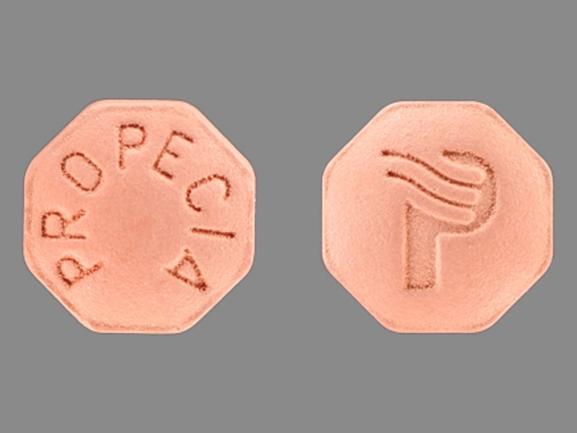
Propecia Side Effects
Generic name: finasteride
Medically reviewed by Drugs.com. Last updated on Feb 19, 2024.
Note: This document provides detailed information about Propecia Side Effects associated with finasteride. Some dosage forms listed on this page may not apply specifically to the brand name Propecia.
Applies to finasteride: oral tablet.
Precautions
It is very important that your doctor check your progress at regular visits. This will allow your doctor to see if the medicine is working properly and to decide if you should continue to take it. Blood and urine tests may be needed to check for unwanted effects.
Women and children should not use this medicine. Women who are pregnant or may become pregnant should not handle crushed or broken tablets. Finasteride can be absorbed through the skin and cause birth defects in male babies. If a woman does come in contact with this medicine, the affected area should be washed right away with soap and water.
This medicine will not prevent prostate cancer but may increase your risk of developing high-grade prostate cancer. Tell your doctor if you have concerns about this risk.
This medicine may affect the results of the prostate specific antigen (PSA) test, which may be used to detect prostate cancer. Make sure you tell all of your doctors that you are using this medicine.
Some men who use this medicine have become infertile (unable to have children). Talk with your doctor before using this medicine if you plan to have children.
Serious side effects of Propecia
Along with its needed effects, finasteride (the active ingredient contained in Propecia) may cause some unwanted effects. Although not all of these side effects may occur, if they do occur they may need medical attention.
Check with your doctor immediately if any of the following side effects occur while taking finasteride:
More common side effects
- chills
- cold sweats
- confusion
- dizziness, faintness, or lightheadedness when getting up suddenly from a lying or sitting position
Less common side effects
- bloating or swelling of the face, arms, hands, lower legs, or feet
- breast enlargement and tenderness
- hives or welts, itching, skin rash
- rapid weight gain
- redness of the skin
- swelling of the lips and face
- tingling of the hands or feet
- unusual weight gain or loss
Incidence not known
- clear or bloody discharge from the nipple
- dimpling of the breast skin
- inverted nipple
- lump in the breast or under the arm
- persistent crusting or scaling of the nipple
- redness or swelling of the breast
- sore on the skin of the breast that does not heal
Other side effects of Propecia
Some side effects of finasteride may occur that usually do not need medical attention. These side effects may go away during treatment as your body adjusts to the medicine. Also, your health care professional may be able to tell you about ways to prevent or reduce some of these side effects.
Check with your health care professional if any of the following side effects continue or are bothersome or if you have any questions about them:
More common side effects
- decreased interest in sexual intercourse
- inability to have or keep an erection
- loss in sexual ability, desire, drive, or performance
Less common side effects
- runny or stuffy nose
- sleepiness or unusual drowsiness
- sneezing
Less common or rare side effects
Incidence not known
- testicular pain
See also:
For healthcare professionals
Applies to finasteride: oral tablet.
Genitourinary adverse events
Most men were older and were taking concomitant medications and/or had comorbid conditions:
- Very common (10% or more): Impotence (up to 18.5%)
- Common (1% to 10%): Abnormal ejaculation, decreased ejaculatory volume, abnormal sexual function, gynecomastia, erectile dysfunction, ejaculation disorder, testicular pain, male infertility and/or poor seminal quality
- Postmarketing reports: Hematospermia[Ref]
Two hundred fourteen reports of gynecomastia in men taking finasteride in the United States were received by the FDA between June 1992 and February 1995. Among those reported, fifty eight percent were taking additional medications that have been associated with gynecomastia. Sixty nine of 86 patients who discontinued finasteride treatment had partial or complete remission.
New reports of drug-related sexual adverse experiences have been reported to decrease with duration of therapy.
Erectile dysfunction has been reported to continue beyond treatment discontinuation. Normalization or improvement of seminal quality has been reported after withdrawing finasteride treatment.[Ref]
Endocrine
- Uncommon (0.1% to 1%): Breast tenderness, breast enlargement
- Frequency not reported: Reductions in prostate specific antigen (PSA) levels of approximately 50%[Ref]
Finasteride may cause a decrease in PSA levels in patients with benign prostatic hyperplasia as well as in patients with prostate cancer. In one study, mean PSA reductions of 50% were noted, regardless of baseline levels. There was no indication that PSA levels were further suppressed in patients with prostate cancer.
PSA levels are commonly used in the screening process for prostate cancer. Patients who develop sustained increases in PSA while on finasteride therapy should be carefully evaluated for medical causes as well as noncompliance.[Ref]
Nervous system
- Common (1% to 10%): Decreased libido, dizziness, somnolence
- Frequency not reported: Headache[Ref]
Cardiovascular
- Common (1% to 10%): Postural hypotension, hypotension
- Postmarketing reports: Palpitations[Ref]
Oncologic
- Frequency not reported: A prevention or delay in the appearance of prostate cancer, an increased risk of high-grade prostate cancer
- Postmarketing reports: Rare cases of male breast cancer[Ref]
Gastrointestinal
Dermatologic
- Rare (less than 0.1%): Rash
- Very rare (less than 0.01%): Cutaneous leukocytoclastic vasculitis, solitary fixed drug eruption
- Postmarketing reports: Pruritus, urticaria, angioedema (including swelling of the lips, tongue, throat, and face)[Ref]
A 58 year old man presented with an itchy, lumpy rash on upper and lower extremities following two weeks of finasteride treatment for prostatism. The patient had no known allergies and was taking no other medications prior to the episode. The finasteride was discontinued and dapsone was initiated. The rash resolved two weeks after finasteride therapy was stopped.[Ref]
Hypersensitivity
- Frequency not reported: Pruritus, urticaria, angioedema of the lips, tongue, throat, and face[Ref]
Metabolic
- Common (1% to 10%): Edema[Ref]
Respiratory
Psychiatric
- Frequency not reported: Depression
Musculoskeletal
- Frequency not reported: Asthenia
Hepatic
- Frequency not reported: Increased hepatic enzymes
References
1. Gormley GJ, Stoner E, Bruskewitz RC, Imperato-McGinley J, Walsh PC, McConnell JD, Andriole GL, Geller J, Bracken BR, Tenover JS, et al. (1992) "The effect of finasteride in men with benign prostatic hyperplasia. The Finasteride Study Group." N Engl J Med, 327, p. 1185-91
2. Steiner JF (1993) "Finasteride: a 5 alpha-reductase inhibitor." Clin Pharm, 12, p. 15-23
3. (2002) "Product Information. Proscar (finasteride)." Merck & Co., Inc
4. Tammela TL, Kontturi MJ (1993) "Urodynamic effects of finasteride in the treatment of bladder outlet obstruction due to benign prostatic hyperplasia." J Urol, 149, p. 342-4
5. Guess HA, Heyse JF, Gormley GJ (1993) "The effect of finasteride on prostate-specific antigen in men with benign prostatic hyperplasia." Prostate, 22, p. 31-7
6. Stoner E, Round E, Ferguson D, Gormley GJ (1994) "Clinical experience of the detection of prostate cancer in patients with benign prostatic hyperplasia treated with finasteride." J Urol, 151, p. 1296-300
7. Volpi R, Maccarini PA, Boni S, Chiodera P, Coiro V (1995) "Finasteride-induced gynecomastia in a 62-year-old man." Am J Med Sci, 309, p. 322-5
8. Guess HA, Gormley GJ, Stoner E, Oesterling JE (1996) "The effect of finasteride on prostate specific antigen: review of available data." J Urol, 155, p. 3-9
9. Stoner E (1996) "5 alpha-reductase inhibitors/finasteride." Prostate, Suppl 6, p. 82-7
10. Green L, Wysowski DK, Fourcroy JL (1996) "Gynecomastia and breast cancer during finasteride therapy." N Engl J Med, 335, p. 823
11. Ferrando J, Grimalt R, Alsina M, Bulla F, Manasievska E (2002) "Unilateral Gynecomastia Induced by Treatment With 1 mg of Oral Finasteride." Arch Dermatol, 138, p. 543-4
12. Thompson IM, Goodman PJ, Tangen CM, et al. (2003) "The influence of finasteride on the development of prostate cancer." N Engl J Med, 349, p. 215-24
13. Australian Government. Department of Health. Therapeutic Goods Administration (2013) Medicines Safety Update, Volume 4, Number 6, December 2013. http://www.tga.gov.au/hp/msu-2013-06.htm
14. Lear JT, Byrne JPH (1996) "Finasteride-related cutaneous vaculitis." Postgrad Med J, 72, p. 127
15. Oyama N, Kaneko F (2009) "Solitary fixed drug eruption caused by finasteride." J Am Acad Dermatol, 60, p. 168-9
Frequently asked questions
More about Propecia (finasteride)
- Check interactions
- Compare alternatives
- Pricing & coupons
- Reviews (29)
- Drug images
- Latest FDA alerts (3)
- Dosage information
- During pregnancy
- Generic availability
- Drug class: 5-alpha-reductase inhibitors
- En español
Patient resources
Other brands
Professional resources
Other brands
Related treatment guides
Further information
Propecia side effects can vary depending on the individual. Always consult your healthcare provider to ensure the information displayed on this page applies to your personal circumstances.
Note: Medication side effects may be underreported. If you are experiencing side effects that are not listed, submit a report to the FDA by following this guide.