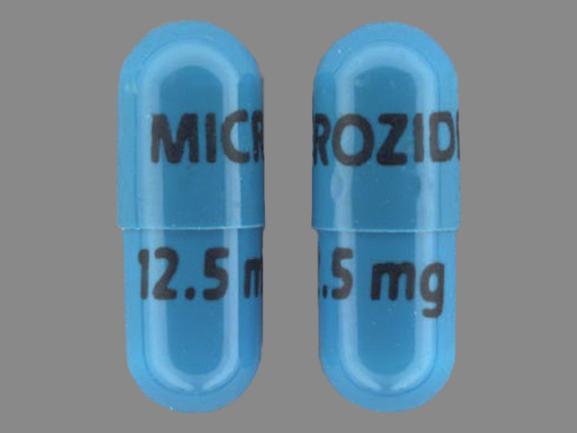
Microzide Side Effects
Generic name: hydrochlorothiazide
Medically reviewed by Drugs.com. Last updated on Nov 15, 2023.
Note: This document provides detailed information about Microzide Side Effects associated with hydrochlorothiazide. Some dosage forms listed on this page may not apply specifically to the brand name Microzide.
Applies to hydrochlorothiazide: oral capsule, oral tablet.
Serious side effects of Microzide
Along with its needed effects, hydrochlorothiazide (the active ingredient contained in Microzide) may cause some unwanted effects. Although not all of these side effects may occur, if they do occur they may need medical attention.
Check with your doctor immediately if any of the following side effects occur while taking hydrochlorothiazide:
Incidence not known
- back, leg, or stomach pains
- black, tarry stools
- bleeding gums
- blistering, peeling, or loosening of the skin
- bloating
- blood in the urine or stools
- blue lips and fingernails
- blurred vision
- burning, crawling, itching, numbness, prickling, "pins and needles", or tingling feelings
- chest pain or tightness
- chills
- clay-colored stools
- cloudy urine
- cold sweats
- confusion
- constipation
- cough or hoarseness
- coughing that sometimes produces a pink frothy sputum
- coughing up blood
- cracks in the skin
- darkened urine
- decrease in urine-concentrating ability
- decreased frequency or amount of urine
- diarrhea
- difficult, fast, or noisy breathing
- difficulty with swallowing
- dizziness, faintness, or lightheadedness when getting up from a lying or sitting position
- dry mouth
- fast or irregular heartbeat
- fever
- flushed, dry skin
- fruit-like breath odor
- general body swelling
- general feeling of discomfort or illness
- greatly decreased frequency of urination or amount of urine
- headache
- hives, itching, rash
- increased hunger
- increased sweating
- increased thirst
- increased urination
- indigestion
- joint pain, stiffness, or swelling
- loss of appetite
- loss of heat from the body
- lower back or side pain
- muscle cramps or pain
- nausea or vomiting
- nosebleeds
- numbness, tingling, pain, or weakness in the hands or feet
- painful or difficult urination
- pains in the stomach or side, possibly radiating to the back
- pale skin
- persistent non-healing sore
- pink growth
- pinpoint red spots on the skin
- puffiness or swelling of the eyelids or around the eyes, face, lips, or tongue
- red, irritated eyes
- red skin lesions, often with a purple center
- red, swollen skin
- reddish patch or irritated area
- redness, soreness, or scaly skin
- seizures
- shiny bump
- sore throat
- sores, ulcers, or white spots on the lips or in the mouth
- sores, welting, or blisters
- swelling of the face, fingers, legs, ankles, feet, or lower legs
- swollen or painful glands
- tenderness of salivary glands
- thickening of bronchial secretions
- trembling
- trouble breathing
- unpleasant breath odor
- unusual bleeding or bruising
- unusual tiredness or weakness
- unusual weight loss
- vomiting of blood
- weakness and heaviness of the legs
- weight gain
- white, yellow or waxy scar-like area
- yellow eyes or skin
Other side effects of Microzide
Some side effects of hydrochlorothiazide may occur that usually do not need medical attention. These side effects may go away during treatment as your body adjusts to the medicine. Also, your health care professional may be able to tell you about ways to prevent or reduce some of these side effects.
Check with your health care professional if any of the following side effects continue or are bothersome or if you have any questions about them:
Incidence not known
- cramping
- decreased interest in sexual intercourse
- difficulty having a bowel movement (stool)
- feeling of constant movement of self or surroundings
- hair loss or thinning of the hair
- inability to have or keep an erection
- increased sensitivity of the skin to sunlight
- loss in sexual ability, desire, drive, or performance
- muscle spasm
- redness or other discoloration of the skin
- restlessness
- sensation of spinning
- severe sunburn
- weakness
For healthcare professionals
Applies to hydrochlorothiazide: compounding powder, oral capsule, oral solution, oral tablet.
Metabolic
- Frequency not reported: Electrolyte imbalance, hyperglycemia, glycosuria, hyperuricemia, mild hypokalemia (decrease of 0.5 mEq/L) occurs in up to 50% of patients (and may predispose patients to cardiac arrhythmias), metabolic alkalosis, hyponatremia, hypomagnesemia, hypercalcemia, hyperglycemia, elevated serum uric acid levels, glucose intolerance and a potentially deleterious effect on the lipid profile (i.e., increased serum cholesterol)[Ref]
Since hydrochlorothiazide (the active ingredient contained in Microzide) may increase total serum cholesterol by 11%, LDL lipoprotein cholesterol by 12%, and VLDL lipoprotein cholesterol levels by 50%, and may reduce insulin secretion, it should be used with caution in diabetic patients and in those with hypercholesterolemia. True glucose intolerance may develop in approximately 3% of patients. It is typically reversible within six months after discontinuation of therapy.
Hyperuricamia may be an important consideration in patients with a history of gout. Hypophosphatasemia and low serum magnesium concentrations may occur, but are usually clinically insignificant except in malnourished patients.[Ref]
Hypersensitivity
- Frequency not reported: Anaphylactic reactions, necrotizing angiitis (vasculitis and cutaneous vasculitis), respiratory distress (including pneumonitis and pulmonary edema), photosensitivity, fever, urticaria, rash, purpura, toxic epidermal necrolysis[Ref]
There have been approximately 34 known cases of thiazide-induced pulmonary edema, encompassing 52 episodes of pulmonary edema, as of 1991 (per a 1996 review). In some cases, doses as small as 12.5 mg were associated with the development of pulmonary edema. The average time to onset of this adverse reaction is 44 minutes, women carry a relative risk of 9:1, and the average age is 56 years. The mortality rate is 6%. Some experts consider this side effect grossly underreported.[Ref]
Dermatologic
- Frequency not reported: Erythema multiforme (including Stevens-Johnson syndrome), exfoliative dermatitis (including toxic epidermal necrolysis), alopecia, erythema annular centrifugum, acute eczematous dermatitis, morbilliform and leukocytoclastic vasculitis, phototoxic dermatitis[Ref]
A 67-year-old woman with hypothyroidism, hypercalcemia, depression, and hypertension developed facial erythema, headaches, tremors, confusion and personality changes associated with a new positive ANA and anti-nRNP, and a skin biopsy consistent with lupus erythematosus while taking hydrochlorothiazide (HCTZ), levothyroxine, and amitriptyline. The eruption resolved upon discontinuation of HCTZ, but she later developed a higher ANA titer associated with symptomatic diffuse interstitial pulmonary infiltrates. She was successfully treated with corticosteroids.[Ref]
Renal
- Frequency not reported: Renal insufficiency (manifest as an increase in serum creatinine and BUN may occur due to hydrochlorothiazide-induced intravascular volume depletion), interstitial nephritis, renal failure[Ref]
Although hydrochlorothiazide has been used to treat nephrogenic diabetes insipidus, a case report in which the drug was believed to have caused this condition has been reported.[Ref]
Cardiovascular
- Frequency not reported: Hypotension including orthostatic hypotension (may be aggravated by alcohol, barbiturates, narcotics or antihypertensive drugs), cardiac arrhythmias (including ventricular ectopy and complete AV heart block)[Ref]
The incidence of premature ventricular contractions as measured by 48-hour ambulatory ECG monitoring is the same in both patients with and without left ventricular hypertrophy despite a similar fall in serum potassium concentrations.[Ref]
Gastrointestinal
- Frequency not reported: Pancreatitis, jaundice (intrahepatic cholestatic jaundice), diarrhea, vomiting, sialadenitis, cramping, constipation, gastric irritation, nausea, anorexia, acute cholecystitis[Ref]
Thiazide diuretics may increase serum cholesterol and triglycerides, resulting in increased risk of cholesterol gallstone formation. Reports of bowel strictures associated with thiazide ingestion were reported in the 1960s although these patients were on a combination hydrochlorothiazide-potassium product.[Ref]
Respiratory
- Rare (less than 0.1%): Acute noncardiogenic pulmonary edema[Ref]
Although rare, nearly 40 cases of hydrochlorothiazide-induced noncardiogenic pulmonary edema have been reported including at least two fatalities. Onset of symptoms can occur within minutes (range 10 to 150 minutes) of first exposure to the drug. Associated symptoms include dyspnea, hypoxia, respiratory distress, wheezing, cough, tachypnea, dizziness, nausea, vomiting, diarrhea, and hypotension. Ninety percent of cases have occurred in women at a mean dose of 38.7 mg. Treatment varies, but following discontinuation of hydrochlorothiazide (the active ingredient contained in Microzide) most patients respond, with symptoms resolving in a mean 3.5 days. Rechallenge can result in a more severe reaction, even months to years after the initial exposure. Rechallenge with any thiazide diuretic is not recommended.[Ref]
Immunologic
- Rare (less than 0.1%): Allergic vasculitis, hemolytic anemia, development of a rash histologically identical to subacute cutaneous lupus[Ref]
There are rare case reports of hydrochlorothiazide-induced immune hemolytic anemia. The following illustrates a fatal case:
A 53-year-old man with hypertension developed nausea, vomiting, diarrhea, and progressive anorexia and weakness associated with scleral icterus, anemia with spherocytosis, dark red urine with proteinuria, bilirubinuria, hemoglobinuria, and elevated lactic dehydrogenase levels 18 months after beginning hydrochlorothiazide and methyldopa. Haptoglobin was less than 50 mg per dl. Direct and indirect Coombs tests were positive. The patient died suddenly; autopsy revealed no obvious cause of death, left ventricular hypertrophy, and mild coronary atherosclerosis.[Ref]
Hematologic
- Frequency not reported: Aplastic anemia, agranulocytosis, leukopenia, hemolytic anemia, thrombocytopenia[Ref]
Musculoskeletal
- Frequency not reported: Muscle spasm, myalgias[Ref]
Nervous system
- Frequency not reported: Weakness, vertigo, paresthesias, dizziness, headache, restlessness, chills[Ref]
Ocular
- Frequency not reported: Transient blurred vision, idiosyncratic reactions to hydrochlorothiazide (the active ingredient contained in Microzide) resulting in acute transient myopia and acute angle-closure glaucoma, xanthopsia
Genitourinary
- Frequency not reported: Impotence
References
1. Pollare T, Lithell H, Berne C (1989) "A comparison of the effects of hydrochlorothiazide and captopril on glucose and lipid metabolism in patients with hypertension." N Engl J Med, 321, p. 868-73
2. Rosenberg L, Shapiro S, Slone D, Kaufman DW, Miettinen OS, Stolley PD (1980) "Thiazides and acute cholecystitis." N Engl J Med, 303, p. 546-8
3. Papademetriou V, Fletcher R, Khatri IM, Freis ED (1983) "Diuretic-induced hypokalemia in uncomplicated systemic hypertension: effect of plasma potassium correction on cardiac arrhythmias." Am J Cardiol, 52, p. 1017-22
4. Kuller L, Farrier N, Caggiula A, Borhani N, Dunkle S (1985) "Relationship of diuretic therapy and serum magnesium levels among participants in the Multiple Risk Factor Intervention Trial." Am J Epidemiol, 122, p. 1045-59
5. Fichman MP, Vorherr H, Kleeman CR, Telfer N (1971) "Diuretic-induced hyponatremia." Ann Intern Med, 75, p. 853-63
6. Ragnarsson J, Hardarson T, Snorrason SP (1987) "Ventricular dysrhythmias in middle-aged hypertensive men treated either with a diuretic agent or a beta-blocker." Acta Med Scand, 221, p. 143-8
7. Hollifield JW, Slaton PE (1981) "Thiazide diuretics, hypokalemia and cardiac arrhythmias." Acta Med Scand Suppl, 647, p. 67-73
8. Papademetriou V, Price M, Notargiacomo A, Gottdiener J, Fletcher RD, Freis ED (1985) "Effect of diuretic therapy on ventricular arrhythmias in hypertensive patients with or without left ventricular hypertrophy." Am Heart J, 110, p. 595-9
9. Krishna GG, Narins RG (1988) "Hemodynamic consequences of diuretic-induced hypokalemia." Am J Kidney Dis, 12, p. 329-31
10. Mahabir RN, Laufer ST (1969) "Clinical evaluation of diuretics in congestive heart failure. A detailed study in four patients." Arch Intern Med, 124, p. 1-7
11. Polanska AI, Baron DN (1978) "Hyponatraemia associated with hydrochlorothiazide treatment ." Br Med J, 1, p. 175-6
12. Pinnock CA (1978) "Hyponatraemia associated with hydrochlorothiazide treatment ." Br Med J, 1, p. 48
13. Hakim R, Tolis G, Goltzman D, Meltzer S, Friedman R (1979) "Severe hypercalcemia associated with hydrochlorothiazide and calcium carbonate therapy." Can Med Assoc J, 121, p. 591-4
14. Itescu S, Haskell LP, Tannenberg AM (1987) "Thiazide-induced clinically significant hypophosphatemia ." Clin Nephrol, 27, p. 161-2
15. Byatt CM, Millard PH, Levin GE (1990) "Diuretics and electrolyte disturbances in 1000 consecutive geriatric admissions." J R Soc Med, 83, p. 704-8
16. Bain PG, Egner W, Walker PR (1986) "Thiazide-induced dilutional hyponatraemia masquerading as subarachnoid haemorrhage ." Lancet, 2, p. 634
17. Benfield GF, Haffner C, Harris P, Stableforth DE (1986) "Dilutional hyponatraemia masquerading as subarachnoid haemorrhage in patient on hydrochlorothiazide/amiloride/timolol combined drug ." Lancet, 2, p. 341
18. Duarte CG, Winnacker JL, Becker KL, Pace A (1971) "Thiazide-induced hypercalcemia." N Engl J Med, 284, p. 828-30
19. Gould L, Reddy CV, Zen B, Singh BK (1980) "Life-threatening reaction to thiazides." N Y State J Med, 80, p. 1975-6
20. Diamond MT (1972) "Hyperglycemic hyperosmolar coma associated with hydrochlorothiazide and pancreatitis." N Y State J Med, 72, p. 1741-2
21. Seelig CB (1990) "Magnesium deficiency in two hypertensive patient groups." South Med J, 83, p. 739-42
22. Peters RW, Hamilton J, Hamilton BP (1989) "Incidence of cardiac arrhythmias associated with mild hypokalemia induced by low-dose diuretic therapy for hypertension." South Med J, 82, 966-9,
23. Kone B, Gimenez L, Watson AJ (1986) "Thiazide-induced hyponatremia." South Med J, 79, p. 1456-7
24. Holland OB, Kuhnert L, Pollard J, Padia M, Anderson RJ, Blomqvist G (1988) "Ventricular ectopic activity with diuretic therapy." Am J Hypertens, 1, p. 380-5
25. Fager G, Berglund G, Bondjers G, Elmfeldt D, Lager I, Olofsson SO, Smith U, Wiklund O (1983) "Effects of anti-hypertensive therapy on serum lipoproteins. Treatment with metoprolol, propranolol and hydrochlorothiazide." Artery, 11, p. 283-96
26. Mouallem M, Friedman E, Shemesh Y, Mayan H, Pauzner R, Farfel Z (1991) "Cardiac conduction defects associated with hyponatremia." Clin Cardiol, 14, p. 165-8
27. Jones IG, Pickens PT (1967) "Diabetes mellitus following oral diuretics." Practitioner, 199, p. 209-10
28. Murphy MB, Kohner E, Lewis PJ, Schumer B, Dollery CT (1982) "Glucose intolerance in hypertensive patients treated with diuretics: a fourteen-year follow-up." Lancet, 2, p. 1293-5
29. Bell DS (1993) "Insulin resistance. An often unrecognized problem accompanying chronic medical disorders." Postgrad Med, 93, 99-103,
30. Berlin I (1993) "Prazosin, diuretics, and glucose intolerance." Ann Intern Med, 119, p. 860
31. Kasiske BL, Ma JZ, Kalil RS, Louis TA (1995) "Effects of antihypertensive therapy on serum lipids." Ann Intern Med, 122, p. 133-41
32. Freis ED (1995) "The efficacy and safety of diuretics in treating hypertension." Ann Intern Med, 122, p. 223-6
33. Harper R, Ennis CN, Heaney AP, Sheridan B, Gormley M, Atkinson AB, Johnston GD, Bell PM (1995) "A comparison of the effects of low- and conventional-dose thiazide diuretic on insulin action in hypertensive patients with NIDDM." Diabetologia, 38, p. 853-9
34. Pickkers P, Schachter M, Hughes AD, Feher MD, Sever PS (1996) "Thiazide-induced hyperglycaemia: a role for calcium-activated potassium channels?" Diabetologia, 39, p. 861-4
35. Frassetto LA, Nash E, Morris RC, Sebastian A (2000) "Comparative effects of potassium chloride and bicarbonate on thiazide-induced reduction in urinary calcium excretion." Kidney Int, 58, p. 748-52
36. Magil AB, Ballon HS, Cameron EC, Rae A (1980) "Acute interstitial nephritis associated with thiazide diuretics. Clinical and pathologic observations in three cases." Am J Med, 69, p. 939-43
37. Hoss DM, Nierenberg DW (1988) "Severe shaking chills and fever following hydrochlorothiazide administration." Am J Med, 85, p. 747
38. Klein MD (1987) "Noncardiogenic pulmonary edema following hydrochlorothiazide ingestion." Ann Emerg Med, 16, p. 901-3
39. Beaudry C, Laplante L (1973) "Severe allergic pneumonitis from hydrochlorothiazide." Ann Intern Med, 78, p. 251-3
40. Hoegholm A, Rasmussen SW, Kristensen KS (1990) "Pulmonary oedema with shock induced by hydrochlorothiazide: a rare side effect mimicking myocardial infarction." Br Heart J, 63, p. 186
41. Biron P, Dessureault J, Napke E (1991) "Acute allergic interstitial pneumonitis induced by hydrochlorothiazide [published erratum appears in Can Med Assoc J 1991 Sep 1;145(5):391]." Can Med Assoc J, 145, p. 28-34
42. Dorn MR, Walker BK (1981) "Noncardiogenic pulmonary edema associated with hydrochlorothiazide therapy." Chest, 79, p. 482-3
43. Magil AB (1983) "Drug-induced acute interstitial nephritis with granulomas." Hum Pathol, 14, p. 36-41
44. Prupas HM, Brown D (1983) "Acute idiosyncratic reaction to hydrochlorothiazide ingestion." West J Med, 138, p. 101-2
45. Grace AA, Morgan AD, Strickland NH (1989) "Hydrochlorothiazide causing unexplained pulmonary oedema." Br J Clin Pract, 43, p. 79-81
46. Levay ID (1984) "Hydrochlorothiazide-induced pulmonary edema." Drug Intell Clin Pharm, 18, p. 238-9
47. Goette DK, Beatrice E (1988) "Erythema annulare centrifugum caused by hydrochlorothiazide-induced interstitial nephritis." Int J Dermatol, 27, p. 129-30
48. Alted E, Navarro M, Cantalapiedra JA, Alvarez JA, Blasco MA, Nunez A (1987) "Non-cardiogenic pulmonary edema after oral ingestion of hydrochlorothiazide ." Intensive Care Med, 13, p. 364-5
49. Frierson JH, Marvel SL, Thomas GM (1995) "Hydrochlorothiazide-induced pulmonary edema with severe acute myocardial dysfunction." Clin Cardiol, 18, p. 112-4
50. Fine SR, Lodha A, Zoneraich S, Mollura JL (1995) "Hydrochlorothiazide-induced acute pulmonary edema." Ann Pharmacother, 29, p. 701-3
51. Geanon JD, Perkins TW (1995) "Bilateral acute angle-closure glaucoma associated with drug sensitivity to hydrochlorothiazide." Arch Ophthalmol, 113, p. 1231-2
52. Biron P (1996) "Thiazide-induced pulmonary edema." Ann Pharmacother, 30, p. 415-6
53. Fine SR, Lodha A, Zoneraich S, Mollura JL (1996) "Thiazide-induced pulmonary edema." Ann Pharmacother, 30, p. 416
54. Bjornberg A, Gisslen H (1965) "Thiazides: A cause of necrotising vasculitis?" Lancet, 2, p. 982-3
55. Reed BR, Huff JC, Jones SK, Orton PW, Lee LA, Norris DA (1985) "Subacute cutaneous lupus erythematosus associated with hydrochlorothiazide therapy." Ann Intern Med, 103, p. 49-51
56. Diffey BL, Langtry J (1989) "Phototoxic potential of thiazide diuretics in normal subjects." Arch Dermatol, 125, p. 1355-8
57. Robinson HN, Morison WL, Hood AF (1985) "Thiazide diuretic therapy and chronic photosensitivity." Arch Dermatol, 121, p. 522-4
58. Parodi A, Romagnoli M, Rebora A (1989) "Subacute cutaneous lupus erythematosus-like eruption caused by hydrochlorothiazide." Photodermatol, 6, p. 100-2
59. Goodrich AL, Kohn SR (1993) "Hydrochlorothiazide-induced lupus erythematosus: a new variant?" J Am Acad Dermatol, 28, p. 1001-2
60. Rich MW, Eckman JM (1995) "Can hydrochlorothiazide cause lupus?" J Rheumatol, 22, p. 1001
61. Brown CW, Deng JS (1995) "Thiazide diuretics induce cutaneous lupus-like adverse reaction." J Toxicol Clin Toxicol, 33, p. 729-33
62. Delevett AF, Recalde M (1973) "Diuretic-induced renal colic." JAMA, 225, p. 992
63. Grunwald MH, Halevy S, Livni E (1989) "Allergic vasculitis induced by hydrochlorothiazide: confirmation by mast cell degranulation test." Isr J Med Sci, 25, p. 572-4
64. Weir MR, Wright JT, Jr Ferdinand KC, Cook CA, Champion D, Wong S, Jenkins PA, Kong BW (1993) "Comparison of the efficacy and metabolic effects of nicardipine and hydrochlorothiazide in hypertensive black men and women." J Hum Hypertens, 7, p. 141-7
65. Dietz MW (1967) "Iatrogenic jejunal ulcer." Am J Roentgenol Radium Ther Nucl Med, 99, p. 136-8
66. Reinus FZ, Weinberger HA, Fischer WW (1966) "Medication-induced ulceration of the small bowel." Am J Surg, 112, p. 97-101
67. Wagner W, Longerbeam JK, Smith LL, Feikes HL (1967) "Drug-induced ulcers of the small bowel causing intestinal obstruction or perforation." Am Surg, 33, p. 7-11
68. Campbell JR, Knapp RW (1966) "Small bowel ulceration associated with thiazide and potassium therapy: review of 13 cases." Ann Surg, 163, p. 291-6
69. Smith BL, Tedeschi A, Lane CD (1988) "Pancreatitis with a twist." Hosp Pract (Off Ed), 23, 150,
70. Holland GW (1965) "Stenosing ulcers of the small bowel associated with thiazide and potassium therapy." N Z Med J, 64, p. 383-5
71. Daugherty KK, Subramanian J (2005) "Cognitive and neurologic impairment with hydrochlorothiazide." Am J Health Syst Pharm, 62, p. 2630-3
72. Bernal C, Patarca R (1999) "Hydrochlorothiazide-induced pulmonary edema and associated immunologic changes." Ann Pharmacother, 33, p. 172-4
73. Chittivelu S (1999) "Hydrochlorothiazide-induced pulmonary edema and associated immunologic changes." Ann Pharmacother, 33, p. 1010-1
74. Knowles SR, Wong GA, Rahim SA, Binkley K, Phillips EJ, Shear NH (2005) "Hydrochlorothiazide-induced noncardiogenic pulmonary edema: an underrecognized yet serious adverse drug reaction." Pharmacotherapy, 25, p. 1258-65
75. Beck ML, Cline JF, Hardman JT, Racela LS, Davis JW (1984) "Fatal intravascular immune hemolysis induced by hydrochlorothiazide." Am J Clin Pathol, 81, p. 791-4
76. Garratty G, Houston M, Petz LD, Webb M (1981) "Acute immune intravascular hemolysis due to hydrochlorothiazide." Am J Clin Pathol, 76, p. 73-8
77. Shirey RS, Bartholomew J, Bell W, Pollack B, Kickler TS, Ness PM (1988) "Characterization of antibody and selection of alternative drug therapy in hydrochlorothiazide-induced immune hemolytic anemia." Transfusion, 28, p. 70-2
78. Eisner EV, Crowell EB (1971) "Hydrochlorothiazide-dependent thrombocytopenia due to IgM antibody." JAMA, 215, p. 480-2
79. Sebastian A (2000) "Thiazides and bone." Am J Med, 109, p. 429-30
80. LaCroix AZ, Ott SM, Ichikawa L, Scholes D, Barlow WE (2000) "Low-dose hydrochlorothiazide and preservation of bone mineral density in older adults." Ann Intern Med, 133, p. 516-26
Frequently asked questions
- What is the best time of day to take blood pressure medication?
- How long does hydrochlorothiazide stay in your system?
- Should you use a diuretic with diazoxide?
More about Microzide (hydrochlorothiazide)
- Check interactions
- Compare alternatives
- Reviews (3)
- Drug images
- Dosage information
- During pregnancy
- Generic availability
- Drug class: thiazide diuretics
- Breastfeeding
Patient resources
Other brands
Professional resources
Other brands
Related treatment guides
Further information
Microzide side effects can vary depending on the individual. Always consult your healthcare provider to ensure the information displayed on this page applies to your personal circumstances.
Some side effects may not be reported. You may report them to the FDA.