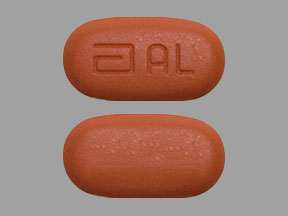
Kaletra Side Effects
Generic name: lopinavir / ritonavir
Medically reviewed by Drugs.com. Last updated on Nov 1, 2024.
Note: This document provides detailed information about Kaletra Side Effects associated with lopinavir / ritonavir. Some dosage forms listed on this page may not apply specifically to the brand name Kaletra.
Applies to lopinavir / ritonavir: oral solution, oral tablet.
Precautions
It is very important that your doctor check the progress of you or your child at regular visits to make sure that this medicine is working properly. Blood and urine tests may be needed to check for unwanted effects.
Do not use this medicine if you or your child are also using alfuzosin (Uroxatral®), apalutamide (Erleada®), cisapride (Propulsid®), colchicine (Colcrys®), dronedarone (Multaq®), elbasvir/grazoprevir (Zepatier®), ergot medicines (eg, dihydroergotamine, ergotamine, methylergonovine, Cafergot®, Ergomar®, Methergine®, or Migranal®), lomitapide (Juxtapid®), lovastatin (Advicor®, Altoprev®, Mevacor®), lurasidone (Latuda®), oral midazolam (Versed®), pimozide (Orap®), ranolazine (Ranexa®), rifampin (Rifadin®), sildenafil (Revatio®), simvastatin (Simcor®, Vytorin®, Zocor®), or triazolam (Halcion®).
Pancreatitis may occur while you are using this medicine. Check with your doctor right away if you or your child have sudden and severe stomach pain, chills, constipation, nausea, vomiting, fever, or lightheadedness.
Check with your doctor right away if you or your child have pain or tenderness in the upper stomach, pale stools, dark urine, loss of appetite, nausea, unusual tiredness or weakness, or yellow eyes or skin. These could be symptoms of a serious liver problem.
This medicine may increase blood sugar levels. Check with your doctor if you or your child notice a change in the results of your blood or urine sugar tests.
This medicine may cause heart rhythm problems, including PR or QT prolongation. It may change the way your heart beats and cause fainting or serious side effects in some patients. Contact your doctor right away if you or your child have any symptoms of heart rhythm problems, such as fast, pounding, or irregular heartbeats.
This medicine may increase the amount of cholesterol and fats in your blood. If this condition occurs, your doctor may give you some medicines that can lower the amount of cholesterol and fats in the blood. Talk to your doctor if you or your child have concerns.
If you or your child develop a skin rash, hives, or any allergic reaction to this medicine, check with your doctor as soon as possible.
If you are taking the oral liquid, you should limit the amount of alcohol you drink. The Kaletra® oral liquid contains 42% alcohol. Talk to your doctor if you or your child are taking, or plan to take, metronidazole (Flagyl®) or disulfiram (Antabuse®).
Birth control pills that contain estrogen may not work as well while you are using this medicine. To keep from getting pregnant, use an additional form of birth control along with your pills. Other forms of birth control include condoms, a diaphragm, or contraceptive foam or jelly.
Your immune system may get stronger when you start taking HIV medicines. Tell your doctor right away if you notice any changes in your health. Sometimes the immune system will start to fight infections that were hidden in your body, such as pneumonia or tuberculosis, or may result in a flare-up of a hidden autoimmune disorder such as Graves disease, polymyositis, or Guillain-Barré syndrome.
This medicine may cause you to have excess body fat. Tell your doctor if you or your child notice changes in your body shape, such as an increased amount of fat in the upper back and neck, or around the chest and stomach area. You might also lose fat from the legs, arms, and face.
This medicine may increase the risk of bleeding in patients with hemophilia (a bleeding disorder). Talk with your doctor about this risk.
Do not take other medicines unless they have been discussed with your doctor. This includes prescription and nonprescription (over-the-counter [OTC]) medicines, and herbal (eg, St. John's wort) or vitamin supplements.
Serious side effects of Kaletra
Along with its needed effects, lopinavir / ritonavir may cause some unwanted effects. Although not all of these side effects may occur, if they do occur they may need medical attention.
Check with your doctor immediately if any of the following side effects occur while taking lopinavir / ritonavir:
Less common side effects
- bloating
- blurred vision
- chills
- constipation
- darkened urine
- dry mouth
- fast heartbeat
- fever
- flushed, dry skin
- fruit-like breath odor
- increased hunger
- increased thirst
- increased urination
- indigestion
- loss of appetite
- loss of consciousness
- nausea
- pains in the stomach, side, or abdomen, possibly moving to the back
- sweating
- troubled breathing
- unexplained weight loss
- vomiting
- yellow eyes or skin
Incidence not known
- blistering, peeling, or loosening of the skin
- chest pain or discomfort
- cough
- diarrhea
- itching
- joint or muscle pain
- lightheadedness, dizziness, or fainting
- red skin lesions, often with a purple center
- red, irritated eyes
- slow or irregular heartbeat
- sore throat
- sores, ulcers, or white spots in the mouth or on the lips
- unusual tiredness or weakness
Get emergency help immediately if any of the following symptoms of overdose occur while taking lopinavir / ritonavir:
Symptoms of overdose
- agitation
- confusion
- cool, sweaty skin
- decreased appetite
- decreased awareness or responsiveness
- decreased urine output
- depression
- fast, irregular, or pounding heartbeat
- fast, shallow breathing
- general feeling of discomfort
- headache
- hostility
- irritability
- muscle pain or cramping
- muscle twitching
- pounding, slow heartbeat
- rapid weight gain
- seizures
- severe sleepiness
- stomach discomfort
- swelling of the face, ankles, or hands
- swelling of the feet or lower legs
- unusual drowsiness, dullness, tiredness, weakness, or feeling of sluggishness
Other side effects of Kaletra
Some side effects of lopinavir / ritonavir may occur that usually do not need medical attention. These side effects may go away during treatment as your body adjusts to the medicine. Also, your health care professional may be able to tell you about ways to prevent or reduce some of these side effects.
Check with your health care professional if any of the following side effects continue or are bothersome or if you have any questions about them:
Less common side effects
- abnormal stools
- belching
- heartburn
- lack or loss of strength
- pain
- skin rash
- trouble with sleeping
Incidence not known
- redistribution of body fat
See also:
Biktarvy
Biktarvy is a complete HIV-1 treatment in a once-a-day single tablet containing three antiviral ...
Descovy
Descovy is used to treat and prevent HIV infection in adults and adolescents. When used for HIV-1 ...
Cabenuva
Cabenuva (cabotegravir and rilpivirine) injections are a long-acting HIV treatment used to keep HIV ...
Truvada
Truvada is used to prevent HIV (HIV PrEP) or treat HIV-1 infection in combination with other HIV-1 ...
Atripla
Atripla prevents the human immunodeficiency virus (HIV) from reproducing in your body. Learn about ...
Complera
Complera (emtricitabine, rilpivirine, and tenofovir) is used to treat HIV infection. Includes ...
Stribild
Stribild (cobicistat, elvitegravir, emtricitabine and tenofovir) is used to treat HIV-1 infection ...
Epzicom
Epzicom is used to treat HIV, which causes the acquired immunodeficiency syndrome (AIDS). Learn ...
Emtricitabine
Emtricitabine is used for HIV Infection, nonoccupational exposure, occupational exposure
For healthcare professionals
Applies to lopinavir / ritonavir: oral capsule, oral liquid, oral tablet.
General adverse events
In clinical studies, this drug was used with nucleoside reverse transcriptase inhibitors with or without efavirenz or nevirapine. The most common side effects were diarrhea, nausea, vomiting, hypertriglyceridemia, and hypercholesterolemia. Diarrhea, nausea, and vomiting occurred more often at the start of therapy while hypertriglyceridemia and hypercholesterolemia generally occurred later. Diarrhea was reported more often when this drug was used once a day than when it was used twice a day.[Ref]
Other
- Very common (10% or more): Increased total cholesterol (up to 39%), increased triglycerides (up to 36%)
- Common (1% to 10%): Fatigue, asthenia, pain, decreased weight, pyrexia, chills, decreased inorganic phosphorus
- Uncommon (0.1% to 1%): Increased weight
- Frequency not reported: Generalized pain, back and abdomen enlargement, chest pain, cyst, edema, peripheral edema, face edema, influenza syndrome, hypertrophy, malaise, drug interaction, increased drug level, bacterial infection, viral infection, otitis media, breast enlargement
Antiretroviral therapy:
- Frequency not reported: Increased weight, increased blood lipid levels[Ref]
Increased total cholesterol (greater than 300 mg/dL) and triglycerides (greater than 750 mg/dL) have been reported in up to 39% and up to 36% of patients, respectively. Decreased inorganic phosphorus (less than 1.5 mg/dL) has been reported in up to 2% of patients.[Ref]
Hepatic
- Very common (10% or more): Increased GGT (up to 29%), increased ALT (up to 11%)
- Common (1% to 10%): Increased AST, hepatitis (including increased AST, ALT, GGT), increased total bilirubin
- Uncommon (0.1% to 1%): Hepatomegaly, cholangitis, hepatic steatosis, hyperbilirubinemia, jaundice
- Frequency not reported: Fatty liver deposit, cytolytic hepatitis, liver tenderness, hepatic failure, cholecystitis, hepatic dysfunction
- Postmarketing reports: Jaundice, hepatitis[Ref]
Increased GGT (greater than 300 units/L), ALT (greater than 215 units/L), AST (greater than 180 units/L), and total bilirubin (greater than 3.48 mg/dL) have been reported in up to 29%, up to 11%, up to 10%, and 1% of patients, respectively.
Patients with underlying hepatitis B or C or marked elevations in transaminases before initiation of therapy may be at an increased risk for developing further transaminase elevations or liver decompensation. There have been reports of hepatic dysfunction with some cases leading to death. A causal relationship with this drug has not been proven since these cases have generally occurred in patients with advanced HIV who also had underlying chronic hepatitis or cirrhosis and were taking multiple concomitant medications.[Ref]
Gastrointestinal
- Very common (10% or more): Diarrhea (up to 28%), nausea (up to 16%)
- Common (1% to 10%): Increased amylase, vomiting, abdominal pain, upper abdominal pain, lower abdominal pain, increased lipase, gastroenteritis and colitis, dyspepsia, pancreatitis, gastroesophageal reflux disease, hemorrhoids, flatulence, abdominal distention, abnormal feces, constipation, dysphagia
- Uncommon (0.1% to 1%): Stomatitis and oral ulcers, duodenitis, gastritis, gastrointestinal hemorrhage (including rectal hemorrhage), dry mouth, gastrointestinal ulcer, fecal incontinence
- Frequency not reported: Abdominal discomfort, enteritis, enterocolitis, eructation, esophagitis, gastric disorder, gastric ulcer, hemorrhagic enterocolitis, mouth ulceration, periodontitis, sialadenitis, stomach discomfort, ulcerative stomatitis[Ref]
Increased amylase (greater than 2 times the upper limit of normal [2 x ULN]) and lipase (greater than 2 x ULN) were reported in up to 8% and up to 5% of patients, respectively.
Pancreatitis, including fatalities, has occurred in patients receiving this drug, including those who developed hypertriglyceridemia. Although a causal relationship has not been established, marked triglyceride elevation is a risk factor for the development of pancreatitis.[Ref]
Respiratory
- Very common (10% or more): Upper respiratory tract infection (up to 13.9%)
- Common (1% to 10%): Lower respiratory tract infection, bronchitis
- Frequency not reported: Asthma, bronchopneumonia, dyspnea, pulmonary edema, pharyngitis, rhinitis, increased cough, sinusitis, influenza[Ref]
Metabolic
- Common (1% to 10%): Hypercholesterolemia, hypertriglyceridemia, increased glucose, increased uric acid, decreased appetite, blood glucose disorders (including diabetes mellitus), anorexia
- Uncommon (0.1% to 1%): Lactic acidosis, increased appetite
- Frequency not reported: Avitaminosis, hypovitaminosis, dehydration, dyslipidemia, hyperamylasemia, hyperlipasemia, decreased glucose tolerance, lipomatosis, obesity, hyperglycemia, new onset diabetes mellitus, exacerbation of preexisting diabetes mellitus, ketoacidosis, insulin resistance, hyperlactatemia
- Postmarketing reports: Redistribution/accumulation of body fat (including central obesity, dorsocervical fat enlargement, peripheral wasting, facial wasting, breast enlargement, "cushingoid appearance")
Combination antiretroviral therapy:
- Frequency not reported: Redistribution of body fat (fat loss or fat gain)
Antiretroviral therapy:
- Frequency not reported: Redistribution/accumulation of body fat, increased glucose levels[Ref]
Increased glucose (greater than 250 mg/dL) and uric acid (greater than 12 mg/dL) have each been reported in up to 5% of patients.
Episodes of hyperglycemia, new onset diabetes mellitus, and exacerbation of preexisting diabetes mellitus have been reported during postmarketing studies in HIV-infected patients receiving protease inhibitors. In some cases, diabetic ketoacidosis has occurred. No causal relationship has been established.[Ref]
Musculoskeletal
- Common (1% to 10%): Musculoskeletal pain (including arthralgia, back pain), increased creatine phosphokinase, myalgia, muscle disorders (such as weakness, spasms)
- Uncommon (0.1% to 1%): Rhabdomyolysis, osteonecrosis
- Frequency not reported: Arthropathy, arthrosis, muscular weakness, joint disorder, osteoarthritis, extremity pain, myasthenia, myositis, perineal abscess[Ref]
Increased creatine phosphokinase (greater than 4 x ULN) was reported in up to 5% of patients.[Ref]
Nervous system
- Common (1% to 10%): Headache (including migraine), neuropathy (including peripheral neuropathy), dizziness, paresthesia
- Uncommon (0.1% to 1%): Ageusia, convulsion, vertigo, tremor, cerebrovascular accident/event, tinnitus, dysgeusia
- Frequency not reported: Amnesia, ataxia, balance disorder, abnormal coordination, cerebral infarction, dyskinesia, encephalopathy, facial paralysis/palsy, hypertonia, peripheral neuritis, somnolence, hyperacusis, extrapyramidal disorder[Ref]
Hematologic
- Common (1% to 10%): Decreased neutrophils, anemia, decreased hemoglobin, leukopenia, neutropenia, lymphadenopathy
- Rare (less than 0.1%): Hemolytic anemia, spontaneous bleeding in hemophiliacs
- Frequency not reported: Splenomegaly[Ref]
Decreased neutrophils (less than 0.75 x 10[9]/L) and hemoglobin (less than 8 g/dL) have been reported in up to 5% and up to 2% of patients, respectively.[Ref]
Psychiatric
- Common (1% to 10%): Anxiety, insomnia, decreased libido, depression
- Uncommon (0.1% to 1%): Abnormal dreams
- Frequency not reported: Affect lability, agitation, apathy, confusional state, disorientation, mood swings, nervousness, abnormal thinking[Ref]
Dermatologic
- Common (1% to 10%): Rash (including maculopapular rash), skin infections (including cellulitis, folliculitis, furuncle), acquired lipodystrophy (including facial wasting), dermatitis/rash (including eczema, seborrheic dermatitis), night sweats, pruritus
- Uncommon (0.1% to 1%): Alopecia, capillaritis, vasculitis
- Rare (0.01% to 0.1%): Stevens-Johnson syndrome, erythema multiforme
- Frequency not reported: Acne, dry skin, acneiform dermatitis, allergic dermatitis, exfoliative dermatitis, idiopathic capillaritis, generalized rash, nail disorder, seborrhea, benign skin neoplasm, skin discoloration, skin hypertrophy, skin ulcer, skin striae, swelling face, hyperhidrosis, acute generalized exanthematous pustulosis, furunculosis
- Postmarketing reports: Toxic epidermal necrolysis, Stevens-Johnson syndrome, erythema multiforme[Ref]
Renal
- Common (1% to 10%): Decreased calculated CrCl, renal failure
- Uncommon (0.1% to 1%): Nephritis
- Frequency not reported: Nephrolithiasis, renal disorder
- Postmarketing reports: Nephrolithiasis[Ref]
Decreased calculated CrCl (less than 50 mL/min) was reported in up to 3% of patients.[Ref]
Hypersensitivity
- Common (1% to 10%): Hypersensitivity (including urticaria, angioedema)
- Frequency not reported: Drug hypersensitivity, severe skin and mucous hypersensitivity reaction with transient multiorgan failure[Ref]
Cardiovascular
- Common (1% to 10%): Hypertension, vasodilatation
- Uncommon (0.1% to 1%): Deep vein thrombosis, atherosclerosis (such as myocardial infarction), atrioventricular (AV) block, tricuspid valve incompetence
- Frequency not reported: Distended veins, angina pectoris, atrial fibrillation, chest pain, palpitation, orthostatic hypotension, thrombophlebitis, varicose vein, vasculitis, sinus arrest, bradycardia-tachycardia syndrome
- Postmarketing reports: Bradyarrhythmias, first-degree AV block, second-degree AV block, third-degree AV block, QTc interval prolongation, torsades de pointes[Ref]
Genitourinary
- Common (1% to 10%): Erectile dysfunction, menstrual disorders, amenorrhea, menorrhagia
- Uncommon (0.1% to 1%): Hematuria
- Frequency not reported: Ejaculation disorder, impotence, abnormal urine odor, urine abnormality[Ref]
Endocrine
- Common (1% to 10%): Hypogonadism
- Frequency not reported: Cushing's syndrome, hypothyroidism, gynecomastia[Ref]
Ocular
- Uncommon (0.1% to 1%): Visual impairment
- Frequency not reported: Visual disturbance, eye disorder[Ref]
Immunologic
- Uncommon (0.1% to 1%): Immune reconstitution syndrome/immune reconstitution inflammatory syndrome
- Frequency not reported: Autoimmune disorders in the setting of immune reconstitution (e.g., Graves' disease, polymyositis, Guillain-Barre syndrome, autoimmune hepatitis)
Oncologic
- Frequency not reported: Neoplasm, lipoma
References
1. (2001) "Product Information. Kaletra (lopinavir-ritonavir)." Abbott Pharmaceutical
2. Hicks C, King MS, Gulick RM, et al. (2004) "Long-term safety and durable antiretroviral activity of lopinavir / ritonavir in treatment-naive patients: 4 year follow-up study." AIDS, 18, p. 775-779
3. Guest JL, Ruffin C, Tschampa JM, DeSilva KE, Rimland D (2004) "Differences in rates of diarrhea in patients with human immunodeficiency virus receiving lopinavir-ritonavir or nelfinavir." Pharmacotherapy, 24, p. 727-35
4. Cerner Multum, Inc. "UK Summary of Product Characteristics."
5. Borras-Blasco J, Belda A, Rosique-Robles D, Castera E, Abad J, Amoros-Quiles I (2007) "Hair loss induced by lopinavir-ritonavir." Pharmacotherapy, 27, p. 1215-8
6. Leon A, Martinez E, Sarasa M, et al. (2007) "Impact of steady-state lopinavir plasma levels on plasma lipids and body composition after 24 weeks of lopinavir / ritonavir-containing therapy free of thymidine analogues." J Antimicrob Chemother
7. Warnke D, Barreto J, Temesgen Z (2007) "Antiretroviral drugs." J Clin Pharmacol, 47, p. 1570-9
8. Cerner Multum, Inc. "Australian Product Information."
9. Rabaud C, Burty C, Grandidier M, et al. (2005) "Tolerability of postexposure prophylaxis with the combination of zidovudine-lamivudine and lopinavir-ritonavir for HIV infection." Clin Infect Dis, 40, p. 303-5
10. Johnson M, Grinsztejn B, Rodriguez C, et al. (2006) "96-week comparison of once-daily atazanavir/ritonavir and twice-daily lopinavir / ritonavir in patients with multiple virologic failures." AIDS, 20, p. 711-718
11. Cameron DW, Becker S, King MS, et al. (2007) "Exploratory study comparing the metabolic toxicities of a lopinavir / ritonavir plus saquinavir dual protease inhibitor regimen versus a lopinavir / ritonavir plus zidovudine/lamivudine nucleoside regimen." J Antimicrob Chemother, 59, p. 957-63
12. (2009) "Drugs for HIV infection." Treat Guidel Med Lett, 7, p. 11-22
13. Bongiovanni M, Bini T, Tordato F, et al. (2003) "Immunovirological outcomes in 70 HIV-1-infected patients who switched to lopinavir / ritonavir after failing at least one protease inhibitor-containing regimen: a retrospective cohort study." J Antimicrob Chemother, 51, p. 171-4
14. Martinez E, Domingo P, Galindo MJ, et al. (2004) "Risk of metabolic abnormalities in patients infected with HIV receiving antiretroviral therapy that contains lopinavir-ritonavir." Clin Infect Dis, 38, p. 1017-23
15. Doco-Lecompte T, Garrec A, Thomas L, Trechot P, May T, Rabaud C (2004) "Lopinavir-ritonavir (Kaletra) and lithiasis: seven cases." AIDS, 18, p. 705-6
16. Canta F, Marrone R, Bonora S, et al. (2005) "Pharmacokinetics and hepatotoxicity of lopinavir / ritonavir in non-cirrhotic HIV and hepatitis C virus (HCV) co-infected patients." J Antimicrob Chemother
17. Johnson M, Grinsztejn B, Rodriguez C, et al. (2005) "Atazanavir plus ritonavir or saquinavir, and lopinavir / ritonavir in patients experiencing multiple virological failures." AIDS, 19, p. 685-94
18. Manfredi R, Sabbatani S (2006) "Serious, multi-organ hypersensitivity to lopinavir alone, involving cutaneous-mucous rash, and myeloid, liver, and kidney function." AIDS, 20, p. 2399-2400
19. Soriano V, Puoti M, Sulkowski M, et al. (2007) "Care of patients coinfected with HIV and hepatitis C virus: 2007 updated recommendations from the HCV-HIV International Panel." AIDS, 21, p. 1073-89
20. Voigt E, Wasmuth JC, Vogel M, et al. (2004) "Safety, Efficacy and Development of Resistance under the New Protease Inhibitor Lopinavir/Ritonavir: 48-Week Results." Infection, 32, p. 82-8
21. Hammer SM, Saag MS, Schechter M, et al. (2006) "Treatment for adult HIV infection: 2006 recommendations of the International AIDS Society-USA panel." JAMA, 296, p. 827-43
22. Brennan-Benson P, Pakianathan M, Rice P, et al. (2006) "Enfurvitide prevents vertical transmission of multidrug-resistant HIV-1 in pregnancy but does not cross the placenta." AIDS, 20, p. 297-9
23. Molto J, Santos JR, Negredo E, Miranda C, Videla S, Clotet B (2007) "Lopinavir / ritonavir monotherapy as a simplification strategy in routine clinical practice." J Antimicrob Chemother, 60, p. 436-9
24. Roberts DM, Ray JE, Buckley NA (2008) "Mild clinical toxicity and dose-dependent pharmacokinetics following acute lopinavir / ritonavir poisoning in a HIV-positive patient." AIDS, 22, p. 792-3
25. Borras-Blasco J, Navarro-Ruiz A, Borras C, Castera E (2008) "Adverse cutaneous reactions associated with the newest antiretroviral drugs in patients with human immunodeficiency virus infection." J Antimicrob Chemother, 62, p. 879-88
26. Badiou S, De Boever CM, Dupuy AM, Baillat V, Cristol JP, Reynes J (2003) "Small dense LDL and atherogenic lipid profile in HIV-positive adults: influence of lopinavir / ritonavir-containing regimen." AIDS, 17, p. 772-4
27. Bergersen BM (2006) "Cardiovascular Risk in Patients with HIV Infection : Impact of Antiretroviral Therapy." Drugs, 66, p. 1971-87
28. Yazdanpanah Y, Viget N, Cheret A, et al. (2003) "Increased bleeding in HIV-positive haemophiliac patients treated with lopinavir-ritonavir." AIDS, 17, p. 2397-9
29. Ghosn J, Duvivier C, Tubiana R, Katlama C, Caumes E (2005) "Acute generalized exanthematous pustulosis induced by HIV postexposure prophylaxis with lopinavir-ritonavir." Clin Infect Dis, 41, p. 1360-1
30. Yotsumoto M, Kitano K, Saito H (2005) "Bradycardia-tachycardia syndrome induced by lopinavir-ritonavir in a patient with AIDS." AIDS, 19, p. 1547-8
31. Worm SW, Sabin C, Weber R, et al. (2009) "Risk of myocardial infarction in patients with HIV infection exposed to specific individual antiretroviral drugs from the 3 major drug classes: The Data Collection on Adverse Events of Anti-HIV Drugs (D:A:D) Study." J Infect Dis, 201, p. 318-30
32. Calza L, Manfredi R, Verucchi G (2010) "Myocardial infarction risk in HIV-infected patients: epidemiology, pathogenesis, and clinical management." AIDS, 24, p. 789-802
More about Kaletra (lopinavir / ritonavir)
- Check interactions
- Compare alternatives
- Pricing & coupons
- Reviews (4)
- Drug images
- Dosage information
- During pregnancy
- Generic availability
- Drug class: protease inhibitors
- En español
Patient resources
Professional resources
Related treatment guides
Further information
Kaletra side effects can vary depending on the individual. Always consult your healthcare provider to ensure the information displayed on this page applies to your personal circumstances.
Note: Medication side effects may be underreported. If you are experiencing side effects that are not listed, submit a report to the FDA by following this guide.