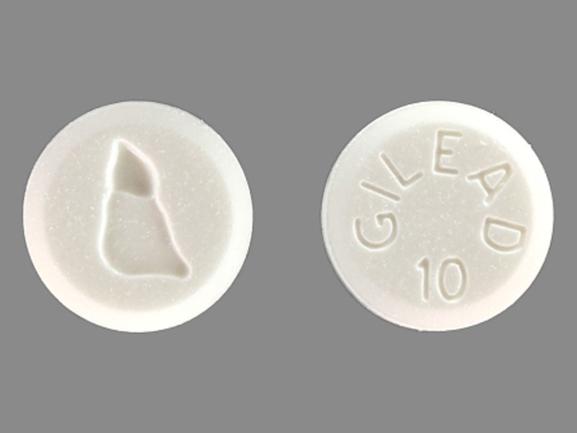
Hepsera Side Effects
Generic name: adefovir
Medically reviewed by Drugs.com. Last updated on Aug 17, 2024.
Note: This document provides detailed information about Hepsera Side Effects associated with adefovir. Some dosage forms listed on this page may not apply specifically to the brand name Hepsera.
Applies to adefovir: oral tablet.
Important warnings
This medicine can cause some serious health issues
Oral route (tablet)
Severe acute exacerbations of hepatitis may occur in patients who discontinue adefovir dipivoxil.
Monitor hepatic function closely in these patients.
Chronic use of adefovir dipivoxil may result in nephrotoxicity in patients at risk of or having underlying renal dysfunction; therefore, monitor renal function closely in these patients.
Dose adjustment may be required.
Emergence of HIV resistance may occur in chronic hepatitis B patients with unrecognized or untreated HIV infection who are treated with adefovir dipivoxil. Lactic acidosis and severe hepatomegaly with steatosis, including fatal cases, have been reported with the use of nucleoside analogs.
Precautions
It is very important that your doctor check your progress at regular visits. This will allow your doctor to see if the medicine is working properly. Blood and urine tests may be needed to check for unwanted effects.
You should not use this medicine if you are also taking tenofovir (Viread®) or other medicines containing tenofovir (eg, Atripla®, Complera®, Stribild™, or Truvada®). Tell your doctor right away if you are using any of these medicines. Do not start using adefovir (the active ingredient contained in Hepsera) until your doctor tells you to.
If you have or get HIV infection, be sure to discuss your treatment with your doctor. If you are using this medicine to treat chronic hepatitis B, and are not taking medicine for your HIV infection at the same time, some HIV treatments may be less likely to work. You may need to get an HIV test before you start using this medicine, and again later if there is a chance you were exposed to HIV. This medicine will not help your HIV infection.
When this medicine is stopped, the liver disease (hepatitis) may become worse. Do not stop using adefovir unless your doctor tells you to. Be sure to keep all appointments with your doctor after you stop using this medicine. Blood tests will be needed to check your liver function.
Check with your doctor right away if you have more than one of the following: blood in the urine, change in frequency of urination or amount of urine, difficulty with breathing, drowsiness, increased thirst, loss of appetite, nausea or vomiting, swelling of the feet or lower legs, or weakness. These may be symptoms of a serious kidney problem.
Two rare but serious reactions to this medicine are lactic acidosis (build-up of acid in the blood) and liver toxicity, including an enlarged liver. These are more common if you are female, very overweight (obese), or have been taking anti-HIV medicines for a long time. Call your doctor right away if you have stomach discomfort or cramping, nausea, vomiting, diarrhea, decreased appetite, muscle cramping or pain, unusual tiredness or weakness, trouble breathing, or a yellowish color in your skin or eyes.
Treatment with adefovir has not been shown to decrease the chance of giving hepatitis B virus infection to other people through sexual contact or by sharing needles. If you have any questions about this, check with your doctor.
Serious side effects of Hepsera
Along with its needed effects, adefovir may cause some unwanted effects. Although not all of these side effects may occur, if they do occur they may need medical attention.
Check with your doctor immediately if any of the following side effects occur while taking adefovir:
More common side effects
- dark urine
- general tiredness and weakness
- light-colored stools
- nausea and vomiting
- upper right abdomen or stomach pain
- yellow eyes and skin
Less common side effects
- blood in the urine
- change in frequency of urination or amount of urine
- difficult breathing
- drowsiness
- increased thirst
- loss of appetite
- swelling of the feet or lower legs
- weakness
Rare side effects
- fast, shallow breathing
- general feeling of discomfort
- muscle pain or cramping
- shortness of breath
- sleepiness
- unusual tiredness or weakness
Incidence not known
- bloating
- bone fractures, especially of the thigh bone
- bone pain
- chills
- cloudy urine
- constipation
- convulsions
- darkened urine
- decreased frequency or amount of urine
- fast heartbeat
- fever
- increase in the amount of urine
- increased blood pressure
- indigestion
- lower back or side pain
- muscular pain, tenderness, wasting, or weakness
- pains in the stomach, side, or abdomen, possibly radiating to the back
- swelling of the face, fingers, or lower legs
- weight gain
Other side effects of Hepsera
Some side effects of adefovir may occur that usually do not need medical attention. These side effects may go away during treatment as your body adjusts to the medicine. Also, your health care professional may be able to tell you about ways to prevent or reduce some of these side effects.
Check with your health care professional if any of the following side effects continue or are bothersome or if you have any questions about them:
More common side effects
- abdominal or stomach pain
- headache
- lack or loss of strength
Less common side effects
- acid or sour stomach
- belching
- bloated or full feeling
- diarrhea
- excess air or gas in the stomach or intestines
- heartburn
- passing gas
- stomach discomfort, upset, or pain
See also:
For healthcare professionals
Applies to adefovir: oral tablet.
General adverse events
In patients with compensated liver disease, the most commonly reported side effects were asthenia, headache, abdominal pain, and nausea during 48 weeks of therapy. In patients with decompensated liver disease, the most commonly reported side effects were increased creatinine and asthenia during up to 203 weeks of therapy.[Ref]
Renal
- Very common (10% or more): Increased serum creatinine
- Common (1% to 10%): Renal failure, abnormal renal function
- Frequency not reported: Renal toxicity, changes in renal function, renal events, renal insufficiency, renal calculus, renal pain, nephrotoxicity, Fanconi-like syndrome, overall renal function deterioration
- Postmarketing reports: Proximal renal tubulopathy, Fanconi syndrome[Ref]
In 125 hepatitis B e antigen (HBeAg)-negative patients with extended therapy (up to 240 weeks), serum creatinine increases of at least 0.5 mg/dL from baseline were confirmed in 4 patients; 1 patient discontinued therapy due to elevated serum creatinine level. In 65 HBeAg-positive patients with extended therapy (up to 234 weeks), serum creatinine increases of at least 0.5 mg/dL from baseline were confirmed in 6 patients; 2 patients discontinued therapy due to elevated serum creatinine level.
Pre- and post-liver transplantation patients (n=226 and 241, respectively) with chronic hepatitis B and lamivudine-resistant hepatitis B were treated for up to 203 weeks; changes in renal function were reported in those with risk factors for renal dysfunction. Serum creatinine increases of at least 0.3 mg/dL from baseline were seen in 37% and 53% of pre-liver transplantation patients by 48 and 96 weeks, respectively; serum creatinine increases of at least 0.5 mg/dL from baseline occurred in 18%, 35%, and 35% of pre-liver transplantation patients by 48, 96, and 144 week, respectively. Serum creatinine increases of at least 0.3 mg/dL from baseline were seen in 32% and 51% of post-liver transplantation patients by 48 and 96 weeks, respectively; serum creatinine increases of at least 0.5 mg/dL from baseline occurred in 12%, 28%, and 30% of post-liver transplantation patients by 48, 96, and 144 weeks, respectively. Serum creatinine elevations at least 0.5 mg/dL from baseline resolved (up to 0.3 mg/dL increase from baseline) in 8 of 39 pre-liver transplantation patients and in 14 of 43 post-liver transplantation patients by last study visit. Serum phosphorus values less than 2 mg/dL were seen in 1.3% and 2.5% of pre- and post-liver transplantation patients, respectively, by last study visit. This drug was discontinued due to renal events in 4% of pre- and post-liver transplant patients. Causality could not be definitely determined because of the presence of multiple risk factors for renal dysfunction.
Fanconi-like syndrome and overall renal function deterioration have been reported at high doses.
Renal failure has also been reported during postmarketing experience.[Ref]
Hepatic
- Very common (10% or more): Elevated ALT (20%)
- Common (1% to 10%): Elevated AST
- Frequency not reported: Hepatic failure, severe acute exacerbations of hepatitis
- Postmarketing reports: Clinical and laboratory evidence of exacerbations of hepatitis
Nucleoside analogs:
- Frequency not reported: Severe hepatomegaly with steatosis[Ref]
Elevated ALT (greater than 5 times the upper limit of normal [5 x ULN]) and AST (greater than 5 x ULN) were reported in 20% and 8% of patients, respectively, during the first 48 weeks of therapy.
Severe acute exacerbations of hepatitis have been reported in patients who have discontinued this drug. Although most cases appeared self-limited or resolved by restarting therapy, severe hepatitis exacerbations (including fatalities) have been reported.
Clinical and laboratory evidence of exacerbations of hepatitis have been reported after treatment with this drug was discontinued.
Lactic acidosis and severe hepatomegaly with steatosis (including fatalities) have been reported with the use of nucleoside analogs alone or in combination with antiretrovirals.[Ref]
Other
- Very common (10% or more): Asthenia (up to 13%), decreased serum phosphorus
- Common (1% to 10%): Decreased carnitine levels
- Frequency not reported: Fever, weight loss, influenza-like syndrome, infection, pain, accidental injury[Ref]
Genitourinary
- Very common (10% or more): Hematuria (11%)
- Common (1% to 10%): Glycosuria
Hematuria (at least 3+) and glycosuria (at least 3+) were reported in 11% and 1% of patients, respectively, during the first 48 weeks of therapy.
Gastrointestinal
- Common (1% to 10%): Abdominal pain, nausea, flatulence, diarrhea, dyspepsia, vomiting, increased amylase
- Postmarketing reports: Pancreatitis[Ref]
Increased amylase (greater than 2 x ULN) was reported in 4% of patients during the first 48 weeks of therapy.[Ref]
Nervous system
- Common (1% to 10%): Headache
- Frequency not reported: Dizziness[Ref]
Musculoskeletal
- Common (1% to 10%): Increased creatine kinase
- Frequency not reported: Arthralgia, back pain, hypophosphatemic osteomalacia (in the context of Fanconi syndrome)
- Postmarketing reports: Myopathy, osteomalacia (manifested as bone pain and infrequently contributing to fractures)[Ref]
Increased creatine kinase (greater than 4 x ULN) was reported in 7% of patients during the first 48 weeks of therapy.
Osteomalacia and myopathy, both associated with proximal renal tubulopathy, have been reported.[Ref]
Dermatologic
- Common (1% to 10%): Pruritus, rash[Ref]
Metabolic
- Common (1% to 10%): Hypophosphatemia
- Frequency not reported: Anorexia
Nucleoside analogs:
- Frequency not reported: Lactic acidosis[Ref]
Hypophosphatemia has also been reported during postmarketing experience.
Lactic acidosis and severe hepatomegaly with steatosis (including fatalities) have been reported with the use of nucleoside analogs alone or in combination with antiretrovirals.[Ref]
Psychiatric
- Frequency not reported: Insomnia
Respiratory
Cardiovascular
- Frequency not reported: Myocardial infarction[Ref]
Myocardial infarction has been reported at high doses.[Ref]
Ocular
- Frequency not reported: Amblyopia[Ref]
Amblyopia has been reported at high doses.[Ref]
References
1. (2022) "Product Information. Hepsera (adefovir)." Gilead Sciences
2. Cerner Multum, Inc. "UK Summary of Product Characteristics."
3. Cerner Multum, Inc. "Australian Product Information."
4. Szczech LA (2001) "Hypertension and medication-related renal dysfunction in the HIV-infected patient." Semin Nephrol, 21, p. 386-93
5. Bendele RA, Richardson FC (2002) "Adefovir nephrotoxicity and mitochondrial DNA depletion." Hum Pathol, 33, p. 574
6. Tanji N, Tanji K, Kambham N, Markowitz GS, Bell A, D'agati VD (2001) "Adefovir nephrotoxicity: possible role of mitochondrial DNA depletion." Hum Pathol, 32, p. 734-40
7. Rivkina A, Rybalov S (2002) "Chronic hepatitis B: current and future treatment options." Pharmacotherapy, 22, p. 721-37
8. Marcellin P, Chang TT, Lim SG, et al. (2003) "Adefovir dipivoxil for the treatment of hepatitis B e antigen-positive chronic hepatitis B." N Engl J Med, 348, p. 808-16
9. Perazella MA (2003) "Drug-induced renal failure: update on new medications and unique mechanisms of nephrotoxicity." Am J Med Sci, 325, p. 349-62
10. Izzedine H, Hulot JS, Launay-Vacher V, et al. (2004) "Renal safety of adefovir dipivoxil in patients with chronic hepatitis B: Two double-blind, randomized, placebo-controlled studies." Kidney Int, 66, p. 1153-8
11. Izzedine H, Launay-Vacher V, Deray G (2005) "Renal tubular transporters and antiviral drugs: an update." AIDS, 19, p. 455-62
12. Izzedine H, Launay-Vacher V, Deray G (2005) "Antiviral drug-induced nephrotoxicity." Am J Kidney Dis, 45, p. 804-17
13. Garcia A, Mazuecos A, Gonzalez P, et al. (2005) "Treatment with adefovir dipivoxil in a renal transplant patient with renal insufficiency and Lamivudine-resistant hepatitis B infection." Transplant Proc, 37, p. 1462-3
14. Lok AS (2005) "The maze of treatments for hepatitis B." N Engl J Med, 352, p. 2743-6
15. Hadziyannis SJ, Tassopoulos NC, Heathcote EJ, et al. (2005) "Long-term therapy with adefovir dipivoxil for HBeAg-negative chronic hepatitis B." N Engl J Med, 352, p. 2673-81
16. Fontaine H, Vallet-Pichard A, Chaix ML, et al. (2005) "Efficacy and safety of adefovir dipivoxil in kidney recipients, hemodialysis patients, and patients with renal insufficiency." Transplantation, 80, p. 1086-92
17. Sun DQ, Wang HS, Ni MY, Wang BJ, Guo RC (2007) "Pharmacokinetics, safety and tolerance of single- and multiple-dose adefovir dipivoxil in healthy Chinese subjects." Br J Clin Pharmacol, 63, p. 15-23
18. Han SH (2006) "Natural course, therapeutic options and economic evaluation of therapies for chronic hepatitis B." Drugs, 66, p. 1831-51
19. Muller C (2006) "Chronic Hepatitis B and C--current treatment and future therapeutic prospects." Wien Med Wochenschr, 156(13-14), p. 391-6
20. Gish RG (2005) "Clinical trial results of new therapies for HBV: implications for treatment guidelines." Semin Liver Dis, 25 Suppl 1, p. 29-39
21. Hadziyannis SJ, Tassopoulos NC, Heathcote EJ, et al. (2006) "Long-Term Therapy With Adefovir Dipivoxil for HBeAg-Negative Chronic Hepatitis B for up to 5 Years." Gastroenterology
22. de Silva HJ, Dassanayake AS, Manamperi A, de Silva AP (2006) "Treatment of Lamivudine-resistant hepatitis B infection in post-renal transplant patients with adefovir dipivoxil: premiminary results." Transplant Proc, 38, p. 3118-20
23. Delaney WE 4th (2007) "Progress in the treatment of chronic hepatitis B: long-term experience with adefovir dipivoxil." J Antimicrob Chemother
24. Izzedine H, Kheder-Elfekih R, Housset P, Sarkozy C, Brocheriou I, Deray G (2009) "Adefovir dipivoxil-induced acute tubular necrosis and Fanconi syndrome in a renal transplant patient." AIDS, 23, p. 544-5
25. Wong T, Girgis CM, Ngu MC, et al. (2010) "Hypophosphatemic osteomalacia after low-dose adefovir dipivoxil therapy for hepatitis B." J Clin Endocrinol Metab, 95, p. 479-80
26. Hadziyannis SJ, Tassopoulos NC, Heathcote EJ, et al. (2003) "Adefovir dipivoxil for the treatment of hepatitis B e antigen-negative chronic hepatitis B." N Engl J Med, 348, p. 800-7
More about Hepsera (adefovir)
- Check interactions
- Compare alternatives
- Drug images
- Dosage information
- During pregnancy
- Drug class: nucleoside reverse transcriptase inhibitors (NRTIs)
- Breastfeeding
- En español
Patient resources
Professional resources
Related treatment guides
Further information
Hepsera side effects can vary depending on the individual. Always consult your healthcare provider to ensure the information displayed on this page applies to your personal circumstances.
Note: Medication side effects may be underreported. If you are experiencing side effects that are not listed, submit a report to the FDA by following this guide.