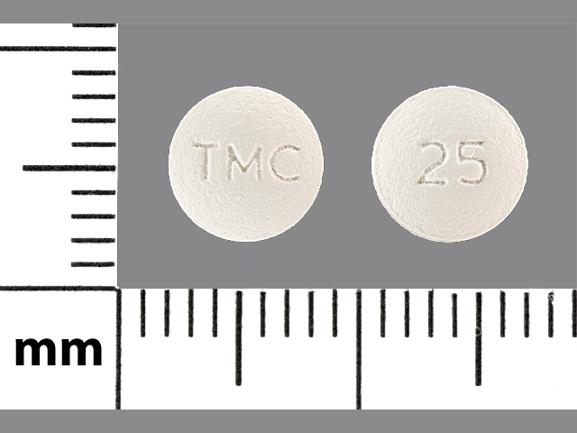
Edurant Side Effects
Generic name: rilpivirine
Medically reviewed by Drugs.com. Last updated on Jan 31, 2025.
Note: This document provides detailed information about Edurant Side Effects associated with rilpivirine. Some dosage forms listed on this page may not apply specifically to the brand name Edurant.
Applies to rilpivirine: oral tablet.
Precautions
It is very important that your doctor check your or your child's progress at regular visits to make sure that this medicine is working properly. Blood tests may be needed to check for unwanted effects.
Do not use rilpivirine (the active ingredient contained in Edurant) if you are also taking dexamethasone (Decadron®), St. John's wort, medicine to treat tuberculosis (eg, rifampin, rifapentine, Priftin®, Rifadin®, or Rimactane®), seizure medicine (eg, carbamazepine, oxcarbazepine, phenobarbital, phenytoin, Dilantin®, Tegretol®, or Trileptal®), or certain stomach medicines (eg, esomeprazole, lansoprazole, omeprazole, pantoprazole, rabeprazole, Aciphex®, Nexium®, Prevacid®, Prilosec®, or Protonix®).
Serious skin reactions can occur with this medicine. Check with your doctor right away if you have blistering, peeling, or loosening of the skin, red skin lesions, severe acne or skin rash, sores or ulcers on the skin, or fever or chills with this medicine.
This medicine may cause serious types of allergic reactions, including anaphylaxis and drug reaction with eosinophilia and systemic symptoms (DRESS syndrome). Anaphylaxis can be life-threatening and requires immediate medical attention. Call your doctor right away if you have a rash, itching, hoarseness, lightheadedness or dizziness, trouble breathing, trouble swallowing, or any swelling of your hands, face, or mouth with this medicine.
Tell your doctor right away if you start to feel depressed and have thoughts about hurting yourself. Report any unusual thoughts or behaviors that trouble you, especially if they are new or get worse quickly.
This medicine may cause serious liver problems. This may occur in patients with a history of hepatitis B or C infection. Check with your doctor right away if you have clay-colored stools, dark urine, a decreased appetite, fever, headache, itching, nausea and vomiting, skin rash, stomach pain or tenderness, swelling of the feet or lower legs, unusual tiredness or weakness, or yellow eyes or skin.
Your immune system may get stronger when you start taking HIV medicines. Tell your doctor right away if you notice any changes in your health. Sometimes the immune system will start to fight infections that were hidden in your body, such as pneumonia, herpes, or tuberculosis. Autoimmune disorders such as Graves disease, polymyositis, and Guillain-Barré syndrome may also occur.
Before you have any medical tests, tell the medical doctor in charge that you are taking this medicine. The results of some tests may be affected by this medicine.
Do not take other medicines unless they have been discussed with your doctor. This includes prescription or nonprescription (over-the-counter [OTC]) medicines and herbal or vitamin supplements.
Serious side effects of Edurant
Along with its needed effects, rilpivirine may cause some unwanted effects. Although not all of these side effects may occur, if they do occur they may need medical attention.
Check with your doctor immediately if any of the following side effects occur while taking rilpivirine:
Less common side effects
- changes in behavior
- cloudy or bloody urine
- discouragement
- feeling sad or empty
- gaseous stomach pain
- indigestion
- irritability
- lack of appetite
- loss of interest or pleasure
- recurrent fever
- severe nausea or vomiting
- stomach fullness
- swelling of the face, feet, or lower legs
- thoughts of killing oneself
- tiredness
- trouble concentrating
- trouble sleeping
- yellow eyes or skin
Incidence not known
- blurred vision
- chest tightness
- chills
- cough
- dizziness
- fever
- headache
- hives, itching, skin rash
- hoarseness
- irritation
- joint pain, stiffness, or swelling
- nervousness
- pounding in the ears
- redness of the skin
- slow or fast heartbeat
- sore throat
- swollen, painful, or tender lymph glands in the neck, armpit, or groin
- trouble breathing or swallowing
Other side effects of Edurant
Some side effects of rilpivirine may occur that usually do not need medical attention. These side effects may go away during treatment as your body adjusts to the medicine. Also, your health care professional may be able to tell you about ways to prevent or reduce some of these side effects.
Check with your health care professional if any of the following side effects continue or are bothersome or if you have any questions about them:
Less common side effects
- abnormal dreams
- diarrhea
- fear
- nausea
- sleepiness or unusual drowsiness
- stomach discomfort
- unusual tiredness or weakness
- vomiting
See also:
Biktarvy
Biktarvy is a complete HIV-1 treatment in a once-a-day single tablet containing three antiviral ...
Descovy
Descovy is used to treat and prevent HIV infection in adults and adolescents. When used for HIV-1 ...
Cabenuva
Cabenuva (cabotegravir and rilpivirine) injections are a long-acting HIV treatment used to keep HIV ...
Truvada
Truvada is used to prevent HIV (HIV PrEP) or treat HIV-1 infection in combination with other HIV-1 ...
Atripla
Atripla prevents the human immunodeficiency virus (HIV) from reproducing in your body. Learn about ...
Complera
Complera (emtricitabine, rilpivirine, and tenofovir) is used to treat HIV infection. Includes ...
Stribild
Stribild (cobicistat, elvitegravir, emtricitabine and tenofovir) is used to treat HIV-1 infection ...
Epzicom
Epzicom is used to treat HIV, which causes the acquired immunodeficiency syndrome (AIDS). Learn ...
Emtricitabine
Emtricitabine is used for HIV Infection, nonoccupational exposure, occupational exposure
For healthcare professionals
Applies to rilpivirine: oral tablet, oral tablet dispersible.
General adverse events
The most common side effects reported from monthly and every 2 month IM dosing studies were injection site reactions, headache, and pyrexia.
Most side effects occurred in the first 48 weeks of oral therapy. The most common side effects (at least moderate severity) were depression, headache, insomnia, increased transaminases, and rash. This drug was discontinued due to side effects in 2% of patients.
Safety findings from phase 3 trials were similar when this drug was used in combination with cabotegravir tablets or other antiretroviral agents. The manufacturer product information for cabotegravir tablets and cabotegravir-rilpivirine (the active ingredient contained in Edurant) IM should be consulted for additional information.[Ref]
Dermatologic
- Common (1% to 10%): Rash (included rash, erythematous rash, generalized rash, macular rash, maculopapular rash, morbilliform rash, papular rash, pruritic rash)
- Frequency not reported: Lipodystrophy
- Postmarketing reports: Severe skin and hypersensitivity reactions (including drug reaction with eosinophilia and systemic symptoms [DRESS])[Ref]
During phase 3 trials, 3% of patients using this drug reported at least grade 2 therapy-related rashes; most rashes were grade 1 or 2 and developed in the first 4 to 6 weeks of therapy.[Ref]
Endocrine
- Frequency not reported: Decreased basal cortisol, decreased adrenocorticotropic hormone (ACTH)-stimulated cortisol levels, adrenal insufficiency, abnormal 250 mcg ACTH stimulation test[Ref]
In the pooled phase 3 trials, at week 96, there was an overall mean change from baseline in basal cortisol of -19.1 nmol/L (-0.69 mcg/dL) in the rilpivirine group, and of -0.6 nmol/L (-0.02 mcg/dL) in the efavirenz group. At week 96, the mean change from baseline in ACTH-stimulated cortisol levels was lower in the rilpivirine group (+18.4 nmol/L) than in the efavirenz group (+54.1 nmol/L). Mean values for both basal and ACTH-stimulated cortisol values at week 96 were within the normal range.
In the rilpivirine group, 43 of 588 patients with normal 250 mcg ACTH stimulation test at baseline developed abnormal 250 mcg ACTH stimulation test (peak cortisol level less than 18.1 mcg/dL) during the trial versus 18 of 561 patients in the efavirenz group. Abnormal 250 mcg ACTH stimulation test at week 96 was seen in 14 of the 43 rilpivirine patients and 9 of the 18 efavirenz patients. Clinical significance of abnormal 250 mcg ACTH stimulation tests (or the higher rate in the rilpivirine group) has not been established.
Overall, there were no serious side effects, deaths, or treatment discontinuations that could clearly be attributed to adrenal insufficiency.[Ref]
Gastrointestinal
- Very common (10% or more): Nausea, increased pancreatic amylase
- Common (1% to 10%): Abdominal pain (included abdominal pain, upper abdominal pain), vomiting, abdominal discomfort, increased lipase, dry mouth, flatulence, diarrhea
- Frequency not reported: Pancreatitis[Ref]
During clinical studies, elevated lipases were observed with this drug plus cabotegravir; grade 3 and 4 lipase increases occurred at a higher incidence with this drug plus cabotegravir compared with current antiretroviral therapy. These elevations were generally asymptomatic and did not lead to discontinuation of therapy. A case of fatal pancreatitis with grade 4 lipase and confounding factors (including history of pancreatitis) was reported in 1 study; causality to the injection regimen could not be ruled out.[Ref]
Hematologic
- Common (1% to 10%): Decreased white blood cell count, decreased hemoglobin, decreased platelet count[Ref]
Hepatic
- Very common (10% or more): Increased ALT (up to 18%), increased AST (up to 16%), increased transaminases
- Common (1% to 10%): Increased total bilirubin
- Uncommon (0.1% to 1%): Hepatotoxicity, blood bilirubin increased
- Frequency not reported: Cholecystitis, cholelithiasis, drug-induced acute allergic hepatitis[Ref]
Increased ALT (grade 1: 18%; grade 2: 5%; grade 3: 1%; grade 4: 1%), AST (grade 1: 16%; grade 2: 4%; grade 3: 2%; grade 4: 1%), and total bilirubin (grade 1: 5%; grade 2: 3%; grade 3: 1%) have been reported.
The incidence of hepatic enzyme elevation was greater in patients coinfected with hepatitis B and/or C virus compared with uninfected patients.
During clinical studies, elevated transaminases (ALT/AST) were observed with this drug plus cabotegravir; these elevations were primarily attributed to acute viral hepatitis. A few patients on oral therapy (rilpivirine plus cabotegravir) had transaminase elevations attributed to suspected drug-related hepatotoxicity; these changes were reversible when therapy was stopped.
Small, nonprogressive increases in total bilirubin (without clinical jaundice) were observed with this drug plus cabotegravir; these changes were not considered clinically relevant as they likely reflected competition between cabotegravir and unconjugated bilirubin for a common clearance pathway (UGT1A1).[Ref]
Hypersensitivity
- Postmarketing reports: Severe skin and hypersensitivity reactions (including DRESS)
Immunologic
- Uncommon (0.1% to 1%): Immune reconstitution/reactivation syndrome
- Frequency not reported: Autoimmune disorders in the setting of immune reconstitution (e.g., Graves' disease, polymyositis, Guillain-Barre syndrome, autoimmune hepatitis)[Ref]
Local
- Very common (10% or more): Injection site reactions (up to 84%), injection site pain and discomfort, injection site nodule, injection site induration
- Common (1% to 10%): Injection site swelling, injection site erythema, injection site pruritus, injection site bruising, injection site warmth, injection site hematoma
- Uncommon (0.1% to 1%): Injection site abscess, injection site cellulitis, injection site anesthesia, injection site hemorrhage, injection site discoloration[Ref]
Injection site reactions (ISRs) were the most common side effects associated with the IM administration of this drug; up to 1% of patients discontinued treatment with rilpivirine (the active ingredient contained in Edurant) and cabotegravir injections due to ISRs. ISRs were generally of mild (grade 1: up to 75%) or moderate (grade 2: up to 36%) severity; up to 4% of patients had severe (grade 3) ISRs. The median duration of overall ISR events was 3 days. The percentage of patients reporting ISRs decreased over time.[Ref]
Metabolic
- Common (1% to 10%): Decreased appetite
- Frequency not reported: Redistribution/accumulation of body fat (including central obesity, dorsocervical fat enlargement, peripheral wasting, facial wasting, breast enlargement, "cushingoid appearance")[Ref]
Musculoskeletal
- Common (1% to 10%): Myalgia[Ref]
Nervous system
- Very common (10% or more): Headache, dizziness
- Common (1% to 10%): Somnolence
- Uncommon (0.1% to 1%): Vasovagal reactions (in response to injections)[Ref]
Other
- Very common (10% or more): Increased fasted total cholesterol (up to 17%), increased fasted low-density lipoprotein (LDL) cholesterol (up to 14%), pyrexia (included pyrexia, feeling hot, body temperature increased)
- Common (1% to 10%): Increased fasted triglycerides, fatigue, asthenia, malaise, increased weight[Ref]
Increased fasted total cholesterol (grade 1: 17%; grade 2: 7%; grade 3: less than 1%), fasted LDL cholesterol (grade 1: 14%; grade 2: 5%; grade 3: 1%), and fasted triglycerides (grade 2: 2%; grade 3: 1%) have been reported.
At 48 weeks in 2 studies, patients who received this drug plus cabotegravir gained 1.5 kg (median) in weight, while patients who continued their current antiretroviral therapy gained 1 kg (median) in weight (pooled analysis). In the individual studies, the median weight gains in the arms with this drug plus cabotegravir were 1.3 and 1.8 kg, respectively, compared to 1.5 and 0.3 kg in the arms with current antiretroviral therapy. In another study, the median weight gain at 48 weeks was 1 kg in both the monthly and 2-monthly rilpivirine (the active ingredient contained in Edurant) plus cabotegravir dosing arms.[Ref]
Psychiatric
- Very common (10% or more): Insomnia
- Common (1% to 10%): Depression, depressed mood, depressive disorders (reported as depressed mood, depression, dysphoria, major depression, altered mood, negative thoughts, suicide attempt, suicidal ideation), abnormal dreams, sleep disorders, anxiety[Ref]
Psychiatric disorders were the most common side effects leading to treatment discontinuation. In the phase 3 clinical trials, ten patients (1%), discontinued this drug due to psychiatric disorders.
During phase 3 trials through 96 weeks, depressive disorders (regardless of causality, severity) were reported in 9% of patients.[Ref]
Renal
- Common (1% to 10%): Increased creatinine
- Frequency not reported: Membranous glomerulonephritis, mesangioproliferative glomerulonephritis, nephrolithiasis
- Postmarketing reports: Nephrotic syndrome[Ref]
Grade 1, 2, and 3 increases in creatinine have been reported in 6%, 1%, and less than 1% of patients, respectively.
During phase 3 trials, an increase in serum creatinine was seen over 96 weeks of therapy. Most of this increase occurred within the first 4 weeks of therapy, with a mean change of 0.1 mg/dL (range: -0.3 to 0.6 mg/dL) observed after 96 weeks of therapy. In subjects with mild or moderate baseline renal dysfunction, the serum creatinine increase observed was similar to that seen in subjects with normal renal function. These changes were not considered clinically relevant and no subject discontinued therapy due to increases in serum creatinine.[Ref]
References
1. (2022) "Product Information. Edurant (rilpivirine)." Janssen Pharmaceuticals, SUPPL-18
2. (2019) "Product Information. Edurant (rilpivirine)." Janssen-Cilag Pty Ltd, CCDS181016v011
3. (2021) "Product Information. Edurant (rilpivirine)." Janssen-Cilag Ltd
4. (2022) "Product Information. Rekambys (rilpivirine)." Janssen-Cilag Ltd
5. Ahmed Y, Siddiqui W, Enoch CB, Albrecht H, Bookstaver PB (2012) "Rare case of rilpivirine-induced severe allergic hepatitis." J Antimicrob Chemother
Frequently asked questions
- What drugs are contained in HIV treatment Juluca?
- HIV Antiviral Drugs - What are the common side effects?
- What is the difference between HIV treatments Odefsey and Complera?
More about Edurant (rilpivirine)
- Check interactions
- Compare alternatives
- Pricing & coupons
- Drug images
- Dosage information
- During pregnancy
- FDA approval history
- Drug class: NNRTIs
- Breastfeeding
- En español
Patient resources
Other brands
Professional resources
Related treatment guides
Further information
Edurant side effects can vary depending on the individual. Always consult your healthcare provider to ensure the information displayed on this page applies to your personal circumstances.
Note: Medication side effects may be underreported. If you are experiencing side effects that are not listed, submit a report to the FDA by following this guide.