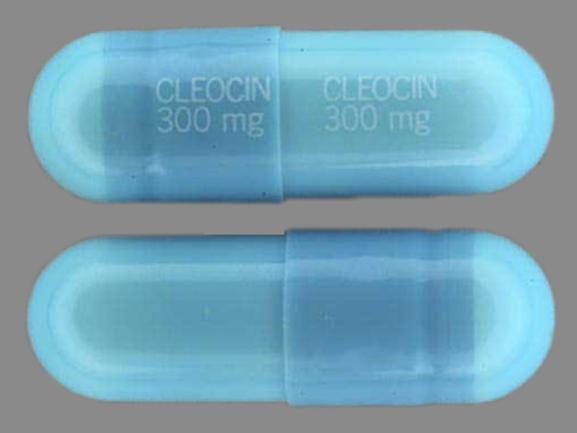
Cleocin HCl Side Effects
Generic name: clindamycin
Medically reviewed by Drugs.com. Last updated on Jan 25, 2024.
Note: This document contains side effect information about clindamycin. Some dosage forms listed on this page may not apply to the brand name Cleocin HCl.
Applies to clindamycin: oral capsule, oral powder for solution. Other dosage forms:
Warning
Oral route (Powder for Solution)
Pseudomembranous colitis has been reported with nearly all antibacterial agents, including clindamycin, and may range in severity from mild to life-threatening. Therefore, it is important to consider this diagnosis in patients who present with diarrhea subsequent to the administration of antibacterial agents. Because clindamycin therapy has been associated with severe colitis which may end fatally, it should be reserved for serious infections where less toxic antimicrobial agents are inappropriate. Diarrhea, colitis, and pseudomembranous colitis have been observed to begin up to several weeks following cessation of therapy with clindamycin.
Oral route (Capsule)
Clostridium difficile associated diarrhea (CDAD) has been reported with nearly all antibacterial agents, including clindamycin, and may range in severity from mild diarrhea to life-threatening colitis and has been observed to begin over 2 months after the administration of antibacterial agents. It is important to consider this diagnosis in patients who present with diarrhea subsequent to the administration of antibacterial agents. If CDAD is confirmed or suspected, antibiotic therapy not directed against Clostridium difficile may need to be discontinued. Because clindamycin therapy has been associated with severe colitis which may end fatally, it should be reserved for serious infections where less toxic antimicrobial agents are inappropriate.
Serious side effects of Cleocin HCl
Along with its needed effects, clindamycin (the active ingredient contained in Cleocin HCl) may cause some unwanted effects. Although not all of these side effects may occur, if they do occur they may need medical attention.
Check with your doctor immediately if any of the following side effects occur while taking clindamycin:
Rare
- Cracks in the skin
- loss of heat from the body
- red, swollen skin scaly skin
Incidence not known
- Abdominal or stomach cramps, pain, or tenderness
- black, tarry stools
- bleeding gums
- blistering, peeling, or loosening of the skin
- bloating
- blood in the urine or stools
- blurred vision
- chest pain
- chills
- clay-colored stools
- cloudy urine
- confusion
- cough or hoarseness
- dark urine
- decrease in the amount of urine
- diarrhea
- diarrhea, watery and severe, which may also be bloody
- difficulty with swallowing
- dizziness
- dizziness, faintness, or lightheadedness when getting up suddenly from a lying or sitting position
- dry mouth
- fast heartbeat
- fever with or without chills
- general feeling of tiredness or weakness
- headache
- heartburn
- heart stops
- hives or welts, itching, or skin rash
- increased thirst
- itching of the vagina or genital area
- joint or muscle pain
- loss of appetite
- lower back or side pain
- nausea or vomiting
- no breathing
- no pulse or blood pressure
- pain during sexual intercourse
- pain in the lower back or side
- painful or difficult urination
- pinpoint red spots on the skin
- puffiness or swelling of the eyelids or around the eyes, face, lips, or tongue
- rash with flat lesions or small raised lesions on the skin
- red skin lesions, often with a purple center
- red, irritated eyes
- redness of the skin
- sore throat
- sores, ulcers, or white spots in the mouth or on the lips
- swollen glands
- thick, white vaginal discharge with no odor or with a mild odor
- thirst
- tightness in the chest
- trouble breathing
- unconscious
- unpleasant breath odor
- unusual bleeding or bruising
- unusual tiredness or weakness
- unusual weight loss
- vomiting of blood
- yellow eyes or skin
For Healthcare Professionals
Applies to clindamycin: compounding powder, injectable solution, intravenous solution, oral capsule, oral powder for reconstitution.
Gastrointestinal
Common (1% to 10%): Pseudomembranous colitis, diarrhea, abdominal pain
Uncommon (0.1% to 1%): Dysgeusia, nausea, vomiting
Frequency not reported: Esophageal ulcers, esophagitis (oral preparations)[Ref]
The onset of pseudomembranous colitis symptoms may occur during or after antibacterial treatment and is associated with the presence of Clostridium difficile toxin in the stool. Pseudomembranous colitis may also be associated with toxic megacolon, which can be life-threatening.
An unpleasant or metallic taste has occasionally been reported after high doses of IV clindamycin.[Ref]
Dermatologic
Common (1% to 10%): Maculopapular rash
Uncommon (0.1% to 1%): Urticaria
Rare (less than 0.1%): Erythema multiforme, pruritus
Frequency not reported: Toxic epidermal necrolysis, Stevens-Johnson syndrome, exfoliative dermatitis, bullous dermatitis, generalized mild to moderate morbilliform-like rash, acute generalized exanthematous pustulosis (AGEP), Sweet's Syndrome
Postmarketing reports: Serious cutaneous adverse reaction[Ref]
Rash was particularly common in AIDS patients.
A 47-year-old female patient with multiple comorbidities was diagnosed with Sweet's Syndrome. The patient's symptoms developed 2 days after initiating oral clindamycin therapy for a tooth infection. The patient's symptoms persisted despite tooth extraction and continuance of antibiotic treatment with intravenous, then oral, clindamycin. Following discontinuation of clindamycin, the patient's symptoms resolved over several days. Drug-induced Sweet's syndrome was determined based on the temporal relationship of the patient's symptoms, the beginning and end of clindamycin therapy, and the exclusion of other etiologies.
Three days after starting oral clindamycin for the persistence of symptoms following a root canal, a 34-year-old male patient reported "pimples" on his scalp which changed to pustules 24 hours later. The lesions progressed and the patient's antibiotic therapy was discontinued. Two days later, the rash improved considerably. The patient met the diagnostic criteria for drug-induced Sweet's syndrome and clindamycin was the most likely cause due to the timeline of antibiotic therapy and the patient's improvement following its discontinuation.[Ref]
Hypersensitivity
Frequency not reported: Anaphylactoid reactions, drug reaction with eosinophilia and systemic systems (DRESS)[Ref]
Cardiovascular
Common (1% to 10%): Thrombophlebitis (after IV infusion)
Uncommon (0.1% to 1%): Cardiorespiratory arrest, hypotension[Ref]
Cardiorespiratory arrest and hypotension have been reported after too rapid IV administration. Thrombophlebitis has been reported after intravenous infusion.[Ref]
Genitourinary
Frequency not reported: Vaginitis[Ref]
Hematologic
Uncommon (0.1% to 1%): Eosinophilia
Frequency not reported: Neutropenia, leucopenia, agranulocytosis, thrombocytopenia[Ref]
Neutropenia (ANC 945 cells/mm3) occurred in a 68-year-old male 6 days after receiving a single 600 mg oral dose of clindamycin. The neutrophil count normalized after 2 weeks.[Ref]
Hepatic
Common (1% to 10%): Liver function test abnormalities
Frequency not reported: Jaundice[Ref]
Local
Frequency not reported: Injection site irritation, pain, abscess formation[Ref]
Pain, induration, and sterile abscess have been reported after intramuscular administration.[Ref]
Musculoskeletal
Frequency not reported: Polyarthritis[Ref]
Renal
Frequency not reported: Renal dysfunction, as shown by azotemia, oliguria, and/or proteinuria[Ref]
Frequently asked questions
- What are the best antibiotics for a tooth infection?
- What is the best antibiotic to treat strep throat?
- Is clindamycin a strong antibiotic?
- Can I take clindamycin if I am allergic to penicillin?
- Is clindamycin a penicillin?
- Why can't you lay down after taking clindamycin?
- Can clindamycin be used to treat chlamydia?
More about Cleocin HCl (clindamycin)
- Check interactions
- Compare alternatives
- Pricing & coupons
- Reviews (4)
- Drug images
- Dosage information
- During pregnancy
- Drug class: lincomycin derivatives
- Breastfeeding
- En español
Patient resources
Professional resources
Other formulations
Related treatment guides
References
1. Leigh DA, Simmons K, Williams S. Gastrointestinal side effects following clindamycin and lincomycin treatment: a follow up study. J Antimicrob Chemother. 1980;6:639-45.
2. Wilson DH. Clindamycin in the treatment of soft tissue infections: a review of 15,019 patients. Br J Surg. 1980;67:93-6.
3. Mason SJ, O'Meara TF. Drug-induced esophagitis. J Clin Gastroenterol. 1981;3:115-20.
4. Davies J, Beck E. Recurrent colitis following antibiotic-associated pseudomembranous colitis. Postgrad Med J. 1981;57:599-601.
5. Milstone EB, McDonald AJ, Scholhamer CF Jr. Pseudomembranous colitis after topical application of clindamycin. Arch Dermatol. 1981;117:154-5.
6. Cone JB, Wetzel W. Toxic megacolon secondary to pseudomembranous colitis. Dis Colon Rectum. 1982;25:478-82.
7. Parry MF, Rha CK. Pseudomembranous colitis caused by topical clindamycin phosphate. Arch Dermatol. 1986;122:583-4.
8. Van Ness MM, Cattau EL Jr. Fulminant colitis complicating antibiotic-associated pseudomembranous colitis: case report and review of the clinical manifestations and treatment. Am J Gastroenterol. 1987;82:374-7.
9. Product Information. Cleocin (clindamycin). Pharmacia and Upjohn. 2002;PROD.
10. Meadowcroft AM, Diaz PR, Latham GS. Clostridium difficile toxin-induced colitis after use of clindmycin phosphate vaginal cream. Ann Pharmacother. 1998;32:309-11.
11. Cerner Multum, Inc. UK Summary of Product Characteristics.
12. George WL, Sutter VL, Finegold SM. Antimicrobial agent-induced diarrhea--a bacterial disease. J Infect Dis. 1977;136:822-8.
13. Geddes AM, Bridgwater FA, Williams DN, Oon J, Grimshaw GJ. Clinical and bacteriological studies with clindamycin. Br Med J. 1970;2:703-4.
14. Bartlett JG. Narrative review: the new epidemic of Clostridium difficile-associated enteric disease. Ann Intern Med. 2006;145:758-64.
15. de Groot MC, van Puijenbroek EP. Clindamycin and taste disorders. Br J Clin Pharmacol. 2007;64:542-5.
16. Cerner Multum, Inc. Australian Product Information.
17. Vidal C, Iglesias A, Saez A, Rodriguez M. Hypersensitivity to clindamycin. DICP. 1991;25:317.
18. Clark BM, Homeyer DC, Glass KR, D'Avignon LC. Clindamycin-Induced Sweet's Syndrome. Pharmacotherapy. 2007;27:1343-6.
19. Paquet P, Schaaflafontaine N, Pierard GE. Toxic epidermal necrolysis following clindamycin treatment. Br J Dermatol. 1995;132:665-6.
20. Lammintausta K, Tokola R, Kalimo K. Cutaneous adverse reactions to clindamycin: results of skin tests and oral exposure. Br J Dermatol. 2002;146:643-8.
21. Kapoor R, Flynn C, Heald PW, Kapoor JR. Acute generalized exanthematous pustulosis induced by clindamycin. Arch Dermatol. 2006;142:1080-1.
22. Tian D, Mohan RJ, Stallings G. Drug rash with eosinophilia and systemic symptoms syndrome associated with clindamycin. Am J Med. 2010;123:e7-8.
23. Miller Quidley A, Bookstaver PB, Gainey AB, Gainey MD. Fatal clindamycin-induced drug rash with eosinophilia and systemic symptoms (DRESS) syndrome. Pharmacotherapy. 2012.
24. Bubalo JS, Blasdel CS, Bearden DT. Neutropenia after single-dose clindamycin for dental prophylaxis. Pharmacotherapy. 2003;23:101-3.
Further information
Always consult your healthcare provider to ensure the information displayed on this page applies to your personal circumstances.
Some side effects may not be reported. You may report them to the FDA.