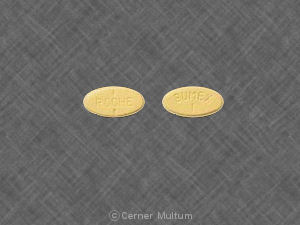
Bumex Side Effects
Generic name: bumetanide
Medically reviewed by Drugs.com. Last updated on Dec 2, 2023.
Note: This document contains side effect information about bumetanide. Some dosage forms listed on this page may not apply to the brand name Bumex.
Applies to bumetanide: oral tablet. Other dosage forms:
Warning
Oral route (Tablet)
Bumetanide is a potent diuretic which, if given in excessive amounts, can lead to a profound diuresis with water and electrolyte depletion. Therefore, careful medical supervision is required, and dose and dosage schedule have to be adjusted to the individual patient's needs.
Serious side effects of Bumex
Along with its needed effects, bumetanide (the active ingredient contained in Bumex) may cause some unwanted effects. Although not all of these side effects may occur, if they do occur they may need medical attention.
Check with your doctor immediately if any of the following side effects occur while taking bumetanide:
More common
- Abdominal pain
- blurred vision
- confusion
- decreased urine output
- dizziness
- drowsiness
- dry mouth
- fast or irregular heartbeat
- flushed, dry skin
- fruit-like breath odor
- headache
- increased hunger
- increased thirst
- increased urination
- irritability
- joint pain, stiffness, or swelling
- loss of appetite
- loss of mental alertness
- lower back, side, or stomach pain
- mood or mental changes
- muscle pain or cramps
- nausea or vomiting
- numbness or tingling in the hands, feet, or lips
- shortness of breath
- sweating
- swelling of face, hands, feet, ankles, or lower legs
- troubled breathing
- unexplained weight loss
- unusual tiredness or weakness
- weak pulse
Rare
- Agitation
- back pain
- black, tarry stools
- bleeding gums
- blood in the urine or stools
- chest pain
- convulsions (seizures)
- deep or fast breathing with dizziness
- dizziness, faintness, or lightheadedness when getting up from a lying or sitting position suddenly
- fever
- hallucinations
- hives
- increase in heart rate
- increased blood pressure
- numbness of feet, hands, and around the mouth
- pinpoint red spots on the skin
- rapid breathing
- stiff neck
- sunken eyes
- trembling, jerking of hands
- unusual bleeding or bruising
- weight gain
- wrinkled skin
Get emergency help immediately if any of the following symptoms of overdose occur while taking bumetanide:
Symptoms of overdose
- Difficulty breathing
- pain in chest, groin, or legs, especially the calves
- severe, sudden headache
- slurred speech
- sudden loss of coordination
- sudden, severe weakness or numbness in the arm or leg
- sudden, unexplained shortness of breath
- unusual drowsiness, dullness, or feeling of sluggishness
- vision changes
Other side effects of Bumex
Some side effects of bumetanide may occur that usually do not need medical attention. These side effects may go away during treatment as your body adjusts to the medicine. Also, your health care professional may be able to tell you about ways to prevent or reduce some of these side effects.
Check with your health care professional if any of the following side effects continue or are bothersome or if you have any questions about them:
Rare
- Decreased interest in sexual intercourse
- diarrhea
- difficulty with moving
- ear discomfort
- feeling of constant movement of self or surroundings
- inability to have or keep an erection
- itching skin
- loss in sexual ability, desire, drive, or performance
- muscle or bone pain
- muscle stiffness
- nipple tenderness
- pain, swelling, or redness in joints
- rash
- sensation of spinning
- shorter than usual time to ejaculation of semen
- trouble with hearing
- upset stomach
For Healthcare Professionals
Applies to bumetanide: compounding powder, injectable solution, oral tablet.
Metabolic
Besides acting on the loop of Henle, bumetanide (the active ingredient contained in Bumex) also inhibits phosphate reabsorption in the proximal tubule, resulting in phosphaturia. Since phosphorous is abundant in most diets, bumetanide-induced phosphaturia may not be significant except in malnourished patients, patients on life support, and patients with significant muscle weakness.
Calcium balance appears to remain neutral during treatment with a loop diuretic (i.e., furosemide, bumetanide). Although loop diuretics cause an increase in renal calcium excretion, this appears to be compensated for by a parathyroid-dependent increase in 1,25-dihydroxyvitamin D levels, which increases intestinal calcium absorption. Bone metabolism does not appear to be significantly affected by loop diuretics.[Ref]
Metabolic side effects associated with bumetanide, as with other loop diuretics, occur in 7% to 20% of patients, and include hyponatremia, hypokalemia, hypochloremia, and hyperuricemia. These side effects may be more likely in patients with renal insufficiency. Glucose intolerance is reported in up to 14% of elderly patients. Hypokalemia may lead to increased renal tubular bicarbonate reabsorption, resulting in metabolic alkalosis.[Ref]
Musculoskeletal
Musculoskeletal side effects have included muscle cramps in 1.1% and weakness in 0.2% of patients.[Ref]
Renal
Renal insufficiency, manifested as a rise in serum creatinine and BUN, may occur in up to 7% of patients. It is usually due to extracellular fluid volume depletion and is readily reversible.[Ref]
Cardiovascular
Cardiovascular side effects include hypotension in less than 2% of patients. Patients with a history of cardiac arrhythmias should be monitored closely because of the risk of hypokalemia.[Ref]
Gastrointestinal
Gastrointestinal side effects were reported in less than 2% of patients and included nausea, vomiting, loose stools, and constipation. There have been rare reports of hyperamylasemia and pancreatitis associated with bumetanide (the active ingredient contained in Bumex) use.[Ref]
Nervous system
Nervous system side effects, such as headache, dizziness, deafness, tinnitus, vertigo, and decreased hearing, are reported in less than 2% of patients. Encephalopathy after bumetanide (the active ingredient contained in Bumex) administration is reported in patients with severe liver disease.[Ref]
Hypersensitivity
Hypersensitivity reactions are rare. Rash is reported in less than 1% of treated patients. Because cross-reactivity with furosemide is rare, bumetanide (the active ingredient contained in Bumex) can be substituted at about a 1:40 dose ratio of bumetanide to furosemide in patients allergic to furosemide.[Ref]
Severe hypersensitivity reactions such as Stevens-Johnson syndrome and recurrent urticaria have been reported in rare cases.[Ref]
Dermatologic
Dermatologic side effects have included pseudoporphyria, Stevens-Johnson syndrome, and toxic epidermal necrolysis.[Ref]
Hematologic
Hematologic side effects are extremely rare. Cases of thrombocytopenia, mild anemia, and leukopenia have been reported.[Ref]
Frequently asked questions
More about Bumex (bumetanide)
- Check interactions
- Compare alternatives
- Reviews (10)
- Drug images
- Dosage information
- During pregnancy
- Generic availability
- Drug class: loop diuretics
- Breastfeeding
Patient resources
- Bumex oral/injection drug information
- Bumex (Bumetanide Injection) (Advanced Reading)
- Bumex (Bumetanide Oral) (Advanced Reading)
- Bumex
Professional resources
Related treatment guides
References
1. Ward A, Heel RC. Bumetanide: a review of its pharmacodynamic and pharmacokinetic properties and therapeutic use. Drugs. 1984;28:426-64.
2. Menday AP, Adnitt PI, Underwood PN. Effect of long-term treatment with bumetanide/amiloride on electrolytes and renal function in elderly patients with heart failure. Curr Ther Res Clin Exp. 1991;50:57-64.
3. Ring-Larsen H. Bumetanide in the treatment of hepatic ascites. A short and long-term study. Acta Med Scand. 1974;195:411-4.
4. Kubik MM, Bowers E, Underwood PN. Longterm experience of the routine use of bumetanide. Br J Clin Pract. 1976;30:11-4.
5. Chaudhuri ML, Catania J. A comparison of the effects of bumetanide (Burinex) and frusemide on carbohydrate metabolism in the elderly. Br J Clin Pract. 1988;42:427-9.
6. Hofstetter A. Bumetanide, a new diuretic. Int Urol Nephrol. 1974;6:35-42.
7. Rejnmark L, Vestergaard P, Heickendorff L, Andreasen F, Mosekilde L. Effects of thiazide- and loop-diuretics, alone or in combination, on calcitropic hormones and biochemical bone markers: a randomized controlled study. J Intern Med. 2001;250:144-53.
8. Rejnmark L, Vestergaard P, Heickendorff L, Andreasen F, Mosekilde L. Effects of long-term treatment with loop diuretics on bone mineral density, calcitropic hormones and bone turnover. J Intern Med. 2005;257:176-84.
9. Johnson CA, Grant KL, Madalon MG. Severe musculoskeletal syndrome in patients with renal failure and hypoalbuminemia receiving bumetanide. Clin Pharm. 1987;6:735-41.
10. Berg KJ, Tromsdal A, Wideroe TE. Diuretic action of bumetanide in advanced chronic renal insufficiency. Eur J Clin Pharmacol. 1976;9:265-75.
11. Product Information. Bumex (bumetanide). Roche Laboratories. 2002;PROD.
12. Stenvinkel P, Alvestrand A. Loop diuretic-induced pancreatitis with rechallenge in a patient with malignant hypertension and renal insufficiency. Acta Med Scand. 1988;224:89-91.
13. Lynggaard F, Bjorndal N. Bumetanide-induced hyperamylaseaemia in patients with renal insufficiency. Lancet. 1977;2:1355.
14. Handler B, Dhingra RC, Rosen KM. Bumetanide: a new diuretic. Results of clinical efficacy and safety in patients with congestive heart failure. J Clin Pharmacol. 1981;21:691-6.
15. Dixon DW, Barwolf-Gohlke C, Gunnar RM. Comparative efficacy and safety of bumetanide and furosemide in long- term treatment of edema due to congestive heart failure. J Clin Pharmacol. 1981;21:680-7.
16. Leitao EA, Person JR. Bumetanide-induced pseudoporphyria. J Am Acad Dermatol. 1990;23:129-30.
Further information
Always consult your healthcare provider to ensure the information displayed on this page applies to your personal circumstances.
Some side effects may not be reported. You may report them to the FDA.