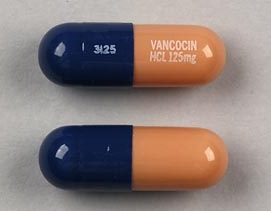
Vancomycin (Monograph)
Brand names: Firvanq, Vancocin
Drug class: Glycopeptides
VA class: AM900
Molecular formula: C66H75Cl2N9O24 • HCl
CAS number: 1404-93-9
Warning
- Potential Risk of Exposure to Excipients During the First or Second Trimester of Pregnancy with Certain Formulations
-
Certain formulations of vancomycin injection contain the excipients polyethylene glycol (PEG 400) and N-acetyl D-alanine (NADA), which may cause fetal malformations.
-
Avoid use of vancomycin formulations containing PEG 400 and NADA in pregnant patients.
Introduction
Antibacterial; tricyclic glycopeptide antibiotic.
Uses for Vancomycin
Gram-Positive Bacterial Infections
Oral vancomycin is used for treatment of diarrhea caused by Clostridioides difficile (formerly known as Clostridium difficile) infection (CDI; C. difficile-associated diarrhea [CDAD]).
Oral vancomycin is also used for treatment of enterocolitis caused by S. aureus (including methicillin-resistant S. aureus [MRSA]).
Orally administered vancomycin is not effective for the treatment of other types of infections.
IV vancomycin is used principally for treatment of serious infections caused by gram-positive bacteria in patients who cannot receive or who have failed to respond to penicillins or cephalosporins or for treatment of gram-positive bacterial infections that are resistant to β-lactams and other anti-infectives.
Effectiveness of IV vancomycin has been documented in staphylococcal infections such as endocarditis, septicemia, bone infections, lower respiratory tract infections, skin and skin structure infections.
IV vancomycin is used for initial therapy when MRSA is suspected; after susceptibility data are available, therapy should be adjusted accordingly.
When staphylococcal infections are localized and purulent, antibiotics are used as adjuncts to appropriate surgical measures.
See individual sections below in Uses for additional details on the use of vancomycin in specific gram-positive infections.
C. difficile-associated Diarrhea
Used orally for treatment of diarrhea caused by Clostridioides difficile (formerly known as Clostridium difficile) infection (CDI) in adults and pediatric patients.
The Infectious Diseases Society of America (IDSA) and Society for Healthcare Epidemiology of America (SHEA) has published guidelines on the management of CDI.
The guidelines state that oral vancomycin (125 mg 4 times daily for 10 days) or fidaxomicin (200 mg twice daily for 10 days) may be used for initial treatment of CDI; however, fidaxomicin may be preferred when both agents are available.
Vancomycin is the treatment of choice for fulminant CDI (characterized by hypotension or shock, ileus, or megacolon); IV metronidazole is also recommended in conjunction with vancomycin, especially if ileus is present.
Enterocolitis Caused by S. aureus
Used orally for treatment of enterocolitis caused by S. aureus (including MRSA) in adults and pediatric patients.
Enterocolitis caused by S. aureus (including MRSA) is rare. Usually, patients are successfully treated with oral vancomycin, but other antibiotic therapy or surgical intervention has been required.
Endocarditis
Used IV for treatment of endocarditis caused by staphylococci (e.g., S. aureus or S. epidermidis, including methicillin-resistant strains), streptococci (e.g., viridans streptococci, S. bovis [also known as S. gallolyticus]), or enterococci (e.g., E. faecalis). Also has been effective for treatment of diphtheroid endocarditis.
The American Heart Association (AHA) has published guidelines on the management of infective endocarditis in adults and children.
Initial therapy of infective endocarditis is generally empiric; selection of an appropriate empiric antibiotic regimen is based on patient characteristics, prior antimicrobial exposures, microbiological findings, and other factors (e.g., injection drug use, indwelling cardiovascular medical devices, genitourinary disorders, chronic skin disorders, prosthetic valve replacement). Once cultures are available, the antimicrobial regimen should be adjusted accordingly.
Vancomycin is generally recommended for treatment of endocarditis caused by MRSA. Use alone or in a combination regimen (e.g., with rifampin and gentamicin) based on whether patient has native- or prosthetic-valve endocarditis.
Used alone or in combination with an aminoglycoside for endocarditis caused by S. viridans or S. bovis (also known as S. gallolyticus).
Used in combination with an aminoglycoside for treatment of endocarditis caused by enterococci (e.g., E. faecalis).
Respiratory Tract Infections
IV vancomycin has been used in the treatment of lower respiratory tract infections due to staphylococci.
The American Thoracic Society (ATS) and Infectious Diseases Society of America (IDSA) have published guidelines on the management of adults with community-acquired pneumonia (CAP).
Although not considered a drug of choice for empiric treatment of CAP, IV vancomycin has been included in anti-infective regimens for CAP.
Also has been used for empiric coverage against MRSA in patients with nosocomial pneumonia.
For empiric treatment of ventilator-associated pneumonia or hospital-acquired pneumonia, ATS and IDSA recommend use of broad-spectrum anti-infectives with activity against gram-positive (e.g., S. aureus) and gram-negative (e.g., Pseudomonas aeruginosa) bacteria.
Skin and Skin Structure Infections
IV vancomycin is used in the treatment of various skin and skin structure infections due to staphylococci (e.g., cutaneous abscesses, furuncles, carbuncles, inflamed epidermoid cysts, cellulitis, surgical site infections, necrotizing fasciitis, pyomyositis, clostridial gas gangrene).
The Infectious Diseases Society of America (IDSA) has published guidelines on the management of skin and soft tissue infections. An antibiotic that is active against MRSA is recommended in patients with these infections who have failed initial antibiotic treatment, have markedly impaired host defenses, or have systemic inflammatory response syndrome (SIRS) and hypotension.
Antimicrobial Prophylaxis in Surgery
IV vancomycin (usually administered as a single preoperative dose) has been used for the prevention of surgical site infections. However, routine use of vancomycin for antimicrobial surgical prophylaxis is not recommended since such use may promote emergence of vancomycin-resistant enterococci or staphylococci.
The American Society of Health-System Pharmacists (ASHP), Infectious Diseases Society of America (IDSA), Surgical Infection Society (SIS), and Society for Healthcare Epidemiology of America (SHEA) have published a joint guideline on antimicrobial prophylaxis in surgery.
The guideline states that routine use of vancomycin is not recommended for any procedure; however, vancomycin may be included in the treatment regimen when a cluster of MRSA cases (e.g., mediastinitis after cardiac procedures) or methicillin-resistant coagulase negative staphylococci surgical site infections has been observed at a particular institution or in patients with known MRSA colonization or at high risk for MRSA colonization in the absence of surveillance data (e.g., recent hospitalization, nursing-home residents, patients receiving hemodialysis).
Meningitis and Other CNS Infections
Has been used for empiric treatment of healthcare-associated ventriculitis and meningitis† [off-label], in conjunction with an anti-pseudomonal β-lactam (e.g., cefepime, ceftazidime, meropenem).
Has been used for the treatment of healthcare-associated ventriculitis and meningitis† [off-label] caused by MRSA.
Corynebacterium Infections
Has been used for the treatment of infections caused by Corynebacterium † [off-label], including pulmonary infections, central venous catheter-related infections, endophthalmitis, osteomyelitis, and orthopedic infections.
Prevention of Perinatal Group B Streptococcal Disease
IV vancomycin has been used as an alternative to parenteral penicillin G or ampicillin for prevention of perinatal group B streptococcal (GBS) disease† [off-label] in certain women with a high-risk penicillin allergy and whose GBS isolate is not susceptible to clindamycin.
Febrile Neutropenia
Although IV vancomycin generally not recommended as a standard part of the initial antibiotic regimen for empiric anti-infective therapy in patients with febrile neutropenia† [off-label], consideration may be given to adding vancomycin to recommended empiric anti-infective therapy for other specific clinical conditions (e.g., suspected catheter-related infection, skin or soft-tissue infection, pneumonia, hemodynamic instability).
Related/similar drugs
amoxicillin, doxycycline, ciprofloxacin, cephalexin, azithromycin, metronidazole, clindamycin
Vancomycin Dosage and Administration
General
Patient Monitoring
-
Monitor renal function, especially in patients with underlying renal impairment, patients with risk factors for renal impairment, and patients receiving concomitant therapy with nephrotoxic drugs. Nephrotoxicity has been reported following both oral and IV administration of vancomycin and can occur during or after completion of therapy.
-
Therapeutic monitoring of vancomycin is recommended in certain patients and situations (e.g., serious methicillin-resistant S. aureus [MRSA] infections, pediatric patients).
-
Monitor patient's BP during IV infusion of vancomycin.
Administration
Administer orally or by IV infusion. Should not be given IM; safety and efficacy of intrathecal (intralumbar or intraventricular), intracameral, intravitreal, or intraperitoneal administration have not been determined.
Administered orally for treatment of Clostridioides difficile (formerly known as Clostridium difficile-associated diarrhea or enterocolitis caused by Staphylococcus aureus (including methicillin-resistant S. aureus [MRSA]). Administered IV for treatment of systemic infections.
Oral vancomycin is not effective for treatment of systemic infections.
Oral Administration
Administer orally as capsules or powder for oral solution. Alternatively, an oral solution prepared using the parenteral preparation can be given orally by mouth or via NG tube.
Preparation of Oral Solution Using Commercially Available Powder for Oral Solution
Reconstitute powder for oral solution with supplied diluent. Tap the bottle of powder first on a hard surface to loosen the powder, then shake the bottle of diluent and add approximately half of the diluent to powder. Shake the mixture for approximately 45 seconds. Then, add the remaining diluent and shake again for approximately 30 seconds. The final concentration of the solution is 25 or 50 mg/mL.
Preparation of Oral Solution Using Lyophilized Powder for IV Administration
When necessary, an oral solution may be prepared by diluting the appropriate dose of the parental form of vancomycin lyophilized powder in 30 mL of water. The 500-mg single-use vial should be used to prepare these oral solutions; ADD-Vantage vials should not be used to prepare such oral solutions, and premixed solutions of vancomycin hydrochloride injection should not be administered orally.
IV Infusion
For solution and drug compatibility information, see Compatibility under Stability.
Usually administered by intermittent IV infusion. Has been administered by continuous IV infusion.
Various commercial IV preparations of vancomycin are available.
Lyophilized powder: must reconstitute and further dilute prior to administration. Reconstitute powder by adding 10, 15, 20, or 30 mL of sterile water for injection to a vial containing 500 mg, 750 mg, 1 g, or 1.5 g of vancomycin to provide a solution containing 50 mg/mL. Further dilute in at least 100 mL of compatible IV solution. Consult the manufacturer's prescribing information for detailed instructions on preparation of this dosage form.
ADD-Vantage vials: reconstitute according to the manufacturer’s instructions using 5% dextrose injection or 0.9% sodium chloride injection. ADD-Vantage vials should be used only when actual doses of 500 mg, 750 mg, or 1 g are appropriate and should not be used in neonates, infants, or young children who require doses <500 mg.
Pharmacy bulk package: reconstitution of the lyophilized powder and further dilution are required prior to administration. Consult manufacturer's prescribing information for detailed instructions on preparation of this dosage form.
Frozen premixed solution in single-dose Galaxy plastic containers: thaw solution at room temperature (25°C) or under refrigeration (5°C); do not thaw by immersion in a water bath or by exposure to microwave radiation. A precipitate may form in the frozen state; however, this will usually dissolve with little or no agitation upon reaching room temperature, and the potency of the drug is not affected. Do not use thawed injection in series connections with other plastic containers.
Premixed single-dose flexible bags containing vancomycin in liquid (consisting of water and PEG together with the excipients NADA and lysine): this formulation should only be used in patients who require the entire dose of the drug contained in the bags and not any fraction thereof.
Rate of Administration
Administer by IV infusion over ≥1 hour.
Rapid IV administration (e.g., over several minutes) may cause hypotension, including shock and rarely cardiac arrest, and should be avoided.
Adverse effects may be minimized if infusion rate is ≤10 mg/minute, but consider that adverse effects associated with vancomycin infusions could occur with any infusion rate.
Therapeutic Drug Monitoring
To achieve optimal serum vancomycin concentrations while minimizing toxicity, therapeutic drug monitoring of IV vancomycin is recommended in certain clinical situations.
A consensus guideline on therapeutic monitoring of vancomycin for serious MRSA infections (e.g., bacteremia, sepsis, infective endocarditis, pneumonia, osteomyelitis, meningitis) has been published by the American Society of Health-System Pharmacists (ASHP), the Infectious Diseases Society of America (IDSA), the Pediatric Infectious Diseases Society (PIDS), and the Society of Infectious Diseases Pharmacists (SIDP).
The primary predictive pharmacokinetic/pharmacodynamic parameter for vancomycin efficacy is the AUC/minimum inhibitory concentration (MIC) ratio. An AUC/MIC ratio ≥400 mg×h/L (with MIC determined by broth dilution [BMD]) has been established as the current accepted critical target for optimum vancomycin activity.
Although used more extensively in the past, trough vancomycin concentration monitoring may be insufficient to guide vancomycin dosing in all patients. Trough-only monitoring, with a target of 15–20 mg/L, is no longer recommended based on efficacy and nephrotoxicity data in patients with serious infections due to MRSA.
Current guidelines recommend AUC-guided therapeutic monitoring of vancomycin in both adults and pediatric patients with serious MRSA infections. There is insufficient evidence to provide recommendations on vancomycin therapeutic drug monitoring for patients with MSSA, noninvasive MRSA, or other infections.
Two AUC-based therapeutic monitoring methods have been described (Bayesian method and first-order pharmacokinetic equations based on the collection of 2 timed steady-state serum vancomycin concentrations to estimate the AUC). Although AUC-based therapeutic drug monitoring methods present logistical and clinical challenges, they may be preferred dosing strategies due to their ability to increase the proportion of patients who obtain vancomycin AUC/MIC ratios within therapeutic range, potentially decreasing unnecessary high exposures to the drug and preventing associated toxicities.
The guidelines state that in patients with suspected or definitive serious MRSA infections, an individualized target AUC/MICBMD ratio of 400–600 mg×h/L (assuming a vancomycin MICBMD of 1 mg/L) should be advocated to achieve clinical efficacy while improving patient safety.
For additional information, consult the guideline document at [Web].
Dosage
Available as vancomycin hydrochloride; dosage expressed in terms of vancomycin.
A consensus guideline published by the American Society of Health-System Pharmacists (ASHP), the Infectious Diseases Society of America (IDSA), the Pediatric Infectious Diseases Society (PIDS), and the Society of Infectious Diseases Pharmacists (SIDP) provides recommendations for vancomycin dosing and monitoring in the treatment of serious MRSA infections (e.g., bacteremia, sepsis, infective endocarditis, pneumonia, osteomyelitis, meningitis). Consult the guidelines for additional information ([Web])
Pediatric Patients
General Dosage for Neonates
Systemic Infections
IVManufacturer recommends 15 mg/kg initially, followed by 10 mg/kg either every 12 hours (in neonates <1 week of age) or every 8 hours (in neonates 1 week to 1 month of age). Close monitoring of serum vancomycin concentrations is recommended. Longer dosing intervals may be necessary in premature infants.
American Academy of Pediatrics (AAP) provides recommendations for vancomycin dosing in neonates based on serum creatinine concentrations. An initial IV loading dose of 20 mg/kg is recommended followed by a maintenance dosage in Table 1.
The maintenance dosage should begin at the same number of hours after the loading dose as the interval in the recommended dosage regimen.
For invasive MRSA infections, a 24-hour AUC/MIC ratio ≥400 mg×h/L is recommended based on adult studies.
|
Gestational Age |
Serum Creatinine (mg/dL) |
Dosage |
|---|---|---|
|
28 weeks or less |
Less than 0.5 |
15 mg/kg every 12 hours |
|
0.5–0.7 |
20 mg/kg every 24 hours |
|
|
0.8–1 |
15 mg/kg every 24 hours |
|
|
1.1–1.4 |
10 mg/kg every 24 hours |
|
|
Greater than 1.4 |
15 mg/kg every 48 hours |
|
|
Greater than 28 weeks |
Less than 0.7 |
15 mg/kg every 12 hours |
|
0.7–0.9 |
20 mg/kg every 24 hours |
|
|
1–1.2 |
15 mg/kg every 24 hours |
|
|
1.3–1.6 |
10 mg/kg every 24 hours |
|
|
Greater than 1.6 |
15 mg/kg every 48 hours |
General Dosage for Older Children
Systemic Infections
IVFor older infants and children with normal renal function, manufacturers recommend an IV dosage of 10 mg/kg every 6 hours. AAP suggests that children ≥1 month of age receive IV vancomycin in a dosage of 45–60 mg/kg daily given in 3–4 divided doses.
For children with normal renal function and suspected serious MRSA infections (including pneumonia, pyomyositis, multifocal osteomyelitis, complicated bacteremia, and necrotizing fasciitis), the consensus guideline by ASHP, IDSA, PIDS, and SIDP recommends an initial vancomycin dosage 60–80 mg/kg per day, in divided doses given every 6 hours for children 3 months to <12 years of age and a dosage of 60–70 mg/kg per day, in divided doses given every 6 to 8 hours, for pediatric patients ≥12 years old.
CDI
Oral
For treatment of diarrhea caused by CDI, usual dosage is 40 mg/kg daily given in 3 or 4 divided doses for 7–10 days. Dosage should not exceed 2 g daily.
Enterocolitis Caused by S. aureus (Including MRSA)
Oral
Usual dosage is 40 mg/kg daily given in 3 or 4 divided doses for 7–10 days. The total daily dosage should not exceed 2 g.
Adults
General Adult Dosage
Treatment of Life-threatening Systemic Infections
IV500 mg every 6 hours or 1 g every 12 hours.
In critically ill patients with suspected or documented serious MRSA infections, the consensus guideline by ASHP, IDSA, PIDS, and SIDP states that a vancomycin loading dose of 20–35 mg/kg (based on actual body weight with a maximum dose of 3000 mg) can be considered for intermittent-infusion administration. A vancomycin loading dose of 20–25 mg/kg using actual body weight, with a maximum dose of 3000 mg, may be considered in obese adult patients with serious infections.
CDI
Oral
For treatment of diarrhea caused by CDI, usual dosage is 125 mg 4 times daily for 10 days.
For treatment of a first recurrence of CDI, vancomycin in a tapered and pulsed regimen or vancomycin as a standard course may be given. An example of a tapered and pulsed regimen is as follows: vancomycin 125 mg 4 times daily for 10–14 days, initially; followed by 125 mg twice daily for 7 days; then, 125 mg once daily for 7 days; then, 125 mg once every 2–3 days for 2–8 weeks.
Enterocolitis Caused by S. aureus (Including MRSA)
Oral
Usual dosage is 0.5–2 g daily given in 3 or 4 divided doses for 7–10 days.
Prevention of Perinatal Group B Streptococcal (GBS) Infection†
IV
20 mg/kg (not exceeding 2 g) of vancomycin given IV every 8 hours until delivery. When indicated, such prophylaxis is initiated at the time of labor or rupture of membranes.
Perioperative Prophylaxis†
Cardiac, Neurosurgical, Orthopedic, Thoracic (Noncardiac), or Vascular Surgery†
IVA single 15-mg/kg dose given IV.
Because vancomycin should be infused over 1–2 hours, start the infusion within 120 minutes prior to the time of incision.
Prescribing Limits
Pediatric Patients
The consensus guideline by ASHP, IDSA, PIDS, and SIDP states that the maximum empiric daily dose of IV vancomycin is usually 3.6 g in children with adequate renal function.
Adults
The consensus guideline by ASHP, IDSA, PIDS, and SIDP states that loading doses of vancomycin in critically ill patients with suspected or documented serious MRSA infections should be based on actual body weight and not exceed 3 g.
Special Populations
Hepatic Impairment
Limited data suggest dosage adjustments not necessary.
Renal Impairment
Treatment of Systemic Infections
IV
Doses and/or frequency of administration must be modified in response to the degree of renal impairment.
The consensus guideline published by ASHP, IDSA, PIDS, and SIDP recommends vancomycin loading and maintenance doses for patients with serious MRSA infections who are receiving hemodialysis (see Table 2).
|
Timing |
Dialyzer Permeability |
Vancomycin Dosage |
|---|---|---|
|
After dialysis ends |
Low permeability |
Loading Dose: 25 mg/kg |
|
Maintenance Dosage: 7.5 mg/kg three times a week |
||
|
High permeability |
Loading Dose: 25 mg/kg |
|
|
Maintenance Dosage: 10 mg/kg three times a week |
||
|
Intradialytic |
Low permeability |
Loading Dose: 30 mg/kg |
|
Maintenance Dosage: 7.5–10 mg/kg three times a week |
||
|
High permeability |
Loading Dose: 35 mg/kg |
|
|
Maintenance Dosage: 10–15 mg/kg three times a week |
ASHP, IDSA, PIDS, and SIDP recommends a loading dose of 20–25 mg/kg based on actual body weight in patients with serious MRSA infections who are receiving continuous renal replacement therapy (CRRT) at conventional, KDIGO-recommended effluent rates. The initial vancomycin maintenance dosage for such patients should be 7.5–10 mg/kg every 12 hours. Consult the guidelines for additional information ([Web])
Geriatric Patients
Cautious dosage selection (usually starting at the low end of the dosing range) because of age-related decreases in renal function.
Obese Patients
Consider loading dose of 20–25 mg/kg (up to a maximum dose of 3 g) based on actual body weight in obese adult patients with serious infections. Calculate initial maintenance dosage using a population pharmacokinetic estimate of vancomycin clearance and the target AUC in obese patients. Empiric maintenance doses for most obese patients do not exceed 4.5 g/day, depending on renal function. Early and frequent monitoring of AUC exposure is recommended for dosage adjustment, especially when empiric doses exceed 4 g/day. Consult the guidelines for additional information ([Web])
Cautions for Vancomycin
Contraindications
-
Hypersensitivity to vancomycin.
-
Commercially available frozen vancomycin hydrochloride injection in 5% dextrose may be contraindicated in patients with known allergy to corn or corn products.
Warnings/Precautions
Warnings
Potential Risk of Exposure to Excipients During the First or Second Trimester of Pregnancy with Certain Formulations
Certain formulations of vancomycin injection contain the excipients polyethylene glycol (PEG 400) and N-acetyl D-alanine (NADA), which may cause fetal malformations. Avoid use of such formulations in pregnant patients. (See Boxed Warning.)
Ototoxicity
Ototoxicity has occurred during parenteral vancomycin therapy; such toxicity rarely observed during oral vancomycin therapy.
Ototoxicity included damage to the auditory branch of the eighth cranial nerve and permanent deafness, vertigo, dizziness, and tinnitus.
Most cases involved patients with renal impairment, patients receiving high dose or prolonged IV therapy, patients with preexisting hearing loss, or those receiving other ototoxic drugs concomitantly.
Ototoxicity usually has been associated with serum or blood vancomycin concentrations of 80–100 mcg/mL, but has occurred with concentrations as low as 25 mcg/mL.
Ototoxicity may be transient or permanent.
Serial auditory function testing may minimize risk of ototoxicity.
Nephrotoxicity
Nephrotoxicity has occurred during parenteral vancomycin therapy; such toxicity rarely observed during oral vancomycin therapy.
Nephrotoxicity included increased BUN or Scr concentrations, presence of hyaline and granular casts and albumin in urine, fatal uremia, and acute interstitial nephritis.
Reported most frequently in patients with renal impairment, patients receiving high dose or prolonged IV therapy, or those receiving other nephrotoxic drugs concomitantly.
Although there is conflicting data regarding causal relationship between vancomycin exposures and nephrotoxicity, increased risk of nephrotoxicity observed in patients with trough serum vancomycin concentrations ≥15 mg/L compared with trough concentrations <15 mg/L. Limited data show that AUC ≥600 mg×h/L may be associated with increased risk of nephrotoxicity.
Use with caution in patients with impaired renal function. Perform urinalysis and renal function tests periodically during therapy.
Infusion Reactions
Rapid IV administration may result in a potentially serious hypotensive reaction.
These infusion reactions referred to as vancomycin flushing syndrome (previously referred to as “red man syndrome”) usually involve a sudden and possibly severe decrease in BP and may be accompanied by flushing and/or a maculopapular or erythematous rash on the face, neck, chest, and upper extremities. Latter manifestations may occur in the absence of hypotension. Wheezing, dyspnea, angioedema, urticaria, pruritus, and, rarely, cardiac arrest or seizures may also occur.
The reaction usually begins a few minutes after infusion is started, but may not occur until after its completion and usually resolves spontaneously over 1 to several hours after discontinuance. If the hypotensive reaction is severe, antihistamines, corticosteroids, or IV fluids are recommended.
To minimize risk of infusion reaction, administer IV over a period of ≥1 hour using a rate ≤10 mg/minute and monitor BP. Avoid rapid IV administration (e.g., over several minutes).
Pretreatment with antihistamines may attenuate but not eliminate the risk of infusion reactions.
Concomitant administration of vancomycin and anesthetic agents has been associated with an increased frequency of infusion-related events (e.g., hypotension, flushing, erythema, urticaria, pruritus). Infusion-related events may be minimized by the administration of vancomycin as a 60-minute infusion prior to anesthetic induction.
Sensitivity Reactions
Hypersensitivity Reactions
Anaphylaxis, urticaria, exfoliative dermatitis, macular rashes, exfoliative dermatitis, and Stevens-Johnson syndrome reported.
Rapid IV administration may result in anaphylactoid reaction involving hypotension, wheezing, dyspnea, urticaria, or pruritus.
General Precautions
Ocular Effects
Hemorrhagic occlusive retinal vasculitis (HORV), including permanent blindness, has occurred in patients receiving vancomycin by intracameral or intravitreal injection during or after cataract surgery.
Safety and efficacy of vancomycin administered by the intracameral or intravitreal route not established; vancomycin is not indicated for prophylaxis of endophthalmitis.
Hematologic Effects
Neutropenia, eosinophilia, and thrombocytopenia reported. Neutropenia may occur ≥7 days after initiation of therapy or after a total dose of >25 g and may be rapidly reversible following discontinuance of the drug.
Monitor leukocyte counts periodically in patients receiving prolonged therapy and in those receiving concomitant therapy with drugs that may cause neutropenia.
Local Reactions
Vancomycin is very irritating to tissues and can cause pain, tenderness, and necrosis if inadvertent extravasation occurs during IV administration. Thrombophlebitis may occur. Do not administer by IM injection.
Increased Systemic Absorption
Although not usually appreciably absorbed from GI tract, clinically important serum vancomycin concentrations may occur following multiple enteral or oral doses in patients with active C. difficile-associated diarrhea and colitis, particularly those with renal impairment.
Clinically important systemic absorption of vancomycin may occur in some patients receiving oral vancomycin who have inflammatory disorders of intestinal mucosa; this may increase risk of adverse reactions, particularly in those with renal impairment.
Consider monitoring serum vancomycin concentrations in patients with renal impairment and/or colitis.
C. difficile-associated Diarrhea and Colitis
Treatment with anti-infectives alters normal colon flora and may permit overgrowth of Clostridioides difficile (formerly known as Clostridium difficile).
C. difficile infection (CDI) and C. difficile-associated diarrhea and colitis (CDAD; also known as antibiotic-associated diarrhea and colitis or pseudomembranous colitis) have been reported with the use of nearly all anti-infectives, including IV vancomycin, and may range in severity from mild diarrhea to fatal colitis.
Selection and Use of Anti-infectives
To reduce development of drug-resistant bacteria and maintain effectiveness of vancomycin and other antibacterials, use only for treatment or prevention of infections proven or strongly suspected to be caused by susceptible bacteria.
When selecting or modifying anti-infective therapy, use results of culture and in vitro susceptibility testing. In the absence of such data, consider local epidemiology and susceptibility patterns when selecting anti-infectives for empiric therapy.
Updated guidance regarding implementation of antibiotic stewardship programs, therapeutic vancomycin monitoring, and treatment of specific infections has been published to aid in the appropriate use of antibiotics, including vancomycin. For additional information, the current IDSA clinical practice guidelines available at [Web] should be consulted.
Warning and Precautions Related to Oral Formulations
Orally administered vancomycin capsules or solution must be used for treatment of Clostridioides difficile (formerly known as Clostridium difficile) infection (CDI; C. difficile-associated diarrhea [CDAD]) and enterocolitis caused by S. aureus. Parenteral administration of vancomycin does not effectively treat such infections.
Following oral administration of vancomycin, clinically important serum concentrations reported. Systemic absorption of vancomycin following oral administration may occur in patients with inflammatory disorders of the intestinal mucosa. Such patients receiving high doses of oral vancomycin may be at risk for experiencing systemic vancomycin-associated adverse effects; serum concentration monitoring may be warranted in certain situations (e.g., patients with renal insufficiency and/or colitis, concomitant use with an aminoglycoside antibiotic).
Specific Populations
Pregnancy
Not known whether vancomycin can cause fetal harm.
No evidence of teratogenicity or adverse effects on fetal development in animal studies.
No sensorineural hearing loss or nephrotoxicity due to vancomycin reported in neonates born to women who received the drug IV for severe staphylococcal infections associated with injection drug abuse. In one infant whose mother received IV vancomycin in the third trimester of pregnancy, conductive hearing loss reported; causal relationship to vancomycin not established.
No major adverse effects observed in mothers or their newborns when IV vancomycin administered at the time of delivery.
Use during pregnancy only when clearly needed.
Lactation
Distributed in milk following IV administration; not known whether distributed into milk following oral administration. Discontinue nursing or the drug.
Pediatric Use
Safety and efficacy of oral vancomycin not established in pediatric patients.
Use IV vancomycin with caution in premature neonates and young infants because of renal immaturity and potential for increased serum vancomycin concentrations; close monitoring of serum concentrations recommended.
Geriatric Use
Monitor renal function during and after treatment with oral vancomycin in all geriatric patients, including those with normal renal function.
Geriatric patients ≥65 years of age may take longer to respond to oral vancomycin therapy compared with patients <65 years of age.
Select dosage with caution, usually starting at low end of dosing range, because of age-related decreases in hepatic, renal, and/or cardiac function and potential for concomitant disease and drug therapy.
Renal Impairment
Minimally removed by hemodialysis when a low-flux capillary is used (e.g., cuprophan) or peritoneal dialysis, including continuous ambulatory peritoneal dialysis. The drug is substantially removed by hemodiafiltration; rebound effect may occur.
Common Adverse Effects
IV: Local effects (pain and thrombophlebitis), infusion reactions, hypersensitivity reactions.
Oral solution: Nausea, abdominal pain, hypokalemia.
Drug Interactions
Ototoxic and Nephrotoxic Drugs
Concurrent or sequential use with other ototoxic and/or nephrotoxic drugs (e.g., aminoglycosides, amphotericin B, bacitracin, cisplatin, colistin, furosemide, polymyxin B) may result in additive toxicity and should be avoided, if possible. Monitor renal and auditory function carefully if used concomitantly with an ototoxic and/or nephrotoxic agent.
Specific Drugs
|
Drug |
Interaction |
Comments |
|---|---|---|
|
Aminoglycosides |
In vitro evidence of synergistic antibacterial activity against S. aureus, nonenterococcal group D streptococci (S. bovis [also known as S. gallolyticus]), enterococci, and viridans streptococci Increased risk of ototoxicity and/or nephrotoxicity |
Used to therapeutic advantage, but consider possible increased risk of ototoxicity and/or nephrotoxicity |
|
Anesthetics |
Possible increased risk of anaphylactoid reactions and increased risk of vancomycin infusion reactions in patients receiving anesthetic agents; erythema and histamine-like flushing reported |
Infusion-related events may be minimized by the administration of vancomycin as a 60-minute infusion prior to anesthetic induction |
Vancomycin Pharmacokinetics
Absorption
Bioavailability
Not appreciably absorbed from GI tract in most patients; must be given parenterally for treatment of systemic infections.
Oral bioavailability usually <5%; bioavailability increased in C. difficile-associated diarrhea and colitis and/or in severe renal impairment.
Clinically important serum vancomycin concentrations may occur following multiple enteral or oral doses in some patients being treated for active C. difficile-associated diarrhea and colitis, particularly those with renal impairment.
Special Populations
Serum vancomycin concentrations are higher in patients with renal impairment than in those with normal renal function.
Distribution
Extent
Widely distributed into body tissues and diffuses following IV administration, including pericardial, pleural, ascitic, and synovial fluids. Small amounts are distributed into bile.
Does not readily distribute into CSF in the absence of inflammation unless serum concentrations are exceedingly high. Low concentrations may be attained in CSF if meninges are inflamed, but negligible amounts detected in CSF in most patients with uninflamed meninges. The relationship between CSF concentrations and clinical efficacy of vancomycin in the treatment of meningitis is unclear.
Crosses the placenta and is distributed into cord blood.
Distributed into milk following IV administration; not known whether distributed into milk following oral administration.
Plasma Protein Binding
30–60%.
May be decreased to 19–29% in those with hypoalbuminemia (e.g., burn patients, those with end-stage renal disease).
Elimination
Metabolism
Does not appear to be metabolized.
Elimination Route
Following oral administration, excreted mainly in feces.
Following IV administration, 75–90% of a dose eliminated unchanged in urine by glomerular filtration.
Removed by hemodialysis; substantially removed by hemofiltration.
Only minimally removed by peritoneal dialysis, including CAPD.
Half-life
Adults with normal renal function: 4–7 hours. Accumulation tends to occur after 2–3 days of IV administration at 6- or 12-hour intervals.
Geriatric adults: 12.1 hours.
Neonates and infants: 6.7 hours in full-term neonates and 4.1 hour in infants ≥1 month but <1 year of age.
Children 2.5–11 years of age: 5.6 hours.
Special Populations
Geriatric patients: Renal clearance may be decreased.
Renal impairment: Elimination half-life is increased. Half-life averages 32.3 hours (range: 10.1–75.1 hours) in patients with Clcr 10–60 mL/minute and 146.7 hours (range: 44.1–406.4 hours) in those with Clcr <10 mL/minute.
Burn patients: Increased clearance; half-life averages 4 hours.
Stability
Storage
Oral
Capsules
15–30°C.
Powder for Oral Solution
2–8°C. Protect powder for oral solution from light; do not freeze.
Store reconstituted oral solution at 2–8°C when not in use. Discard the reconstituted solution after 14 days or if it appears hazy or contains particulates.
Parenteral
Powder for Infusion
20–25°C. One manufacturer states that excursions between 15–30°C are permitted.
After further dilution to a concentration of 5 mg/mL in 5–30% dextrose injection, solutions are stable when stored in plastic syringes for 24 hours at 4°C and then subsequently for 2 hours at room temperature.
When reconstituted as directed using 5% dextrose injection or 0.9% sodium chloride injection, solutions prepared from ADD-Vantage vials are stable for 24 hours at room temperature or 14 days in a refrigerator.
Injection, for IV Infusion
Commercially available premixed vancomycin injection in water with polyethylene glycol 400, N-acetyl-D-alanine, and L-lysine hydrochloride: <25°C. Use within 28 days following removal from aluminum pouch.
Injection (Frozen)
-20° C or lower. After thawing, may be stored for 72 hours at room temperature (25°C) or up to 30 days at 5°C.
Compatibility
Parenteral
Solution CompatibilityHID
|
Compatible |
|---|
|
Dextrose 5% in Ringer's injection, lactated |
|
Dextrose 5% in sodium chloride 0.9% |
|
Dextrose 5 or 10% in water |
|
Normosol M in dextrose 5% |
|
Ringer’s injection, lactated |
|
Sodium chloride 0.9% |
|
Sodium lactate (1/6) M |
Actions and Spectrum
-
A tricyclic glycopeptide antibiotic obtained from cultures of Amycolatopsis orientalis (formerly Nocardia orientalis).
-
Usually bactericidal.
-
Binds to the bacterial cell wall and blocks glycopeptide polymerization; inhibits cell wall synthesis and causes damage to the cytoplasmic membrane.
-
Spectrum of activity includes many gram-positive aerobic and anaerobic bacteria. Inactive against gram-negative bacteria, mycobacteria, and fungi.
-
Gram-positive bacteria: Active against Staphylococci aureus and S. epidermidis (including MRSA), S. pyogenes (group A β-hemolytic streptococci), S. pneumoniae (including penicillin-resistant strains), S. agalactiae (group B streptococci), viridans streptococci, nonenterococcal group D streptococci (S. bovis [also known as S. gallolyticus]), enterococci (e.g., Enterococcus faecalis), Corynebacterium, and Clostridioides (C. difficile). Also active in vitro against Actinomyces, Bacillus, Lactobacillus, and Listeria monocytogenes.
-
Resistance reported in enterococci (e.g., E. faecalis, E. faecium, E. gallinarum , E. casseliflavus, E. flavescens) and staphylococci (e.g., S. haemolyticus, S. epidermidis).
Advice to Patients
-
Advise patients that vancomycin should only be used to treat bacterial infections and not used to treat viral infections (e.g., the common cold).
-
Importance of completing full course of therapy, even if feeling better after a few days.
-
Advise patients that skipping doses or not completing the full course of therapy may decrease effectiveness and increase the likelihood that bacteria will develop resistance and will not be treatable with vancomycin or other antibacterials in the future.
-
Importance of reporting possible manifestations of adverse effects to the clinician, including ototoxicity, nephrotoxicity, infusion site reactions, and hypersensitivity.
-
Risk of diarrhea; usually ends when vancomycin is discontinued. If watery and bloody stools (with or without stomach cramps and fever) occurs as late as two or more months after having taken the last dose of the drug, advise patient to contact their physician as soon as possible.
-
Importance of informing clinicians of existing or contemplated concomitant therapy, including prescription and OTC drugs, and any concomitant illnesses.
-
Importance of women informing clinicians if they are or plan to become pregnant or plan to breast-feed.
-
Importance of advising patients of other important precautionary information. (See Cautions.)
Preparations
Excipients in commercially available drug preparations may have clinically important effects in some individuals; consult specific product labeling for details.
Please refer to the ASHP Drug Shortages Resource Center for information on shortages of one or more of these preparations.
* available from one or more manufacturer, distributor, and/or repackager by generic (nonproprietary) name
|
Routes |
Dosage Forms |
Strengths |
Brand Names |
Manufacturer |
|---|---|---|---|---|
|
Oral |
Capsules |
125 mg (of vancomycin)* |
Vancocin |
Ani |
|
Vancomycin Hydrochloride Capsule |
||||
|
250 mg (of vancomycin)* |
Vancocin |
Ani |
||
|
Vancomycin Hydrochloride Capsule |
||||
|
Powder for Oral Solution |
3.75 g |
Firvanq (supplied with flavored diluent) |
Azurity |
|
|
7.5 g |
Firvanq (supplied with flavored diluent) |
Azurity |
||
|
15 g |
Firvanq (supplied with flavored diluent) |
Azurity |
||
|
Parenteral |
For injection |
5 g (of vancomycin) pharmacy bulk package* |
Vancomycin Hydrochloride for Injection |
|
|
10 g (of vancomycin) pharmacy bulk package* |
Vancomycin Hydrochloride for Injection |
|||
|
100 g (of vancomycin) pharmacy bulk package* |
Vancomycin Hydrochloride for Injection |
|||
|
For injection, for IV infusion |
250 mg (of vancomycin)* |
Vancomycin Hydrochloride for Injection |
||
|
500 mg (of vancomycin)* |
Vancomycin Hydrochloride for Injection |
|||
|
Vancomycin Hydrochloride for Injection ADD-Vantage |
||||
|
750 mg (of vancomycin)* |
Vancomycin Hydrochloride for Injection |
|||
|
Vancomycin Hydrochloride for Injection ADD-Vantage |
||||
|
1 g (of vancomycin)* |
Vancomycin Hydrochloride for Injection |
|||
|
Vancomycin Hydrochloride for Injection ADD-Vantage |
||||
|
1.25 g (of vancomycin)* |
Vancomycin Hydrochloride for Injection |
|||
|
1.5 g (of vancomycin)* |
Vancomycin Hydrochloride for Injection |
* available from one or more manufacturer, distributor, and/or repackager by generic (nonproprietary) name
|
Routes |
Dosage Forms |
Strengths |
Brand Names |
Manufacturer |
|---|---|---|---|---|
|
Parenteral |
Injection (frozen), for IV infusion |
5 mg (of vancomycin) per mL (500 mg, 750 mg, 1 g) in 5% dextrose* |
Vancomycin Injection in 5% Dextrose |
* available from one or more manufacturer, distributor, and/or repackager by generic (nonproprietary) name
|
Routes |
Dosage Forms |
Strengths |
Brand Names |
Manufacturer |
|---|---|---|---|---|
|
Parenteral |
Injection (frozen), for IV infusion |
5 mg (of vancomycin) per mL (500 mg, 750 mg, 1 g) in 0.9% sodium chloride* |
Vancomycin Injection in 0.9% Sodium Chloride |
* available from one or more manufacturer, distributor, and/or repackager by generic (nonproprietary) name
|
Routes |
Dosage Forms |
Strengths |
Brand Names |
Manufacturer |
|---|---|---|---|---|
|
Parenteral |
Injection, for IV infusion |
5 mg (of vancomycin) per mL (500 mg, 750, mg, 1 g, 1.25 g, 1.5 g, 2 g) in diluent consisting of water and PEG, and excipients NADA and lysine* |
Vancomycin Injection |
AHFS DI Essentials™. © Copyright 2024, Selected Revisions October 13, 2022. American Society of Health-System Pharmacists, Inc., 4500 East-West Highway, Suite 900, Bethesda, Maryland 20814.
† Off-label: Use is not currently included in the labeling approved by the US Food and Drug Administration.
Reload page with references included
Frequently asked questions
- Can you drink alcohol while taking vancomycin?
- What is the difference between Firvanq and the CutisPharma FIRST-Vancomycin Compounding Kit?
More about vancomycin
- Check interactions
- Compare alternatives
- Pricing & coupons
- Reviews (56)
- Drug images
- Latest FDA alerts (8)
- Side effects
- Dosage information
- Patient tips
- During pregnancy
- Support group
- Drug class: glycopeptide antibiotics
- Breastfeeding
Patient resources
Professional resources
- Vancomycin Capsules prescribing information
- Vancomycin Hydrochloride (FDA)
- Vancomycin Oral Solution (FDA)