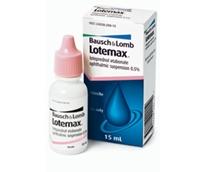
Loteprednol (Monograph)
Brand names: Alrex, Lotemax
Drug class: Corticosteroids
VA class: OP300
Chemical name: 17-(ethyl carbonate) chloromethyl 11β,17-dihydroxy-3-oxoandrosta-1,4-diene-17β-carboxylate
Molecular formula: C24H31ClO7
CAS number: 82034-46-6
Introduction
Synthetic nonfluorinated corticosteroid.
Uses for Loteprednol
Allergic Conjunctivitis
Symptomatic relief of seasonal allergic (hay fever, pollinosis) conjunctivitis.
Inflammatory Ocular Disorders
Symptomatic relief of corticosteroid-responsive inflammatory conditions of the palpebral and bulbar conjunctiva, cornea, and anterior segment of the globe (i.e., allergic conjunctivitis, acne rosacea keratitis, superficial punctate keratitis, herpes zoster keratitis, iritis, and cyclitis. Use in conjunction with appropriate anti-infective therapy in some cases of conjunctival infection, when the benefits of reducing edema and inflammation outweigh the risks associated with use of topical corticosteroids.
Loteprednol etabonate 0.5% less effective than prednisolone acetate 1% in the management of anterior uveitis.
Postoperative Ocular Inflammation
Treatment of postoperative ocular inflammation following ocular surgery.
Bacterial Ophthalmic Infections
Used in fixed combination with tobramycin in certain bacterial ocular infections.
Loteprednol Dosage and Administration
General
-
For seasonal allergic rhinitis, do not use for >2 weeks.
-
For inflammatory ocular disorders, do not discontinue therapy prematurely.
-
When used in fixed combination with tobramycin, do not discontinue prematurely.
-
Reevaluate patient if ocular signs and symptoms fail to improve after 2 days of therapy.
-
Monitor intraocular pressure (IOP) in patients receiving therapy for ≥10 days.
Administration
Ophthalmic Administration
Apply topically to the eyes as an ophthalmic suspension.
In fixed combination with tobramycin, apply topically to the eyes as an ophthalmic suspension.
Shake suspension vigorously prior to use.
Avoid contamination of the dropper tip.
Dosage
Available as loteprednol etabonate; dosage expressed in terms of the salt.
Adults
Seasonal Allergic Conjunctivitis
Ophthalmic
1 drop of a 0.2% suspension in the affected eye(s) 4 times daily.
Inflammatory Ocular Disorders
Ophthalmic
1 or 2 drops of a 0.5% suspension in the affected eye(s) 4 times daily. During initial treatment (within the first week), may increase dosage up to 1 drop every hour. When improvement occurs, decrease frequency of application.
Postoperative Ocular Inflammation
Ophthalmic
1 or 2 drops of a 0.5% suspension to the eye(s) undergoing surgery 4 times daily beginning 24 hours after surgery and continuing for 2 weeks after surgery.
Bacterial Ophthalmic Infections
Ophthalmic
Loteprednol etabonate and tobramycin ophthalmic suspension: 1 or 2 drops in the affected eye(s) every 4–6 hours. During the initial 24–48 hours, dosing may be increased to every 1–2 hours. When improvement occurs, decrease frequency of application.
Cautions for Loteprednol
Contraindications
-
Viral diseases of the cornea and conjunctiva (e.g., epithelial herpes simplex keratitis [dendritic keratitis], vaccinia, varicella), mycobacterial infection of the eye, and fungal diseases of ocular structures.
-
Known hypersensitivity to loteprednol, other corticosteroids, or any ingredient in the formulations.
Warnings/Precautions
Warnings
Ocular Effects
Risk of glaucoma (with damage to optic nerve), defects in visual acuity and fields of vision, and posterior subcapsular cataract formation with prolonged use of corticosteroids. Use with caution in the presence of glaucoma. Marked elevation in IOP (≥10 mm Hg) reported with loteprednol use; incidence lower than that reported with prednisolone acetate.
In conditions causing thinning of the cornea or sclera, perforations reported with use of topical corticosteroids.
Corticosteroid use after cataract surgery may delay healing and increase incidence of bleb formation.
Immunosuppressive Effects
Risk of secondary ocular infection with prolonged use of corticosteroids.
In acute purulent ocular conditions, corticosteroids may mask infection or exacerbate existing infection.
Risk of prolongation or exacerbation of ocular viral infections (e.g., herpes simplex) with ophthalmic corticosteroids. Use with extreme caution in patients with history of herpes simplex.
General Precautions
Use of Fixed Combination
Observe the usual precautions associated with tobramycin therapy when loteprednol is used in fixed combination with tobramycin.
Evaluation of Ocular Condition
Initial prescription or renewal of medication order beyond 14 days should be provided only after examination of the patient with the aid of magnification (e.g., slit lamp biomicroscopy, fluorescein staining where appropriate).
Fungal Infections
Long-term local corticosteroid application associated with development of fungal infections of the cornea. Consider fungus invasion in patients with persistent corneal ulceration who have or are receiving corticosteroid therapy; obtain fungal cultures when appropriate.
Specific Populations
Pregnancy
Category C.
Lactation
Not known whether distributed into human milk following topical application to the eye. Systemic corticosteroids distributed into human milk and may suppress growth, interfere with endogenous corticosteroid production, and cause other adverse effects. Use with caution.
Pediatric Use
Safety and efficacy not established in children <18 years of age.
Common Adverse Effects
Abnormal/blurred vision, burning on instillation, chemosis, discharge, dry eyes, epiphora, foreign body sensation, itching, injection, photophobia.
Adverse systemic events include headache, rhinitis, and pharyngitis.
Loteprednol Pharmacokinetics
Absorption
Bioavailability
Limited systemic exposure following topical application to the eye; plasma concentrations usually are undetectable.
Onset
In clinical studies in patients with seasonal allergic conjunctivitis, improvement in ocular itching and bulbar conjunctival injection occurred within 2 hours following initiation of therapy.
In clinical studies in patients with contact lens-associated giant papillary conjunctivitis, improvement in papillae, conjunctival injection and itching, and lens intolerance was evident within 1 week of therapy.
Duration
In patients with seasonal allergic conjunctivitis, improvement in ocular itching and bulbar conjunctival injection persisted through day 14 of therapy.
In patients with contact lens-associated giant papillary conjunctivitis, improvement in papillae, conjunctival injection and itching, and lens intolerance persisted for up to 6 weeks while therapy was continued.
Elimination
Metabolism
Undergoes extensive metabolism to inactive carboxylic acid metabolites.
Stability
Storage
Ophthalmic
Suspension
Upright at 15–25°C. Do not freeze.
Actions
-
Corticosteroids inhibit edema, fibrin deposition, capillary dilation, leukocyte migration, capillary proliferation, fibroblast proliferation, deposition of collagen, and scar formation associated with inflammation.
-
Corticosteroids may induce phospholipase A2 inhibitory proteins; these proteins may inhibit release of arachidonic acid and, thus, control biosynthesis of potent mediators of inflammation (e.g., prostaglandins, leukotrienes).
Advice to Patients
-
Importance of learning and adhering to proper administration techniques to avoid contamination of the tip of the suspension container.
-
Consult a clinician if pain, redness, itching, or inflammation worsens.
-
Importance of not wearing soft contact lenses during treatment with Lotemax or Zylet (benzalkonium chloride preservative may be absorbed by the lenses).
-
Importance of removing soft contact lenses prior to administration of each dose of Alrex. Delay reinsertion for 10 minutes after administration if eyes are not red; do not wear contact lenses if eye(s) are red. Not indicated for contact lens-related irritation.
-
Importance of women informing their clinician if they are or plan to become pregnant or plan to breast-feed.
-
Importance of informing patients of other important precautionary information. (See Cautions.)
Preparations
Excipients in commercially available drug preparations may have clinically important effects in some individuals; consult specific product labeling for details.
Please refer to the ASHP Drug Shortages Resource Center for information on shortages of one or more of these preparations.
|
Routes |
Dosage Forms |
Strengths |
Brand Names |
Manufacturer |
|---|---|---|---|---|
|
Ophthalmic |
Suspension |
0.2% |
Alrex (with benzalkonium chloride and povidone) |
Bausch & Lomb |
|
0.5% |
Lotemax (with benzalkonium chloride and povidone) |
Bausch & Lomb |
|
Routes |
Dosage Forms |
Strengths |
Brand Names |
Manufacturer |
|---|---|---|---|---|
|
Ophthalmic |
Suspension |
0.5% with Tobramycin 0.3% |
Zylet (with benzalkonium chloride and povidone) |
Bausch & Lomb |
AHFS DI Essentials™. © Copyright 2025, Selected Revisions January 24, 2012. American Society of Health-System Pharmacists, Inc., 4500 East-West Highway, Suite 900, Bethesda, Maryland 20814.
Reload page with references included
Related/similar drugs
Frequently asked questions
More about loteprednol ophthalmic
- Check interactions
- Compare alternatives
- Pricing & coupons
- Reviews (40)
- Side effects
- Dosage information
- During pregnancy
- Drug class: ophthalmic steroids
- Breastfeeding
- En español
Patient resources
Professional resources
Other brands
Lotemax, Eysuvis, Alrex, Inveltys