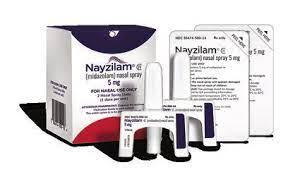
midazolam
PronunciationGeneric Name: midazolam (oral) (mye DAZ oh lam)
Brand Name: Versed
What is midazolam?
Midazolam is a benzodiazepine (ben-zoe-dye-AZE-eh-peen) sedative.
Midazolam is used to sedate a person who is having a minor surgery, dental work, or other medical procedure.
Midazolam may also be used for purposes not listed in this medication guide.
What is the most important information I should know about midazolam?
You should not take this medication if you have narrow-angle glaucoma, or if you are allergic to midazolam or to other benzodiazepines, such as alprazolam (Xanax), chlordiazepoxide (Librium), clorazepate (Tranxene), diazepam (Valium), lorazepam (Ativan), or oxazepam (Serax).
Treatments for depression are getting better everyday and there are things you can start doing right away.
Do not use midazolam if you are pregnant. It could harm the unborn baby.
Before taking midazolam, tell your doctor if you have any breathing problems, glaucoma, kidney or liver disease, or a history of depression, suicidal thoughts, or addiction to drugs or alcohol.
Do not drink alcohol shortly after taking midazolam. This medication can increase the effects of alcohol, which could be dangerous.
What should I discuss with my healthcare provider before taking midazolam?
You should not take this medication if you have narrow-angle glaucoma, or if you are allergic to midazolam or to other benzodiazepines, such as alprazolam (Xanax), chlordiazepoxide (Librium), clorazepate (Tranxene), diazepam (Valium), lorazepam (Ativan), or oxazepam (Serax).
To make sure midazolam is safe for you, tell your doctor if you have any of these other conditions:
-
glaucoma;
-
asthma, emphysema, bronchitis, chronic obstructive pulmonary disorder (COPD), or other breathing problems;
-
kidney or liver disease;
-
congestive heart failure;
-
a history of depression or suicidal thoughts or behavior; or
-
a history of drug or alcohol addiction.
FDA pregnancy category D. Do not use midazolam if you are pregnant. It could harm the unborn baby. Before you receive this medication, tell your doctor if you are pregnant.
Midazolam can pass into breast milk and may harm a nursing baby. Do not use this medication without telling your doctor if you are breast-feeding a baby.
The sedative effects of midazolam may last longer in older adults. Accidental falls are common in elderly patients who take benzodiazepines. Use caution to avoid falling or accidental injury while you are taking midazolam.
How should I take midazolam?
Midazolam is usually given as a single dose just before your surgery or procedure. You will receive this medicine in a hospital or clinic setting to quickly treat any serious side effects that occur.
You will be watched closely after receiving midazolam, to make sure you do not have an allergic reaction or serious side effects.
What happens if I miss a dose?
Take the missed dose as soon as you remember. Skip the missed dose if it is almost time for your next scheduled dose. Do not take extra medicine to make up the missed dose.
What happens if I overdose?
Seek emergency medical attention or call the Poison Help line at 1-800-222-1222. An overdose of midazolam can be fatal.
Overdose symptoms may include severe forms of some of the side effects listed in this medication guide.
What should I avoid while taking midazolam?
Do not drink alcohol shortly after taking midazolam. This medication can increase the effects of alcohol, which could be dangerous.
Grapefruit and grapefruit juice may interact with midazolam and lead to potentially dangerous effects. Avoid the use of grapefruit products while taking midazolam.
This medication may impair your thinking or reactions. Avoid driving or operating machinery until you know how midazolam will affect you.
Midazolam side effects
Get emergency medical help if you have any of these signs of an allergic reaction: hives; difficult breathing; swelling of your face, lips, tongue, or throat.
Call your doctor at once if you have a serious side effect such as:
-
cough, wheezing, trouble breathing, weak or shallow breathing;
-
slow heart rate;
-
seizure (convulsions);
-
feeling like you might pass out;
-
agitation, hostility; or
-
confusion, hallucinations, unusual thoughts or behavior.
Less serious side effects may include:
-
drowsiness, dizziness;
-
blurred vision;
-
nausea, vomiting;
-
runny nose, sneezing;
-
mild rash; or
-
amnesia or forgetfulness after your procedure.
This is not a complete list of side effects and others may occur. Call your doctor for medical advice about side effects. You may report side effects to FDA at 1-800-FDA-1088.
See also: midazolam side effects (in more detail)
Midazolam Dosing Information
Usual Adult Dose for Light Sedation:
Oral:
10 to 20 mg one time before procedure (IM or IV is preferred).
IV:
1 to 2.5 mg IV over 2 to 3 minutes before procedure. Wait an additional 2 or more minutes to fully evaluate the sedative effect. If additional titration is necessary, it should be given at a rate of no more than 1 mg over 2 minutes, waiting an additional 2 or more minutes each time to fully evaluate the sedative effect. Total doses greater than 5 mg are not usually necessary.
IM:
0.07 to 0.08 mg/kg 30 to 60 minutes prior to surgery. Reduce dose in patients with COPD, high risk patients, and when narcotics or other CNS depressants are used. Maximum dose 10 mg.
Usual Adult Dose for Light Anesthesia:
Initial dose: 2 mg IV once at a rate not to exceed 1 mg/min immediately before the procedure. Additional doses of 0.5 to 2 mg may be administered after 2 minutes to achieve desired level of sedation. Most patients achieve adequate sedation with a total dose less than 5 mg.
Maintenance dose: Generally does not exceed 25% of the dose initially required to achieve sedation.
Usual Adult Dose for ICU Agitation:
Initial dose: 0.01 to 0.08 mg/kg (usually 1 to 5 mg) IV over 2 to 3 minutes, every 5 to 15 minutes to control acute agitation.
Maintenance dose: 0.02 to 0.2 mg/kg/hour by continuous infusion. The patient should be assessed regularly and the infusion rate adjusted to maintain the desired level of sedation. The minimum effective rate is recommended. Lower infusion rates are required in patients also receiving opioid analgesics.
Usual Geriatric Dose for Light Sedation:
IV:
1 to 1.5 mg IV over 2 to 3 minutes before procedure. Wait an additional 2 or more minutes to fully evaluate the sedative effect. If additional titration is necessary, it should be given at a rate of no more than 1 mg over 2 minutes, waiting an additional 2 or more minutes each time to fully evaluate the sedative effect. Total doses greater than 3.5 mg are not usually necessary.
IM:
0.02 to 0.05 mg/kg IM 30 to 60 minutes prior to surgery.
Usual doses are 1 to 3 mg. Some patients may respond to as little as 1 mg.
If concomitant CNS depressant premedications are used in these patients, they will require at least 50% less midazolam than healthy young unpremedicated patients.
What other drugs will affect midazolam?
Before using midazolam, tell your doctor if you regularly use other medicines that make you sleepy (such as cold or allergy medicine, other sedatives, narcotic pain medicine, sleeping pills, muscle relaxers, and medicine for seizures, depression, or anxiety). They can add to sleepiness caused by midazolam.
Tell your doctor about all other medicines you use, especially:
-
boceprevir (Victrelis);
-
bosentan (Tracleer);
-
cimetidine (Tagamet);
-
conivaptan (Vaprisol);
-
dexamethasone (Cortastat, Dexasone, Solurex, DexPak);
-
imatinib (Gleevec);
-
isoniazid (for treating tuberculosis);
-
nefazodone;
-
St. John's wort;
-
an antibiotic such as clarithromycin (Biaxin), erythromycin (E.E.S., EryPed, Ery-Tab, Erythrocin, Pediazole), rifampin (Rifadin, Rifater, Rifamate), or telithromycin (Ketek);
-
antifungal medication such as fluconazole (Diflucan), itraconazole (Sporanox), ketoconazole (Nizoral), miconazole (Oravig), posaconazole (Noxafil), or voriconazole (Vfend);
-
a barbiturate such as butabarbital (Butisol), secobarbital (Seconal), pentobarbital (Nembutal), or phenobarbital (Solfoton);
-
heart or blood pressure medication such as diltiazem (Cardizem, Cartia, Dilacor, Diltia, Diltzac, Taztia, Tiazac), nicardipine (Cardene), quinidine (Quin-G), or verapamil (Calan, Covera, Isoptin, Verelan, Tarka);
-
HIV/AIDS medication such as atazanavir (Reyataz), delavirdine (Rescriptor), efavirenz (Sustiva, Atripla), etravirine (Intelence), fosamprenavir (Lexiva), indinavir (Crixivan), nelfinavir (Viracept), nevirapine (Viramune), ritonavir (Norvir, Kaletra), saquinavir (Invirase), or telaprevir (Incivek); or
-
seizure medication such as carbamazepine (Carbatrol, Equetro, Tegretol), felbamate (Felbatol), oxcarbazepine (Trileptal), phenytoin (Dilantin), or primidone (Mysoline).
This list is not complete and other drugs may interact with midazolam. Tell your doctor about all medications you use. This includes prescription, over-the-counter, vitamin, and herbal products. Do not start a new medication without telling your doctor.
More midazolam resources
- midazolam MedFacts Consumer Leaflet (Wolters Kluwer)
- midazolam Advanced Consumer (Micromedex) - Includes Dosage Information
- Midazolam Hydrochloride Monograph (AHFS DI)
Compare midazolam with other medications
Where can I get more information?
- Your pharmacist can provide more information about midazolam.
- Remember, keep this and all other medicines out of the reach of children, never share your medicines with others, and use this medication only for the indication prescribed.
- Disclaimer: Every effort has been made to ensure that the information provided by Cerner Multum, Inc. ('Multum') is accurate, up-to-date, and complete, but no guarantee is made to that effect. Drug information contained herein may be time sensitive. Multum information has been compiled for use by healthcare practitioners and consumers in the United States and therefore Multum does not warrant that uses outside of the United States are appropriate, unless specifically indicated otherwise. Multum's drug information does not endorse drugs, diagnose patients or recommend therapy. Multum's drug information is an informational resource designed to assist licensed healthcare practitioners in caring for their patients and/or to serve consumers viewing this service as a supplement to, and not a substitute for, the expertise, skill, knowledge and judgment of healthcare practitioners. The absence of a warning for a given drug or drug combination in no way should be construed to indicate that the drug or drug combination is safe, effective or appropriate for any given patient. Multum does not assume any responsibility for any aspect of healthcare administered with the aid of information Multum provides. The information contained herein is not intended to cover all possible uses, directions, precautions, warnings, drug interactions, allergic reactions, or adverse effects. If you have questions about the drugs you are taking, check with your doctor, nurse or pharmacist.
Copyright 1996-2012 Cerner Multum, Inc. Version: 1.03. Revision Date: 2012-10-22, 2:28:56 PM.