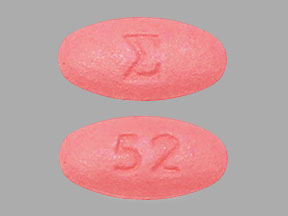
Ambrisentan (Monograph)
Brand name: Letairis
Drug class: Endothelin receptor antagonists
Warning
- Fetal/Neonatal Morbidity and Mortality
-
Based on animal data, may cause fetal harm if used during pregnancy.
Exclude pregnancy in females of childbearing potential before initiation of therapy and prevent thereafter by using acceptable methods of contraception during and for 1 month following discontinuance of therapy.
-
When pregnancy is detected, discontinue ambrisentan as soon as possible.
Introduction
Vasodilator; a propionic-acid, endothelin-1 (ET-1) type A receptor-selective antagonist.
Uses for Ambrisentan
Pulmonary Arterial Hypertension (PAH)
Management of PAH (WHO group 1 pulmonary hypertension) in adults to improve exercise capacity and delay clinical worsening. Also used in combination with tadalafil to reduce the risks of disease progression and hospitalization for worsening PAH, and to improve exercise ability.
Efficacy established principally in patients with WHO functional class II or III PAH (idiopathic, heritable, or associated with connective tissue diseases) as monotherapy or in combination with tadalafil.
Expert consensus guidelines recommend that all adult patients with symptomatic PAH be treated with established PAH-specific medications. Endothelin-receptor antagonists such as ambrisentan are recommended among several options for treatment of WHO/NYHA class II or III PAH. Selection of drug therapy should be based on disease severity (WHO/NYHA class) in addition to comorbid conditions, concomitant medications, adverse effects, route of administration, costs, and patient preferences.
Has been designated an orphan drug by FDA for treatment of PAH.
Pulmonary Fibrosis
No clinical benefit observed in a controlled study in patients with pulmonary fibrosis† [off-label] with or without pulmonary hypertension (WHO group 3); relatively greater risk of disease progression and death observed with ambrisentan versus placebo.
Ambrisentan Dosage and Administration
General
Pretreatment Screening
-
Obtain a pregnancy test in females of reproductive potential.
-
Measure hemoglobin concentrations.
Patient Monitoring
-
Monitor for signs of fluid retention.
-
Monitor hemoglobin concentrations at 1 month of treatment, and periodically thereafter.
-
Monitor liver function tests as clinically indicated.
Dispensing and Administration Precautions
-
Handling and disposal: Ambrisentan is a hazardous drug based on reproductive concerns; follow procedures for proper handling (e.g. use of gloves) when handling the oral tablets.
Administration
Oral Administration
Administer orally without regard to meals.
Do not split, chew, or crush tablets.
If a dose is missed, take as soon as it is remembered that day, and take next dose at regularly scheduled time; do not take 2 doses at the same time to make up for a missed dose.
Dosage
Adults
PAH
Oral
Initially, 5 mg once daily with or without tadalafil 20 mg once daily. May increase either ambrisentan or tadalafil at 4-week intervals to ambrisentan 10 mg or tadalafil 40 mg as needed or tolerated.
Do not exceed 5 mg once daily if administered concomitantly with cyclosporine.
Special Populations
Hepatic Impairment
Avoid use in patients with preexisting moderate or severe hepatic impairment. Manufacturer makes no specific recommendation in patients with mild pre-existing hepatic impairment; however, exposure to ambrisentan may be increased.
Renal Impairment
Dosage adjustment not required in patients with mild or moderate renal impairment; not studied in patients with severe renal impairment or on hemodialysis.
Geriatric Patients
Manufacturer makes no specific dosage recommendations.
Cautions for Ambrisentan
Contraindications
-
Pregnancy.
-
Idiopathic pulmonary fibrosis, with or without pulmonary hypertension (WHO group 3).
Warnings/Precautions
Warnings
Fetal Neonatal Morbidity and Mortality
May cause fetal harm; teratogenicity and embryotoxicity demonstrated in animals. (See Boxed Warning.)
Exclude pregnancy in females of childbearing potential prior to initiation; prevent pregnancy thereafter with acceptable methods of contraception during and for 1 month following cessation of therapy. If patient becomes pregnant during therapy, apprise patient of potential hazard to the fetus.
When pregnancy is detected, discontinue ambrisentan as soon as possible.
Other Warnings and Precautions
Fluid Retention
Peripheral edema reported, usually mild to moderate in severity; occurred with greater frequency and severity in geriatric patients. Peripheral edema and fluid retention more common with ambrisentan and tadalafil than with ambrisentan or tadalafil alone.
Peripheral edema is a known class effect of endothelin-receptor antagonists and also a consequence of PAH.
Fluid retention, sometimes requiring intervention (e.g., diuretics, fluid management, hospitalization), reported.
If clinically important fluid retention occurs, further evaluate to determine cause; initiate appropriate treatment or discontinue ambrisentan if necessary.
Pulmonary Edema with Pulmonary Veno-occlusive Disease (PVOD)
If acute pulmonary edema occurs during therapy, consider possibility of pulmonary veno-occlusive disease; if confirmed, discontinue drug.
Fertility in Males
Reduced sperm counts observed in some men with PAH following treatment with another endothelin receptor antagonist (bosentan); possibility of adverse effects on spermatogenesis with ambrisentan cannot be excluded.
Hematologic Effects
Decreases in hemoglobin and hematocrit reported within first few weeks of treatment, followed by stabilization; hemoglobin decreases do not appear to be related to hemorrhage or hemolysis.
Monitor hemoglobin concentrations prior to initiation, at 1 month, and periodically during therapy.
Not recommended in patients with clinically important anemia. Consider discontinuance of therapy if clinically important, otherwise unexplained reductions in hemoglobin occur.
Hepatic Effects
Serious hepatotoxicity (e.g., cirrhosis, liver failure) reported with some endothelin-receptor antagonists (e.g., bosentan, sitaxsentan [not commercially available in the US]).
Monitor AST/ALT concentrations if clinically indicated. Discontinue therapy if AST/ALT >5 times ULN or if elevations are accompanied by bilirubin concentrations >2 times ULN or by manifestations of liver impairment and alternative causes have been excluded.
Specific Populations
Pregnancy
May cause embryofetal toxicity, including birth defects and fetal death; contraindicated during pregnancy. Data limited on use in pregnant women. If used during pregnancy, or if patient becomes pregnant during therapy, advise patient of fetal risk.
Lactation
Not known whether distributed into human milk. Discontinue nursing or the drug.
Females and Males of Reproductive Potential
Exclude pregnancy in females of childbearing potential prior to initiation and prevent thereafter with acceptable methods of contraception during treatment and for 1 month after discontinuance. If used during pregnancy or if patient becomes pregnant during therapy, apprise patient of potential hazard to fetus.
Potential adverse effect on spermatogenesis.
Pediatric Use
Safety and efficacy not established.
Juvenile animal data revealed a reduction in brain weight but no morphologic or neurobehavioral changes with drug exposure.
Geriatric Use
Higher incidence of peripheral edema observed in geriatric patients ≥65 years of age relative to younger adults. Improvement in walk distance was less in elderly compared to younger patients, although prescribing information states to interpret this information, which comes from subgroup analysis, with caution.
Hepatic Impairment
Substantially metabolized and eliminated by the liver and biliary system. Avoid use in patients with moderate to severe hepatic impairment. No information on use in patients with mild hepatic impairment; possible increased systemic exposure.
Renal Impairment
Not studied in patients with severe renal impairment or in those undergoing hemodialysis.
No clinically important effect of mild or moderate renal impairment on ambrisentan disposition.
Common Adverse Effects
Common adverse effects (>3%): peripheral edema, nasal congestion, sinusitis, flushing.
When used in combination with tadalafil, common adverse effects (>5%): peripheral edema, headache, nasal congestion, cough, anemia, dyspepsia, bronchitis.
Drug Interactions
Metabolized by UGT enzymes 1A9S, 2B7S, and 1A3S and by CYP3A4 and CYP2C19 isoenzymes in vitro.
Appears to be a substrate of P-glycoprotein and organic anion transport protein (OATP).
Does not inhibit OATP or P-glycoprotein.
Does not inhibit or induce CYP enzymes at clinically relevant concentrations.
Drugs Affecting Hepatic Microsomal Enzymes
Inhibitors or inducers of CYP2C19: Pharmacokinetic interaction possible but not likely to be clinically important.
Inhibitors or inducers of CYP3A4: Pharmacokinetic interaction possible but clinically important interaction demonstrated to date only with cyclosporine (a CYP3A4 inhibitor).
Drugs Affecting OATP
Potential pharmacokinetic interaction with drugs that inhibit OATP.
Drugs Affecting the P-glycoprotein Transport System
Pharmacokinetic interactions possible with inhibitors or inducers of P-glycoprotein.
Drugs Affecting Uridine Diphosphate Glucuronosyltransferase Enzymes
Pharmacokinetic interactions possible with drugs that induce UGT but not likely to be clinically important.
Specific Drugs
|
Drug |
Interaction |
Comments |
|---|---|---|
|
Cyclosporine |
Increased AUC and peak plasma ambrisentan concentrations by 2- and 1.5-fold, respectively; no change in cyclosporine exposure |
Limit ambrisentan dosage to 5 mg once daily No adjustment of cyclosporine dosage required |
|
Digoxin |
Modest increase in digoxin exposure |
Not considered clinically important; no dosage adjustments necessary |
|
Hormonal contraceptives |
Ethinyl estradiol/norethindrone: No clinically important change in systemic exposure to oral contraceptive |
No dosage adjustments necessary |
|
Ketoconazole |
Modest increase in ambrisentan exposure and half-life |
Not considered clinically important; no dosage adjustments necessary |
|
Mycophenolate mofetil |
Pharmacokinetics of either drug not altered |
No dosage adjustments necessary |
|
Omeprazole |
Peak plasma concentrations and systemic exposure of ambrisentan not substantially altered |
No dosage adjustments necessary |
|
PDE type 5 inhibitors (sildenafil, tadalafil) |
Clinically important pharmacokinetic interaction not observed |
No dosage adjustments necessary |
|
Rifampin |
Increased ambrisentan exposure by twofold, but effect was transient and not considered clinically important |
No dosage adjustments necessary |
|
Ritonavir |
Peak plasma concentrations and systemic exposure of ambrisentan not altered |
No dosage adjustments necessary |
|
Tacrolimus |
Peak plasma concentrations and systemic exposure of ambrisentan not altered |
No dosage adjustments necessary |
|
Warfarin |
Clinically important interaction not observed |
No dosage adjustments necessary |
Ambrisentan Pharmacokinetics
Absorption
Bioavailability
Rapidly absorbed following oral administration, with peak plasma concentrations occurring within approximately 2 hours. Absolute bioavailability unknown.
Food
Food does not affect absorption.
Distribution
Extent
Detected in plasma 2 hours after administration.
Plasma Protein Binding
99%.
Elimination
Metabolism
Undergoes hepatic metabolism, principally by glucuronidation and to a lesser extent by hydroxylation.
Elimination Route
Predominantly nonrenal pathways; contributions of metabolism and biliary excretion not well characterized. Most of radiolabeled dose recovered in feces as unchanged drug or glucuronide metabolite. Undergoes enterohepatic recycling.
Half-life
Terminal half-life 15 hours; effective half-life approximately 9 hours.
Special Populations
Potential for increased exposure to ambrisentan in patients with hepatic impairment.
Serum ambrisentan concentrations not affected in patients with mild or moderate renal impairment (based on studies in individuals with Clcr 20–150 mL/minute).
Stability
Storage
Oral
Tablets
25°C (excursions permitted between 15–30°C) in original package.
Actions
-
Exhibits specific, selective antagonism of ET-1 type A receptor in the endothelium and vascular smooth muscle. Increased concentrations of ET-1, a potent vasoconstrictor, have been detected in the plasma and lung tissue of patients with PAH, suggesting a pathogenic role for ET-1 in this disorder.
-
Pharmacologically related to other ET-1 receptor antagonists (e.g., bosentan), but exhibits 4000-fold greater selectivity for ET-1 type A receptor versus type B receptor. Clinical implications of receptor selectivity currently not established.
-
Improves exercise capacity in PAH patients by inhibiting ET-1 type A receptor-mediated vasoconstriction and cell proliferation.
Advice to Patients
-
Advise patients to read the FDA-approved patient labeling (Medication Guide).
-
Risk of fetal harm; advise women of childbearing potential to avoid pregnancy and to use acceptable methods of contraception during and for 1 month following discontinuance of therapy.
-
Advise patients to inform their clinician immediately if pregnancy is suspected; clinicians should provide counseling on the use of emergency contraception in the event of unprotected sexual intercourse or known or suspected contraceptive failure. Apprise patients of potential risk to fetus if pregnancy occurs.
-
Potential risk of liver toxicity. Advise patients to inform their clinicians of any unexplained nausea, vomiting, right upper quadrant pain, fatigue, anorexia, jaundice, dark urine, fever, or itching.
-
Potential risk of peripheral edema and fluid retention. Advise patients to inform clinicians of signs of fluid retention.
-
Advise patients of the importance of periodic monitoring of red blood cell counts during treatment.
-
Advise patients of the risk for decreases in sperm count and potential effects on fertility.
-
Advise patients to inform their clinician if they are or plan to become pregnant or plan to breast-feed.
-
Advise patients to inform their clinicians of existing or contemplated concomitant therapy including prescription (e.g., cyclosporine) and OTC drugs, as well as any concomitant illnesses.
-
Inform patients of other important precautionary information.
Additional Information
The American Society of Health-System Pharmacists, Inc. represents that the information provided in the accompanying monograph was formulated with a reasonable standard of care, and in conformity with professional standards in the field. Readers are advised that decisions regarding use of drugs are complex medical decisions requiring the independent, informed decision of an appropriate health care professional, and that the information contained in the monograph is provided for informational purposes only. The manufacturer’s labeling should be consulted for more detailed information. The American Society of Health-System Pharmacists, Inc. does not endorse or recommend the use of any drug. The information contained in the monograph is not a substitute for medical care.
Preparations
Excipients in commercially available drug preparations may have clinically important effects in some individuals; consult specific product labeling for details.
Please refer to the ASHP Drug Shortages Resource Center for information on shortages of one or more of these preparations.
* available from one or more manufacturer, distributor, and/or repackager by generic (nonproprietary) name
|
Routes |
Dosage Forms |
Strengths |
Brand Names |
Manufacturer |
|---|---|---|---|---|
|
Oral |
Tablets, film-coated |
5 mg* |
Ambrisentan Tablets |
|
|
Letairis |
Gilead |
|||
|
10 mg* |
Ambrisentan Tablets |
|||
|
Letairis |
Gilead |
AHFS DI Essentials™. © Copyright 2025, Selected Revisions June 10, 2025. American Society of Health-System Pharmacists, Inc., 4500 East-West Highway, Suite 900, Bethesda, Maryland 20814.
† Off-label: Use is not currently included in the labeling approved by the US Food and Drug Administration.
Reload page with references included
Related/similar drugs
More about ambrisentan
- Check interactions
- Compare alternatives
- Pricing & coupons
- Reviews (15)
- Drug images
- Side effects
- Dosage information
- During pregnancy
- Drug class: agents for pulmonary hypertension
- Breastfeeding
- En español