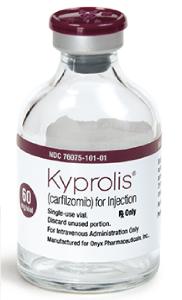
Kyprolis
Generic name: carfilzomib [ kar-FILZ-oh-mib ]
Dosage form: Infusion
Drug class: Proteasome inhibitors
What is Kyprolis?
Kyprolis (carfilzomib) is a treatment for types of multiple myeloma when other medicines have not worked or have stopped working. Kyprolis treatment helps slow the spread of cancer and cause cancer cells to die. Kyprolis treatment is given once or twice weekly as an IV infusion that takes 30 minutes.
Kyprolis is from a class of medicines called proteasome inhibitors, which are targeted therapies for cancer. Kyprolis works by blocking proteasome, which normally breaks down damaged or unneeded proteins within cells. This means that more abnormal proteins build up in the cancer cells, which causes the cancer cells to die.
Multiple myeloma is a cancer of plasma cells (a type of white blood cell). Kyprolis treats relapsed or refractory multiple myeloma.
Kyprolis FDA approval was received on July 20, 2012.
Who can use Kyprolis?
Kyprolis is an FDA-approved medicine indicated to treat relapsed or refractory multiple myeloma in adults who have received one to three lines of therapy in combination with:
- Lenalidomide (Revlimid) and dexamethasone; or
- Dexamethasone; or
- Daratumumab (Darzalex) and dexamethasone; or
- Daratumumab and hyaluronidase-fihj (Darzalex Faspro) and dexamethasone; or
- Isatuximab (Sarclisa) and dexamethasone.
Kyprolis is also FDA-approved as a single treatment agent in adults with relapsed or refractory multiple myeloma who have received one or more lines of therapy.
Kyprolis side effects
Common Kyprolis side effects
Common Kyprolis side effects may include:
- fever, bruising, pale skin or other signs of low blood cell counts;
- feeling short of breath;
- low potassium;
- nausea, diarrhea;
- cold symptoms such as stuffy nose, sneezing, cough, sore throat;
- muscle spasm;
- swelling in your hands or feet; or
- headache, trouble sleeping, and feeling tired.
Serious Kyprolis side effects
Get emergency medical help if you have signs of an allergic reaction to Kyprolis: hives; difficulty breathing; swelling of your face, lips, tongue, or throat.
Some side effects may occur within 24 hours after the injection. Tell your caregiver right away if you feel weak, nauseated, chilled or feverish, light-headed, or if you have joint or muscle pain, a cold sweat, chest pain or tightness, trouble breathing, or swelling in your face.
Kyprolis may cause a serious brain infection that can lead to disability or death. Call your doctor right away if you have problems with speech, thought, vision, or muscle movement. These symptoms may start gradually and get worse quickly.
Also, call your doctor at once if you have:
- a light-headed feeling, like you might pass out;
- easy bruising or bleeding (nosebleeds, bleeding gums), or any bleeding that will not stop;
- vomiting, diarrhea, weakness, blood in your stools, coughing up blood or vomit that looks like coffee grounds;
- headache, confusion, dizziness, problems with balance;
- a seizure;
- jaundice (yellowing of the skin or eyes);
- heart problems - chest pain, pain spreading to your jaw or shoulder, pounding in your neck or ears, blurred vision, severe headache;
- kidney problems - little or no urination, swelling in your feet or ankles, feeling tired or short of breath;
- low blood cell counts - fever, chills, tiredness, mouth sores, skin sores, pale skin, cold hands and feet;
- lung problems - shortness of breath (even while lying down), wheezing, blue-colored lips, and skin, cough with foamy mucus;
- low potassium level - leg cramps, irregular heartbeats, increased thirst or urination, numbness or tingling, muscle weakness or limp feeling;
- signs of a blood clot - sudden numbness or weakness, slurred speech, pain or redness in an arm or leg; or
- signs of tumor cell breakdown - weakness, muscle cramps, nausea, vomiting, fast or slow heart rate, decreased urination, tingling in your hands and feet or around your mouth.
This is not a complete list of side effects, and others may occur. Call your doctor for medical advice about side effects. You may report side effects to FDA at 1-800-FDA-1088.
Related/similar drugs
Warnings
Kyprolis can affect your heart or lungs. Call your doctor at once if you have chest pain, pounding heartbeats, shortness of breath (even with mild exertion or while lying down), swelling of your hands or feet, feeling like you might pass out, wheezing, gasping for breath, cough with foamy mucus, or blue-colored appearance of your lips and skin.
Before taking this medicine
To make sure Kyprolis is safe for you, tell your doctor if you have ever had:
- kidney disease (or if you are on dialysis);
- heart disease, high blood pressure;
- a heart attack or stroke;
- lung disease;
- liver disease, or abnormal liver function tests.
Consider antiviral prophylaxis to decrease the risk of shingles reactivation (herpes zoster).
Pregnancy
You should not use Kyprolis if you are pregnant or planning to become pregnant, or if you plan to father a child. if you are a female of reproductive potential you may be required to do a pregnancy test before starting Kyprolis treatment.
Kyprolis can harm an unborn baby if the mother or the father is using this medicine.
- If you are a woman, do not use Kyprolis if you are pregnant. Use effective birth control to prevent pregnancy while you are using this medicine and for at least 6 months after your last dose.
- If you are a man, use effective birth control if your sex partner is able to get pregnant. Keep using birth control for at least 3 months after your last dose.
- Tell your doctor right away if a pregnancy occurs while either the mother or the father is using Kyprolis.
Breastfeeding
Do not breastfeed while using this medicine, and for at least 2 weeks after your last dose.
How will I receive Kyprolis?
Kyprolis is given as an infusion into a vein which will take 10 minutes to 30 minutes, depending on your treatment protocol. A healthcare provider will give you this injection.
Your treatment may be once or twice a week.
You may be given other medications to help prevent serious side effects or infections. Keep using these medicines for as long as your doctor has prescribed.
You will need frequent medical tests, and your next dose may be delayed based on the results.
Call your doctor if you have ongoing vomiting or diarrhea, or if you are sweating more than usual. You can easily become dehydrated while receiving this medication. Avoid dehydration by drinking plenty of liquids before and after your injections.
Dosing Information
Your healthcare provider will work out the correct dose and regime for your treatment.
Kyprolis dosing once weekly
Kyprolis once weekly 20/70 mg/m2 (30-minute infusion) is administered in combination with:
- dexamethasone (Kd),
- daratumumab plus dexamethasone (DKd), or
- daratumumab and hyaluronidase-fihj plus dexamethasone (DKd).
Kyprolis dosing twice weekly
Kyprolis twice weekly 20/56 mg/m2 (30-minute infusion) is administered as monotherapy or in combination with:
- dexamethasone (Kd),
- daratumumab plus dexamethasone (DKd),
- daratumumab and hyaluronidase-fihj plus dexamethasone (DKd), or
- isatuximab plus dexamethasone (Isa-Kd).
Kyprolis twice Weekly 20/27 mg/m2 (10-minute infusion) is administered as monotherapy or in combination with
- lenalidomide and dexamethasone (KRd).
For more detailed information on Kyprolis dosing click the link below.
What happens if I miss a dose?
Call your doctor for instructions if you miss an appointment for your Kyprolis injection.
What happens if I overdose?
Seek emergency medical attention or call the Poison Help line at 1-800-222-1222.
What should I avoid while receiving Kyprolis?
Avoid driving or hazardous activity until you know how this medicine will affect you. Your reactions could be impaired.
Kyprolis Package Insert
Review the Kyprolis Package Insert for more detailed information about this medicine. Discuss any medical questions with your doctor or other health care provider. This is not all the information you need to know about this medicine for safe and effective use, and it does not take the place of talking to your doctor about your treatment.
Storage
- Unopened vials should be stored refrigerated 2°C to 8°C (36°F to 46°F).
- Retain in original package to protect from light.
Ingredients
Active ingredient: carfilzomib
Inactive ingredients: betadex sulfobutyl ether sodium, anhydrous citric acid, sodium hydroxide, water.
Company
Amgen Kyprolis
Manufactured for:
Onyx Pharmaceuticals, Inc., One Amgen Center Drive, Thousand Oaks, CA 91320-1799 U.S.A.
Popular FAQ
Is Kyprolis a chemo drug and how does it work?
Kyprolis (carfilzomib) is not a chemotherapy drug, it is a proteasome inhibitors, which are targeted therapies for cancer. Kyprolis works by inhibiting proteasomes - a complex of proteases (enzymes), which break down proteins in the body. Continue reading
How is Kyprolis (carfilzomib) administered?
Kyprolis is given as infusion into a vein over 10 to 30 minutes, once or twice a week for 3 weeks then a week with no treatment. This is a 28 days treatment cycle which maybe repeated. Continue reading
References
More about Kyprolis (carfilzomib)
- Check interactions
- Compare alternatives
- Pricing & coupons
- Reviews (5)
- Drug images
- Side effects
- Dosage information
- Patient tips
- During pregnancy
- Generic availability
- FDA approval history
- Drug class: proteasome inhibitors
- Breastfeeding
- En español
Professional resources
Related treatment guides
Further information
Always consult your healthcare provider to ensure the information displayed on this page applies to your personal circumstances.